作者: admin

  • APUA Nears Completion of Tyrells Booster Station, Promises Improved Water Pressure for Liberta Communities

    APUA Nears Completion of Tyrells Booster Station, Promises Improved Water Pressure for Liberta Communities

    ST. JOHN’S, Antigua – April 13, 2026 – A critical upgrade to Antigua’s regional water distribution network is entering its final completion phase, with the Antigua Public Utilities Authority (APUA) confirming that a new water booster station in the community of Tyrells will be fully commissioned within days.

    In an official public notice released this Monday, APUA’s Water Business Unit outlined that the facility, which has undergone months of planning, construction and safety testing, is on track to be fully operational by the end of this week. The core goal of this infrastructure investment is to address uneven water access that has plagued higher elevation neighborhoods across the region for decades.

    Once the new booster station is brought online, the entire local water network will see improved hydraulic function, a change that project managers say will deliver far more consistent and dependable water delivery to homes and businesses across the service area. The communities positioned to see the most immediate and tangible benefits include Liberta and its surrounding sub-neighborhoods, specifically Green Hill, Evergreen Tree Road and Horsford Hill, where residents have long struggled with underwhelming water pressure and intermittent supply.

    APUA officials emphasized that the Tyrells booster station is just one component of a broader, multi-year initiative to overhaul outdated water infrastructure across Antigua. The authority has prioritized upgrading distribution systems in high-elevation zones, where geographic challenges have historically created systemic low pressure that undermines supply reliability for local residents.

  • Joseph says St Mary’s North “coming home” to UPP

    Joseph says St Mary’s North “coming home” to UPP

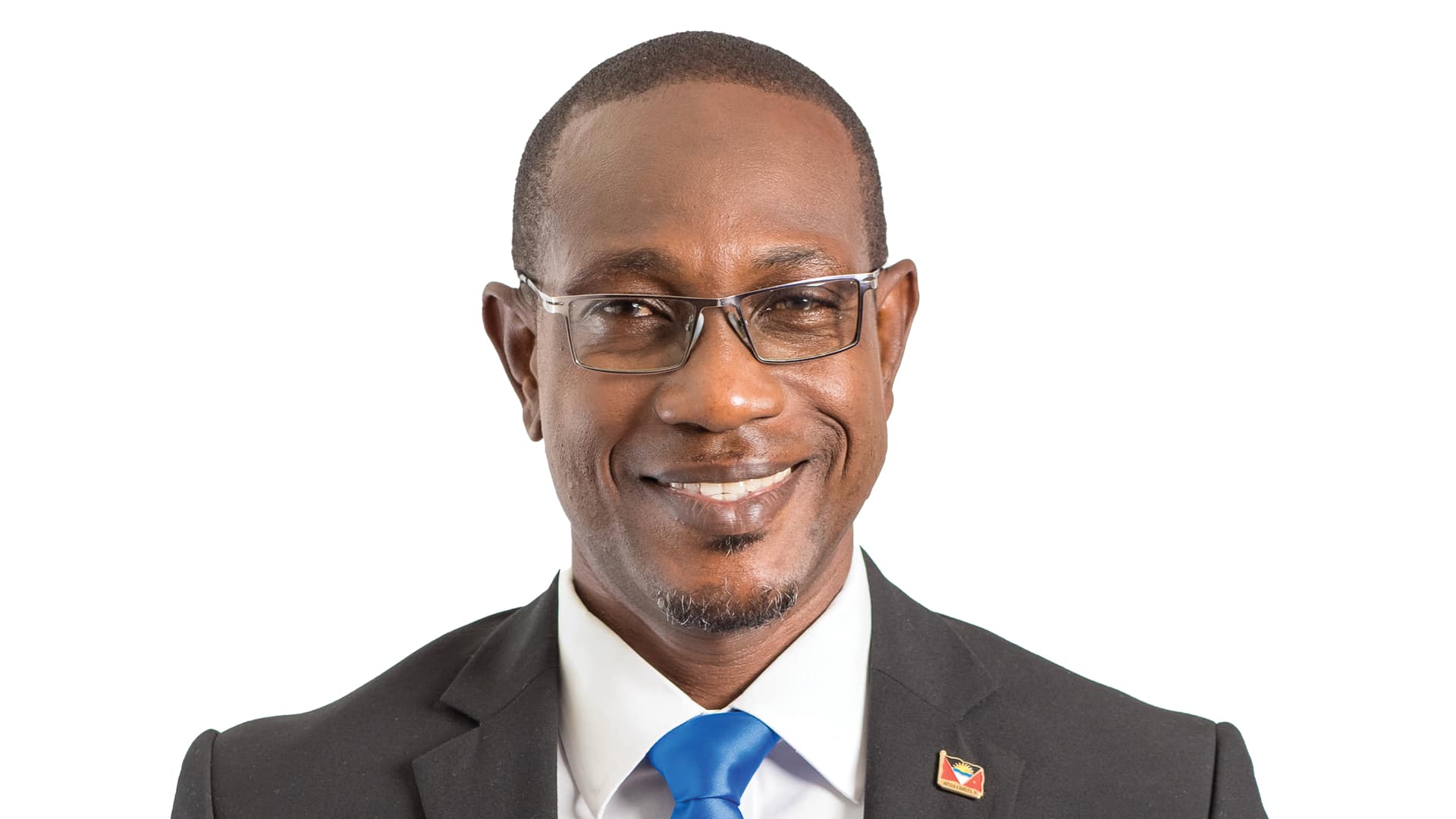
    As the April 30 general election in Antigua and Barbuda draws near, United Progressive Party (UPP) senatorial candidate Johnathon Joseph has made clear his optimism about securing the St Mary’s North constituency seat for his party. Speaking to supporters and reporters at the official launch of his constituency campaign, Joseph framed the upcoming vote as a homecoming for the UPP in the district, backing his confidence with three years of consistent on-the-ground canvassing and sustained community outreach work.

    “I’m pretty confident,” Joseph stated firmly during the event. “St Mary’s North is coming home under the column of the United Progressive Party.”

    Joseph explained that his campaign strategy has centered on grassroots engagement: rather than imposing a pre-written policy platform, his team has prioritized listening directly to residents to document their top priorities. “It’s their community… they know the kind of community that they want to see,” he noted, emphasizing that a successful representative must center voter needs above partisan interests.

    A lifelong connection to the region has also helped Joseph build rapport with local voters, he said. Having grown up in the St Mary’s North community of Jennings, Joseph said he shares the daily experiences of local constituents. “Their struggles are my struggles, their concerns are my concerns,” he explained.

    Joseph will face off against Philmore Benjamin, the candidate for the incumbent Antigua and Barbuda Labour Party (ABLP), who was tapped earlier this year to replace retiring long-serving MP Sir Molwyn Joseph. Joseph acknowledged that the race is competitive, but argued that the outcome will tilt in his favor because of his ongoing, consistent investment in constituent relationships.

    Looking ahead to the final weeks of campaigning before voting day, Joseph said he will stick to his grassroots approach, continuing to hold in-person meetings with voters across the constituency and encouraging all eligible residents to participate in the democratic process. “Exercise your democratic right… and select a representative who will listen and speak on your behalf,” Joseph urged voters.

  • Een ambassadeur met oog voor het kleine: Walter Oostelbos en zijn stille ode aan Suriname

    Een ambassadeur met oog voor het kleine: Walter Oostelbos en zijn stille ode aan Suriname

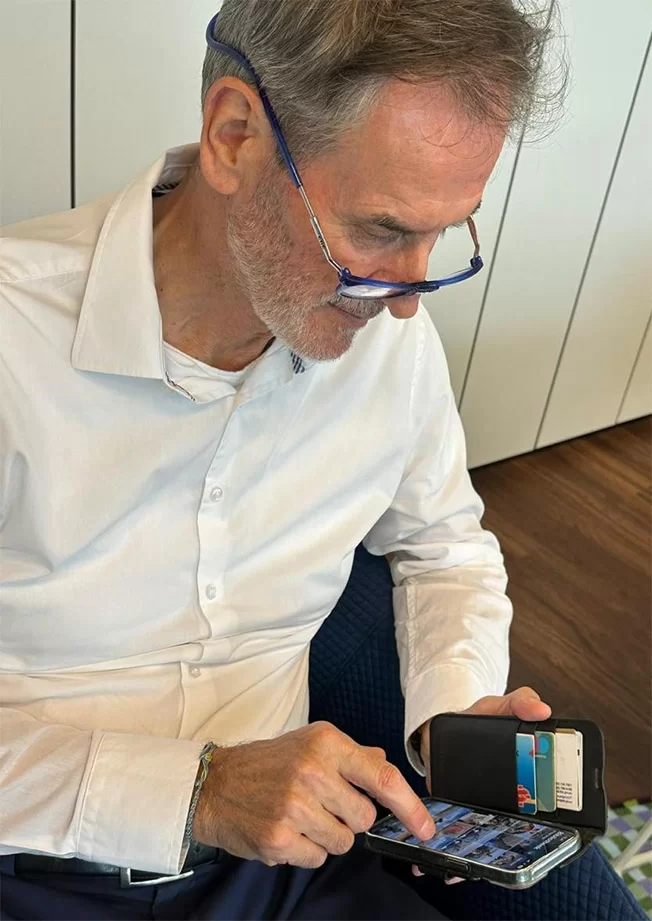
    For years, Dutch ambassador to Suriname Walter Oostelbos has turned his personal Instagram account into a living, visual diary of the South American nation – one that prioritizes quiet, overlooked details over formal diplomatic announcements. What began as a spontaneous idea during a weekend trip to Knini Paati has grown into a decades-long personal project, with the ambassador now sharing nearly 3,000 original photographs paired with short contextual stories, all published in a personal capacity.

    Oostelbos, a trained historian and former journalist, describes the daily posting habit as a deep-seated passion rather than an obligation, a characterization his family frames simply as a beloved hobby. His trained eye looks beyond the surface of Suriname’s daily life, zeroing in on landscapes, architecture, traditions, and cultural fragments that are at risk of fading into obscurity or flying under the radar of most observers.

    This year marks a major milestone for the country: Suriname’s 50th anniversary of independence, locally called Srefidensi. The national celebration included formal addresses at a special National Assembly sitting, a military parade on Independence Square, and a large public reception at the presidential palace. Guests at the reception were greeted by a striking, fully edible centerpiece: a giant cake shaped like Suriname, decorated with portraits of influential Surinamese women from past and present, surrounded by smaller cakes representing each of the nation’s distinct ethnic communities. The design highlighted the country’s defining cultural and ethnic richness, turning a celebratory dessert into a symbolic nod to national identity.

    For Oostelbos, the most valuable lesson Suriname offers the world lies in this interwoven diversity. Unlike many global regions where ethnic and religious difference has sparked deep tension and even violence, Suriname has built a successful model of peaceful coexistence that is rarely highlighted internationally, he argues. Integration runs deep, even within multi-ethnic families, creating an example the ambassador says the world at large can learn from. He has pushed for Suriname to center this unique strength more prominently in its global profile, not as an empty marketing slogan, but as a tangible, working example of pluralism done right.

    Many of Oostelbos’ posts focus on the small, fading cultural practices that make Suriname unique. One recent feature, for example, highlighted the Londa ke náach, a traditional dance practiced by Suriname’s Hindustani community originally imported from India. Performed by boys and young men, the dance uses distinct hand and hip movements, and it is traditionally featured at weddings, birthdays, neighborhood prayer gatherings, Navratri celebrations, and major national events. Sadly, the tradition is declining among younger generations, as many young boys report feeling ashamed to dress in the traditional feminine-coded attire required for the performance.

    Another recurring focus of the project is the country’s endangered built heritage, particularly the characterful historic wooden architecture that dots Paramaribo and beyond. Oostelbos has repeatedly documented at-risk buildings, sounding the alarm over rapid demolition that replaces historic structures with generic new development. He points to the neighborhood of Frimangron, where two of four adjacent historic wooden homes were demolished in a short span of time, as just one example of this steady loss of cultural and historical identity. Even so, he emphasizes that these old buildings carry the full complexity of Suriname’s history: while some communities associate colonial-era structures with a painful legacy of oppression, erasing the structures does not erase that history, he argues. Paramaribo’s inner city, a UNESCO World Heritage Site since 2002, is one of the most unique historic urban landscapes in the world, where centuries of history remain visible in streetscapes like the iconic Waterkant – the capital’s oldest street, built in the first half of the 17th century along the Suriname River quay. For centuries, it was the first view of Paramaribo that arriving visitors saw when their ships docked, and nearly all of its existing buildings date to after the 1821 Great City Fire, with the exception of the 1730-built presidential palace that stands at the end of the street on Independence Square.

    Beyond the capital, Oostelbos has also traveled to document the country’s remote interior landscapes and indigenous communities. He has featured landmarks like the Tapanahony River, a major waterway in southeastern Suriname that rises in the Eilerts de Haan Mountains along the Brazilian border, flows north through rugged highlands reaching 700 meters in elevation, and joins the Marowijne border river near Stoelmanseiland. Its banks are home to distinct indigenous and Maroon communities, including the Tiriyó people in upstream villages, and the Wayana and Ndyuka Aukan peoples further downstream. Even local Surinamese followers often tell Oostelbos his posts have made them see their own home in a new light, reacting with surprise to the layers of history he uncovers in familiar places.

    For Oostelbos, this current posting to Suriname will be his last as a career diplomat. He is set to retire from diplomatic service in a matter of months, closing out his career with the visual diary project that has become his defining legacy during his time in the country. What remains after his departure is a sprawling, intimate portrait of Suriname – one built not from grand political announcements or headline-making events, but from small, daily observations that add up to reveal the nation’s true character. The ambassador’s core message, woven through every post, is that Suriname’s greatest strength does not come from its most visible, large-scale achievements. It lives in the uncelebrated details, in the functional pluralism of its diverse communities, in the living history that still surrounds those who choose to look for it, and in the power of telling those forgotten stories.

  • Independent candidates among persons nominated to contest April 30 elections

    Independent candidates among persons nominated to contest April 30 elections

    With the nomination period now closed for Antigua and Barbuda’s upcoming April 30 general election, election officials have finalized the full slate of competing candidates, marking the official entry of three independent contenders into races across key constituencies. This development has introduced competitive multi-candidate contests that break the long-standing two-party dynamic in three districts across the twin-island nation.

    For the majority of the 19 House of Representatives constituencies, the electoral landscape remains dominated by the country’s two leading political forces: the incumbent Antigua and Barbuda Labour Party (ABLP) and the main opposition United Progressive Party (UPP). Just one candidate from the smaller Barbuda People’s Movement (BPM) is also in the running, alongside the three independent contenders who qualified to appear on the ballot after meeting all requirements laid out in the Representation of the People Act.

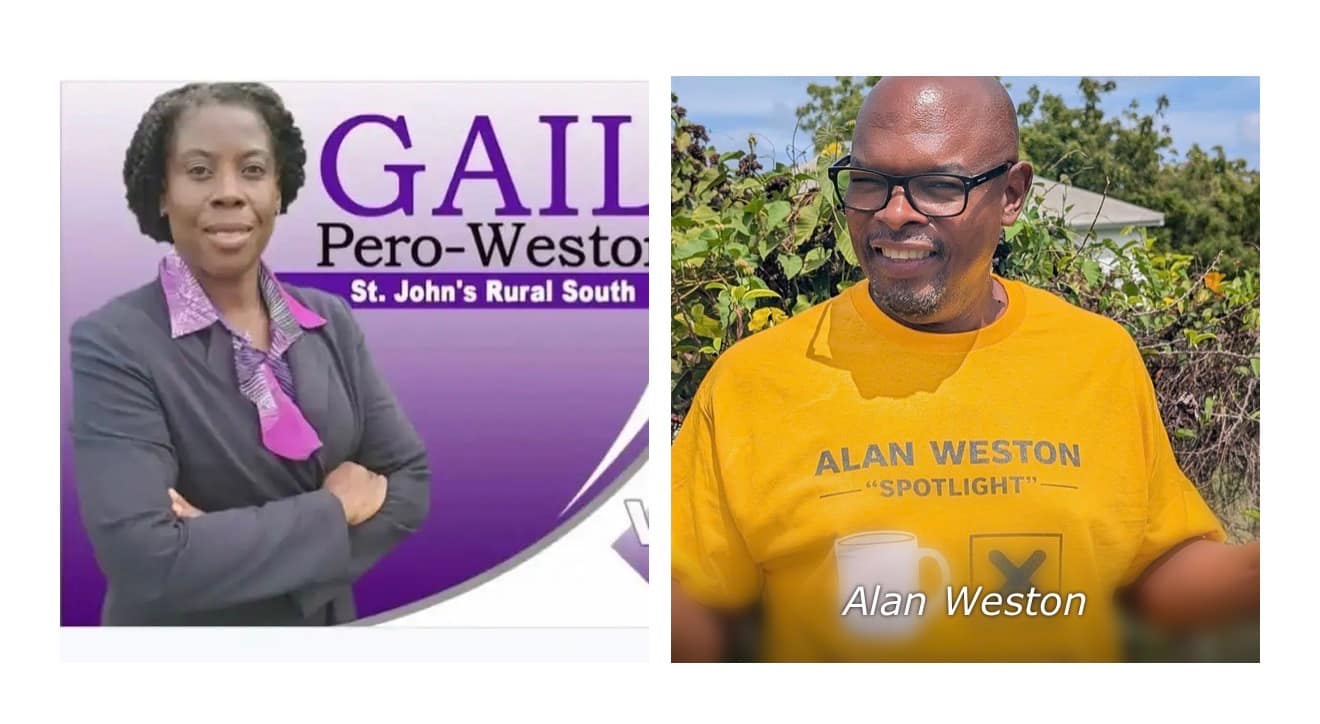
    On the island of Barbuda, the race pits ABLP nominee Kendra Beazer against BPM incumbent Trevor Walker, a matchup that will determine the constituency’s single House seat. The independent candidates have turned three mainland districts into crowded competitive contests: in St. George, ABLP’s Michael Freeland and UPP’s Kelton Dalso will now face off against independent contender Debbie Pero Georges. St. Paul sees another three-way race, with ABLP incumbent EP Chet Greene and UPP candidate Franz deFreitas competing against independent Alan Weston. In St. John’s Rural West, independent Nigel Bascus joins the contest between the two major party nominees, creating a third multi-candidate race.

    In the capital district of St. John’s, high-profile matchups have been confirmed across the city’s constituencies. In St. John’s City West, ABLP leader and incumbent Prime Minister Gaston Browne will challenge for re-election against UPP challenger Alister Thomas. Neighboring districts see equally clear matchups: St. John’s City South pits incumbent ABLP minister Steadroy “Cutie” Benjamin against UPP’s Adrian Williams, while St. John’s City East sees ABLP incumbent Melford Nicholas go up against UPP challenger Pearl Quinn-Williams.

    Across rural St. John’s, most districts feature head-to-head contests between the two major parties. St. John’s Rural South matches ABLP’s Daryll Matthew against UPP’s Emanuel Peters, while St. John’s Rural North sees ABLP’s Henry Charles Fernandez face off against UPP’s Malaka Parker. St. John’s Rural East, like most rural constituencies, is a straight ABLP-UPP race, with only St. John’s Rural West disrupted by the addition of the independent candidate.

    Matchups across the rest of the mainland hold to the two-party pattern. In St. Mary’s North, ABLP’s Dr. Philmore Benjamin will contest against UPP’s Jonathan Joseph, while St. Mary’s South sees ABLP’s Dwayne George face off against UPP’s Kelvin Simon. All Saints East and St. Luke has ABLP’s Lamin Newton James competing against UPP’s Jamal Pringle, and All Saints West matches ABLP’s Anthony Smith Jr. against former UPP leader Harold Lovell. In St. Peter, ABLP’s Rawdon Turner will challenge UPP’s George Wehner Weste, while both St. Philip North and St. Philip South host straight two-party contests. All candidates have been verified as eligible under national electoral law, and voters across Antigua and Barbuda will head to the polls on April 30 to select their new House of Representatives.

  • King criticises Gonsalves’ home meetings despite $153,000 for office

    King criticises Gonsalves’ home meetings despite $153,000 for office

    A political controversy has erupted in the aftermath of Saint Vincent and the Grenadines’ 2025 general election, with a sitting government senator calling for transparency from the newly installed opposition leader over how he uses public funds allocated for official office operations.

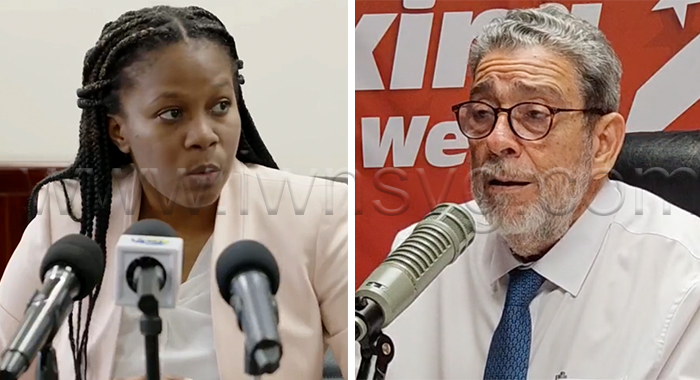
    Lavern King, who serves as Minister of State in the Ministry of Education, Voc Training, Innovation, Digital Transformation and Information, and also acts as the ruling New Democratic Party’s (NDP) public relations officer, raised the questions publicly during an appearance on the NDP’s own *New Times* talk programme on NICE Radio.

    King centered her inquiry on an annual EC$153,000 public subvention allocated exclusively to the Leader of the Opposition, designated to cover office space rental and related administrative costs. She told listeners that her observations show incumbent opposition leader Ralph Gonsalves, who led the previous Unity Labour Party (ULP) government for two decades, has been hosting formal meetings with foreign diplomatic delegations and other high-level dignitaries at his private residence in Gorse, rather than at a publicly funded office space.

    “When you accept taxpayers’ money to maintain an official opposition office, these formal diplomatic engagements should rightfully take place in that designated workspace,” King argued. She pointed to a clear precedent set by current NDP Prime Minister Godwin Friday, who operated as Leader of the Opposition while the NDP was out of power, and held all official meetings at his designated Kingstown office, never at his personal home in Bequia.

    King pushed back against claims that local media coverage of the opposition has become one-sided propaganda, framing her questions as a legitimate matter of public accountability. “This is 153 thousand dollars of public money, from taxpayers,” she emphasized. “Pictures of these official meetings at his private residence are already circulating publicly. We are not saying his office is definitively at his home, but we deserve clear clarification: where is this funded office space located, and how exactly is this public allocation being spent?”

    King also used the platform to critique Gonsalves’ long-standing leadership style, noting that after the ULP’s landslide defeat in the November 27 general election, Gonsalves was the only ULP candidate to retain his parliamentary seat, with the NDP securing 14 of the 15 total seats. King argued that the lopsided result has exposed a lack of internal party structure and future-facing leadership on the opposition’s side, centered entirely on Gonsalves himself.

    In a prompt response during his weekly talk show on ULP-owned Star Radio, Gonsalves pushed back against King’s questions, initially misattributing the comments to another government minister before addressing King directly. The opposition leader confirmed that he does maintain a fully functional, publicly funded Office of the Leader of the Opposition, located in a newly constructed building on the ULP’s Kingstown complex, staffed by a full support team headed by research officer Ferdinand. He stated that he regularly meets with constituents and other visitors at this office, particularly on the Mondays and Wednesdays he travels into central Kingstown.

    Gonsalves rejected the claim that he is required to host all meetings at the designated office, arguing that he has the right to meet diplomatic delegates at his private home if all parties are comfortable with the arrangement. “Lavern King cannot dictate where I am allowed to hold my meetings,” he said. “If foreign diplomats want to meet me for lunch at my residence, which has a fully appointed library and appropriate meeting space, that is my prerogative. King herself is welcome to visit, she could even borrow a book if she wishes.”

    He dismissed King’s inquiry as “infantile”, and accused the ruling NDP of surveilling his movements and visitors, noting that the NDP’s national headquarters is located adjacent to the ULP headquarters on Murray’s Road in Kingstown. Gonsalves said that the NDP has been spreading unfounded rumors that he is operating a “government in exile” out of his Gorse home to undermine the new ruling administration, and King’s questions only amplify these baseless claims by drawing more attention to visitors frequenting his property.

    The clash comes roughly five months after the NDP’s landslide electoral victory, which ended 25 consecutive years of ULP governance led by Gonsalves.

  • Son demands justice

    Son demands justice

    A shocking case of prolonged captivity and abuse has emerged in Trinidad and Tobago, where a 42-year-old domestic worker was held against her will and tortured for seven months, leading to the arrest of two suspects and a tearful emotional reunion with her family after her escape. Sabita Basdeo, the victim, told law enforcement officers that her captors repeatedly beat her, burned her body, and slammed her head into walls during her confinement at a private residence in Penal. The two people taken into custody on Saturday are a 38-year-old woman and her 17-year-old son, who are currently being held by police as investigators build their case, with charges including potential false imprisonment already on the table.

    The case came to official attention after social activist and Trinidad and Tobago Red Cross Society Vice-President Edward Moodie spotted circulating online videos detailing the abuse allegations. Acting quickly to protect Basdeo, Moodie shared the footage of the assault and captivity with top regional and national security officials, including Minister of Homeland Security Roger Alexander, Commissioner of Police Allister Guevarro, and the senior superintendent of the local TTPS district. On the same day of the arrest, the two suspects brought Basdeo to Barrackpore Police Station, where she formally identified them as her abusers before being transferred to a local hospital for urgent medical care. She was treated for visible bruises covering her body and face, alongside other unexplained marks of harm from the months of abuse.

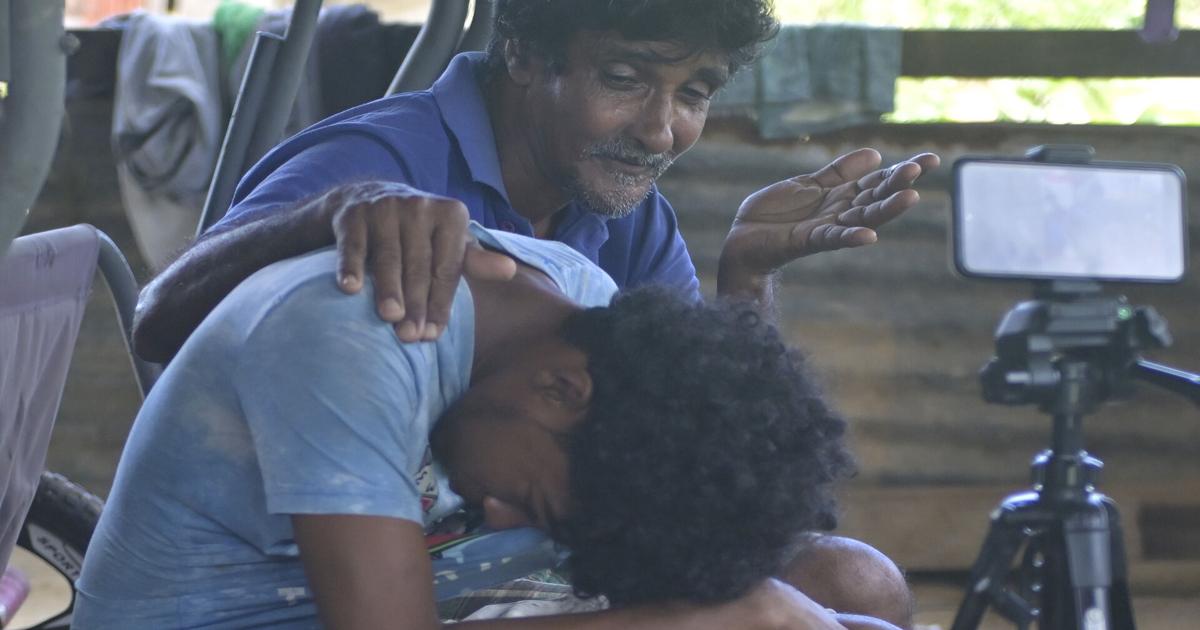
    At the family’s home in Barrackpore’s Ramlal Road, off Platinite Trace, Basdeo’s husband 56-year-old Krishendeo Basdeo and 17-year-old son Brandon Basdeo spoke publicly yesterday through tears about their years-long separation and their fight for justice. Brandon, who had been cut off from his mother for years before her rescue, described the emotional first meeting at the police station over the weekend. “The police picked me up and carried me to the station. As she saw me, she started to cry. She said it was a long time she did not see me. She hugged me. She asked for my brother. He was outside the station and didn’t get to come inside. Then they carried her to the hospital,” he recounted.

    Expressing deep anger at the suspects, Brandon Basdeo told reporters: “I hope they get locked up and never come out again.” Despite the trauma of the ordeal, the teenager said he felt overwhelming relief that his mother is finally free from harm. “I feel better seeing she, knowing she will be out of there. I know nobody will be beating she, doing she nuttin. She will be better and making she self stronger now. I am glad for her,” he said.

    The family told reporters they had believed Basdeo was gainfully employed as a housekeeper for the suspects, and had no idea she was being held captive, abused, and denied pay for her work. On multiple occasions when they tried to visit Basdeo at the property, they were attacked and forced off the land. “Not knowing that she was being abused and people were taking advantage of her, not getting paid,” Brandon explained. “On two occasions, my father went there, and they beat him. Then about a month ago, I went there with a man to pick up some manure, and when (one of the suspects) saw me, (the suspect) hit me a slap on my back and run me out from the place. I left.” It was only when the family saw an online video of Basdeo roughly a month ago that they learned of the ongoing abuse, he added.

    As of yesterday, the two suspects remain in police custody, and formal charges have not yet been filed. In a WhatsApp statement to the *Express*, TTPS Head of Corporate Communications ASP Joanne Archie confirmed that investigators are still working to document the full scope of the abuse, with ongoing interviews between Basdeo, investigative officers, and staff from the Victims and Witness Support Unit to gather all relevant evidence before charges are formally laid. Investigations are continuing to uncover all circumstances surrounding the seven-month captivity.

  • Jet ski victim died from multiple traumatic injuries

    Jet ski victim died from multiple traumatic injuries

    A post-mortem examination conducted Wednesday on the body of 7-year-old Angelica Jogie has confirmed that the young girl died as a result of multiple severe traumatic injuries, according to local law enforcement and medical officials in Tobago.

    The forensic analysis was performed by leading pathologist Dr. Hubert Daisley at the Scarborough Mortuary, bringing official clarity to the cause of last week’s fatal incident that shocked the small coastal community. The tragedy unfolded on Pigeon Point Beach, one of Tobago’s most popular public recreational shorelines, when an out-of-control jet ski collided with Angelica, her father Arnold Jogie, and her uncle Darren Jogie last Wednesday. Angelica was pronounced dead at the scene, while her family members suffered non-life-threatening injuries in the crash.

    In the days following the incident, police took a 32-year-old jet ski operator, a resident of Canaan Feeder Road in Tobago, into custody as the primary person of interest connected to the collision. As of Wednesday, the suspect remained in police detention while investigators work to complete their evidentiary review. Once all case details are compiled, law enforcement officials confirmed the full investigative file will be forwarded to Director of Public Prosecutions Roger Gaspard, who will make a final determination on what criminal charges, if any, will be filed.

    Top regional officials have weighed in on the tragedy, expressing deep grief and calling for greater attention to recreational water safety. Orlando Kerr, Education Secretary for the Tobago House of Assembly, told reporters Wednesday that he is convinced this fatal outcome could have been prevented entirely. “It’s a tragedy, it is something that could have been avoided—totally could have been avoided,” Kerr said. Speaking from personal experience as a parent, he shared his sympathy for Angelica’s grieving family, noting, “I could only imagine what they are going through. It is going to be very difficult for them; I’m hoping that they would get some form of counselling.”

    Kerr emphasized that preventable water-based accidents like this do not stem from gaps in legislation or regulation, but rather a need for greater consistent care and awareness among people operating recreational watercraft. “This has nothing to do with legislation or laws or nothing, is something just as human beings we have to be more concerned about people and people’s wellbeing. I think that it really is a tragedy,” he added. “Condolences to her family; but you know, it is really a loss of life at such a tender age…all that potential that has not been tapped—it is a sad thing, it is very sad.”

    In the wake of Angelica’s death, the Tobago House of Assembly is coordinating logistical support to help the family complete funeral arrangements. Administrative teams are currently working to transfer Angelica’s body from Scarborough Mortuary back to Trinidad, where the young girl will receive her final burial rites according to her family’s wishes.

  • Wayne Yip Choy dies by suicide

    Wayne Yip Choy dies by suicide

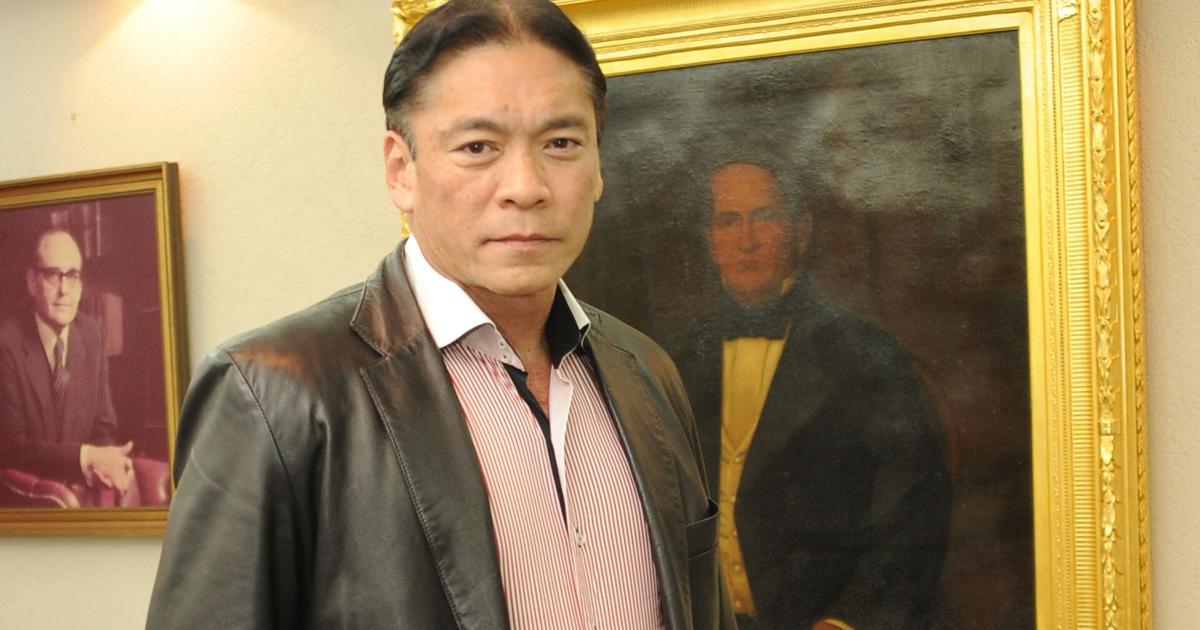
    Trinidad and Tobago’s industrial and manufacturing community is mourning the loss of one of its most prominent figures, Wayne Yip Choy, who died by suicide at his Westmoorings residence on Tuesday. Local law enforcement officials confirmed that preliminary investigations place the time of death around 2 p.m. local time.

    Yip Choy’s 40-plus year career left an indelible mark on the nation’s business landscape, starting with his first major appointment in 1976 as managing director of Sweetheart Cakes Ltd. The small bakery operation would eventually rebrand to become Kiss Baking Company Ltd, one of the most recognizable household food brands across the twin-island nation. Beyond the baking sector, he went on to lead the Caribbean Development Company in the same top executive role, and also served a term as president of the Trinidad and Tobago Manufacturers’ Association, the leading industry body representing the country’s production sector.

    Many industry observers point to his tenure at the helm of Angostura Holdings Ltd as the most high-profile chapter of his professional life. Yip Choy was brought in to lead the regional beverage and spirits conglomerate in 2009, stepping into the role immediately after the collapse of parent company CL Financial. At the time of his appointment, Angostura was saddled with massive unpaid debt and facing existential uncertainty, and Yip Choy was widely credited with steering the company through a successful financial turnaround that stabilized its operations and restored profitability.

    His time at Angostura ended abruptly in 2011, however, amid a public and acrimonious dispute over performance-based compensation. Yip Choy claimed he was owed a $20 million performance bonus tied to the company’s improved financial results, a payment that Angostura’s leadership refused to authorize. The disagreement escalated into a lengthy legal battle that ultimately reached the nation’s High Court, where Justice James Aboud ruled fully in Yip Choy’s favor, awarding him $28 million in total compensation at the conclusion of the proceedings.

    Outside of his core executive roles, Yip Choy also brought his decades of industry expertise to the boardrooms of two of the country’s leading construction materials firms, Readymix and Trinidad Cement Ltd, where he served as a board member for multiple terms. Tributes have begun to pour in from across Trinidad and Tobago’s business community this week, honoring Yip Choy’s decades of contributions to growing the nation’s manufacturing sector.

  • Woman bitten by dogs on Lady Chancellor

    Woman bitten by dogs on Lady Chancellor

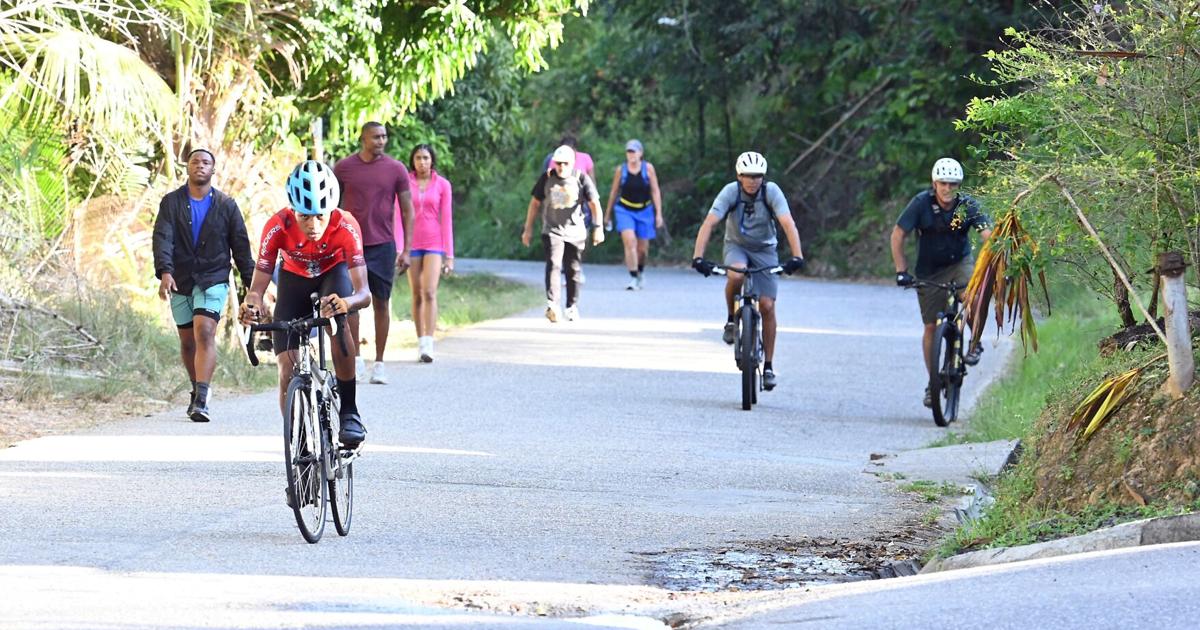
    Early yesterday morning, a female jogger was attacked and bitten by two dogs, widely reported to be pitbulls, on Lady Chancellor Hill – a popular recreational trail adjacent to Queen’s Park Savannah in Port of Spain, according to initial local reports.

    Law enforcement officials confirmed they have received informal notification of the incident, which unfolded at approximately 6 a.m., but as of press time, the victim has not yet lodged a formal complaint with the Belmont Police Station.

    In response to the attack, Superintendent Raymond Thom, head of the Port of Spain Police Division, ordered immediate stepped-up patrols on Lady Chancellor Hill. Thom also extended the enhanced security measures to other high-traffic outdoor exercise areas across Port of Spain, including Nelson Mandela Park and the broader Queen’s Park Savannah grounds. The move comes after months of repeated public complaints from recreational users about un-muzzled and untethered dogs roaming freely across these public spaces.

    When reporters from the Express visited the Lady Chancellor Hill trail yesterday afternoon, most regular joggers they spoke to said they were aware of the morning attack but had no plans to abandon the trail, noting it remains one of the safest and most accessible places for outdoor fitness in the capital.

    One couple who spoke to reporters said they learned of the attack shortly after it occurred, and drove up the hill specifically to check whether the aggressive dogs were still loose. “We were worried, so we drove up ahead of our walk to make sure the dogs weren’t here and the area was safe,” a woman in the couple explained. “But there will always be that lingering concern now, because this could happen to anyone at any time.”

    A local jogger who asked to only be identified by his initials TC said he is a dog lover, but believes owners of potentially dangerous breeds have a non-negotiable responsibility to keep their animals contained in public. “Dogs really are man’s best friend, but owners need to stay with their pets at all times and keep them leashed so they can control them,” he said. “We all get to enjoy these public spaces, so it’s up to owners to make sure their pets don’t put other visitors at risk.”

    The attack has brought renewed attention to the existing Dog Control Act enacted between 2013 and 2014, which outlines strict regulations for restricted breeds in Trinidad and Tobago. Under the legislation, six breeds classified as high-risk – including the American Pit Bull Terrier, American Staffordshire Terrier, American Bully, Dogo Argentino, Japanese Tosa and Fila Brasileiro – are required to be licensed, carry a minimum of $250,000 in insurance coverage per animal, and remain muzzled and leashed any time they are in public spaces.

    Owners who violate these rules by keeping unlicensed or unsecured restricted dogs face heavy penalties, ranging from fines of $50,000 to $100,000 to up to one year of imprisonment. If a restricted dog injures or kills a person, the animal’s owner is held fully legally liable for the outcome. The Act also grants police officers explicit authority to seize and impound any dog that is not kept in compliance with regulations. Seized dogs may be placed with a new responsible owner, transferred to a stray dog facility, or humanely euthanized by a licensed veterinarian if necessary.

  • PCA probes police shooting death

    PCA probes police shooting death

    An independent oversight body has launched a official investigation into the fatal shooting of 43-year-old Shakeel Smart by law enforcement officers that took place late Sunday night in the Cascade community of Trinidad. David West, director of the Police Complaints Authority (PCA), confirmed the ongoing enquiry to reporters this week, noting that Smart’s death marks the ninth fatal shooting involving police personnel in the country since the start of the calendar year.

    According to initial accounts from the Trinidad and Tobago Police Service, the incident unfolded just after 10 p.m. Sunday, when officers assigned to the Guard and Emergency Branch were conducting routine patrols along Cascade Main Road. During their patrol, the officers spotted a white Nissan AD Wagon carrying three male occupants that drew their attention. When the vehicle’s occupants noticed the police presence, the driver immediately accelerated away from the scene, triggering a high-speed pursuit that wound through local roads all the way to Hololo Mountain Road.

    Police officials stated that during the cross-community chase, individuals inside the fleeing vehicle fired gunshots at the pursuing officers, prompting the officers to return fire in response. The pursuit came to a halt close to a private villa along Hololo Mountain Road, when the driver lost control of the vehicle and crashed off the paved roadway. All three men exited the damaged vehicle immediately after the crash; two of the suspects managed to escape into the surrounding wooded terrain on foot, while Smart remained at the scene, having collapsed from his gunshot injuries.

    Emergency medical responders transported the wounded Smart to Port of Spain General Hospital, but medical staff pronounced him dead upon his arrival at the facility. Law enforcement teams launched an immediate manhunt for the two remaining at-large suspects, but as of the latest update, no arrests have been made and the two men remain at large. A forensic post-mortem examination, scheduled to determine the exact cause and manner of Smart’s death, is set to be conducted this week at the Forensic Science Centre located in Federation Park. The PCA’s independent investigation will examine whether the officers’ use of deadly force complied with official police protocols and national law.