作者: admin

  • SPL T20 Week 1: Titans lead, Edward hits century, Leatherbacks, Knights dominate

    SPL T20 Week 1: Titans lead, Edward hits century, Leatherbacks, Knights dominate

    The much-anticipated sixth iteration of the Saint Lucia Premier League T20 (SPL T20) launched last weekend, with five competitive matches held across two host venues to kick off the tournament. After the conclusion of the opening round of fixtures, Jade Mountain Soufriere Titans have claimed the top spot on the points table courtesy of a superior net run rate, with weeks of competition still ahead to shake up the rankings.

    The opening clash of the tournament unfolded on Friday evening at the iconic Mindoo Philip Park, where Dr Freezers South Castries Lions secured a five-wicket victory over the Babonneau Leatherbacks. Electing to bat first, Babonneau was held to a total of 128 runs off the full 20 overs, with disciplined bowling from ex-Babonneau player Larry Edward proving decisive—Edward claimed three wickets for just 15 runs to restrict the opponent’s scoring. Only two batters from Babonneau managed to surpass the 20-run mark, with Khan Elcock notching 37 runs and Johnnel Eugene adding 25.

    Even though South Castries Lions’ star players Andre Fletcher and Johnson Charles failed to deliver their expected impact, the side still pulled off a comfortable win, led by overseas recruit Daniel McDonald’s unbeaten top score of 39 runs.

    In the second match of the opening week, Jade Mountain Soufriere Titans delivered a dominant nine-wicket blowout against Mon Repos Credit Union Pioneers. Batting first, the Pioneers put up a competitive 164 runs for the loss of seven wickets, thanks to dangerous opening batter Sabbinus Emmanuel’s quickfire 51 off 33 deliveries, captain Keon Gaston’s explosive 38 from 17 balls, and 18 not out from Cody Lesmond.

    The Titans chased down the 165-run target in just 12.2 overs, powered by a match-winning 115-run opening partnership between Guyanese import Kevin Sinclair and Dwight Thomas. Thomas remained unbeaten on 54 at the close, while Sinclair bludgeoned 76 runs off only 26 deliveries, including seven towering sixes and five clinical fours. His spectacular performance earned him the Man of the Match award.

    The third fixture saw City Blasters secure a narrow 11-run win over Micoud Eagles in a tense, back-and-forth encounter. Batting first, City Blasters posted a solid total of 185 runs for 8 wickets, with Jaden Elibox top-scoring with 34 runs. Five of the side’s batters crossed the 20-run threshold, building the foundation for the competitive total. Micoud mounted a strong fightback, with Samuel Charles scoring 46 runs and Dominic Auguste adding 35, but the side ultimately fell short of the target, finishing on 174 runs for 7 wickets.

    The fourth match of the week brought an emphatic victory for Babonneau Leatherbacks, who thrashed Choiseul Credit Union Craft Masters by 141 runs. Batting first, Babonneau piled up a massive 253 runs for the loss of 4 wickets, led by Khan Elcock’s 79 runs, Shervon Joseph’s 65, and Qwaine Henry’s quick 49. In response, the Craft Masters were bowled out for just 112 runs, undone by Joshua Mann’s exceptional bowling figures of 6 wickets for 31 runs, supported by Elcock’s 3 wickets for 21 runs.

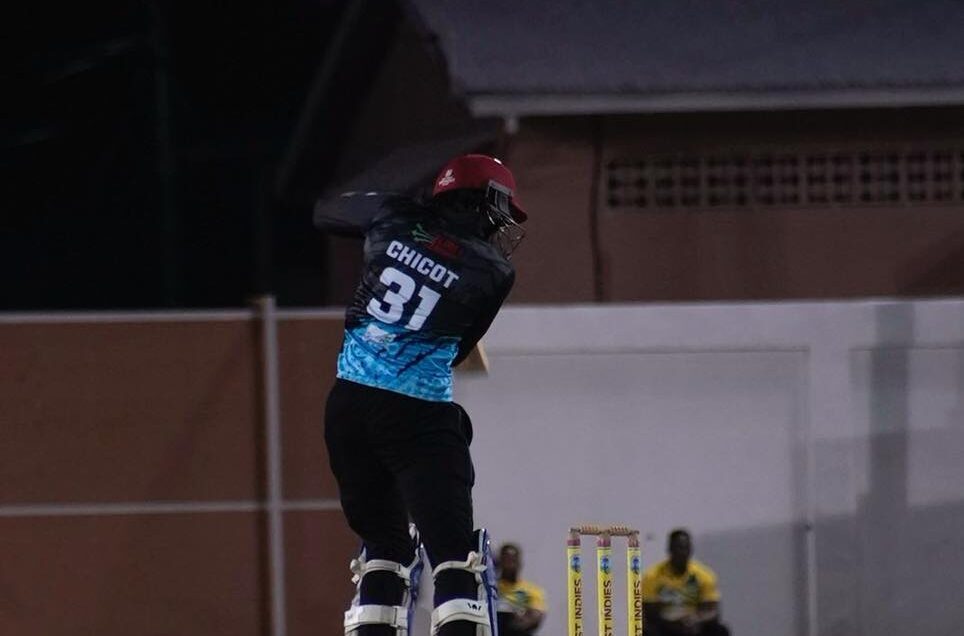
    The opening weekend of the tournament wrapped up with a convincing 88-run win for SAIL Gros Islet Knights over Mon Repos Pioneers. Gros Islet amassed an imposing total of 274 runs, headlined by the first century of the 2024 tournament: Tarrique Edward scored a blistering 111 runs off 53 deliveries, while Dillon Douglas added a rapid 40 off 16 balls to boost the total. Despite a valiant 58 runs from Pioneers captain Keon Gaston, Mon Repos could only reach 186 runs for 9 wickets at the close. Edward capped off a stellar all-round performance by picking up 3 wickets for 26 runs to complement his match-winning century.

    Action will resume this coming Tuesday for the second week of the tournament. South Castries Lions will face off against Gros Islet Knights at Mindoo Philip Park, while Babonneau Leatherbacks will take on league leaders Soufriere Titans at the Francis “Baba” Lastic Grounds. Both fixtures are scheduled to get underway at 7:30 PM local time.
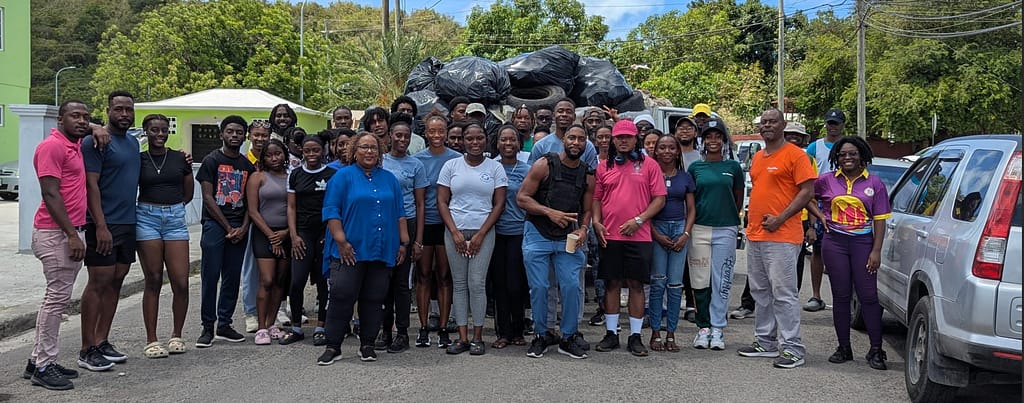

  • UWI FIC First Year Experience Programme Leads Community Clean Up, Collects More Than 4,000 Pounds of Garbage

    UWI FIC First Year Experience Programme Leads Community Clean Up, Collects More Than 4,000 Pounds of Garbage

    On April 12, 2025, The University of the West Indies (UWI) Five Islands Campus turned out over 100 participants for a landmark community-wide clean-up organized through its flagship First Year Experience Programme, pulling more than 4,000 pounds – equal to 2 metric tons – of waste from public spaces across the Five Islands region of Antigua and Barbuda.

    The cross-group collaboration brought together incoming first-year undergraduates, tenured and junior faculty members, campus administrative staff, local community residents, and corporate sponsors to rejuvenate high-traffic public areas. Volunteers split into coordinated teams to cover three key stretches of coastline and roadway: the corridor linking Pensioners Roundabout to Green Apple Cafe, the route from Royalton Antigua Resort’s back entrance to Green Apple Cafe, and the coastal stretch from Hawksbill Beach to Green Apple Cafe. This targeted coverage addressed areas popular with both locals and tourists that had accumulated excess waste over recent months.

    Campus leadership framed the event as far more than a one-off environmental action, positioning it as a concrete demonstration of the institution’s pledge to act as a responsible, embedded partner to the community that hosts its campus. The First Year Experience Programme, the framework behind the initiative, was designed specifically to ease new students’ transition into higher education, with core priorities spanning academic preparation, personal growth, and intentional cultivation of civic duty. Unlike traditional first-year orientation programming that focuses solely on on-campus adjustment, this model prioritizes experiential learning outside the lecture hall, pushing students to engage with pressing local social and environmental challenges from their very first semester.

    Rhajhel Brown, the programme’s coordinator at the Five Islands Campus, expanded on this educational mission in comments after the event. “The First Year Experience Programme is built around out-of-classroom learning, designed to help our new students adapt not just to the demands of university academics, but to the real-world challenges that shape our community today,” Brown explained. He also highlighted that the clean-up would not have achieved its large-scale impact without support from regional partners, naming Royalton Antigua, the Akhimo Group, the Rotaract Club of Antigua, Adoptacoastline, Green Apple Café, and the Governor General’s Deputy Sir Clare Roberts as key contributing collaborators.

    Senior campus administrators echoed Brown’s enthusiasm, emphasizing that the event reflects a long-term institutional commitment rather than a temporary public relations exercise. Dr. Camille Samuel, Campus Registrar, noted that the clean-up offers clear proof of the positive contribution the UWI Five Islands Campus makes to surrounding neighborhoods. “The Five Islands Campus has already left its mark on this community, and we hope our faculty, staff, and students will keep working to improve the place we call home,” Samuel said. She added that campus administration will continue allocating resources and support for future community engagement projects, framing the 2025 clean-up as one part of a sustained, ongoing effort to lift overall quality of life for residents of the Five Islands community and the wider nation of Antigua and Barbuda.

  • Clarke unfair dismissal claim may head to tribunal as conciliation talks collapse

    Clarke unfair dismissal claim may head to tribunal as conciliation talks collapse

    A high-profile employment dispute between one of Barbados’ most recognizable media personalities and leading local media network Starcom Network has moved one step forward without resolution, after a mandatory conciliation hearing before the Chief Labour Officer failed to bridge the two sides’ differences.

    Ronald “De Announcer” Clarke, a veteran calypsonian and former programme director of Starcom’s Voice of Barbados, was terminated from his role in November last year following an internal disciplinary hearing that found him guilty of gross misconduct connected to public comments he made about the network. Clarke has staunchly claimed his firing was unlawful and unfair, a position his legal team has formalized in labour proceedings.

    Speaking to local media outlet Barbados TODAY on Monday, Clarke’s senior counsel Hal Gollop outlined that Thursday’s conciliation meeting, which included legal representation for Starcom Network, did not produce a final agreement on the core disputed issues. Gollop explained that Clarke’s legal team tabled a formal settlement proposal rooted in their argument that the dismissal was unjust.

    A key plank of Gollop’s argument centers on the severance payment Starcom already issued to Clarke. “When you summarily dismiss an employee for gross misconduct, the only payment you are obligated to issue is outstanding vacation pay. Any amount beyond that is widely interpreted as an implicit admission that the dismissal was unfair, with the extra funds serving as partial compensation for damages caused by the unlawful termination,” Gollop explained. He added that the Employment Rights Act requires full compensation for workers found to have been unfairly dismissed, and that Clarke is entitled to that remedy.

    Gollop noted that Starcom’s legal team has committed to returning a response from the network’s board of directors within one week. If the two sides cannot reach a mutually acceptable settlement in that follow-up, Gollop confirmed he would file an official claim with the Employment Rights Tribunal (ERT) to have an independent body adjudicate the dispute.

    Clarke himself offered a brief, upbeat assessment of the conciliation process following Thursday’s meeting, telling reporters “I think it went well,” while declining to comment further and directing all additional questions to his legal team. Outside of the labour dispute, the veteran entertainer shared that he is already preparing to return to the Pic-o-de-Crop calypso competition for the 2026 Crop Over festival, performing under his iconic stage name “De Announcer”.

    The firing of Clarke last year sent shockwaves through Barbados’ media and entertainment communities. The termination letter, signed by Nation Group CEO Noel Wood (Nation Group is Starcom Network’s parent company), stated that the gross misconduct stemmed from comments Clarke made during a July 16 appearance on the Marcia Weekes Show, which streams publicly on YouTube.

    Clarke’s remarks addressed Starcom’s internal opposition to him performing his controversial 2025 hit calypso *National Carol Festival* in the Pic-o-de-Crop competition. Starcom’s internal investigation flagged three of the seven comments Clarke made during the interview as violations of the company’s Policies and Procedures Manual, branding the statements as false, malicious, and damaging to the network’s reputation.

    One of the cited statements from Clarke reads: “We have this fear of addressing what they call the elephant in the room… when you are in an arena, transparency and fact are an expectation of the people that support you, whether they listen to you, whether they spend money with you, whether they work for you. It’s hard to be in a situation where you see that is not being delivered.”

    Days after Clarke’s termination was announced, Starcom Network general manager Anthony Greene released a public statement pushing back on claims that the firing was tied to the content of Clarke’s calypso. Greene clarified that the termination followed the completion of a formal disciplinary process concluded on November 7, which was conducted in full compliance with the network’s internal protocols, Barbados’ national labour laws, and with legal representation for both parties throughout the process.

  • Students Manage Media as Equipment Handed Over to Barbuda Secondary School

    Students Manage Media as Equipment Handed Over to Barbuda Secondary School

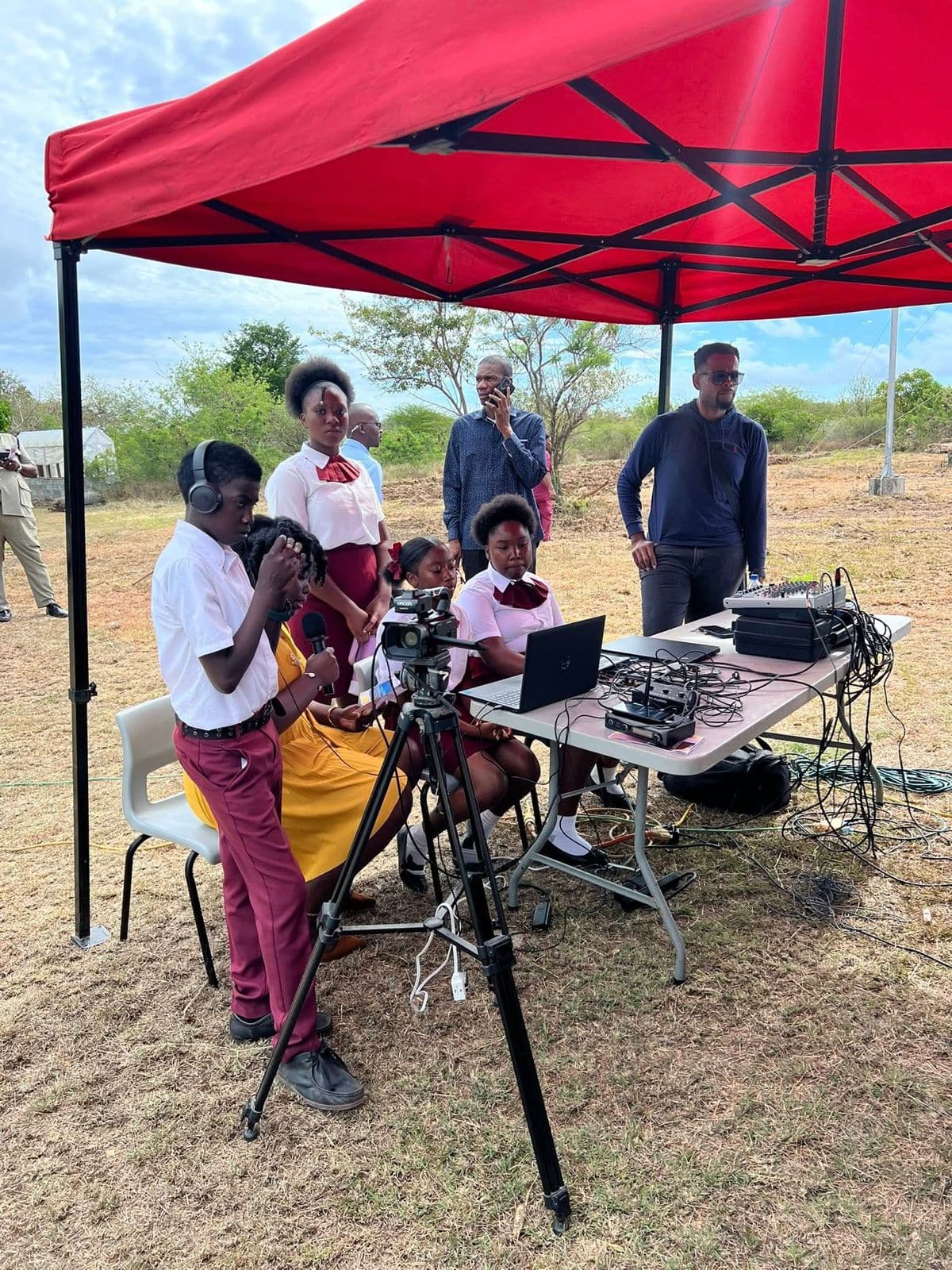
    At a recent equipment handover event held at Sir McChesney George Secondary School, students stepped into the spotlight by taking charge of all on-site media operations, turning a routine institutional ceremony into a dynamic hands-on learning opportunity. Rather than sidelining young people as passive attendees, event organizers intentionally integrated the student body into core operational roles, letting them put their communication, technical and collaborative abilities on full display.

    What makes this student-led management milestone particularly notable is that it demonstrates the versatile abilities young people build through school sports programmes – abilities that stretch far beyond athletic competition on the pitch or court. Education and sports officials who attended the event emphasized that embedding students in the event’s planning and execution gave them unparalleled real-world experience that cannot be replicated in a traditional textbook-only classroom setting.

    Officials further explained that intentional, practical involvement like this underscores the often-overlooked value of school sports initiatives. Beyond promoting physical fitness and team competition, these programmes cultivate a range of practical, transferable skills that serve students well in future academic pursuits and professional careers. Skills such as project coordination, media communication, problem-solving and cross-team collaboration, all fostered through participation in organized sports, proved critical to the students’ successful management of the handover ceremony’s media operations.

  • Americas’ Agriculture essential to global food security, transformation and resilience necessary, say IICA, IDB heads

    Americas’ Agriculture essential to global food security, transformation and resilience necessary, say IICA, IDB heads

    During a high-profile policy event hosted by the Inter-American Development Bank (IDB) in Washington D.C., Muhammad Ibrahim, director-general of the Inter-American Institute for Cooperation on Agriculture (IICA), delivered a stark warning that global food, energy and environmental security depends entirely on decisive action to modernize and strengthen the Americas’ agricultural sector. The event, which drew roughly 240 in-person and virtual attendees, generated lively, engaged discussion between leaders and stakeholders on the urgent need to reorient regional agricultural development for a era of growing global shocks.

    Beyond the formal presentation, Ibrahim held a closed working meeting with Pedro Martel, head of IDB’s Agriculture and Rural Development Division, where the two leaders mapped out a shared collaborative agenda for the region. Both officials centered their remarks on the outsized global importance of the Americas’ agricultural sector: the region stands as the world’s top net food exporter, accounting for more than one-fifth of total global food output. But behind this leading global position, Martel exposed a deep and persistent inequity: nearly 30 percent of the region’s rural population still struggles with chronic food insecurity, a gap that has widened amid growing global market volatility.

    Martel outlined decades of regional agricultural performance data collected by IDB, noting that while Latin America and the Caribbean saw solid agricultural productivity growth over the second half of the 20th century, productivity growth slowed dramatically between 2010 and 2020. He attributed this slowdown primarily to widespread gaps in technical efficiency across small and medium producer operations. “Our core challenge right now is to reignite productivity gains and growth, while simultaneously protecting the natural resources that our sector depends on,” Martel explained during the discussion.

    The dialogue also emphasized the complementary strengths of the two leading regional agricultural institutions, positioning them to tackle the sector’s most pressing challenges. IICA brings specialized technical expertise, cross-regional coordination capacity, and on-the-ground implementation experience across 34 member states, while IDB provides the large-scale financing tools needed to roll out large development initiatives across Latin America and the Caribbean.

    Their joint work program targets both near-term and long-term priorities. In the medium term, the two organizations will focus on addressing deep structural weaknesses across the sector, including gaps in food transport infrastructure, outdated logistics networks, lack of support for inclusive smallholder production systems, and persistent vulnerabilities in regional plant and animal health systems. Looking ahead to the next decade, both institutions have prioritized investment in the bioeconomy as a transformative pathway to rebuild rural production systems across the Western Hemisphere, balancing productivity growth with environmental sustainability.

    Ibrahim stressed that the region has an unprecedented opportunity to leverage its existing agricultural strength to lead global agrifood system transformation, but that this leadership is not a given. “IICA and the IDB have a unique opportunity to scale up our joint work and support member countries to build a more competitive and resilient productive base,” Ibrahim said. “The sheer scale, resources, and productive capacity of the Americas’ agriculture sector puts it in a position to lead the future of global agrifood systems. But this leadership will not happen automatically; it depends entirely on the bold decisions we make today.”

    Against the backdrop of ongoing geopolitical instability and post-pandemic market disruptions, Ibrahim argued that incremental, short-term policy fixes will not be enough to address the root vulnerabilities facing the sector. “Global agrifood systems are facing more frequent climate, geopolitical, logistical, and market shocks than ever before, and these events are increasingly simultaneous and interconnected,” he explained. “We cannot treat these shocks as isolated, one-off events. They are fundamentally redefining the conditions for production, trade, and food security across every region.”

    He also emphasized that these disruptions do not impact all stakeholders equally, with pre-existing inequalities magnifying harm for the most vulnerable producers and nations. “Impact and response capacity vary tremendously across the sector. Smallholder farmers suffer the most from shocks, and at the national level, technological gaps widen existing inequalities,” Ibrahim noted. “Countries that have advanced science and technology to boost productivity and resilience are in a far stronger position to absorb and respond to crises.” That is why IICA has centered its work on cross-border knowledge transfer, targeting support to the countries and producers that need it most, he added.

    One of the most critical structural vulnerabilities the discussion highlighted is the region’s heavy dependence on imported agricultural inputs, particularly fertilizers and energy. Ibrahim pointed out that even Brazil, one of the world’s largest agricultural exporters, imports more than 80 percent of the fertilizers it uses for domestic production. “Input costs make up a huge share of total agricultural expenses, and in fully mechanized production systems, they can account for as much as 70 percent of total operating costs,” Ibrahim explained. “Our current production model directly shapes how vulnerable our system is: the higher our dependence on imported strategic inputs, the more exposed we are to external price shocks and supply chain disruptions.”

    Ibrahim concluded by reaffirming that only deep structural transformation of the region’s agrifood systems can resolve these long-standing vulnerabilities. “By transforming the fundamental structure of our agrifood systems, we can cut structural vulnerabilities, boost overall productivity, and reduce our dependence on strategic external inputs,” he said. “This transformation will deliver tangible benefits for all: higher incomes for farming households, and more accessible, nutritious food for every community across the region.”

  • NOTICE: Section of Newgate Street Temporarily Closed for APUA Repiping; Businesses Remain Open

    NOTICE: Section of Newgate Street Temporarily Closed for APUA Repiping; Businesses Remain Open

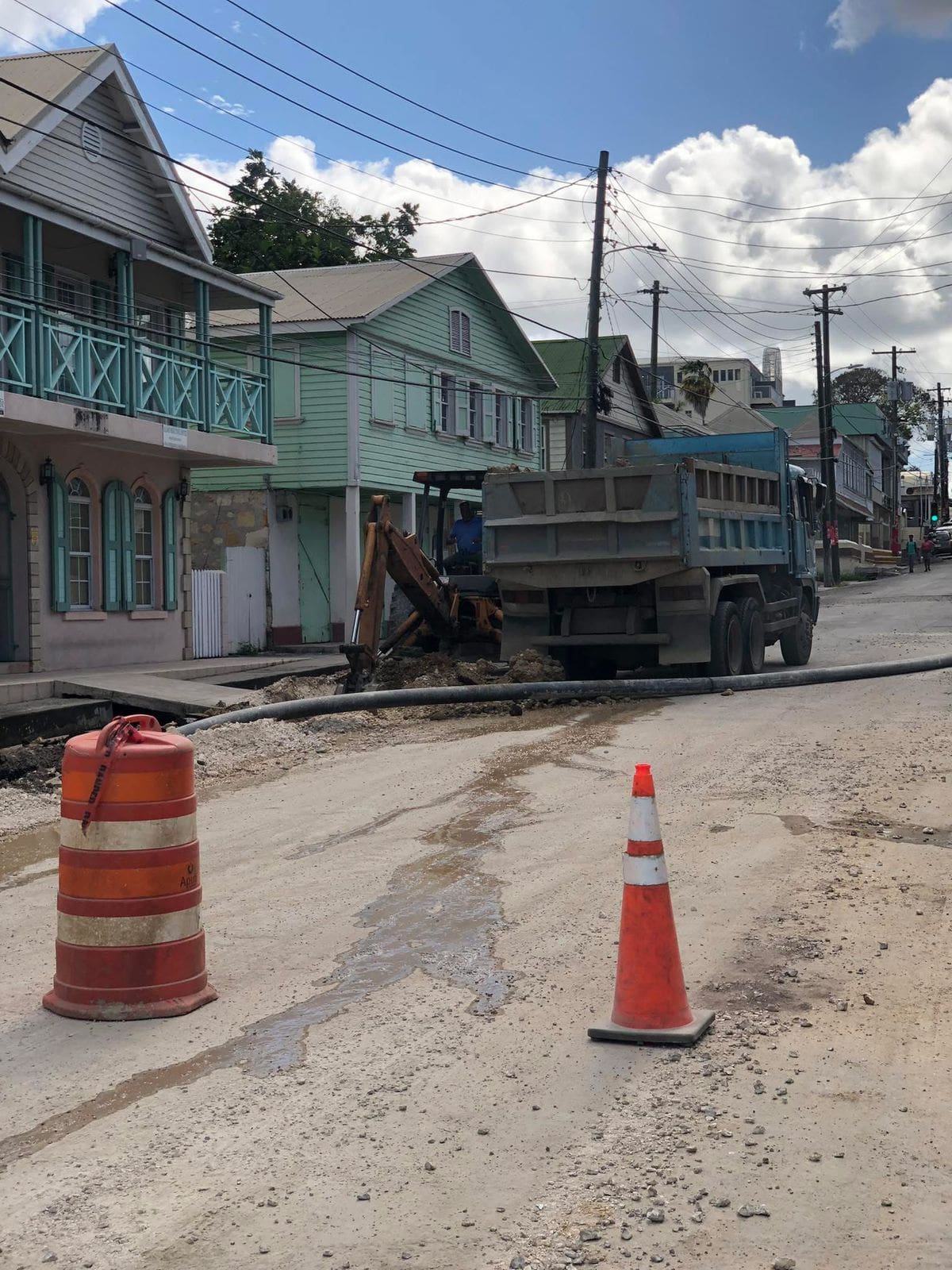
    A short stretch of Newgate Street will be shut down to all through traffic starting today, as crews from the Antigua Public Utilities Authority (APUA) carry out critical repiping work along the corridor. Local transportation officials have confirmed that despite the closure, all retail shops, restaurants, service providers and other commercial operations located along the affected section of the street will continue normal operating hours throughout the duration of the construction project. Commuters and recreational drivers who typically rely on this route to reach their destinations are being urged by transportation authorities to map out alternate paths in advance, and build extra time into their travel schedules to account for inevitable traffic congestion and delays stemming from the blocked roadway.

  • Afreximbank Signs Hosting Deal for ACTIF2026 in St Kitts and Nevis

    Afreximbank Signs Hosting Deal for ACTIF2026 in St Kitts and Nevis

    In a landmark move to strengthen cross-Atlantic economic collaboration, the African Export-Import Bank (Afreximbank) has formalized a hosting agreement with the government of St Kitts and Nevis to hold the fifth iteration of the AfriCaribbean Trade and Investment Forum (ACTIF2026) in mid-2026. The April 14 announcement cements both parties’ shared commitment to deepening long-standing partnerships between Africa and the Caribbean while unlocking new avenues for mutual trade growth and investment. Scheduled to run from July 29 to 31, 2026, the forum will convene at the St. Kitts Marriott Beach Resort, Casino & Spa in Basseterre, the federation’s capital.

    Dr. George Elombi, Afreximbank’s President and Board Chairman, emphasized that the 2026 forum will bring together stakeholders from across the Global African diaspora to address shared development hurdles and advance collective goals of economic self-determination and resilience. “At this fifth edition of ACTIF, we will once again reunite with our fellow Africans across the Atlantic to reflect on our shared development challenges and to recommit to the implementation of strategic programmes that will advance our collective aspiration for self-determination and self-reliance,” Elombi stated. “Through ACTIF2026, we will identify priority projects and programmes and dedicate ourselves to effective execution. This will be the pathway to our shared economic development.”

    For St Kitts and Nevis Prime Minister Dr. Terrance M Drew, hosting the high-profile gathering represents more than an honor—it signals the island nation’s growing role as a strategic investment gateway connecting Africa and the Caribbean. “We are not just a beautiful destination; we are a gateway for investment, a hub for enterprise, and a proud partner in the Renaissance of Africans,” Drew noted. He added that ACTIF2026 will act as a powerful catalyst for inclusive economic growth, generating tangible new opportunities for local workers and businesses across both regions that will deliver intergenerational benefits. “We look forward to welcoming delegates from global Africa to St Kitts and Nevis,” he said.

    Attendees can expect a packed schedule of collaborative programming, including expert-led panel discussions on advancing regional trade integration, targeted workshops to explore underutilized investment opportunities, dedicated networking sessions to connect cross-sector stakeholders, and deep dives into new initiatives designed to strengthen long-term Africa-Caribbean economic cooperation. As a high-level convening space, ACTIF2026 will bring together heads of state, government representatives, private investors, private sector leaders, development finance institutions, local entrepreneurs, and diaspora stakeholders to map out inclusive growth strategies for Global Africa amid ongoing global economic uncertainty.

    Organized by Afreximbank, ACTIF has grown into the leading global platform for mobilizing capital, forging transformative public-private partnerships, and accelerating economic integration between the African and Caribbean regions. The forum’s track record of delivering tangible impact is already clear: the 2025 iteration secured five landmark Caribbean trade and investment deals worth a combined $291.25 million across three nations, spanning sectors including trade and investment finance, corporate finance, project preparation, and export development.

    Afreximbank’s expanding footprint in the Caribbean underscores its long-term commitment to regional development. Since opening its regional office in Barbados two years prior to the 2026 agreement, the institution has approved more than $700 million in critical financing across CARICOM member states. This funding has supported a wide range of high-priority projects, including climate adaptation infrastructure in Saint Lucia, sports and tourism development in Barbados, small and medium enterprise financing in the Bahamas, tourism expansion in Grenada, and energy development initiatives in Suriname, among others.

  • Blue Economy Department Launches Ocean Month Art Competition for Young Children

    Blue Economy Department Launches Ocean Month Art Competition for Young Children

    To kick off official programming for Ocean Month 2026, the Department of the Blue Economy has unveiled a one-of-a-kind art competition open exclusively to children between the ages of 7 and 11, centered on ocean conservation and sustainable blue economy themes.

    Organized in partnership with the Ministry of Education’s Education Broadcasting Unit and a coalition of additional community and institutional partners, the competition invites young creative minds to translate their personal understanding of the blue economy into visual art. Participants can choose to create either murals or posters, with encouraged themes ranging from vibrant depictions of native marine life to illustrations of actionable ocean conservation practices.

    According to event organizers, the competition serves two core goals: to foster the creative talent of young people across the region, and to build broader public awareness of the critical role healthy oceans and marine ecosystems play in supporting communities and economic activity. Unlike many youth art competitions that end with a simple award ceremony, this initiative offers a unique lasting opportunity for the top participant: the winning entry will be converted into a full-size public mural that will be displayed in a community space, leaving a permanent legacy of the young artist’s vision and work.

    Submissions for the competition opened to participants on April 13, and the submission window will remain open through to May 7. Following a period of judging, the winner is set to be publicly announced on June 8, which aligns with the annual observance of World Ocean Day, tying the event to a global movement for ocean protection.

    Department officials are actively encouraging parents, primary school teachers, and guardians to guide and support children in entering the competition. They frame the event as more than an art contest: it is a targeted opportunity to nurture the next generation of creative thinkers, innovative problem-solvers, and dedicated environmental stewards who will carry forward the work of protecting the world’s oceans for decades to come.

  • Kia Kirwan to Represent Antigua and Barbuda Wednesday in Caribbean Queen Pageant in St. Maarten

    Kia Kirwan to Represent Antigua and Barbuda Wednesday in Caribbean Queen Pageant in St. Maarten

    The highly anticipated annual Caribbean Queen Pageant is just around the corner, set to kick off this Wednesday on the vibrant island of St. Maarten. One of the most anticipated participants stepping onto the competition stage is Kia Kirwan, who has been selected to carry the hopes and national pride of Antigua and Barbuda in this year’s contest.

    The Caribbean Queen Pageant has long served as a premier cultural event across the region, bringing together talented young women from dozens of Caribbean nations and territories to celebrate Caribbean heritage, leadership, and personal achievement. Beyond the traditional components of beauty competition, the event also highlights contestants’ community engagement work, cultural knowledge, and commitment to advancing social causes across the region.

    As the official representative for her country, Kirwan has spent months preparing for the pageant, engaging in local community outreach, practicing performance routines, and showcasing the unique cultural traditions of Antigua and Barbuda. Organizers of the event have reported strong pre-event turnout, with attendees from across the Caribbean and North America traveling to St. Maarten to watch the competition and celebrate regional culture. For Kirwan, the opportunity to compete is not just a personal milestone, but a chance to shine a global spotlight on the beauty, culture, and community spirit of the twin-island nation she represents.

  • LIVE on DNO from 10:30AM: Inter-Secondary Schools Debating Competition Finals

    LIVE on DNO from 10:30AM: Inter-Secondary Schools Debating Competition Finals

    The stage is set for an eagerly anticipated high-stakes debate grand final in Dominica, where two top secondary school institutions will clash over a pressing piece of proposed legislative reform that touches on the intersection of public accountability and sexual offense legislation. The 2026 competitive debate finals will pit Dominica Grammar School against Wesley High School, with competitors set to argue over the contentious proposition: that Dominica should amend its existing Sexual Offences Act to carve out a limited exception that permits publication of the identities of accused sexual offenders when such disclosure serves the broader public interest.

    This proposed legislative change has sparked significant public discussion across the island nation, as it balances two deeply important priorities: on one hand, the long-standing protection of privacy for accused individuals who are presumed innocent until proven guilty, and on the other hand, growing public demand for greater transparency around sexual offense cases that are of widespread community concern. Proponents of the amendment argue that limited disclosure can enable public awareness, help community members make informed safety decisions, and address gaps in the current legislation that often keep cases of public interest completely out of public view. Opponents, meanwhile, warn that even limited exceptions could risk damaging the reputations of innocent individuals before they have had their day in court, exacerbate the already significant stigma that surrounds sexual offense allegations, and undermine the fundamental principles of a fair justice system.

    For the two competing schools, the final represents the culmination of months of rigorous research, preparation and preliminary debate rounds, with student debaters tasked not only with mastering the nuances of Dominica’s existing legal framework but also with articulating compelling arguments that resonate with the core values of Dominican society. The debate comes amid growing regional and national conversations across the Caribbean about how to modernize sexual offense legislation to better reflect changing public expectations around transparency, while still upholding the fundamental rights that underpin democratic justice systems.

    Observers note that regardless of which school claims the championship title, the event itself shines a critical spotlight on an issue that continues to shape legal and social policy across Dominica, encouraging broader public engagement with legislative reform that has direct impacts on community safety and justice outcomes.