作者: admin

  • Guyana requests formal relationship with Meta/Facebook

    Guyana requests formal relationship with Meta/Facebook

    Guyana’s top law enforcement official, Attorney General Anil Nandlall, has confirmed he has submitted an official correspondence to Meta Platforms, the parent company of global social media giant Facebook, calling for the establishment of a dedicated formal institutional arrangement between the Guyanese government and the tech firm. While Nandlall has not released specific details about the terms of the requested partnership, he openly signaled that authorities in Guyana have growing discomfort with harmful content circulating on the platform.

    In public remarks, Nandlall emphasized the urgent need for closer, ongoing collaboration with major social media platforms, pointing to the rapid speed at which damaging content can spread online. “You need to have a constant engagement with a platform like Facebook. I mean, all of us here are, we are activists of Facebook and you see the destruction that it includes in one post. And by the time you get that post removed, the damage is already done. It’s already done,” he said.

    This push for a formal arrangement aligns with the Guyanese government’s recent crackdown on anti-government voices hosted on Meta’s platforms. Nandlall himself has already filed multiple defamation lawsuits against anti-government activists based outside of Guyana, and has pushed to extradite at least one of these critics back to the country to face criminal prosecution.

    Currently, the only formal tie between Guyana’s state apparatus and Meta is limited to a portal accessed by the Guyana Police Force via Interpol, Nandlall confirmed. While the company already operates a global portal that allows governments to submit formal requests for content removal and user data disclosure, Guyana has no dedicated government-wide relationship with the firm.

    Meta has not yet publicly responded to Nandlall’s new request, nor has it released aggregated data on government requests from Guyana for the full 2025 calendar year to date. The company’s most recent published data covers the first six months of 2025, during which the Guyanese government submitted three formal legal process requests and 13 emergency disclosure requests, targeting information on 13 separate user accounts.

    Looking back at prior years, the volume of government requests from Guyana has shifted significantly. In 2024, authorities submitted five emergency disclosure requests, three legal process requests, and sought data on nine user accounts. In 2023, the government submitted 32 legal process requests and 36 requests for user account data, totaling 68 requests that year.

    In response to queries about its processing of government requests, Meta has stated that it evaluates all incoming demands for user data and content removal in line with both local applicable laws and the company’s internal terms of service. “Each and every request we receive is carefully reviewed for legal sufficiency, and the company rejects or requires greater specificity on requests that appear overly broad or vague,” a Meta spokesperson said in a previous statement on its government request practices.

  • Oprichter en leadzanger van The Merrymen overleden

    Oprichter en leadzanger van The Merrymen overleden

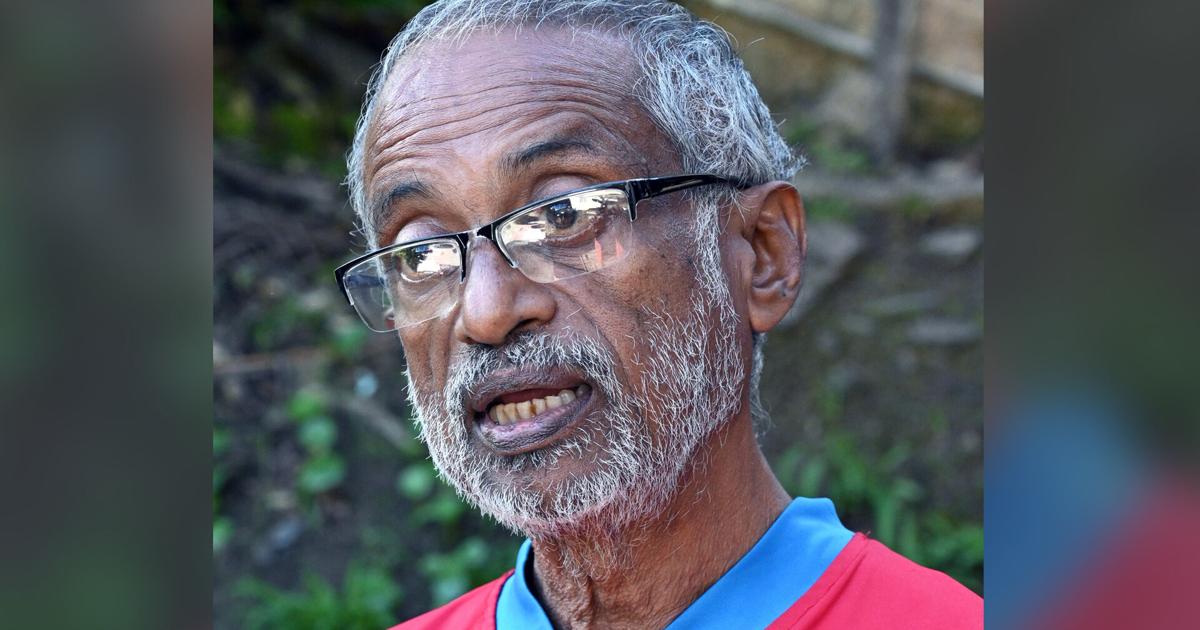
    Barbadian music icon Sir Charles Emile Straker, the founder and creative core of internationally celebrated Caribbean band The Merrymen, passed away on Friday, June 19, 2026, at his beloved Caribbean home island at the age of 90. Knighted for his contributions to culture in 2019, Straker leaves behind a decades-long legacy that reshaped global perceptions of Caribbean music, even amid longstanding industry controversy over his work.

    Straker launched his professional music career in 1961 in Canada. Just one year later, he returned to his native Barbados and co-founded The Merrymen alongside Robin Hunte, who played tenor guitar and electric mandolin, Stephen Fields on guitar and vocals, and Chris Gibbs on bass and vocals. Straker himself took on guitar and steelpan duties, serving as the band’s lead vocalist with his iconic golden voice and signature whistling, while also emerging as a prolific songwriter for the group. Shortly after the band’s founding, drummer Robert Foster joined to complete the original lineup. Today, only Stephen Fields survives from the 1962 founding roster, and he currently lives with dementia.

    As part of a generation of Caribbean artists bringing regional genres like calypso and soca to global audiences, The Merrymen faced sharp criticism from Black Caribbean musicians, who framed the group’s take on these Afro-Caribbean styles as too “white,” dismissing the band as so-called “wannabe calypsonians.”

    The most prominent critic was legendary Trinidadian calypsonian The Mighty Sparrow, who publicly condemned the global success The Merrymen found with their lighter, more accessible style of “white calypso” at a time when he and other Black calypsonians struggled to break through to international audiences. In 1967, Sparrow released his album *Spicy Sparrow*, which included a satirical track mocking The Merrymen’s take on calypso. Originally titled *Bajan Dolphus* (a reference to the demonym for Barbadians, which also describes the island’s local culture and language), the track was renamed *Sing Dolphus Sing* for its official release, with lyrics mocking the band’s popularity and credibility in the calypso space.

    Despite this controversy, The Merrymen racked up one international hit after another through the 1960s and 1970s, particularly in the United States. The band also earned a particularly devoted fanbase in Suriname, where generations of older listeners grew up hearing their tracks played repeatedly on national radio. Beloved hits that still remain cultural touchstones across the Caribbean and global diaspora include *Ring Ting Ting*, *Big Bamboo*, *Sugar Bum Bum*, *Archie*, and the fan-favorite melancholic standard *Yellow Bird*. The band developed a distinct sound they dubbed “Caribeat,” and toured across more than 100 countries, turning Barbados into a household name for music fans around the world.

    In a statement shared by the *Jamaica Observer* following Straker’s death, Barbadian Prime Minister Mia Mottley paid tribute to the legendary musician’s far-reaching impact. “He helped put Barbados on the map far beyond our shores,” Mottley said. “Long before hashtags, marketing campaigns, and global social platforms, Sir Emile and The Merrymen brought our island to the world: on hotel stages, in concert halls, on records that tourists carried home with them, and in the hearts of people who kept returning to Barbados because his music made them feel they already belonged here.”

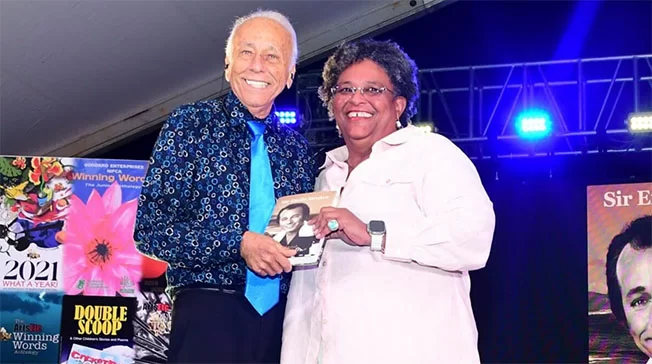
    Late in his career, in November 2023, Straker released his autobiography *My Island and Me*, edited by John Roett. The project was supported by the Barbados National Cultural Foundation and Prime Minister Mottley’s office, with Straker handing over the first published copy of the memoir to Mottley shortly after its completion.

  • Mark ‘hand-picked’ in 2024 although London was best candidate – Shallow

    Mark ‘hand-picked’ in 2024 although London was best candidate – Shallow

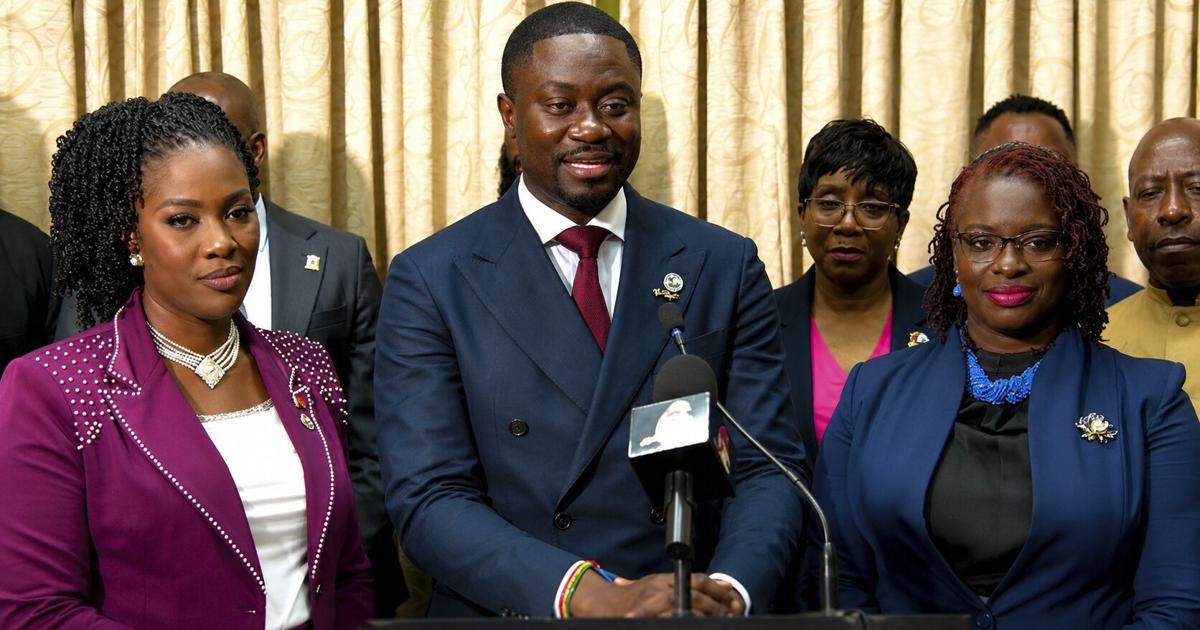
    In a striking disclosure that lifts the curtain on opaque political appointment practices in St. Vincent and the Grenadines’ tourism sector, new Tourism Minister Kishore Shallow has confirmed that the previous chief executive of the St. Vincent and the Grenadines Tourism Authority (SVGTA), Annette Mark, was handpicked for the role two years ago, overriding the outcome of a formal recruitment process that named Shafia London as the top candidate.

    Shallow made the revelation during a press briefing in Villa on Monday, where he formally announced London’s appointment as the new SVGTA CEO, effective July 1. London will serve an initial three-year term in the role, and Shallow framed her appointment as a deliberate step to rebuild public trust and reinstate transparency and merit-based hiring for senior public sector positions.

    Recounting the irregularities of the 2023 recruitment process, Shallow explained that the previous Unity Labour Party (ULP) government launched what was billed as a robust, comprehensive search for the SVGTA CEO role, led by an independent external recruitment panel that included experts from Trinidad. After evaluating all applicants, the panel unanimously ranked London as the leading candidate for the position. However, just days before a formal employment agreement was set to be finalized, the entire process was circumvented, and Mark was personally appointed to the role instead.

    Shallow told reporters, “Just before an agreement was reached, the process was, should I say, circumvented — was circumvented — and someone else was hand-picked. That’s the reality. I say it as is. I understand that the agency then, who I had a very lengthy discussion with, … did not favour the then selectee.” The minister did not name the specific officials who intervened to derail the process, nor did he elaborate on the reasoning behind the last-minute change. Political observers have pointed out that London was passed over at a time when her husband, Grenville Williams, served as Attorney General in the ULP administration, and later ran as a ULP candidate in the November 2025 general election.

    Mark, who previously served as Executive Director of Invest SVG — St. Vincent and the Grenadines’ foreign direct investment attraction agency — was appointed SVGTA CEO on August 12, 2024, when the ULP was still in power and Carlos James held the tourism minister portfolio. Her appointment was part of a high-profile leadership swap between two major state agencies: she replaced Glen Beache, a 10-year veteran SVGTA CEO and former ULP tourism minister, who took over Mark’s role at Invest SVG amid reported tensions between Beache and James.

    Following the November 2025 general election, which saw Shallow’s New Democratic Party (NDP) take power and Shallow personally defeat James in the North Leeward parliamentary constituency, Mark submitted her resignation from the SVGTA CEO post. Sources familiar with the situation confirm that Mark later attempted to withdraw her resignation, stating she was willing to work with the new minister, but the administration allowed her resignation to take effect without responding to her request to reverse it.

    When the SVGTA CEO position became vacant in December, Shallow said he moved quickly to revisit the results of the 2023 recruitment, reaching out to London to confirm if she was still interested in the role. “I engaged Ms London, ascertaining her availability and willingness, interest still in becoming the CEO. I will just say she responded favourably,” Shallow said, adding that London’s original ranking as the top candidate in the aborted process was a major factor in her selection. Even so, Shallow emphasized that London’s appointment went through an additional full round of vetting, consultations, and approvals to eliminate any hint of political favoritism, including reviews by the Attorney General Louise Mitchell, the SVGTA board chair Shelly Ann Fraser, and final approval from Prime Minister Dr. Godwin Friday, who gave the appointment his full backing.

    London brings an exceptional range of academic and professional credentials to the role. A 2003 national scholar, she is currently completing a doctorate in business administration, and holds a first-class honours bachelor’s degree from the University of the West Indies St. Augustine, a Master of Science in biochemical engineering from University College London, and a Master of Business Administration with distinction from UWI Cave Hill.

    Her career spans decades of leadership across private and public sector organizations in the Caribbean. She began her career as Executive Director of the SVG Chamber of Industry and Commerce, building expertise in local economic development, before moving into the private sector as marketing manager at St. Vincent Brewery Ltd. She rose through the ranks of regional beverage giant Banks Holdings Limited Group in Barbados, holding successive roles as group marketing manager, group commercial manager, and country head. As country head for AB InBev, the world’s largest brewer, she oversaw multi-market operations across Barbados, St. Vincent and the Grenadines, and Dominica, delivering consistent revenue growth and market expansion, a performance that earned her the title of Top ABI Business Leader in the Caribbean and Latin America in 2022. Most recently, she served as general manager with the SLU Group of Companies, and held leadership roles as first vice president of the Barbados Manufacturing Association and SVG’s technical representative to the Caribbean Private Sector Organization.

    Shallow praised London as a highly capable, sharp-minded Vincentian business and civic leader, noting that her deep expertise in administration, marketing, and regional business strategy will be an invaluable asset as SVG works to grow its tourism sector in an increasingly competitive global market. “I know some are going to want to know how we were able to land such a high-value professional, right? And that’s why I keep saying we are fortunate,” Shallow said, adding that London’s appointment corrects a longstanding injustice and delivers the outcome that a fair, merit-based process produced nearly two years ago.

  • Two Men Arrested After Police Seize Jewellery During Hatton Searches

    Two Men Arrested After Police Seize Jewellery During Hatton Searches

    St. John’s, Antigua and Barbuda – Law enforcement operations carried out across two separate residential locations in the Hatton district have left two individuals in police detention, as investigators continue to unpack an alleged stolen jewelry ring operating in the area. The coordinated early-morning raids, executed on June 22 by joint teams from the Royal Police Force of Antigua and Barbuda, marked a major milestone in ongoing probes into reports of widespread jewelry theft.

    According to official details released by the force’s Office of Strategic Communications on June 23, the operation kicked off just before 6 a.m. that Monday, when handpicked units from the Criminal Investigations Department Task Force and the Special Services Unit moved in simultaneously on the targeted properties. The multi-unit collaboration was structured to eliminate the risk of evidence being destroyed or moved between locations before searches could be completed.

    During the systematic searches of both premises, law enforcement personnel recovered a cache of evidence tied to the theft investigation. Among the items seized were an undisclosed quantity of suspected stolen jewelry, a personal mobile phone, and multiple other pieces of physical evidence that investigators say will help them build their case against the two detained men. Both suspects have been arrested on formal charges of receiving stolen property, a criminal offense under Antigua and Barbuda’s penal code.

    As of the latest official update, the investigation remains active and ongoing. Law enforcement officials have not yet released the identities of the two detainees, nor have they shared details on the total estimated value of the recovered jewelry, or whether additional arrests are expected as the probe progresses. The Royal Police Force has indicated that it will issue further public updates as new developments emerge in the case.

  • Legal minds explore age 18 limit for full social media access

    Legal minds explore age 18 limit for full social media access

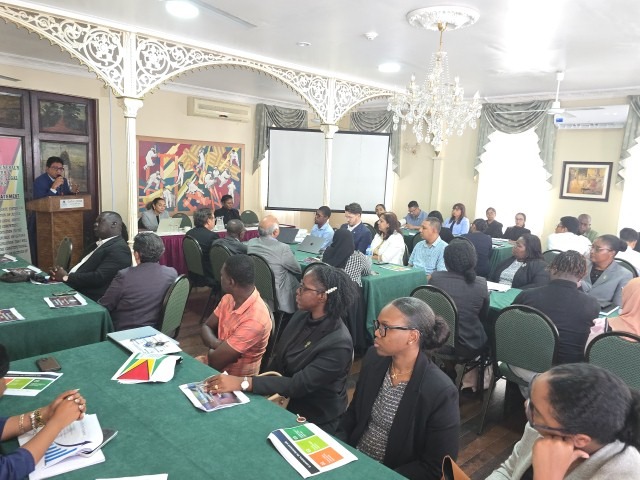
    On a recent consultation hosted by Guyana’s Attorney General’s Chambers focused on social media’s impact on children, top legal officials and regional stakeholders have laid out competing perspectives and actionable proposals for regulating underage access to major social platforms, kicking off a public drafting process for new national legislation.

    The gathering, which brought together senior judiciary figures, government legal advisors, private attorneys and Caribbean Community (CARICOM) representatives, centered on balancing two core priorities: protecting developing minors from well-documented harms of unregulated social media use, and avoiding unnecessary barriers to young people’s digital development in an increasingly connected global economy.

    Opening the evidence-based discussion, Chief Justice Navindra Singh made a forceful case for setting the minimum age of unmonitored independent social media access at 18, grounding his proposal in developmental neuroscience. Singh pointed to established research showing that the human brain does not complete its full structural and cognitive development until around age 25. For young people between 12 and 17, he explained, the brain is still maturing its socio-emotional regulation system, a period marked by heightened sensitivity to social reward, increased vulnerability to peer pressure and stress, and a greater tendency toward impulsive risk-taking. “That’s particularly one of the problems with social media,” Singh noted. “It pushes these children to do nonsense.”

    Beyond a hard age cap, Singh proposed that minors should be restricted to education-focused discussion platforms and structured communication tools linked to schools and parent-monitored learning networks, rather than open commercial social platforms such as TikTok. Attorney General Anil Nandlall, leader of the government’s law reform initiative, echoed the core principle that regulation must apply to all people under 18, clarifying that the incoming framework would not impose a one-size-fits-all foreign model, nor would it include intrusive home enforcement by police. Compliance, he emphasized, would rest with parents, elders and community guardians acting in the best interest of children.

    Deputy Chief Parliamentary Counsel Joann Bond framed the consultation as a response to a growing global movement toward minor digital protection, noting that Guyana is already obligated to safeguard children under its own constitution and the UN Convention on the Rights of the Child. She highlighted that other nations have already advanced binding regulation: the United Kingdom has implemented a ban on social media use for children under 16, Brazil has enacted a comprehensive Digital Statute for Children and Adolescents, and China operates a nationwide system of dedicated youth modes for digital platforms. Bond also outlined the range of harms that regulation seeks to address, including rising youth mental health concerns, impaired cognitive and interpersonal development, cyberbullying, online harassment, grooming and sexual exploitation, unfiltered exposure to violent or inappropriate content, and intentionally addictive platform design engineered to keep young users engaged for hours.

    Former Chancellor of the Judiciary Carl Singh added a key complementary proposal, arguing that legislative reform must be paired with widespread public education for parents. While regulation can set clear boundaries, he noted, “One of the things I believe that is important, which we can’t legislate on, but I would respectfully urge is an aggressive education and awareness program for parents.” He emphasized that not all digital platforms are inherently harmful, noting many offer meaningful educational benefits for young users, making targeted parental guidance more effective than blanket restrictions.

    Regional perspectives brought key practical challenges to the table. CARICOM General Counsel Justice Lisa Shoman pushed for inclusion of regional youth voices in the drafting process, calling for formal engagement with the Caribbean Regional Youth Council to secure youth buy-in. Shoman emphasized that protection must not come at the cost of young people’s ability to participate in the digital economy: “In terms of digital transformation and the digital economy that we must all develop… protecting our children and minors is protecting them, yes, but not at the expense of retarding their own development in this digital future that we are expecting them to be able to operate in.”

    Most critically, Shoman flagged a major structural barrier to enforcing any local regulation: the relatively small combined market size of Caribbean nations may give large global social media platforms little incentive to comply with individual national domestic laws. “Australia, the U.K., the U.S., China, these are markets. We in the Caribbean, I don’t even know if we, all of us together, would give rise to a market,” she said. But she added that this challenge is not insurmountable, urging coordinated collective action across CARICOM and knowledge sharing with nations that have already successfully implemented regulation. Shoman also echoed a proposal from prominent intellectual property attorney Teni Housty that called on local internet service providers to assist with enforcement, by blocking access to restricted content within Guyana’s jurisdictional borders. Housty noted that platforms already routinely geoblock content based on national jurisdiction using IP address tracking, making this a feasible first step toward enforcement. Nandlall confirmed that global platform operators will be consulted as the legislation develops, and Shoman added that framing regulation as a child protection measure can help build goodwill from platforms eager to demonstrate corporate social responsibility.

    Enforcement mechanisms were further debated by other legal experts. Government consultant Attorney Darshan Ramdhani proposed that regulations require large social media platforms to maintain a registered physical office within Guyana, making them legally vulnerable to domestic service of process and enforcement action. Meaningful penalties, including content suspension and full platform blocking, would need to be written into law to ensure compliance, Ramdhani argued, a point Nandlall acknowledged as a critical component of upcoming legal policy.

    Stakeholders also pushed for flexibility in setting age limits. Attorney Emily Dodson proposed that the University of Guyana conduct a national public survey to gauge majority public support for a regulatory age, ensuring the final law reflects public priorities. Retired Justice Kenneth Benjamin, head of the University of Guyana’s Department of Law, urged against a rigid “carte blanche” age ban, noting that children mature at different paces, and many academically advanced 16- and 17-year-olds already access higher education and rely on digital tools for their studies. He called for the law to include targeted exceptions for younger mature users.

    As the consultation concluded, Nandlall confirmed that once an initial draft of the legislation is completed, a second round of public consultation with the legal profession and broader stakeholders will be held before the bill is finalized.

  • Joshua’s father held

    Joshua’s father held

    A grieving Trinidadian father, Christopher Samaroo, whose son Joshua was killed in a police-involved shooting earlier this year, has been taken into custody under national emergency regulations after voluntarily contacting police to clear up misrepresented comments he made in a public radio interview.

    Joshua Samaroo died on January 20 following a confrontation with law enforcement officers in St Augustine. Following his death, Joshua’s common-law wife Kaia Sealy has been hit with multiple criminal charges, including manslaughter, three counts of shooting with intent to cause grievous bodily harm, and additional related offenses. On Father’s Day, Christopher Samaroo joined an i95.5FM radio program to talk about his months-long experience of grief after losing his son. The discussion also included Ronald “Crab” Cabrera, who was still mourning the murder of his 12-year-old daughter Mercedez Layne.

    During the emotional interview, Samaroo opened up about his frustration with the circumstances of his son’s shooting and shared that he had little confidence that the ongoing legal process would deliver a fair outcome. Some of his critical remarks directed at law enforcement were clipped and shared widely across social media, cutting out key surrounding context from the full conversation. The radio program’s host intervened shortly after Samaroo made the comments in question, and only the truncated segment was circulated online.

    Sensing growing concern over the misrepresented clips, Samaroo chose to voluntarily meet with police to clarify what he actually said, accompanied by his defense attorney Aaron Lewis. According to Lewis, the pair first arrived at Port of Spain’s Central Police Station around 5:30 p.m. on the day of the arrest, where Samaroo spent 40 minutes answering officers’ questions about the circulating statements. Lewis said Central Police Station officers told the pair they had no reports filed against Samaroo connected to the comments and no existing investigation into his remarks.

    After leaving Central Police Station, Samaroo and Lewis received word from family members that a specialized police unit had visited the family’s Maraval home to look for Samaroo. The pair then traveled to Maraval Police Station to follow up, but officers there claimed to have no information about any warrant for Samaroo or any visit to his residence. They then moved on to St Clair Police Station, where officers from the Criminal Investigations Department approached Samaroo and informed him he was officially the target of an investigation.

    Samaroo was formally cautioned and detained under Regulation 11 of the country’s Emergency Powers Regulations, the legal provision outlined in Legal Notice No 40. This regulation bans any action intended to sway public opinion in a way that could harm public safety, as well as any possession of materials or actions that support such an effort.

    Lewis decried the arrest as a deeply unfair and unfortunate outcome, emphasizing that his client’s full remarks had been deliberately twisted and stripped of context online. “His words were twisted in the manner in which they were presented. He made a report concerning what he actually said, and what was circulated was cut short and does not reflect the entirety of his statement,” Lewis told local outlet the Express just minutes after Samaroo was taken into custody.

    The attorney added that the arrest has worsened the severe emotional distress Samaroo has already endured since his son’s death. “To be cautioned and arrested for something like that, taking into consideration what he is going through with the loss of his son, is traumatic,” Lewis said. He noted that while Samaroo had braced for the possibility of police action, the actual experience of being taken into custody was far more overwhelming, particularly amid the ongoing state of emergency that grants authorities expanded power. “It is a serious matter,” Lewis added.

    As of the night of the arrest, law enforcement officials had not released any public details about the specific allegations against Samaroo or the full scope of the investigation. Before he was detained, Samaroo himself had pushed back against the misrepresented clips, confirming that the online version cut off key portions of his full remarks. “That is not totally what I said. They caught me halfway through. The whole thing was missing parts,” he said, adding that the circulating snippets failed to capture the full context of his comments about his son’s death and his grief.

  • THA wants $4.12 billion for 2026-2027 budget

    THA wants $4.12 billion for 2026-2027 budget

    In a formal presentation delivered to the Assembly Chamber in Scarborough on Tuesday, Tobago House of Assembly (THA) Finance Secretary Petal-Ann Roberts unveiled the body’s requested $4.12 billion expenditure budget for the 2027 fiscal year, which runs from October 1, 2026 to September 30, 2027. Framed under the guiding theme “Results Based Governance, A Pathway to Prosperity”, the budget proposal breaks down total requested spending into two core buckets: $3.03 billion allocated to ongoing recurrent operations, and $1.09 billion earmarked for targeted development programming, including a $43.35 million line item for the Community-Based Environmental Protection and Enhancement Programme (CEPEP).

    Roberts noted that the total request is calculated as a 6.6% share of Trinidad and Tobago’s projected $62.16 billion national budget for the period — a proportional allocation equal to just $6.60 of every $100 in national planned spending, matching the THA’s share in the current 2026 fiscal cycle. A line-by-line breakdown of the recurrent expenditure budget reveals that the Division of Health and Wellness has secured the largest single allocation, requesting $1.03 billion to support public health services across the island. Other major allocations include $519.60 million for the Division of Education, Skills and Innovation, $343.99 million for the Division of Public Infrastructure and Transportation, $193.28 million for the Division of Tourism, Antiquities and Creative Industries, and $181.94 million for the Office of the Chief Secretary, with all recurrent expenditure line items summing exactly to the $3.03 billion total.

    Breaking down the components of recurrent spending, Roberts reported that $805.52 million is allocated to personnel costs, $935.57 million covers goods and services, $67.95 million supports minor equipment purchases, and $1.22 billion goes toward current transfers and subsidies for public services.

    In a key policy shift, the budget restructures two long-running public employment and community development programs. The existing Unemployment Relief Programme (URP) will be rebranded and relocated as a new initiative under the Division of Public Infrastructure and Transportation, renamed the Programme for Infrastructure Upgrade in Urban and Rural Communities (IUURC), with an allocated $91.9 million in 2027 funding. Meanwhile, CEPEP has been realigned to the Division of Food Security, where its workforce will be leveraged to support growth and transformation of the island’s food production sector, retaining its $43.35 million approved budget.

    Beyond spending allocations, Roberts used the budget presentation to call attention to a long-standing fiscal dispute between the THA and the central national government. She pointed out that the THA’s officially recorded total annual tax revenue of $220.5 million, collected via existing national revenue and tax administration systems, significantly undercounts the actual tax revenue generated by economic activity within Tobago. A large share of revenue generated locally in Tobago is currently collected by tax authorities based in Trinidad, a practice that Roberts says violates Section 49 of the THA Act 40 of 1996, the legislation governing the autonomous body’s authority.

    Roberts emphasized that the only permanent solution to this decades-long fiscal inequity is the full completion of the Tobago internal self-government project, which would strengthen the THA’s legislative and enforcement authority to manage its own revenue streams in line with existing legal mandates.

  • US Navy SEALs to help fight crime

    US Navy SEALs to help fight crime

    During a phone interview with local outlet the Express while visiting the United States, Trinidad and Tobago Prime Minister Kamla Persad-Bissessar has outlined a sweeping expansion of bilateral security cooperation with Washington, aimed at tightening border control, curbing drug trafficking, and dismantling organized crime across the twin-island nation.

    Persad-Bissessar, who is in the U.S. to attend the funeral of her brother-in-law Michael L Ahamad and will return to Trinidad and Tobago tomorrow, with Works and Infrastructure Minister Jearlean John serving as acting Prime Minister in her absence, emphasized that the current government has reversed the security failures of the previous People’s National Movement (PNM) administration. She claimed that under her leadership, national borders are now more tightly controlled, additional Coast Guard vessels patrol territorial waters daily, and the national coastal radar system is fully operational – a stark contrast to conditions under the former government, which she accuses of having left borders porous for criminal networks.

    The Prime Minister confirmed that in the coming months, Trinidad and Tobago will receive additional maritime patrol vessels from the United States to boost coastal security. Beyond equipment support, U.S. military and intelligence agencies are ramping up their on-the-ground presence to support local anti-crime operations. Currently, advance elements of U.S. Navy SEAL teams are already in the country coordinating logistics for a larger upcoming deployment. As the U.S. military’s elite special operations force, named for their capability to operate across sea, air and land domains, these SEAL personnel will provide specialized training and operational support to the Trinidad and Tobago Coast Guard and Defence Force, focusing on border protection, drug interdiction, and internal security operations.

    While official data received regularly by the National Security Council, which Persad-Bissessar chairs, shows a measurable drop in serious violent crime across the country, and the Trinidad and Tobago Police Service (TTPS) has successfully disrupted multiple gang operations, the Prime Minister acknowledged that persistent security challenges remain. Drug shipments originating in South America continue to flow into the country through unpatrolled coastal areas of southern, southwestern, and central Trinidad. The coastline stretching from Caroni to Marabella, particularly its dense mangrove regions and informal squatter settlements, remains a high-risk smuggling corridor. Persad-Bissessar noted that these squatter communities are deeply infiltrated by criminal gangs, creating safe havens for illicit activity. Beyond transnational drug trafficking, the nation is also grappling with rising petty crime committed by non-gang-affiliated ordinary citizens, alongside ongoing issues of financial fraud and domestic violence. She explained that decades of unpunished lawbreaking have eroded social norms, leading some normally law-abiding residents to commit minor offenses, creating a gradual slide toward broader lawlessness.

    In a surprising endorsement, Persad-Bissessar awarded Police Commissioner Allister Guevarro an “A” grade for his performance over his first year leading the TTPS, noting his progress in targeting entrenched criminal groups while acknowledging that fully dismantling long-established community gangs will require years of sustained effort.

    On countering transnational financial crime, Persad-Bissessar highlighted critical intelligence support from U.S. agencies, which have identified individuals, business owners, and banking employees linked to cartel drug trafficking and money laundering operations who have moved billions of U.S. dollars out of the country illicitly for years. U.S. authorities have already begun punitive action against these networks, restricting their access to U.S. territory and the American financial system. The U.S. is also supporting upgrades to both physical and digital security infrastructure at Trinidad and Tobago’s major airports and seaports to strengthen border screening.

    Persad-Bissessar criticized the former PNM administration for rejecting the full package of U.S. security assistance that was already available to them, accusing the previous government of intentionally leaving borders and ports open to allow traffickers to flood the country with illegal narcotics and weapons.

    Looking ahead, the government plans to expand its holistic anti-crime strategy with new legislative measures and increased human resources. To crack down on white-collar crime and the financial networks backing drug trafficking and gang activity, the government is actively recruiting new staff for the understaffed Inland Revenue division, which previously operated at only 25% of its authorized workforce. The division is also receiving upgrades to its tax administration technology, boosting the state’s ability to monitor and investigate illicit financial activity.

  • REGION FACES CHALLENGES

    REGION FACES CHALLENGES

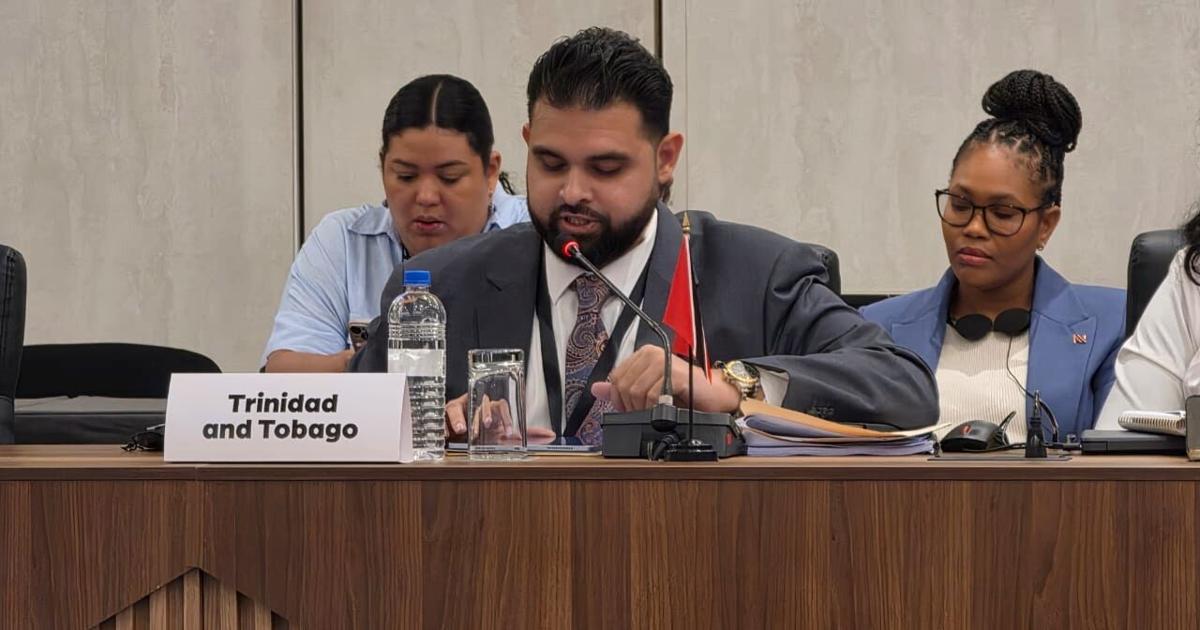
    Speaking at a high-level private sector dialogue hosted alongside the 56th Organisation of American States General Assembly in Panama on Sunday, Trinidad and Tobago Government Minister Nicholas Morris has issued a urgent call for systemic reforms to how Caribbean nations access development financing, warning the region’s most pressing challenges cannot be resolved by individual nations alone and demand coordinated regional collaboration backed by consistent, reliable funding.

    Against a backdrop of rising global geopolitical and economic fragmentation, Morris, who serves in the Office of the Prime Minister, emphasized that multilateral cooperation remains the most effective pathway for small island states to advance their long-term development objectives. His remarks were delivered during a dedicated strategic session focused on multilateralism as a collective response to global crises, and the strategic role of regional bodies in turning discussion into tangible action for the Greater Caribbean.

    Morris outlined that the ongoing dialogue reinforced just how critical multilateral institutions and collective action are, particularly as Caribbean countries navigate mounting economic and social strain. He stressed that policy conversations can no longer stop at reflection — tangible, actionable progress is needed immediately, especially when it comes to development resourcing.

    The minister painted a clear picture of overlapping, interconnected challenges facing the Caribbean region: extreme climate vulnerability, persistent food and energy insecurity, rapidly rising sovereign debt levels, and growing threats from transnational organized crime. He also drew attention to the ongoing risk of de-risking by large international financial institutions, a practice that cuts off smaller Caribbean economies from critical global banking and financial services, further stifling growth.

    According to Morris, the combination of these overlapping challenges has rendered traditional development financing frameworks obsolete, leaving outdated mechanisms unable to meet the region’s current needs. “The central challenge is not only the availability of financing, but its accessibility, predictability, and alignment with regional priorities,” he explained.

    He added that Caribbean nations already operate with severely constrained fiscal space, leaving them disproportionately exposed to external economic shocks and destructive natural disasters that can erase years of development progress in days. As a result, entirely new, innovative approaches to resourcing are required to build regional resilience and advance inclusive sustainable development across the Caribbean.

    Morris called for far greater mobilization of blended and innovative financing instruments to tackle the region’s development gaps. He argued that deeper, more effective partnerships with global development finance institutions are essential, alongside expanded access to concessional financing for the region’s most vulnerable economies. The minister stressed that development financing frameworks must be adapted to reflect the unique realities small island developing states face, noting that many Caribbean nations are classified as middle-income countries despite facing extreme climate and economic vulnerabilities that outpace those of many lower-income nations.

    His remarks echo longstanding grievances from Caribbean governments, who have repeatedly argued that traditional eligibility criteria for concessional funding lock nations out of critical support even as their development challenges grow more severe.

    Morris also turned attention to the need for institutional evolution within the Association of Caribbean States (ACS), arguing the organization must transition from its current role as a primarily consultative forum to a functional mechanism that can coordinate tangible cross-border action.

    “It is precisely in this context that the ACS must be positioned not merely as a consultative body but as a genuine instrument of coordinated regional action,” he said. Morris argued the ACS is uniquely positioned to take a leading role in coordinating and attracting financing for high-impact regional projects, identifying priority areas including cross-border infrastructure development, climate adaptation initiatives, digital transformation programs, and expanded investment in the blue economy. He suggested the organization could serve as a practical convening platform that brings together national governments, multilateral development institutions, and international investors around shared, actionable regional development objectives.

    The minister also highlighted the critical importance of deepening strategic relationships with non-traditional international partners that can bring new investment capital and innovative development financing models to the region. He welcomed the participation of senior delegates from the United Arab Emirates, the Gulf Cooperation Council, and the OECD Development Centre at the dialogue, noting their presence signals growing interest in strategic partnerships beyond the region’s traditional development collaborators. Morris noted that these new partnerships can unlock unprecedented financing and investment opportunities across the Greater Caribbean, pointing to Trinidad and Tobago’s existing bilateral engagement with the United Arab Emirates as a working example of the benefits these relationships can deliver.

    While underscoring the foundational value of regional cooperation and strategic planning, Morris emphasized that accessible, adequate financing remains the make-or-break factor for delivering on regional development goals. “Without adequate and accessible financing, even the most well-designed regional strategies risk remaining aspirational,” he warned.

    Closing his remarks, Morris expressed Trinidad and Tobago’s gratitude for the longstanding support the country and region have received from international development partners, and reaffirmed the country’s commitment to expanding and deepening these strategic relationships. He said the Trinidad and Tobago government remains focused on strengthening and diversifying regional and global partnerships as part of broader efforts to accelerate inclusive, sustainable development across the entire Greater Caribbean.

  • Family pleads for help after fire

    Family pleads for help after fire

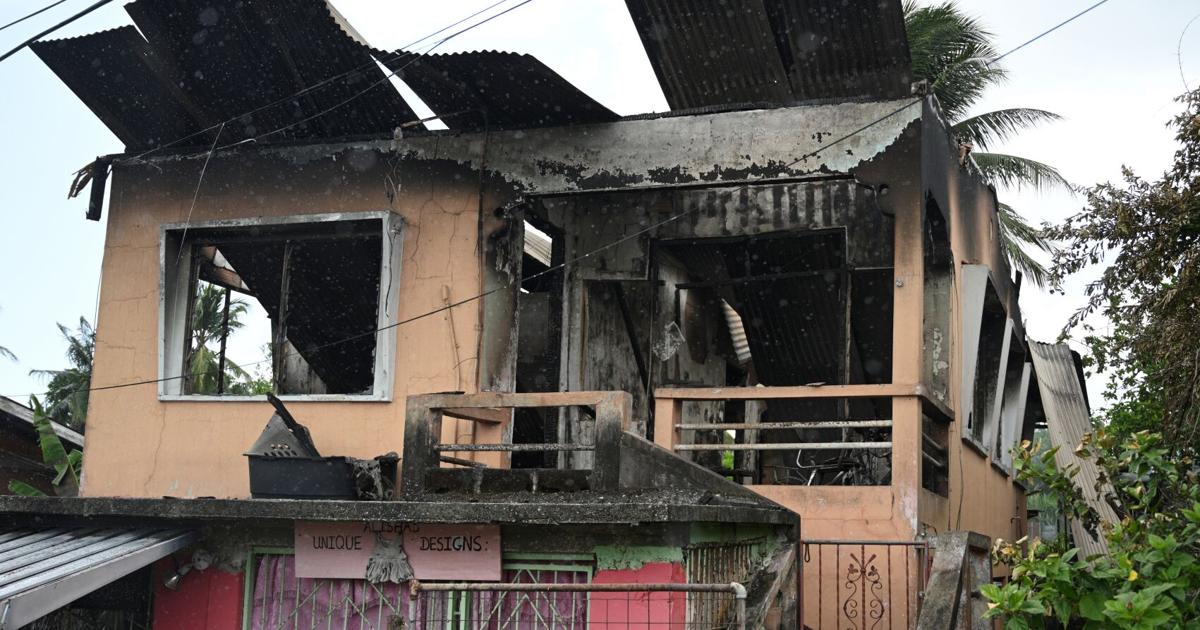
    A devastating fast-moving blaze has left a family of six displaced and with no personal possessions after destroying their two-storey residence in La Romaine, Trinidad and Tobago, this Sunday, prompting a public call for urgent assistance to help the group rebuild their lives. The inferno quickly tore through the mixed wood-and-concrete home located on Lucky Street Extension, overwhelming desperate, immediate efforts by nearby neighbors to contain the fire and save the property before emergency crews arrived.

    The home housed two family groups across its floors: Aaliyah Small, 25, shared the ground floor with her mother Alisha Mohammed, while Mohammed’s 35-year-old sister Derecia Christopher, Christopher’s three young children, and Christopher’s fiancé lived in the upper-level apartment. According to the family’s timeline, Christopher and her household locked their upper floor and left the property around 7:30 a.m. on the day of the fire. Roughly two hours later, Mohammed and Small, who were on the ground floor, noticed unusual noise coming from the empty upper apartment. Upon investigation, they discovered the space was already engulfed in flames.

    Neighbors spotted thick smoke and bright flames billowing from the structure almost immediately, and rushed across to help the family evacuate and battle the blaze, but the fire spread too quickly through the building’s wooden framing. Small recalled the chaotic scene when local media visited the fire-ravaged site the following day, saying “I ran outside when I saw smoke at the top of the house, the roof was engulfed in flames. Everything started to collapse inside the house. The neighbours came across and tried to help us. They even wet the dogs to protect them from the heat. We tried to move the car out of harm’s way, but we couldn’t get it out in time.”

    Preliminary investigations into the cause of the fire point to an electrical fault as the most likely source, though official probes are still ongoing to confirm the origin. Remarkably, the entire family escaped the disaster without injury: all residents who had been on the property got out safely before the structure collapsed, and the upper-floor household was already out when the fire broke out, a fact local officials have highlighted as a small blessing amid the tragedy.

    Local Government Councillor Raven Ramsawak was among the first officials to respond to the family after the fire, visiting the site to deliver immediate emergency aid including non-perishable food, bottled water, and other basic necessities, while also arranging temporary shelter for the displaced family. Speaking to reporters, Ramsawak emphasized that while the material loss was total, the outcome could have been far worse, noting “Thankfully, no one was hurt nor did anyone lose a loved one. Those who were home escaped without injury. Those in the upper floor were not at home, and we’re grateful for that as the fire started near the electrical wires, which quickly spread onto the roof that became engulfed in the flames.”

    To expand support beyond emergency aid, Ramsawak has shared a formal appeal for public donations via his official Facebook page, outlining exactly what the family needs to get through the coming weeks. The requested items include both cooked and uncooked food, general groceries, clothing for adults and children (two five-year-olds and one ten-year-old), basic over-the-counter medication, and sanitary products. Members of the public who wish to donate or offer any other form of assistance can contact Ramsawak’s office at 320-0325, or reach family members directly at 731-7259 (Small) and 334-5582 (Christopher).

    Photographs from the scene show Small pulling a single damaged bicycle from the charred rubble of the home — the only personal item the family has managed to recover from the blaze, underscoring the total loss the group has suffered.