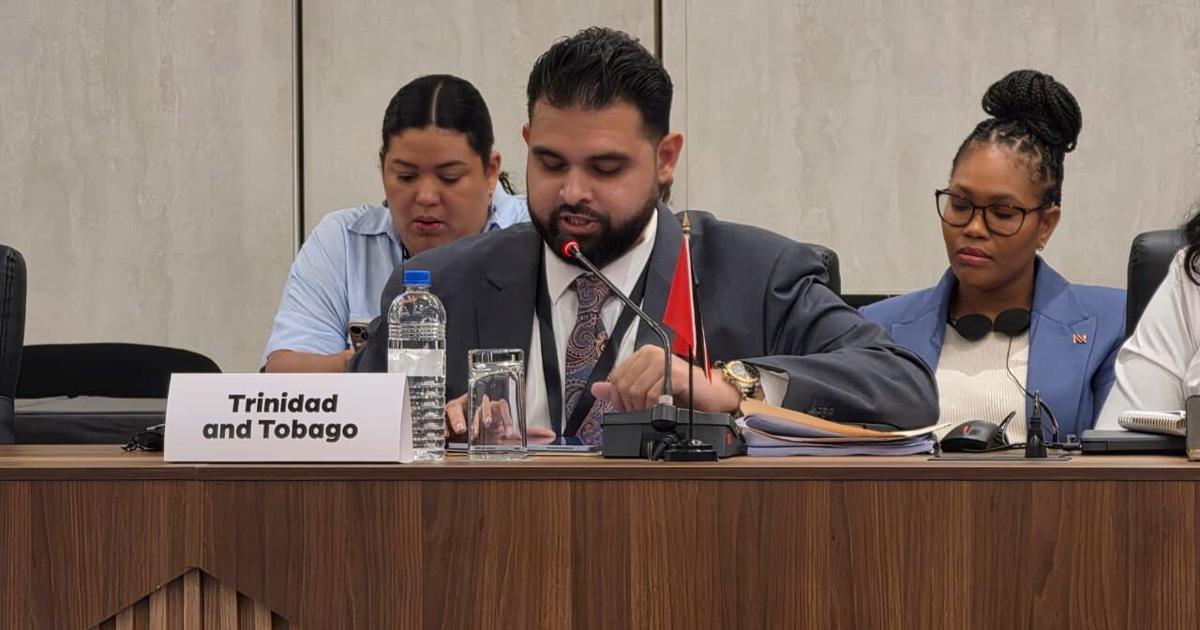
Speaking at a high-level private sector dialogue hosted alongside the 56th Organisation of American States General Assembly in Panama on Sunday, Trinidad and Tobago Government Minister Nicholas Morris has issued a urgent call for systemic reforms to how Caribbean nations access development financing, warning the region’s most pressing challenges cannot be resolved by individual nations alone and demand coordinated regional collaboration backed by consistent, reliable funding.
Against a backdrop of rising global geopolitical and economic fragmentation, Morris, who serves in the Office of the Prime Minister, emphasized that multilateral cooperation remains the most effective pathway for small island states to advance their long-term development objectives. His remarks were delivered during a dedicated strategic session focused on multilateralism as a collective response to global crises, and the strategic role of regional bodies in turning discussion into tangible action for the Greater Caribbean.
Morris outlined that the ongoing dialogue reinforced just how critical multilateral institutions and collective action are, particularly as Caribbean countries navigate mounting economic and social strain. He stressed that policy conversations can no longer stop at reflection — tangible, actionable progress is needed immediately, especially when it comes to development resourcing.
The minister painted a clear picture of overlapping, interconnected challenges facing the Caribbean region: extreme climate vulnerability, persistent food and energy insecurity, rapidly rising sovereign debt levels, and growing threats from transnational organized crime. He also drew attention to the ongoing risk of de-risking by large international financial institutions, a practice that cuts off smaller Caribbean economies from critical global banking and financial services, further stifling growth.
According to Morris, the combination of these overlapping challenges has rendered traditional development financing frameworks obsolete, leaving outdated mechanisms unable to meet the region’s current needs. “The central challenge is not only the availability of financing, but its accessibility, predictability, and alignment with regional priorities,” he explained.
He added that Caribbean nations already operate with severely constrained fiscal space, leaving them disproportionately exposed to external economic shocks and destructive natural disasters that can erase years of development progress in days. As a result, entirely new, innovative approaches to resourcing are required to build regional resilience and advance inclusive sustainable development across the Caribbean.
Morris called for far greater mobilization of blended and innovative financing instruments to tackle the region’s development gaps. He argued that deeper, more effective partnerships with global development finance institutions are essential, alongside expanded access to concessional financing for the region’s most vulnerable economies. The minister stressed that development financing frameworks must be adapted to reflect the unique realities small island developing states face, noting that many Caribbean nations are classified as middle-income countries despite facing extreme climate and economic vulnerabilities that outpace those of many lower-income nations.
His remarks echo longstanding grievances from Caribbean governments, who have repeatedly argued that traditional eligibility criteria for concessional funding lock nations out of critical support even as their development challenges grow more severe.
Morris also turned attention to the need for institutional evolution within the Association of Caribbean States (ACS), arguing the organization must transition from its current role as a primarily consultative forum to a functional mechanism that can coordinate tangible cross-border action.
“It is precisely in this context that the ACS must be positioned not merely as a consultative body but as a genuine instrument of coordinated regional action,” he said. Morris argued the ACS is uniquely positioned to take a leading role in coordinating and attracting financing for high-impact regional projects, identifying priority areas including cross-border infrastructure development, climate adaptation initiatives, digital transformation programs, and expanded investment in the blue economy. He suggested the organization could serve as a practical convening platform that brings together national governments, multilateral development institutions, and international investors around shared, actionable regional development objectives.
The minister also highlighted the critical importance of deepening strategic relationships with non-traditional international partners that can bring new investment capital and innovative development financing models to the region. He welcomed the participation of senior delegates from the United Arab Emirates, the Gulf Cooperation Council, and the OECD Development Centre at the dialogue, noting their presence signals growing interest in strategic partnerships beyond the region’s traditional development collaborators. Morris noted that these new partnerships can unlock unprecedented financing and investment opportunities across the Greater Caribbean, pointing to Trinidad and Tobago’s existing bilateral engagement with the United Arab Emirates as a working example of the benefits these relationships can deliver.
While underscoring the foundational value of regional cooperation and strategic planning, Morris emphasized that accessible, adequate financing remains the make-or-break factor for delivering on regional development goals. “Without adequate and accessible financing, even the most well-designed regional strategies risk remaining aspirational,” he warned.
Closing his remarks, Morris expressed Trinidad and Tobago’s gratitude for the longstanding support the country and region have received from international development partners, and reaffirmed the country’s commitment to expanding and deepening these strategic relationships. He said the Trinidad and Tobago government remains focused on strengthening and diversifying regional and global partnerships as part of broader efforts to accelerate inclusive, sustainable development across the entire Greater Caribbean.