作者: admin

  • Merrymen co-founder hailed as cultural pioneer after death

    Merrymen co-founder hailed as cultural pioneer after death

    Barbados has lost one of its most influential cultural ambassadors after the passing of Sir Charles Emile Straker, the legendary singer, songwriter and guitarist who took the island’s homegrown music to a global audience. The 90-year-old, who had been in poor health for an extended period, died in the early hours of Friday.

    Straker was the last surviving original founding member of the Merrymen Trio, the group he co-established in 1962 alongside fellow musicians Robin Hunte and Chris Gibbs, which would later become widely known simply as The Merrymen. His death prompted an outpouring of tribute from across the country, including from the political group Friends of Democracy (FOD), which honored his decades-long legacy of shaping Barbadian cultural identity.

    In an official statement released to the public, Ricky Williams, FOD’s spokesperson for sports and culture, celebrated Straker as a towering figure in Caribbean music whose work left an indelible mark on generations of listeners both at home and abroad. Over his decades-long career, Straker wrote and performed dozens of chart-topping hits, the most famous of which is the global fan favorite “Big Bamboo”. Williams confirmed that the track earned unprecedented international acclaim for Barbadian music, holding the number one position on multiple European music charts for 18 straight weeks.

    A defining feature of Straker’s artistry was his instantly recognizable vocal style, and his commitment to centering Bajan culture in the group’s work. A key innovation he brought to The Merrymen’s song catalog was integrating the traditional pennywhistle into their arrangements, reimagining the instrument to fit distinctly Barbadian musical styles. Beyond his crossover hit, Straker crafted many tracks that celebrated local life and Barbadian heritage, including fan favorites such as *Beautiful Barbados*, *Nutseller*, and *Gary Sobers*.

    Williams also highlighted how The Merrymen broke new ground for Caribbean culture on the global stage, booking performances at some of the world’s most iconic and prestigious performance venues. These included New York’s legendary Madison Square Garden, and two of London’s most celebrated cultural spaces: the Royal Festival Hall and the Royal Albert Hall. The group’s trailblazing global tour culminated in a landmark performance as the half-time entertainment at Super Bowl XIII in 1979, one of the most-watched sporting events in the United States at that time. Playing for a live stadium audience of 80,000 people, the band introduced Barbados’ unique indigenous folk music to millions of television viewers tuning in from across the globe.

    “In passing of this giant, we have been left with an irreplaceable vacuum,” Williams said in his statement. “Sir Charles will be deeply missed by all who loved his music and the work he did for our country. On behalf of Friends of Democracy, we extend our deepest condolences to Sir Charles Emile Straker’s family and loved ones at this difficult time. May he rest in peace.”

  • Ministry of Tourism and DDA to host inaugural Wellness Fair on July 4

    Ministry of Tourism and DDA to host inaugural Wellness Fair on July 4

    The Caribbean island of Dominica is preparing to launch its first ever public Wellness Fair, a landmark event jointly organized by the country’s Ministry of Tourism and the Discover Dominica Authority (DDA) to celebrate the island’s growing reputation as a global nature-centric wellness destination.

    Scheduled for Saturday, July 4, 2026, the full-day event will run from 9:00 AM to 4:00 PM at the UWI Global Campus, and carries the fitting theme “Be Well in Nature”. As the flagship activity of the 2026 Tourism Awareness Program — which itself operates under the broader banner “Wellness by Nature” — the fair will unite a diverse cross-section of stakeholders, from independent wellness practitioners and local wellness businesses to certified service providers and community wellness organizations.

    At its core, the initiative is designed to integrate holistic wellness practices into daily life for attendees, highlighting the interconnected roles of preventive healthcare, regular physical movement, balanced nutrition, intentional stress management, and deep connection to the natural world in supporting long-term well-being. Beyond positioning Dominica as a leading wellness travel hub, the fair also carries a domestic mission: to empower local residents to adopt and sustain healthier daily habits, while showcasing the full breadth of homegrown wellness talent and offerings available across the island.

    Attendees can expect a packed schedule of complimentary activities and experiences tailored to all levels of wellness interest. The lineup includes free basic health screenings, one-on-one wellness consultations with local experts, live fitness demonstrations, high-energy cardio jam sessions, open-level yoga classes, and interactive educational exhibits highlighting the local wellness sector. Unlike many industry events, the fair creates dedicated space for direct conversation between attendees and practitioners, giving visitors the chance to ask questions, explore local products and services, and connect with ongoing wellness resources available year-round in Dominica.

    A key highlight of the event is a series of educational informational sessions led by local specialist speakers. Topics cover the full spectrum of holistic health, including evidence-based nutrition guidance, practical stress reduction techniques, mindfulness practice, chronic disease prevention, physical fitness planning, personal development, and emotional wellness. Organizers designed these sessions to deliver actionable, practical knowledge that attendees can immediately implement in their own daily routines, rather than focusing solely on abstract discussion.

    To add an extra layer of excitement for attendees, the event will also host multiple prize giveaways through public draws. Grand prizes include round-trip airfare donated by two regional carriers, FRS Express des Îles and Sunrise Airways. Additional high-value giveaways include tickets to the 2026 World Creole Music Festival, one of Dominica’s most anticipated annual cultural celebrations, giving winners the chance to experience the island’s iconic cultural scene alongside their wellness-focused visit.

    Marva Williams, CEO and Director of Tourism at the Discover Dominica Authority, emphasized that the fair reflects the shared commitment of the DDA and Ministry of Tourism to embed wellness into both the island’s tourism identity and local community life. “Wellness is one of the defining experiences that sets Dominica apart. Through Wellness Fair 2026, we are creating an opportunity for residents and visitors to connect with local wellness professionals, learn practical ways to improve their well-being and experience the many ways wellness is naturally woven into life on the Nature Island,” Williams said. “We encourage everyone to join us on July 4 at the UWI Global Campus and take advantage of the free services, information sessions and activities available throughout the day.”

    Admission to the 2026 Wellness Fair is completely free and open to all members of the public, with both local residents and traveling visitors welcome to attend all activities. Organizers have noted that spaces in the specialized informational sessions are limited, so interested guests are encouraged to reserve their spots in advance via the official registration link: https://forms.gle/RcWAuJ1aJB6T5HvV8.

  • Anthony Stuart Delivers Financial Management and Leadership Session for Youth

    Anthony Stuart Delivers Financial Management and Leadership Session for Youth

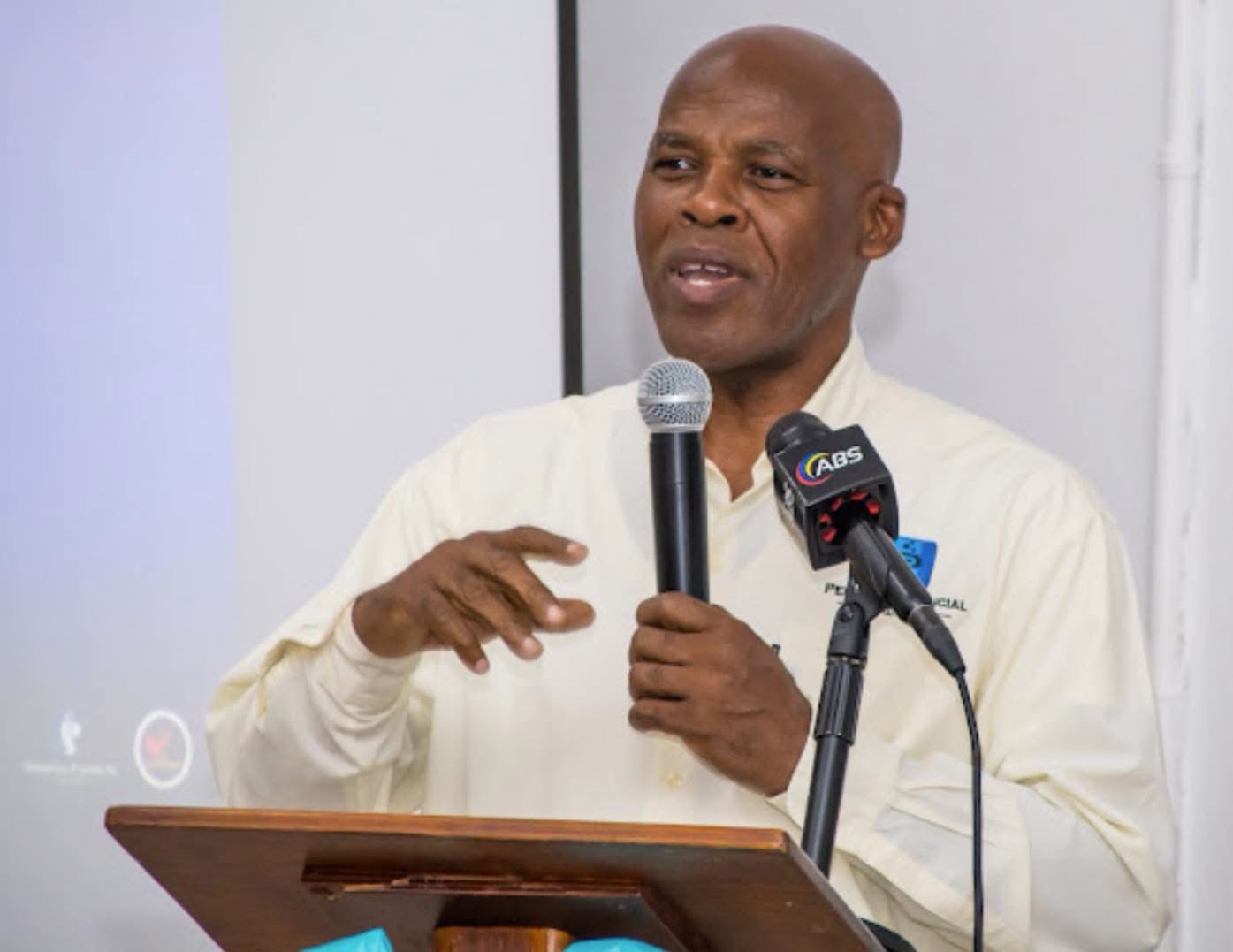
    On June 22, Antigua and Barbuda’s Department of Youth Affairs hosted a targeted youth development workshop focused on two critical pillars for young professional growth: practical financial management and principled ethical leadership. Following the event, department officials publicly extended their gratitude to the session’s lead speaker, veteran financial and business consultant Anthony Stuart, as well as local coordinator Kelly-Ann Boatswain, for making the engaging, skill-focused session a success. Officials also highlighted the foundational support of the program’s two major sponsors, the Sandals Foundation and Flow Antigua, whose contributions turned the community-focused initiative from a planned project into a tangible, impactful event for local youth.

    A native of Antigua, Stuart brings unparalleled professional expertise to this youth outreach work, boasting more than three and a half decades of hands-on experience spanning the finance, banking, insurance, and business development sectors. His academic and professional credentials underscore his authority in the field: he holds a Bachelor of Science degree in Accounting and Economics, a Master of Business Administration with a specialized focus on Finance, and holds professional certifications as a Certified Public Accountant, Certified Fraud Examiner, and Certified Anti-Money Laundering Specialist. Beyond his private consulting work, Stuart also serves as a business lecturer at the School of Business and Management at The University of the West Indies Five Islands Campus, giving him extensive experience translating complex financial concepts for emerging professionals.

    Stuart’s cross-sector career background further enriches his perspective for youth audiences: he has held leadership and technical roles in both the public and private spheres, including stints with Antigua and Barbuda’s Customs Department and Audit Department. He previously served as Executive Director of the St. John’s Development Corporation, and currently works as Senior Financial and Business Consultant at Personal Financial Solutions, a locally owned Antiguan consultancy firm.

    For the Department of Youth Affairs, this workshop is far more than a one-off community event. It is part of a sustained, ongoing strategy to arm young Antiguans and Barbudans with the practical, real-world skills they need to thrive in modern workplaces and launch their own ventures. Beyond hard financial skills, the program prioritizes fostering a culture of ethical decision-making, strong leadership capabilities, and entrepreneurial ambition among the nation’s youth. Department representatives emphasized that the ongoing program continues to deliver long-term value, nurturing innovation, ethical practice, and professional resilience among the next generation of young leaders and entrepreneurs across Antigua and Barbuda.

  • Antigua and Barbuda Owes WIOC EC$6 Million as Fuel Subsidies Continue

    Antigua and Barbuda Owes WIOC EC$6 Million as Fuel Subsidies Continue

    Amid persistent volatility in the global energy market that has driven up international crude oil costs, the government of Antigua and Barbuda has accumulated more than 6 million Eastern Caribbean dollars in outstanding arrears to the West Indies Oil Company (WIOC). The unpaid balance stems from a deliberate policy implemented by the administration to shield everyday consumers and local businesses from skyrocketing retail fuel prices, according to Prime Minister Gaston Browne, who also holds the portfolio of Finance Minister.

    For months, Browne confirmed in public remarks, the government has been covering a fixed share of fuel costs to prevent dramatic jumps in the retail prices of both gasoline and diesel. Without this targeted intervention, he explained, motorists and commercial operators would be forced to pay far more per gallon at fuel pumps across the twin-island nation. Instead of passing the full weight of global price increases directly to households that are already grappling with broader cost-of-living pressures, the administration made the decision to absorb the additional expenses as part of a wider initiative to stabilize economic conditions.

    Browne characterized the policy as a people-first measure designed to benefit all Antigua and Barbudans, but acknowledged that the growing unpaid debt is creating significant financial strain for the government. “This is a very benevolent position taken by my administration to contain the price of diesel and gasoline for the benefit of the people, but it is hurting us financially,” he stated.

    Despite the mounting fiscal pressure, the Prime Minister pointed out that Antigua and Barbuda still boasts one of the lowest fuel price points in the entire Caribbean region. The core goals of the subsidy program extend beyond immediate relief for drivers: it is also intended to insulate the broader national economy from sudden, disruptive fuel price spikes and protect the purchasing power of local consumers, who would otherwise see their disposable incomes eroded by higher energy and transportation costs.

    Looking ahead, Browne issued a caution that the government’s ability to sustain this level of support could come under threat if international oil prices remain at elevated levels for a prolonged period. Sustained high global prices would continue to widen the gap between the subsidized retail price and the actual cost of fuel, increasing the government’s financial obligations and challenging the long-term viability of the current subsidy framework.

  • Derde helft WK 2026: Iraakse passie en hoop onwankelbaar bij WK-debuut na 40 jaar

    Derde helft WK 2026: Iraakse passie en hoop onwankelbaar bij WK-debuut na 40 jaar

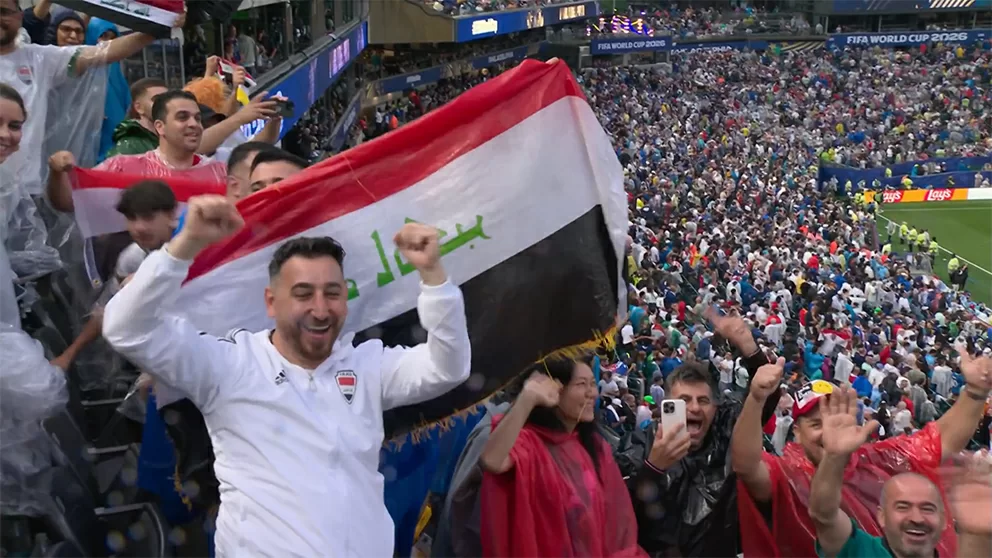
    After four decades away from the world’s biggest football stage, Iraq made a landmark return to the FIFA World Cup in Philadelphia, delivering a moment that transcended the final scoreline and reignited collective passion and hope across the global Iraqi community. Though the two-time world champion France claimed a comfortable 3-0 victory over the underdog side, Iraqi fans who packed the stands refused to let the result dim their enthusiasm — proving that for this nation that has endured decades of crisis, football is far more than a game: it is a lifeline of unity and optimism.

    For Ali Alkabasi, the journey to this match was a lifetime in the making. He first watched Iraq compete at a World Cup on television when he was just 13 years old. Forty years later, he stood inside Philadelphia’s stadium, cheering on his nation as it faced one of the tournament’s most formidable contenders. Even with a lopsided 3-0 defeat in Iraq’s second group stage match, Alkabasi said he felt nothing but gratitude to witness his country play on the global stage in person.

    “It is more than enough just to see Iraq competing at the World Cup,” Alkabasi told reporters. “The team’s performance was not bad at all. We knew what to expect from the result — France plays at an entirely different level. But what mattered is that our players did not just resort to booting long balls nonstop. They actually tried to build organized attacks, and that is something to be proud of.”

    When the final whistle blew, every Iraqi supporter rose to their feet to applaud the team off the pitch. Even when trailing by three goals, fans cheered every Iraqi attack as if an equalizing comeback was still within reach. Fans traveled from across the United States and as far as South Australia to pack the stands, turning the stadium into a sea of Iraqi national colors for a nation that has faced decades of unthinkable hardship, from repeated conflict and political upheaval to the rise of armed extremism. For this dispersed community, Iraq’s World Cup return was nothing short of a dream come true.

    Halah Maykhan, an Iraqi-American who traveled from Wisconsin to attend the match, called the four-decade-long wait for this moment a fantasy realized. “We are living the dream right now,” she said. “My homeland Iraq has qualified for the World Cup, held here in America where I live — that is a double dream for me. This is a point of tremendous pride for every Iraqi people.”

    Maykhan praised the team for uniting Iraqis from all corners of the globe, regardless of where they call home. “We stand behind this team no matter what the scoreboard says,” she said. “They may lack the experience that top sides have, but we still hope they do well — and we hope all Arab teams thrive at this tournament.”

    The match got off to a fast start for France, with superstar Kylian Mbappé silencing the raucous Iraqi crowd with a stunning opening goal in the 14th minute. But the silence did not last: fans quickly rallied, roaring chants of “Iraq! Iraq!” that echoed through the stadium. The pattern repeated twice more: each French goal only temporarily dampened the support for the Lions of Mesopotamia, with fans cheering their team on through every minute of play.

    Despite the massive gap in ranking and resources between the two sides, Iraq rejected a purely defensive, parking-the-bus approach. The side pushed to maintain possession and play through France’s high pressing, earning respect from fans even in defeat. Mohammed Abduljabbar, who traveled to Philadelphia from Texas, acknowledged the result was disappointing, but emphasized that the team gave everything they had against a far more experienced opponent.

    “Their performance was solid,” Abduljabbar said. “There were a few mistakes, of course, but there were also some really beautiful plays. We are so proud of them, and grateful that they brought us all here to the World Cup. The feeling of watching Iraq play live in a World Cup stadium is indescribable.”

    Beyond football, Iraq’s World Cup run has become a powerful symbol of renewed national unity, cutting through long-standing sectarian and religious divides. On match day, Kurdish and Assyrian flags waved alongside the Iraqi national banner, with every fan standing shoulder to shoulder behind the team. Husam Nafea, an Iraqi fan who drove four hours from Virginia to attend the match, said the nation has risen above internal divisions to come together behind the team more strongly than ever.

    “Wherever we go, all Iraqis are happy and united as one,” Nafea said, wrapped in an Iraqi flag outside the stadium after the match. “And we hope that this unity lasts long after the tournament ends.”

    Over the past 40 years, Iraq has endured coups, multiple wars, foreign invasion, civil unrest, and the rise and fall of the ISIL extremist group. While the nation now enjoys a period of relative stability, it remains surrounded by persistent geopolitical tensions across the Middle East. For Nawres Almamoori, who traveled all the way from South Australia to see Iraq play, the team’s World Cup qualification brings much-needed joy to a people who have endured far too much hardship.

    “Iraqis have been through so much, and they still face ongoing struggles,” Almamoori said. “They deserve every bit of this joy.”

    The match itself was not without off-pitch drama: a severe storm with heavy rain and thunder forced a nearly two-hour halt to play at halftime, leaving fans and players waiting out the downpour. Even as supporters trudged through the rain to reach their seats, no one questioned why they were there. Iraqi fan Hassan Raad said neither the brutal weather nor the lopsided final result mattered to him.

    “Rain, sun, freezing cold, desert heat — we are here for our boys,” Raad said. “The score doesn’t change anything. Our job as fans is to stand by this team, no matter what.”

    Ateka Saleh, another Iraqi-American from Wisconsin, echoed that sentiment ahead of kickoff. “No matter what happens today, they have already given us everything by getting us all here together, to celebrate this moment with them,” Saleh said. “So we just want to say thank you to them. We are incredibly proud of this team.”


  • Crown of Glory Father’s Day Charity Dinner Deemed a Success

    Crown of Glory Father’s Day Charity Dinner Deemed a Success

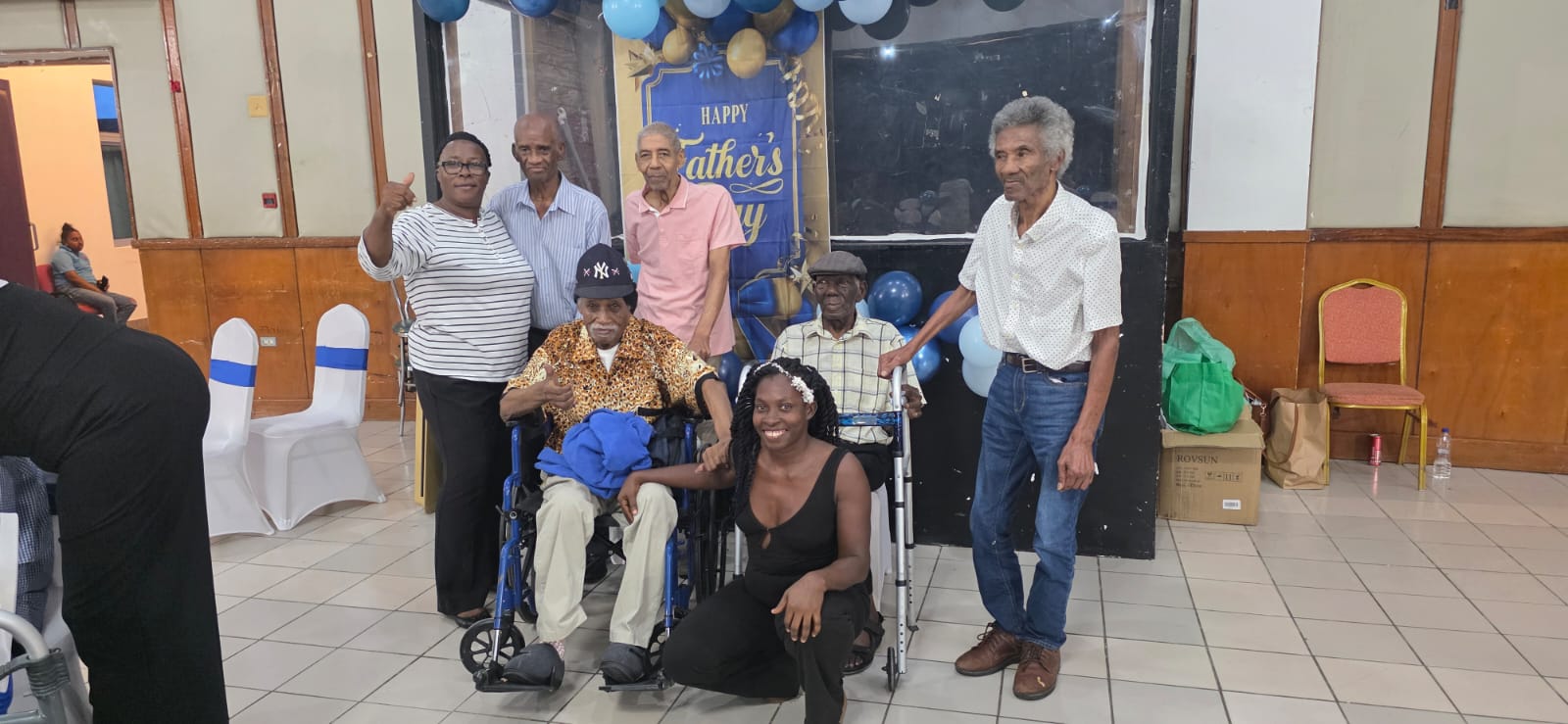
    A collaborative community charity initiative held in Antigua has wrapped up to widespread acclaim, with organizers offering sincere gratitude to every individual and entity that contributed to its positive impact. The Crown of Glory Father’s Day Charity Dinner, jointly organized by Wanmei Transforming Lives Disability Services and Jamaica Patriots Antigua, was created to lift up vulnerable groups across the local community, including low-income residents, the Fiennes Institute, regional nursing homes, and local church communities.

    In a public statement released following the event, co-founder Joedian Samms highlighted the critical role that local business sponsors played in making the dinner a meaningful experience for all attendees. Among the supporting local partners were major Antiguan establishments including Christo’s Supermarkets, Mega Distributors Ltd, Carlisle Bay Resort, Jolly Beach Antigua Resort, Connie’s Comfort Suites, Shakera’s Tamarind Fusion, Antigua Digest, ANROP, The National School Bus, St. John Development, Little Canton, and Cool and Smooth.

    Beyond corporate and institutional sponsorship, organizers emphasized that the participation of individual attendees, community partners from nursing homes, the Fiennes Institute, and local congregations was equally vital to the initiative’s success. Every contribution, whether financial, in-kind, or simply through personal attendance, helped the event deliver on its core mission of supporting community welfare.

    Samms noted that the dinner stood as a powerful testament to what collective community care and intentional giving can achieve. The evening brought together people from across different sectors of Antiguan society united by a shared commitment to lifting up their neighbors, aligning perfectly with Wanmei Transforming Lives Disability Services’ long-term mission of creating tangible, positive change for people across the community. To allow the public to engage with the joy and connection of the occasion, event organizers have shared photos capturing key moments from the evening, preserving the memory of the successful celebration of giving.

    As the organization looks ahead to future community outreach projects, Samms extended a final note of appreciation to all who stood with the initiative this Father’s Day, reaffirming the group’s commitment to continuing its work of transforming lives through targeted, compassionate social services.

  • From Antigua to London: Windrush descendant shares powerful story of separation, identity and legacy

    From Antigua to London: Windrush descendant shares powerful story of separation, identity and legacy

    On June 20, 2026, London’s Jacksons Lane Arts Centre opened its doors to the 78th Windrush commemoration, hosting a special exhibition and event titled *Windrush Stories: Portraits & Voices* inside the venue’s Studio 1 in Highgate. At the gathering, established Antiguan and Barbudan author William took the stage to share a raw, deeply personal account of how his experience of migration, familial separation and fractured belonging has shaped every layer of his literary work to this day.

    William’s journey begins in the small New Winthropes Village of Antigua and Barbuda, where he spent his entire childhood without any connection to his parents. As part of the mid-20th century Windrush migration wave that saw thousands of Caribbean citizens move to the United Kingdom to fill post-war labor gaps, William’s parents had relocated to Britain years before he was born. It was not until 1970, when William was just an unaccompanied minor, that he made the transatlantic crossing to reunite with them – a meeting that marked the first time he had ever laid eyes on the people who gave him life. Growing up, he had never even seen a photograph of his parents or heard the sound of their voices, making the transition to a new life with strangers in an unfamiliar country all the more disorienting.

    In his address to attendees, William unpacked the layered emotional weight of that life-altering journey, while also pushing back against gaps in how the Windrush generation is often historicized. He pointed out that mainstream narratives around Windrush almost exclusively center the pioneers who made the initial voyage to Britain, leaving the lived experiences of their children and subsequent descendants unacknowledged and sidelined.

    “Our voices matter too, and it is long past time they got the same attention as those of the first generation,” William told the crowd. He explained that every piece of his writing is crafted specifically to reframe the Windrush story through the lens of the descendants who came after the initial migration.

    This mission is embodied in his published work *Betwixt 2 Shores*, a book centered entirely on the unique perspective of Windrush descendants. The text dives deep into themes of fractured identity, forced displacement, and intergenerational cultural memory, seeking to expand public understanding of the Windrush legacy beyond the common focus on arrival stories. For William, the most important story to tell is that of generations who grew up caught between two distinct cultural worlds, navigating the everyday realities of belonging to neither fully.

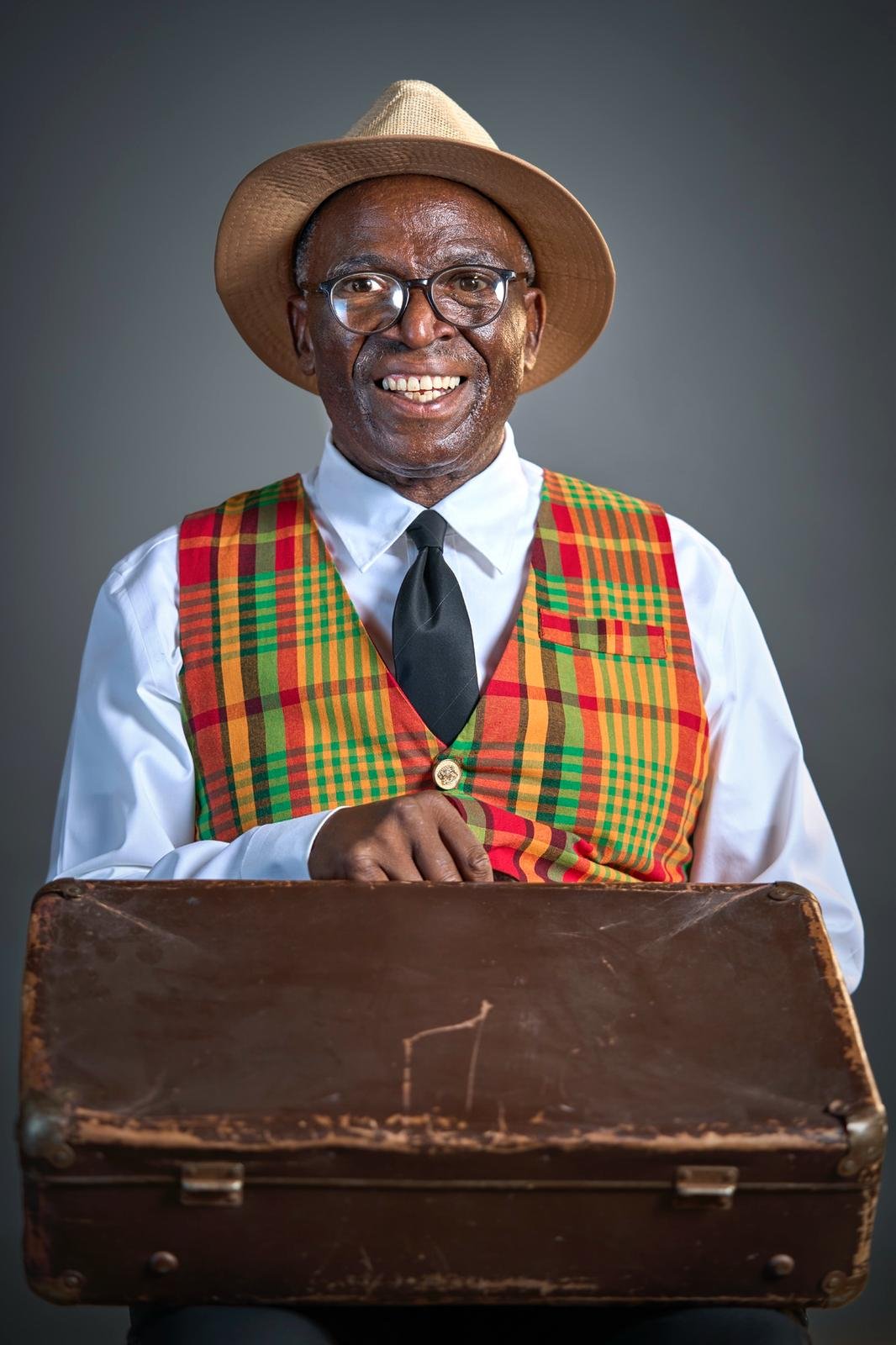
    A tangible, evocative symbol of William’s decades-long journey is the worn small suitcase, called a “grip”, that he carried with him when he left Antigua more than 50 years ago. Today, the tattered case is preserved as a personal historical artifact, one that William says carries every ounce of his experience: the pain of leaving his childhood home behind, the struggle to adapt to a new country, and the quiet resilience that carried him through.

    “The grip holds everything I went through,” he shared. “It is proof of what it means to leave one entire life behind and build another from scratch.”

    The 78th Windrush celebration and accompanying *Windrush Stories: Portraits & Voices* exhibition are part of a broader, ongoing push to protect and amplify under-told Windrush narratives. Through visual portraiture, firsthand testimony, and creative literary expression, organizers work to ensure that both the original Windrush pioneers and their descendants are formally recognized as core parts of Britain’s ever-evolving cultural history.

    For William, the 2026 commemoration was more than a moment to look back on his own story. It was another step forward in his lifelong mission: to pull the voices of Windrush descendants out of the margins of history and place them firmly at the center of the full Windrush narrative.

  • Manickchand’s jewellery gift to former US ambassador handed over to US gov’t

    Manickchand’s jewellery gift to former US ambassador handed over to US gov’t

    New disclosures from the U.S. State Department have brought to light a protocol-compliant transfer of an unsolicited high-value gift from a senior Guyanese political figure to a former top American diplomat stationed in the South American nation. According to official records, Sarah-Ann Lynch, who previously served as the United States Ambassador to Guyana, accepted a piece of jewelry valued at $1,198 U.S. dollars from Priya Manickchand, Guyana’s former Minister of Education, during a meeting held on September 12, 2023.

    The gift in question consists of two thin gold bangle bracelets paired with a pearl drop necklace, a set whose appraised value far exceeds the $525 U.S. dollar cap on personal gifts that U.S. government officials are permitted to retain under federal ethics guidelines. In line with longstanding U.S. federal gift rules for diplomatic personnel, Lynch turned the jewelry over to the U.S. General Services Administration (GSA), the federal agency tasked with managing and disposing of such unallowed gifts, for official handling.

    Officials note that this case follows a standard protocol applied to hundreds of similar scenarios involving diplomatic gifts to U.S. representatives across the globe. The official justification recorded for temporary acceptance of the gift before transfer aligns with common diplomatic practice: declining the present directly would have created unnecessary social embarrassment for both the donor and the United States government, undermining routine diplomatic courtesy. This procedural transfer underscores the strict ethics frameworks that govern gift acceptance for American diplomatic personnel, designed to avoid perceived or actual conflicts of interest while maintaining basic diplomatic decorum in international engagements.

  • DLP urges students, parents to stay focused after 11-Plus

    DLP urges students, parents to stay focused after 11-Plus

    As thousands of young students across Barbados wrap up the Common Entrance Examination and prepare to transition into secondary education, the island’s opposition Democratic Labour Party (DLP) has released a comprehensive message framing this milestone not as a final destination, but as the opening of a critical new educational journey. Quincy Jones, the DLP’s spokesperson on education, led the party’s outreach, starting with public recognition for the resilience young learners demonstrated throughout the stressful examination preparation and assessment period.

    Jones emphasized that the shift to secondary education marks the beginning of a transformative life chapter, packed with unique growth opportunities and formative new challenges, regardless of whether students earned a spot at their top-choice institution. “Whether you achieved your first choice or not, you should be proud of the hard work, dedication, and perseverance that brought you to this moment,” Jones stated in his address. “This examination is simply one step along the path of your education and personal growth. As you prepare to enter secondary school, a world of new possibilities awaits you. You will experience new schools, new opportunities, new subjects, new teachers, new friends and yes, new obstacles.”

    For incoming first-form students, Jones highlighted that the secondary school experience serves as a foundational platform to unearth hidden talents, refine core life skills, and build the capabilities needed for long-term success. He urged students to seize every opportunity available to them during their secondary education, from rigorous academic coursework to extracurricular engagement. “You will discover talents you never knew you had, develop skills that will shape your future, and build memories that will last a lifetime,” he added. “Secondary education is a chance to challenge yourself academically, participate in sports, culture, clubs, and community service, and develop the confidence that will help you become the leaders of tomorrow.”

    Turning his attention to parents, guardians and school communities across the country, Jones noted that parental responsibility grows significantly as students enter adolescence, crediting families for the sacrifices they have already made to support their children’s learning while stressing that ongoing, daily engagement remains non-negotiable through the secondary years. The DLP holds that consistent, intentional parental involvement is one of the most critical determinants of student success during secondary education, and has laid out a clear structured framework for families to follow. This includes regular participation in Parent-Teacher Association activities, attendance at scheduled parent-teacher conferences, and individual check-ins with form teachers and subject instructors at least twice per academic term.

    Jones also highlighted the importance of attending school orientation and year-level kickoff events, consistent monitoring of student homework completion and attendance, and ongoing reinforcement of positive behaviour, personal discipline and mutual respect at home. Beyond family action, the DLP is calling for deeper, more intentional collaboration between school administrations and household communities across Barbados, proposing a slate of targeted initiatives designed to strengthen the home-classroom partnership.

    These proposals include peer parent mentorship programs that allow adults to share professional expertise and life lessons with students, structured parent learning circles to collaboratively address common educational challenges, and family-focused literacy and reading nights to build a stronger culture of continuous learning in the home. The party also suggested expanding parent volunteer networks to support school sports and arts programming, leveraging modern digital communication platforms to keep parents updated on school activities and student progress in real time, and hosting regular appreciation events to recognize the valuable contributions parents make to school life.

    Closing his address, Jones expressed the DLP’s collective pride in Barbados’ young generation, reiterating that the island’s youth are the core of the nation’s long-term development. He encouraged incoming secondary students to approach this new chapter with confidence, curiosity, and a commitment to excellence. “Embrace this next chapter with confidence, curiosity, and determination,” Jones said. “Believe in yourselves, work hard, treat others with kindness, and never stop striving for excellence. The future of Barbados is sitting in classrooms across this nation today. We are proud of you, we believe in you, and we look forward to witnessing all that you will achieve.”

  • This Day in History: 23 June 1831

    This Day in History: 23 June 1831

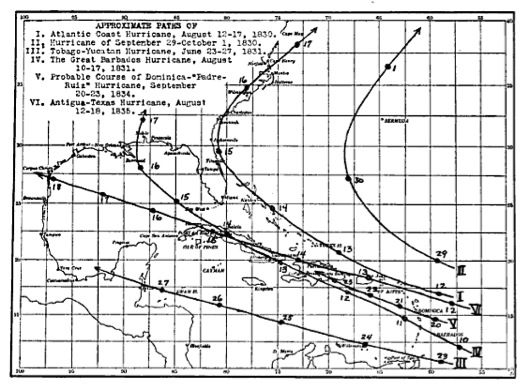
    On June 23, 1831, a rare and destructive hurricane made an unexpected landfall across the southern Caribbean, bringing widespread devastation to the islands of Trinidad, Tobago, and Grenada while upending long-held local knowledge of Atlantic storm season patterns. Every child growing up in Grenada learns a traditional rhyme that outlines the expected window of hurricane risk: “June, too soon / July, stand by / August, a must / September, remember / October, all over!” This 1831 storm shattered that conventional wisdom, arriving far earlier than any major hurricane in living memory, and striking well south of the typical Atlantic hurricane belt that historically has been the primary zone of storm activity.

    Residents of Grenada awoke on the morning of Thursday, June 23 to a series of unsettling, unseasonable signs that something extraordinary was unfolding. The sea grew unusually turbulent, emitting a low, unnerving roar that clashed sharply with the dead stillness of the surrounding air, leaving locals with a vague, unexplainable sense of dread. The sky overhead was heavy and dark from dawn, but the full force of the hurricane did not begin to build until close to midday. The storm reached its peak intensity between 3 and 4 o’clock in the afternoon, before gradually weakening and moving off the island. While the damage to infrastructure, agriculture, and property across Grenada was crippling, historical accounts note that only one life was lost on land during the event.

    The storm’s fury was far more dangerous for vessels caught at sea off the Grenada coast. Captain Charles Cooper, commander of the mail schooner *Friends*, which operated a regular route between Trinidad, Grenada, and St. Vincent, recorded that his ship encountered a catastrophic gale just five leagues south of Grenada. The storm raged without pause for five full hours, forcing the vessel almost onto its beam ends at the height of the tempest. On board were Captain J. M‘Gregor of the British Royal Regiment, along with multiple other passengers. Cooper later reported that every person on the vessel—passengers, master, and crew alike—fully expected to be swallowed by the churning, foaming ocean and perish at sea.

    Across Grenada, the hurricane wiped out nearly all standing crops and family provision grounds, including agricultural holdings at the Lataste Estate in the island’s northern St. Patrick Parish. At the time, the estate depended on enslaved labor, and the destruction of food supplies left enslaved people in a state of desperate hunger. Historical records note that with no other food available, enslaved workers were forced to eat unripened crops, which caused widespread illness, and ultimately left them dependent on overpriced rations of imported grain to survive.

    Contemporary observers across the region recorded that the 1831 hurricane was the most severe storm to hit the southern Caribbean since the devastating Great Hurricane of October 1780, one of the deadliest Atlantic hurricanes in recorded history. While rarely hit by hurricanes, Trinidad sustained only minor damage from the 1831 storm, but neighboring Tobago suffered extensive destruction, with particularly severe damage to ships anchored in Scarborough Bay. The nearby island of St. Vincent also escaped with only minimal harm, leaving Grenada and Tobago to bear the brunt of the unprecedented early-season storm.

    This report was originally published as part of the A-Z of Grenada Heritage series by John Angus Martin, with content attribution to the contributor and disclaimer of editorial responsibility by NOW Grenada.