作者: admin

  • From Nova Scotia to Nassau: Lucky’s extraordinary journey

    From Nova Scotia to Nassau: Lucky’s extraordinary journey

    Against all odds, a tiny, critically endangered Kemp’s ridley sea turtle named Lucky has completed an extraordinary 2,700-mile cross-border journey from an icy Canadian shore to the warm tropical waters of The Bahamas, a groundbreaking conservation success story that arrives just as the world marks Earth Day.

    Lucky’s story began in late autumn last year, when volunteers with the Canadian Sea Turtle Network, who conduct routine cold-weather coastal patrols, stumbled upon the weak, unresponsive juvenile along the rocky outer shores of Halifax, Nova Scotia. The young turtle had wandered far north of his species’ native warm Gulf of Mexico habitat, and plummeting ocean temperatures left him suffering from “cold stunning” — a life-threatening condition that leaves sea turtles immobilized and unable to forage or escape dangerous conditions. Prior to this rescue, no cold-stunned Kemp’s ridley sea turtle had ever been found alive and successfully rehabilitated in Canadian history; survival of such an event in Halifax’s frigid waters was widely considered almost impossible.

    After the turtle was pulled from the shore, he received weeks of specialized veterinary care in Canada, slowly regaining enough strength to move to the next phase of his rehabilitation. Conservation teams began searching for a suitable facility with a natural warm marine environment and experienced veterinary staff to continue preparing Lucky for his eventual release back into the wild. That search ultimately led to Atlantis Paradise Island, a resort in The Bahamas with a dedicated Fish and Turtle Hospital and a long-running marine conservation program.

    The journey south was almost derailed before it even began. Teams were set to depart Halifax on February 24, when a massive winter storm slammed into the region, dumping nearly 12 inches of snow and bringing wind gusts reaching 60 miles per hour. But as his name suggests, fortune favored the young turtle. After rerouting through Toronto, the rescue team and their precious passenger completed the multi-leg trip and touched down in The Bahamas, where Atlantis staff were waiting at the airport to receive him.

    Lucky was immediately transported via the organization’s SeaKeepers rescue vehicle to the Atlantis facility, where he entered a quarantine period to acclimate to his new surroundings. A full health intake was conducted the following day, with Atlantis’s veterinary and aquarist teams completing detailed measurements, a full physical examination, and diagnostic blood work to confirm his stability.

    After six weeks of continuous observation, targeted care, and rehabilitation that allowed Lucky to redevelop natural foraging behaviors and rebuild his strength, he passed a final health assessment led by Atlantis veterinarian Deandra Delancey-Milfort on April 8. Later that day, the Atlantis SeaKeeper team carried Lucky offshore and released him into the clear waters just off Paradise Island, marking the successful end of a months-long collaborative effort that crossed international borders, connected multiple conservation organizations, and united volunteers and experts across two vastly different climates.

    Kemp’s ridley sea turtles, first formally identified in 1906 by Florida fisherman Richard M. Kemp after whom the species is named, are the smallest and most critically endangered of all sea turtle species. Juveniles typically hatch along Gulf of Mexico nesting beaches, then seek shelter in floating sargassum patches to feed and grow before moving to coastal habitats. However, young, inexperienced turtles often get pushed far off course by strong winds and shifting tides, stranding them in far northern waters as autumn transitions to winter, when dropping temperatures lead to life-threatening cold stunning.

    Ahead of this year’s Earth Day, Lucky’s survival and release offers a powerful reminder of the fragility of marine ecosystems and the impact of cross-border collaborative conservation. What began as a near-fatal wrong turn for a tiny juvenile turtle has become a powerful example of what collective action for the natural world can achieve. Even for the smallest, most vulnerable creatures, conservationists note, cross-border cooperation can deliver second chances that make every mile of effort worth it.
  • Three ships targeted in Hormuz, Iran seizes two, says Guards

    Three ships targeted in Hormuz, Iran seizes two, says Guards

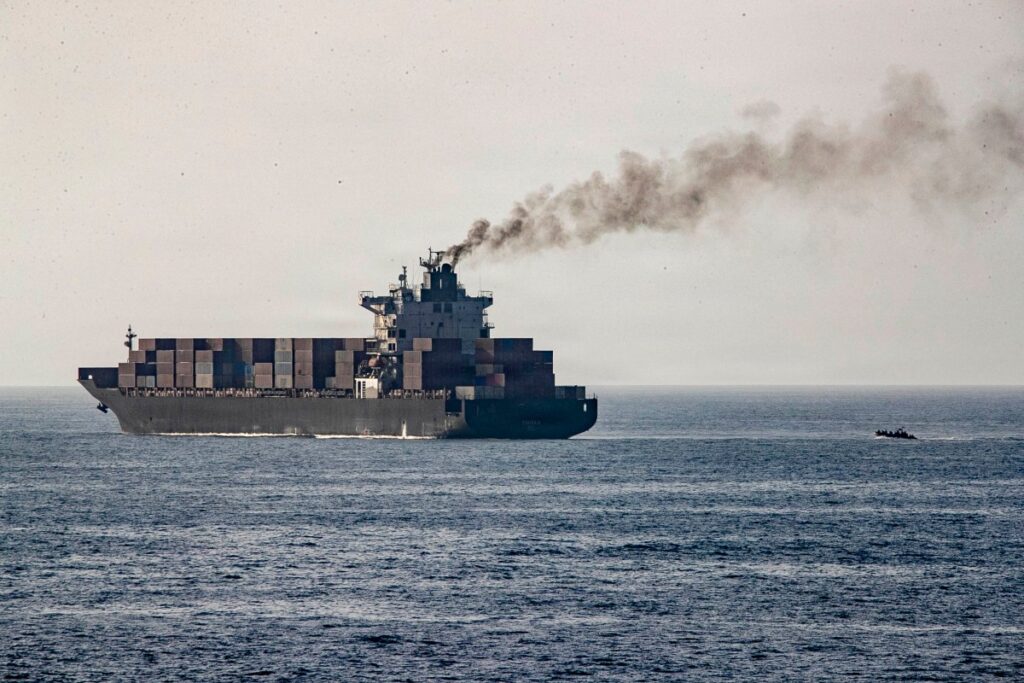
    Tensions in the critical Middle Eastern waterway the Strait of Hormuz flared once again on Wednesday, as Iranian military forces seized two container vessels and opened fire on a third, escalating security risks for global shipping at the heart of the ongoing regional conflict. Multiple maritime security monitors and Iranian official sources have confirmed the series of interconnected incidents.

    The United Kingdom’s Maritime Trade Operations (UKMTO), a leading British maritime security agency, first reported that an Iranian gunboat opened fire on a container ship roughly 15 nautical miles northeast of Oman’s coast. In its official briefing, UKMTO noted that the ship’s captain reported the IRGC gunboat approached the vessel before opening fire, causing significant structural damage to the ship’s bridge. No fires or oil spills that would impact the surrounding marine environment were reported, and all crew members on board escaped unharmed.

    According to assessments from British maritime security firm Vanguard Tech, the targeted vessel was sailing under the flag of Liberia, and had received prior confirmation that it had official permission to traverse the Strait of Hormuz. Iranian state news agency Tasnim pushed back on this account, claiming the ship had repeatedly ignored explicit warnings from Iranian armed forces to change course.

    In a separate official statement, Iran’s Islamic Revolutionary Guard Corps (IRGC) confirmed that its naval units intercepted two vessels attempting to cross the Strait of Hormuz, seizing both and escorting them into Iranian territorial waters. The IRGC said the ships violated a naval blockade Iran imposed on the strategic waterway following the outbreak of open conflict on February 28, when the United States and Israel launched joint airstrikes on Iranian targets.

    Iranian state broadcaster IRIB shared the identities of the two seized vessels via its Telegram channel: the MSC Francesca and the Epaminondas, both container ships. The IRGC claimed the MSC Francesca has ties to Israel, while the Epaminondas was held for lacking required transit permits and allegedly tampering with its onboard navigation systems. Data from global ship-tracking platform MarineTraffic confirms both vessels came to a stop near the Iranian coast shortly after the interception on Wednesday.

    A second separate shooting incident was also documented Wednesday: UKMTO reported that a cargo container vessel sailing eight nautical miles off Iran’s western coast came under fire and was forced to stop in the water. “A master of an outbound cargo ship reports having been fired upon and is now stopped in the water. Crew are safe and accounted for. There is no reported damage to the vessel,” the agency’s statement read.

    Vanguard Tech identified this vessel as the Panama-flagged container ship Euphoria, which was traveling outbound through the Strait of Hormuz at the time of the incident. Unlike the two seized ships, MarineTraffic data later confirmed the Euphoria was allowed to continue its journey, and had departed the strait en route to Jeddah, Saudi Arabia.

    The Strait of Hormuz, one of the world’s most critical chokepoints for global oil and commercial trade, has seen heavily restricted shipping access since Iran implemented its blockade at the start of the conflict with Israel and the United States. In a countermeasure, the U.S. military has enforced its own blockade of major Iranian ports. In a separate announcement Wednesday, U.S. President Donald Trump confirmed that a temporary truce between the warring parties, first implemented on April 8, would be extended.

  • Controversial fence removed from Negril beach

    Controversial fence removed from Negril beach

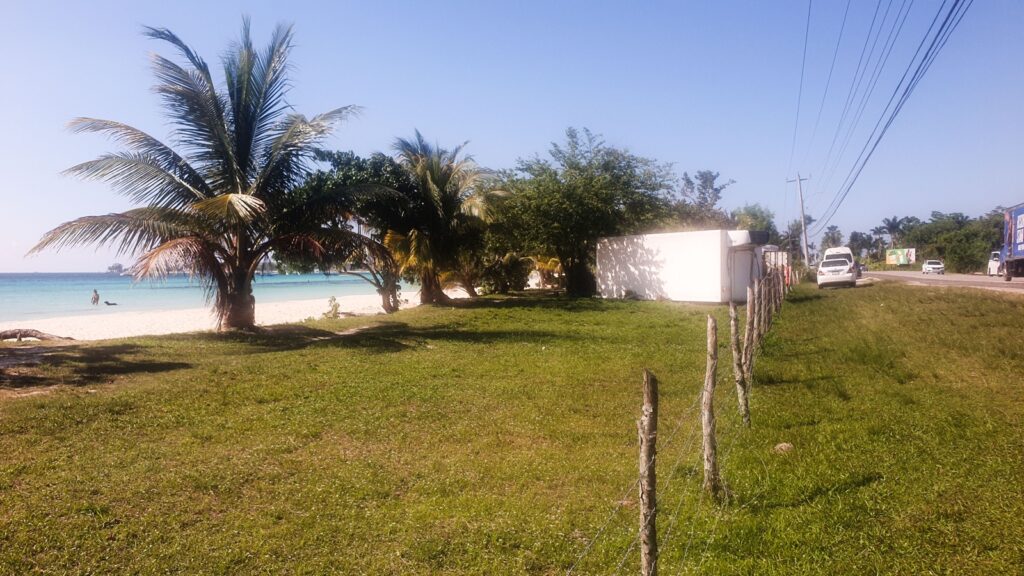
    NEGRIL, Hanover — A sudden public access dispute that threatened to cut off sections of Jamaica’s iconic Seven Mile Beach in the popular resort town of Negril has been resolved within hours, after coordinated intervention from local government agencies quickly removed an unauthorized barrier.

    The incident unfolded early Tuesday, when local hotelier Winthrop “Throp” Wellington discovered a barbed-wire fence spanning from the main public road down to the shoreline during his daily morning jog along Long Bay Beach. Shocked by the obstruction, Wellington recorded a video of the blocked access route, which spread rapidly across social media and sparked widespread public anger over attempts to restrict entry to one of Jamaica’s most beloved public natural spaces.

    Wellington emphasized that the barrier was an illegal violation of public right-of-way, noting that Seven Mile Beach is universally recognized as public land open to all. “Nobody owns this beach, and nobody has the right to prevent people from moving freely along it,” he said, adding that even beachfront hotel operators like himself have no authority to block public access. He warned that allowing such encroachments would set a dangerous precedent for further privatization of the public coastline.

    The fence was erected by Diego Heaven, a local water sports and diving business owner who operates Reef Explorer and Dive Centre on a plot of land leased from Jamaica’s Urban Development Corporation (UDC). Heaven told reporters the barrier was never intended to block public access to the beach, but was a desperate measure to protect his business assets after a string of repeated thefts that have cost him more than JA$3.7 million in lost equipment.

    Over the past several months, Heaven explained, thieves have stolen paddleboards, beach chairs, and critical diving gear from his operation, with the most recent theft occurring just the previous Saturday. He noted that while his property is covered by security cameras, the area lacks sufficient street lighting, leaving dark stretches vulnerable to criminal activity. He insisted he supports full public access to the beach, even providing free drinking water and changing facilities for visitors, and that the fence was only meant to secure his gear storage area. Heaven added that the thefts have been carried out by local individuals, not tourists, and appealed to community members to support local businesses rather than harm them.

    Local industry leaders expressed deep concern over the incident, warning that unauthorized barriers would open the door for widespread encroachment on public beach access, a core draw for Negril’s tourism-driven economy. Immediate past president of the Negril Chamber of Commerce Elaine Allen-Bradley stressed the critical need to enforce existing land use regulations to protect the public coastline.

    When authorities were notified of the obstruction Tuesday morning, multiple local agencies mobilized immediately to address the issue. Richard Wallace, chairman of the Negril Destination Assurance Council (DAC), told the Jamaica Observer that the fence was removed completely within hours of the complaint being filed. “As soon as it was brought to our attention, the different agencies jumped into action, and the fence was removed forthwith,” Wallace said. By midday Tuesday, he confirmed that full public access had been restored, and normal activity along Seven Mile Beach had resumed.

    The rapid resolution has eased immediate fears of prolonged access restrictions, though the incident has renewed discussion around balancing private business security needs on the coastline with the public’s long-held right of access to Negril’s famous beaches.

  • Tourist recounts trauma after husband’s sudden Exuma death

    Tourist recounts trauma after husband’s sudden Exuma death

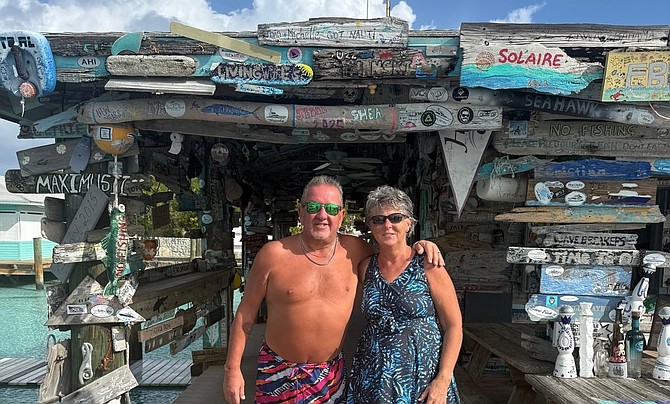
    For a couple married more than 30 years, a three-day birthday getaway to the idyllic Staniel Cay in the Bahamas was meant to be a quiet celebration of Gerry Martell’s 70th year. What unfolded on that trip in January would leave Ann Martell, Gerry’s wife from Ontario, Canada, grappling with unprocessed trauma that has required ongoing therapy and daily medication, as she continues fighting for answers months after her husband’s sudden death.

    The tragedy struck on the second day of the vacation, as the couple joined a boat tour and swam near a local cave. Ann Martell watched in horror as her husband fell into distress, clinging to a nearby orange buoy thrown by other people on the water. His final words to her were, “help me, I’m dying,” before he lost consciousness.

    The captain of a nearby yacht quickly launched a small dinghy to pull Gerry from the water and rushed him back to shore as fast as possible. During the desperate voyage back, Martell says her husband suffered violent seizures, an episode she now suspects was triggered by a brain bleed related to the underlying heart condition that would later be named as his cause of death. Once on shore, a doctor who happened to be staying at the marina performed cardiopulmonary resuscitation, but the efforts were too late—Gerry could not be revived, and Ann was told her husband had passed away minutes later.

    If the sudden loss was not devastating enough, Ann says the mishandling and callous treatment that followed the death compounded her trauma beyond measure. After Gerry’s body was moved to a medical trailer on the island, Ann was immediately ordered to gather her belongings, withdraw cash, and prepare to leave Staniel Cay before sunset, because the small island had no dedicated cold storage facility to hold a deceased person.

    “I was given almost no time to call my family, to sit with my husband, to say a final goodbye,” Martell shared in an exclusive interview with Tribune. “All I remember is people yelling at me nonstop. First they screamed I had to come up with $60,000 or Medevac wouldn’t come get the body, then the next minute they changed it to $6,000, saying we had to get him out of there immediately because we had nowhere to put him. They told me to grab my husband’s credit card and go get the cash right now.”

    The unprofessional, insensitive treatment extended to the responding law enforcement officer on scene, Martell says. The officer hounded her for an official statement immediately after Gerry’s death, following her around the medical trailer and repeating the demand even as she begged for space to process what had just happened. “I was getting so frustrated,” she recalled. “I just kept asking him to leave me alone, but he wouldn’t listen to anything I said.”

    Breaking the news of her father’s death to the couple’s adult children was equally devastating. Their daughter, who resides in Egypt, collapsed when she received the devastating call.

    The most distressing part of the entire ordeal, Ann says, came when it was time to transport Gerry’s body off the island to Nassau’s New Providence. She watched as staff loaded his body into the plane wrapped in nothing but heavy green garbage bags sealed with red tape, and then she was forced to sit through the entire flight with the wrapped body positioned directly at her feet. No staff member warned her ahead of time how the body would be transported, she says, nor did anyone offer to move her to another seat to avoid the dehumanizing experience.

    “How is it possible that no one had even a little bit of compassion to tell me what was going to happen, to treat my husband like a human being rather than trash?” she asked. Later, a nurse explained to Ann that the garbage bags were only an outer covering, placed over a clear standard body bag because Gerry’s body was wet when it was retrieved from the water. Ann rejects that explanation, pointing out that her husband did not drown, and was only in the water for a matter of minutes before he was pulled out.

    When they arrived in New Providence, Ann waited more than an hour for a mortician to arrive, only to learn he had been delayed by a prior funeral commitment. She and her family then waited for multiple additional hours before they were allowed to formally identify Gerry’s body.

    Though both the Bahamian Coroner and an attending pathologist expressed concern over the handling of Gerry’s body and the circumstances of the aftermath, and pledged to launch a formal investigation into the incident, Ann and her family have yet to receive any updates or official answers more than six months later. Ann has formally requested a full copy of the police report into her husband’s death, to clarify the official timeline of events and identify the doctor who performed CPR—she says she still does not even know his name. She has shared her correspondence with Commissioner of Police Shanta Knowles with the Tribune, and the commissioner had not responded to requests for comment as of press time.

    Gerry Martell’s cause of death was later confirmed by doctors to be a heart blockage. His body was cremated in the Bahamas, and his ashes were returned to Ann and their family in Canada. In the months since, Ann has relied on close friends to get through each day, saying the entire experience has left her disgusted, heartbroken, and deeply angry at how the situation was handled on Staniel Cay. “The way they treated my husband and me that day was completely reprehensible,” she said. “He was a human being, and he was treated with no dignity, no respect at all. I just want answers, and I want people to know what happened to us.”

  • Bain seeks to seal court records in $90,000 dispute

    Bain seeks to seal court records in $90,000 dispute

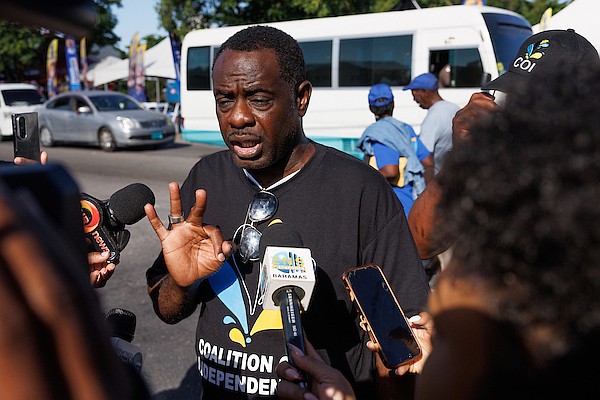
    As the Bahamas prepares for its upcoming general election, a high-stakes civil financial dispute involving one of the country’s opposition political leaders has moved back into the public spotlight. Lincoln Bain, head of the Coalition of Independents and a candidate in the approaching vote, is pushing to seal court records related to a 16-year-long $90,000 unresolved debt dispute — though his first attempt to secure the sealing order fell short earlier this month over a procedural misstep.

    The initial request for a sealing order was raised orally on April 1, 2026, during a Notice to Attend Examination hearing, with attorney Tanya Wright making the ask on Bain’s behalf. Travette Pyfrom, the attorney representing claimant Zinnia Rolle, immediately objected to the informal move, noting that no formal written application had been submitted to the court and that the proceeding was scheduled to be held in open, public court.

    While justices indicated they held no principled opposition to sealing the records in this matter, they confirmed they could not issue a ruling without a properly filed formal application before the court during the hearing. Court administration officials later confirmed that Bain’s legal team only submitted the formal written application one day after the hearing, on April 2, 2026. As a result, the request was not taken up for consideration during the April 1 proceedings, no sealing order has been granted to date, and all case documents remain accessible as part of the public court record.

    Details included in the submitted application outline Bain’s core arguments for sealing the dispute. As a prominent public figure running for public office, Bain’s legal team argues that confidential information shared during a closed-door chambers hearing held on March 13, 2026, was improperly leaked to the public and shared widely on the social media platform Facebook, despite explicit court warnings against disclosing confidential proceedings. The filing asserts the leak could only have originated from a person in attendance at the closed March hearing, and adds that Rolle has failed to appear at multiple court hearings over the past several years, leaving her potentially unaware of court-imposed confidentiality rules. Beyond the sealing request, the application also asks the court to require Rolle to attend all future hearings in person, unless explicitly exempted by the court or a mutual agreement between both legal teams. Bain has submitted a sworn affidavit in support of his request, court records confirm.

    The underlying dispute stretches back to a failed investment deal first struck in 2010. Rolle secured a Supreme Court judgment against Bain and his company in December 2021, ordering the defendants to repay $64,000 in outstanding funds. The ruling was upheld on appeal by the Bahamas Court of Appeal, and when the Judicial Committee of the Privy Council — the region’s highest court of appeal — declined to hear Bain’s final appeal in October 2025, the court awarded Rolle an additional $26,000 in legal costs, bringing the total unpaid judgment to $90,000.

    To date, the full $90,000 remains unpaid, and court-ordered enforcement actions to collect the outstanding sum have ramped up in recent months. As part of these enforcement proceedings, Bain was previously ordered to appear before Supreme Court Registrar Renaldo Toote to answer questions about his assets and financial status.

    The case has added new scrutiny to Bain’s public financial disclosures, which he submitted as a candidate in the upcoming May general election. In those mandatory declarations, Bain reported a personal net worth exceeding $1.5 million, and listed his total outstanding liabilities at just $85,000 — a figure that nearly matches the $90,000 unpaid judgment at the center of the ongoing dispute.

  • ‘Rules collapse if no enforcement’

    ‘Rules collapse if no enforcement’

    A growing political firestorm has erupted in the Bahamas after a top-ranking permanent secretary was photographed wearing partisan political gear on Nomination Day, prompting a former cabinet minister to demand formal disciplinary action and warning of systemic damage to the country’s civil service rules if the government fails to act.

    Brensil Rolle, the former Minister of Public Service, is leading the calls for accountability against Melvin Seymour, Permanent Secretary of the Ministry of Foreign Affairs. The controversy centers on photos published last week showing Seymour in clothing and accessories affiliated with the ruling Progressive Liberal Party (PLP), a move that critics say directly violates the long-standing General Order 949, the regulatory framework that mandates political neutrality for all public servants.

    Rolle emphasized that the dispute is far more than a superficial public relations problem: it strikes at the core of equal enforcement of civil service rules. If the government chooses to ignore Seymour’s violation, he argued, the entire regulatory system designed to govern public officer conduct will become unenforceable. Not only would this set a dangerous precedent for future violations, Rolle said, but it would also expose the administration to legal action from public servants who have already been disciplined for identical infractions under the same rules.

    “While I believe permanent secretaries have a right to their own political persuasion, as long as they’re holding that post as permanent secretary, they cannot violate any aspect of general order,” Rolle told reporters. “Any clear violation of general orders by a permanent secretary, like any other public officer, that person must be disciplined.”

    The timeline of the controversy adds an extra layer of gravity: as recently as February 2, Gina Thompson, Permanent Secretary of the Ministry of Labour and Public Services, issued a formal circular to all senior civil servants explicitly reminding them of the requirements of General Order 949. The circular, titled *POLITICAL ACTIVITIES OF PUBLIC OFFICERS*, laid out the core principle of civil service neutrality clearly: “The character of any public service depends entirely on its loyalty, integrity, ability and impartiality. It follows therefore that public officers should maintain a code of reserve in all political matters and that the public airing of an officer’s own political views may destroy that impartiality which any Government may expect of its own public service. To ensure, therefore, that standards are upheld, it may be necessary in a case of serious indiscretion, to consider action against the public officer concerned.”

    What has amplified public outrage is the revelation that Seymour himself previously disciplined a subordinate foreign affairs officer for the exact same violation. In May 2024, Ivan Thompson, a foreign service officer, received a formal warning letter signed by Seymour for violating General Order 949 over his own public political engagement. After images of Seymour in PLP gear emerged, Thompson publicly shared the warning letter alongside the photos of his superior, calling out the blatant double standard.

    “Imagine being called in by your PS, getting a serious tongue lashing, not giving you any opportunity to respond, then issuing you this said letter. Then today, this picture comes across your phone by the very person demonizing you of the very thing!” Thompson wrote in a public Facebook post. Speaking to reporters, Thompson added: “When you consider that the Permanent Secretary runs the ministry — the minister is not responsible for the ministry — the highest official in any government ministry is the permanent secretary, and when you see the highest official in the ministry doing that, you know we have some serious problems.”

    Hilbert Collie, the attorney representing Ivan Thompson, noted that the incident raises fundamental questions about whether employment rules and disciplinary procedures are applied equally across all levels of the civil service. Rolle echoed that concern, noting that going forward, the government will have no legal or moral standing to discipline any other public servant for political activity violations unless it acts against Seymour first. Worse, he argued, any public servant who has already been disciplined for similar offenses while Seymour avoids consequences has a legitimate legal right to sue the government for unequal treatment.

    “Justice cannot be for some and injustice for everybody else,” Rolle said.

    General Order 949 does not ban public servants from holding private membership in a political party, but it does require all officers to maintain a public “code of reserve” to uphold the impartiality of the civil service. For senior civil servants like permanent secretaries, who earn total compensation packages valued at well over $136,000 annually — including a base salary of around $104,000, a $20,000 responsibility allowance, a $12,000 housing allowance, a car allowance, and full pension benefits for Seymour, who is already retired — the requirement for neutrality is considered especially strict.

    When contacted for comment on Monday, both Seymour and Foreign Affairs Minister Fred Mitchell declined to address the controversy. Observers note that the photos surprised many Bahamian political watchers, given the widespread understanding that the rules around this conduct are clear and non-negotiable. Under standard disciplinary protocol for General Order violations, Rolle said, the process would begin with a formal show-cause letter requiring Seymour to explain why disciplinary action should not be pursued against him.

  • TikTok mom launches non-profit to help women without support

    TikTok mom launches non-profit to help women without support

    For many first-time mothers, navigating the overwhelming physical, emotional, and financial burdens of new parenthood can feel like an isolating journey — but one 26-year-old Bahamian content creator is turning her own experience and online community engagement into tangible support for women in need. Danille Hanna, who amassed roughly 15,000 followers on TikTok by sharing open, unfiltered updates of her first pregnancy, has officially launched Her Village Foundation, a non-profit organization dedicated to creating a reliable, hands-on support network for mothers without access to robust personal support systems.

    Hanna’s path to launching the non-profit began shortly after she welcomed her first child last month. What started as a personal project to document her own transition into motherhood evolved quickly after she began receiving hundreds of messages from women across the region sharing their own struggles. Before her pregnancy, Hanna had already built a small audience through a popular Christmas-themed series on TikTok, but her pregnancy vlogs — which covered everything from prenatal exercise and medical appointments to travel and delivery preparation — resonated far more deeply with followers. Women began opening up about a wide range of unmet needs, from postpartum recovery complications and strained co-parenting relationships to the overwhelming loneliness that comes with raising a newborn without close support.

    The turning point that pushed Hanna to turn her online community into a formal non-profit came when she offered her unused postpartum supplies to local mothers via Facebook. After giving away her initial items, dozens more women reached out requesting everything from baby clothes to essential feeding and care supplies. The overwhelming response laid bare the gap in existing support services for new mothers, Hanna said. “Sometimes our family members, our partners, they’re busy. Everybody else is still carrying on with their normal life, while we still have to heal and still take care of a baby,” she explained. “That kind of helps me come up with the idea of creating a non-profit, just having a safe community for mothers.”

    Officially launched on April 2, Her Village Foundation operates mostly on self-funding from Hanna, with additional contributions coming from public donations. In just the first weeks of operation, the foundation has already supported 35 local mothers. One of Hanna’s first initiatives, a community food drive, distributed fresh fish boxes to 30 mothers and full grocery and baby supply bundles to five additional families — multiple recipients were so moved by the support that they teared up when receiving their donations, Hanna said.

    A TikTok post announcing the foundation has already earned more than 18,000 views as of press time, with dozens of women reaching out to offer donations and share their own stories of struggle as new mothers. Addressing common misconceptions about maternal support, Hanna emphasized that help extends far beyond financial contributions. “Even women with help, it’s hard. When everybody goes to work and you’re up all night making bottles, and then you’re doing it all day and all night,” she said. “I think they think that help is just financial, and it’s not. I feel like it’s more so hands on. Yes, finance plays a big part in it, don’t get me wrong, but I feel like it’s very time consuming.”

    Looking ahead, Hanna has set her sights on expanding the foundation’s reach across the entire Bahamas, including the remote Family Islands. Women from the Bahamian islands of Andros and Eleuthera have already reached out to request support, confirming the widespread need for the initiative Hanna built from her own personal journey.

  • Insurers push tax breaks to lift islandwide coverage

    Insurers push tax breaks to lift islandwide coverage

    Jamaica’s insurance industry is advancing a new set of policy proposals to the national government, designed to tackle the country’s decades-long problem of low uptake for life insurance, health coverage, and private pension schemes. Industry stakeholders have repeatedly warned that the majority of Jamaican households remain severely financially vulnerable, with no safety net to absorb unexpected costs from illness, natural disasters, or retirement. The proposals, which include targeted tax breaks for insurance products, government-backed health savings accounts, and the reintroduction of mandatory automatic pension enrolment, were formally framed this week by Hugh Reid, General Manager of JN Life, during the Insurance Association of Jamaica (IAJ) 2026 conference held at Kingston’s Jamaica Pegasus Hotel.

    Speaking to the Jamaica Observer after his panel discussion — titled “Lessons from Hurricane Melissa: What a National Shock Revealed About Insurance Resilience” — Reid emphasized that low insurance penetration remains one of Jamaica’s most pressing unaddressed systemic financial risks. “Across every segment: life insurance, health cover, general insurance, and pensions, our performance is deeply poor,” Reid explained during the event. “The vast majority of Jamaicans have none of these critical protections.”

    Reid noted that decades of industry-led public financial education campaigns have failed to move the needle on uptake, pushing the sector to push for direct government policy intervention. He argued that low penetration is not driven by a rejection of insurance itself, but by economic reality: most working-class Jamaican households are forced to prioritize immediate essential expenses, such as school fees and utility bills, over long-term financial protection. “Insurance requires people to put off current consumption to plan for the future,” Reid said. “When families are balancing competing needs, the future is too often put on the back burner.”

    To counter this barrier, the sector’s new plan centers on near-term incentives to make saving and insurance purchase more attractive today, rather than only delivering benefits years down the line. “We need to give people an immediate reason to start saving, whether that’s through a health savings account they can draw on for upcoming medical costs, or an up-front tax credit for purchasing a life or critical illness policy that protects their family,” Reid outlined.

    During the panel discussion, IAJ Executive Director and session moderator Everton McFarlane raised a key counterpoint: how can new tax incentives be feasibly implemented at a time when the Jamaican government is facing significant pressure to protect public revenues and maintain fiscal discipline?

    Reid pushed back against the idea that current fiscal constraints should block long-term reform, arguing that short-term revenue concerns are too often used as an excuse to delay structural changes that would strengthen national savings and drive sustainable economic growth. “Our fiscal situation is frequently cited as a reason not to act, but we need to look at where we want the country to be decades from now, not just balance next year’s budget,” he said. Reid added that the debate should not only focus on whether the government can afford new incentives, but also examine whether existing harmful taxes, such as the temporary asset tax that has remained in place for years, are holding back the insurance sector’s ability to mobilize national savings and drive development. “Critics ask where the government will find the money for these incentives, but incentives deliver returns: more people buying coverage means more long-term savings, a more resilient population, and stronger economic growth down the line,” he noted.

    The reform push also puts renewed focus on Jamaica’s pension sector, where years of regulatory modernization have failed to expand participation to most working people. Data from Jamaica’s Financial Services Commission shows that total pension assets grew from JMD $779.9 billion to $829.23 billion between June 2024 and June 2025, but active pension membership still only accounts for just over 12% of Jamaica’s total employed labor force.

    Automatic pension enrolment, a proposal that has been debated for more than a decade in Jamaica, is back on the sector’s policy agenda. Reid explained that the concept is simple: all new workers, whether self-employed or hired by a company, would be automatically enrolled in a formal pension scheme, with an option for workers to opt out if they choose. “Global research shows that once people are enrolled, it takes active effort to opt out, so this simple change would automatically bring tens of thousands more Jamaicans into formal pension protection,” Reid said.

    Reid confirmed to the Business Observer that the IAJ is currently finalizing formal, detailed proposals for the government and financial regulators, with formal discussions scheduled to take place before the end of 2026. “We are building a concrete plan to discuss with policymakers about how we can deepen insurance penetration across the country,” he said. “Higher penetration doesn’t just help the industry: it makes all Jamaicans more financially resilient, and puts every household in a better long-term position.”

  • Consumer group calls for fairer prices at the pump

    Consumer group calls for fairer prices at the pump

    As ongoing conflict in the Middle East rattles global energy markets and Jamaica’s $4.50 per litre fuel price cap is scheduled to expire this week, the head of Jamaica’s Consumers Intervention (CIJ) is demanding sweeping regulatory reform to deliver fair, transparent fuel pricing for Jamaican consumers, arguing that pricing decisions cannot be left exclusively to private retailers and suppliers.

    Michael Diamond, president of the 2015-founded consumer advocacy group, is sounding the alarm over what he calls widespread opportunistic price gouging, warning that retailers are already marking up fuel prices based on future market volatility rather than the actual cost of inventory already held in the country. Global energy markets operate largely on futures trading, meaning pump prices are often tied to projected supply and demand shifts rather than current market conditions. The geopolitical turmoil that erupted in late February 2026 disrupted critical shipping lanes through the Strait of Hormuz and damaged Qatar’s key Ras Laffan LNG complex, sending global commodity prices soaring: Brent crude settled at $90.90 per barrel last Friday, while Asian spot LNG prices jumped more than 140%. For Diamond, this global volatility only affects future fuel shipments, not the stock already on Jamaican soil, making automatic immediate price hikes unjustified.

    Diamond specifically called out the inconsistent pricing logic used by major local energy stakeholders, pointing to the Jamaica Public Service Company (JPS) and state-owned refiner Petrojam, both of which have tied immediate price increases directly to the Middle East conflict. “This is price gouging dressed up as market mechanics,” Diamond argued. “Retailers are collecting windfall profits on inventory they bought cheap, because consumers can’t tell the difference.”

    Compounding the problem, Diamond noted in an interview with the Jamaica Observer on Tuesday, is the concentrated structure of Jamaica’s fuel market, where a small cohort of multinational suppliers controls distribution and in many cases owns retail service stations directly. This creates an unfair playing field for independent dealers, who are forced to purchase fuel from competing vertically integrated firms that do not offer the same preferential pricing given to company-owned stations.

    To address these systemic flaws, Diamond is calling for enhanced, proactive oversight from Jamaica’s key regulatory bodies, including the Consumer Affairs Commission (CAC), the Office of Utilities Regulation (OUR), and the Fair Trading Commission. Beyond ad-hoc oversight, the CIJ is pushing for regular mandatory audits of fuel supply chains and pricing practices to verify that price increases are justified, even during non-emergency periods. The group also is calling for clearer public communication about how fuel pricing is calculated, to empower consumers to hold retailers accountable. While the CIJ has operated largely out of the public eye since its founding, Diamond reaffirmed the organization’s ongoing commitment to advancing consumer rights through public education and policy engagement.

    Diamond’s advocacy comes on the heels of the Jamaican government’s recent decision to eliminate its gasoline subsidy program amid soaring global oil prices, a change that will allow full global price increases to pass through to consumers starting as early as this Thursday, when new weekly fuel prices are set to be announced. Energy Minister Daryl Vaz confirmed last week that the $4.50 price cap would be allowed to expire, stoking widespread consumer anxiety over sharp upcoming price hikes. Policymakers are currently weighing a new tiered pricing framework to replace the old subsidy program, which had cost the government billions of dollars to offset weekly price increases. In the interim, the government has urged Jamaican citizens to conserve fuel to help mitigate broader economic fallout from the price shifts.

    Before the recent escalation of Middle East tensions, global oil prices had remained relatively stable, averaging roughly $70 per barrel with only moderate fluctuations. The new conflict has upended that stability, putting persistent upward pressure on both crude oil and refined petroleum product prices globally.

    Diamond laid out what he frames as straightforward solutions to the current crisis, contingent on political will to act. First, he called for full audits of retailer inventory logs, requiring all fuel purchased before the outbreak of conflict to be sold at pre-conflict prices plus a reasonable, fair retail margin, a step he says would immediately curb opportunistic markups. Second, he argued that Jamaica’s $6.8 billion net international reserve should be deployed to stabilize domestic fuel prices, rather than remaining unused.

    Underscoring the government’s central responsibility to protect consumers, Diamond said authorities must launch formal investigations into retail pricing practices to ensure all markup is fair and justified. “Without oversight, consumers will continue to suffer from inflated prices that do not correlate with genuine market conditions,” he said. “Jamaicans are being forced into demand destruction not by global supply constraints, but by local profiteering. Until Government treats this as the gross violation it is, every litre pumped is money stolen from consumers who have no choice but to pay.”

    In response to the CIJ’s concerns, Phillip Chong, president of the Jamaica Gasoline Retailers Association (JGRA), told the Business Observer on Tuesday that he does not anticipate price gouging among his organization’s members, but noted the association cannot speak for the marketing and supply companies that sit between refineries and retail stations. Chong explained that JGRA member retailers typically stick to a standard 12–15% percentage margin regardless of global price shifts driven by the Middle East conflict. He emphasized that Jamaica’s fuel market is fully deregulated, meaning the JGRA has no legal authority to set or mandate pricing for its members, nor can it regulate the entire market.

    Chong attributed any potential unfair pricing variability to the marketing companies, which often sell fuel to different retailers at differing price points, creating uneven costs across the industry. He added that while the JGRA promotes a strict code of ethics for its roughly 120 members, there are more than 300 total fuel retailers across Jamaica, meaning many operators fall outside the association’s influence. “The JGRA cannot regulate the market, and as such we can only continue to encourage ethical behaviour among our members,” Chong said. “This is not the first time that we are in a crisis-like situation, and our members have acted quite honourably and diligent in their dealings.”

  • DIGITAL HEIST

    DIGITAL HEIST

    A shifting landscape of financial fraud has emerged in Jamaica, where the total number of reported cases and aggregate losses have dropped for the first time in more than four years — but authorities warn that remaining incidents are growing more organized, targeted, and costly per attack. New data from the Bank of Jamaica’s (BOJ) 2025 Financial Stability Report, released March 31, details this dramatic transformation of financial crime across the nation’s banking sector.

    Last year, total fraud losses across Jamaica’s deposit-taking institutions fell 18 percent year-over-year, dropping from approximately $2.9 billion to $2.4 billion. Meanwhile, the volume of reported fraud incidents plummeted 58.9 percent to 44,316, marking the first pullback in overall fraud activity since 2021. Despite these encouraging aggregate numbers, law enforcement leaders stress the changing nature of fraud poses new, more complex risks to the financial system.

    “Whilst the volume of reports is contracting, financial losses are increasing with fewer attempts,” explained Horace Forbes, head of the Jamaica Constabulary Force’s Fraud Squad and Financial Crimes Investigation Division, in an interview with the Jamaica Observer.

    The BOJ’s analysis breaks down how fraud composition has shifted dramatically. Credit card fraud rose 29.4 percent and debit card fraud increased 16.8 percent in 2025, with the growth of card-not-present transactions — online, phone, and in-app payments that do not require physical presentation of a card — driving much of this uptick. At the same time, traditional fraud categories saw steep declines: loan fraud dropped 87 percent, internet banking fraud fell 78.4 percent, and cheque fraud decreased 23.4 percent.

    Forbes noted that investigators are increasingly facing sophisticated criminal syndicates rather than isolated bad actors, with networks dividing labor across specialized roles to pull off faster, cross-jurisdictional attacks. Team members handle discrete tasks from hacking accounts and socially engineering victims to moving illicit funds and cashing out stolen assets, allowing operations to be completed in hours across multiple locations.

    Most modern attacks are routed through digital channels. One common tactic involves compromising email accounts tied to high-value transactions, such as real estate deals or payments to overseas suppliers, allowing fraudsters to intercept transfers and redirect funds to their own accounts. In other schemes, stolen account data harvested from one region is used almost instantly to initiate fraudulent transactions in another, leaving little time for security systems to flag suspicious activity.

    The speed of modern fraud has made recovering stolen funds far harder once transactions are finalized, Forbes emphasized. While funds remain within Jamaica’s formal banking system, financial institutions can freeze suspicious accounts and investigators can secure court orders to trace and recover assets. But once cash is withdrawn or funds are laundered through online trading platforms, e-commerce sites, or cryptocurrencies, tracing becomes significantly more complicated, often requiring cross-border cooperation.

    “For evidentiary purposes, this will require the use of mutual legal assistance, which takes some time,” Forbes told the Business Observer. He added that many syndicates are structured to mirror legitimate businesses, passing victim interactions between multiple team members to keep the facade of a normal transaction and avoid triggering security alerts.

    This new fraud dynamic has forced investigators to revise their approach, placing greater priority on proactive asset tracing and seizure to counter the rapid movement of funds across accounts and national borders.

    The BOJ attributes the overall decline in fraud to meaningful improvements in the sector’s cybersecurity defenses, enhanced real-time transaction monitoring, and closer coordination across financial institutions and regulators. These gains show that stronger controls are working to root out traditional fraud schemes. However, the growth of digital payments and card-not-present transactions has created new exposure to cyber and operational risks.

    The shift means that even with fewer total incidents, each successful attack now carries higher average losses, and faster execution makes recovery far less likely. This has put growing pressure on Jamaican banks to invest in more robust real-time monitoring and prevention systems to block sophisticated attacks before they are completed.

    Despite these new challenges, the BOJ confirmed that Jamaica’s financial system remains resilient, supported by strong capital buffers, high liquidity levels, and ongoing regulatory updates designed to strengthen cybersecurity and industry oversight.

    Authorities stress that the drop in reported fraud cases does not mean overall risk is decreasing. Instead, criminal groups have adapted their strategies, shifting to fewer, better-coordinated attacks that deliver larger payouts. This evolution represents a broader transformation of financial crime globally, with more efficient, targeted attacks reshaping risk profiles for banking systems worldwide.