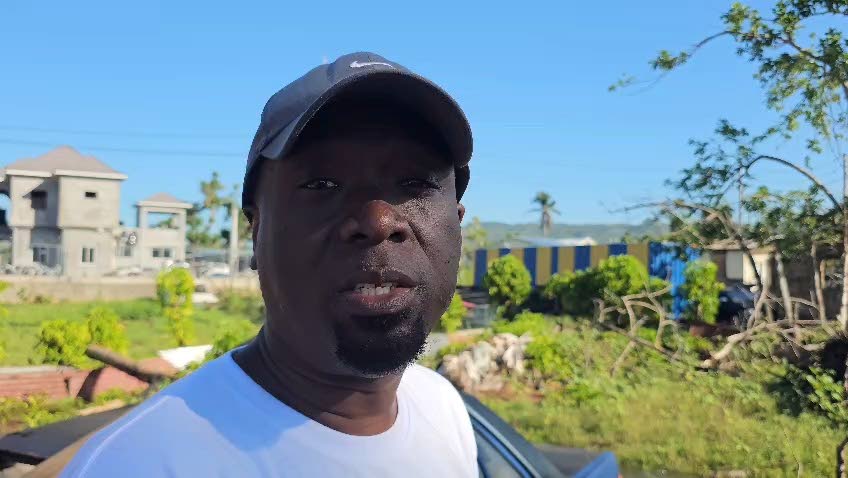
LACOVIA, St Elizabeth — Fed up with weeks of unaddressed flooding that has destroyed homes, ruined livelihoods, and upended daily life, hundreds of residents from multiple districts in this south-central Jamaican parish took collective action on Tuesday, closing the Lacovia main road with protest placards to demand immediate clearing of the area’s clogged drainage networks. The roadblock was dismantled quickly to restore traffic flow connecting Lacovia to eastern and western hubs including Holland Bamboo and Santa Cruz, but the deep-rooted anger over the ongoing crisis remains unaddressed.
作者: admin
-
Not JPS’s fault, says Paulwell
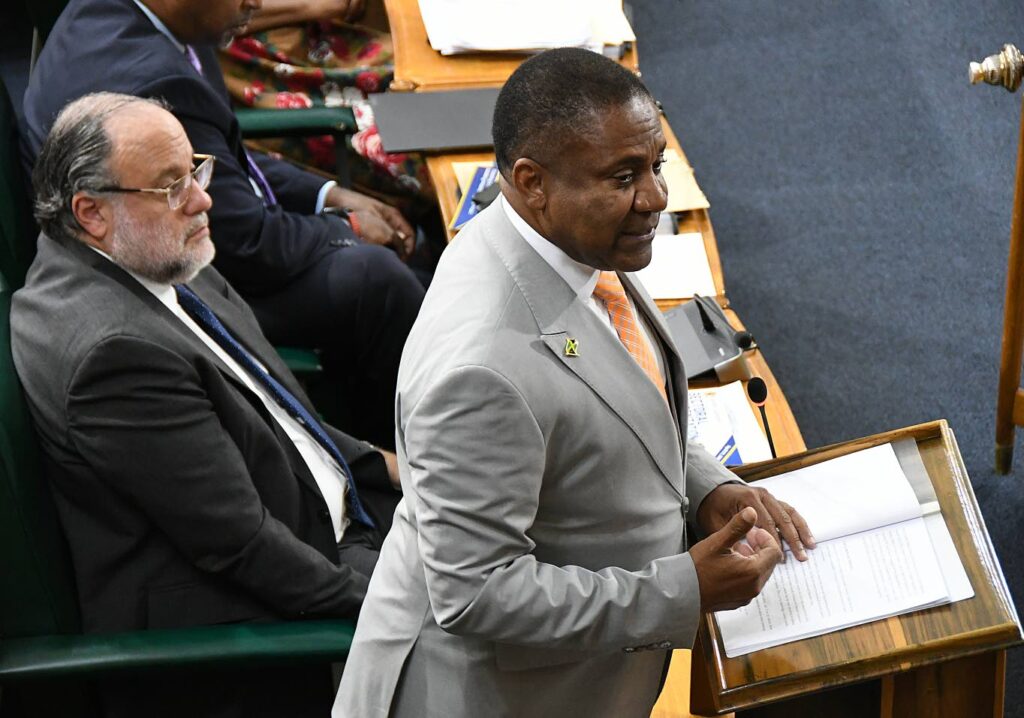
As Jamaica navigates a heated public debate over the future of the Jamaica Public Service (JPS) licence – which is scheduled to expire in 2027 – and growing public frustration over persistent high electricity prices, Opposition Energy Spokesman Phillip Paulwell has pushed back against dominant narratives, arguing that flawed government energy policy, not the existing licence framework itself, is the root cause of the island nation’s affordability crisis.
Speaking during his contribution to the 2026/27 sectoral debate in Jamaica’s Parliament on Tuesday, Paulwell dismantled what he framed as a misleading public conversation that links elevated power costs directly to the terms of JPS’s operating licence. Instead, he traced the problem to successive government failures to diversify the country’s energy mix and open up the sector to healthy competition, before laying out a comprehensive set of restructuring proposals to anchor any upcoming revised or renewed licence agreement.
At the core of Paulwell’s plan is a fundamental overhaul of how electricity generation capacity is developed and approved in Jamaica. A centerpiece reform is the elimination of JPS’s current right of first refusal to replace its existing generation infrastructure. Going forward, he argues, all new generation licences should be awarded through the government-run Generation Procurement Entity (GPE) via a fully transparent international competitive tender, with contracts awarded based on the lowest-cost viable renewable energy technologies paired with high-efficiency energy storage solutions.
“ You can’t award licences for renewables without thinking about storage, and the level of efficiency in storage has improved tremendously,” Paulwell told Parliament. He emphasized that expanding competition in renewable energy generation is the only sustainable path to long-term cost reduction, a position that aligns with global and regional policy trends shifting toward competitive procurement to cut energy prices and speed the clean energy transition.
Beyond generation reform, Paulwell called for the long-delayed rollout of energy wheeling, a transmission mechanism that would allow large industrial and commercial businesses to generate power at one site and move it across the national grid to operations at other locations. He also pushed for expanded self-generation access, with a priority on the country’s special economic zones, arguing that allowing zone operators and tenants to produce their own power would cut operational costs, boost Jamaica’s global competitiveness, and attract much-needed foreign investment.
For residential consumers and small business owners, Paulwell highlighted the urgent need to reform and improve net metering programs, which currently allow households with rooftop solar to feed excess power back into the grid. Updating these policies would put more money in consumers’ pockets and encourage broader adoption of residential renewable energy, he said. The opposition spokesman also proposed a major shift in distribution infrastructure, calling for competitive bidding for microgrid licences with a clear mandate to extend reliable power access to unserved and underserved communities across Jamaica. Even where public subsidies are required to make the projects economically viable, universal access is a non-negotiable public priority, he argued: “This is what it means to build with purpose and to build with people.”
Paulwell also turned attention to systemic inefficiencies that drive up overall costs for all consumers, specifically highlighting widespread illegal power connections and unmetered usage. He called for a clear, enforceable national mandate to crack down on these losses, urging the government to take greater responsibility for addressing the issue. His approach would pair stiffer penalties for electricity theft in more affluent communities with targeted support to connect low-income households to the grid legally, removing the incentive for illegal hookups in marginalized areas.
In addition to generation and distribution reforms, Paulwell called for clearer structural separation of JPS’s core generation, transmission, and distribution operations, as well as sweeping billing transparency reforms. Slamming Jamaica’s current billing system as one of the most opaque in the world, he argued that all charges – for generation, transmission, distribution, and system losses – must be fully disaggregated to give consumers clear insight into exactly what they are paying for.
Consumer protection was another key pillar of Paulwell’s proposals, particularly around compensation for damaged household appliances caused by frequent voltage fluctuations. He called for an end to the practice of JPS avoiding liability by referencing fine print in consumer contracts, saying the sector must be restructured to prioritize robust protections for residential customers.
Paulwell’s comprehensive set of recommendations comes as Jamaica enters a multi-year period of review ahead of the 2027 expiry of JPS’s current licence, with affordability remaining one of the most pressing public policy issues for Jamaican households. His intervention reinforces longstanding opposition calls to reframe Jamaica’s energy sector around consumer interests rather than incumbent utility preferences.
-

Barefoot beginnings to city honours
Decades before he rose to become one of the most globally influential voices in dancehall music, Bounty Killer — born Rodney Pryce — was just a child growing up in the Seaview Gardens neighborhood of Kingston, Jamaica. The gritty community that shaped his early struggles and forged his inner strength is now set to give the iconic artist the highest local honor a native son can receive.
In a move that closes a meaningful full-circle chapter in Pryce’s life, the Kingston and St Andrew Municipal Corporation (KSAMC) announced last Tuesday during a regular public meeting that the legendary entertainer will be awarded the prestigious Keys to the City of Kingston. In an additional, deeply personal tribute, the small residential street he walked and played on as a barefoot boy will also be renamed in his honor.
The announcement won unanimous, cross-divisional support from sitting councillors, who highlighted Pryce’s decades-long contributions to Jamaican music, cultural identity, and the development of younger generations of creative talent. Among the supporters were Hazel Anderson, representing the Seaview Gardens Division; Michelle Thomas Nelson of Duhaney Park; Patrick Roberts of Molynes Gardens; Kelvin Hall of Tower Hill; and Andrew Harris of Hughenden. Their collective backing made clear that Pryce’s impact extends far beyond the recording studio, cementing his status as a cultural anchor for the entire Kingston region.
Up-and-coming dancehall artist Razor B, who attended the KSAMC meeting, also shared his tribute, thanking the municipal corporation for recognizing Pryce’s far-reaching impact. Razor B specifically noted how the veteran icon personally shaped his own career and artistic path, a testament to the mentorship Pryce has provided to emerging talent across the industry.
In an interview with the Jamaica Observer following the announcement, Pryce opened up about the flood of emotion and reflection the honor sparked, describing a overwhelming sense of pride and gratitude that words can barely capture. For the self-described “King of Kingston”, the recognition is far more than a formal civic gesture — it is a deeply personal milestone rooted in his earliest memories.
“As a child, I would spend all day on that same street, playing games with my friends in torn pants, barefoot, covered in sweat, until the street lights flickered on at night,” Pryce shared. “It’s an incredible feeling to be honored by the same people who knew me when I was just a little boy, who watched me grow into the person I am today. I never in my wildest dreams imagined this day would come.”
Calling the honor a “dream come true”, Pryce emphasized that the recognition from his hometown community means more than any global chart success or international award he has earned over his career. He also extended public thanks to his long-time manager and brother Paul “Bankey G” Giscome, who has stood beside him every step of his decades-long career, noting that Giscome shares in his joy and pride over the achievement.
-

Bullets litter crime scene in cops’ murder trial
A high-profile murder trial involving six current and former members of the Jamaica Constabulary Force (JCF) reached a critical procedural turn this week, when a judge granted prosecutors permission to present graphic crime scene imagery to the jury over repeated pushback from the defense team. The case centers on the fatal 2013 shooting of three men in St. Andrew, a confrontation that authorities say unfolded during a police operation, and has drawn intense scrutiny over the conduct of Jamaican law enforcement.
The six accused officers are Sergeant Simroy Mott, Corporal Donovan Fullerton, Constables Andrew Smith, Sheldon Richards, Orandy Rose, and Richard Lynch. Fullerton faces an additional charge of filing a false statement to the Independent Commission of Investigations, Jamaica’s anti-corruption and police oversight body. The incident that sparked the trial dates back to January 12, 2013, when Matthew Lee, Ucliffe Dyer, and Mark Allen were killed during a shootout on Acadia Drive in St. Andrew.
According to prosecution allegations, the three victims plus a fourth unidentified man were traveling in a blue Mitsubishi Outlander when they were flagged down by officers conducting a targeted operation. Prosecutors claim the driver initially hesitated to pull over, and after finally stopping, multiple men exited the vehicle and exchanged gunfire with the responding officers. The shootout ended with Lee, Dyer and Allen killed at the scene, while the fourth man managed to escape. This narrative is contested by the defense, which has challenged the prosecution’s evidence throughout the early phases of the trial.
The key witness in this phase of the proceeding is a former JCF detective constable who was originally assigned to document the 2013 crime scene. The witness left the force years ago to relocate overseas for new employment, and his current work commitments made an in-person court appearance impossible. Following a special procedural application, the court approved the witness to testify remotely via pre-recorded video link, allowing the seven-member jury to view his evidence.
The witness confirmed that he was the official photographer for the Acadia Drive crime scene, and also told the court that the crime scene extended beyond Acadia Drive to include portions of nearby Evans Avenue and Roxborough Avenue. During Tuesday’s proceedings, the jury and witness viewed a DVD containing more than 30 marked crime scene photographs. The vast majority of the images show spent bullet casings, mostly 5.56mm and 9mm rounds, scattered across the ground, alongside markings placed next to red stains the witness identified as blood spots and dried blood trails on concrete. Other notable items captured in the photos include a black and grey peaked cap, a leather wallet, and a fragment of what appears to be a leather belt.
When testimony began on Monday, the former detective acknowledged a critical gap in his evidence: he could not confirm that a spent casing presented to court in an evidence envelope matches the casing he originally collected and sent to the government forensic laboratory for ballistic testing. When pressed by lead prosecutor Kathy-Ann Pyke to recall his actions on the day of the 2013 shooting, the witness said the 13-year gap made independent memory impossible. He explained that he relies on his original post-incident statement to refresh his recollection of the event, noting that written documentation is the standard method for preserving crime scene details.
“I made notes at the scene. We preserve memory by writing statements, and that is why I refer to my statement and not memory. This statement refreshes my memory on what I wrote but not what I did on that particular day,” he told the court Monday.
The defense team, led by defense attorneys Hugh Wildman, John Jacobs, and Althea Grant-Coppin, had formally objected to the jury being shown the graphic DVD imagery ahead of Tuesday’s session, but their objection was overruled by the judge. The trial is scheduled to resume proceedings on Wednesday, with additional evidence and witness testimony expected in the coming days.
-
No place to hide
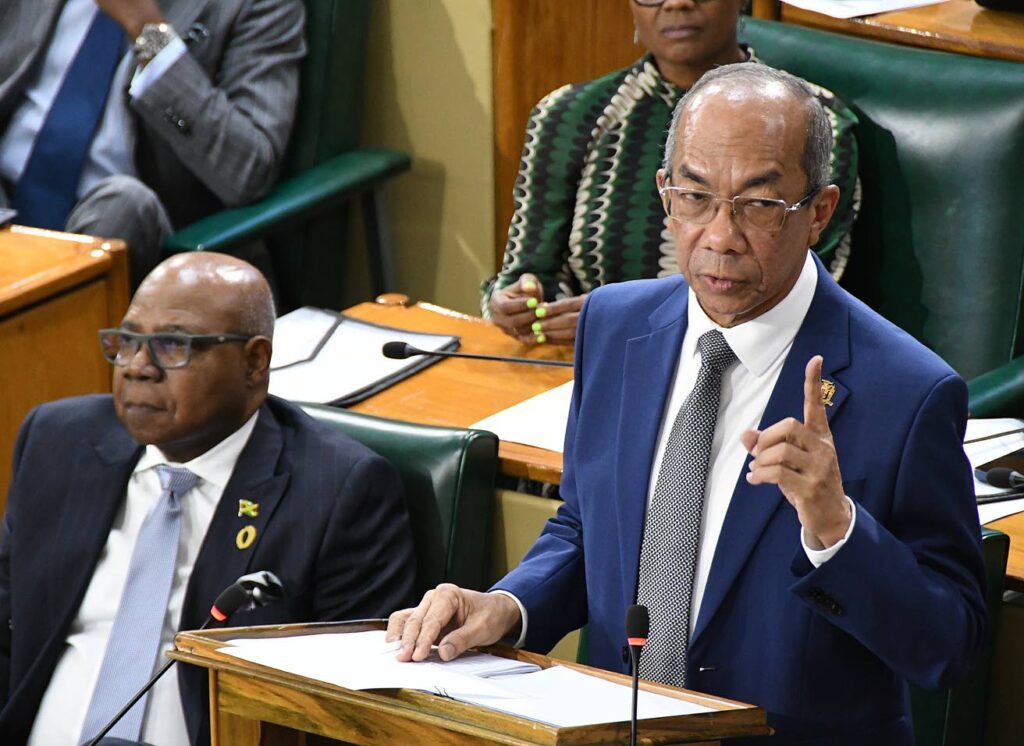
Delivering the opening address for the 2026/27 Sectoral Debate in Jamaica’s House of Representatives on Tuesday, Minister of National Security and Peace Dr. Horace Chang announced a landmark milestone in the country’s decades-long fight against violent crime, crediting targeted, sustained government investment in law enforcement for the transformative results.
Central to Chang’s presentation was a striking improvement in arrest rates relative to homicides: the ratio of arrests per 100 murders has climbed dramatically from just 44 in 2012 to 99 in 2025, a near one-to-one ratio of arrests to lives lost to violent crime. ‘This is the essence of deterrence,’ Chang explained, noting that the growing certainty of capture and incapacitation sends an unmissable warning to individuals who turn to criminal activity.
Over the past years, the Jamaican government has prioritized upgrading the Jamaica Constabulary Force (JCF), pouring resources into expanded personnel, new and renovated infrastructure, modernized patrol vehicles, and enhanced intelligence-gathering infrastructure. Chang emphasized that these investments have driven a fundamental shift in public safety outcomes that has not been seen in over 15 years.
The most tangible indicator of progress is the national murder rate: in 2025, Jamaica recorded 674 homicides, marking the first time in 32 years that the annual total fell below the 700 threshold. The downward trend has accelerated into 2026, with first-quarter murder rates dropping 29% compared to the same period last year. Chang added that the final quarter of 2025 (with 153 murders) and first quarter of 2026 (with 134 murders) are the two lowest quarterly homicide counts recorded since the JCF began collecting structured, disaggregated crime data 25 years ago.
Between 2017 and 2025, the cumulative impact of these security interventions has saved thousands of lives, Chang said: over that period, roughly 3,000 homicides occurred, compared to the higher baseline that preceded the government’s reforms. ‘That represents an average of 374 Jamaicans each year who are alive today because of these interventions,’ he stated.
Beyond homicides, other categories of violent crime, including non-fatal shootings, have followed the same downward trajectory. Chang extended the Jamaican government’s sincere gratitude to both the rank-and-file of the JCF and the country’s international security partners, whose human and technical support have been critical to the progress. ‘Without these actions and investments Jamaica would have continued on a trajectory that could have made us one of the most unsafe places to live in the world,’ he noted. ‘We changed that path.’
Chang attributed the breakthrough to disciplined, consistent execution of long-term reform, which has now pushed the country to a tipping point of accelerated public safety gains. The progress is rooted in two key improvements: stronger intelligence-led policing and more rigorous case investigation. Another landmark achievement is record-high firearm seizure rates: in 2025 alone, Jamaican law enforcement recovered 1,076 illegal weapons, most of which were pistols—the weapon most frequently used in homicides.
The ratio of firearm seizures to murders has also improved dramatically, outpacing the rate of violent crime. Back in 2011, Jamaican authorities seized an average of 44 firearms for every 100 murders, a 4:10 ratio. By 2024, that ratio climbed to 73 seizures per 100 murders, or 7:10. In 2025, the ratio hit 15:10, meaning authorities now recover an average of three illegal firearms for every two murders committed.
‘This shows clear evidence that enforcement is now getting ahead of violent crime,’ Chang said. He framed the current performance as a major national breakthrough, enabled by better intelligence, inter-agency coordination, and a more cohesive national response to organized crime.
Through the transformed JCF and deepened collaboration with other key security agencies including the Major Organised Crime & Anti-Corruption Agency (MOCA), Passport, Immigration and Citizenship Agency (PICA), and Jamaica Customs Agency, law enforcement is systematically disrupting transnational and local criminal networks and eroding their ability to operate. ‘In Jamaica, there is no hiding place for criminals. We will find them! We will incapacitate them! We will arrest and prosecute them!’ Chang declared. ‘Critically, our intelligence is now outpacing the criminals — and we will continue to strengthen it.’
-

GIRLZ ON BRINK
Jamaica’s iconic senior women’s national football side, the Reggae Girlz, stand on the cusp of unprecedented regional history this November, with two tickets to global elite tournaments up for grabs when they clash with Costa Rica in the Concacaf W Championship quarterfinals.
The highly anticipated matchup is scheduled for Friday, November 27 at a venue in Texas, following the official draw conducted by the Confederation of North, Central American and Caribbean Association Football (Concacaf) earlier this week. For Jamaica, a single victory over their Central American opponents will not only secure a spot in the tournament’s semifinal round, but it will also punch their ticket to the 2025 FIFA Women’s World Cup set to be hosted in Brazil — marking their third consecutive appearance at the global competition.
Beyond World Cup qualification, a win against Costa Rica would also lock in the Reggae Girlz’ place at the 2028 Summer Olympic Games in Los Angeles, a milestone that would make history for the entire Caribbean nation: no Jamaican men’s or women’s football team has ever competed in the Olympic football tournament.
This quarterfinal fixture marks the fourth consecutive World Cup qualifying campaign that Jamaica has drawn Costa Rica as an opponent, creating a compelling narrative of repeated rivalry across more than a decade of regional competition. The two sides have a long, tightly contested history in these high-stakes matches, with Jamaica holding the upper hand in recent encounters.
The first meeting in this streak of consecutive qualifying matchups came in 2014, when Costa Rica claimed a 2-1 win over Jamaica that blocked the Reggae Girlz from advancing to the knockout round and secured the Central Americans’ spot at the 2015 FIFA Women’s World Cup in Canada. It would be the last time Costa Rica bested Jamaica in qualifying.
In the 2018 Concacaf W Championship, a single first-half strike from star striker Khadija “Bunny” Shaw earned Jamaica a 1-0 win that pushed them through to the knockout stage. The side went on to defeat Panama in a penalty shootout in the third-place playoff to secure their first ever Women’s World Cup berth for the 2019 tournament in France. Four years later, at the 2022 edition of the regional championship, Jamaica again edged Costa Rica 1-0 in extra time to advance, booking their spot at the 2023 Women’s World Cup co-hosted by Australia and New Zealand, where they made history by advancing to the knockout round for the first time.
Leading the Reggae Girlz into this latest high-stakes clash is head coach Hubert Busby, who is aiming to become the third different manager to lead Jamaica to a Women’s World Cup, following Hue Menzies (2019) and Lorne Donaldson (2023). Busby can already point to an impressive start to the side’s campaign: Jamaica finished the group stage of Concacaf W Championship qualifying undefeated, topping Group B with four wins from four matches. Most recently, they secured a 2-0 home win over Guyana at Kingston’s National Stadium on the final matchday to cement their place in the quarterfinals.
The Reggae Girlz-Costa Rica matchup is one of four quarterfinal fixtures in the regional competition. Other matchups see four-time World Cup champions the United States face El Salvador, 2024 Olympic bronze medalists Canada take on Panama, and host nation Mexico square off against Haiti.
The historic nature of this matchup is not lost on fans or players alike: a single result this November can cement the Reggae Girlz’s status as the most successful women’s football side in Caribbean history, while opening an entirely new chapter for football development across the region.
-
Blood on their hands
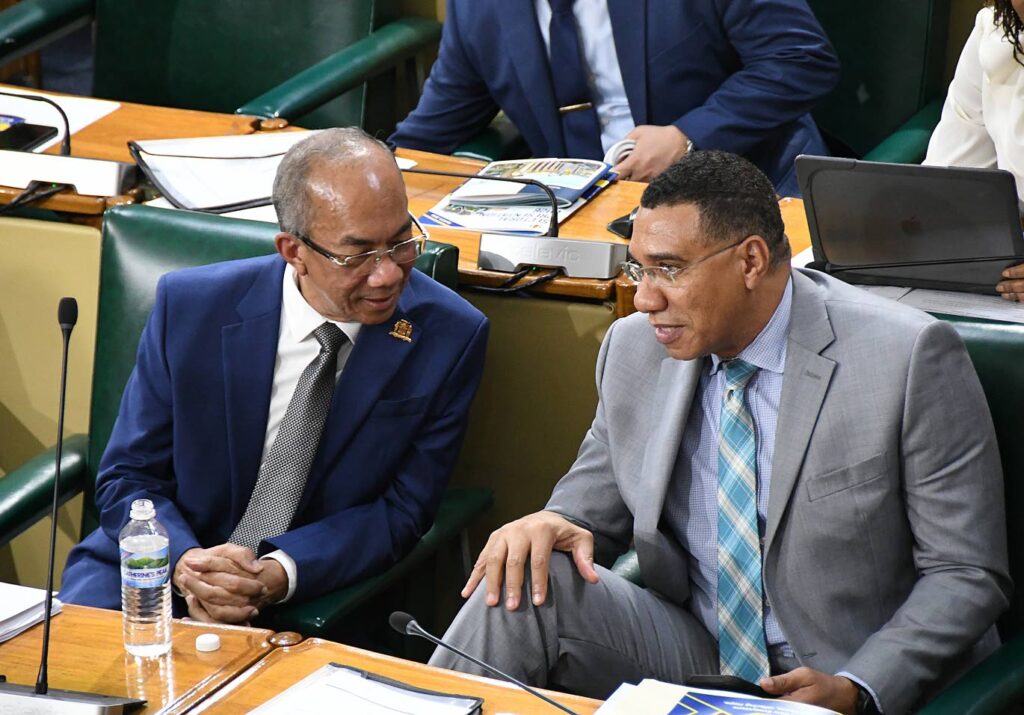
During Tuesday’s 2026/27 Sectoral Debate in Jamaica’s House of Representatives, National Security and Peace Minister Dr. Horace Chang, who also serves as deputy prime minister, delivered a charged address holding civil society organizations directly responsible for the recent fatal shootings of two retired police officers from his constituency. The minister, who has a long history of tense clashes with advocacy groups – most notably Jamaicans for Justice (JFJ), which he has previously accused of accepting “blood money” – doubled down on his scathing criticism, arguing that unfounded public claims of unjustified police killings created a culture of retaliation that led to the officers’ deaths.
Dr. Chang detailed the circumstances of one killing to the chamber, identifying the victim as Mr. Brown, an elderly retired officer described as a quiet, unassuming man. Brown was shot dead by gunmen while driving his aged Toyota Corolla, after slowing down to navigate a pothole. The minister emphasized that just one week before the attack, public claims had circulated that police had killed an unarmed civilian without justification, creating a hostile narrative that criminals exploited to target vulnerable retired officers. “These were retired, so they [gunmen] found the soft targets,” Dr. Chang told lawmakers.
While maintaining that Jamaica remains a robust democracy rooted in the rule of law, and asserting he welcomes legitimate criticism of Jamaica’s security forces, Dr. Chang pushed back against repeated calls from civil society for independent investigations into police-related fatalities. He noted that multiple domestic oversight bodies already monitor, evaluate and regulate the conduct of police officers and public servants, dismissing repeated demands for extra independent reviews as “foolishness.”
Citing official data from the July 2024 report from Jamaica’s Independent Commission of Investigations (Indecom), Dr. Chang backed his argument with empirical evidence. Between 2011 and 2023, Indecom investigated 1,936 fatal shootings involving security forces, and only 66 of those cases proceeded to criminal prosecution – a prosecution rate of just 3.4%. Since the start of 2024, 11 police officers have been charged in connection with fatal shootings; of those, 8 were off-duty at the time of the incident, with only 3 facing charges for events that occurred while on active duty.
In a sharp rebuke of JFJ and other advocacy groups that push for increased police accountability measures including mandatory body cameras, Dr. Chang challenged activists to experience the intensity of armed policing first-hand: “Sometimes some of these people who are calling for the police to always have cameras, they should go out there and go to Twickenham Park [training school] and let the JCF fire some rounds and let them hear what the M16 bullets really sound like.”
Dr. Chang remained unapologetic for his stance, stressing that law enforcement officers should not be placed in unnecessary danger because of unfounded “verandah talk” – a colloquial term for unsubstantiated public gossip. He argued that civil society groups and public opinion should not interfere with the work of established oversight bodies, noting that when false narratives portray police as routinely killing civilians without cause, criminals become emboldened to retaliate against easy targets like retired officers. “If criminals come to believe that police officers are killing persons wantonly they will retaliate and attack other officers whom they perceive as soft targets. These groups must adhere to the evidence reflected in the data. It is wrong to do otherwise. It is dangerous, and it is immoral,” Dr. Chang insisted.
-
OVERREACH!
A routine ethics hearing at Jamaica’s Parliament descended into fractious internal debate on Tuesday, as the Ethics Committee found itself in uncharted procedural waters, unable to resolve a fundamental dispute over its authority to recall sitting Member of Parliament Dennis Gordon of St Andrew East Central. What had been billed as a session where the media would hear testimony from Gordon instead devolved into a tense, wide-ranging debate over whether the committee has the legal standing to revisit a matter already finalized by the full House of Representatives.
At the core of the standoff is the committee’s earlier recommendation on Gordon’s exemption application, which was already approved by Parliament. Newly surfaced public information has cast doubt on the accuracy of disclosures Gordon submitted as part of that original application, prompting some committee members to push for a second invitation for Gordon to appear to answer questions.
Committee chair Marlene Malahoo Forte defended the effort to reconvene Gordon, framing the request as a matter of core procedural fairness. She argued that Gordon deserves a formal opportunity to respond to the new allegations before the committee draws any final conclusions. But after Gordon rejected the invitation to attend, the debate quickly shifted to the unresolved question of whether the committee retains any jurisdiction over the case once the House has acted on its original recommendation.
Opposition MP Anthony Hylton, an attorney representing St Andrew Western, was among the most prominent voices calling for the jurisdictional question to be settled before any further action. Hylton emphasized that the committee cannot overstep the boundaries laid out in parliamentary rules, warning that the body’s authority is not unlimited. He pointedly raised the legal doctrine of functus officio, which holds that an official body has exhausted its mandate once it has completed its assigned task on a matter. “The fundamental issue for any committee has first to rest on its jurisdiction to address the matter,” Hylton said. “Our committees are not all-powerful; they are specific, they are limited to the mandates that are given to them, and we can’t do things ‘because it’s nice’.”
While acknowledging the unprecedented complexity of the situation, Malahoo Forte pushed back against the argument that the committee must drop the matter. She stressed that the body cannot simply ignore new concerns about the integrity of the information that formed the basis of its original recommendation to the House. She also expressed deep discomfort with Gordon’s outright refusal to appear, arguing that the committee has an ethical obligation to examine whether a sitting MP’s rejection of its invitation is appropriate under parliamentary rules.
“The ethical issue is not so much about what is happening in accounts, but is in relation to the truthfulness of answers provided to the committee which then grounded the recommendation of the committee to the House,” Malahoo Forte said. “So, again, it requires sensitivity, it requires fairness, it requires some reflection.” She added that the tone of Gordon’s rejection letter sat poorly with her, noting that the inquiry is not an attempt at political retaliation: “This is not about witch-hunting anyone, it’s not about pointing fingers at anyone, but it just does not sit well with me.”
Gordon’s rejection of the invitation left little room for compromise. In his formal note to the committee, he wrote: “Good day, be advised that I will not attend any such sitting. This is overreaching the committee’s mandate. It has no jurisdiction or authority to summon me without an express referral from the full Parliament.”
Committee member Natalie Neita Garvey, MP for St Catherine North Central, echoed calls for caution, highlighting the need to balance the committee’s mandate to uphold good governance with protections for the individual rights of the MP under scrutiny. Garvey argued that the committee should have clarified its procedural standing before extending a summons to Gordon, and that the body must respect Gordon’s decision to assert his rights under existing rules. “There could have been, from this committee, a clear request as to how we should proceed prior to summoning the member back here in an effort to make sure that we are protecting him as well as this House and this committee,” Garvey said.
As the debate wrapped up without agreement, Malahoo Forte acknowledged that the impasse exposes deeper procedural challenges the committee will likely face in future ethics inquiries. With no immediate path to resolution, members voted unanimously to refer the entire question to the full House of Representatives for formal guidance before moving forward.
The jurisdictional dispute has already been backed by formal legal advice from the Parliament’s own senior legislative team. In an April 21, 2026 memorandum, senior legislative counsel Tiffany Stewart laid out that under Jamaica’s Standing Orders, select committees like the Ethics Committee have strictly limited authority, confined only to matters formally referred to them by the full House.
Stewart noted that the committee’s original mandate was limited exclusively to reviewing and reporting on Gordon’s exemption motion, a process that concluded when the motion was approved by both the House of Representatives and the Senate earlier this year. Once the House adopted the committee’s final report, Stewart wrote, the committee exhausted its authority on the matter, falling under the functus officio doctrine. Without a new formal referral from the full House, the committee has no standing to reopen the case, even when new information emerges.
Citing longstanding parliamentary principles laid out in the authoritative guide Erskine May: Parliamentary Practice, Stewart’s legal opinion stressed that any effort to reconsider the matter, regardless of new evidence, requires a fresh substantive motion from the House of Representatives. “Committees are creatures of the House and possess no independent authority to amend or revisit decisions already sanctioned by Parliament,” the memorandum clarified. Stewart added that the proper procedural path, when new concerns arise after a report is approved, is for the House to either issue a new referral sending the matter back to the committee, or to rescind its original decision before any further review can proceed.
-

Belize Education Officials Hold Bilateral Talks in Taiwan
In a recent diplomatic engagement focused on deepening cross-national ties, a high-level education delegation from Belize traveled to Taipei for bilateral discussions with Taiwan’s top foreign policy official, marking another step forward in the long-standing partnership between the two regions.
The meeting, held last week, brought together Taiwan’s Foreign Minister Lin Chia-lung with two senior Belizean representatives: Dian Maheia, Chief Executive Officer of Belize’s Ministry of Education, Culture, Science and Technology, and Vincent Palacio, President of the University of Belize. According to official statements released by Taiwan’s Ministry of Foreign Affairs following the talks, the dialogue was centered on expanding collaborative initiatives across two core areas: formal education programs and targeted talent development initiatives.
During the discussions, Lin framed human capital investment as a central pillar of the relationship between Taiwan and Belize. He specifically highlighted Taiwan’s decades-long scholarship program that opens academic opportunities for Belizean students as a foundational example of successful existing cooperation, noting that the program has consistently delivered tangible benefits for both sides over the years.
Maheia offered formal recognition of Taiwan’s ongoing, consistent support for Belize’s education sector, and shared the Belizean delegation’s strong interest in growing person-to-person and institutional exchanges between universities and research bodies across both regions. Echoing this forward-looking perspective, Palacio emphasized his support for building out stronger, more structured partnerships between post-secondary and vocational education institutions in Belize and Taiwan, a move that would open new training and career pathways for students in both regions.
-

Nationale gebedsdag moet bijdragen aan herstel van normen en waarden
PARAMARIBO, Suriname – April 21 – A new national moment of collective reflection and spiritual unity is set to launch this week in Suriname, as President Jennifer Simons has formally backed a national prayer day focused on rebuilding core societal norms and values amid ongoing national development shifts. The initiative, originally organized by Suriname’s collective body of Catholic bishops, will take place on Friday, April 24, after being elevated to a national event by the country’s presidency. President Simons first outlined the goals of the observance during a working consultation with national Christian faith leaders at the President’s Cabinet this Monday, government communications body Communicatiedienst Suriname confirmed.
The event centers on a clear mission: to root broad societal renewal in the restoration of strong family relationships, which organizers frame as the foundational bedrock for broader respect and institutional authority across Surinamese public life. The prayer day’s theme draws from Malachi 4:6, a scripture passage that emphasizes intergenerational connection and family cohesion. During the closed-door consultation, leaders and the president held wide-ranging discussions covering the current spiritual climate of the nation, long-term social planning, and the rapid changes shaping the country’s fast-growing oil and gas sector, a key driver of recent economic transformation in Suriname.
Pastor Steven Reyme, a senior leader of Logos International who participated in the talks, explained that the core objective of the national gathering is to spiritually strengthen the nation and commit Suriname’s future to collective faith. He stressed that the prayer day is not merely a ceremonial event: it calls for leaders across all sectors of public life to embrace a heightened sense of accountability to the broader population, particularly to the country’s youth and most vulnerable community groups. A top priority topic in the consultation was the growing challenge of youth crime, with leaders and the president agreeing that early character formation through family-based education and upbringing is the most critical intervention to keep young people on positive life trajectories. Faith-based organizations, attendees agreed, are uniquely positioned to complement government efforts by providing targeted mentorship and moral formation for at-risk youth.
President Simons wrapped up the consultation by issuing a formal call to attending faith leaders to document their policy recommendations and actionable proposals in writing. These submissions will form the foundation for a new ongoing partnership between the Surinamese government and the national religious sector, with the first National Prayer Day serving as the official starting point for this collaborative work. Simons reaffirmed that religious and community organizations have an indispensable role to play in national post-crisis recovery and ongoing social stability, offering moral guidance and social support that government alone cannot provide.