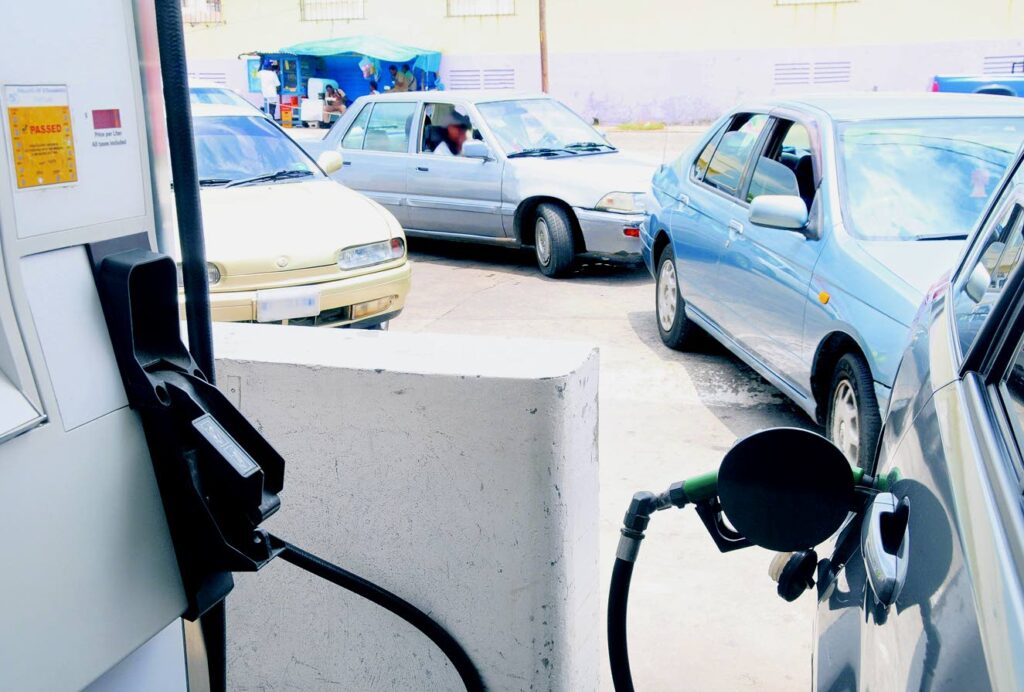
As ongoing conflict in the Middle East rattles global energy markets and Jamaica’s $4.50 per litre fuel price cap is scheduled to expire this week, the head of Jamaica’s Consumers Intervention (CIJ) is demanding sweeping regulatory reform to deliver fair, transparent fuel pricing for Jamaican consumers, arguing that pricing decisions cannot be left exclusively to private retailers and suppliers.
Michael Diamond, president of the 2015-founded consumer advocacy group, is sounding the alarm over what he calls widespread opportunistic price gouging, warning that retailers are already marking up fuel prices based on future market volatility rather than the actual cost of inventory already held in the country. Global energy markets operate largely on futures trading, meaning pump prices are often tied to projected supply and demand shifts rather than current market conditions. The geopolitical turmoil that erupted in late February 2026 disrupted critical shipping lanes through the Strait of Hormuz and damaged Qatar’s key Ras Laffan LNG complex, sending global commodity prices soaring: Brent crude settled at $90.90 per barrel last Friday, while Asian spot LNG prices jumped more than 140%. For Diamond, this global volatility only affects future fuel shipments, not the stock already on Jamaican soil, making automatic immediate price hikes unjustified.
Diamond specifically called out the inconsistent pricing logic used by major local energy stakeholders, pointing to the Jamaica Public Service Company (JPS) and state-owned refiner Petrojam, both of which have tied immediate price increases directly to the Middle East conflict. “This is price gouging dressed up as market mechanics,” Diamond argued. “Retailers are collecting windfall profits on inventory they bought cheap, because consumers can’t tell the difference.”
Compounding the problem, Diamond noted in an interview with the Jamaica Observer on Tuesday, is the concentrated structure of Jamaica’s fuel market, where a small cohort of multinational suppliers controls distribution and in many cases owns retail service stations directly. This creates an unfair playing field for independent dealers, who are forced to purchase fuel from competing vertically integrated firms that do not offer the same preferential pricing given to company-owned stations.
To address these systemic flaws, Diamond is calling for enhanced, proactive oversight from Jamaica’s key regulatory bodies, including the Consumer Affairs Commission (CAC), the Office of Utilities Regulation (OUR), and the Fair Trading Commission. Beyond ad-hoc oversight, the CIJ is pushing for regular mandatory audits of fuel supply chains and pricing practices to verify that price increases are justified, even during non-emergency periods. The group also is calling for clearer public communication about how fuel pricing is calculated, to empower consumers to hold retailers accountable. While the CIJ has operated largely out of the public eye since its founding, Diamond reaffirmed the organization’s ongoing commitment to advancing consumer rights through public education and policy engagement.
Diamond’s advocacy comes on the heels of the Jamaican government’s recent decision to eliminate its gasoline subsidy program amid soaring global oil prices, a change that will allow full global price increases to pass through to consumers starting as early as this Thursday, when new weekly fuel prices are set to be announced. Energy Minister Daryl Vaz confirmed last week that the $4.50 price cap would be allowed to expire, stoking widespread consumer anxiety over sharp upcoming price hikes. Policymakers are currently weighing a new tiered pricing framework to replace the old subsidy program, which had cost the government billions of dollars to offset weekly price increases. In the interim, the government has urged Jamaican citizens to conserve fuel to help mitigate broader economic fallout from the price shifts.
Before the recent escalation of Middle East tensions, global oil prices had remained relatively stable, averaging roughly $70 per barrel with only moderate fluctuations. The new conflict has upended that stability, putting persistent upward pressure on both crude oil and refined petroleum product prices globally.
Diamond laid out what he frames as straightforward solutions to the current crisis, contingent on political will to act. First, he called for full audits of retailer inventory logs, requiring all fuel purchased before the outbreak of conflict to be sold at pre-conflict prices plus a reasonable, fair retail margin, a step he says would immediately curb opportunistic markups. Second, he argued that Jamaica’s $6.8 billion net international reserve should be deployed to stabilize domestic fuel prices, rather than remaining unused.
Underscoring the government’s central responsibility to protect consumers, Diamond said authorities must launch formal investigations into retail pricing practices to ensure all markup is fair and justified. “Without oversight, consumers will continue to suffer from inflated prices that do not correlate with genuine market conditions,” he said. “Jamaicans are being forced into demand destruction not by global supply constraints, but by local profiteering. Until Government treats this as the gross violation it is, every litre pumped is money stolen from consumers who have no choice but to pay.”
In response to the CIJ’s concerns, Phillip Chong, president of the Jamaica Gasoline Retailers Association (JGRA), told the Business Observer on Tuesday that he does not anticipate price gouging among his organization’s members, but noted the association cannot speak for the marketing and supply companies that sit between refineries and retail stations. Chong explained that JGRA member retailers typically stick to a standard 12–15% percentage margin regardless of global price shifts driven by the Middle East conflict. He emphasized that Jamaica’s fuel market is fully deregulated, meaning the JGRA has no legal authority to set or mandate pricing for its members, nor can it regulate the entire market.
Chong attributed any potential unfair pricing variability to the marketing companies, which often sell fuel to different retailers at differing price points, creating uneven costs across the industry. He added that while the JGRA promotes a strict code of ethics for its roughly 120 members, there are more than 300 total fuel retailers across Jamaica, meaning many operators fall outside the association’s influence. “The JGRA cannot regulate the market, and as such we can only continue to encourage ethical behaviour among our members,” Chong said. “This is not the first time that we are in a crisis-like situation, and our members have acted quite honourably and diligent in their dealings.”