作者: admin

  • Trump places statue of Christopher Columbus near the White House

    Trump places statue of Christopher Columbus near the White House

    Over the weekend, a 13-foot replica statue of Christopher Columbus — cast using fragments recovered from the original monument torn down and thrown into Baltimore’s Inner Harbor during 2020’s national racial justice protests — was installed on the White House campus, outside the historic Eisenhower Executive Office Building. The placement marks the latest step in the Trump administration’s sweeping initiative to restore controversial historical monuments removed across the United States in the wake of widespread demonstrations following George Floyd’s murder.

    The project was completed in partnership with the Conference of Presidents of Major Italian American Organizations, which coordinated the transfer of the replica to Washington to coincide with the United States’ upcoming 250th anniversary of independence and to celebrate Italian American cultural heritage. In a published letter to the organization, President Donald Trump lauded the group for its “incredible generosity” in bringing the monument to the nation’s capital, describing the original Baltimore statue as having been “torn down by anti-American rioters.”

    White House spokesperson Davis Ingle reiterated the administration’s position in a Monday statement to CNN, affirming that “as we celebrate our Nation’s 250th anniversary of independence, the White House is proud to honor Christopher Columbus’s legendary life and legacy with a well-deserved statue on the White House grounds.” Echoing the president’s framing, Ingle added that “in this White House, Christopher Columbus is a hero, and President Trump will ensure he’s honored as such for generations to come.”

    Basil Russo, president of the Conference of Presidents of Major Italian American Organizations, noted that for the more than 18 million Italian Americans living in the U.S., monuments to Columbus have long served as critical symbols of communal pride and cultural identity. “For over a century, Columbus’s legacy helped Italian immigrants navigate prejudice and hardship, serving as a source of unity and belonging as they built new lives in this country,” Russo said in the organization’s official release.

    In his own remarks on the statue, Trump expanded on this framing, calling Columbus “the original American hero, a giant of Western civilization, and one of the most gallant and visionary men to ever walk the face of the earth.” He added that Columbus’ 1492 voyage “carried thousands of years of wisdom, philosophy, reason, and culture across the Atlantic into the Americas.”

    The statue, which stands across from the Smithsonian’s Renwick Gallery and steps from the White House residence, is currently cordoned off by multiple rows of fencing and closed to close public viewing. Its installation comes as part of a broader nationwide reckoning over historical commemoration that unfolded after the 2020 racial justice protests, during which hundreds of controversial monuments — including hundreds of Confederate memorials and dozens of Columbus statues — were removed by local governments or pulled down by protesters.

    Columbus has remained a deeply divisive figure in U.S. historical memory for centuries: while long popularized as the explorer who “discovered America,” a widely repeated myth that overlooks millennia of Indigenous habitation of the continent and earlier transatlantic contact by Norse explorers, he is widely criticized by scholars and activists for his brutal exploitation of Indigenous communities in the Caribbean and his role in opening the era of European colonization that led to the mass displacement and death of Indigenous populations across the Americas.

    This installation is not the first controversial monument restoration carried out by the Trump administration in Washington, D.C. The administration has already reinstalled a statue of Confederate officer Albert Pike in the district, and has announced formal plans to return a Confederate memorial to Arlington National Cemetery in Virginia.

  • China Railway First Group’s engineer arrested for massive power outage; electricity being restored

    China Railway First Group’s engineer arrested for massive power outage; electricity being restored

    A major nearly four-hour power outage that disrupted services across multiple communities in Guyana’s Demerara region has ended with an arrest, as power authorities work to gradually restore full electricity service to affected areas.

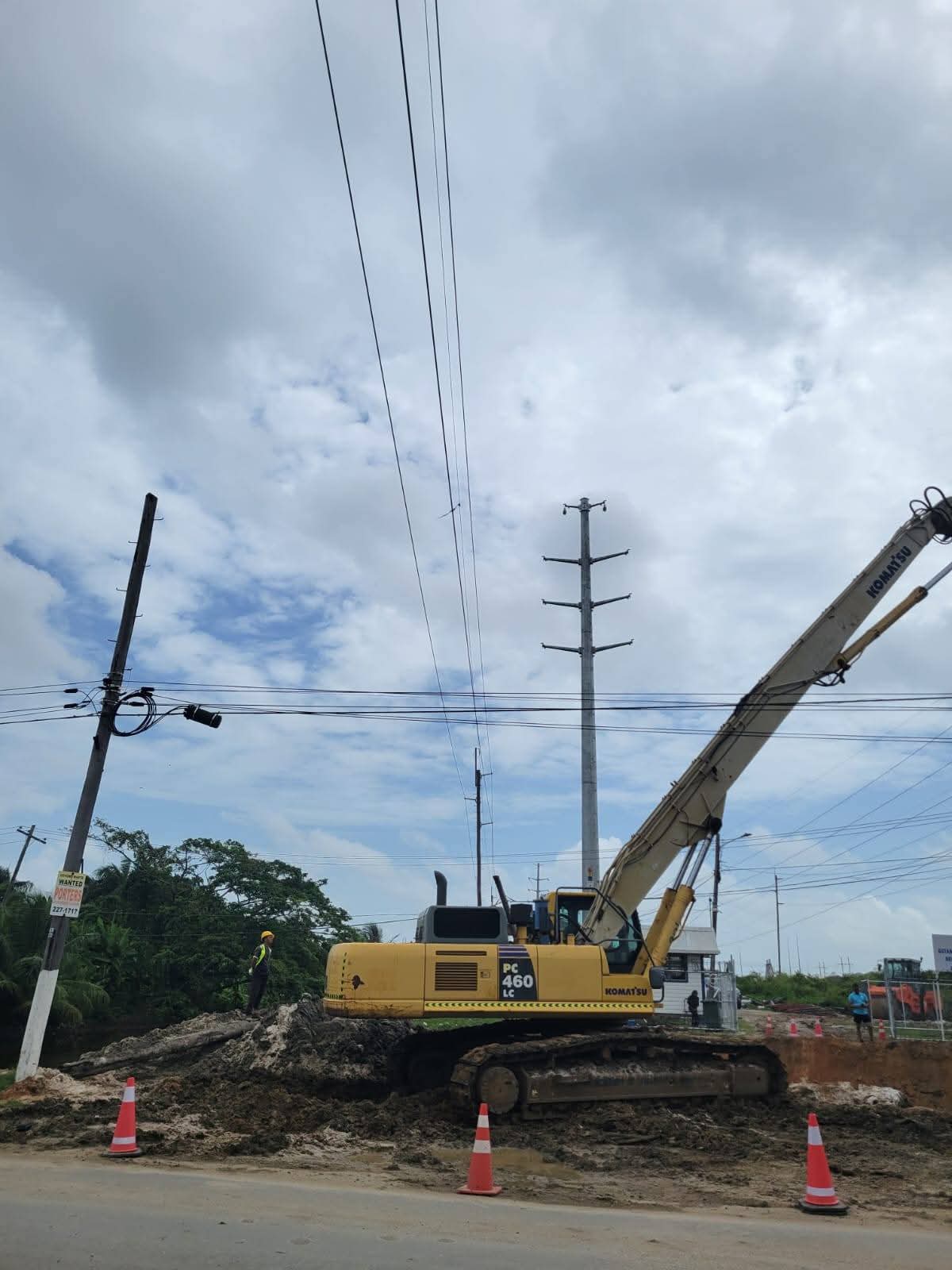
    According to a statement released by Guyana Power and Light (GPL), the outage was triggered by an avoidable industrial incident on April 26, 2026. A piece of heavy machinery operated by contractors from China Railway First Group accidentally made contact with a critical 69,000-volt transmission line. This transmission line, labeled Line 10, serves as a key connection between the New Georgetown and Sophia substations, and the collision forced the line to trip offline, cutting power across the network.

    In the aftermath of the incident, the Guyana Police Force has taken the site engineer overseeing the China Railway First Group project into custody, as law enforcement and utility officials investigate the circumstances that led to the blackout.

    GPL officials confirmed that incremental power restoration efforts launched immediately after the incident have already succeeded in returning electricity to multiple neighborhoods across Georgetown. “This restoration exercise will continue systematically until all affected areas have been fully repowered,” the company said in its official update.

    Beyond the immediate response to the outage, GPL has issued a renewed public warning to all individuals and organizations working near its energy infrastructure, emphasizing that accidental contact with high-voltage lines does not only cause widespread disruption for thousands of customers, but also poses a severe deadly risk to on-site workers and nearby community members. The utility is urging all construction and engineering teams operating near transmission networks to double-check safety protocols before starting any work to prevent similar incidents from occurring in the future.

  • High-energy dancehall dominates at ‘Showdown’

    High-energy dancehall dominates at ‘Showdown’

    The iconic Kensington Oval played host to a night of nonstop high-octane dancehall energy on Saturday, as Showdown — the penultimate showcase of the annual Barbados Reggae Weekend — drew a sold-out crowd of reggae and dancehall fans from across the region and beyond.

    The evening almost got off to a rocky start after a last-minute scheduling dispute involving scheduled performer 450 threatened to overshadow the event. But quick thinking and flexible negotiation from festival organizers resolved the standoff smoothly: instead of pulling out entirely, 450 agreed to shift his appearance to the weekend’s closing flagship event, Reggae in the Gardens, keeping his involvement in the festival intact while allowing Saturday’s showcase to proceed as planned.

    Far from dampening audience excitement, the minor scheduling shakeup did nothing to dim the electric atmosphere inside the packed stadium. Attendees turned out in full force, including high-profile local guests such as former Barbadian Attorney General Dale Marshall and current Minister of Innovation, Science and Technology Marsha Caddle. Staying true to decades of dancehall stage show tradition, guests pulled out bold, creative fashion statements, with dark leather and delicate lace emerging as the unofficial dominant themes of the night’s street style.

    Every performer on the Saturday lineup delivered on the event’s “Showdown” name, bringing energetic sets that held the crowd’s attention from the opening act to the final encore. But it was Jamaican dancehall superstar Popcaan, the self-styled “Unruly Boss,” that stole the entire night with a sprawling, high-energy headlining set that cemented his status as one of the genre’s top global draws.

    Staying true to his iconic eccentric aesthetic, Popcaan took the stage in leather Guapi pants accented with shiny silver leg warmers, leaning into the signature style that has made him a fashion and music trendsetter across the Caribbean and worldwide. His 90-minute set catered to every corner of his diverse fanbase: long-time fans got the gritty, high-energy hits they came for, including *Ova Dweet*, *Clarks*, and *Unruly*, while a dedicated “ladies’ segment” packed with steamy romantic and uptempo hits including *Only Man She Want*, *Addicted*, *My Type*, and *Naughty Girl* sent the entire VIP section into a screaming frenzy. In one of the night’s most unexpected highlights, Popcaan brought out fellow Jamaican star Jada Kingdom as a surprise guest, who left the crowd roaring with a performance of her chart-topping hit *What’s Up*.

    Following Popcaan’s iconic headlining set, regional dancehall veterans kept the momentum going strong. 59-year-old reggae legend Capleton proved he has lost none of his signature fiery stage presence, delivering a blistering set of his most beloved hits including *Jah Jah City*, *Fire Time*, *That Day Will Come*, and his career-defining anthem *Cooyah Cooyah*. Veteran dancehall deejay General Degree followed up with a nostalgic set of old-school classics, pulling out fan favorites such as *When I Hold You Tonight*, *Traffic Blocking*, and *Granny* to the delight of long-time fans.

    The night opened with a deliberate spotlight on homegrown Bajan talent, with every emerging local artist holding their own against the regional superstars later in the lineup. Local favorite Maasta T stood out as the top emerging act of the evening, with fans noting the steady growth of his sharp lyricism and commanding stage presence across recent performances. His set drew a roar from the hometown crowd, with hundreds of fans reciting every word to his hits *Why Should I* and *Tea Tea*. Other rising Bajan acts including Doejay, Brutal Crankstar, Weather 40, and Idea the Artist all helped build the night’s energy from the opening minutes.
    \nBetween main stage sets, rotating deejay crews including the Legacy Team, Surf Rat, Jagwa De Champ, Thorny and Pun, and Full Klip Entertainment kept the crowd engaged and the vibes high with seamless transitions and curated selections that kept energy steady through the entire night.

    With Showdown wrapped, the festival now turns its full attention to its flagship closing event, Reggae in the Gardens, which is set to bring the 2024 iteration of Barbados Reggae Weekend to a grand, celebratory climax.

  • ABLP Megacade 2026 happening NOW

    ABLP Megacade 2026 happening NOW

    The only content provided in the incoming news submission is a single line directing audiences to view a live video at an unspecified location. No further details about the subject of the live stream, the event being covered, participating individuals or organizations, or any contextual background information has been shared. Without additional core content about the live broadcast, it is impossible to expand on the event, its purpose, or any related details that would make for a complete news report. The link or specific location referenced by “HERE” is also not included in the provided materials, leaving no way for audiences to access the referenced live video content as directed.

  • NBC Says It Does Not Charge 19 Cents Per Mile

    NBC Says It Does Not Charge 19 Cents Per Mile

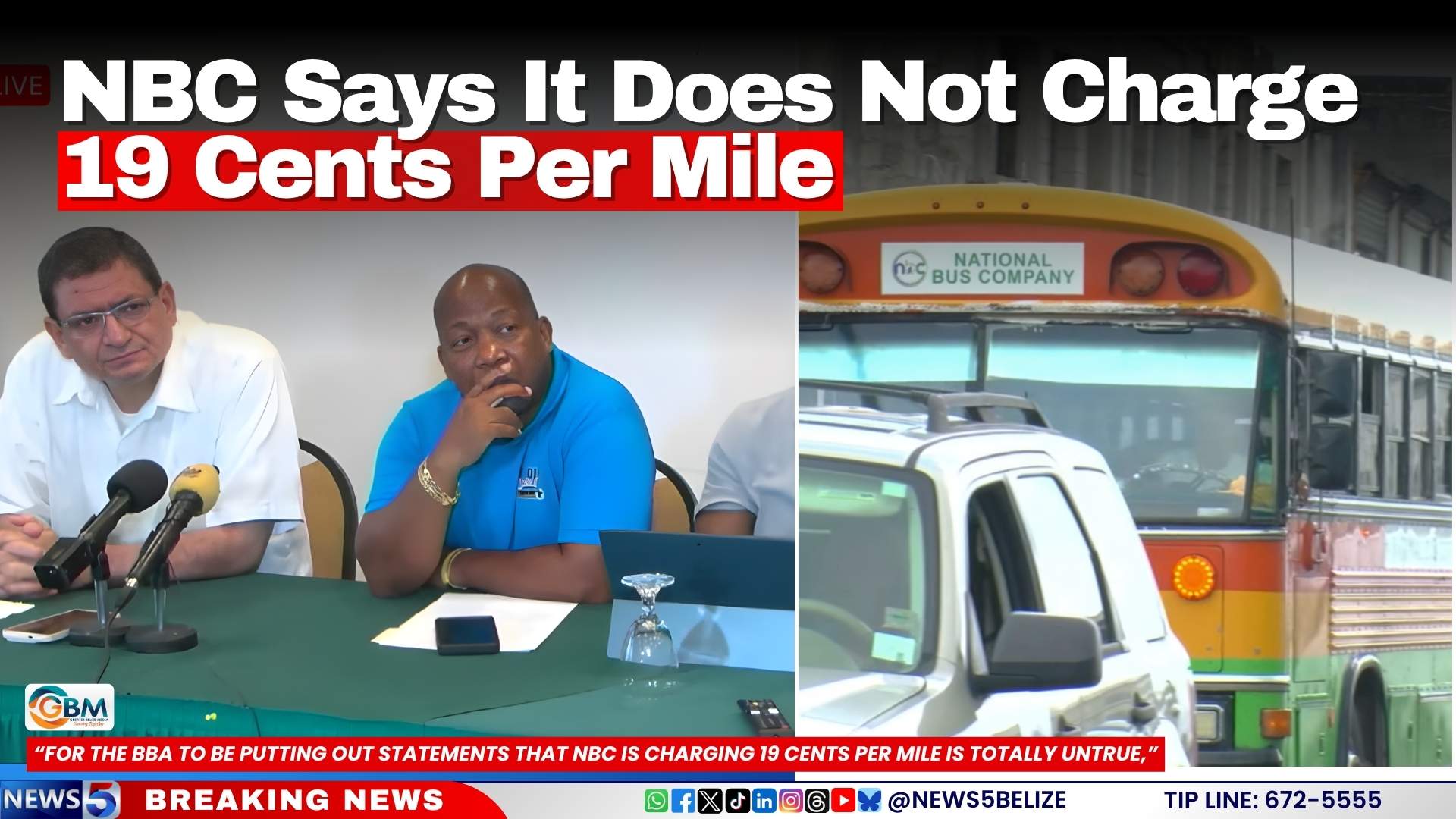
    A public disagreement over bus pricing has erupted between the Belize Bus Association (BBA) and the Belizean government, centered on a widely circulated claim that the state-owned National Bus Company (NBC) charges a uniform 19 cents per mile for all routes. Government officials have pushed back hard against this assertion, labeling the figure entirely inaccurate and misleading, as negotiations over bus operator relief amid soaring fuel costs enter a new phase.

    Speaking at a Saturday press briefing, Minister of Transport Louis Zabaneh clarified that NBC does not operate under a single flat-rate pricing structure. Instead, per-mile fares vary significantly based on the characteristics of each specific route, with actual average rates coming in substantially lower than the 19-cent figure cited by the BBA. On southern routes run by NBC, for example, average per-mile costs fall between 11 and 13 cents, while western route averages range from 16 to 17 cents per mile.

    Chester Williams, Chief Executive Officer of the Ministry of Transport, backed up this clarification with concrete on-the-route examples to illustrate the discrepancy. Williams noted that a full one-way trip from Punta Gorda to Belize City, a journey of roughly 210 miles, carries a total ticket price of approximately $27. When calculated per mile, that works out to just 13 cents per mile. Similarly, a 105-mile trip from Dangriga to Belize City costs around $12, averaging out to 11 cents per mile. “For the BBA to be putting out statements that NBC is charging 19 cents per mile is totally untrue,” Williams emphasized.

    The inaccurate 19-cent claim has served as the core of the BBA’s push for industry-wide fare adjustments. The association has argued that its member operators should be allowed to align their pricing with what they claim NBC charges, to offset soaring operating costs. But government officials explain that this cross-sector comparison is fundamentally misleading, because fare structures are shaped by route-specific conditions that differ sharply between the BBA’s primary service areas and NBC’s operating regions.

    NBC’s core operational footprint is concentrated in Belize’s southern and western regions, where routes are typically longer. Longer routes naturally translate to lower average per-mile costs, even with total ticket prices factored in. By contrast, the majority of BBA-operated routes are located in northern Belize, where shorter route lengths and different operating dynamics lead to higher inherent per-mile costs. Officials added that these variable pricing differences stem from multiple tangible factors: overall route length, the number of scheduled stops along a route, and variable operating costs unique to each area, rather than a one-size-fits-all national pricing scheme for bus services.

    The current dispute comes after weeks of closed-door negotiations between the BBA and the Belizean government, sparked by rising global fuel prices that have driven up operating costs for all domestic bus operators. Initially, the BBA put forward three separate requests for regulatory and financial relief: full tax exemptions on fuel and bus replacement parts, direct government subsidies to offset increased fuel costs, or permission to adjust fares up to a uniform 19 cents per mile across the board.

    In a sudden policy shift following the BBA’s claims about NBC pricing, Zabaneh announced that the government would abandon plans for any fare increase for consumers. “Since the BBA is saying they don’t wish for the rates, and that they reject the rates, then we will remove the rates,” Zabaneh stated. “No increase in rates to our people. Instead, the Prime Minister has agreed we will work on a subsidy for the BBA.”

    All details of the planned subsidy package for BBA member operators are set to be unveiled by Prime Minister John Briceño in an official announcement scheduled for Monday.

  • Suriname en China versterken landbouwsamenwerking met focus op verwerking en training

    Suriname en China versterken landbouwsamenwerking met focus op verwerking en training

    Diplomatic and agricultural cooperation between Suriname and China is set to expand into new phases, with both sides confirming plans to deepen ties in the agriculture sector during a recent high-level meeting between Suriname’s top agricultural official and China’s ambassador to the country.

    The meeting, held between Mike Noersalim, Minister of Agriculture, Livestock and Fisheries (LVV) of Suriname, and Chinese Ambassador Lin Ji, centered on prioritizing three core areas of enhanced partnership: agricultural product processing, technical training, and cross-border knowledge sharing. The two officials opened their discussion by reviewing the outcomes of the first phase of the Tijgerkreek (Tiger Creek) project, an initiative focused on introducing and scaling the cultivation of a range of new crop varieties in Suriname. Both parties confirmed that the initial phase of the project has been completed successfully, and preparations are now underway for the launch of the second phase, which is scheduled to kick off by the end of May this year.

    Beyond the Tiger Creek project, the conversation placed significant emphasis on increasing the added value of Suriname’s agricultural outputs. Minister Noersalim highlighted that local producers currently face significant volatility from price fluctuations when supply outpaces domestic demand, making local processing infrastructure a critical priority. To address this challenge, additional targeted support will be provided to smallholder farmers and local agricultural entrepreneurs, with the goal of building out domestic processing capacity. As part of this effort, the two sides discussed plans to establish a dedicated food processing unit, which is on track to be completed and operational by the end of 2025. Once the facility is established, a series of specialized training programs will be rolled out to boost Suriname’s overall production and processing capabilities across the agricultural sector.

    The meeting also touched on long-standing systemic challenges facing Suriname’s agricultural industry, most notably the declining interest in agricultural careers among young people that has created a gap in the sector’s workforce. Both Suriname and China agreed that there is significant potential to reverse this trend through targeted education and skills training programs that can attract more new entrants to the industry.

    In closing remarks following the meeting, Minister Noersalim emphasized that the bilateral agricultural cooperation between the two countries delivers tangible benefits to Suriname’s long-term development. He noted that the partnership creates clear pathways for sustainable growth of the national agricultural sector while strengthening the country’s overall production capacity to meet domestic demand and expand export opportunities.

  • Accused gunman at correspondents’ dinner was likely targeting Trump and top officials, Blanche says

    Accused gunman at correspondents’ dinner was likely targeting Trump and top officials, Blanche says

    WASHINGTON – A shocking attempt to breach one of Washington D.C.’s most high-profile annual political gatherings has brought new details of a premeditated attack targeting former President Donald Trump and senior members of his administration, acting Attorney General Todd Blanche revealed in public comments Sunday.

    According to Blanche, the suspect accused of carrying weapons to storm the White House Correspondents’ Association (WHCA) dinner ballroom plotted the incident well in advance, traveling across the United States over multiple days to reach the nation’s capital. Investigative accounts show the man journeyed by rail from his home state of California to Chicago, before continuing on to Washington D.C. Once in the city, he checked in as a paying guest at the Washington Hilton – the venue hosting the invite-only, glitzy Saturday night dinner that draws hundreds of top politicians, journalists, and media figures from across the country.

    While law enforcement has not officially released the suspect’s identity to the public, two unnamed law enforcement sources with direct knowledge of the investigation confirmed to the Associated Press that the individual is 31-year-old Cole Tomas Allen, a resident of Torrance, California.

    Preliminary assessments of evidence taken from Allen’s electronic devices and written materials have led investigators to conclude he came to the dinner with clear violent intentions: he planned to attack current and former Trump administration officials in attendance at the event. The chaotic attempt to force entry into the sprawling ballroom unfolded quickly: Allen was taken down by security before he could enter the main event space, but the struggle resulted in stray gunfire, prompting immediate emergency action. Trump, who was speaking at the dinner at the time, was rapidly escorted off stage by security personnel, and hundreds of guests scrambled for safety, taking cover under their dining tables.

    Blanche confirmed the preliminary findings during an interview on NBC News’ weekly public affairs program *Meet the Press*, stating “It does appear that he did in fact set out to target folks who work in the administration, likely including the president.”

    Blanche added that the two firearms recovered from the suspect were purchased by Allen within the past two years. As of Sunday, the suspect has refused to cooperate with investigators, and federal prosecutors are set to file multiple criminal charges against him during a Monday court hearing.

  • Supporting the autistic

    Supporting the autistic

    KINGSTON, Jamaica — Across Jamaica’s education system, a quiet revolution is unfolding in support of autistic students, driven by a transformative collaborative bond between families and contracted Special Education Needs Assistants (SENAs) — roles previously known as shadows or caregivers. Working under the jurisdiction of the country’s Ministry of Education, Youth, Skills and Information (MoESYI), these dedicated support staff embed in school settings to advance autistic children’s participation, social integration, long-term independence, and overall safety and well-being.

    New data for the 2025-2026 academic year underscores the urgent demand for this targeted support: of 217 students placed in private non-governmental special education institutions this year, 124 — 57% of the total cohort — have received an autism spectrum disorder (ASD) diagnosis. Even more striking, 70% of the 696 students approved for dedicated shadow support this academic year are autistic. To uphold its commitment to leaving no child behind, MoESYI’s Special Education Unit has implemented a proactive provisional placement policy: students waiting for formal psychological education assessments are admitted to schools immediately, with doctor’s notes accepted as temporary documentation to avoid gaps in learning.

    This model of collaborative care, rooted in intentional partnership between SENAs and families, has produced tangible, life-changing progress for autistic students, with countless stories of patience, persistence, and compassionate care at its core.

    One such success story centers on 8-year-old Kylian Barnett, a nonverbal autistic student at Solid Base Preparatory and Kindergarten School in Spanish Town, where SENA Dana Beckford has supported his personal care and skill development since July 2024. From the earliest days of Kylian’s diagnosis, his father Keino Barnett refused to succumb to despair. With prior experience working as a music teacher supporting a nonverbal autistic drumming student at Portmore’s Aintree Basic School, Barnett understood that autism did not define his son’s potential. “He was three when we noticed developmental differences, but I stayed calm — autism wasn’t new to me. I always knew he could thrive,” he explained. The entire Barnett family, including Kylian’s sister and grandparents, has embraced active participation in his care, creating a consistent support system that complements Beckford’s work in the classroom.

    That consistent cross-setting support has delivered remarkable progress. Under Beckford’s patient, gentle guidance, Kylian — once nonverbal — now speaks several words and completes many daily tasks independently. Keino Barnett credits Beckford’s unwavering commitment for the visible shifts in his son’s development: “There are clear improvements in his behavior, and she has contributed so much to his literacy and numeracy skills. He’s grown so much, and she’s even helped him develop interest in activities he once avoided entirely. That’s the difference her dedication makes.”

    Beckford’s approach is shared by SENAs across the island, who bring personalized, child-centered strategies to their work. For Angela Davis-Johnson, that means centering patience, positivity, and individualization in every interaction. “Every autistic child is unique, with their own personality, interests, and way of learning. Some days bring mood swings or meltdowns, so I adapt to each child’s specific needs,” she explained. Davis-Johnson prioritizes positive reinforcement, framing instructions to minimize negative language and celebrating every small win to encourage desired behaviors. She also notes that ongoing professional development from MoESYI and the Special Education Unit has equipped her with the tools to succeed.

    Hannah-Lisa Clue, another SENA, adds that effective support requires more than just patience: it demands compassion, strong communication, flexibility, and a commitment to continuous learning. “I use simple, accessible communication tools — pictures, gestures, consistent routines — to help children feel comfortable and connected. Most importantly, I work closely with parents to align strategies, so kids get consistent support whether they’re at school or at home,” she said.

    Beyond the on-the-ground support from SENAs, MoESYI has built out a broader framework of inclusive programming. The ministry runs Early Stimulation Programmes (ESP) for children six and under living with a range of developmental disabilities, and has recently launched a new tailored curriculum for students with moderate to severe intellectual disabilities designed to meet their unique learning needs.

  • Barbados and Venezuela seek to strengthen relations in a wide range of socio-economic sectors

    Barbados and Venezuela seek to strengthen relations in a wide range of socio-economic sectors

    BRIDGETOWN, Barbados – In a landmark diplomatic meeting held this week, the Caribbean island nation of Barbados and the South American country of Venezuela have laid the groundwork for a significantly expanded bilateral partnership, reaching consensus on a sweeping slate of collaborative initiatives spanning energy development, trade expansion, economic integration, and cultural exchange.

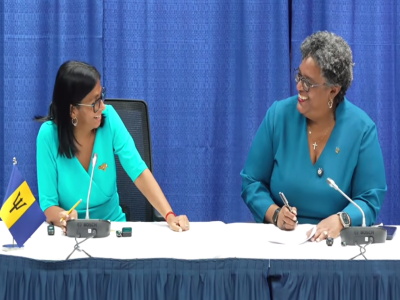
    Venezuela’s acting President Delcy Rodriguez, who touched down in Bridgetown Sunday evening for the high-level talks, met face-to-face with Barbadian Prime Minister Mia Mottley to hash out the details of the new cooperation framework. Both leaders emerged from the closed-door deliberations praising the productive discussions and shared commitment to deepening ties between their nations.

    “April 27 will go down in history as the founding date of modern economic and trade cooperation between Venezuela and Barbados,” Rodriguez told reporters following the talks. She added that negotiations opened new investment opportunities for Barbadian firms in Venezuela’s burgeoning hydrocarbons sector, including invitations for joint exploration and development of the country’s untapped oil and natural gas fields.

    Rodriguez emphasized that Barbadian partnership would play a critical role in boosting Venezuela’s domestic hydrocarbon production, while Caracas would in turn deliver long-term, reliable energy security guarantees for Barbados’ population. She also noted that the two sides have identified strong synergies in renewable energy development, outlining a joint plan to manufacture solar panels that would build a fully integrated, diversified regional energy sector. To further catalyze cross-border investment, the leaders agreed to revisit and update existing bilateral agreements covering investment protections and double taxation, creating a more welcoming regulatory environment for businesses from both nations.

    For her part, Prime Minister Mottley highlighted that volatile global energy prices have put unprecedented pressure on small island developing states like Barbados, making expanded bilateral energy cooperation a long-held strategic priority. She noted that Barbados’ state-owned National Energy Company, despite its modest size, is well-positioned to enter into joint investment projects in the energy opportunities Venezuela has put forward. These collaborations, she explained, will help Barbados expand its domestic energy capacity, strengthen its resilience to global market shocks, and maintain affordable access to critical energy products for all Barbadians.

    Mottley recalled Venezuela’s decades-long track record of supporting Caribbean energy security, pointing to the 1970s San Jose Agreement – a joint initiative with Mexico that stabilized energy access for the entire region during a global oil crisis – and the 1990s PetroCaribe initiative launched by former Venezuelan President Hugo Chávez that delivered discounted oil to dozens of Caribbean nations. In recent years, she added, discussions have focused on continuing this legacy by extending discounted energy supplies to other Caribbean partners where possible. “Over the past five decades, Venezuela has stood as a close, reliable friend to the entire Caribbean on issues of energy security and affordable access to energy products,” Mottley said. “At a moment of profound global energy insecurity, we welcome this opportunity to build cooperation that delivers mutual benefit for both our nations.”

    Barbados is pushing to expand energy cooperation beyond fossil fuels to capture the massive potential of renewable energy collaboration, Mottley clarified. From small-scale residential solar water heating systems to utility-scale photovoltaic panels and onshore wind energy development, Mottley said the two sides have identified enormous untapped potential for joint work in the clean energy transition. Mottley accepted an invitation to visit Caracas in the coming months to continue advancing the partnership, noting that the short one-hour flight between the two nations underscores the geographic and strategic proximity that makes cooperation so natural. “We cannot allow historical or language barriers to hold us back from unlocking the full potential of cooperation for our two peoples,” she said. “We aim to build on the strong foundation our predecessors laid, and turn this diplomatic partnership into tangible benefits for ordinary citizens, not just government leaders.”

    In addition to energy and trade, the talks yielded a landmark agreement on cultural and linguistic cooperation. Rodriguez confirmed that Mottley has outlined Barbados’ plan to designate Spanish as the country’s second official language, building on the existing work of the bilateral Institute for Cultural Cooperation, which has long offered Spanish language training to Barbadian residents. The two sides have agreed to expand the institute’s capabilities, including integrating new digital learning tools and facilitating exchanges that will bring Venezuelan language instructors to Barbados to provide advanced training for local learners. Rodriguez added that the expanded program will also create opportunities for Venezuelans to learn from Barbadian educators and cultural leaders, creating two-way people-to-people exchange.

    The partnership also includes new commitments to advance regional food security, a pressing priority for small import-dependent Caribbean nations. Mottley said Barbados is working aggressively to build a robust domestic agro-processing industry to expand exports, and the new agreement will create new market access for Barbadian agricultural goods in Venezuela. “We are committed to making sure that planes and ships arriving from Venezuela do not return empty – they will carry back Barbadian produce that supports our farmers and manufacturers,” Mottley explained. The two sides also agreed to explore joint agricultural production projects on Venezuelan soil that will deliver food supplies for Barbados, alongside collaborative research and scientific development initiatives to boost agricultural yields. The partnership will focus on addressing the global challenge of declining soil productivity, working together to develop sustainable practices that increase harvests and deliver benefits for farmers across the Caribbean region.

    Leaving the meeting, Rodriguez emphasized that both delegations left the talks with high levels of enthusiasm for the new roadmap of cooperation, saying “we are departing this visit extremely happy with the progress we have made.”

  • Dallas teen forward Flagg voted NBA Rookie of the Year

    Dallas teen forward Flagg voted NBA Rookie of the Year

    In an official announcement made Monday, the National Basketball Association has named 19-year-old Dallas Mavericks forward Cooper Flagg the 2026 Rookie of the Year, capping off one of the most historic debut campaigns in league history. Selected as the first overall pick in the 2025 NBA Draft — a pick the Mavericks landed only after trading franchise cornerstone Luka Doncic to the Los Angeles Lakers last season — Flagg delivered numbers unmatched by any first-year player in the 2025-26 season. He averaged 21.0 points, 6.7 rebounds, 4.5 assists, and 1.2 steals per game, all leading his Dallas squad. That feat makes Flagg just the second rookie in NBA history to top his team in all four major counting stat categories, a distinction last earned by Chicago Bulls legend Michael Jordan when he won the same award back in 1985. Flagg’s standout numbers were paired with a string of league-breaking individual performances that cemented his status as a generational young talent. Earlier this month, he dropped a career-high 51 points in a tight contest against the Orlando Magic, a showing that made him the youngest player in NBA history to record a 50-point game at the professional level. Over the course of the entire regular season, Flagg notched four separate 40-point outings. That is the most 40-plus point games by any NBA rookie since Hall of Famer Allen Iverson matched the mark during the 1996-97 campaign, and it broke a 20-plus year record previously held by LeBron James for the most 40-point games by a teenager in league history. Despite Flagg’s historic individual production, the Mavericks struggled as a team through the 2025-26 season, finishing with a 26-56 win-loss record and missing out on a spot in the annual NBA playoffs. Still, that rebuild-era struggles gave the young star the opportunity to carry heavy offensive and defensive responsibilities from day one, a chance he used to showcase his full potential. Flagg is the third player in Dallas Mavericks franchise history to take home the Rookie of the Year award. He joins Hall of Fame point guard Jason Kidd, who claimed the honor in 1995, and the aforementioned Doncic, who won the award in 2019. Two other standout first-year players rounded out the award’s three finalists: 20-year-old Bahamian guard VJ Edgecombe of the Philadelphia 76ers, and 20-year-old American forward Kon Knueppel of the Charlotte Hornets. Knueppel, who was Flagg’s college teammate during their time at Duke University, finished second in voting after earning 44 first-place votes from a global panel of sportswriters and media members, for a total of 386 points. Flagg secured the win with 56 first-place votes and a total of 412 overall points in the official voting process.