作者: admin

  • Na ziekteverzuim werken luchtverkeersleiders volgens normaal schema

    Na ziekteverzuim werken luchtverkeersleiders volgens normaal schema

    A sudden, widespread shutdown of air operations at Suriname’s busiest international gateway last weekend has pulled back the curtain on decades of unresolved systemic issues plaguing the country’s air traffic control sector, just as the nation prepares for an expected oil-driven economic boom next year.

    On Saturday, the control tower at Johan Adolf Pengel International Airport was left completely unstaffed after multiple air traffic controllers called in sick, bringing nearly all flight activity to a standstill. Normal operations only resumed Sunday as controllers returned to their scheduled shifts, according to the Suriname Air Traffic Controllers Association (SATCA).

    SATCA has repeatedly emphasized that the incident was not a deliberate strike or organized work stoppage, but rather the inevitable outcome of a chronic understaffing crisis that left no available backup personnel to cover unexpected absences. In a statement released Sunday morning, the Presidential Cabinet confirmed that the situation had been normalized following direct intervention by Suriname President Jennifer Simons, and a formal meeting between the president and SATCA leadership has been scheduled for Monday to address the root causes of the crisis.

    Tensions have been building for months between air traffic controllers and Transport, Communication and Tourism Minister Raymond Landveld, whom SATCA no longer trusts to negotiate meaningful reforms. Landveld delegated all discussions on controller concerns to a special negotiation commission, but SATCA reports the commission has not held any substantive contact with the association since February 26, and failed to deliver any actionable solutions to address long-standing grievances. This stalemate led SATCA to demand direct talks only with the president, a request Simons has agreed to grant.

    A key flashpoint in the dispute is a recent policy change that cut the maximum monthly overtime hours for controllers from 60 to 30, which eliminated all available backup shift coverage that relied on overtime work. Beyond staffing, SATCA is also demanding the president address severe wage inequality within the Aviation Authority’s operational divisions, a long-running imbalance that has driven a steady brain drain from the sector.

    Years of excessive workloads and perceived undercompensation have pushed dozens of experienced controllers to leave the profession entirely for other opportunities. Two controllers have retrained to become commercial pilots for foreign carriers, while many others have left Suriname altogether to take up aviation roles abroad with better pay and working conditions.

    Industry observers note that these challenges are not new: the Suriname air traffic control sector has struggled with persistent underperformance and understaffing for decades. Even basic safety protocols are regularly breached, the association confirms: a prohibited operating model called Single Person Operation, where only one controller plus a single assistant handle all air traffic duties during a shift, is now common practice rather than a rare exception.

    As Suriname prepares for a major oil boom projected to start next year, experts warn the brain drain crisis is only set to worsen, repeating a pattern already seen in neighboring Guyana, which faced similar staffing shortfalls after its own oil sector expansion. Already, the trend of skilled controllers leaving is accelerating, and without urgent reforms, the country will be unable to meet growing air traffic demand tied to the incoming energy boom.

    President Simons has acknowledged the scope of the crisis, stating that a structural, long-term solution is needed. She has confirmed that the problem extends far beyond just filling empty staffing slots, and that addressing wage inequality and upgrading outdated, aging air traffic control equipment will also be key priorities in the upcoming talks.


  • More than 1,000 attend debate on Islam in the Dominican Republic

    More than 1,000 attend debate on Islam in the Dominican Republic

    A controversial public forum hosted by a local Christian movement in the Dominican Republic has drawn over 1,000 attendees to Santo Domingo, centering discussion on the expansion of Islam in the country and neighboring Haiti, alongside calls for new state oversight of Islamic religious practice. The event, titled “Islam: A Threat to the Church and to the Dominican Republic?”, was held at Mahanaim Miraflores Church and organized by the Trinitarios movement, a group that frames its public advocacy around Christian and nationalist perspectives.

    The gathering brought together a cross-section of prominent Christian leaders and a sitting national legislator to unpack the topic. Heading the event were organizers Isaac B. Colón, Víctor Medina, and Robert Martínez, with a featured panel that included senior and junior pastors Ezequiel Molina Rosario, Ezequiel Molina Jr., and Junior Ponciano. Sitting Congressman Elías Wessin Chávez also joined the panel, alongside guest speaker Daniel Blanco, a former Muslim who converted to Christianity and shared his personal conversion story with attendees.

    Over the course of the forum, speakers outlined their concerns about the rising footprint of Islam in both the Dominican Republic and Haiti, warning that this growth could create unaddressed cultural and religious challenges for the Dominican national identity and the country’s majority Christian establishment. Attendees unanimously expressed public support for a draft legislative proposal put forward by Wessin Chávez that would introduce new government regulations on the practice of Islam across the nation.

    This event is not an isolated initiative, but rather part of a broader campaign by the Trinitarios movement to foster public debate on key national issues through the lens of Christian faith and Dominican patriotism, organizers confirmed. The forum’s provocative framing, which explicitly questions whether Islam poses a threat to national and religious institutions, has brought heightened attention to growing religious tension in the Caribbean nation.

  • AEI welcomes approval of real estate intermediation law

    AEI welcomes approval of real estate intermediation law

    In Santo Domingo, the Dominican Republic’s real estate sector has reached a key legislative milestone, after the national Senate gave first-reading approval to a long-awaited bill that would formalize and regulate real estate intermediation services across the country.

    The Association of Real Estate Agents and Companies of the Dominican Republic (AEI), the nation’s leading industry body for real estate professionals, has hailed the approval as a transformative step forward for the local property market. Industry leaders say the new regulatory framework will address longstanding gaps in oversight, boosting transparency, formalizing legal standards, and building greater public confidence in real estate transactions.

    Alberto Bogaert, president of AEI, extended public gratitude to the Dominican Senate for advancing the collaborative proposal. He emphasized that the core mission of the legislation is consumer protection: it will create clear safeguards for both international investors and domestic families investing in property, a demographic that makes up the large majority of participants in the local market.

    Bogaert also noted that the bill moving forward is the product of years of coordinated work between AEI members and other sector stakeholders, built on broad consensus across the organized real estate community. The legislation reflects input from agents, brokerage firms, and consumer advocates to address unregulated practices that have put buyers and sellers at risk in the past.

    Now that the bill has cleared its first reading hurdle, it proceeds to the remaining steps of the Dominican legislative process, including a mandatory second reading and review, before a vote on final approval can be held. AEI has reaffirmed its ongoing commitment to partnering with national legislative authorities, executive branch regulators, and cross-sector stakeholders to refine the bill into a balanced legal framework. The ultimate goal of the framework is to elevate industry-wide professionalism, enforce clear ethical standards for intermediaries, and establish stronger institutional oversight of the real estate brokerage sector, supporting long-term sustainable growth for Dominican real estate.

  • Dominican Republic maintains global leadership in premium cigar production and exports, says Intabaco Director

    Dominican Republic maintains global leadership in premium cigar production and exports, says Intabaco Director

    At the 26th annual Premium Cigar Association (PCA) convention, held recently in New Orleans under the banner “PCA 26: Back in the Big Easy”, a top Dominican industry official has reaffirmed the Caribbean nation’s unrivaled standing in the global premium cigar market. Speaking to industry stakeholders from around the world, Iván Hernández Guzmán, director of the Dominican Republic’s Tobacco Institute, outlined the robust production and export metrics that underpin the country’s decades-long leading position.

    Hernández Guzmán revealed that the Dominican craft cigar sector churns out more than 196 million handmade premium cigars each year. The vast majority of these luxury products are shipped to international markets, reaching consumers across 148 different countries. Among these global destinations, the United States continues to dominate as the single largest importer and consumer of Dominican premium cigars, remaining the country’s core trading partner for the high-value product.

    The official went on to highlight the key competitive advantages that set Dominican premium cigars apart from competitors around the globe. Unlike mass-produced machine-made alternatives, Dominican premium cigars have earned international acclaim for their time-honored artisanal production methods, carefully controlled aging processes, complex balanced flavors, distinctive aromatic profiles, and wide range of tobacco options.

    This reputation for quality is rooted in the country’s unique agricultural ecosystem, which supports the cultivation of several world-renowned premium tobacco cultivars. These include the iconic Olor Dominicano, Piloto Cubano, and San Vicente varieties, which form the backbone of the country’s thriving cigar manufacturing ecosystem. The sector is home to a diverse roster of established, globally recognized brands, including pioneering Dominican manufacturer La Aurora, industry giant General Cigar Dominicana, and boutique luxury producer La Flor Dominicana.

    Beyond sharing industry data, the convention served as a critical platform for Dominican cigar producers to showcase their latest releases, connect with global distributors and retailers, and expand their footprint in existing and emerging international markets. Industry observers note that the country’s continued output growth and market reach confirm its status as the undisputed global hub for premium handmade cigar production.

  • Project for 1,000 housing units in northern Haiti

    Project for 1,000 housing units in northern Haiti

    In a landmark step to address Haiti’s growing affordable housing crisis and expand social protection coverage, Haiti’s Minister of Social Affairs and Labor (MAST) Marc-Elie Nelson officially laid the foundation stone for the new regional office of the Public Enterprise for the Promotion of Social Housing (EPPLS) in the northern border city of Ouanaminthe on Saturday, April 26, 2026.

    During the well-attended groundbreaking ceremony, Minister Nelson used the occasion to directly address local families, workers, and laborers, reaffirming the Haitian government’s unwavering commitment to supporting vulnerable populations across the Far North region through targeted, people-centered subsidy programs. He confirmed that a total allocation of 7.405 billion gourdes has already been disbursed to boost social protection frameworks and support the country’s most economically disadvantaged groups. As part of this broader effort, Nelson highlighted that the Fund for Economic and Social Support (FAES) has rolled out direct cash assistance, providing 5,000 gourdes in one-time support to every employed worker in Haiti’s key textile export sector.

    EPPLS Director General Rony Charles praised the government’s strategic investments in social welfare and called for proactive collaboration from local communities to ensure sustainable, responsible management of the new social housing developments and planned residential villages. To institutionalize this local oversight, a nine-member Supervisory Commission made up of early-career young professional trainees has been established. The commission’s core mandate includes ongoing monitoring of infrastructure upkeep and enforcing public cleanliness standards across all social housing sites, with formal letters of appointment officially presented to the new commission members during Saturday’s ceremony.

    In a major policy announcement made at the event, Nelson confirmed plans to construct 1,000 new housing units across the broader northern region of Haiti, a project designed to alleviate the severe housing shortage that has disproportionately impacted low-income households in the area. The entire development will be funded through partnerships with international development organizations, with all units reserved exclusively for low-income families struggling to access safe, affordable housing.

    The Ouanaminthe groundbreaking is part of Minister Nelson’s official cross-country outreach tour, which launched in northern Haiti on April 24, 2026. Following the conclusion of his northern visit, Nelson is scheduled to travel to Haiti’s Great South region starting next week, where he will oversee the rollout of direct government assistance to vulnerable households in that part of the country.

  • Abinader inaugurates Bajo Yuna Road Circuit connecting Duarte and María Trinidad Sánchez

    Abinader inaugurates Bajo Yuna Road Circuit connecting Duarte and María Trinidad Sánchez

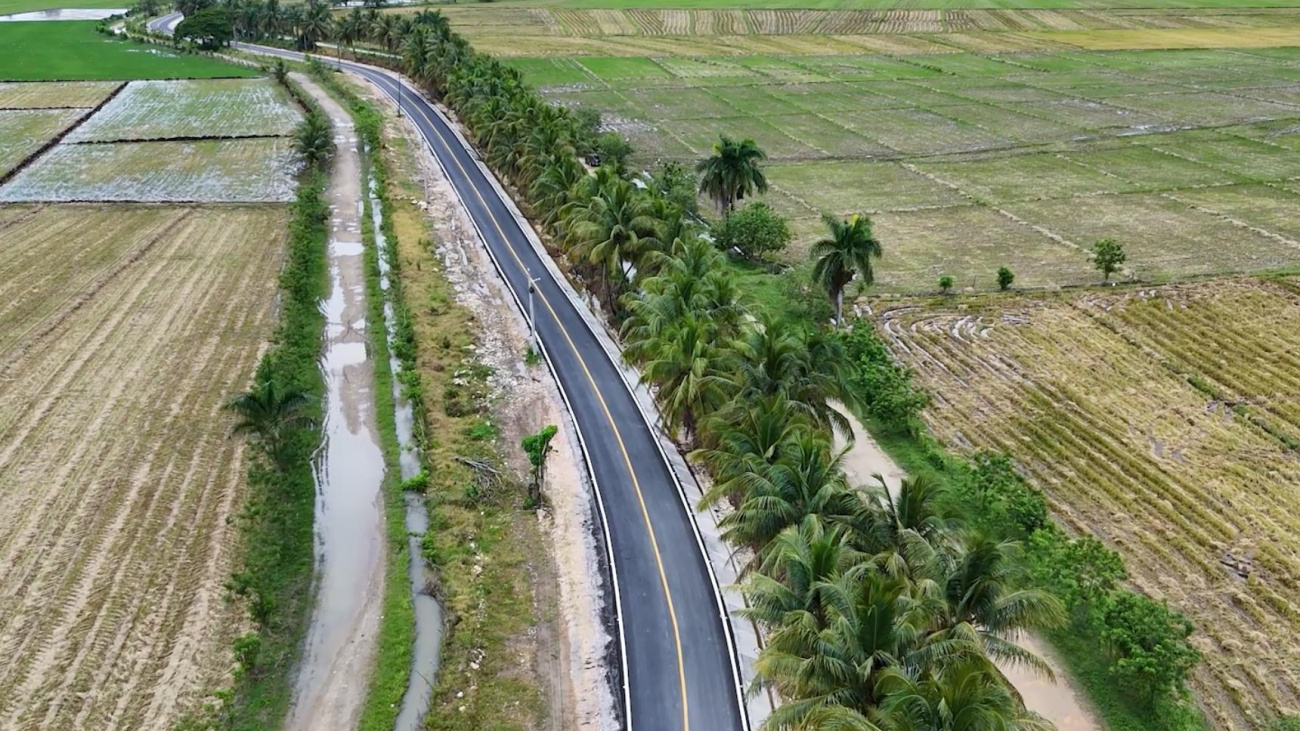
    Dominican Republic President Luis Abinader has formally opened the transformative Bajo Yuna Road Circuit, a 49-plus kilometer infrastructure project that bridges Duarte Province and María Trinidad Sánchez Province in a long-awaited upgrade for the underserved Lower Yuna region.

    Delivered by the nation’s Ministry of Public Works and Communications, the project comprises 42.8 kilometers of primary highway and an additional 6.2 kilometers of feeder roads connecting local settlements. It links a string of previously disconnected communities—including La Reforma, Las Coles, La Jagua, El Jobo, and La Garza—to critical national transport routes, namely the Juan Pablo Segundo Highway and the Nagua–Samaná road. For more than 20,000 people living in these areas, the new connection cuts travel times and removes long-standing barriers to accessing essential public services, from hospital care to primary and secondary schooling, as well as regional commercial markets.

    Beyond connecting people, the roadway is designed to revolutionize the movement of the region’s key agricultural exports, most notably rice and cocoa. Speaking at the inauguration ceremony, Public Works Minister Eduardo Estrella emphasized that streamlined logistics will directly strengthen the sector’s competitiveness, with rice producers set to see the most significant gains from reduced transit costs and faster delivery times.

    Project planners also prioritized climate resilience in response to the Lower Yuna region’s history of frequent flooding. Custom drainage systems were integrated into the circuit’s design to ensure the route remains passable through heavy rain and flood events, delivering reliable connectivity year-round rather than just during dry seasons.

    Local community leaders have welcomed the infrastructure as a game-changer for the region. They note that the elimination of transport bottlenecks will lift local agricultural productivity, open new economic opportunities for smallholder producers, and lay the foundation for broad-based, sustainable development across the entire Bajo Yuna catchment area.

  • GTUC president calls for cost of living subsidies

    GTUC president calls for cost of living subsidies

    As Guyana kicked off its annual Labour Week celebrations on Sunday, April 26, 2026, the country’s leading trade union chief has amplified pressure on the ruling administration to roll out broad new consumer subsidies, blaming cascading global conflicts for driving up everyday costs for working Guyanese.

    Norris Witter, president of the Guyana Trades Union Congress (GTUC), made the appeal immediately after he joined fellow union representatives in laying a ceremonial wreath at the Hubert Nathaniel Critchlow monument, located on the grounds of Georgetown’s Parliament Building. The annual tribute opens the country’s Labour Week, which honors the legacy of Critchlow, widely recognized as the founding father of Guyana’s trade union movement.

    Speaking to reporters after the ceremony, Witter traced the current cost-of-living crisis in Guyana back to two overlapping global conflicts: the ongoing war between Russia and Ukraine, and the escalating tensions in the Persian Gulf. According to Witter, these dual crises have severely disrupted global supply chains, exacerbated fossil fuel shortages, and driven up prices for a wide range of essential goods nationwide.

    To counteract these inflationary pressures, Witter argued that targeted government subsidies — what he called the “invisible hand of the State” — are the most effective immediate tool to stabilize prices for basic commodities. The call comes as transportation providers across the country have already implemented fare hikes: public buses, private taxis, and domestic airlines have all raised ticket prices in response to sharp spikes in global fuel costs.

    Witter criticized the incumbent People’s Progressive Party Civic (PPPC) administration, arguing that the broad subsidy package the GTUC demands would require political will that the current government has so far failed to demonstrate. He accused the PPPC of overly aligning with Western geopolitical interests instead of prioritizing the economic needs of Guyanese workers, and called on the government to adopt a more inclusive approach that accommodates diverse perspectives from across Guyanese society.

    Currently, the government already implements limited energy-related subsidies: it covers extra fuel costs for the state-owned Guyana Power and Light utility and Guyana Water Incorporated to prevent them from passing higher fuel expenses on to residential and commercial customers. The administration has also eliminated all taxes on gasoline and diesel, and state-owned petroleum firm Guyana Oil Company (GUYOIL) sells fuel at below-market rates to act as a price anchor for private fuel importers and distributors.

    Witter acknowledged that many union members expect private and public sector employers to raise wages and salaries to help workers keep up with rising costs. However, he emphasized that the ultimate responsibility for taming inflation falls on national policymakers. “Even though the unions will have a right to engage the employers for meaningful increases, we must not lose sight of the fact that it is political managers who manage the national economy, who have that foremost responsibility to ensure that the kinds of policies and programmes are put in place to arrest the increase in the cost of living,” Witter said.

    Witter’s comments echo recent criticism from former Guyanese Finance Minister Winston Jordan, who has also called on the PPPC government to take stronger action to address the cost of living. Jordan recently recommended that the government distribute an interim salary increase to public workers using funds already allocated in the 2026 national budget, then revise the entire budget to cut non-essential spending on low-priority infrastructure projects. He has also faulted the administration for failing to roll out a public fuel conservation education campaign and implement formal policies to crack down on predatory price gouging by retailers and suppliers.

  • Situation report on the crisis in Haiti (January-March 2026)

    Situation report on the crisis in Haiti (January-March 2026)

    Three months into 2026, Haiti’s humanitarian catastrophe continues to deepen, as brutal gang violence leaves large swathes of the country uninhabitable and pushes millions of vulnerable people into displacement. Hard-hit regions including the Artibonite and Central departments, as well as the densely populated Port-au-Prince metropolitan area, have seen widespread destruction of residential property, alongside sharp spikes in kidnapping and sexual violence. Current data confirms that roughly 1.4 million Haitians have been forced to abandon their homes to seek safety, while thousands more have been killed since the crisis escalated. Amidst the collapsing security environment, the United Nations Population Fund (UNFPA) and its local implementing partners have remained on the ground to deliver life-saving sexual and reproductive health (SRH) services, while stepping up efforts to prevent and respond to gender-based violence (GBV) that disproportionately impacts women and adolescent girls. Between January and March 2026, the agency delivered critical SRH care to 7,470 vulnerable people, and ran GBV intervention and support programs that reached 5,580 survivors and at-risk community members. To meet the immediate hygiene and health needs of displaced women and girls, UNFPA also distributed 2,792 dignity kits, and supplied 100 inter-agency reproductive health kits to local health facilities and non-governmental organizations, enough to cover the care needs of 5,489 people across crisis-hit regions. To scale up these life-saving operations and meet the rapidly growing demand for services across the country in 2026, UNFPA has launched a $32.8 million emergency funding appeal. However, as of the end of March 2026, the agency has only received $1.8 million in donations since the start of the year – less than 5.5% of the total funding required. With humanitarian needs worsening by the day and violence continuing to displace more Haitian families, the UN body has warned that additional urgent funding is critical to ensure women and girls retain access to essential health care and protection services that are already on the brink of collapse.

  • Haiti : Access work underway at the Mont Fleury solar power plant site

    Haiti : Access work underway at the Mont Fleury solar power plant site

    Haiti’s landmark renewable energy transition is moving one step closer to reality, as access improvement works get underway at the Mont Fleury site earmarked for the new Jacmel photovoltaic solar power plant. This progress comes on the heels of the recent construction contract signing for the project, which stands as one of the Caribbean nation’s most ambitious renewable energy investments in recent years.

    Joseph Almathe Pierre Louis, Haiti’s Minister of Public Works, Transport and Communications (MTPTC), has formally directed engineering teams to accelerate upgrades to key road sections leading to the project site. The Southeast Departmental Directorate (DDSE-Jacmel) is providing technical oversight and support for the infrastructure works, which serve a dual purpose: clearing the way for smooth construction of the solar facility and delivering long-awaited connectivity improvements for local residents in Mont Fleury, the sixth communal section of Jacmel.

    As the official project owner, MTPTC is overseeing strict quality controls and regular progress monitoring for the entire initiative. The project is backed by more than $17 million in financing from the World Bank, disbursed through Haiti’s flagship *Renewable Energy for All* (SREP) program, an initiative designed to expand affordable, reliable access to electricity across the country.

    The construction contract was awarded to ESD Engineering Service S.R.L., a Dominican-based international engineering firm with extensive experience in large-scale energy infrastructure. The company is tasked with delivering a fully completed, turnkey facility equipped with cutting-edge clean energy technology. Key components of the finished plant will include a 4 megawatt solar generation capacity (with a guaranteed minimum output of 3.35 megawatts), a 6 megawatt-hour lithium-ion battery energy storage system (BESS) to store excess power for low-sun periods, and comprehensive grid expansion works. These upgrades include the installation of roughly 4 kilometers of new low-voltage power lines and 7 kilometers of 23 kV medium-voltage lines to connect the facility to the national grid.

    A standout feature of the project is its advanced grid-forming technology, a system engineered to maintain consistent voltage and frequency stability across Haiti’s electrical grid. This capability means the plant will continue to deliver reliable power even if the nation’s existing thermal power facilities shut down unexpectedly, or during extended periods of low sunlight. The technology addresses one of the biggest longstanding challenges facing Haiti’s fragile energy sector: persistent grid instability and widespread outages.

    Construction of the solar power plant is scheduled to take 13 months, with work kicking off in February 2026 and commercial operations on track to launch by March 2027. Beyond boosting generation capacity, the project is expected to set a precedent for future renewable energy investment in Haiti, helping the nation reduce its dependence on expensive imported fossil fuels and expand access to electricity for underserved communities across the southeast region.

  • Abinader inaugurates RD$281 million highway project in Las Gordas, Nagua

    Abinader inaugurates RD$281 million highway project in Las Gordas, Nagua

    After more than half a century of unmet community demands, Dominican Republic President Luis Abinader has officially opened the 13.8-kilometer Mata Bonita–Los Memisos highway in Nagua’s Las Gordas district, delivering a transformative infrastructure upgrade to María Trinidad Sánchez Province.

    The new highway, constructed by the Dominican Hydroelectric Generation Company (EGEHID) with a total investment of over 281 million Dominican pesos (approximately US$5 million), delivers connectedness gains to four key rural communities: Los Memisos, Mata Bonita, Los Guayabitos, and Las Catalinas. Beyond improving daily travel for local residents, the route also cuts travel time to the Rosa Julia de la Cruz, commonly known as Boba, hydroelectric power plant, streamlining access for facility operations and maintenance.

    Engineers and construction crews outfitted the highway with a full suite of safety and accessibility features, including full asphalt paving, reinforced drainage networks, culverts for water runoff management, concrete curbs, clear road signage, strategically placed speed bumps, and reinforced slope protection to prevent erosion and landslide risks. These upgrades are designed to reduce accident rates and support smoother, more reliable traffic flow year-round, even during extreme weather events common to the region.

    Speaking at the inauguration ceremony, EGEHID administrator Rafael Salazar emphasized that the project is fully aligned with the administration’s core priorities to uplift underserved vulnerable communities across the country. Salazar noted that improved road infrastructure will strengthen emergency response capabilities for medical and disaster events, cut commute times for students traveling to local schools, and reduce transportation costs for small-scale agricultural producers looking to get their crops to regional markets.

    Local community leaders and residents have praised the initiative, noting that the new highway ends decades of geographic isolation for the area’s rural populations. Stakeholders highlighted that enhanced connectivity will unlock new economic opportunities, attract small business investment, and lay the groundwork for long-term sustainable development across rural María Trinidad Sánchez Province. The completion of the project marks a key campaign promise fulfilled by the Abinader administration, demonstrating its commitment to delivering public infrastructure improvements to underserved regions outside the country’s major urban centers.