作者: admin

  • Mbappe doubt for Clasico after Real Madrid confirm thigh injury

    Mbappe doubt for Clasico after Real Madrid confirm thigh injury

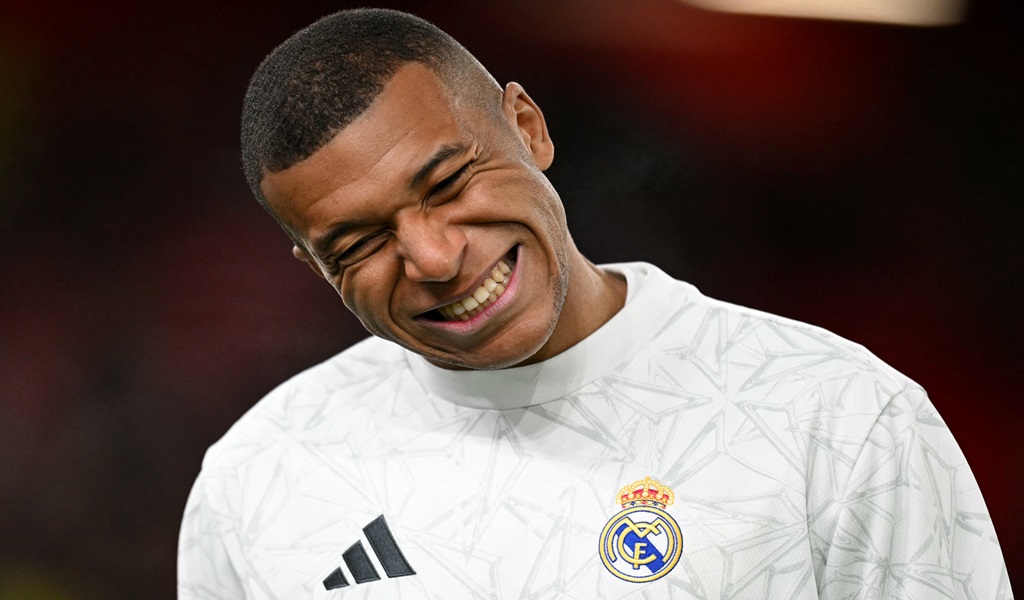
    MADRID, Spain – Fresh uncertainty has swept through Real Madrid and French football ahead of a pivotal month of fixtures, after La Liga giants Real Madrid confirmed on Monday that star striker Kylian Mbappe is facing a race against fitness to feature in the upcoming El Clasico clash against Barcelona on May 10. The world-class forward picked up the injury during Real Madrid’s hard-fought 1-1 La Liga draw against Real Betis this past Friday, forcing the France national team captain to leave the pitch early.

    In an official statement, the 14-time Champions League winners – commonly nicknamed Los Blancos – confirmed that diagnostic testing revealed damage to the semitendinosus muscle in Mbappe’s left thigh. Initial assessments shortly after the match suggested the issue was nothing more than muscular overexertion, but follow-up scans have now confirmed a full injury to the star, who leads Real Madrid’s goalscoring charts this season.

    The injury comes at a critical juncture for the club, which currently sits second in the La Liga table, 11 points adrift of league leaders Barcelona. Before the high-stakes Clasico showdown with the Catalan side, Real Madrid is set to take on Espanyol this coming Sunday. If Real Madrid drops points in that fixture without their star striker, and Barcelona secures three points against Osasuna the previous day, Hansi Flick’s Barcelona will wrap up back-to-back La Liga titles with several games still left to play.

    Beyond domestic club football, Mbappe’s latest fitness setback has sparked growing anxiety among French football circles, with the 2026 FIFA World Cup – jointly hosted by the United States, Canada, and Mexico – set to get underway on June 11. This is not the first long-term injury issue the 27-year-old 2018 World Cup winner has faced this season. Earlier in the campaign, a persistent knee injury kept him sidelined for two months, the longest absence of his entire professional career. Mbappe previously opened up about the mental toll of that extended layoff, admitting it left him struggling with feelings of frustration, anger, and anxiety.

  • Oil rises, stocks steady as US-Iran peace talk hopes wobble

    Oil rises, stocks steady as US-Iran peace talk hopes wobble

    Global financial markets showed mixed but largely stable movement on Monday, as the sudden collapse of planned peace negotiations between the United States and Iran sent oil prices climbing, leaving investors bracing for a packed week of central bank rate calls and high-stakes corporate earnings reports from top U.S. tech firms.

    What had been growing optimism over a potential breakthrough in diplomatic talks over the weekend quickly evaporated. Iranian Foreign Minister Abbas Araghchi’s diplomatic visit to Islamabad had fueled market hopes that new direct negotiations with Washington would move forward, but U.S. President Donald Trump scrapped a planned trip by American diplomatic envoys on Saturday. In comments to Fox News following the cancellation, Trump struck a dismissive tone, saying if Iranian officials wanted dialogue, “they can come to us, or they can call us.”

    On Monday, Tehran’s top diplomat placed full blame for the failed talks — the first and only round of negotiations aimed at de-escalating ongoing conflict between the two nations — squarely on Washington. Araghchi criticized the U.S. for insisting on “excessive demands” during discussions, and reiterated that “safe passage through the Strait of Hormuz is an important global issue.” The strategic Strait of Hormuz, through which roughly a fifth of global oil supplies pass daily, has remained largely closed amid ongoing tensions, keeping upward pressure on energy prices.

    U.S. media outlet Axios reported Sunday, citing an unnamed U.S. official and two additional sources familiar with the negotiations, that Iran had tabled a new proposal focused on ending hostilities by reopening the Strait of Hormuz and lifting an ongoing U.S. naval blockade of the waterway, with controversial nuclear negotiations deferred to a later phase of talks.

    Against this geopolitical backdrop, global oil benchmarks climbed on Monday, with both major contracts posting roughly 1% gains. The global benchmark Brent crude held firmly above the $100 per barrel threshold, trading up 1.3% at $106.70 per barrel by 1100 GMT, while U.S. West Texas Intermediate gained 1% to settle at $95.34 per barrel. Gains were tempered, however, by lingering investor hopes that a diplomatic agreement could still be reached in the coming weeks.

    Major European equity markets defied expectations of a pullback from higher energy prices, posting modest gains. London’s FTSE 100 added 0.2% to 10,398.57 points, Paris’s CAC 40 rose 0.6% to 8,206.54 points, and Frankfurt’s DAX climbed 0.9% to 24,348.27 points. Asian markets ended the trading day mixed: Tokyo’s Nikkei 225 and Seoul’s Kospi rallied on a wave of tech sector gains, while Hong Kong’s Hang Seng Index slipped 0.2% and Shanghai’s composite index gained a modest 0.2%. U.S. markets closed slightly lower, with the Dow Jones Industrial Average dipping 0.2% to 49,230.71 points.

    Analysts noted that investor expectations for a diplomatic breakthrough were already muted heading into the Islamabad talks, leaving most market participants in a holding pattern ahead of the week’s key economic events. “It may be that hopes of a diplomatic breakthrough were pretty faint to start with, and markets are now in wait-and-see territory ahead of a heavy week of earnings and economic touchpoints,” explained Derren Nathan, head of equity research at U.K. investment firm Hargreaves Lansdown.

    This week brings scheduled monetary policy decisions from three of the world’s most influential central banks. With energy prices remaining persistently elevated, economists widely expect the U.S. Federal Reserve will hold interest rates steady when it announces its decision on Wednesday. The European Central Bank and the Bank of England are also projected to follow suit with similar rate pauses.

    Beyond central bank policy, investors are turning their attention to quarterly earnings reports from five of the world’s largest tech giants: Alphabet, Meta, Microsoft, Amazon, and Apple. In recent weeks, stronger-than-expected corporate results have lifted equity markets globally, giving investors some confidence amid ongoing volatility. Russ Mould, investment director at brokerage AJ Bell, noted that “investors have been encouraged by corporate news flow over the past few weeks, leading to higher equity prices.” Still, he warned that extended periods of elevated oil prices carry major inflation risks: “higher oil for longer spells trouble for inflation, which in turn could act as a headwind for the economy.”

    Currency markets saw mild movement on Monday, with the euro edging up to $1.1746 from Friday’s close of $1.1717, and the pound climbing slightly to $1.3558 from $1.3530. The dollar slipped against the yen, falling to 159.15 yen from 159.42 yen, while the euro gained marginally against the pound to hit 86.64 pence.

  • UNFINISHED BUSINESS

    UNFINISHED BUSINESS

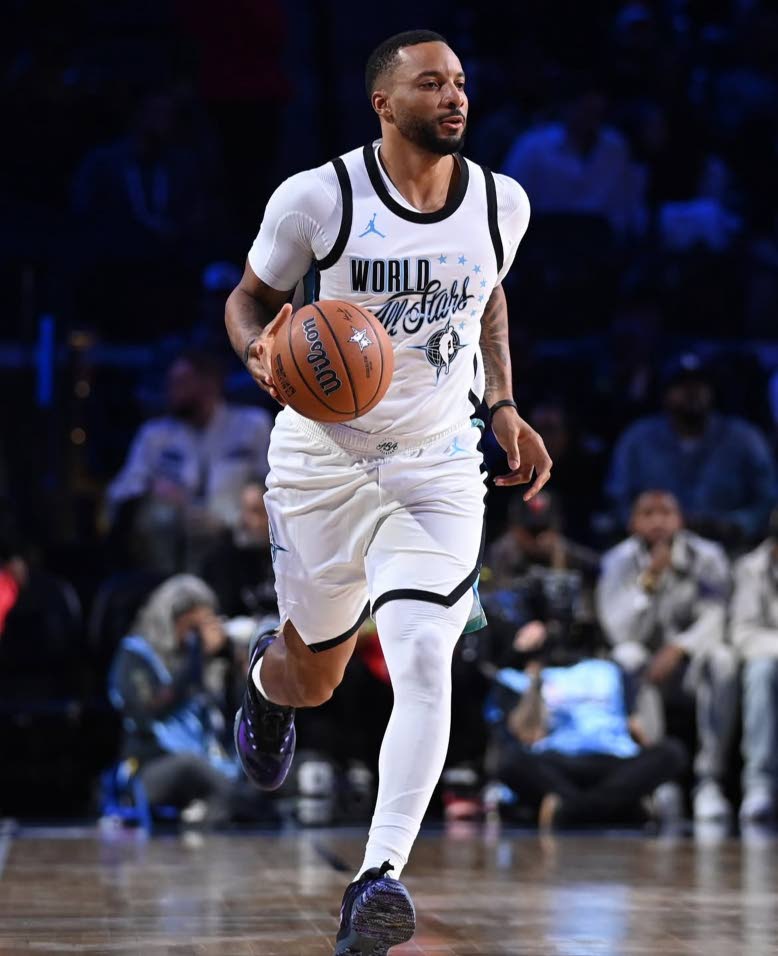
    As the NBA offseason kicks into gear and star guard Norman Powell prepares to hit free agency this July, the 32-year-old Jamaican athlete has left his long-term future with the Miami Heat open to question, wrapping up a breakout individual season that ended in collective disappointment for the franchise.

    Traded from the Los Angeles Clippers to South Florida ahead of the 2024-2025 campaign, Powell delivered a career-defining performance in his first season with the Heat. Emerging as the team’s top offensive weapon, he averaged nearly 22 points per game, a stat line that earned him his first-ever selection to the NBA All-Star Game. With the honor, Powell joined an exclusive club of Heat All-Stars that includes franchise legends LeBron James and Dwyane Wade, cementing his status as one of the league’s most in-demand free agents this summer.

    Despite his standout individual form, the Heat’s season fell short of postseason expectations. A late groin injury forced Powell into a reduced bench role for five of his final seven outings, and the team was ultimately eliminated from playoff contention in the play-in tournament with a loss to the Charlotte Hornets.

    Heading into free agency, Powell offered no guarantee he would re-sign with Miami, saying he will wait for discussions between his agent and Heat front office leadership, including Hall of Fame executive Pat Riley, before mapping out his next steps.

    “I’m not sure. I’m going to talk to my agent (and) I know my agent’s going to talk to (general manager) Pat (Riley) in the front office and figure those things out,” Powell told reporters. “I’ll connect with my agent sometime next week and figure out how those conversations went and then we’ll start the game plan from there, what free agency looks like and what the next couple weeks look like for me.”

    While his future remains up in the air, Powell made clear he holds his time with the Heat in high regard, noting he had long dreamed of playing for the franchise and that he valued the connections he built with teammates and staff despite the season’s disappointing end.

    “I enjoyed my time here in Miami, I’ve always wanted to play for the Heat. I thought it was a good year for me in spite of the injuries and some of the setbacks and stuff like that,” he said. “But I enjoyed my time, I enjoyed the staff and my teammates and everything that came along with the season. I thought we had a great time off the court, really bonding and being able to joke around and things like that. That’s the most important part about the season is the bonds and stuff that you make. Every season there’s only one champion, so it’s all about the memories and things that you make and the ups and downs and going through it.”

    Instead of fixating on free agency negotiations immediately after the season, Powell plans to decompress with family before shifting focus to international basketball. He is set to rejoin the Jamaican men’s national team for crucial FIBA World Cup Qualifying matches against Canada and the Bahamas scheduled for July.

    Jamaica currently needs at least one win from the two upcoming matches to advance to the final qualifying round, where they will compete for a spot in the 2026 FIBA World Cup hosted by Qatar. For Powell, the break from NBA roster talks will be short, with the guard set to return to the court just weeks after the end of the Heat’s season to push for his country’s first World Cup berth in recent history.

    “Right now it’s just decompressing, relaxing, getting some time to spend with my family and then getting right back into it sometime at the end of next week or the beginning of the week after that because I have some other stuff I got to take care of with the national team and things like that for qualifying,” Powell said. “So there won’t be too much time off before I start getting back on the court and working.”

  • Musicians front and centre!

    Musicians front and centre!

    Jamaica’s live music industry is undergoing a long-overdue reckoning, as a collective of instrumental musicians led by saxophonist Verlando Small is calling for a fundamental shift in how session and backing musicians are valued, positioned, and compensated within the country’s entertainment ecosystem. At the official launch of the Verlando Small Reimagined performance series, held at the University of the West Indies Mona Campus’ Philip Sherlock Centre for the Creative Arts, artists opened up about the systemic challenges that have long sidelined instrumentalists, pushing them to the background of live productions even as their work forms the backbone of every successful show.

    Slated for May 9 and 10, the two-night event is co-produced by the Verlando Small Reimagined Production Team and Aureum Luxe Entertainment, with a talented core lineup featuring musical director Evan Mason, guitarists Nicholas Groskopf and Brandon Benjamin, percussionists Colin Phillips and Robert Malcolm, multi-instrumentalist Joe Davis, and producer-engineer-musician Keneil Delisser. The launch drew a host of respected Jamaican music industry figures, including veteran industry leader Tommy Cowan and iconic tenor saxophonist Dean Fraser, all gathered to discuss the future of the craft in Jamaica.

    Opening the conversation, Tommy Cowan framed the push for musician leadership as a full-circle moment for Jamaican music, recalling the legacy of standout instrumentalists from decades past. “From the days of Ernie Ranglin, Tommy McCook, and Dan Drummond, through to icons like Dean Fraser today, excellence has always come when musicians step into their own power,” Cowan noted. “Ultimately, it comes down to each musician’s personal responsibility, ambition, and understanding of their purpose in this industry.”

    For Verlando Small, who made history in 2013 as the only non-vocalist to win Jamaica’s popular Digicel Rising Stars talent competition, the conversation is long overdue. Small, who has built a cross-genre reputation playing saxophone in contemporary worship, reggae, jazz, and soul, challenged fellow instrumentalists to take an active role in elevating their standing in the industry. “If we want more recognition and better treatment as musicians, we have to be willing to grow into more,” Small asserted. “Earning a seat at the planning table doesn’t just happen — it requires vision, original ideas, and a solid understanding of how the business side of music works.” He also emphasized that musicians consistently go above and beyond to deliver a seamless, successful show, and that greater inclusion in production planning and fair compensation must match that commitment. “We never let a show fail — we always give more than what’s asked of us. Inclusion and fair pay have to follow that effort,” he said.

    Grammy Award-winning guitarist Nicholas Groskopf echoed Small’s perspective, pointing out that while the work of musicians is irreplaceable, they are often sidelined until showtime. “Live music simply cannot happen without us, and every musician is a star in their own right — but it’s still a team effort,” Groskopf explained. “A lot of the time, we feel pushed to the back seat and forgotten, until the day of the show when everyone is scrambling to pull everything together.” He added that while Jamaica’s music industry is globally celebrated for its innovation and talent, systemic improvements are needed to better integrate musicians into early planning and production processes, rather than treating them as afterthoughts.

    Percussionist Robert Malcolm highlighted another persistent challenge: the industry’s overreliance on informal verbal agreements, with little to no formal documentation. “We operate mostly in a verbal community here, but there’s almost never any follow-up in writing,” Malcolm said. “Without a paper trail, you get constant confusion around expectations, rehearsal schedules, and compensation, which leaves musicians in vulnerable positions.”

    For musical director Evan Mason, the path forward starts with greater visibility and more intentional opportunities for instrumentalists to step into the spotlight. “We need more platforms, more events where musicians can perform in the light, not just as backup, but as the main attraction,” Mason said. While he acknowledged that Jamaica has produced legendary standouts like Dean Fraser, Monty Alexander, and Dennis Rushton, he noted these iconic figures are exceptions, not the norm for most working instrumentalists in the country. “We just need more opportunities to showcase the incredible depth of talent that exists here,” he added.

    Mason also pushed for musicians to proactively engage with the business side of the industry, even when it means having uncomfortable conversations. “Learn how the business works. Have those difficult discussions, because that’s where fair compensation comes from,” he said. “Most of the time, being clear from the start with paperwork and formal contractual agreements makes everything easier for everyone involved. We’re not here to bash anyone in the industry — we’re saying that as musicians, we have work to do to lift ourselves up and claim the space we deserve.”

    The upcoming Verlando Small Reimagined shows are designed to turn this conversation into action, putting instrumentalists front and center to showcase their talent and redefine their role in Jamaica’s live entertainment landscape.

  • Dowdie tops Miss Bikini Jamaica International

    Dowdie tops Miss Bikini Jamaica International

    After a four-month postponement triggered by Hurricane Melissa, the 11th edition of the Miss Bikini Jamaica International competition finally kicked off to a warm reception at Neil’s Auditorium in Mandeville, Manchester. When the final scores were tallied, Suzan Dowdie walked away with the coveted top crown, adding an extra Best Figure accolade to her haul to cap off a remarkable night of competition.

    Rounding out the top four placements, Gabrielle Whyte secured the runner-up position, while Moya-Maye Nanan claimed third place and Olivia Harley finished in fourth. What makes Dowdie’s victory even more compelling is the extraordinary adversity she overcame to reach the stage: a devastating Hurricane Melissa destroyed her family home in Giddy Hall, St Elizabeth, leaving her facing profound personal loss and disruption even as she stepped into the competition.

    Rather than letting the storm derail her dreams, Dowdie turned her hardship into purpose. As both a construction forewoman and the executive director of the Lil Suz Foundation, a community nonprofit she launched in the wake of the disaster, she has dedicated her post-hurricane energy to lifting up her neighbors. “Melissa knocked me down,” Dowdie shared in an interview after her win. “I am currently helping a lot of people in Giddy Hall… that is where Lil Suz Foundation came in. Currently we are building houses in Giddy Hall for persons whose homes were damaged and destroyed during the hurricane. I sheltered a lot of people in my home during and after the storm.”

    The road to the 11th staging was anything but smooth for event organizers. The competition was originally scheduled for December 2024, but event founder Dwight Dunn made the call to shift the date from peak hurricane season to April 2025, a direct response to the widespread damage caused by Melissa. Even after the date change, the storm left lasting impacts on the contestant pool: originally slated to feature 12 competitors, multiple contestants were displaced by the hurricane and forced to drop out due to catastrophic financial strain. A handful of remaining contestants also withdrew later in the process, as they could no longer cover the costs of required training, leaving 10 participants to compete on the opening night.

    Founded 12 years ago, the Miss Bikini Jamaica International competition has built a steady following through years of adaptive evolution. It launched its first edition at Oracabessa, St Mary’s iconic James Bond Beach, before relocating to Kingston for eight consecutive stagings. When the COVID-19 pandemic upended live events in 2020, organizers pivoted once again, moving the competition to Mandeville and hosting it as a virtual production. The contest returned to its traditional in-person format in 2022, and has remained in Mandeville ever since.

    Despite all the setbacks that marked this year’s staging, Dunn is already looking ahead to expanding the competition beyond Jamaica’s borders, with plans to host a staging in Florida in 2026. For the newly crowned champion, however, the focus remains on the ongoing recovery work in her community, proving that beauty pageantry can extend far beyond the stage to drive tangible, positive change for those in need.

  • From TV scripts to supply chains

    From TV scripts to supply chains

    Shanan Smart’s journey to becoming a leading Jamaican entrepreneur defies conventional career paths, blending a lifelong passion for science, years of groundbreaking work in media production, and a commitment to solving pressing local business challenges. Long before she navigated corporate boardrooms and coordinated complex logistics for her distribution company, Smart honed her creative instincts as a core team member behind one of Jamaica’s most beloved television institutions: *The Ity and Fancy Cat Show*. As a key creative force for the iconic program, she helped craft its signature humor, cultural resonance, and narrative rhythm that captivated audiences across the island and the Jamaican diaspora worldwide. Following the show’s widespread success, the creative duo behind it returned to television in 2019 with a new sitcom titled *Bigger Boss*, and brought Smart onto their growing team.

    The fast-paced, often unpredictable environment of television production taught Smart a foundational skill: how to build something impactful from limited resources. That experience refined her storytelling discipline and showed her how creative thinking can turn a simple concept into a powerful connection between diverse groups of people. Today, that same innovative spirit is directed toward solving a critical gap in Jamaica’s business ecosystem: after years of writing television scripts, Smart is now writing a new story for Jamaican enterprise through targeted supply chain solutions.

    As Chief Operating Officer of Smart Haves Distributors, Smart leads the company alongside her husband George, who serves as Chief Executive Officer. The couple founded the firm together in 2020, anchored by a clear mission: to improve lives across Jamaica by delivering high-quality essential goods and unmatched customer service. This mission has positioned the company to support local manufacturers and micro, small, and medium enterprises (MSMEs) as they navigate skyrocketing operational costs and persistent supply chain disruptions that threaten long-term business stability.

    Smart Haves fills a long-unaddressed need in Jamaica’s industrial market by connecting local businesses with consistent access to essential supplies, cutting indirect procurement costs by as much as 20 percent, and delivering the operational stability that local firms have long lacked. The company’s core client base is Jamaica’s manufacturing sector, the largest contributor to the country’s goods-producing industries, accounting for 8.9 percent of Jamaica’s total gross domestic product. Between 2020 and 2024, the sector expanded by more than J$6.7 billion, creating growing demand for reliable supply chain support.

    “Many managers and business owners do not realise how critical operational supplies are until they can’t get them,” Smart noted. “Local tax increases, international tariffs, and broader economic volatility make it extremely difficult for businesses to plan and budget accurately, since prices are constantly fluctuating. What we offer to businesses across the country is stability: reliability in pricing, on-time delivery, and customer service you can count on.”

    Smart’s winding career path before entrepreneurship included stints across seemingly disconnected sectors, each of which prepared her for her current role. She studied environmental biology, drawn to science from a young age by a deep curiosity about how natural and man-made systems work. She later transitioned into media production, where she wrote and produced content for television, before moving into a role in sales, operations, and training at iCreate.

    Looking back on her career, Smart now recognizes how every step built the skill set she needed to launch and run Smart Haves. “Science teaches you to ask questions and understand how systems function,” she explained. “Television production teaches you how to create something meaningful with limited resources. When you run a business, you need both of those skill sets.”

    George Smart credits much of the company’s rapid growth to his wife’s leadership and disciplined approach to operations. “Shanan has an incredible ability to see both the big picture and the small daily details that make a business run,” he said. “She’s an amazing mother, a trusted partner, and a business leader who approaches every challenge with patience and focus. Building both our family and our company together has been one of the most rewarding experiences of my life. Seeing the level of commitment and discipline it took for her to do both has been truly inspiring.”

    The couple’s professional partnership is built on a foundation of balanced trust and shared responsibility. While George leads business development and logistics strategy, Shanan oversees client relationships, inventory monitoring, and the operational systems that keep orders moving smoothly to clients across the country.

    Their business model prioritizes building long-term collaborative relationships with clients over one-off transactional sales. “We see our clients as partners,” Smart explained. “When their operations run efficiently, it means their employees keep working, their customers receive products on time, Jamaicans get better prices when they shop, and the entire country benefits.”

    While Smart Haves has already established a strong foothold in Jamaica’s distribution sector, Smart is already planning the company’s next phase of growth. Her long-term vision is to expand into a broader Smart Haves Group of Companies, with a new line of sustainable products that aligns with growing consumer and business demand for naturally derived ingredients.

    “We’re watching the market change in real time,” she said. “People are paying closer attention to what they use every day, and businesses have to keep up with that shift. For us, it aligns perfectly with one of our core values: sustainability. We pride ourselves on thinking ahead and being innovative. So we are excited to provide products that support healthier choices while still delivering the reliability our clients depend on.”

    When asked about navigating the overwhelmingly male-dominated business landscape, Smart gives an unfiltered, straightforward answer. She has had countless experiences where she has had to assert her expertise, prove her capabilities, and refuse to be dismissed or talked over by male colleagues. What makes her approach unique is that she never tried to conform to masculine norms to fit in.

    “My approach has always been to show up as myself. I am confident, capable, and clear. And I don’t take anything personally,” she said.

    Where many other women in male-led industries have altered their approach or tried to fit in as “one of the boys”, Smart has built her career on her own terms. Her advice to young women entering the workforce is clear: “Be yourself. If you think about it, most industries are male-dominated. You don’t need to be like the men. Learn your role, know your industry, and be disciplined. The road rises to meet the woman who walks it as herself.”

  • Teachers to wear black in protest as JTA puts members on alert

    Teachers to wear black in protest as JTA puts members on alert

    Thousands of educators across Jamaica are set to wear black clothing today and Tuesday as a visible act of protest against what the Jamaica Teachers’ Association (JTA) describes as systemic disregard for the teaching profession. The mass demonstration was announced by the JTA in an official press statement released over the weekend, at a time when months of drawn-out contract negotiations have left teachers increasingly disillusioned with the government’s lack of progress on core demands.

    In its statement, the JTA acknowledged that the extended negotiation process has placed an unmanageable burden on its rank-and-file members. Many teachers have reported deep-seated frustration, chronic professional exhaustion, and rapidly dwindling patience after months of unfulfilled promises and stalled talks. The association noted that the ongoing delay has not only tested educators’ willingness to compromise, but also eroded their sense of professional worth and dignity as public servants.

    JTA President Mark Malabver reaffirmed the organization’s unwavering solidarity with teachers across the island, emphasizing that the body understands the daily sacrifices educators make even amid ongoing uncertainty about their compensation and working conditions. Malabver stressed that the dispute extends far beyond base pay: the fight, he said, is fundamentally a battle for social justice, aimed at correcting long-standing inequities and ensuring that teachers receive the respect and compensation that matches their irreplaceable role in driving Jamaica’s national development.

    According to the JTA, Jamaica’s Ministry of Finance has recently extended a formal invitation for a new round of negotiation talks scheduled for Tuesday. The upcoming meeting is framed as a critical make-or-break opportunity to make tangible progress on the JTA’s outstanding list of claims. Two central issues top the association’s agenda: the long-unresolved graduate allowance dispute, and a suite of other outstanding matters related to members’ overall compensation and workplace welfare.

    Even with the new meeting scheduled, the JTA was candid about the lack of movement on these priorities to date. Despite the association’s repeated good-faith efforts to move the negotiation process forward over recent months, no significant breakthrough has been achieved on any of the core demands.

    Against this backdrop, the JTA has appealed to its members to extend a short window of patience to allow Tuesday’s talks to proceed without premature escalation. The association made clear that this appeal comes with a full understanding of the widespread anger and frustration that permeates the teaching profession right now. At the same time, members have been urged to remain vigilant and on high alert for further updates coming out of the negotiations.

    The JTA issued a clear ultimatum to the government: if no meaningful progress is made during Tuesday’s meeting, particularly on the graduate allowance issue and other core demands, the association will put the question of next steps directly to the full membership to decide what action to take. Teachers have been instructed to stand by for official updates immediately following the conclusion of the negotiation session.

  • Scallion burden eased

    Scallion burden eased

    In New Forest, Manchester, Jamaica, Agriculture Minister Floyd Green has confirmed that targeted support will continue reaching local scallion producers grappling with a major supply glut, delivered through a coordinated public-private partnership designed to absorb the region’s unexpectedly large harvest.

    Speaking to reporters during an on-site visit Sunday, Green outlined that the relief effort is already underway, with produce moving out of the New Forest agro-park steadily. Just one week prior, private sector partner GraceKennedy Group moved roughly 50,000 pounds of excess scallion out of the area. On the same day of Green’s announcement, the ministry launched its next phase of intervention, covering transportation costs for the produce in a new collaboration with food processor Walkerswood.

    Over the course of this week alone, the partnership will purchase 125,000 pounds of scallion from local growers to take excess supply off the market. Beyond Walkerswood’s commitment, Green confirmed that additional private firms have stepped in to buy a further 200,000 pounds of the crop. Altogether, the two-week relief intervention will move approximately 600,000 pounds of scallion, a volume that Green says will substantially ease the financial pressure on farmers who have been stuck with unsellable product.

    The crisis first drew public attention just over a week earlier, when Opposition Member of Parliament Peter Bunting, who represents Manchester Southern, raised alarms about plummeting demand and widespread spoilage impacting dozens of farmers in New Forest’s key agricultural belt during a community tour.

    Green pushed back against any suggestion that the ministry was slow to act, noting that officials began coordinating a response weeks before the issue gained public attention. After recognizing that strong growing conditions had led to a bumper harvest that outstripped existing demand, the ministry called together major Jamaican agro-processors to map out a solution.

    Officials learned that GraceKennedy had already stockpiled nearly three years of scallion inventory due to a recent industry-wide drop in demand, leading the firm to cut back on new purchases. With that context, the ministry partnered with Walkerswood to design the targeted buy-in initiative that is now being rolled out.

    Green also highlighted that the current overproduction is actually a sign of a remarkable recovery for the region’s agricultural sector. Just six months prior, New Forest’s farmlands were entirely flooded and severely damaged by Category 5 Hurricane Melissa. In the wake of the storm, the ministry implemented aggressive support measures to help growers restart production, including providing free irrigation water to all farmers in the New Forest agro-park through the end of February.

    That support paid off with a far larger harvest than initially projected, creating the current supply-demand imbalance. “One of the good things we have seen since Hurricane Melissa is a tremendous recovery, especially in our agro-parks,” Green said. “The reason we are seeing that recovery is because we have taken definitive steps to help the farmers get back on their feet.” He credited local growers for their extraordinary resilience in rebuilding their operations after the devastating storm, adding that the current intervention will help them stabilize their incomes and continue investing in future production.

  • Murder on holy ground

    Murder on holy ground

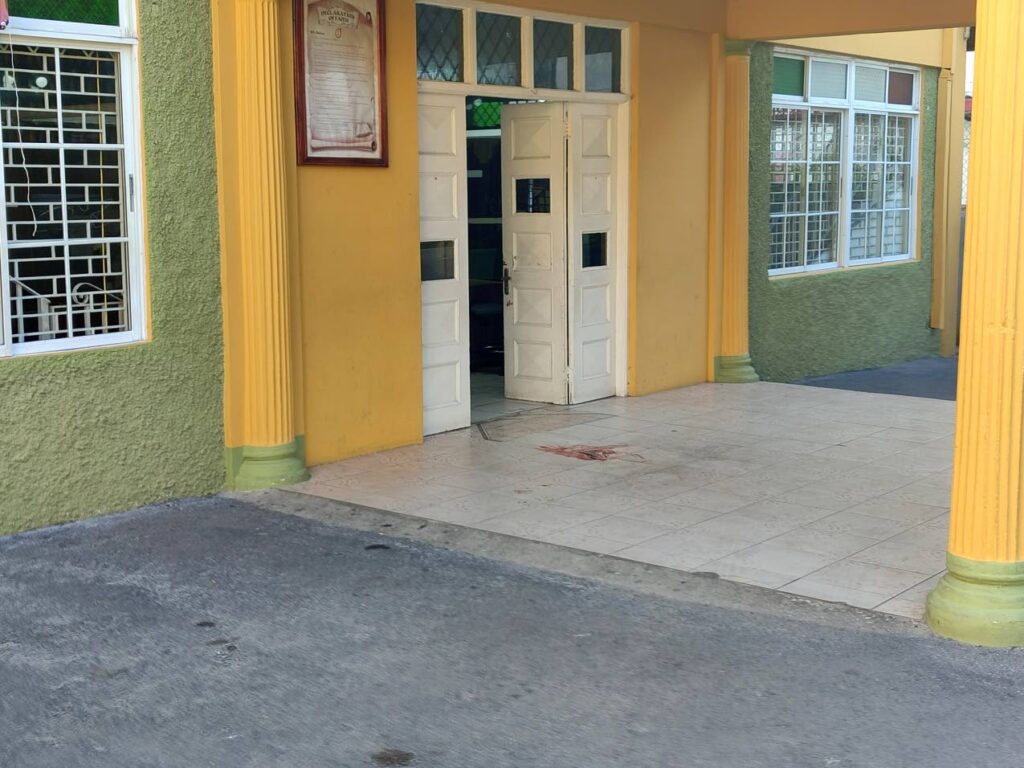
    In western Jamaica, two high-profile fatal shootings on church grounds have ignited urgent public and religious dialogue about whether traditional sacred spaces can still function as the sanctuaries communities have relied on for generations. The most recent tragedy unfolded last Wednesday, when 38-year-old church member Cora Thompson was killed outside Montego Bay’s New Testament Church of God mid-way through a scheduled fasting service. This killing echoes a 2021 attack that claimed the life of 51-year-old Andrea Lowe-Garwood, who was shot and killed during an active worship service at Agape Christian Fellowship Church in Falmouth, Trelawny.

    For centuries, churches across Jamaica and much of the world have held a unique social status: more than just gathering places for worship, they were understood as neutral zones of peace, where people facing conflict, persecution or hardship could find safe refuge. Today, regional religious leaders agree that while the core mission of the church to serve its community remains unchanged, the unwritten social respect that once shielded these spaces from violence has sharply deteriorated.

    Pastor Michael McAnuff-Jones, co-chairman of the Watchman Christian Leadership Alliance, frames this shift as a “thinning out of a kind of a moral shield” that once protected church grounds. “It may be that in a real sense, this historical kind of societal contract that is in people’s minds about the need for the church to be treated as holy ground, as sacred ground, has broken down,” he explained. “When people begin to see a church building as just another building with walls and a roof, then we have a shift in the way people respond.”

    Bishop Conrad Pitkin, senior pastor of Faith Temple Assembly of God in Montego Bay and custos of St James, traces this cultural shift to a broader collapse of foundational societal values. “They have lost respect for the church as a sanctuary. They have lost respect for the sanctity of life. There’s a disregard in our society for people,” Pitkin said. “It is not just a simple loss of respect alone, but the whole question of value has been eroded.”

    Bishop Roy Notice, chairman of the Jamaica Umbrella Group of Churches and administrative bishop of the New Testament Church of God in Jamaica, goes further, describing attacks on church property as an act of desecration that signals a deeper national crisis. “The society is kind of losing its soul” due to rampant violent crime and a widespread “lack of respect and regard for human life,” he argued.

    When asked whether the church, through spiritual practice and discernment, could have anticipated and prevented these tragedies through prayer, leaders offered a nuanced, grounded perspective that balances faith with the realities of living in an imperfect world. Notice noted that while divine revelation sometimes forewarns of coming harm, the church operates in a world where “evil is rampant.” “We don’t live in heaven,” he pointed out. “There are times when the Lord reveals it to us before it happens, and there are other times the Lord gives grace to take us through it. And there are other times when the impact is so great, the evil creates victims, and the Lord also guides us through that. So whatever happens, whether we sensed it and discerned it or whether we didn’t, God gives grace for all the occasions.”

    McAnuff-Jones echoed this sentiment, adding there is no guarantee of prophetic warning for every potential tragedy. “The reality of life is that we worship a God who intervenes in matters for His own purpose. God is sovereign, and there are times when bad things happen to good people. There are things that happen to Christians that happen to other people. There are things that happen to people who are not in the church; the same things happen to Christians,” he said, citing the historical persecution of the apostles and the crucifixion of Jesus as examples of violence against faithful people.

    Even amid rising violence and eroding social norms, religious leaders remain committed to upholding the church’s historic role as a place of refuge. Notice reaffirmed that despite the negative influence of broader societal instability, “the church continues to be a place of refuge, sanctuary, and a place of joy.”

    That said, reclaiming the historic safety and sacred status of church grounds will require collective action from across Jamaican society, leaders agree. Pitkin emphasized that broad systemic change is needed to reverse the current trend: “There has to be some level of reinforcement of values and attitudes in our society, and behavioural adjustment. A lot of things need to be done and we are going to have to do it.”

    McAnuff-Jones joined this call, pushing for a “new cultural consensus” that re-establishes church spaces as consecrated ground that demands respect. “People should not for one minute believe that this is a place where anything can happen and anything goes,” he said. “As to what God does when people do these things, that’s for God to decide. But I think it is fair to say that, you know, God is not to be toyed with and people should respect that.”

  • BLAME THE MINISTRY!

    BLAME THE MINISTRY!

    As Jamaica grapples with a growing crisis of weapons possession and widespread student indiscipline across the nation’s public schools, the top leader of the country’s teachers’ union has issued a scathing rebuke of government inaction, accusing policymakers of actively undermining school administrators’ efforts to enforce order and hold violating students accountable.

    In an exclusive interview with the Jamaica Observer published Sunday, Jamaica Teachers’ Association (JTA) President Mark Malabver outlined the deep scope of the problem, revealing that some campuses are now struggling to control gang activity infiltrating their halls.

    “The Ministry of Education already collects detailed data on every major infraction reported across our schools, so they are fully aware of the range and volume of weapons seized from students every year,” Malabver told the outlet. “Students are bringing an alarming variety of weapons onto campus. I don’t know what purpose this data is serving if no substantive action follows, but it is past time for meaningful intervention.”

    Malabver emphasized that the number of weapons recovered is significant, and called for coordinated action from school administrators, governing boards, and the education ministry to expel gang presence from campuses entirely. “Schools must be made a completely hostile environment for gangs,” he said.

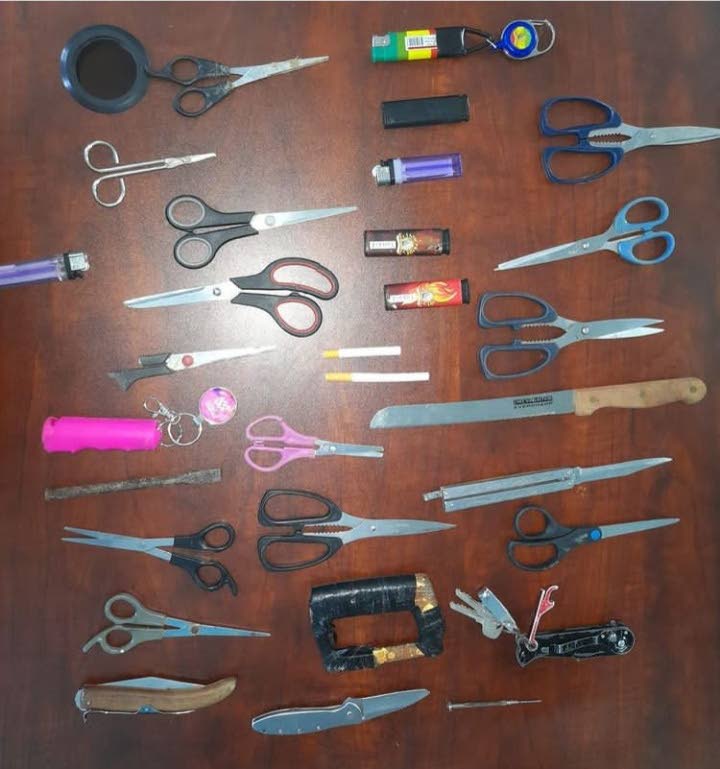
    The JTA president confirmed that common edged weapons including knives, ice picks, and scissors are regularly carried by students to school, noting that while firearm seizures are not an everyday occurrence, they have happened repeatedly. “We have had students taken into law enforcement custody for carrying loaded firearms on campus,” he said. “This is not a new problem, but it points to a much wider crisis of systemic student indiscipline that has played out in deadly ways.”

    The most recent high-profile fatal incident took place on April 20, when 13-year-old Seaforth High School student Kland Doyle was stabbed to death by a fellow student in St Thomas. The fatal attack grew out of an on-campus dispute that spilled off school grounds, unfolding between 2:30 p.m. and 3:00 p.m. near the Morant Bay Transport Centre, close to a Teen Hub facility and an internet café frequently used by students. St Thomas Police Division Commanding Officer Rohan Ritchie confirmed three students have been taken into custody in connection with Doyle’s killing.

    Just one week before that fatal stabbing, law enforcement officers arrested four Papine High School students in Gordon Town, St Andrew, after breaking up a public brawl. The students were found in possession of multiple offensive weapons including knives, ice picks, and machetes. While no assault charges were filed because no formal victim reports were submitted, all four teens were formally charged with illegal weapons possession.

    The Jamaica Observer has requested official aggregated statistics from police on the total number and types of weapons seized from students across the island since last week. While the department promised to release the data this week, it has not yet been made public. Police have however repeatedly shared photos of seized student weapons on their public social media channels in recent months, highlighting the scope of the issue.

    In one of the most alarming revelations from the interview, Malabver stated that reports collected by the JTA point to a sharp rise in unprovoked violent attacks against teaching staff by students. “We have seen a significant jump in these unprovoked attacks, alongside persistent bullying across campuses,” he explained. “In one recent case in St Catherine, a student attacked a teacher from behind, causing severe injuries that forced the educator to miss months of classes while recovering. In far too many of these cases, teachers end up paying for their own medical costs out of pocket.”

    Malabver argued that the root of the current indiscipline crisis stems from multiple systemic failures, starting with lack of parental accountability, which the government has failed to address. “We are only treating the symptoms of the problem right now, not getting to the root cause. For me, the core issue is poor parenting,” he said. “There is currently no legislation on the books that holds parents legally responsible for the harmful behavior their children engage in while at school. Lawmakers need to take this gap seriously and pass new legislation to create that accountability.”

    Beyond parental accountability, Malabver pointed to gaps in school governance that let offending students avoid consequences, often when school boards fail to take timely disciplinary action. He went a step further, arguing that the Ministry of Education has inadvertently become complicit in undermining school-wide discipline policies.

    “Whenever school leaders enforce existing dress and grooming codes, ministry officials and even elected politicians often side with violating students instead of backing administrators,” he said. “We keep hearing that new policies are in development, stuck in one consultation phase or another, but where is the urgent, concrete policy to address the indiscipline crisis tearing at our schools? We need a firm, uncompromising approach to discipline, and right now the Ministry is failing to deliver that. They may deny this, but the facts speak for themselves.”

    The issue of weapons in Jamaican schools is not new: just a few years ago, St Catherine North Police, backed by Jamaica Defence Force personnel, carried out a coordinated search of a local high school and seized a large cache of weapons and contraband from students, images of which were widely shared on official police social media at the time.