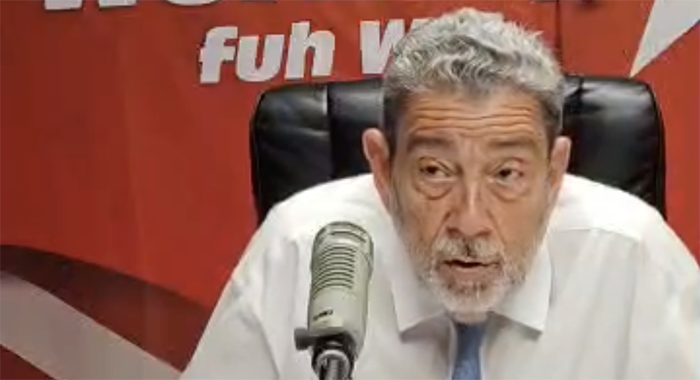
St. Vincent and the Grenadines’ Opposition Leader Ralph Gonsalves, head of the Unity Labour Party, has broken his silence on the newly signed cruise terminal concession deal with Global Ports Holdings (GPH), confirming that his administration held extensive, multi-round negotiations with the international port operator before leaving office following the November general election.
Earlier this month, on June 10, the newly installed New Democratic Party (NDP) government formalized a memorandum of understanding (MOU) with GPH that sets the stage for exclusive negotiations over a 30-year concession agreement. The deal outlines a planned EC$250 million investment to carry out phased modernization work on the Kingstown cruise terminal, with provisions that allow local Vincentian investors to acquire up to a 30% stake in the project and guarantee local representation on the venture’s board of directors.
Speaking this week on Star Radio, the Unity Labour Party’s official broadcast platform, Gonsalves launched pointed criticism of the NDP administration, accusing the sitting government of moving forward with a 30-year commitment without disclosing critical detailed terms of the arrangement to the public. He stressed that while the NDP has publicly announced the MOU, it has released no specific information about the core financial terms that will shape the project’s long-term impact on the country.
Gonsalves recalled that his own administration engaged in multiple rounds of talks with GPH representatives, including a face-to-face meeting with GPH Chairman Mehmet Kuhmen. Shortly before the November 2025 general election that ended the Unity Labour Party’s term, GPH submitted a draft proposal to his administration, though Gonsalves has not released the specific content of that document. He also confirmed that GPH was one of multiple firms that approached his government to pitch proposals for upgrading the country’s cruise infrastructure.
When GPH first presented its vision for the project, Gonsalves said, he walked the initial delegation through the existing port site and shared his administration’s development blueprint: constructing a brand-new terminal on the old port land, followed by a hotel and a purpose-built performing arts centre on adjacent parcels. Gonsalves noted that GPH representatives immediately signaled they were not interested in pursuing a development of that scale.
As part of his administration’s due diligence, Gonsalves said he consulted with Antigua and Barbuda Prime Minister Gaston Browne, who reported that Antigua’s existing partnership with GPH in St. John’s has been satisfactory. However, Gonsalves also highlighted cautionary examples from other Caribbean nations: an agreement with GPH reached by the former Timothy Harris administration in St. Kitts and Nevis was ultimately scrapped after a review found it did not serve the country’s best interests, while a cruise port concession signed by the Freundel Stuart administration in Barbados was put on hold when the Mia Mottley-led government took power.
Despite those past canceled deals, Gonsalves clarified that he does not oppose a partnership between St. Vincent and the Grenadines and GPH. His research, he said, confirmed that GPH is a well-established, professional operator with strong industry standing.
After the third round of talks with GPH, Gonsalves said, his administration intentionally paused progress to request full, specific details of the proposed agreement, a step the NDP has skipped according to the opposition leader. He emphasized that while he understands GPH is a for-profit enterprise that is not operating as a philanthropic organization, the government and people of St. Vincent and the Grenadines have a non-negotiable stake in securing a fair, transparent deal.
Gonsalves shared tentative terms that were discussed during his administration’s talks: GPH initially proposed an investment of US$30 million, with the option to allocate additional capital later. The phased plan the firm presented called for first repairing and upgrading the existing terminal facility, then building an additional new terminal. GPH proposed managing both facilities (without claiming ownership) in exchange for a long-term concession lease, drawing revenue from management fees and a share of head tax collected from cruise lines. However, Gonsalves stressed that GPH never finalized key details during his term, including the exact length of the proposed lease, the projected financial return for the firm, and what percentage of head tax revenue GPH would retain.
“The devil is in the details, which is why we never signed on to anything,” Gonsalves said. He called on the NDP government to release full transparency, arguing that key details – including total project costs over the 30-year term, full financing structures, and the split of head tax revenue – must be publicly vetted to avoid a scenario where the country ends up paying out more than the value of GPH’s initial investment. “What worries people is that you agree in advance that you’re going to give them 30 years without knowing any details,” he added.