作者: admin

  • How To Plan Your Wedding Budget

    How To Plan Your Wedding Budget

    For many engaged couples, mapping out a wedding budget ranks among the most overwhelming parts of wedding planning. But industry experts frame this foundational document not as a set of rigid restrictions, but as a guiding blueprint that shapes every element of your big day, from the venue you book to the closing track that wraps up your reception. When approached with intentional strategy and personalized priorities, a budget shifts from a source of stress to a tool that helps you invest in what matters most to you as a couple. Instead of automatically asking “Can we afford this item?”, you start asking “Does this align with what we value most?” — that shift in perspective is where the magic of intentional wedding planning begins.

    One of the most effective frameworks for keeping spending on track is breaking the total budget into clear percentage-based allocations. While every couple can adjust these numbers to match their unique priorities, event management professional Shikima Hinds, Managing Director of Jamaica-based Shikima Hinds Events Concierge, has shared a balanced guideline tailored specifically for Jamaican weddings, where guest experience is the top priority.

    According to Hinds, the largest share — 40 to 50 percent of the total budget — should go toward venue, catering and bar services. This category forms the core of your celebration, and it is the area where guests will most clearly notice and benefit from your investment. Next, 10 to 15 percent is allocated to hiring a professional wedding planner or coordinator. Hinds notes that the peace of mind a skilled planner brings is worth every penny, as they oversee seamless execution of every timeline and detail, freeing couples to enjoy their engagement and big day.

    Design and decor, which includes florals, furniture rentals, lighting, and all the small details that turn an empty space into a personalized wedding experience, also gets a 10 to 15 percent allocation. For preserving memories long after the final dance ends, Hinds recommends allocating 10 to 12 percent of the budget to photography and videography, an investment that ensures your most cherished moments are captured authentically and beautifully. Entertainment, which covers everything from DJs and live bands to surprise performance acts, fuels the energy of your celebration and should take up 8 to 10 percent of the total budget.

    Attire and beauty, from the wedding gown and groom’s formal wear to hair, makeup, and grooming services, makes up another 8 to 10 percent, a allocation that ensures you feel your absolute best in the moment and in photos. Stationery and invitations, which create your guests’ first impression of your big day and now include digital invites and custom wedding websites alongside traditional paper goods, take up a smaller 2 to 4 percent. For Jamaican weddings in particular, transportation and logistics are a critical 2 to 5 percent expense: coordinating guest travel between hotels and ceremony/reception venues can make or break the flow of the day, and planners recommend not overlooking the costs of parking and on-site security. Miscellaneous items and guest favors, including welcome gifts and personalized small touches that elevate the overall guest experience, account for 2 to 3 percent. Finally, a non-negotiable 5 to 10 percent contingency fund acts as a financial safety net, because unexpected costs always arise during wedding planning, and you will be grateful to have set aside funds to cover them.

    Beyond the percentage framework, Hinds emphasizes that the real success of a wedding budget depends on how couples approach their spending choices. The first step is to sit down together as a couple and identify your top three priorities. Is farm-to-table catering the most important element for you? Do you dream of a designer decor scheme, or is a high-energy all-night dance party your top goal? Once you are clear on what matters most to you, you can confidently allocate more funding to those areas and cut back on elements that are less important to you as a pair. A wedding does not need every element to be top-of-the-line to feel luxurious — balance is the key to a successful, fulfilling celebration.

    Hinds also warns couples not to overlook the impact of small, practical details: seamless transportation, clear parking arrangements, welcome gifts, and a curated itinerary for wedding weekend guests all leave a lasting positive impression, and these are the details that turn a standard wedding into a memorable experience for everyone in attendance. She also cautions against falling into the common “Pinterest trap”: it is easy to fall in love with hundreds of gorgeous ideas when scrolling social media and inspiration boards, but not every trending idea will align with your budget or your personal vision for the day. Impulsive, last-minute additions to your vendor list or design plan are some of the most common causes of budget overages, so staying focused on your original priorities and trusting your experienced event team is key.

    Above all, Hinds encourages couples to have open, honest conversations about money from the very start of the planning process. A clear, agreed-upon budget reduces planning stress, prevents awkward misunderstandings between couples and families, and allows your planner and vendors to guide you effectively toward your goals. The point of budgeting for a wedding is not to restrict spending — it is to help you spend well, on the things that actually matter to you.

    At the end of the day, a thoughtfully allocated budget does not limit your wedding vision — it empowers it. It lets you create a celebration that feels intentional, elevated, and most importantly, completely true to you as a couple.
  • JAMAICA IS OPEN!

    JAMAICA IS OPEN!

    As Jamaica’s 2024 summer tourist season kicks into high gear, island officials are extending a dual invitation to global travelers: come enjoy the country’s world-famous beaches, culture and events – and stay for the robust investment opportunities emerging from a remarkably fast post-disaster recovery.

    Tourism Minister Edmund Bartlett made the call during an appearance on Fyah 105’s popular morning program *The BIM Show*, part of the outlet’s Radio Remote Week hosted at Sandals Ochi Beach Resort in the popular northern coastal town of Ocho Rios. He highlighted a stacked lineup of marquee summer events that draw crowds from across the globe, including the iconic Reggae Sumfest, Dream Weekend and Best Weekend Ever, as core draws for seasonal visitors.

    Six months after Hurricane Melissa, one of the most destructive tropical systems to hit the Caribbean in recent decades, Bartlett said the speed of Jamaica’s reconstruction has surpassed all expectations. “After what was arguably the worst hurricane on the planet, you’d barely know we had one six months later,” he noted, crediting the rapid rebound to collective effort from Jamaican people, national leadership, and generous collaboration with the country’s global diaspora community.

    In the first full quarter after the storm, Jamaica welcomed roughly one million international visitors, Bartlett reported, with the vast majority of hurricane-damaged hospitality properties already back to full operation. At the current pace of recovery, he projects the island will restore 90 percent of its pre-storm tourism capacity by the end of the calendar year.

    Unlike many disaster-hit destinations that lose long-term airline partnerships, Jamaica has retained every single one of its international carrier connections – and even expanded its route network, according to Bartlett. Major airlines including Southwest, Breeze Airways, Virgin Atlantic, Wingo and Copa Airlines have all added new routes to the island in recent months, a clear sign of global industry confidence in Jamaica’s recovery trajectory.

    Leading the charge for northern Jamaica’s tourist hub Ocho Rios is St Ann Mayor Michael Belnavis, who has rebranded the town as Jamaica’s “party capital” and is working to position it as a top global entertainment and ecotourism hub. “The entertainment industry here is extremely lucrative, and we’re investing in building it out to draw visitors year-round,” Belnavis explained, pointing to successful past events like the Easter We Vacay party series as proof of the parish’s growing global appeal.

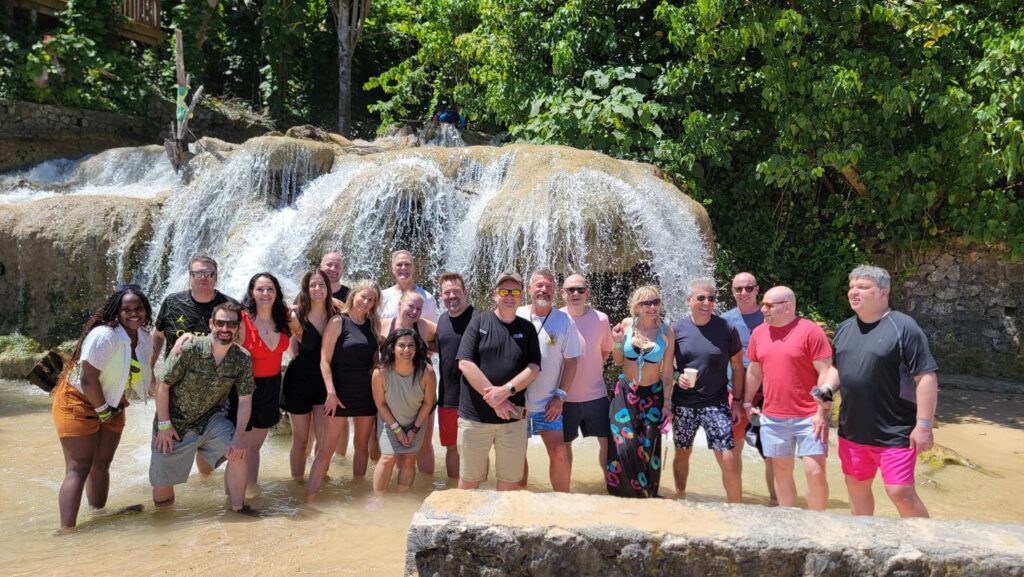
    Beyond cultural events, St Ann boasts some of the most diverse natural attractions in the Caribbean, headlined by the world-famous Dunn’s River Falls – which Belnavis called “the number one tourist attraction in the entire Caribbean.” The cascading, ocean-fed waterfall is joined by other iconic natural experiences including the Blue Hole, scenic river excursions, snorkeling, white-water rafting, and newer one-of-a-kind offerings like the Poco Loco floating bar. “This is a destination defined by its aquatic beauty, paired with endless sun, warm seas and an unmatched welcoming energy,” he added.

    Ongoing infrastructure investments, including the recent opening of a new purpose-built conference centre, are also growing the parish’s appeal for business and meetings tourism, with Belnavis predicting a coming real estate boom across the Ocho Rios area as demand for visitor and investor properties rises.

    Sicourney Jackson, public relations officer for the Jamaica Tourist Board, reinforced the official message during Radio Remote Week, which brought 21 international radio outlets from the United Kingdom and Canada to the island to showcase Jamaica’s post-hurricane readiness. “Right here, right now, Jamaica is open and ready to welcome you,” she said, echoing Bartlett’s call for travelers to support the country’s recovery with a visit. Jackson acknowledged that full reconstruction is still ongoing – the island is not yet back to 100 percent pre-storm capacity – but said progress has been steady and remarkable, crediting frontline tourism workers who have sacrificed personal comfort to speed the industry’s rebound.

    As global interest in travel to Jamaica continues to climb, local tourism and government stakeholders frame the island’s rapid recovery as both a demonstration of extraordinary national resilience and an open invitation. Whether travelers are chasing world-class cultural festivals, one-of-a-kind ecotourism adventures, or high-growth investment opportunities, the message from Jamaica is clear: the island is open for visitors and for business.

    Radio Remote Week, which hosted international and local media outlets across Ocho Rios’ top attractions, gave journalists a first-hand look at the destination’s recovery, with outings ranging from electric ATV adventures at Mystic Mountain to rides on the resort’s famous Olympic-inspired bobsled track, and visits to the popular Poco Loco floating bar to cap off the week.

  • Duitse bondskanselier Merz hekelt Iran en VS in conflict

    Duitse bondskanselier Merz hekelt Iran en VS in conflict

    The long-running standoff between the United States and Iran has pulled Germany’s top leader into the fray, with Chancellor Friedrich Merz issuing scathing criticism of both Tehran and Washington on Monday, laying bare growing frictions between Washington and its NATO allies in Europe that have already been fractured by disagreements over the war in Ukraine.

    Speaking to a gathering of students in Marsberg, North Rhine-Westphalia, Merz accused Iran’s ruling leadership of humiliating the U.S. by inviting American negotiators to travel to Islamabad for diplomatic talks only to walk away with no tangible progress. “The Iranians have clearly mastered the art of not negotiating. They let the Americans travel to Islamabad and leave again without any result,” Merz told the audience. “An entire nation is being humiliated by Iran’s leaders, particularly the so-called Revolutionary Guards. I hope this comes to an end as soon as possible.”

    Beyond his rebuke of Iran, Merz also criticized the U.S. and Israel for failing to consult Berlin and other European capitals ahead of their February 28 military strikes against Iran, confirming he had already directly shared his skepticism with U.S. President Donald Trump. “If I had known the conflict would drag on for five or six weeks and keep worsening, I would have expressed my opposition even more forcefully,” Merz said, drawing parallels between the ongoing escalation and past protracted U.S. military interventions in Iraq and Afghanistan.

    Prospects for a peaceful diplomatic resolution have dimmed further after Trump called off a planned peace mission by his envoys Steve Witkoff and Jared Kushner to Islamabad at the start of this past weekend. On Monday, Iranian Foreign Minister Abbas Araqchi departed for Russia after diplomatic talks held in Pakistan and Oman failed to produce any breakthrough.

    Merz also drew attention to the severe fallout from the partial mining of the Strait of Hormuz, the critical global oil chokepoint that has been effectively blocked since the conflict erupted. He confirmed that European powers, including Germany, have already offered to deploy German minesweepers to clear the waterway and reopen commercial passage.

    The ongoing blockade of the strait has already imposed heavy economic costs on Germany, Merz warned, saying “It is costing us a great deal of money, a lot of taxpayer funds and a significant hit to our economic strength.”

    Global energy markets have already been roiled by the closure of the key shipping route, pushing oil prices sharply higher. The disruption is adding new strain to the already fragile global economy and risks fueling a new wave of rising inflation around the world.

    Now in its third month, the ongoing conflict involving the U.S., Iran and Israel shows no clear path to de-escalation. Deteriorating diplomatic ties and persistent military violence have amplified global uncertainty, triggering widespread economic and geopolitical instability across the Middle East and beyond.

  • Bus Strike Paralyzes Commute

    Bus Strike Paralyzes Commute

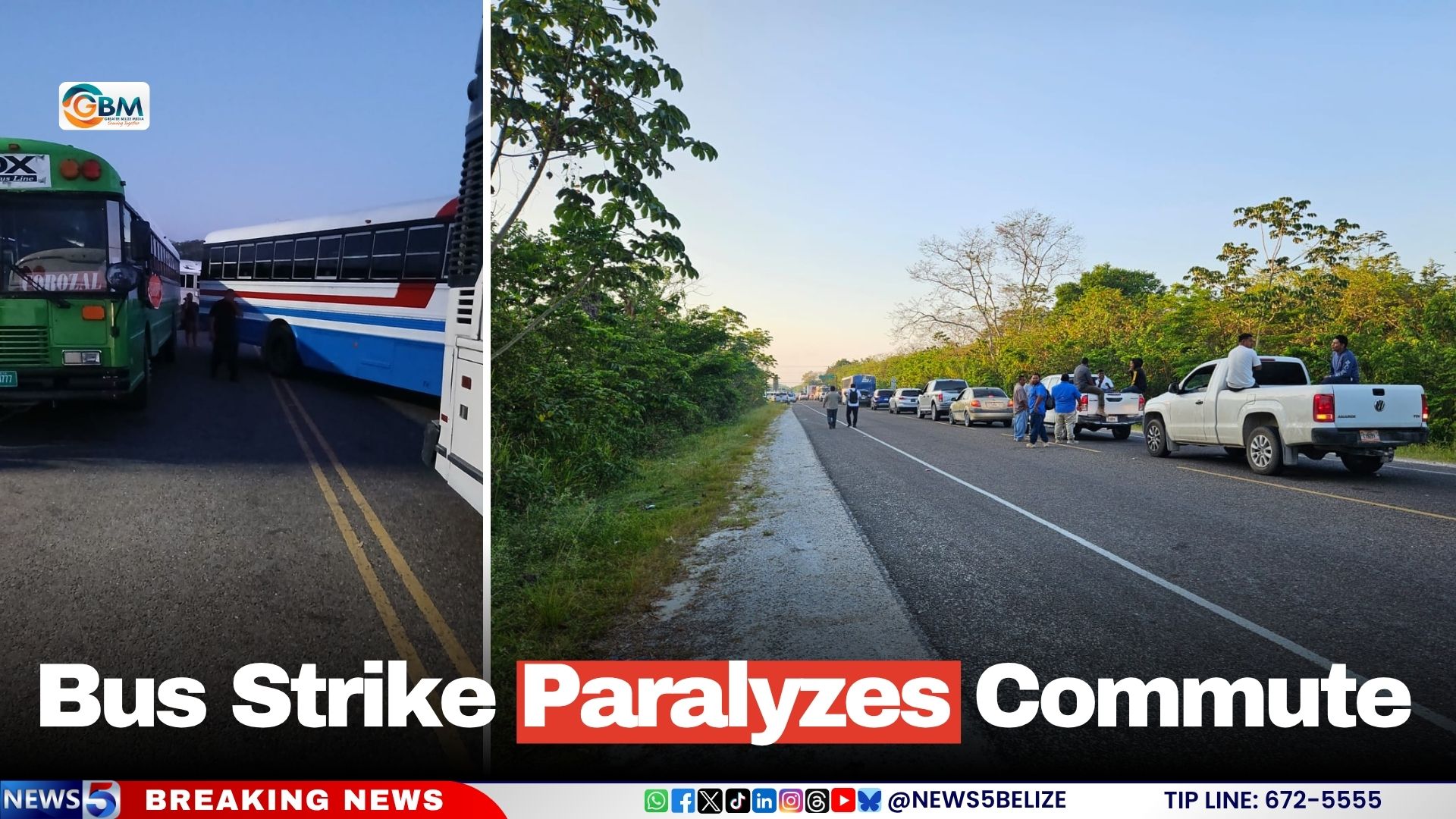
    On the morning of April 27, 2026, thousands of daily commuters across northern Belize woke up to widespread travel chaos after the Belize Bus Association (BBA) launched a planned strike over a long-running unresolved fuel subsidy disagreement with the national government.

    The industrial action, which the BBA had threatened weeks prior, came to fruition after negotiations between the group and state authorities failed to produce a mutually acceptable agreement. According to BBA representatives, the latest subsidy proposal put forward by the government failed to cover critical high-demand routes, most notably frequent intercity services connecting to Belize City, the country’s largest urban center. The association pinned full responsibility for the breakdown of talks on Belize’s Ministry of Transport, accusing the department of ignoring the pressing cost burdens facing private bus operators.

    As the strike got underway, participating operators escalated their demonstration by blocking the major Toll Bridge crossing in Orange Walk Town, a key transport artery connecting northern districts to the rest of the country. The blockade brought motor vehicle and pedestrian traffic to a complete standstill, leaving hundreds of workers, students, and residents stranded for hours as they attempted to reach their daily destinations. Local authorities finally cleared the blockage from the bridge structure shortly after 8:30 a.m. that same morning.

    In an official statement responding to the crisis, Prime Minister John Briceño acknowledged the severe disruption the strike had inflicted on everyday Belizeans, while tracing the root of the conflict to skyrocketing global crude oil prices that have driven up operational costs for transport providers across the country. “We recognize that there is a crisis… the price of fuel has been going up dramatically,” Briceño noted, adding that government negotiating teams had worked through the entire preceding weekend to craft a compromise proposal that would address operators’ concerns without placing undue burden on passengers.

    Under the framework the government put forward, subsidies would be extended to cover all inter-village, inter-town and intercity bus routes, paired with a controlled, modest increase in passenger fares to help operators offset remaining costs. Briceño emphasized that finding a balanced solution was critical to protecting both sides: “We have to find a balance. Operators are struggling with higher costs, but passengers also cannot absorb steep fare hikes.”

    The Prime Minister confirmed that immediate de-escalation efforts were already underway to end the standoff, including appointing a dedicated government negotiator to resume talks with BBA leadership. He reiterated that the immediate priority was reopening key transport infrastructure to restore normal movement for the public, noting that he had already received official confirmation that the Toll Bridge blockade had been removed. Negotiations between BBA representatives and the government are scheduled to continue the same day in the capital city of Belmopan, as both parties work toward a lasting resolution to the dispute.

  • Barbados Reggae Weekend closes out in style as top artistes electrify crowd

    Barbados Reggae Weekend closes out in style as top artistes electrify crowd

    BRIDGETOWN, Barbados – On a warm Caribbean weekend in late April 2026, thousands of reggae and dancehall fans from across the region packed the historic Kensington Oval for the highly anticipated annual Barbados Reggae Weekend, which closed out on a triumphant high note Sunday with its star-studded final installment, “Reggae in the Gardens”.

    Over three consecutive nights of non-stop rhythm and crowd energy, the festival has steadily cemented its reputation as one of the Caribbean’s premier live music events, drawing growing audiences and acclaim across the Caribbean each year. Following two sold-out, high-voltage opening nights, organizers saved the biggest and most diverse lineup for the closing showcase, blending iconic local acts, breakout regional talent, and global award-winning superstars for an unforgettable closing experience.

    The evening kicked off in celebratory fashion with the legendary Barbadian band Spice and Company, marking a remarkable 50 years of making music together. The veteran group got the crowd moving from their first note, weaving together decades of original hits, beloved covers, and fan favorites that included the staples *Johanna* and a standout, soulful arrangement of *Bob’s Song*. They closed their opening set with the infectious *Conga Line*, turning the entire stadium into a throbbing, unified sea of moving bodies that set an electric tone for the rest of the night.

    Next up, Jamaican dancehall favorite Kranium took the stage, delivering a smooth, charismatic performance that highlighted his artistic versatility. Backed by a live band, he ran through his catalog of signature tracks, with his global hit *Nobody Has To Know* drawing a thunderous reaction from the thousands of attendees, particularly the female fans who sang every word back to the artist.

    Breakout Caribbean star D’Yani kept the momentum rolling during his debut set at Barbados Reggae Weekend. His melodic vocal delivery and natural, engaging stage presence struck an immediate chord with the local audience, earning roars of applause and confirming his status as one of the region’s most promising new talents.

    Dancehall artist 450, who had been forced to miss the weekend’s earlier Guinness Showdown event, made up for his absence with a measured yet high-impact performance that had long-time fans singing along to every track from start to finish, reinforcing his rapidly growing profile in the global dancehall scene.

    The energy reached new heights when Grammy Award-winning R&B and soul singer Fantania stepped onto the stage just after 10:30 p.m. Her powerhouse, soulful vocals and dynamic stage presence left the crowd completely mesmerized, with the entire stadium calling for an encore after her set wrapped, creating one of the most talked-about moments of the entire weekend.

    Closing out the festival in the early hours of Monday morning was dancehall sensation Dexta Daps, whose signature high-energy performance style resonated deeply with the crowd, capping off the three-day event with another massive crowd reaction.

    Organizers and attendees alike agreed that “Reggae in the Gardens” delivered the perfect finale for the 2026 edition of the festival, weaving together decades of musical nostalgia, fresh emerging talent, and A-list international star power into a seamless, immersive experience that highlighted the enduring and growing popularity of reggae and dancehall culture on the island. By pairing Barbados’ famously vibrant cultural atmosphere with a tightly curated world-class lineup, the 2026 Barbados Reggae Weekend has left attendees already counting down to its return in coming years.

  • CARICOM Secretary-General pays tribute to the late Honourable Roderick Rainford

    CARICOM Secretary-General pays tribute to the late Honourable Roderick Rainford

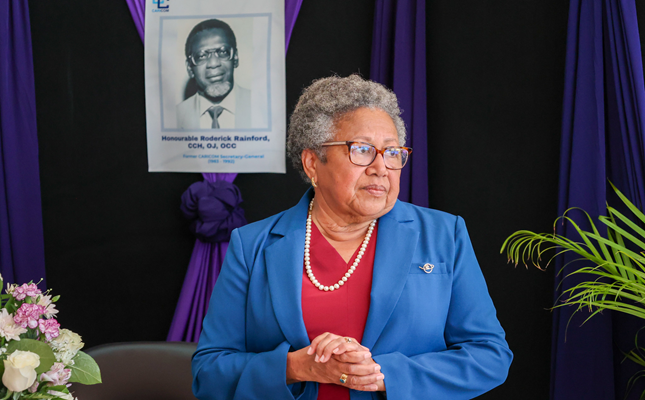
    On April 27, 2026, a Celebration of Life service was held at the University Chapel in Kingston, Jamaica, to commemorate the late Honourable Roderick Rainford — former Secretary-General of the Caribbean Community (CARICOM), one of the bloc’s most transformative leaders, and a decorated regional statesman. Speaking on behalf of the entire CARICOM community, current Secretary-General Dr. Carla Barnett delivered a moving tribute that celebrated Rainford’s decades of dedication and the permanent mark he left on Caribbean integration.

    Rainford led CARICOM for nine years starting in 1983, a tenure Dr. Barnett described as uniquely historic, shaped both by Rainford’s visionary work to strengthen regional cooperation and by the cascading crises that tested the bloc’s very existence in the 1980s. Just weeks after Rainford took office, the assassination of Grenada’s prime minister and subsequent military invasion of the island nation split CARICOM along ideological lines, pushing the integration movement to the brink of collapse. Dr. Barnett noted that this immediate crisis amounted to a “baptism by fire” for the new secretary-general — one he navigated with steady, purposeful leadership.

    Rather than allowing ideological divides to derail decades of progress, Rainford refocused the bloc on its core long-term priorities: expanding trade and driving shared economic development. This pragmatic approach kept CARICOM intact through a turbulent period defined not just by regional upheaval, but also global turmoil including heightened Cold War tensions and volatile sky-high oil prices.

    Rainford’s most enduring contribution to CARICOM came in 1989, when he guided regional heads of government to reach consensus on the landmark Grand Anse Declaration. The agreement laid out core principles for boosting regional competitiveness, eliminating internal trade barriers, and advancing functional cooperation in critical public sectors including health and education — all foundational pillars of what would become the CARICOM Single Market and Economy. The declaration also reaffirmed the bloc’s core commitments to national sovereignty, non-interference in domestic affairs, and equal standing for all member states, principles that remain central to CARICOM’s work to this day.

    Beyond economic integration, Rainford was an early and consistent advocate for regional self-reliance and environmental resilience. His forward-thinking perspective shaped CARICOM’s unified position at the 1992 United Nations Conference on Environment and Development in Rio de Janeiro, the landmark global summit that produced the foundational blueprint for international environmental policy that guides action to this day. Rainford also spearheaded other key regional initiatives, including early efforts to deepen financial cooperation between Barbados, Jamaica, and Trinidad and Tobago, and the revival of the Caribbean Festival of Arts, the region’s premier cultural celebration.

    Dr. Barnett, who first met Rainford in the mid-1990s when she served as Deputy Governor of the Central Bank of Belize and he held the role of Governor of the Bank of Jamaica, remembered him as a thoughtful, collegial leader defined by sharp intellect, unwavering professionalism, and deep respect for all colleagues. Across CARICOM, Rainford earned widespread admiration for his wisdom, foresight, and steadfast commitment to the regional project.

    In recognition of his decades of service, Rainford was awarded CARICOM’s highest honor, the Order of the Caribbean Community, as well as the Cacique Crown of Honour from Guyana (home to the CARICOM Secretariat headquarters) and the Order of Jamaica from his home nation. His legacy, Dr. Barnett emphasized, endures in the strong foundations of regional cooperation he helped build, and his belief in collective progress continues to inspire the work of the CARICOM Secretariat today.

    Closing her tribute, Dr. Barnett extended deepest condolences to Rainford’s wife Nesha, son Kwame, all his extended family, and the government and people of Jamaica. “May you take comfort in knowing that his life’s work was invaluable and has left an enduring mark on all who had the honour of knowing him,” she said. “May his soul rest in peace.”

  • Cabinet Office Rejects Politically Timed “Alfa Nero” Claims as Desperate and Misleading

    Cabinet Office Rejects Politically Timed “Alfa Nero” Claims as Desperate and Misleading

    The UK’s Cabinet Office has pushed back against recent accusations that its handling of the seized superyacht Alfa Nero was timed for political advantage, dismissing the claims as a desperate, misleading attack from political opponents.

    The 270-foot luxury vessel, which was seized by British authorities in 2022 as part of sanctions imposed on Russian oligarchs following Moscow’s full-scale invasion of Ukraine, has been the subject of growing political debate in recent weeks. The vessel was sold at a Bermudan auction in June 2024 for approximately $67 million, far below its estimated $120 million market value, and critics of the current government have alleged that the sale process was rushed to coincide with a key political timeline, rather than being structured to maximize public revenue from the asset.

    In a formal statement issued this week, a spokesperson for the Cabinet Office rejected all assertions of politically motivated scheduling. “These claims are nothing more than desperate, misleading rhetoric from opposition parties looking to score cheap political points,” the spokesperson said. “Every step of the Alfa Nero disposal process was guided by independent legal and financial advisors, with full adherence to international sanctions frameworks and established regulatory protocols. The timeline was set by the legal requirements of the seizure and the auction process, not by any political calculation.”

    Opposition lawmakers have countered that the steep discount on the sale, combined with a tight timeline for accepting bids, raises questions about whether the government prioritized a quick sale over securing the best possible outcome for the public purse. They have called for a full independent inquiry into the disposal process to examine whether political considerations influenced the scheduling of the auction.

    The Alfa Nero dispute comes amid heightened political tension in the UK ahead of the upcoming general election, with opposition parties focusing heavily on the government’s handling of sanctioned Russian assets as a key campaign issue. Supporters of the government have countered that disposing of high-maintenance seized assets quickly reduces the public cost of storing and maintaining the vessels, and that the auction process was fully transparent in line with international standards.

  • WATCH: Azille says Antigua and Barbuda has seen “tremendous” progress in education but more needs to be done

    WATCH: Azille says Antigua and Barbuda has seen “tremendous” progress in education but more needs to be done

    In a recently aired public address that has drawn widespread attention across the twin-island nation, Education Minister Daryll Matthew Azille has publicly acknowledged the extraordinary strides Antigua and Barbuda has made in expanding access to and improving the quality of its national education system, while also stressing that critical gaps remain to be addressed to meet the evolving needs of 21st-century learners.

    Azille made the remarks during a televised engagement that was streamed widely across social media platforms, allowing residents across both main islands and the diaspora to tune in to the update on education policy. The minister pointed to a series of tangible wins over recent years, including a significant rise in primary school enrollment rates that have nearly reached universal access, major infrastructure upgrades to aging school facilities that once posed safety risks to students, and the introduction of new scholarship programs that have opened up post-secondary education opportunities for hundreds of low-income and first-generation college students.

    He also highlighted the progress made in training new cohorts of qualified teachers, a reform that has helped reduce long-standing staff shortages in rural and underserved communities across the country. These gains, Azille noted, have not come without sustained investment and collaborative effort from government agencies, education stakeholders, non-profit partners, and international donor organizations that have supported the nation’s education reform agenda.

    Despite these “tremendous” gains, which the minister emphasized should not be overlooked, Azille made clear that the work to build a world-class, inclusive education system is far from over. He outlined several key priority areas that require continued focus and additional investment moving forward. Among the most pressing challenges are the need to integrate modern digital learning tools into every classroom, address persistent achievement gaps between students from different socioeconomic backgrounds, and expand vocational training programs to align the education system with the growing needs of Antigua and Barbuda’s key economic sectors, particularly tourism and hospitality, renewable energy, and digital services.

    Azille also called for continued collaboration between all stakeholders, saying that transforming education is a collective responsibility that requires buy-in from policymakers, educators, parents, and private sector leaders to ensure that every child in Antigua and Barbuda has the opportunity to develop the skills they need to thrive in a rapidly changing global economy. The address comes as the government prepares to release its new five-year national education strategy, which is expected to outline concrete funding commitments and policy targets for the sector over the coming term.

  • Several schools closed in wake of heavy rainfall over the weekend

    Several schools closed in wake of heavy rainfall over the weekend

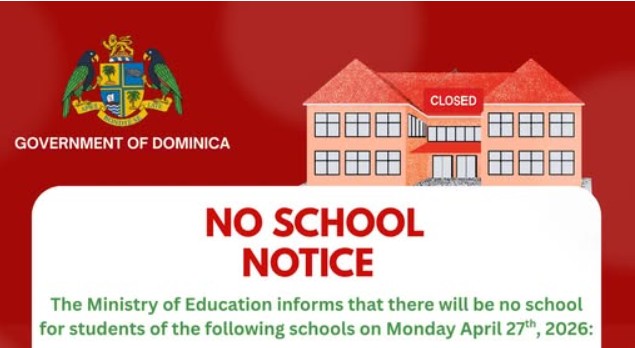
    In the aftermath of a powerful low-pressure trough system that battered the Caribbean island of Dominica on April 26, 2026, widespread heavy rain and flooding have forced the closure of 11 educational institutions across the island’s hardest-hit regions. The country’s Ministry of Education issued an official public alert targeting school leaders, educators, students, families and local communities, confirming the temporary shutdowns that went into effect starting April 27.

    The extreme weather event left much of Dominica waterlogged, with the most severe disruptions recorded in the island’s Eastern and Northeastern Districts. Joint damage and access assessments carried out by the Ministry of Education and Dominica’s Office of Disaster Management verified that safe entry routes to multiple schools in these areas have been either severely damaged or completely blocked by flood-related debris and damage. The 11 affected campuses span both primary and secondary education levels: Concord Primary, Atkinson Primary, Salybia Primary, Sineku Primary, Castle Bruce Primary, San Sauveur Primary, Wesley Primary, Wills Strathmore Stevens (WS Stevens) Primary, Temple Seventh Day Adventist Primary, Castle Bruce Secondary, and North East Comprehensive.

    The closure order came following an emergency Cabinet meeting called specifically to coordinate the government’s response to the severe weather event. Officials have urged residents in flood-impacted zones to maintain strict safety protocols, stay alert to changing conditions, and monitor all official communications for guidance on the evolving situation. The Ministry of Education has committed to releasing new updates promptly as floodwaters recede and assessment teams complete full reviews of campus damage to determine when normal school operations can resume.

  • PM: Recovery will take time

    PM: Recovery will take time

    When the United National Congress (UNC) took power in Trinidad and Tobago in April 2025, it inherited a national treasury drained of resources and a decade of systemic mismanagement left by the previous People’s National Movement (PNM) administration. Prime Minister Kamla Persad-Bissessar laid out this challenging starting point and detailed her government’s early policy wins during a keynote address at the UNC’s 37th annual national congress, held Saturday in Couva.

    Persad-Bissessar painted a stark picture of the economic damage the new administration inherited, telling assembled supporters that meaningful national recovery will require years of targeted effort to reverse a decade of damage. During the PNM’s 10-year tenure, she said, the country’s total national debt surged from $75.4 billion in 2015 to $144.7 billion in 2025 – a near-doubling of the national obligations. At the same time, overall economic output shrank by 20%, the country’s foreign reserve holdings were cut in half, and billions in public savings were withdrawn from state accounts.

    Despite this weak starting position, Persad-Bissessar emphasized that the UNC has already delivered on core campaign promises within its first months in office. The administration quickly released a people-first national budget that cut the price of super gasoline by $1 per unit and eliminated value-added tax on all essential food items, policies designed to reduce cost-of-living burdens for working households.

    “We restored fairness to a system where, for too long, ordinary citizens carried the weight of elite mismanagement,” the prime minister said. “Your UNC Government put more money back into your pockets.”

    One of the administration’s most high-profile early achievements is a 10% wage increase for public sector workers, a policy the prime minister highlighted as a top campaign pledge fulfilled. An agreement between the Chief Personnel Officer and the Public Services Association (PSA) has already locked in the raise, delivering pay increases to more than 51,000 public workers: 17,000 PSA members, 20,000 National Union of Government and Federated Workers members, and 14,000 public school teachers. Persad-Bissessar confirmed that negotiations and planning are already underway to extend similar wage adjustments to other public sector employee groups. The government has also fulfilled its pledge to eliminate taxes on private pensions, a win for retired citizens across the country.

    Beyond domestic policy gains, the UNC has successfully restored international investor and institutional confidence in Trinidad and Tobago’s economy, the prime minister said. Within its first year in office, the administration successfully issued a US$1 billion sovereign bond that drew 2.5 times oversubscription, with participation from more than 140 institutional investors across the globe. “That is a clear signal – the world believes in Trinidad and Tobago again,” Persad-Bissessar said. The government has also secured the country’s removal from both the European Union’s tax blacklist and the Financial Action Task Force’s (FATF) anti-money laundering blacklist, reversing diplomatic and economic damage from the previous administration and rebuilding the country’s global credibility.

    As it works to resuscitate long-stagnant economic growth, the UNC government has placed a high priority on targeted social support for vulnerable and marginalized citizens, the prime minister added. The government has already disbursed $1 million in ex gratia compensation to families impacted by the 2022 Paria diving tragedy, a long-unresolved issue the previous administration failed to address. A wide range of ongoing social programs are delivering tangible support: more than 117,000 elderly citizens have received $3.8 billion in pension payments; 25,602 people living with disabilities have accessed $520.3 million in disability grants; 13,869 low-income vulnerable families have received $216 million in direct cash support; 12,614 people have accessed $75.7 million in targeted food assistance; and 2,808 people impacted by disasters have benefited from 1,232 individual disaster relief grants.

    ### Progress in Healthcare and Diplomatic Outreach

    Beyond economic and social policy, Persad-Bissessar highlighted meaningful improvements to the country’s public healthcare system, long plagued by underfunding and access gaps. The Couva Children’s Hospital, shuttered for years under the previous administration, has been fully reopened and has already completed more than 600 same-day surgical procedures. Regional health authorities have expanded access to care across the country, doubling the number of operational public healthcare clinics and adding hundreds of new doctors, nurses and frontline medical staff to the understaffed public system.

    On the diplomatic front, the UNC government has reengaged with global and regional partners at the highest levels to rebuild bilateral and multilateral ties, the prime minister said. She pointed to her own high-level meeting with United States President Donald Trump during the recent Summit of the Americas as a key step in repairing bilateral relations, as well as a meeting between Foreign and Caricom Affairs Minister Sean Sobers and King Charles III during an official visit to the United Kingdom. Persad-Bissessar came to Sobers’ defense amid recent controversy over Trinidad and Tobago’s objection to the reappointment of Caricom Secretary-General Dr. Carla Barnett, dismissing unsubstantiated claims that Sobers missed a key negotiating meeting due to seasickness as baseless rumor. The prime minister also highlighted a successful official visit by Indian Prime Minister Narendra Modi, which deepened long-standing cultural and economic bilateral ties between the two nations.

    For the island of Tobago, Persad-Bissessar reaffirmed that equitable development remains a top priority for the UNC administration. The 2025 national budget included the largest ever allocation for Tobago, totaling $3.725 billion earmarked for local infrastructure and social programs. The long-standing airfare subsidy for the domestic inter-island airbridge remains in place, and the cabinet has not yet made a final decision on a proposal to add two new unsubsidized flights to the route. The national government is also working closely with the Tobago House of Assembly (THA) to advance a full slate of legislative and administrative reforms: addressing long-standing legal anomalies in the THA Act, exploring the creation of a dedicated Tobago Local Police Service, reforming the outdated alien landholding licensing system, maintaining the existing export licence for the Studley Park quarry, advancing planning for a new desalination plant in Charlotteville to address chronic water shortages, and resolving decades-long unresolved land tenure disputes for local residents.