作者: admin

  • Call for regional push towards renewable energy

    Call for regional push towards renewable energy

    Against a backdrop of skyrocketing global oil prices fueled by ongoing conflict in the Middle East, a top Cayman Islands official has issued a urgent call for Caribbean countries to abandon their long-standing reliance on expensive imported fossil fuels and pivot toward the region’s abundant untapped renewable energy resources.

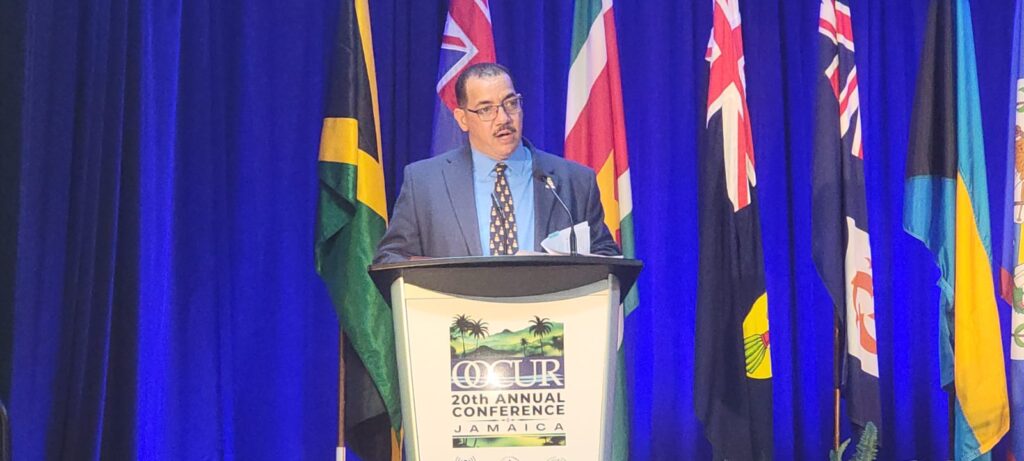
    Cayman Islands Finance and Economic Development Minister Rolston Anglin, who also holds the education and training portfolio, delivered the call Tuesday during the opening ceremony of the Organization of Caribbean Utility Regulators (OOCUR) 2026 Conference, which is being hosted this year at Jamaica’s Ocean Coral Spring Resort in Trelawny. The conference, running through May 1 under the theme “Navigating Caribbean Regulatory Challenges: Opportunities, Innovations and Collaborations,” brings together regional policymakers and energy regulators to address pressing sectoral challenges.

    Anglin pointed out that Caribbean nations have depended on imported fossil fuels for generations, leaving household budgets and national economies extremely vulnerable to every swing in global commodity prices. “This dependence is a vulnerability we have accepted as permanent. It is not,” he told attendees, highlighting that the region is naturally endowed with high-potential renewable resources—from abundant sunlight and steady winds to geothermal energy—that have yet to be developed at a large scale.

    Beyond environmental benefits, Anglin framed the shift to renewables as a critical economic and national security priority for the region. “The raw materials for transformation are here. What is required now is the regulatory architecture to unlock investment, protect consumers, ensure grid stability, and attract the partnerships needed to move from ambition to reality,” he said, adding that regional energy regulators hold consequential leverage to drive this transition.

    Speaking on behalf of Jamaican Prime Minister Dr Andrew Holness, Minister without Portfolio Andrew Wheatley, who oversees science, technology and special projects, outlined Jamaica’s ongoing progress in building out alternative energy capacity. To accelerate the shift away from fossil fuels, Jamaica has cut import taxes on electric vehicles to boost adoption of clean mobility, and is scaling up solar photovoltaic systems paired with battery storage as a core renewable energy strategy.

    Wheatley noted that private investment in residential and commercial solar systems has grown in Jamaica, driven by both cost-saving incentives and rising public awareness of climate change risks. He echoed Anglin’s assessment that persistent heavy dependence on imported fossil fuels has left Caribbean nations with some of the world’s highest electricity prices, squeezing both household finances and business competitiveness. He also reiterated a longstanding regional point: while Caribbean countries contribute a tiny fraction of global greenhouse gas emissions, they bear the brunt of climate change impacts, most notably through increasingly powerful and destructive hurricane seasons.

    Anglin emphasized that cross-border and cross-stakeholder collaboration is the foundation of successful regional energy transition. He called on fellow regional government leaders across all jurisdictions represented at the conference to strengthen partnerships with independent energy regulatory bodies, incorporate their on-the-ground expertise into policy design, and provide these institutions with the funding, clear mandates, and political backing they need to operate effectively.

    Organizations such as OOCUR, he added, offer an invaluable platform for cross-border knowledge sharing that regional policymakers should actively leverage to accelerate progress. Anglin also highlighted a critical gap holding back the transition: many regional governments, including his own in the Cayman Islands, have not yet recognized the full economic value of well-resourced, technically skilled independent energy regulators. Underfunding or sidelining these institutions, he warned, slows broad national development and prevents the region from unlocking the full economic and environmental potential of its renewable energy endowments.
  • ‘Raising the age of consent does not address teen pregnancy’, says Fi We Children Foundation

    ‘Raising the age of consent does not address teen pregnancy’, says Fi We Children Foundation

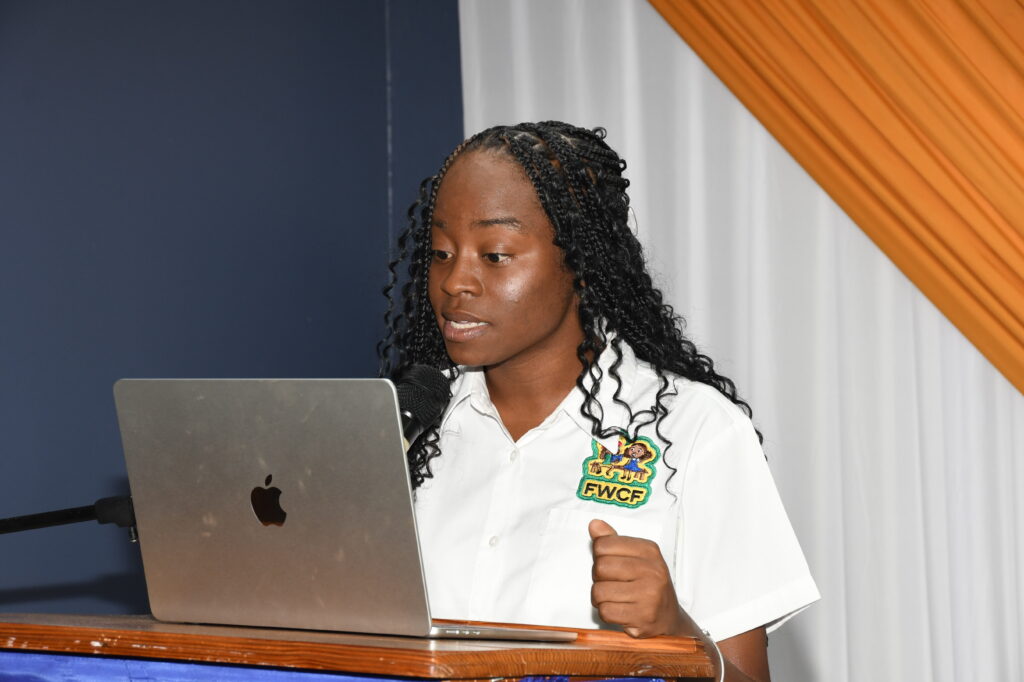
    KINGSTON, Jamaica — In response to a recent legislative proposal from Jamaica’s opposition education spokesperson to raise the age of sexual consent as a fix for persistent teenage pregnancy rates, the local Fi We Children Foundation (FWCF) has pushed back, arguing that legal adjustment alone cannot resolve this complex social challenge and that policymakers must prioritize evidence-based reproductive health support for young people instead.

    The debate was ignited this week when Opposition Spokesman on Education Damion Crawford presented his call during Tuesday’s Sectoral Debate in Jamaica’s House of Representatives. Crawford urged the government to lift the current age of consent from 16 to 18 years, framing the change as a key measure to cut the country’s high teenage pregnancy incidence.

    Africka Stephens, executive founder of FWCF, pushed back against the proposal in a formal press briefing issued Wednesday, warning that the policy change would do more harm than good for Jamaican youth. “Given the realities of adolescent sexual behaviour in Jamaica, raising the age of consent may risk unnecessarily drawing more young people into the criminal justice system rather than protecting them,” Stephens explained. “Any policy discussion must be grounded in practicality, evidence and the lived experiences of Jamaican youth, not moral panic.”

    FWCF’s position draws on preliminary findings from its ongoing 2024/2025 Youth for Reproductive Justice Project, a research and outreach initiative funded by the European Union and the Council of Voluntary Social Services (CVSS). Through direct community engagement with adolescents across the country, the organization has documented that underage sexual activity is already a widespread reality: many young people begin sexual experimentation before they reach their teenage years, even among those below the current 16-year age of consent threshold.

    Most notably, FWCF’s work found that young people themselves are not calling for harsher criminalization of sexual activity. Instead, they are demanding accessible, stigma-free comprehensive sex education that directly addresses their practical questions and health concerns. Young people want safe, judgment-free spaces to talk about sexual and reproductive health with trusted adults — including medical providers, school guidance counsellors and family members, the foundation emphasized. Raising the age of consent to 18 does nothing to change the existing reality of adolescent sexual activity or reduce unintended pregnancy rates, FWCF added.

    The organization outlined what it argues are evidence-based interventions that would actually drive down teenage pregnancy: widespread access to comprehensive sex education in schools, youth-focused reproductive health centers distributed across every region of Jamaica, free or low-cost family planning resources, and stronger cross-sector collaboration between schools, families, and health care providers. This need is particularly acute in rural Jamaican communities, where access to reproductive health services remains severely limited, the foundation noted. It pointed to existing successful models, such as UNICEF’s Teen Hubs, which have already proven that youth-friendly reproductive health services deliver measurable positive outcomes for adolescents.

    FWCF stressed that teenage pregnancy is not a simple issue that can be resolved by adjusting the age of consent. A range of intersecting structural factors drive rates of unintended adolescent pregnancy, including widespread poverty, systemic social inequities, weak public health governance, limited access to basic health care, and a lack of supportive community and family systems for young people. Addressing these root causes must be the central priority for policymakers, the organization said.

    In closing, FWCF called on Jamaican lawmakers to abandon symbolic, politically popular legal changes that fail to tackle the underlying drivers of teenage pregnancy, and refocus policy on evidence-based interventions that meet the actual needs of young Jamaicans.

  • Pastor Mario Moxey elected new Christian Council president

    Pastor Mario Moxey elected new Christian Council president

    In a decisive electoral outcome for one of the Bahamas’ most influential faith-based organizations, Pastor Mario Moxey has been voted in as the new president of the Bahamas Christian Council, wrapping up a competitive selection process with a clear mandate to lead the group through the next three years.

    Final vote counts released to local media confirm Moxey earned 169 votes, while his challenger Apostle Raymond Wells garnered just 58, delivering a landslide victory that solidifies broad support across the council’s membership. Moxey will succeed outgoing president Bishop Delton Fernander, who has steered the interdenominational body since 2017, and will hold the presidency for the 2026 to 2029 term.

    In his first public address following the announcement of the results, Moxey made unifying the nation’s diverse Christian communities and strengthening collective national collaboration the cornerstone of his upcoming leadership.

    “Our first and foremost priority is securing unity in the body of Christ across all denominations,” he said. “Beyond the church, we also aim to build unity across civic, religious and governmental spheres, so that all groups can work together toward the common good of the Bahamian people. This vision is summed up in our leadership theme: One Voice. One Church. One Nation.”

    Moxey noted that he will first convene his newly elected executive team to map out concrete policy priorities aligned with available organizational resources, before rolling out new initiatives. In an official statement confirming the election results, the Bahamas Christian Council formally endorsed Moxey’s appointment and the unity-centered mandate that will guide the body’s work over the next three years.

    “It is both a privilege and a calling to serve God by serving the people of The Bahamas, and in particular the Christian Churches that span our nation,” the council’s statement read. “The Church represents the largest block of citizenry across every sector of society, with approximately 90 percent of our population identifying as Christian. This is not merely a statistic — it is a profound responsibility.”

    Expanding on the council’s strategic direction under his leadership, Moxey emphasized that the Church is positioned to act as a core unifying force in Bahamian public life, rather than a marginal interest group.

    “The Church is not a minority voice trying to be heard. We are the majority voice that must choose to be the unifier,” he said. “As we unify the Church, we position ourselves to help unify the nation, offering spiritual leadership, moral clarity, and a renewed sense of purpose for our people.”

    A 16-year veteran of the Bahamas Christian Council, Moxey most recently served as the body’s vice president prior to his election. He said his decades of involvement with the organization have been rooted in a longstanding commitment to public service for his home country.

    “I’ve always had a desire to serve my country. That’s the reason why I was in the Christian Council, because I felt as though I needed to serve, I needed to contribute,” he explained. “Just as a result of tenure and being there, it’s time for natural elevation to take place, to serve at a higher level. It’s my privilege to represent the Christian community at this season.”

    Alongside Moxey’s appointment, the council announced the full slate of its new executive leadership team, which includes representatives from a wide cross-section of Christian denominations across the Bahamas, reflecting the body’s commitment to inclusive representation of the nation’s diverse faith community.

  • NCL fined for environmental violations at Great Stirrup Cay

    NCL fined for environmental violations at Great Stirrup Cay

    Bahamian regulators have issued financial penalties against Norwegian Cruise Line over multiple environmental infractions at Great Stirrup Cay, the private Caribbean island the company owns and operates. At the same time, a high-stakes labour dispute stemming from a whistleblower’s termination is moving toward a conciliation process, with both investigations remaining in progress with no firm completion dates.

    Bahamas Environment Minister Zane Lightbourne confirmed that enforcement action followed a full regulatory probe into activity on the island. The penalty structure includes a $20,000 base fine plus additional undisclosed financial penalties. While the company has been granted a legal grace period to submit payment, no funds have been processed by regulators as of the latest update. Lightbourne added that investigators uncovered more violations than had previously been reported publicly, and full details will be released in an upcoming official government assessment. He declined to share unconfirmed specifics ahead of the report’s publication, noting that official findings would be published once the review wraps. “We’ll put an official report on that, but we would not like to, at this time, indicate any specifics outside of the official report,” he said in a statement to local media.

    The case is tied to allegations from Daylland Moxey, a former assistant safety manager at the Great Stirrup Cay facility, who claims he was wrongfully fired from his role in early March. Moxey has alleged his termination was retaliation for raising formal concerns about unaddressed environmental and safety risks at the site, including an unsanctioned fire at a waste disposal location and improper management of hazardous materials. He also claims the company still owes him unpaid wages from his tenure. Howard Thompson, Director of the Bahamas Department of Labour, confirmed that the unfair termination claim filed by Moxey will be referred to an independent conciliator for negotiation, though no hearing date has been scheduled due to limited staffing for such cases.

    Thompson explained that the labour department has delayed launching its own full investigation to allow the environmental review to conclude first, as findings from the environmental probe will provide critical context for the labour team’s work. “Once environmental do what they need to do, they will let me know, and then my team will move in,” Thompson said. Once the environmental assessment is complete, the labour department will conduct a two-phase investigation: first reviewing overall occupational health and working conditions on the island, and second investigating Moxey’s claims of unfair treatment and retaliatory discharge.

    Thompson characterized the case as unusually complex due to the broad scope of Moxey’s allegations, noting that environmental investigators’ confirmation of unaddressed violations would heavily support Moxey’s claim that his dismissal was retaliatory. While the labour department does not hold the authority to order a shutdown of operations at Great Stirrup Cay, Thompson noted the agency can issue mandatory correction notices for workplace violations and impose its own fines if issues are not remediated. To date, neither officials from Norwegian Cruise Line nor representatives for Moxey have issued additional public comment on the cases, and no firm timeline has been set for either the release of the full environmental violation report or the scheduling of the conciliation hearing.

  • Henfield questions cost of London worker

    Henfield questions cost of London worker

    A sharp political dispute has erupted in the Bahamas over proposed foreign service reforms, with former Foreign Affairs Minister Darron Henfield publicly questioning the fiscal responsibility and policy logic of the Davis administration’s provisions, centered on a controversial high-cost junior posting in London.

    At the core of Henfield’s critique is a young male government employee assigned to the Bahamian mission in London, who he says drains more than $200,000 annually from public taxpayer funds. The former minister’s attack comes in direct response to current Foreign Affairs Minister Fred Mitchell’s push for the 2025 Foreign Service Act, legislation that would convert most contract-based diplomatic positions into permanent, pension-eligible roles and implement new protections to bar political dismissals of non-partisan staff.

    Mitchell has positioned the reforms as a critical modernization step for the Bahamas’ diplomatic corps, designed to end the decades-long pattern of mass job cuts for junior contract officers that followed the 2017 transition of government. But Henfield argues Mitchell’s framing is deliberately misleading, dismissing the narrative that incoming administrations recklessly purge foreign service staff as disingenuous. He insists that reviewing existing overseas staffing contracts and recalling unnecessary personnel is a standard, routine governance function, and that the current government’s rhetoric is stoking unneeded anxiety among both permanent public servants and contract workers across the foreign ministry.

    While Henfield says he supports job security for public employees in principle and rejects the “cannibalization” of staff rolls purely for political gain when new administrations take power, he accuses the current Progressive Liberal Party government of blatant hypocrisy. He points out that when the PLP returned to office, the administration itself dismissed dozens of workers—including young women and single mothers who were the primary earners for their households—despite now campaigning for sweeping job protection laws for diplomatic staff.

    Defending the staffing cuts his own administration implemented, Henfield explained that a comprehensive review of Bahamian overseas missions when he took office revealed severe budget pressures caused by bloated staffing levels left by the previous government. He said his team immediately found that most overseas posts were facing major budget shortfalls directly tied to unnecessary over-hiring, which was costing Bahamian taxpayers more than $1 million annually in wasteful spending.

    Among the most egregious examples, Henfield cited so-called liaison officer positions that paid over $150,000 per person annually for little more than greeting visiting Bahamian officials at airports and arranging basic travel logistics. He also raised longstanding concerns about the qualifications of many contracted overseas staff, noting multiple cases where diplomatic officers lacked even basic academic credentials required for their roles. In response, his administration recalled roughly seven employees that were deemed either unqualified or unnecessary, and redirected resources toward recruiting and training a new cohort of professional, qualified foreign service officers.

    Notably, despite his pointed criticism of the current government’s approach, Henfield stopped short of rejecting foreign service reform entirely. He acknowledged that his own administration had worked to advance similar structural updates to the diplomatic corps, and agreed that formalized foreign service regulations bring valuable benefits—including creating clear frameworks for disciplinary action and establishing formal systems to recognize outstanding service with awards and honors. His core objection remains to the permanent entrenchment of costly, unneeded postings that he says represent an unfair burden on Bahamian taxpayers, leaving open the question of whether future administrations will be forced to carry the financial weight of such politically connected contracts if the reforms pass.

  • Nurse beaten after leaving shelter pleads for extended victim stays

    Nurse beaten after leaving shelter pleads for extended victim stays

    A registered nurse and domestic violence survivor is pushing for policy changes to extend government-funded shelter stays for high-risk victims, sharing a harrowing account of assault that occurred just one week after she was forced to exit the temporary housing due to a strict three-month occupancy cap.

    Pamela McKenzie, a mother of three, opened up about her years trapped in an abusive marriage, saying her decision to seek official help came after her husband’s brother reportedly pointed a gun at her and her young son. She first reported the incident to local police, but relentless intimidation and threats from her in-laws left her fearing for their safety, prompting her to drop legal proceedings and turn to the country’s Department of Social Services for support. Social Services officials placed McKenzie and her son in a government-contracted domestic violence shelter, where she first witnessed the harsh consequences of the three-month stay limit firsthand.

    McKenzie recalled one elderly shelter resident who was literally left on the side of the road with all her belongings in plastic bags after her time expired. Two weeks before she spoke to reporters, McKenzie and her son hit their own three-month cap and were required to leave. Though she acknowledged shelter staff informed her of the time limit when she first checked in, she argued the arbitrary cutoff fails to account for individual circumstances: she was still processing severe trauma from her abuse and had not been able to secure stable employment, despite her qualification as a registered nurse. She also made unsubstantiated allegations as of press time that some residents, including foreign nationals, had been granted extensions to stay beyond the official limit, claims the Tribune could not independently verify.

    After being evicted from the shelter, McKenzie and her son couch-surfed with a friend, where she slept on the floor for weeks. She has since landed a job as a live-in caretaker, and her son has moved to Exuma to enroll in a job training program – a lucky outcome McKenzie says many other survivors do not get. She noted that other victims she has connected to through her experience have ended up homeless, living out of their vehicles or in flimsy, unsafe makeshift shelters. What disappoints her most, she added, is the complete lack of follow-up support from Social Services after she exited the shelter.

    In response to growing calls for reform, Social Services Minister Myles Laroda addressed the issue in December 2025, acknowledging the system is strained by soaring demand. Laroda explained that the government currently leases roughly 150 rooms from private providers for domestic violence shelter accommodation, not counting rooms at the dedicated Poinciana Inn Shelter, and every single room is currently occupied. Officials are currently in negotiations to lease two additional properties to expand capacity as demand for emergency shelter continues to climb, he confirmed.

    Laroda noted that the ministry does grant extensions for survivors whose situations have not stabilized enough for independent living. But he emphasized that shelter accommodation is intentionally designed as a short-term safety net, not a long-term housing solution. “We are telling individuals that, look, this is a temporary fix,” Laroda said. “We’ll try to assist you. We’ll try to assist you with finances and other stuff, to put you in a position to be on your own. Because, unlike the government housing programme, shelter assistance is supposed to be temporary.”

    For McKenzie, however, the current one-size-fits-all time limit puts survivors’ lives at unnecessary risk. She is urging the government to revise its policy to allow longer stays for survivors who remain unemployed or face ongoing threats of abuse, arguing the current system is failing the very people it is meant to protect.

  • Insurance vital for businesses as global volatility intensifies, says Marathon executive

    Insurance vital for businesses as global volatility intensifies, says Marathon executive

    KINGSTON, Jamaica — At a time of rising climate uncertainty, shifting regulatory standards, and growing legal risk across the Caribbean, a top insurance industry leader is calling on regional enterprises to reframe how they think about insurance coverage. Marvin Douglas, Deputy General Manager of Sales at Marathon Insurance Brokers, is pressing Jamaican and Caribbean business leaders to abandon the long-held view of insurance as an avoidable routine overhead, and instead embrace it as a form of strategic risk capital that can shield firms from catastrophic financial collapse. In an increasingly unstable global and regional operating environment, Douglas warned that failure to properly transfer unmanageable risk leaves companies dangerously exposed to ruinous losses.

    Douglas delivered his remarks at the 2026 Annual Conference for Rotary District 7020, an event held this year under the unifying theme “Recognise needs, transform lives”. In his address, he argued that the outdated perspective of insurance as a forgotten “paper in a drawer” has no place in modern risk management. Instead, he positioned coverage as a foundational tool for building organizational resilience and guaranteeing long-term business continuity.

    At its core, Douglas explained, insurance creates a structured framework for transferring risk. It lets businesses trade the threat of unpredictable, catastrophic losses that could sink an operation for predictable, fixed premium costs that fit into annual budgets. By offloading this extreme risk, companies free up capital that would otherwise be held in reserve for emergency losses, freeing those funds to be invested in expansion, innovation, and improved customer service.

    A key trend Douglas highlighted is the steady uptick in professional liability claims across Jamaica and the broader Caribbean region. Today, professionals ranging from doctors and lawyers to engineers and independent consultants face far greater exposure to lawsuits, as the region shifts toward a more litigious culture. Douglas emphasized that professional indemnity insurance fills two critical needs: it covers potential damage awards against practitioners, and it covers the cost of legal defense—an expense that can financially cripple a small or medium-sized firm long before a court issues a final ruling.

    Against the backdrop of tightening professional standards across all Caribbean industries, this coverage becomes even more non-negotiable, Douglas noted. Beyond covering costs, it protects the professional reputations that practitioners spend decades building, ensuring that one single honest error does not erase years of hard work and community trust.

    Douglas also drew attention to the underappreciated value of business interruption insurance, which he described as a “hidden hero” of post-disaster recovery. While most business owners prioritize traditional property insurance to cover physical damage to facilities and equipment, many overlook the crippling financial strain that comes with operational downtime. This strain includes lost revenue during the shutdown and fixed ongoing costs such as staff salaries and rent that continue to accrue even when the business cannot generate income.

    For a hurricane-prone region that also faces regular global supply chain disruptions, business interruption coverage is the safety net that lets companies remain financially solvent while they rebuild and recover from major disruptive events, Douglas explained. Without this coverage, even firms with solid property insurance can be forced to close permanently after a major shock.

    Looking toward the future of regional risk management, Douglas identified parametric insurance as an innovative emerging solution for climate-related risks, which have grown more frequent and severe in recent years. Unlike traditional insurance policies, which require time-consuming on-site damage assessments before payouts can be issued, parametric policies automatically trigger payouts when predefined, objective conditions are met. Examples include a hurricane reaching a set category of intensity, or regional rainfall exceeding a pre-agreed threshold.

    This fast-payout model makes parametric insurance particularly well-suited for Jamaica’s two largest economic sectors: agriculture and tourism. Both sectors are extremely vulnerable to climate shocks, and both require immediate access to liquidity to begin recovery and avoid long-term revenue loss. By cutting through the delays of traditional claims processing, parametric coverage gets funds into businesses’ hands when they need them most.

    Throughout his address, Douglas stressed that building meaningful organizational resilience depends on proactive risk management, rather than reactive crisis response. While businesses cannot prevent natural disasters, unexpected legal claims, or supply chain collapses, they have full control over how they prepare for and manage those risks. When structured correctly to match a firm’s unique risk profile, he concluded, insurance delivers the financial stability that lets organizations keep operating and serving their local communities, even in the aftermath of major disruptive events.

  • FNM confirms voucher distribution but denies vote buying

    FNM confirms voucher distribution but denies vote buying

    As the Bahamas prepares for its upcoming general election, a growing controversy over political voucher distribution has put both of the country’s major political parties under scrutiny, with questions mounting over whether the practice crosses into illegal vote-buying territory.

    Duane Sands, chairman of the Free National Movement (FNM), and Denalee Penn-Mackey, the party’s parliamentary candidate for the Southern Shores constituency, have publicly confirmed that their party has distributed grocery vouchers to constituents, a move that comes after prior allegations against the incumbent Progressive Liberal Party (PLP) over misuse of public funds for similar voter outreach.

    In an interview with reporters, Sands acknowledged that voucher purchases from local retail chain Super Value have risen across the political spectrum, with both the FNM and PLP accounting for the increased sales. “There’s nothing unique to any particular political organisation here,” he stated, drawing a nuanced but contested line between legal assistance and illegal electoral inducement. Under the country’s Parliamentary Elections Act, any gift or benefit offered to influence a voter’s choice is a criminal offense. Sands argued that the legality of the practice hinges entirely on intent: while providing food support to households facing food insecurity does not violate the law on its face, he admitted the practice is a “slippery slope” that carries significant potential for abuse.

    Sands stressed that even amid the controversy, he would continue assisting constituents facing crisis. “If you come to me today and say that you have no food in your house, I would do the best that I can in order to assist,” he said, noting that he does not have details on the total value or number of vouchers the FNM has acquired overall. He further drew a clear distinction between assistance funded by personal or private political donations and programs backed by public money, arguing that the latter case amounts to a clear violation of electoral law.

    The incumbent Davis administration, led by the PLP, has still not responded to explosive allegations made by Chris Lleida, chief executive officer of Premier Importers. Lleida claims that the Bahamian government, not the PLP as a party, covered the cost of more than $200,000 in gift vouchers distributed and signed by PLP election candidates and party officials. Sands called this a “clear-cut violation of the law” and argued that the entire controversy underscores the urgent need for sweeping national campaign finance reform.

    Penn-Mackey, for her part, confirmed that she began distributing vouchers in her constituency within the past week, but insisted that all costs are covered by her own personal funds, eliminating any comparison to the PLP’s public funds allegations. “That, along with my whole campaign, is run by my own personal money, so I don’t see how what the PLP has done as it relates to the money you’re spending from the public treasury ties into what I’m doing personally,” she said. The vouchers she distributes are valued at approximately $100 each.

    A long-time community philanthropist, Penn-Mackey pushed back against questions about her activities, noting she has provided community support and aid for years independent of her candidacy. “We give out food and vouchers every day. Is that vote buying? The people have a food problem where people come and they said, listen, we need some vouchers. I have no grocery in my house, so when we give them a voucher, is that vote buying?” she asked. Rejecting claims of a double standard between her actions and the allegations against the PLP, she added: “It’s not a double standard because if it’s coming from the public treasury and my vouchers are coming from my personal account, that’s not a double standard at all.”

    FNM leader Michael Pintard echoed the argument that assisting vulnerable constituents is a moral obligation regardless of election season, but warned that using public funds for aid that only intensifies or launches right before an election erodes public trust in the democratic process. “If somebody is in need, I don’t think you take an issue with the government, at least certainly me personally, if somebody is hungry they need food assistance, the government is not providing it, you ordinarily provide it, and this is what you’ve been doing, I think you have an obligation to help people who need help,” Pintard said. “That’s a general rule that certainly I’ve lived by all along in and out of political season. If somebody needs help, you help them.”

    Even so, Pintard acknowledged that introducing new or expanded assistance programs in the middle of an election cycle reasonably invites public suspicion. “It allows others, others who look on, to presume that it’s politically motivated,” he said. “There are a number of constituencies where persons know, beyond the shadow of doubt their people weren’t about doing, running any social assistance programme, have not provided a social safety net, and all of a sudden, they are offering them around election time. That’s what they’re saying about the government right now. All of a sudden, you just realise that my house was leaking, and you have not been involved in the last four and a half years. You came and did an assessment. Nothing happened until just now.”

    To date, the core rules governing electoral conduct in the Bahamas remain clear: offering, giving, or providing any money, gift, or material benefit to a voter with the goal of influencing their ballot selection is classified as a criminal offense under the Parliamentary Elections Act.

  • FNM warns of chaos over missing advance voters

    FNM warns of chaos over missing advance voters

    Just days ahead of the Bahamas’ scheduled advance polling on April 30, a growing electoral dispute has erupted after opposition Free National Movement (FNM) figures revealed dozens of approved voters have been wrongly omitted from the official advance poll register, with election officials dismissing complaints with shrugs that have further enraged the party.

    Travis Robinson, an FNM candidate running in the upcoming general election, told local media that nine eligible voters who met all requirements for early voting were left off the finalized certified list, despite having applied for and received formal authorization to cast advance ballots. Among those impacted are three voters who will be out of the country on the main election day, May 12, meaning they will be completely unable to vote if the error is not corrected before advance polling opens.

    Robinson explained he submitted all advance voting applications on April 23 on behalf of three groups of eligible early voters: senior citizens, registered poll workers who would be working on main election day, and voters traveling abroad. When he returned to collect documentation two days later, he only received required L-form certificates for the senior citizens and traveling voters. To date, he says he has not received any L-form certificates for his poll worker applicants, leaving all of them locked out of the advance poll.

    The full scope of the error only became clear once the official certified advance register was published. Robinson confirmed all nine applicants met every eligibility requirement set out by election authorities, but their names were still excluded from the final list. When he escalated the issue to senior election officials, including Parliamentary Commissioner Harrison Thompson, he was told there was no way to fix the error ahead of polling.

    “I subsequently spoke with a senior official at the registry who basically told me, ‘such is life, things happen, we move on,’” Robinson recalled. “I later contacted Mr Thompson, who gave me a similar response, that unfortunately there’s nothing he can do and that it is what it is.”

    Robinson called the dismissive response completely unacceptable, warning that the disenfranchisement of these nine voters could be enough to swing the final election result in his competitive constituency. He pointed to recent Bahamian political history to underscore the stakes, noting that a former prime minister once lost his parliamentary seat by a margin of just four votes. He has issued an urgent call for Thompson to immediately amend the advance register to add the missing voters before polling begins.

    The impacted voters, Robinson added, are “highly upset” by the error, particularly the three overseas travelers who have no path to vote if the issue remains unaddressed.

    The controversy is not isolated to Robinson’s constituency, according to FNM chairman Duane Sands. Sands confirmed that multiple other FNM candidates, including himself and fellow candidate Heather Hunt, have reported identical issues with the advance poll register. He said that beyond omitting eligible voters who completed all required steps, the register also includes the names of voters who never even submitted applications for early voting.

    Worse, Sands added, the register contains glaring, basic errors that raise serious questions about the integrity of the process: some entries list voters with birth dates that have not yet occurred, meaning people who have not even been born are listed as approved advance voters.

    “When you look at the state of the register — people on the register with birthdays that have not yet come, people who according to the data haven’t even been born yet — and then there are persons who are on the advance poll register who did not apply, in some instances willing to swear an affidavit that they did not apply, and yet they are on the advance poll register, you wonder what is going on,” Sands said.

    Sands is now calling for the immediate removal of Parliamentary Commissioner Harrison Thompson, arguing that the chaotic errors undermine the legitimacy of the upcoming election. He said the severity of the mistakes leaves two possible explanations, neither of which justify Thompson keeping his post.

    “When we see the mess, the chaos, we can ask whether this is just incompetence or whether this is a deliberate act by someone who ought to be relieved of his role as Parliamentary Commissioner forthwith,” he said.

    In an official response to the growing controversy, the Parliamentary Registration Department acknowledged the errors, attributing them to limited typographical mistakes and an unexpected technical system glitch. The department downplayed the severity of the issues, arguing that the mistakes will not impact the final outcome of the election.

    “These are not consequential to the outcome of the election, as the voter’s card and counterfoil contain the accurate information that will be relied upon on voting day,” the department said in a statement. It urged political leaders to stop framing the errors as evidence of widespread systemic failure, noting that minor processing issues are a normal part of election administration. “The Department remains committed to protecting the integrity of the electoral process,” the statement added.

    The ruling Progressive Liberal Party (PLP) has pushed back against FNM’s criticism, condemning the opposition’s claims as a “reckless attack on Bahamian democracy.”

    “The Bahamas has earned its reputation as one of the strongest democracies in the region through decades of peaceful elections and independent institutions,” the PLP said in its official statement. “To suggest otherwise, for political convenience, damages that reputation abroad and weakens the confidence of Bahamians at home.”

  • Trump warns Iran better ‘get smart soon’ and accept nuclear deal

    Trump warns Iran better ‘get smart soon’ and accept nuclear deal

    Escalating tensions between the United States and Iran have reached a critical new juncture this week, as President Donald Trump ramped up public pressure on Tehran to concede to strict new nuclear constraints while a sustained American naval blockade continues to cripple Iran’s already fragile economy. Writing on his own social media platform Wednesday, Trump issued a blunt warning to Iranian leadership, declaring, “Iran can’t get their act together… They better get smart soon.” The post was paired with a doctored image showing Trump holding a rifle against a backdrop of a exploding desert fortress, overlaid with the text “No more Mr Nice Guy.”

    The confrontation comes against a backdrop of open conflict that began two months ago, when a joint US-Israeli military campaign triggered a reciprocal Iranian blockade of the Strait of Hormuz—one of the world’s most critical chokepoints for global oil and natural gas shipments. The closure of the strategic waterway sent immediate shockwaves through international energy markets, and while Iran’s move has disrupted global commerce, it has also inflicted severe damage on Iran’s own domestic economy. By Wednesday, the Iranian rial had plummeted to an all-time low against the U.S. dollar, and interviews with Tehran residents paint a picture of widespread public despair over the prolonged crisis. Speaking to AFP on condition of anonymity, a 52-year-old Iranian architect based in Paris outlined the deep public skepticism toward diplomatic efforts that has built up over years of failed negotiations. “Every time in recent years that negotiations have taken place, the economic situation of the people has only gotten worse. Sanctions have either started or intensified,” he explained. “They go to negotiate and come back with even more sanctions, and the issue is always nuclear. There’s no talk about people, the economy, or freedom. People have the right to not even want to hear the word ‘negotiation.’”

    U.S. defense secretary Pete Hegseth was scheduled to appear before Congress for questioning on the administration’s Iran policy Wednesday, but multiple U.S. press reports indicate Trump has already made a final decision to reject Iran’s latest diplomatic proposal to reopen the Strait of Hormuz. Citing anonymous administration sources, The Wall Street Journal reports Trump intends to maintain the tight naval blockade of Iranian ports until Tehran agrees to fully dismantle its nuclear program, a non-negotiable demand from Washington.

    During a White House state dinner hosted for Britain’s King Charles III on Tuesday, Trump doubled down on his stance, claiming Iran had already been “militarily defeated” and asserting, “we’re never going to let that opponent have a nuclear weapon.” Trump even claimed Charles shared his position on the issue. Iranian military officials have pushed back aggressively against Trump’s claims, however, with army spokesman Amir Akraminia telling state television Tuesday that Tehran rejects any suggestion the war is over, and harbors deep distrust of American intentions. “We do not consider the war to be over. We have many cards that we have not yet used… new tools and methods of fighting based on the experiences of the past two months of conflict, which will definitely allow us to respond to the enemy more decisively” if hostilities resume, Akraminia warned. Iranian defense ministry spokesman Reza Talaei-Nik added that Washington has no right to impose its will on sovereign nations, saying, “The United States is no longer in a position to dictate its policy to independent nations” and demanding Washington abandon its “illegal and irrational demands.”

    Diplomatic efforts to de-escalate the crisis have ground to a halt in recent days. Tehran’s latest proposal, which was relayed to Washington via mediator Pakistan and reviewed by Trump administration officials during a Monday meeting, sets clear red lines on both nuclear policy and the future of the Strait of Hormuz, according to Iran’s semi-official Fars News Agency. Under the framework, Iran would ease its blockade of the strait in exchange for Washington lifting its retaliatory port blockade, with broader negotiations over the nuclear program to follow. But the offer has been flatly rejected by Trump, leaving the standoff locked in place. Qatari officials, whose country has been struck by Iranian strikes despite serving as a neutral mediator, warned Wednesday that the ongoing impasse risks devolving into a long-lasting “frozen conflict” with no clear path to resolution.

    Domestically, Trump faces growing political pressure to find a way out of the standoff, as spiking global energy prices drive up commodity costs for American voters just months ahead of November’s midterm elections. Polling consistently shows the war is deeply unpopular with the U.S. public, and as of Wednesday, international benchmark Brent crude traded above $113 per barrel—surpassing prices seen before a brief April ceasefire—while U.S. West Texas Intermediate crude crossed the $101 per barrel mark. Even key U.S. allies have openly criticized the administration’s lack of a clear strategy. German Chancellor Friedrich Merz, who previously offered cautious backing to Trump’s Iran policy, told reporters Monday that “the Americans obviously have no strategy” in the region and called the war “at the very least ill-considered.” Trump quickly fired back on social media, dismissing Merz’s comments and claiming the German leader “doesn’t know what he’s talking about.”

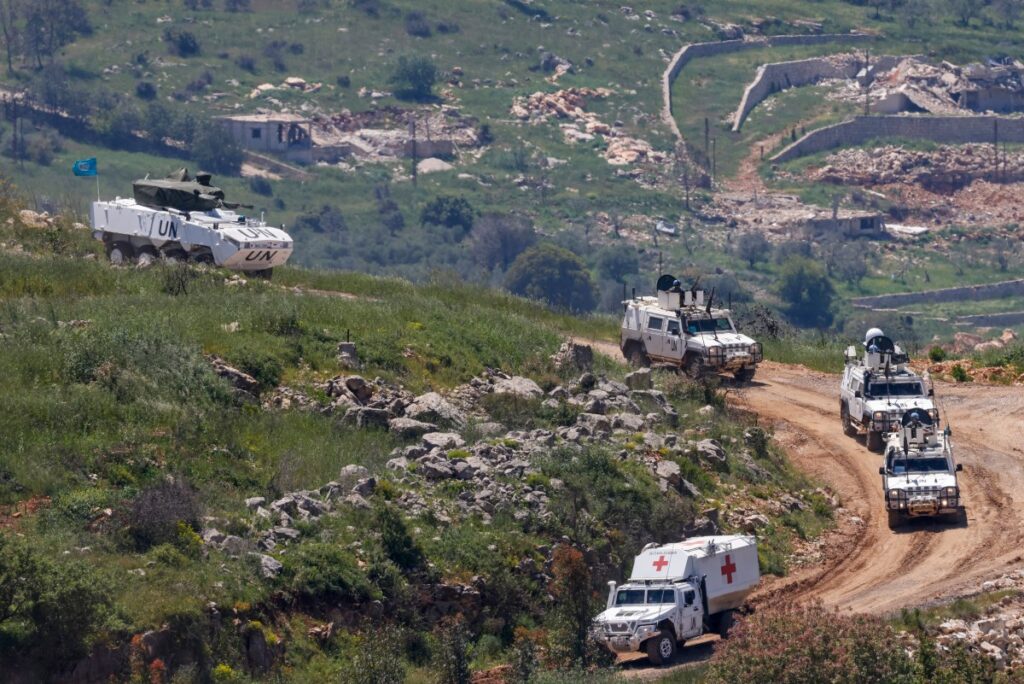
    Violence continues to flare along the conflict’s secondary Lebanese front, even after a recently extended ceasefire between Israel and Iran-backed Hezbollah. The militant group drew Lebanon into the wider conflict when it opened fire on Israel two months ago, triggering Israeli air strikes and a limited ground incursion into southern Lebanon. The Lebanese military confirmed this week that the ceasefire has been violated repeatedly: Tuesday brought the first reported Israeli strike on Lebanese army personnel since the truce took effect, wounding two soldiers, and a second strike Wednesday killed one additional Lebanese soldier.