作者: admin

  • Government Advances Plan to Transform Darkwood Beach into Public Park

    Government Advances Plan to Transform Darkwood Beach into Public Park

    At a post-Cabinet press briefing held on Thursday, Director General of Communications Maurice Merchant publicly introduced a new government-led initiative to reimagine and redevelop Darkwood Beach, a landmark coastal site counted among the nation’s most valued natural assets. The project forms a key component of the administration’s wider national development agenda, with Cabinet receiving a formal progress update during its recent deliberations.

    The core mission of the redevelopment is two-fold: to safeguard the beach’s unique natural ecosystem and scenic character, while upgrading public infrastructure to deliver better recreational experiences for both local residents and international visitors. Under the plan, Darkwood Beach will be transformed into a dedicated public park that balances conservation with improved accessibility and amenities. Merchant confirmed that Cabinet discussed the Darkwood Beach proposal alongside separate redevelopment plans for the nearby Perry Bay-Keeling Point region, but stressed that each initiative will advance through independent regulatory and planning workflows to avoid delays or misalignment.

    As planning moves forward, concept designs for the Darkwood Beach project will be submitted to the full Cabinet for review and approval at key milestones. A central priority for the government is ensuring all development work adheres to strict environmentally responsible standards. To embed this commitment, Cabinet has issued a formal directive requiring a comprehensive Environmental Impact Assessment (EIA) to be completed before any construction work can begin. According to Merchant, this assessment will shape every stage of the planning process, ensuring that environmental protection is fully integrated into the project’s final blueprints. The environmental review will also guide design adjustments to preserve the beach’s unique natural features throughout all phases of construction and redevelopment.

    At the time of the briefing, no specific timeline for construction start or completion was released, nor were detailed specifications of the planned new recreational amenities made public. Merchant framed the initiative as a reflection of the government’s balanced approach to national development: prioritizing the preservation of critical public green and coastal spaces, while investing in infrastructure that boosts quality of life for citizens and supports the nation’s tourism sector.
  • Dominica pledges US$500,000 to Venezuela following devastating earthquakes

    Dominica pledges US$500,000 to Venezuela following devastating earthquakes

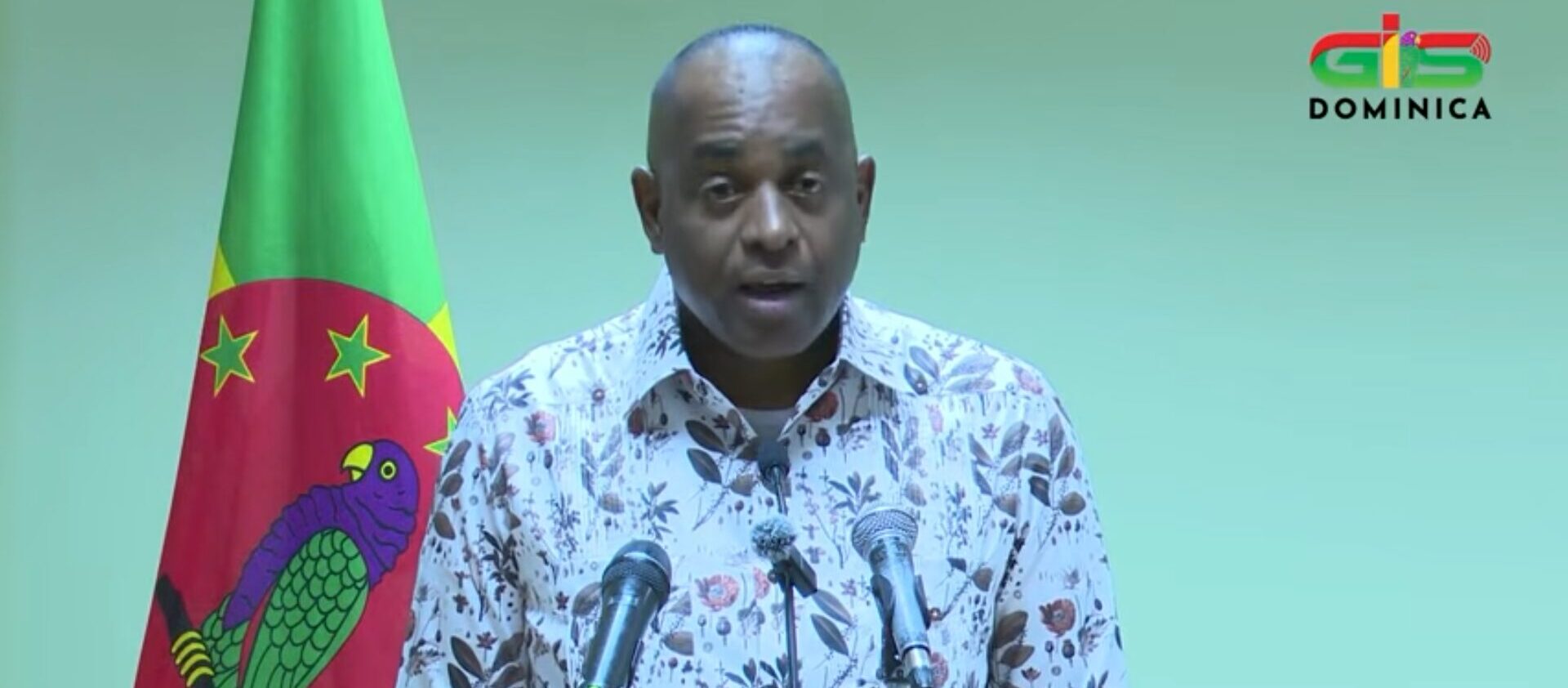
    In the wake of catastrophic back-to-back earthquakes that left northeastern Venezuela reeling from widespread destruction and heavy human loss, the Commonwealth of Dominica has stepped forward with urgent humanitarian support. Prime Minister Roosevelt Skerrit announced Thursday during an official press briefing that his government has greenlit an initial $500,000 financial donation to aid Venezuela’s disaster recovery efforts.

    Skerrit emphasized that this contribution embodies the core values of cross-border solidarity and collaborative action when communities face existential crisis. “Venezuela has always been a valued friend, a neighbor,” he noted, extending the deep sympathy and collective solidarity of the Dominican people to both the Venezuelan government and the public grappling with the aftermath of the disaster.

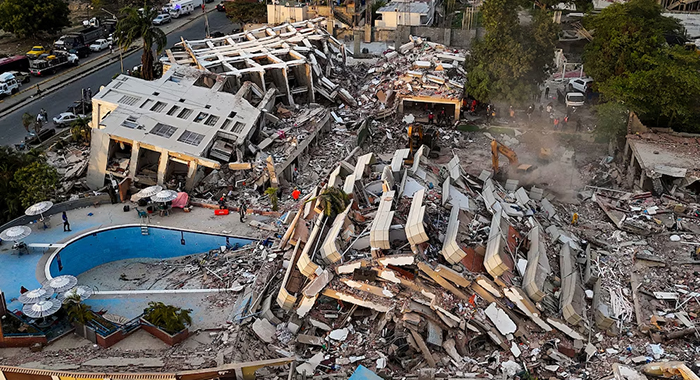
    The powerful seismic events hit northeastern Venezuela within hours of one another on June 24, 2026. The quakes reduced thousands of residential structures and public infrastructure to ruins, disrupted critical basic services, and forced panic-stricken local residents to evacuate into open streets for safety. As of the latest updates, global media outlets have confirmed that the death toll has surpassed 2,200, with more than 11,000 people sustaining injuries, and tens of thousands still remain unaccounted for amid the rubble.

    Venezuelan authorities continue to work to map the full scale of destruction, even as persistent aftershocks hamper relief operations across affected regions. Emergency response teams have remained on the ground around the clock conducting search-and-rescue missions and preliminary damage evaluations, while the national government has mobilized all available resources to deliver aid to impacted communities. Skerrit acknowledged the immense scale of the challenge ahead, stressing that recovery will be an enormous uphill task for Venezuela’s government and its people.

    Bilateral ties between Dominica and Venezuela have remained strong and cooperative for decades. Skerrit’s government has repeatedly extended political support to Caracas through past electoral processes, and has even offered to act as a neutral mediator to facilitate dialogue between Venezuela and the United States. For its part, Venezuela has been a key partner in Dominica’s national development, providing consistent assistance through regional integration frameworks including the PetroCaribe oil initiative and the Bolivarian Alliance for the Peoples of Our America (ALBA).

  • SVG pledges US$100,000 to CARICOM response to Venezuela quakes

    SVG pledges US$100,000 to CARICOM response to Venezuela quakes

    In the wake of two powerful back-to-back earthquakes that struck Venezuela last week, St. Vincent and the Grenadines (SVG) Prime Minister Godwin Friday has reaffirmed the Caribbean nation’s unwavering solidarity with Venezuela, committing US$100,000 to regional relief efforts coordinated by the Caribbean Community (CARICOM).

    Delivering an official address to SVG’s Parliament on Thursday, Friday framed the June 24 quakes as among the deadliest natural disasters Venezuela has faced in modern history, with the full scope of human tragedy and infrastructural damage continuing to emerge days after the event. As of one week post-disaster, official counts place the death toll near 2,300, with more than 11,000 people injured and over 4,500 requiring ongoing hospital care. The United Nations has warned that the final death toll could climb above 10,000 as search-and-recovery operations progress and the odds of locating additional survivors drop sharply.

    “That is a horrific disaster, and a toll that is hard to comprehend,” Friday told members of parliament, noting that statistics alone cannot capture the full weight of the crisis. “Numbers never tell the full story in a disaster… many survivors will carry the trauma of this event with them, perhaps for the rest of their lives.” Beyond human loss, the quakes left widespread destruction across housing, public utilities, and critical infrastructure, including widespread damage in the capital city of Caracas and other hard-hit regions.

    To stay apprised of on-the-ground conditions, SVG has maintained consistent communication through its diplomatic presence in Venezuela. SVG’s ambassador to Caracas, Gareth Bynoe, has remained in the country to coordinate outreach, providing regular situation updates to SVG’s Foreign Affairs Minister Dwight Fitzgerald Bramble as access allows. Bramble, in turn, has directly contacted Venezuelan diplomatic counterparts to convey official condolences, restate SVG’s solidarity, and confirm the nation stands ready to provide additional support where possible.

    Friday stressed that even with significant domestic resource limitations and SVG’s own recent experience with disaster recovery following Hurricane Beryl in July 2024, the small Caribbean nation is committed to stepping up alongside regional partners. CARICOM has organized a unified regional relief response, led by Guyana and supported by the CARICOM Secretariat, and SVG has contributed its pledged $100,000 to this coordinated effort. Friday confirmed that SVG will continue to provide additional assistance both through the regional mechanism and via direct bilateral support moving forward.

    The prime minister grounded SVG’s response in the decades-long close relationship between the two nations. Diplomatic and development cooperation between Kingstown and Caracas dates back to the early 1970s, before SVG gained formal independence in 1979, with full diplomatic relations officially established in 1981. “St. Vincent and the Grenadines and Venezuela have long shared an enduring friendship,” Friday said, pointing to generations of cross-border collaboration and partnership. “Given this history, and our shared humanity, Vincentians are called to be our brothers’ and sisters’ keepers at this moment of crisis.”

    Extending sympathy beyond Venezuelan borders, Friday expressed condolences to all people affected by the disaster, including nationals of other countries who lost family members or loved ones in the quakes. “We mourn with the bereaved families and further extend our sympathy and support to the injured, displaced, and all those whose lives have been profoundly affected,” he said. He also commended the rapid response from the broader international community, and praised fellow Caribbean states for contributing to relief efforts even amid their own ongoing economic and social challenges.

    Closing his address, Friday expressed full confidence in Venezuela’s ability to recover and rebuild from the disaster. “We are confident that they will work through this difficult time and rebuild lives, homes, businesses, and communities,” he said. “May God continue to be with them.”

  • Antigua and Barbuda Police to Intensify Crackdown on Illegal Ski Masks

    Antigua and Barbuda Police to Intensify Crackdown on Illegal Ski Masks

    The twin-island Caribbean nation of Antigua and Barbuda is rolling out an aggressive new law enforcement initiative targeting the rising trend of young people wearing ski masks in public spaces, a practice that has been prohibited under existing national legislation for years. The new crackdown was formally unveiled by Director General of Communications Maurice Merchant during a post-Cabinet press briefing held on Thursday, where he outlined that both the national Cabinet and Police Administration have grown increasingly alarmed by the steady uptick in unauthorised ski mask use across the country’s streets.

    The discussion over the emerging trend made its way to Wednesday’s weekly Cabinet meeting after ministers personally observed the growing popularity of ski masks as a fashion item among the nation’s youth. “As you travel through communities and walk along public thoroughfares in Antigua and Barbuda, it is impossible to miss the growing number of people wearing ski masks for no clear reason,” Merchant told reporters. “For many of our young people, this appears to simply be a new, controversial fashion statement.”

    Under Antigua and Barbuda’s existing laws, ski masks are classified as illegal apparel for public wear, with only narrow exceptions granted for workers who require the protective face covering to carry out their job duties. Construction workers, for example, are permitted to wear ski masks during active work shifts, but this exemption does not extend to wearing the garment in public spaces outside of working hours. “We want to make this clear to parents and the general public: ski masks are banned from public wear across Antigua and Barbuda,” Merchant emphasized.

    To enforce the long-standing ban, law enforcement officers have received formal orders to launch what Merchant described as a “rigorous campaign” aimed at eliminating unauthorised ski mask use from the nation’s public spaces. Under the new initiative, officers will confiscate any ski masks that are being worn in violation of the law. “If an individual is found wearing a prohibited ski mask in public, officers will take the item directly from their possession,” Merchant explained. He added that anyone who resists this enforcement action will face additional action from police, as local law grants officers authority to take all necessary steps to ensure compliance with the ban.

    Alongside the discussion of the ski mask ban, Cabinet members also addressed a recent uptick in street jewellery snatching incidents across the country. Prime Minister Gaston Browne pushed for harsher legal consequences for offenders, arguing that current penalties amount to little more than a “slap on the wrist” that fails to deter criminal activity. No new formal policy changes or legislative amendments were announced during this week’s briefing, however. The new ski mask enforcement campaign is set to get underway immediately, as authorities work to crack down on face coverings that they argue can enable criminal activity and address mounting public safety concerns across the nation.

  • Antigua and Barbuda Records Lowest Urban Population in CARICOM

    Antigua and Barbuda Records Lowest Urban Population in CARICOM

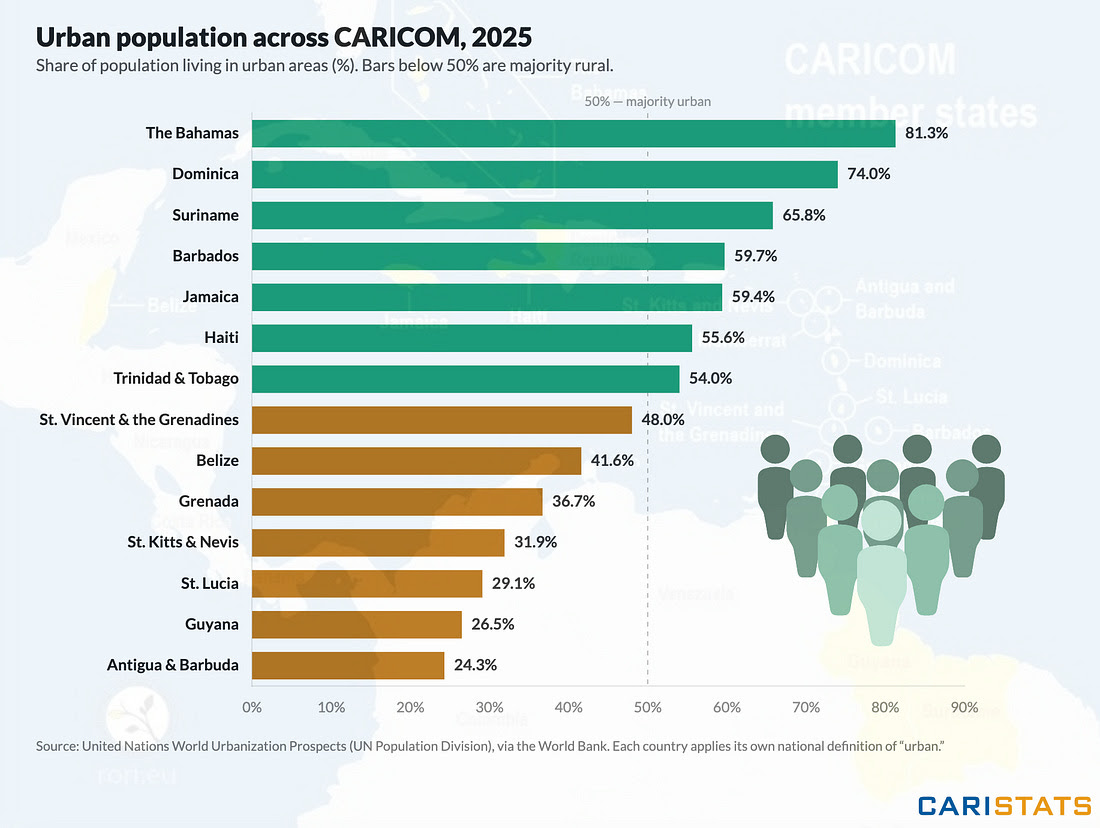
    A recent analysis published by the Caribbean Community (CARICOM) Statistics Agency CARISTATS has uncovered striking variation in urban population shares across the bloc’s 14 member states, challenging common assumptions that economic development correlates directly with higher urbanization rates.

    According to 2025 population estimates drawn from the United Nations World Urbanization Prospects dataset, managed by the UN Population Division and accessed via the World Bank, urban population shares across member states span from a low of 24.3% in Antigua and Barbuda to a high of 81.3% in The Bahamas. This puts Antigua and Barbuda at the bottom of the regional ranking for urban population share.

    Counter to widespread expectations, the data confirms that a country’s level of economic development does not align with its degree of urbanization. Several small, high-income CARICOM economies actually rank among the most rural in the bloc. Beyond Antigua and Barbuda, Saint Lucia reports just 29.1% of its population living in urban areas, while Saint Kitts and Nevis registers 31.9% urban population. These nations join the lower-income South American member state Guyana, which counts only 26.5% of its residents as urban, at the lower end of the regional ranking.

    On the opposite end of the spectrum, The Bahamas leads the region in urban concentration, followed closely by Dominica at 74% and Suriname at 65.8%. In most of these highly urban member states, the vast majority of the population is clustered around a single capital city or along developed coastal belts.

    CARISTATS researchers note that much of this wide variation stems not from actual differences in population density, but from divergent national definitions of what qualifies as an “urban” area. Each CARICOM member state sets its own criteria for classifying urban settlements, basing the designation on factors such as minimum settlement population size, administrative status as a town or city, or the dominant type of economic activity in the area. This means that even tightly packed residential development on a small compact Caribbean island can still be officially classified as rural under a country’s own national guidelines.

    Overall, the report concludes that for a majority of CARICOM’s population, most residents still reside in areas classified as rural by their national governments, a reality that diverges from the region’s popularly held image as predominantly urbanized.

  • Derde helft WK 2026 : De vloek van de vijfde wedstrijd

    Derde helft WK 2026 : De vloek van de vijfde wedstrijd

    For most national football teams, a opening knockout stage victory at a FIFA World Cup is just one more step closer to lifting the global trophy. For Mexico’s beloved national side, known affectionately as El Tri, this win carries far greater weight. For nearly 40 years, every World Cup campaign the country has competed in has been overshadowed by the same lingering question: Can this generation finally break the infamous Curse of the Fifth Match?

    The curse traces its origins back to the 1986 World Cup, a tournament that Mexico hosted on home soil. In front of thousands of cheering local fans, El Tri fought its way to the quarterfinals, where they were ultimately eliminated by West Germany in a tense penalty shootout. No one watching that match could have predicted that 1986 would mark the last time Mexico reached the final eight teams at a men’s World Cup for almost four decades.

    What followed was a striking, decades-long streak of near-misses. From 1994 through to the 2018 tournament, Mexico qualified for the knockout stage seven consecutive times. Each cycle, hope flared among fans that this would finally be the year the curse fell. Every single time, El Tri’s run ended in the Round of 16. A long list of opponents have stepped into the role of the curse’s messenger: Bulgaria, Germany, the United States, Argentina, the Netherlands, and Brazil have all ended Mexico’s tournament dreams at this stage.

    This repeated pattern led Mexican sports media to coin the term “La Maldición del Quinto Partido,” or the Curse of the Fifth Match. Under the traditional World Cup format, reaching the quarterfinals meant a team had played exactly five matches in the tournament. That fifth match barrier has proven impossible for Mexico to overcome for generations.

    The 2026 World Cup, co-hosted by Mexico, the United States and Canada, brings a major format change: the tournament now features 48 teams and an expanded Round of 32 as the first knockout stage. That means the knockout phase kicks off one round earlier than it did under the old structure. As a result, Mexico’s recent 2-0 victory over Ecuador to advance out of the opening knockout round does not mean the curse is broken yet. The team has only cleared its first hurdle on the path to ending the dry spell. Only if El Tri wins their next match and secures a spot in the quarterfinals can they close the chapter on a near 40-year old narrative that has haunted Mexican football.

    Even with the curse still unbroken, the dream of ending it burns brighter in Mexico than ever before. The country is once again hosting the World Cup, the team is playing in front of home crowds, and a seasoned squad has what it takes to finally make history. For millions of Mexican fans, this run is about far more than just a spot in the quarterfinals. It is about throwing off a psychological weight that generations of players, coaches, and supporters have carried for decades.

    In the end, El Tri’s biggest opponent may not be the next team waiting for them on the pitch. It is the weight of history that rises every time the quarterfinals come into view, ready to loom over the side as they chase the breakthrough that has eluded them for generations.

  • OPINION: The Pitch Is the Map

    OPINION: The Pitch Is the Map

    Long before the opening kickoff of the 2026 FIFA World Cup, the broadcast cameras already begin their quiet work of cartography. As lenses pan across team lineups, they lay bare a truth that political rhetoric and fortified border walls have long tried to hide: the modern concept of nationhood can no longer be defined by racial purity, and global power no longer revolves around a single dominant pole. On the green grass of this tournament, hosted across North America, the most unflinching map of the 21st century is drawn with every pass, every tackle and every goal.

  • Saint Lucia launches platform to strengthen consumer protection

    Saint Lucia launches platform to strengthen consumer protection

    Consumers across Saint Lucia are set to benefit from a transformative new initiative that will reshape how they access support and resolve issues, following the formal launch of a multi-agency agreement to establish the unified Consumer Connect Platform. Marking a historic first for the Caribbean nation, the platform brings together all of the country’s leading consumer protection and regulatory bodies under a single, coordinated system, eliminating the fragmented service delivery that has long complicated consumers’ efforts to address concerns.

    The cross-agency partnership includes five key stakeholders: the Department of Consumer Affairs, the National Consumers Association, the National Utilities Regulatory Commission (NURC), the Saint Lucia Bureau of Standards (SLBS), and the National Telecommunications Regulatory Commission (NTRC). By aligning their operations through the new platform, the collaborating organizations aim to cut through bureaucratic red tape, ensure consumer complaints and inquiries are routed to the correct authority without delay, and deliver far more accessible assistance to everyday people.

    Emma Hippolyte, Saint Lucia’s Minister for Labour and Consumer Affairs, has hailed the unified platform as a landmark achievement for consumer rights in the country. In official comments accompanying the agreement, she emphasized that the project reflects a collective commitment across government and regulatory bodies to prioritize consumer needs above institutional silos.

    “No single entity can deliver comprehensive, effective consumer protection on its own,” Hippolyte noted. She added that government bears a dual responsibility: not only to put in place the robust legislative and regulatory frameworks that safeguard consumer interests, but also to guarantee that the support and services built into those frameworks are easily accessible to every member of the public.

    Developed by the National Consumers Association, the Consumer Connect Platform is designed to simplify three core consumer needs: accessing accurate product and service information, submitting formal complaints, and securing timely assistance. For consumers, the shift means an end to the frustrating process of navigating multiple separate agencies to resolve a single issue, replacing that disjointed experience with a far smoother, faster end-to-end process.

    Hippolyte stressed that the timing of the platform’s launch responds directly to rapidly shifting market conditions across the region. As digital transformation accelerates, e-commerce expands, and digital services become an increasingly central part of daily life, consumer protection frameworks must adapt to address new challenges that did not exist in decades past.

    Each participating agency brings unique specialized expertise to the partnership, from regulating utility and telecommunications services to setting national product standards and delivering public consumer education. By pooling these skills and coordinating through the shared platform, the entire consumer protection ecosystem grows stronger, Hippolyte explained, equipping the network to tackle 21st-century consumer challenges far more effectively than any disconnected body could alone.

    Beyond its function as an information-sharing and coordination tool, the minister framed the platform as a critical step forward for public trust. For her, the initiative represents both a reaffirmation of confidence in Saint Lucia’s public institutions and a renewed commitment to delivering tangible, improved outcomes for consumers across the country.

  • Government lowers fuel prices for July 4–10

    Government lowers fuel prices for July 4–10

    In a move designed to ease financial pressure on household and commercial consumers across the Dominican Republic, the nation’s Ministry of Industry, Commerce and Micro, Small and Medium Enterprises (MICM) has rolled out a new round of fuel price cuts for the week spanning July 4 to 10, backed by a 424.53 million Dominican peso (RD) government subsidy.

    The adjustments bring a RD$5.00 per gallon reduction to both regular-grade gasoline and standard diesel, while premium variations of both fuels will see a smaller RD$3.00 per gallon drop. Fuel oil will also follow the downward price trend, but two widely used consumer energy sources — liquefied petroleum gas (LPG) and natural gas — will remain at their current price points. According to MICM, holding LPG prices steady is a deliberate policy choice: as the primary cooking and heating fuel for the vast majority of Dominican households, stable pricing protects families from sudden swings connected to turbulence in global energy markets.

    Not all fuel products are seeing price cuts, however. The ministry confirmed that aviation fuel and kerosene will see price increases, driven by ongoing upward trends in global crude oil costs. MICM also outlined the broader context shaping the country’s fuel pricing: the Dominican Republic imports nearly all of the fuel it consumes for domestic use, and global refining margins for gasoline and diesel have skyrocketed since the start of 2024, spurred by ongoing conflict in the Middle East. This sustained rise in margins has directly pushed up the country’s import costs for most fuel products, creating the need for targeted government subsidies to keep consumer prices manageable.

  • Health Ministry warns of heat stroke risks amid soaring temperatures

    Health Ministry warns of heat stroke risks amid soaring temperatures

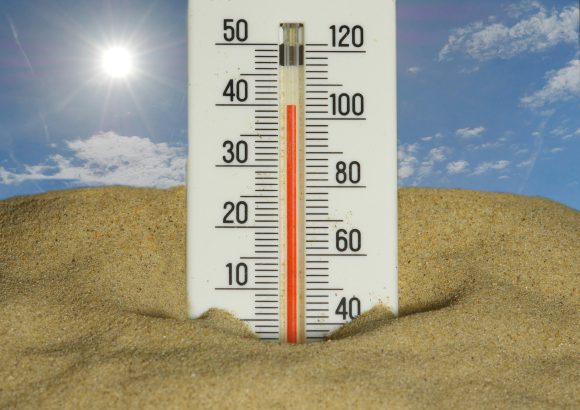
    Across the Dominican Republic, a dangerous spell of record-shattering extreme heat has put public health authorities on high alert, with officials issuing urgent guidance to residents as sweltering conditions are projected to hold for the next fortnight. In the hottest parts of the country, the real-feel heat index has already pushed past 40°C, bringing elevated risks of life-threatening heat-related illnesses for vulnerable populations.