作者: admin

  • 4 killed as US forces strike drug-trafficking vessel in Caribbean

    4 killed as US forces strike drug-trafficking vessel in Caribbean

    In a significant escalation of its counter-narcotics campaign, U.S. forces under Joint Task Force Operation Southern Spear conducted a targeted strike on a vessel in the Caribbean Sea, resulting in four fatalities. U.S. Southern Command (SOUTHCOM) officially confirmed the operation on Wednesday, alleging the boat was transporting illicit narcotics and was operated by entities it designated as terrorist organizations, though no specific group was identified.

    This incident marks the third such engagement in March alone, raising the operation’s cumulative toll to 160 individuals killed across 47 separate strikes on suspected drug-smuggling crafts. According to data compiled by USNI News, this figure includes ten individuals who were initially reported as survivors but are now presumed deceased following unsuccessful search and rescue attempts. A previous strike on March 20th in the Eastern Pacific had left three survivors, though their current status remains unclear as the U.S. Coast Guard has not provided further updates.

    The military action coincides with a major interdiction success. In a coordinated effort, the U.S. Coast Guard and the Ecuadorian Navy seized 592 kilograms of cocaine on Tuesday in international waters off the coast of Ecuador, a seizure announced by SOUTHCOM on the social media platform X.

    This sustained counter-narcotics effort unfolds against a backdrop of shifting U.S. naval deployment priorities. The number of American warships in the SOUTHCOM area of responsibility has diminished as strategic focus pivots towards Iran. The guided-missile cruiser USS Gettysburg (CG-64) recently concluded its independent deployment, returning to Norfolk on Monday. Current U.S. naval presence in the region consists of the Iwo Jima Amphibious Ready Group, the cruiser USS Lake Erie (CG-70), and the destroyer USS Stockdale (DDG-106). It remains uncertain whether a replacement vessel will be dispatched to fill the capability gap left by the Gettysburg’s departure.


  • Meta and YouTube Lose First Major Addiction Lawsuit

    Meta and YouTube Lose First Major Addiction Lawsuit

    In a groundbreaking legal decision with far-reaching implications for the technology industry, a California jury has delivered a landmark verdict against Meta and YouTube, holding both companies accountable for intentionally designing addictive platform features that caused significant harm to a young user’s mental health.

    The Los Angeles Superior Court jury concluded after extensive deliberations that the social media giants acted negligently in their platform design, knowingly implemented risky features, provided insufficient warnings to users, and directly caused substantial psychological injury to the plaintiff, identified as Kaley, now 20 years old. The seven-week trial culminated in more than eight days of jury consideration before reaching this historic decision.

    The court ordered the companies to pay a combined $3 million in compensatory damages, with jurors additionally recommending punitive damages totaling $3 million—$2.1 million against Meta and $900,000 against YouTube. The jury assigned proportional responsibility, attributing 70% of the harm to Meta’s platforms and 30% to YouTube’s services.

    The case originated from a lawsuit filed by Kaley and her mother against multiple social media companies including Meta, YouTube, Snap, and TikTok. The litigation alleged these platforms deliberately employed addictive design strategies that hooked Kaley during her childhood, ultimately contributing to severe anxiety, body dysmorphia, and suicidal ideation. Snap and TikTok previously reached settlements before the trial commenced.

    This verdict represents the first trial outcome among more than 1,500 similar cases pending against social media companies nationwide. While not directly determining the outcome of other lawsuits, legal experts suggest this decision could establish significant precedents influencing future resolutions and potentially exposing technology firms to billions in liability across numerous cases.

    Both Meta and YouTube have announced their intention to appeal the verdict, maintaining their commitment to user safety while disputing the jury’s findings. This case emerges amid growing regulatory scrutiny and public concern regarding social media’s impact on youth mental health and the ethical responsibilities of technology companies.

  • DBS reading competition officially launched on April 15th 2026

    DBS reading competition officially launched on April 15th 2026

    Dominica’s premier literacy initiative for children officially commenced its sixteenth edition on Tuesday with a formal launching ceremony at the University of the West Indies Global Campus. The DBS Radio National Reading Competition, organized in collaboration with the Ministry of Education, will begin its competitive phase on April 15th, 2026, under the thematic banner “Reading and Literature.

    Ronillia Williams, Coordinator of the longstanding competition, characterized the event as “a beacon for illuminating young minds” targeting children aged ten and under nationwide. During her address, Williams expressed profound appreciation for both DBS Radio and the Ministry of Education, acknowledging their sustained commitment to developing the platform into Dominica’s most significant literacy initiative.

    “Primary schools distinguish themselves by selecting readers who embody their literacy focus,” Williams stated. “These children serve as our true ambassadors.” She specifically addressed educators, emphasizing that their guidance directly shapes children’s reading habits, helps forge cultural heritage within communities, and strengthens family traditions that bind generations through shared respect for literature.

    The competition builds on previous successes, including last year’s victory by Kierra John from Sineku Primary School. The annual event continues to serve as a cornerstone of national educational efforts, promoting literacy as both an academic skill and cultural value across Dominican society.

  • Man Found Hidden in Car’s Gas Tank in Attempt to Enter United States

    Man Found Hidden in Car’s Gas Tank in Attempt to Enter United States

    U.S. Customs and Border Protection agents successfully intercepted a perilous human smuggling operation at California’s San Ysidro Port of Entry, uncovering a Mexican national concealed within a modified gas tank compartment. The incident unfolded on Wednesday evening when border officers encountered a 20-year-old male driving a 2005 GMC SUV during routine screening procedures.

    A specialized CBP canine unit detected anomalies beneath the vehicle’s undercarriage, prompting officers to escalate the inspection to a secondary screening area. Upon detailed examination, authorities discovered a non-factory compartment integrated into the fuel tank system containing an individual who had sustained significant burn injuries during the smuggling attempt.

    Emergency medical services promptly transported the concealed person to Scripps Mercy Hospital in Chula Vista for urgent treatment. The driver was immediately taken into custody and transferred to the Metropolitan Correctional Center in San Diego facing human trafficking charges.

    San Ysidro Port Director Mariza Marin condemned the smuggling tactics, stating: ‘This alarming case demonstrates the ruthless and inhumane methods employed by trafficking networks who value financial gain over human safety. The alertness and expertise of our CBP officers potentially saved a life by removing this individual from an immediately dangerous situation and ensuring they received critical medical care.’

    As the nation’s primary border security organization with over 67,000 personnel, CBP maintains its commitment to disrupting transnational criminal operations that jeopardize public safety while facilitating legitimate travel and commerce across U.S. borders.

  • Remarks on the International Day of Remembrance of the victims of slavery and the Transatlantic Slave Trade

    Remarks on the International Day of Remembrance of the victims of slavery and the Transatlantic Slave Trade

    UN Secretary-General Antonio Guterres delivered a powerful address on March 25, 2026, confronting the brutal history of transatlantic slavery and its enduring consequences in modern society. Speaking at a commemorative event in New York, Guterres described the centuries-long system as “a deep betrayal of human dignity” that represented “the worst of humanity.”

    The speech detailed the horrific reality of the transatlantic slave trade, noting how millions of Africans were forcibly taken from their families and communities, with approximately one in seven perishing during the treacherous Atlantic crossing due to unimaginable conditions. Those who survived faced generations of brutal exploitation and systematic denial of their basic humanity throughout the Americas.

    Guterres emphasized that this was not merely forced labor but “a machinery of mass exploitation and deliberate dehumanization” that formed the foundation of a global economic order built on greed, maintained through violence, and justified through constructed racist ideologies. The UN chief specifically acknowledged the complicity of elites and empires, including his own country, in building wealth through “stolen lives and stolen labor.”

    Beyond historical remembrance, the address focused on contemporary responsibilities, highlighting how the legacy of slavery continues to manifest through persistent inequality and racism. Guterres called for concrete actions including dismantling systemic racism, ensuring reparatory justice, and accelerating inclusive development with equal access to education, healthcare, employment, and housing.

    The Secretary-General welcomed some nations’ efforts to apologize for their historical roles but stressed that “far bolder actions by many more States are needed.” These include respecting African countries’ ownership of their natural resources and ensuring their equal participation in global financial institutions and the UN Security Council. Guterres also urged all member states to ratify the International Convention on the Elimination of All Forms of Racial Discrimination.

  • PWA to nominate new executive next week

    PWA to nominate new executive next week

    The Police Welfare Association (PWA) is preparing for a significant leadership transition as it announces plans to convene a special general meeting next Wednesday. Sergeant David Andrew (Jr.), the current Chairman of the association, confirmed the gathering will focus on nominating candidates for a new executive committee.

    During an official statement, Sergeant Andrew outlined the nomination process: ‘The special general meeting was convened to nominate members to form the new executive. Six additional members received nominations during this meeting, joining seven members who had already been nominated through the standard nomination process.’

    This development sets the stage for a competitive election with thirteen candidates vying for positions on the nine-member executive committee that will steer the association’s future direction.

    The PWA represents all members of the Police Force holding ranks below Assistant Superintendent and operates through its Executive Committee. The committee serves a crucial function in law enforcement governance, responsible for advocating on matters pertaining to the general welfare and operational efficiency of the entire Police Force. This electoral process demonstrates the democratic framework within the police organization, ensuring representation for rank-and-file officers in decisions affecting their professional lives and working conditions.

  • IMA Grenada appoints Renée Moses as Head of Diasporic Affairs

    IMA Grenada appoints Renée Moses as Head of Diasporic Affairs

    The Investment Migration Agency (IMA) of Grenada has announced the strategic appointment of Renée Moses as the inaugural Head of Diasporic Affairs. This newly established position signals a significant enhancement of Grenada’s commitment to forging stronger connections with its global diaspora community.

    Ms. Moses arrives at this pivotal role with an impressive portfolio spanning more than ten years in strategic marketing, international trade relations, and destination branding. Her professional expertise encompasses diverse geographical markets including the Caribbean, United Kingdom, Europe, and the Middle East. Recognized as a dynamic and results-oriented executive, she has consistently demonstrated exceptional leadership in managing high-performance teams and implementing multi-market campaigns that effectively drive growth and enhance global brand recognition.

    Her most recent position as marketing manager with a licensed local agent provided her with deep insights into Grenada’s investment migration landscape, where she spearheaded comprehensive marketing and business development strategies. Previously, Moses held senior marketing positions with internationally renowned organizations including Atlantis, The Palm, and Kerzner International in Dubai. During her tenure with the Grenada Tourism Authority, she achieved substantial success in increasing tourist arrivals, expanding international trade networks, and managing high-impact promotional initiatives across crucial global markets. Her professional background includes extensive collaboration with embassies, consulates, and diaspora stakeholders to promote Grenada’s national brand on the international stage.

    Moses’s academic credentials include a Master of Business Administration (MBA) in International Marketing from The University of the West Indies and a Bachelor of Science in International Business from St George’s University. She further enhances her qualifications with professional certifications as a Project Management Professional (PMP) and a Google Digital Marketing and E-Commerce Professional Certificate.

    The Citizenship by Investment Committee and IMA Management have extended a warm welcome to Ms. Moses, expressing strong confidence that her international experience and strategic expertise will substantially contribute to the development and growth of the Diasporic Affairs division. This appointment represents a strategic move to leverage diaspora relationships for national development through the Investment Migration Program.

  • Bachelorette star still likely to get full salary from cancelled show after resurfaced video depicts assault on her partner

    Bachelorette star still likely to get full salary from cancelled show after resurfaced video depicts assault on her partner

    In a controversial turn of events, ABC television network faces contractual obligations to compensate Taylor Frankie Paul, the selected star for the canceled 22nd season of ‘The Bachelorette,’ despite the emergence of damaging assault footage that prompted the show’s last-minute cancellation. The decision to pull the season occurred merely one week before its scheduled premiere after a 2023 video depicting Paul’s violent altercation with her then-boyfriend, Dakota Mortensen, resurfaced in media circulation. The widely circulated footage shows Paul physically assaulting Mortensen by kicking him and hurling barstools, with one projectile inadvertently striking her young daughter, who immediately bursts into tears. This incident adds to Paul’s troubled legal history, as she previously pleaded guilty to charges of aggravated assault in a separate case. Legal expert Reddock-Wright revealed to Yahoo News that ABC’s prior awareness of Paul’s arrest record before finalizing her casting significantly weakens the network’s position to withhold payment under standard contractual clauses. While the precise financial settlement remains undisclosed, industry sources estimate the compensation to reach at least $250,000, highlighting the complex legal and ethical dilemmas reality television producers face when casting controversial figures.

  • CCJ grants a stay in Guyanese extradition matter

    CCJ grants a stay in Guyanese extradition matter

    PORT OF SPAIN, TRINIDAD AND TOBAGO – The Caribbean Court of Justice (CCJ) has intervened in a politically charged extradition case involving Guyanese opposition leader Azruddin Mohamed and his associate Nazar Mohamed. During a procedural conference convened on March 25, 2026, the regional court imposed a temporary stay on extradition proceedings pending its decision on the applicants’ request for special leave.

    The case originates from an October 30, 2025 extradition request by the United States government, seeking the Mohameds’ transfer to face an eleven-count criminal indictment alleging conspiracy, mail and wire fraud, and money laundering. Following the request, Guyanese authorities issued an Authority to Proceed under the Fugitive Offenders Act and obtained arrest warrants, initiating formal extradition proceedings.

    The applicants previously challenged the validity of the extradition process through judicial review proceedings in domestic courts, arguing against the legality of the Minister of Home Affairs’ decision to proceed. Both the High Court (February 4, 2026) and Court of Appeal (March 17, 2026) dismissed these challenges and refused to stay the proceedings.

    The CCJ, recognizing the matter’s urgency and constitutional significance, established an expedited timeline for consideration. Presided over by Justice Winston Anderson alongside Justices Rajnauth-Lee and Ononaiwu, the court directed respondents to file opposition affidavits by April 2, 2026. Written submissions must be completed by April 10, with reply submissions due by April 15.

    The special leave application hearing is scheduled for April 21, 2026, at 9:00 AM Atlantic Standard Time, to be conducted via video conference and livestreamed on the court’s YouTube channel. This proceeding will determine whether the CCJ will hear the substantive appeal against the Guyanese courts’ decisions.

    Legal representation features prominent Caribbean jurists, including Senior Counsel Fyard Hosein leading the appellants’ team, while the respondents are represented by Douglas Mendes, SC, and Attorney General Mohabir Anil Nandlall, among others. The outcome could set significant precedents for regional judicial review and extradition protocols within the Caribbean Community.

  • Iran Rejects Trump’s 15-Point Peace Plan to End the War

    Iran Rejects Trump’s 15-Point Peace Plan to End the War

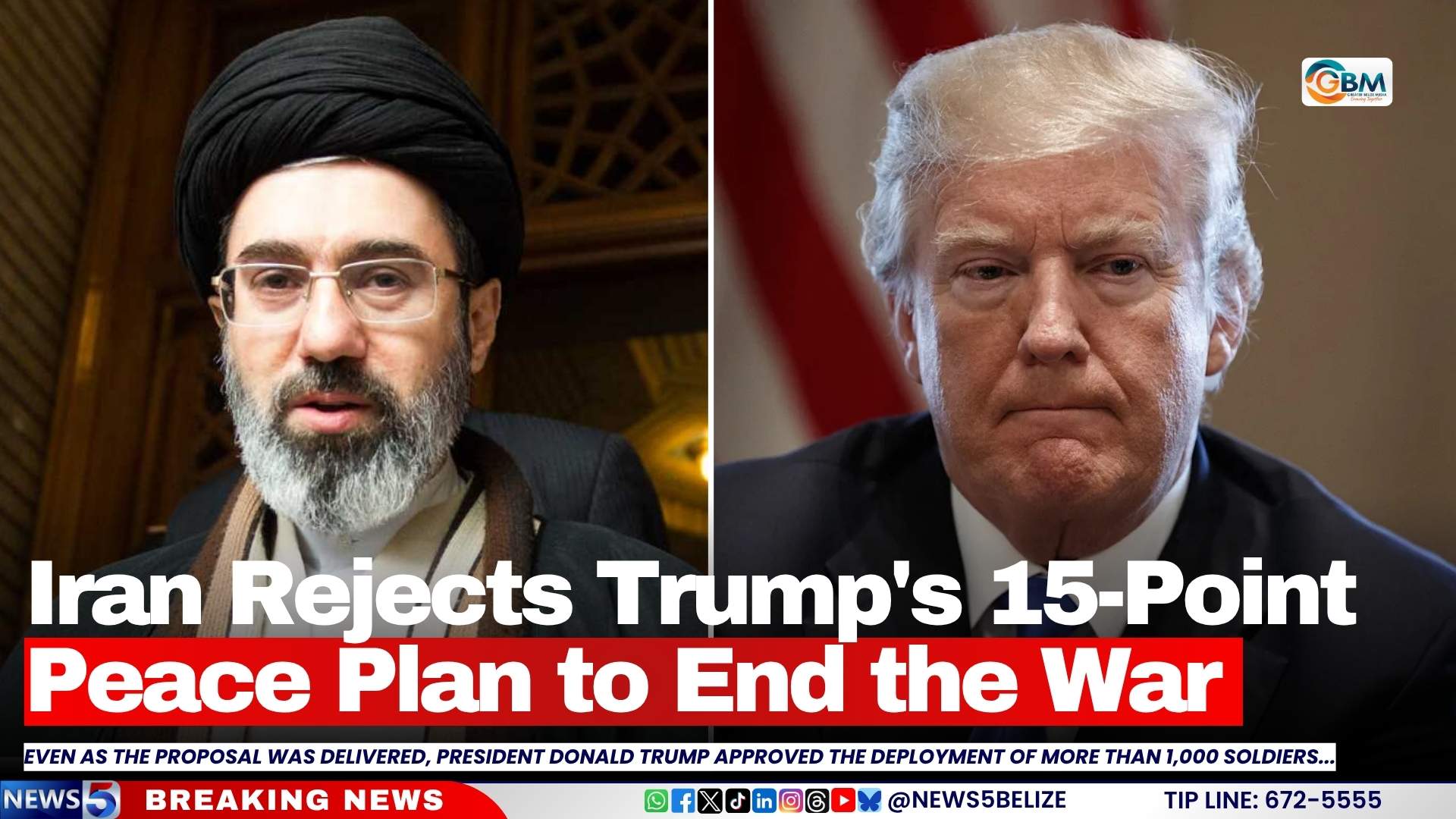
    In a significant diplomatic development, Iran has formally rejected a comprehensive 15-point peace proposal delivered by the United States through Pakistani intermediaries. The initiative, designed to de-escalate ongoing Middle East conflicts, encountered immediate resistance from Tehran officials who characterized it as an attempt to impose American terms.

    Iranian state media conveyed the government’s firm position, quoting senior officials who declared Tehran would not accept Washington’s predetermined conditions or timeline for peace negotiations. Rather than embracing the American proposal, Iranian authorities presented counter-demands including the cessation of what they termed “U.S. and Israeli aggression and targeted assassinations,” alongside formal recognition of Iran’s sovereign control over the strategic Strait of Hormuz—a critical maritime corridor for global oil transportation.

    The diplomatic rejection coincided with heightened military preparations as President Trump authorized the deployment of over 1,000 soldiers from the 82nd Airborne Division to the region. While these troops remain stationed stateside according to NBC News reports, their imminent deployment signals potential escalation.

    Adding to the tense atmosphere, Iranian Parliament Speaker Mohammad Bagher Ghalibaf issued a stark warning via social media, emphasizing that Iranian forces are closely monitoring U.S. military movements. “Do not test our resolve to defend our land,” he declared, underscoring Tehran’s preparedness to respond to perceived provocations. This development highlights the widening gap between diplomatic overtures and military posturing in the increasingly volatile Middle East region.