作者: admin

  • Our Legend

    Our Legend

    Nearly seven decades after the triumph of the Cuban Revolution on January 1, 1959, the enduring character of Raúl Castro remains a steady, defining force in the legacy of the island’s revolutionary struggle. This retrospective reflection, originally published by Granma in 2006 and republished to mark Raúl Castro’s birthday, traces the revolutionary leader’s journey from his childhood in Birán to his pivotal role as a commander in the mountains of eastern Cuba, capturing the unwavering spirit that has defined his lifelong commitment to Cuba’s people.

    The story opens in the thick of the 1958 revolutionary war, anchored in a moment of quiet exhaustion that reveals the grit of the guerrilla movement. In the damp highlands of the Sierra Maestra, a young Raúl Castro allows himself only a fleeting moment of rest, his mind flooding with memories stitched together from a lifetime already steeped in struggle: the scent of orange blossoms in his family’s groves back in Birán, the sharp tap of his father Ángel’s cane on wooden floorboards, the overlapping sounds of a life forged in rebellion — train whistles pulling into Santiago, the rustle of priestly cassocks in the corridors of his strict religious school, the thunder of crowds marching, the crackle of gunfire outside the Moncada Barracks, the roar of enemy aircraft over guerrilla territory. Disoriented by fatigue, he cannot immediately place whether the exploding shrapnel echoing in his memory comes from the harassment after the Battle of Alegría de Pío or air raids targeting his column as they advanced toward the Second Eastern Front. Yet after only minutes of sleep, he jolts awake and returns to his urgent work.

    For hours, Raúl had written tirelessly, forearms braced against rough mountain planks, after days of marching, ambushes, reconnaissance, combat and enemy bombings. In his message to revolutionary leadership, he laid out a clear strategic assessment: following Fidel Castro’s decisive defeats of Fulgencio Batista’s army offensive in the Sierra Maestra, the shaken dictatorship — reeling from the arrest of American citizens on the Second Front, rising troop desertions and plummeting morale among Batista’s ranks — would be desperate to score a symbolic victory to cling to power. The lightly armed Second Eastern Front, he warned, would almost certainly be the target. He closed the urgent dispatch with a request for critical reinforcements: “If they would send us the 159 Springfields and the M-2s that are over there, we could do many things, at least prevent them from penetrating our lines; they must send them here urgently. I had to sleep for a while, lying on the same table where I’m writing to you, so I could finish this. Vilma is writing next to me in the same condition, so please forgive me that this isn’t as long as I’d like; in any case, it’s better this way for you, since all we do is ask for weapons!!”

    That letter, dated July 5, 1958, captures the urgency and resolve that marked Raúl’s leadership from the earliest days of the revolution. Barely 27 years old when revolutionary forces descended from the mountains to claim victory in 1959, Raúl had already spent half his young life fighting for a transformative vision for Cuba. Born June 3, 1931, in the sweltering midday heat of rural Cuba, he was the fourth child of Ángel Castro and Lina Ruz, the youngest son his father affectionately nicknamed “My little calf.” In the small village of Birán, he was remembered as a quick-witted, mischievous, warm-hearted boy who prioritized his family above all else.

    After leaving the strict, discipline-bound Jesuit school Belén, where he bristled at mandatory prayers and confessions, Raúl returned to work on his father’s farm until Fidel encouraged him to pursue university study in Havana, either in law or public administration. When he submitted his application in April 1950 and moved to the capital, he unknowingly stepped onto a path that would write him into the history books. Fidel introduced him to Marxist texts, which opened Raúl’s eyes to a new vision of social justice, and he embraced these ideals with the unshakable focus of a compass and the fiery passion of a young man fighting for what is right. His courage became legendary during the 1953 attack on the Moncada Barracks, when he was detained by guards at the Palace of Justice — only to disarm his captors, save his small contingent of fighters, and lead them to safety.

    That bold action cemented a truth that would define Raúl’s role in the revolution for decades to come: where Raúl was present, the impossible became achievable. Years later, after the Granma landing and the devastating dispersal of revolutionary forces at Alegría de Pío, when Fidel had lost many comrades and thought Raúl may have fallen, his relief at seeing Raúl alive turned to unshakable confidence: “Now we will win the war!”

    To the Cuban people, Raúl has always been known for much more than his strategic skill on the battlefield. They remember his rebellious temperament, his sharp good humor, his approachable simplicity, his unwavering rectitude, his austere work ethic and his warm, jovial demeanor. Above all, he is celebrated for his unyielding loyalty and the singular courage that earned him his place as the revolution’s second-in-command through his own merit, not by circumstance. Alongside Ernesto “Che” Guevara and Celia Sánchez, he was Fidel’s most trusted right hand, a steady anchor rooted deeply in the struggle, a testament to the personal virtues that would carry him through decades of service building the revolution, developing Cuba’s armed forces and shaping the nation’s political and social life. Beside him through every step was his partner Vilma Espín, a fellow guerrilla fighter; their decades-long revolutionary love story revealed the quiet tenderness and sensitivity that lay beneath his tough public resolve.

    As the reflection concludes, marking the anniversary of the revolution and Raúl’s life of service, the core truth of his legacy remains unchanged: Raúl remains the same man who joined the struggle as a young idealist, bringing the same boldness, simplicity, unshakable faith in Cuba’s youth, complete selflessness and restless, joyful, profound spirit to every chapter of the nation’s journey. He always believed the revolution could transform Cuba, and time has proven him right again and again. Firmer than ever in his convictions, he has earned the enduring respect and affection of the Cuban people, who have seen his steady leadership through every trial and recognize him as an eternal brother in the struggle. Bound by shared sacrifice and shared vision, Fidel and Raúl together forged the generous, unyielding, foundational legend of the Cuban Revolution — a legacy that endures, anchored in the unchanging character of the man who never stopped fighting for a better, happier homeland.

  • Bewoners Houttuin tekenen fel protest aan tegen geplande opslag radioactief materiaal

    Bewoners Houttuin tekenen fel protest aan tegen geplande opslag radioactief materiaal

    Residents of Houttuin and surrounding communities in Suriname’s Wanica District have officially lodged formal objections to Houston-based energy firm Halliburton’s proposal to build a radioactive materials storage facility in their residential area. Organized under the advocacy group Suriname River Eco & Water Resort Steering Committee, locals submitted two detailed formal complaints to the Wanica Southeast District Commissioner and the National Environmental Authority (NMA), outlining severe, multi-layered concerns over potential threats to the region’s environment, public health, and community safety.

    At the core of residents’ opposition is the facility’s proposed location: directly above the Zanderij Aquifer, Suriname’s most critical source of fresh drinking water. The community argues the region’s geological and hydrological features make it categorically unsuitable for radioactive waste storage. Porous sandy soils, high regional groundwater tables, and frequent flood risk create a near-constant threat of radioactive contamination that cannot be mitigated through standard design safeguards, the objection states.

    Residents specifically flag the planned storage of radioactive isotopes including Americium-241 and Cesium-137 at the site. They warn that any leak, ground subsidence event, transport accident or extreme flood event could result in irreversible, long-term contamination of the region’s groundwater, agricultural land, and residential neighborhoods, posing lifelong health risks to the local population.

    Beyond the inherent risks of the project’s location, residents accuse the NMA and project consultants of systemic lack of transparency around the required Environment Management and Monitoring Plan (MMMP). Critical data required for full public and regulatory assessment—including radioactive activity levels, radiation contour maps, regional groundwater flow models, and emergency disaster response scenarios—is entirely missing from the publicly released documents, according to the complaint.

    The community also raises questions over the expertise and independence of TDS Consulting, the firm hired to conduct the project’s environmental impact assessment. Residents note that TDS representatives admitted during public information sessions that the firm lacks specialized expertise in nuclear engineering, radioecology, and radiation safety—core competencies required to properly evaluate the risks of a radioactive storage facility.

    Worsening these concerns, residents argue that Suriname as a whole is currently unprepared to handle radiological emergencies. The country lacks specialized nuclear regulatory legislation, independent radiation testing laboratories, specialized medical facilities equipped to treat radiation exposure, and trained response personnel to contain and manage an incident should one occur, the complaint states.

    Locals also say they have lost trust in Halliburton as a project operator, pointing to the company’s history of negligence and environmental contamination in prior international operations. The objection specifically references past incidents involving radioactive materials where the company failed to implement adequate safety precautions, according to residents.

    Another key grievance is the lack of adequate public outreach: residents say they were notified of project consultation sessions far too late, leaving local community members with very little time to register for the public meetings and prepare formal objections to submit to the NMA.

    The objection also extends to a second Halliburton project planned for the same area: an operational base for oil and gas exploration activities. Residents say that during initial information sessions, Halliburton failed to disclose that tools and equipment that have been in contact with radioactive sources would also be stored and handled at the base, leaving communities unaware of additional risks.

    In their formal demands, residents are calling on the NMA to reject all permits for the Houttuin radioactive storage facility entirely. They are also requesting an independent international assessment of the project’s risks, the development of modern national legislation for radiation protection and nuclear liability before any similar projects are approved, and a full assessment of alternative sites that meet international safety standards for radioactive material storage. The community emphasizes that such high-risk facilities should never be sited in densely populated residential areas or above critical drinking water reserves.

    As of the filing date, neither the NMA nor Halliburton has issued a public response to the formal objections.

  • Column: Systeemverandering begint met onze eigen keuze

    Column: Systeemverandering begint met onze eigen keuze

    Twelve months ago, Suriname’s political campaign rallies echoed with bold, sweeping promises: systemic overhaul. Candidates pledged to upend the status quo, rebuild national institutions and deliver a fundamentally better future for all citizens. Slogans like *NDP o Kenki a systeem* (NDP will change the system), *A nyun pasi* (A new path) and *Tra fas’ de* (A different approach) flooded public discourse, all guaranteeing transformative change that would break with decades of entrenched political and institutional stagnation.

    But more than a year after the Simons administration took office, none of the promised systemic transformation has materialized. Long-standing ineffective political patterns remain intact, and the bold campaign rhetoric has fallen silent. This absence of progress raises a critical, underdiscussed question: where does real systemic change actually begin?

    Columnist Indra Toelsie argues that transformation does not start in the ivory towers of political leadership, nor does it emerge from thick, unimplemented policy documents. Instead, genuine systemic change begins with individual citizens – and the leaders they elected – embracing a willingness to think, act, and prioritize differently. Systemic overhaul can only become a reality if every person, from ordinary voters to top policymakers, first accepts that fundamental change is both necessary and possible.

    This shift starts with collective mindset: are citizens and leaders still clinging to familiar, comfortable systems that have clearly failed to deliver progress? Do they have the courage to let go of outdated habits, unchallenged assumptions and entrenched power structures? Toelsie emphasizes that systemic change requires an inner revolution: greater personal awareness and consistent small actions in everyday life, not just top-down policy announcements.

    The core principle is simple: if individuals do not change their own behaviors and mindsets, the broader system will never change. Only when enough people – especially those in leadership positions – internalize this truth and take action will campaign slogans turn into tangible, on-the-ground change. Until that point, “systemic change” will remain nothing more than an empty slogan, a hollow political promise.

    Toelsie also explores the root causes of stalled change: Are ruling party politicians holding back out of fear of electoral backlash in the next election cycle? Do they lack the political courage to cross the high threshold of disrupting entrenched power dynamics? Or has the energy that fueled fiery campaign rhetoric a year ago simply fizzled out in the day-to-day work of governing?

    Genuine systemic change also requires honesty and self-reflection, both from leaders and the public. Can Suriname’s political class deliver on their promises? Do they truly want to? Or will systemic change remain just empty words? Will the public accept that outcome?

    A common cultural attitude in Suriname holds that there is always plenty of time to implement change, work on problems at a slow, comfortable pace aligned with what is often called “Surinamese time.” But Toelsie points out that time is one resource no one can control or replenish.

    One full year of the Simons government’s term has already passed. In principle, the administration still has three full years in office to deliver on the promised systemic change before the fifth year, which is almost always dedicated almost entirely to campaigning for the next election. Three years may sound like a long timeline, but it passes far faster than most people anticipate. Toelsie reminds readers to reflect on how quickly the past year has gone, and recognize just how precious and limited time is for delivering meaningful change.

    In conclusion, Toelsie argues that the public and leaders alike must hold themselves accountable first. Transformation does not come as a gift handed down from political leaders; it is a process that grows from the bottom up, starting with individual mindset and action. Only when Surinamese people – and their elected leaders – dare to change themselves can the entire system get a fresh start.

  • Broki wint na strafschoppen thriller van Robinhood en is SML-kampioen

    Broki wint na strafschoppen thriller van Robinhood en is SML-kampioen

    In a dramatic, capacity-cup final at Suriname’s Franklin Essed Stadion Sunday night, football club Broki pulled off one of the biggest upsets in Suriname Major League (SML) history, defeating previously undefeated defending champion SV Robinhood on penalties to claim the first league title in the club’s 100-plus year history. Entering the match as clear underdogs, Broki set an aggressive tone from the opening whistle, putting constant pressure on Robinhood’s backline and turning the much-hyped title decider into a tense, back-and-forth battle from start to finish.

    Broki drew first blood in the 16th minute, when forward Shaquille Stein beat Robinhood keeper Jonathan Fonkel with a crafty chip shot to put the underdogs up 1-0. Robinhood had multiple chances to level the score before halftime, with attacker Ravello Zijler coming close on several attempts, but Broki goalkeeper Nevon Esperansie delivered a string of stunning saves to keep his side ahead heading into the break. Broki nearly doubled their lead through another Stein chance minutes before halftime, but could not convert, leaving the score 1-0 at intermission.

    Robinhood ramped up pressure in the second half, dominating possession and pinning Broki deep in their own half for most of the period, but the underdog side held firm on defense for nearly the entire 90 minutes. It was not until deep into second-half stoppage time that Zijler finally broke through, heading home a cross to level the score at 1-1 and force extra time, keeping Robinhood’s title defense hopes alive.

    However, Zijler’s celebration would quickly turn to heartbreak. Caught up in the excitement of his late equalizer, he pulled off his shirt, earning a second yellow card for the match that resulted in an automatic red card. Robinhood was forced to play the entirety of extra time down a man, a turning point that would shape the final outcome.

    Even a man down, Robinhood stunned the Broki side just three minutes into the first 15-minute extra period, when substitute youth player Darrel Sijpenhof found the back of the net to put the defending champions up 2-1. But Broki refused to fold, pressing hard for an equalizer as fatigue and tensions rose across the pitch. The underdogs got their leveler when substitute Jovan Haabo connected on a cross from Franklin Singodikromo, heading home to draw the match back to 2-2.

    No more goals were scored in the second period of extra time, forcing a decisive penalty shootout to decide the 2026 SML title. After both sides missed one penalty in the opening five-kick round, the shootout moved to sudden death. Robinhood’s chance at back-to-back titles ended when young forward Serfinjo Pinas sent his sudden death attempt high over the crossbar, opening the door for Broki to claim the trophy. Brazilian midfielder Alan Da Costa coolly slotted home the match-winning penalty to secure the historic victory for Broki, sending the sold-out home crowd at Franklin Essed Stadion into celebration.

  • Analyse: Één jaar later groeit de vraag waar de systeemverandering blijft

    Analyse: Één jaar later groeit de vraag waar de systeemverandering blijft

    It has been 12 months since Suriname’s general elections held on May 25, 2025, and frustration is building across segments of the public. What is growing faster than impatience over the lack of tangible results, however, is the rising question of whether the country’s governing system is truly undergoing the transformative change candidates promised.
    While the Simons administration has launched multiple recovery programs, public consultation rounds and policy proposals since taking office, a clear, foundational path for systemic reform has yet to emerge.
    The 2025 election cycle was dominated by a single core narrative: national recovery. Candidates ran on platforms centered on transparent governance, strengthened state institutions, improved oversight mechanisms, proactive preparation for the coming oil era, and a break from long-entrenched old political cultures. Key priority areas highlighted during the campaign included education, healthcare, agriculture, government transparency and national identity-building.
    Public expectations were particularly high because the country is on the cusp of a historic economic transformation driven by future offshore oil revenues. The widespread consensus going into the new government was that Suriname had learned hard lessons from past economic crises, and that new institutional frameworks and legislation would prevent the country’s coming resource wealth from being squandered again through mismanagement, corruption and political patronage.
    The ongoing debate over Suriname’s 2024 Accounting Law has become a symbolic case study of deeper structural flaws within the country’s state system. The 2026 national budget cannot be processed by parliament, because it was not drafted in alignment with the new law that entered into force on January 1, 2025. The Simons government has proposed delaying full implementation of the reform law until 2029, arguing that critical administrative systems, oversight structures and enforcement frameworks are not yet ready to meet the new requirements. As a temporary solution, the outdated 2019 Accounting Law will remain in effect.
    In practical terms, this delay means that as Suriname enters the final stretch of preparation for incoming oil revenues, it still lacks the fully modernized financial oversight and accountability framework that the new law was designed to deliver. What raises more questions is that the government is seeking a three-year delay, while international advisory bodies have previously cited a two-year timeline as sufficient for full implementation. To date, the administration has not clarified why a three-year extension is necessary, nor has it laid out concrete, trackable milestones to be achieved over that period.
    This dispute cuts to a fundamental question: Why is the modernization of financial oversight being delayed precisely as Suriname prepares for the largest influx of capital in its national history?
    Political and economic attention across the country is increasingly shifting to 2028, the year when the first large-scale offshore oil production is projected to begin. This timeline makes pre-2028 institutional reform a high-stakes priority: pressure is mounting to have robust, fully operational oversight institutions in place before oil revenues begin flowing. Resource wealth brings unprecedented economic opportunity, but it also carries well-documented severe risks, including increased political interference, cronyism, opaque public procurement, concentration of economic power, and weakened independent oversight.
    International organizations, global financial institutions and foreign investors are therefore increasingly scrutinizing Suriname’s governance standards, procurement rules, financial transparency and independent oversight mechanisms. Viewed through this lens, the delay to the Accounting Law is far more than a minor technical bureaucratic issue: it directly impacts confidence in the government’s ability to prepare the country for responsible management of the oil era.
    A central campaign promise of the current administration was a dramatic overhaul of Suriname’s governing system, 50 years after the country gained independence. For many Surinamese, oil revenue represents the last best chance to build a durable, inclusive economic foundation for current and future generations. To date, however, the systemic change promised by candidates has failed to materialize.
    There are new faces in government, new cabinet ministers and shifted political power dynamics, but the day-to-day functioning of the state still retains all the hallmarks of the old model: slow implementation of policy, limited government transparency, politically motivated public sector appointments, weak institutional oversight, and overreliance on informal decision-making processes.
    Debates over procedural irregularities, insufficient oversight and political influence continue to emerge regularly around public procurement processes and state-led infrastructure projects. While the government repeatedly references its commitments to reform and professionalization, much of the public has yet to experience fundamental cultural change within the civil service and governing establishment. This has opened a growing gap between the government’s rhetorical commitments to reform and the public’s on-the-ground experience.
    A further challenge for the administration is that a clear, integrated national reform plan remains largely out of public view. While the government has announced scattered policy initiatives and sector-specific projects, a cohesive national reform framework with clear priorities, binding deadlines and measurable outcomes has yet to be articulated in public discourse.
    This lack of clarity creates a risk that the government will be seen as purely reactive, shifting from one crisis to the next without a visible long-term strategy that the public can assess and hold officials accountable to.
    At this pivotal moment, as the country prepares for sweeping economic change, public demand for predictability, institutional clarity and confidence in state functions is growing rapidly.
    For Suriname, the coming years will not only be defined by efforts to drive economic growth. The real core question of this era is whether the country can build strong, capable state institutions in time for the start of the oil era. Oil itself does not transform nations: strong, accountable institutions do. It is only on that basis that the public will ultimately be able to judge whether true systemic change has arrived – or if nothing has changed beyond a rotation of political leaders within the same broken system.

  • NOAA predicts a below-normal 2026 hurricane season

    NOAA predicts a below-normal 2026 hurricane season

    As the official start of the 2026 Atlantic hurricane season draws near, the United States National Oceanic and Atmospheric Administration (NOAA) has released its official seasonal prediction, calling for a below-average number of storms across the basin this year. The Atlantic hurricane season runs annually from June 1 through November 30, and NOAA’s updated outlook puts the probability of a below-normal season at 55%, compared to a 35% chance of near-normal activity and just a 10% chance of an above-normal season.

    In terms of projected storm counts, NOAA forecasters estimate the 2026 season will see between 8 and 14 named storms — systems that reach sustained wind speeds of 39 miles per hour (63 km/h) or higher. Of these named storms, 3 to 6 are expected to strengthen into full hurricanes, defined by sustained winds of at least 75 miles per hour, with 1 to 3 intensifying further into major hurricanes of Category 3, 4, or 5 strength, which carry winds of 115 miles per hour or stronger. Forecasters hold a 70% confidence interval in this range of projections, which falls well below the 30-year average for Atlantic hurricane seasons: a typical season brings 14 named storms, seven hurricanes, and three major hurricanes.

    U.S. Commerce Secretary Howard Lutnick emphasized that NOAA and the National Weather Service (NWS) are fully prepared to provide timely, accurate updates as the season unfolds, noting that cutting-edge forecasting and tracking infrastructure is in place to deliver real-time storm alerts to at-risk communities.

    NOAA Administrator Neil Jacobs expanded on this preparation, highlighting the agency’s integration of modern innovative tools into its forecasting workflows. “AI-powered weather models, unmanned aerial surveillance drones, and next-generation satellite data, paired with the decades of specialized expertise held by NWS forecasters, will allow us to generate the most reliable forecasts possible to keep vulnerable communities safe,” Jacobs stated.

    Meteorologists point to competing climate patterns that are driving the projection for a quieter-than-average season. The key suppressing factor is the expected development and intensification of El Niño over the course of the season, a climate phenomenon in the Pacific that is well-documented to reduce tropical cyclone formation and intensification in the Atlantic by increasing vertical wind shear that tears developing storms apart. Counteracting this trend, however, are slightly warmer-than-average projected sea surface temperatures across the Atlantic and weaker-than-average trade winds, both of which can create favorable conditions for storm growth.

    Even with the forecast for below-normal activity, NWS Director Ken Graham stressed that preparedness remains non-negotiable for all communities in hurricane-prone regions. “While El Niño often suppresses hurricane development in the Atlantic basin, it only takes one damaging storm to turn a quiet overall season into a catastrophic disaster for your community,” Graham warned. He directed residents to visit the official NWS safety website at https://www.weather.gov/safety and the Federal Emergency Management Agency’s preparedness portal at https://www.ready.gov/ to access critical resources and update emergency plans ahead of the season.

    The World Meteorological Organization’s pre-approved list of 2026 Atlantic tropical storm names is: Arthur, Bertha, Cristobal, Dolly, Edward, Fay, Gonzalo, Hanna, Isaias, Josephine, Kyle, Leah, Marco, Nana, Omar, Paulette, Rene, Sally, Teddy, Vicky, and Wilfred.

  • Magnitude 3.7 Earthquake Recorded Northeast of Antigua

    Magnitude 3.7 Earthquake Recorded Northeast of Antigua

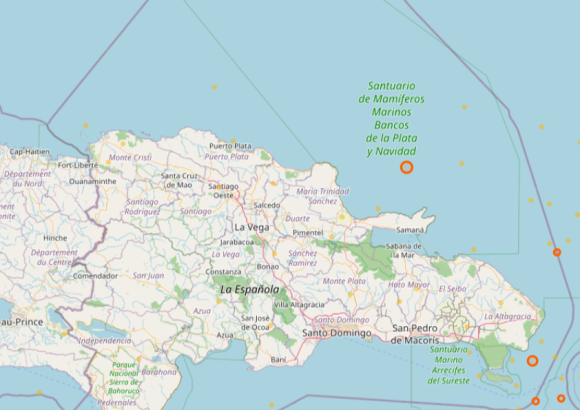
    A magnitude 3.7 earthquake has been detected in the waters north of several Eastern Caribbean island nations, according to an initial alert from The University of the West Indies Seismic Research Centre (SRC).

    The seismic event was registered at 9:05 p.m. local time on Sunday, with automated systems placing its depth at 10 kilometres below the ocean surface. The calculated epicentre falls at geographic coordinates 19.15 degrees north latitude and 62.91 degrees west longitude, placing the tremor hundreds of kilometres from multiple populated island centers.

    Per the preliminary geographic calculations, the quake sits roughly 255 kilometres northwest of St. John’s, the capital of Antigua and Barbuda; 206 kilometres north of Basseterre, the capital of St. Kitts and Nevis; and 273 kilometres north-northwest of Brades, the administrative center of Montserrat.

    The SRC emphasized in its announcement that the current epicentre and magnitude data were generated entirely by automated computer algorithms. Before the data is finalized, it will undergo manual review and potential adjustment by expert seismic analysts, meaning the published location details are not yet confirmed as final.

  • Part of the Croix Périsse (Haiti) road has been reopened

    Part of the Croix Périsse (Haiti) road has been reopened

    In a significant step toward reclaiming territory from armed gangs, Haiti’s national police force (PNH) announced Wednesday that it has successfully reopened a portion of the key Croix Périsse road following a targeted security operation that strengthened law enforcement control across the Carrefour Marchand district.

    The operation, which mobilized multiple elite PNH units supported by armored vehicles, relied on sustained patrols and round-the-clock surveillance to secure the zone and block armed factions from moving personnel and supplies through the area. After securing the perimeter around Carrefour Marchand, officers re-established a permanent presence at key checkpoints in the region, marking a return of state authority to an area long contested by violent groups.

    As part of the clearing operation, police have fully dismantled all unauthorized barricades erected by armed actors between the night of May 22 and 23 in the Kokorat San Ras Yo neighborhood and surrounding areas. To date, two major roadblocks blocking access along Croix Périsse have been completely removed, restoring limited passage for local residents and critical supply convoys.

    Law enforcement teams have also retaken full control of the Rigaud sub-district, and are now advancing toward Point Rouge, a strategic intersection that has long served as a base of operations for armed criminal groups. PNH forces remain fully mobilized in the region, with plans to continue the operation to clear remaining large barricades constructed from heavy tree trunks and consolidate permanent security control over newly recaptured areas.

  • FLASH : Pope Leo XIV warns of the risks of Artificial Intelligence

    FLASH : Pope Leo XIV warns of the risks of Artificial Intelligence

    In a landmark move marking his first major teaching document as pontiff, Pope Leo XIV has published an 82-page encyclical titled *Magnifica Humanitas* (Magnificent Humanity), focused entirely on assessing the growing threats posed by unregulated artificial intelligence development. Dated May 25, 2026, the text, subtitled “On Safeguarding the Human Person in the Time of Artificial Intelligence,” caps years of collaborative theological and ethical reflection within the Catholic Church on advancing digital technology.

    The pontiff’s warning builds on earlier institutional efforts to frame ethical guardrails for AI: dating back to 2020, the Holy See partnered with major technology firms and global academic bodies to launch the Rome Appeal for an Ethics of AI, a public initiative calling for AI innovation centered on respect for inherent human dignity. In this new encyclical, Pope Leo XIV expands that framework to detail five pressing risk areas that demand global attention.

    First, the encyclical highlights widespread economic and labor disruption, warning that unchecked AI deployment could lead to a rapid contraction of available human employment. The Pope specifically criticizes the dominant business model of big tech, which he says prioritizes short-term profit maximization over the fundamental dignity of work and workers.

    Second, the pontiff takes a firm stance against the development of autonomous lethal weapons, commonly referred to as killer robots, including self-operating armed drones. He stresses that any decision to use lethal force must remain under the direct, intentional control of human actors, rejecting the normalization of automated warfare.

    Third, Pope Leo XIV addresses the unique risks posed by generative AI, warning that its ability to mimic human interaction, emotion, and identity risks eroding the line between authentic human connection and digital simulation. He reminds readers that every human person’s individuality—marked by their unique face and voice—is inherently sacred, a status that unregulated generative AI threatens to trivialize.

    Fourth, the encyclical calls out the heavy environmental toll of the AI boom, denouncing the ecological destruction caused by the unregulated scramble to extract rare earth elements and critical minerals required to power AI infrastructure and modern electronics.

    Finally, the document emphasizes that children and young people are uniquely vulnerable to harm from unregulated AI, citing elevated risks of online manipulation, exposure to violent content, and digital exploitation. To counter these threats, the Vatican pushes for widespread investment in accessible digital literacy education, designed to help young people build the critical thinking skills needed to navigate digital spaces safely.

    The full text of *Magnifica Humanitas* is available for public download as an English-language PDF through official Vatican-related channels.

  • Straatverlichting langs weg naar Matta officieel in gebruik genomen

    Straatverlichting langs weg naar Matta officieel in gebruik genomen

    In a major milestone for infrastructure and community development in Suriname, the critical road connecting Zanderij to the village of Matta officially received permanent street lighting starting Saturday, marking the completion of a project aimed at addressing longstanding public safety concerns and unlocking growth in the inland region.

    The initiative, delivered in partnership between the Surinamese government and Energiebedrijven Suriname (EBS), the country’s national energy utility, was designed to respond directly to requests raised by local communities in the Para district years ago. Speaking at the official activation ceremony on behalf of President Jennifer Simons, Minister of Health, Welfare and Labor André Misiekaba emphasized that the project delivers on a core campaign commitment of the administration to expand critical basic services across Suriname’s inland territories. “This project demonstrates our government’s consistent pledge to invest in infrastructure that improves daily life and creates opportunities for communities outside the capital,” Misiekaba stated during the event.

    EBS Director Leo Brunswijk outlined that road safety was the central driver behind the street lighting installation. For decades, the high-traffic route between Zanderij and Matta has been notoriously dangerous for motorists, pedestrians, and commercial drivers after dark, with frequent collisions and security incidents reported after sunset. Brunswijk added that the project is far more than a standalone safety upgrade: it forms a core part of a broader national strategy to expand reliable, accessible electricity access to underserved communities across Suriname. Work is already underway to extend the national power grid further to reach additional rural settlements in the Para district, bringing basic energy services to households that have long operated off-grid or relied on unstable, expensive private power generation.

    Para District Commissioner Patrick Kensenhuis hailed the street lighting activation as a transformative step forward for the entire region. Kensenhuis noted that safer travel along the route will not only improve quality of life for local residents but also support growing tourism and small business activity in the area, which has long been held back by the lack of after-dark infrastructure. For local residents who have campaigned for this upgrade for years, the official switch-on has been met with widespread enthusiasm. Community members report that they have long avoided travel along the route after dark, and now expect the new lighting to cut down on road accidents and reduce crime along the highway, creating a safer environment for everyone who uses the road.