作者: admin

  • Guyana flatly denies Suriname’s claim Ali was told of new Corentyne bridge financing plan

    Guyana flatly denies Suriname’s claim Ali was told of new Corentyne bridge financing plan

    Diplomatic tensions have emerged between neighboring South American nations Guyana and Suriname over the long-planned cross-border Corentyne River Bridge, after Guyana issued a formal categorical rejection of Suriname’s recent claim that Guyanese President Irfaan Ali was briefed nearly two months ago on Suriname’s plan to take sole responsibility for financing the infrastructure project.

    The public dispute broke into the open after Suriname’s Ministry of Foreign Affairs reiterated Saturday that Ali had been officially notified of Suriname’s intention to fully fund the bridge during a May bilateral meeting. This claim followed an earlier announcement of the unilateral financing plan made in Suriname’s National Assembly the prior week, which Ali had already dismissed as inaccurate.

    In a detailed official statement released late Friday ahead of Suriname’s latest reiteration of its claim, Guyana’s Foreign Minister Hugh Todd clarified the full context of the May 15 meeting between Ali and Surinamese President Jennifer Geerlings-Simons, emphasizing the gathering was convened at Ali’s initiative to coordinate disaster assistance amid severe flooding that hit parts of Suriname. During that meeting, Todd said, Guyana offered immediate support: it deployed a technical team of drainage and irrigation specialists from Guyana’s Ministry of Agriculture, and lent two high-capacity portable pumps to support flood mitigation efforts in affected Surinamese communities. At no point during that meeting, Todd stressed, was financing for the Corentyne River Bridge ever discussed, nor was any indication given that Suriname planned to abandon the long-standing collaborative framework for the project.

    Todd recalled that the Corentyne River Bridge has been framed as a joint bilateral undertaking since the project was formalized via a 2020 memorandum of understanding between the two governments under Suriname’s previous administration. From its inception, both sides have agreed that all aspects of the project – from planning and financing to construction, operation and long-term management – would be decided through mutual consultation and joint agreement. In line with this shared approach, Guyana and Suriname have together worked to court international development partners to secure funding for the bridge, which is viewed as a key regional infrastructure project that will boost cross-border trade and social development for both nations.

    “Contrary to the impression now being conveyed publicly, Guyana has never been informed through the established bilateral mechanisms that the Government of Suriname intended to assume sole responsibility for financing the bridge,” Todd said in the statement, adding that if Suriname had formally proposed a policy shift on the project’s financing structure, Guyana would have reviewed the proposal through established diplomatic and technical channels – a step that never occurred because no formal proposal was ever submitted.

    Todd noted that Suriname’s own recent public statement acknowledges that a joint technical working group for the project remains mandated to discuss financial, technical and operational details – a fact that he says confirms financing has always been understood as a matter for joint deliberation, not unilateral decision-making by either side.

    The Guyanese foreign minister added that if Suriname has chosen to revisit the agreed financing arrangements, the appropriate diplomatic process would be to raise the proposed shift through existing bilateral communication channels first, rather than announcing policy changes via public statements that bypass direct consultation.

    Guyana remains fully committed to moving forward with the Corentyne River Bridge project, Todd affirmed, and continues to hold that the initiative must proceed on the foundational principles of transparency, mutual respect, ongoing consultation, and joint decision-making between the two governments. “The Government of Guyana stands ready to continue discussions in good faith through the agreed bilateral mechanisms with a view to advancing this transformational project for the benefit of the peoples of Guyana and Suriname,” the statement concluded.

  • Keiko Fujimori na vierde poging gekozen tot president van Peru

    Keiko Fujimori na vierde poging gekozen tot president van Peru

    After weeks of unresolved uncertainty, mass public protests, and swirling allegations of electoral misconduct, Peru’s conservative political figure Keiko Fujimori has been officially declared the victor of the country’s 2026 presidential election, capping off her fourth bid for the nation’s highest office.

    The National Electoral Board of Peru confirmed that Fujimori secured 50.135% of the vote in the June 7 runoff election, edging out her left-wing opponent, congressional representative Roberto Sánchez, who garnered 49.865% of ballots. The razor-thin margin separated the two candidates by just over 50,000 votes, from a total pool of more than 18 million cast across the country and among overseas voters.

    The official announcement was delayed for weeks as electoral authorities carried out a full re-count of thousands of disputed ballots, prompted by formal objections filed by both campaigns. To date, no credible evidence of widespread irregularities has been uncovered by electoral officials, though Sánchez has refused to recognize the final result, maintaining that the electoral process was marred by unfair practices.

    For 51-year-old Fujimori, the victory marks a long-awaited political breakthrough. She had previously run for president three times, falling short by narrow margins in each contest. This cycle, she built a winning coalition by drawing strong support in the capital city of Lima and among Peruvian voters residing abroad, while Sánchez dominated voting in rural, interior regions of the country.

    Fujimori is the daughter of former Peruvian president Alberto Fujimori, who led the nation from 1990 to 2000. Her father’s legacy remains one of the most divisive issues in Peruvian public life: he is widely credited with taming crippling hyperinflation and defeating the violent Shining Path guerrilla insurgency, but was later convicted on charges of human rights violations and systemic corruption during his time in office, a verdict that continues to split public opinion across the country.

    In post-election statements, Fujimori has outlined her policy priorities, centering on post-pandemic economic recovery, attracting foreign direct investment, and implementing harsher security measures to address rising violent crime across Peru. Political and economic analysts predict her victory will boost investor confidence, particularly in Peru’s critical mining sector, which accounts for a large share of the country’s GDP and export revenue. At the same time, Fujimori will face the enormous challenge of governing a nation deeply divided along political and ideological lines. Peru will mark its tenth presidential administration since 2000, a statistic that underscores the chronic political instability that has plagued the South American nation for decades.

    Fujimori will be sworn in for a five-year presidential term on July 28, Peru’s annual Independence Day.

  • Op-Ed- 4 July: CARICOM Day as a Caribbean national holiday?

    Op-Ed- 4 July: CARICOM Day as a Caribbean national holiday?

    Five years after first raising the question in the *Jamaica Gleaner*, the President of the Caribbean Court of Justice, the Honourable Mr. Justice Winston Anderson, has re-urged Caribbean regional policymakers to make CARICOM Day a universal national holiday across all Caribbean Community member states.

    The push centers on July 4, the historic date when the Caribbean Community was founded. In 1973, four transformative regional leaders — Errol Barrow of Barbados, Forbes Burnham of Guyana, Michael Manley of Jamaica, and Eric Williams of Trinidad and Tobago — gathered in Chaguaramas to sign the Treaty of Chaguaramas, formally establishing the Caribbean Community. Vere Bird of Antigua and Barbuda, a key signatory to the earlier Dickenson Bay Agreement, also stands as a foundational figure in the regional integration movement. This date is far more than a historical marker: it marks the birth of the Caribbean’s most ambitious integration project for small developing states, and the origin of the region’s collective identity as one community made of many nations.

    Today, the Caribbean Community holds many of the traits of a unified economic and social space: it boasts shared regional institutions, a common legal framework, interconnected education systems, and a steadily integrating economy. Yet what it lacks is a collective, region-wide moment to honor and reflect on that shared project. While the United States marks its national identity every July 4 with widespread public celebration, the Caribbean has not claimed the same date, its own founding day, for collective regional observance. A universal CARICOM Day holiday would fill this gap, Anderson argues.

    Communal identity, Anderson notes, is forged not just by borders and institutions, but by shared symbols, traditions and collective rituals. Sustaining a regional community requires intentional moments where citizens can see themselves as part of a shared cross-border enterprise. A yearly CARICOM Day would create exactly that: a shared moment in time, separate from daily life, where Caribbean people can reflect on the regional integration journey and the shared aspirations that continue to drive it forward.

    Integration, Anderson emphasizes, is an intergenerational project. The founding leaders of 1973 knew from the start that building regional unity would take decades, not years, and that the work would pass from one generation to the next. The foundational progress of the 1970s was expanded by subsequent leaders including P.J. Patterson, Basdeo Panday, Owen Arthur, and Bharrat Jagdeo, who deepened economic integration and strengthened regional institutions. In more recent years, leaders such as Kenny Anthony, Patrick Manning, Ralph Gonsalves, and Mia Mottley have carried the mission forward, adapting the integration project to meet modern global challenges.

    Decades of work have yielded tangible, impactful achievements that have benefited all Caribbean people. The Caribbean Community has persisted through political transitions, economic volatility, devastating natural disasters, and shifting global power dynamics, proving the core idea of regional cooperation remains vital: by uniting across borders and diverse backgrounds, Caribbean nations can deliver greater well-being, security and prosperity than any can achieve alone.

    Key milestones include the ongoing expansion of free movement for CARICOM nationals across the region, a reform that enshrines the principle that every citizen of a member state is also a citizen of the broader Caribbean Community, a identity symbolized by the regional CARICOM passport. Regional institutions have also become core pillars of Caribbean progress: the University of the West Indies has educated generations of leaders, professionals and public servants; the Caribbean Examinations Council offers qualifications recognized globally; the Caribbean Development Bank funds critical development projects across member states; the Caribbean Public Health Agency coordinates collective public health responses; and the Caribbean Disaster Emergency Management Agency leads coordinated disaster relief. Even in sport, regional bodies like Cricket West Indies and the CARIFTA Games have united Caribbean people and become enduring symbols of shared regional pride.

    Anderson stresses that these gains should not be taken for granted, and a universal holiday would do far more than honor the past. If July 4 falls on a weekend, the holiday would be observed the following Monday, matching the arrangement already used for many public holidays globally. The annual observance would create space for schools to teach regional integration history, for governments to highlight the work of regional institutions, for businesses and civil society to celebrate Caribbean innovation, and for ordinary citizens to reflect on the shared inheritance that binds the region together.

    Currently, only two member states — Antigua and Barbuda, and Guyana — already recognize CARICOM Day as a formal public holiday, proving the policy is practical and achievable. Anderson urges policymakers not to delay action for another five years, as they did after the 2021 call. Every July 4, he says, Caribbean people should pause to celebrate how far the region has come, reflect on the work still ahead, and reaffirm their commitment to the regional integration project. “In the end, we are all we have. Warts and all,” Anderson writes.

  • Parris Charged in Connection with Nevis Business Break-ins

    Parris Charged in Connection with Nevis Business Break-ins

    CHARLESTOWN, Nevis — Law enforcement authorities on the Caribbean island of Nevis have secured formal charges against two local men in connection with two distinct criminal incidents that unfolded across the territory over the past month.

    The first case stems from a string of targeted break-ins at a local commercial premises, which led to the arrest and charging of 36-year-old Unique Parris, a resident of Marion Avenue on Nevis. Acting on First Instance arrest warrants, police took Parris into custody on July 3, 2026, filing four separate criminal counts against him: housebreaking and larceny, housebreaking with intent to commit a crime, and two counts of malicious damage to property.

    Official records confirm the alleged offenses took place across two separate dates, June 8 and June 29, 2026, at Business Solutions Plus, a local business located on Jew Street in central Nevis. The formal charging process was completed at the Cotton Ground Police Station, according to a statement from the Nevis Police Division shared with local media.

    In a separate case processed on the same day, law enforcement in nearby Cayon charged a second man linked to a non-fatal wounding incident. Damian Burroughs, a resident of Cunningham Village in Lower Cayon, was arrested and formally charged at the Cayon Police Station on July 3, also acting on a First Instance warrant. The charge stems from a June 27, 2026 incident that left local resident Luciano Abbott, also of Cunningham Village, with reported injuries.

    As of Sunday July 5, police have not released additional details about potential motives for either incident, bail status for the two accused, or upcoming court hearing dates. Local law enforcement has not indicated whether additional suspects are being sought in connection with either case.

  • Derde sabotage in vier dagen: Telesur ziet schade aan glasvezelnetwerk oplopen

    Derde sabotage in vier dagen: Telesur ziet schade aan glasvezelnetwerk oplopen

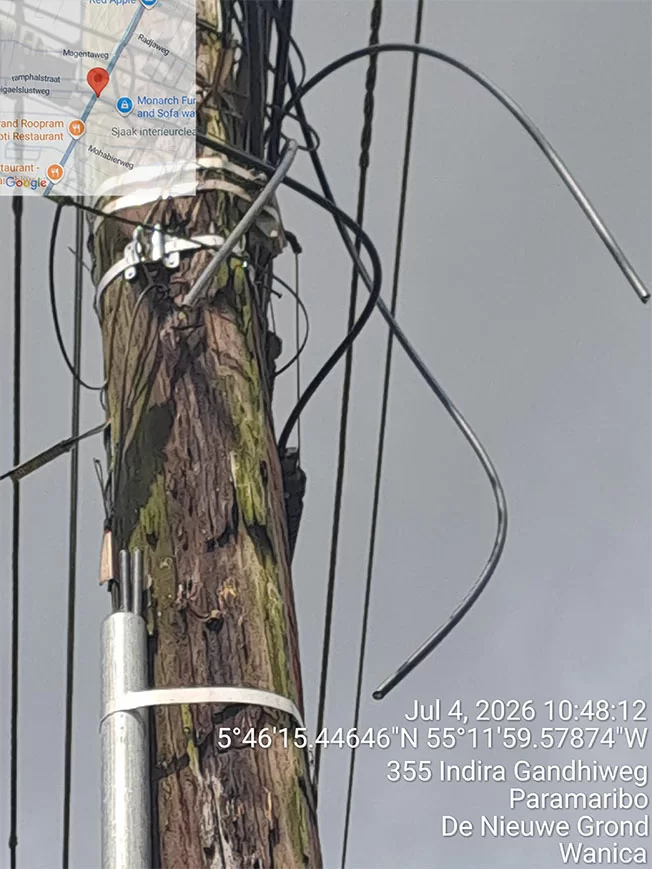
    Suriname’s national telecommunications provider Telesur is facing an escalating crisis of infrastructure sabotage, with its national fiber optic network targeted for deliberate vandalism for the third time in just four days.

    In the most recent attack, perpetrators intentionally sliced through critical fiber optic cables running along the Indira Gandhiweg highway. The damage has triggered widespread disruptions to mobile and internet services for hundreds of residential and commercial customers across multiple districts, including the surrounding Indira Gandhiweg area, Sitalweg, and Livorno-Beekhuizen. Company officials have labeled the string of attacks a deeply worrying development and issued an urgent appeal to the public to report any suspicious activity near key telecom infrastructure immediately.

    According to data released by Telesur, every vandalized fiber cable costs a minimum of $3,000 in emergency repair and replacement work, a financial burden that accumulates rapidly after repeated attacks. Beyond the direct monetary costs, the damage leaves hundreds of customers completely cut off from essential communication services for hours or even days, disrupting work, education, emergency access, and daily life.

    To address the growing threat, Telesur has reported every incident to local police and other relevant regulatory and law enforcement agencies. Working alongside these authorities, the provider has developed a formal action plan focused on three core goals: tracking down and prosecuting the perpetrators, stopping new attacks before they occur, and strengthening physical security for the country’s sprawling telecom network.

    Even with these new safeguards in place, Telesur warns the situation remains deeply concerning. The company has invested consistently in upgrading security measures, expanding surveillance of key routes, and speeding up repair response times, but executives acknowledge that full-time, constant monitoring of a fiber network spanning hundreds of kilometers across the country is logistically and financially impossible.

    “Our team is doing everything within our power to contain this problem, but we cannot solve it alone without support from the public and our law enforcement partners,” said Doric Ramlakhan, Telesur’s chief executive officer. “Sometimes, it feels like mopping the floor with the tap still running – as soon as we finish repairing damage in one location, another attack pops up somewhere else on the network.”

    Ramlakhan emphasized that Telesur invests millions of dollars every year to expand and modernize Suriname’s fiber optic network, with the goal of delivering fast, reliable telecommunications services to communities across the country, supporting national economic and social development. “Every cut cable doesn’t just add thousands of dollars in unexpected repair costs – it creates major inconvenience for our customers and slows the progress of our entire nation,” he explained. “This infrastructure isn’t just an investment by Telesur – it’s a public good that benefits every single person in Suriname. We’re asking the public to protect what we have all built together. This network belongs to all of us.”

    In closing, the company reiterated its call for all citizens to stay vigilant for any unusual or suspicious activity near telecommunications sites or cable routes. Anyone who observes potential suspicious behavior is urged to contact local police or other competent authorities immediately. “Only by working together can we stop repeated attacks on this vital national infrastructure,” Ramlakhan said. “We’re asking every person in Suriname to help us guard what belongs to all of us.”

  • Statement by Chargé d’Affaires Karin Sullivan, U.S. Embassy to Barbados, the Eastern Caribbean, and the OECS on the 250th Anniversary of the United States of America

    Statement by Chargé d’Affaires Karin Sullivan, U.S. Embassy to Barbados, the Eastern Caribbean, and the OECS on the 250th Anniversary of the United States of America

    As the United States of America prepares to mark its historic 250th anniversary of founding, Karin Sullivan, Chargé d’Affaires ad interim of the U.S. Embassy to Barbados, the Eastern Caribbean, and the Organization of Eastern Caribbean States (OECS), has released an official statement reflecting on the nation’s legacy and its enduring partnerships across the Caribbean region.

    In her address, Sullivan opened by grounding the 250th milestone in the core ideals that have shaped the United States from its founding: a commitment to democratic self-governance, individual liberty, and the constant pursuit of a more perfect union. She noted that over two and a half centuries, the nation has weathered profound challenges, from civil conflict to global economic upheaval and public health crises, emerging stronger with each generation’s commitment to refining and expanding the promise of American democracy.

    Sullivan went on to center the deep, long-standing ties between the United States, Barbados, the Eastern Caribbean nations, and OECS member states. For decades, these partnerships have spanned every sector that matters to regional stability and shared prosperity: from collaborative public health initiatives that strengthen local health systems and expand access to care, to climate action cooperation that addresses the existential threat of sea-level rise and extreme weather facing small island developing states. Sullivan highlighted ongoing work in economic development, including support for small and medium-sized enterprises, expanded trade opportunities, and investments in education and youth exchange programs that connect emerging leaders across the region.

    “Our shared history and shared values have created bonds that go far beyond formal diplomacy,” Sullivan said in the statement. “As we mark our 250th year, we reaffirm our commitment to walking alongside the people and governments of Barbados, the Eastern Caribbean, and the OECS to tackle shared challenges and seize shared opportunities.”

    She also pointed to people-to-people connections as the foundation of the strong bilateral and regional relationships, noting that thousands of citizens on both sides have built personal and professional ties through study programs, cultural exchanges, and community cooperation. These grassroots connections, she emphasized, make diplomatic collaboration more effective and more responsive to the needs of all people.

    Looking ahead to the year of celebrations marking the 250th anniversary, Sullivan invited regional partners to join in commemorative events that highlight shared values and shared goals, while also creating new space for deeper collaboration on the issues that will define the next chapter of transatlantic (and trans-Caribbean) cooperation. She closed by reaffirming that the United States remains committed to upholding the shared principles of democracy, respect for human rights, and collective prosperity that have guided both the U.S. and its Caribbean partners for decades.

  • News : Zapping

    News : Zapping

    Over the past week, Haiti has seen a series of significant developments spanning diplomatic engagement, institutional leadership changes, social programs, cultural preservation efforts and industry recognition, shaping the nation’s trajectory across multiple sectors.

    Diplomatic outreach took center stage in London, where a high-level meeting on July 1, 2029 brought together Haitian Ambassador to the United Kingdom Anaïse Manuel and Sir Lindsay Hoyle, Speaker of the UK House of Commons. The bilateral talks centered on two core priorities: the evolving security landscape in Haiti, and opportunities for the UK to expand bilateral trade ties while supporting sustained, long-term economic growth for the Caribbean nation. This engagement marks a continued push by Haiti to strengthen international partnerships amid ongoing domestic challenges.

    In a separate cross-regional partnership between Mexico and Haiti, the first official working meeting was held between Mexican Ambassador Jesús Cisnores Chávez and Haitian Minister Emmanuel Menard. The two sides laid out a roadmap for collaborative work across cultural and academic sectors, covering joint vocational training programs, shared scientific research initiatives, restoration projects for at-risk historical artworks, nationwide heritage conservation efforts, and expanded people-to-people cultural exchanges. The partnership aims to preserve Haiti’s unique cultural legacy while building institutional capacity across related fields.

    Domestically, a key leadership change took place at Haiti’s General Customs Administration (AGD) on July 3, 2026. Economy and Finance Minister Serge Gabriel Collin formally swore in Walter Gabellus as the agency’s new Director General. Gabellus succeeds outgoing leader Gérald Remplais, stepping into a critical role overseeing customs operations that underpin the nation’s revenue collection and trade regulation.

    In a targeted social impact initiative in Cap-Haïtien, 30 vulnerable young people have begun hands-on vocational training in high-demand skilled trades: tiling, plumbing, and electrical work. The program is a joint effort between the U.S. Embassy in Haiti and the local Center for Entrepreneurship and Leadership (CEDEL), delivered through the Lespwa Center. By equipping participants with industry-recognized technical skills, the program aims to remove barriers to formal employment and support long-term professional integration. Allison Lee, Public Affairs Advisor at the U.S. Embassy, highlighted that accessible vocational training is a foundational tool for expanding economic opportunity for marginalized youth across Haiti.

    Haiti’s national police force also saw a leadership change in its Northern Department. Divisional Commissioner Frantz Ernst Dorfeuil was officially installed as the new Director of the Northern Departmental Directorate of the Haitian National Police (PNH), taking over the role from outgoing Divisional Commissioner Sem Calixte. The leadership transition comes as security remains a top priority for the northern region of the country.

    Finally, Haiti’s iconic Barbancourt distillery earned international industry recognition at the 2026 International Spirits Competition, held June 29, 2026. The distillery’s signature Barbancourt Réserve du Domaine 15-Year-Old Rum was awarded a gold medal for quality, and the company additionally took home the prestigious honor of being named “Haitian Distillery of the Year”. The awards put a global spotlight on Haiti’s long-standing rum-making tradition and its standing in the international spirits market.

  • Rondhoutexport blijft een gemiste kans voor economie

    Rondhoutexport blijft een gemiste kans voor economie

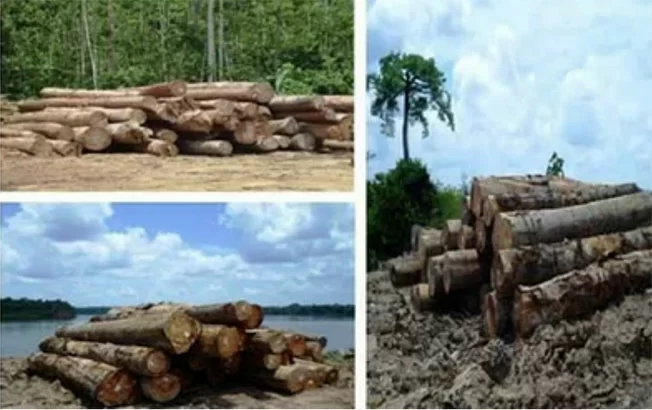
    Suriname is home to one of the largest contiguous forest expanses in the world. For decades, the country’s timber industry has been hailed as a core engine of economic growth, export revenue, and local job creation. Yet a disproportionate share of the natural resource’s total economic value continues to leak beyond Suriname’s borders. The debate over unprocessed roundwood exports has reemerged into public discourse following a recent undergraduate graduation study from Anton de Kom University of Suriname, which concludes deep-seated structural bottlenecks within the domestic sawmill industry are preventing local processing of the nation’s timber reserves.

    While the core conclusion of this discussion is not new, Sharvan Jagernath’s study – for which he was awarded a Bachelor of Science from the university on Friday – uses up-to-date empirical data to confirm what policymakers, business leaders, and researchers have long observed: Suriname has both abundant timber supplies and sufficient installed processing capacity, but it has failed to maximize the economic benefits of this critical natural asset.

    The debate over roundwood exports is far from new, stretching back decades across successive Surinamese administrations. Nearly every government has publicly committed to expanding local timber processing, a policy rooted in simple economic logic: a single tree generates far greater economic value when processed domestically into sawn timber, furniture, window frames, flooring, or other finished products than it does when exported as an unprocessed log.

    The underlying principle is straightforward: the more processing steps completed within the country’s borders, the greater the total added value retained for the domestic economy.

    A key baseline for this ongoing discussion was established by Suriname’s Foundation for Forest Management and Forest Control (SBB). A 2022 SBB study confirmed the country already maintains enough installed sawmill capacity to process all of its domestic roundwood production locally. Even so, more than half of all harvested timber is still exported as unprocessed roundwood, leading to a logical question: if the capacity exists, why is domestic processing not occurring at scale? Jagernath’s graduation study offers a nuanced answer to this longstanding puzzle.

    The research finds that the domestic sawmill sector struggles with a interconnected web of structural challenges, rather than a single easily addressed problem. Many operations rely on outdated processing technology, lack sufficient drying and storage infrastructure, and have limited capacity for secondary wood processing. Compounding these issues, unreliable energy access, exorbitant energy and fuel costs, widespread logistical bottlenecks, and acute shortages of skilled skilled workers leave much of the country’s existing installed capacity underutilized.

    Market dynamics also play a major role. Most local sawmills only process a small number of well-known timber species and largely produce standard dimension lumber, creating a mismatch between domestic supply and the specific demands of international buyers. The end result is that while Suriname holds both the raw timber and the physical processing equipment, it lacks the enabling conditions needed to extract maximum returns from its natural asset.

    Ultimately, the debate over roundwood exports extends far beyond forest management policy, touching on a fundamental question for Suriname’s economic future: how can the country leverage its abundant natural resource endowment to drive broad-based prosperity? Exporting unprocessed logs generates immediate revenue from raw commodity sales, but all subsequent value-added steps – sawing, drying, planing, finished product manufacturing, and branded export sales – take place in other countries. This means the majority of potential new jobs, tax revenue, skills development, and economic value is transferred to foreign economies.

    This economic principle holds across natural resource sectors: a nation’s long-term prosperity depends not on how many raw resources it holds, but on its ability to transform those raw inputs into high-value finished products for domestic and global markets.

    Jagernath’s study also makes a critical policy point: a standalone ban on roundwood exports is not a silver bullet for the sector’s challenges. If domestic mills continue to grapple with high production costs, persistent power outages, skilled labor shortages, and limited access to investment capital, a competitive domestic value-added timber industry will not emerge automatically.

    Successfully phasing down unprocessed roundwood exports requires far more than new regulatory policy. Targeted investments in reliable energy infrastructure, logistics networks, modern processing technology, workforce training, sustainable certification, new market development, and product innovation are equally critical. Delivering these investments will require coordinated action from both the Surinamese government and domestic and international private sector stakeholders.

    With new oil and gas revenue projected to enter the Surinamese economy in coming years, the country faces a broader national development challenge: how can these new resource funds be used to build up other productive sectors of the economy? The timber sector is well positioned to be a key beneficiary of this strategic investment.

    Suriname already has the forest resource, the domestic entrepreneurs, and the majority of the processing capacity it needs to build a high-value timber industry. The core challenge remains resolving the structural bottlenecks that have held the sector back for decades. As such, the roundwood export debate touches on a far larger question than forest policy alone: it forces the country to confront how it intends to manage and benefit from all its natural wealth long-term.

    In conclusion, existing research confirms Suriname has the forests, the processors, and the installed capacity to process most of its roundwood locally. Jagernath’s new study reinforces that capacity alone is not enough. Without targeted investments in enabling infrastructure, widespread industry modernization, and consistent long-term industrial policy, a large share of Suriname’s timber-related economic value will continue to leak beyond its borders.

    The central question hanging over the sector is no longer how much forest Suriname controls – that question has long had a clear answer. The real question now is whether the country can turn its abundant natural wealth into sustained, inclusive domestic economic prosperity.

  • Economy : Signing of an agreement for innovative and job-creating entrepreneurship

    Economy : Signing of an agreement for innovative and job-creating entrepreneurship

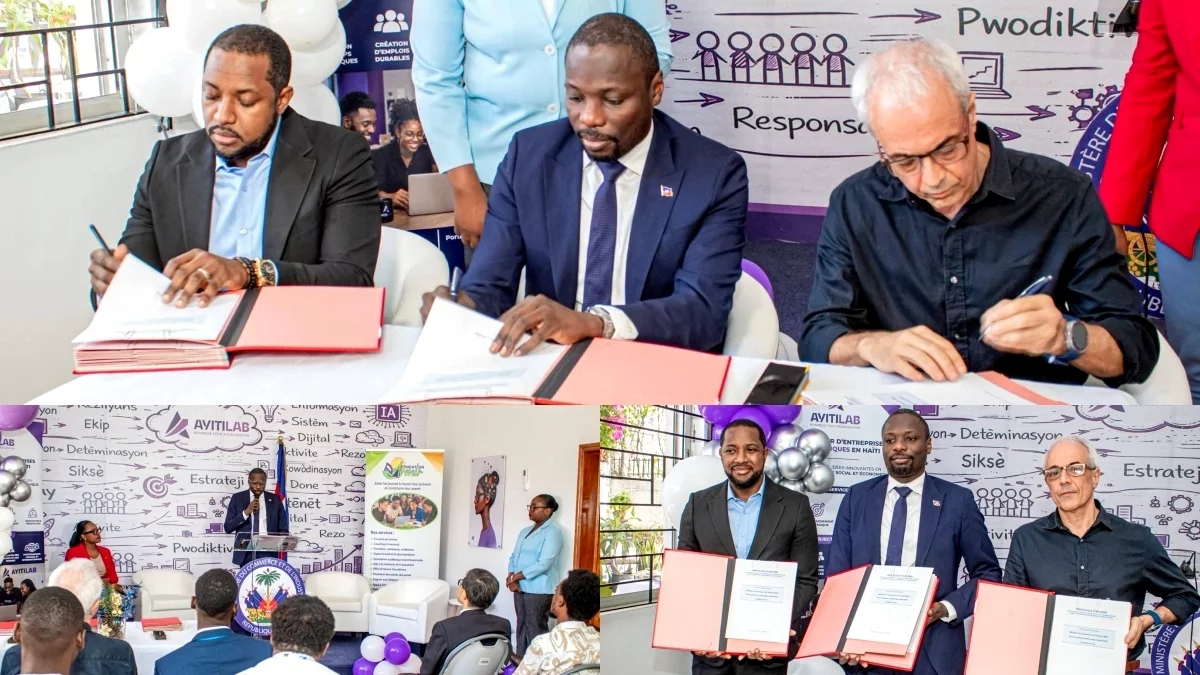
    In a landmark move aimed at unlocking Haiti’s economic potential through youth-led innovation, Haiti’s Ministry of Commerce and Industry (MCI) has joined forces with the Higher School of Infotronics of Haiti (ESIH) and the Avenir Foundation to officially launch AyitiLAB, a groundbreaking entrepreneurship initiative. The formal partnership was cemented earlier this week via the signing of a Memorandum of Understanding, held at the Avenir Foundation’s headquarters in Delmas 83.

    AyitiLAB was designed from the ground up to nurture creative, job-creating business concepts that deliver measurable, long-term benefits to Haiti’s national economy. Speaking at the signing ceremony, Minister of Commerce and Industry James Monazard framed the agreement as far more than a symbolic gesture: it is a collective pledge to address long-standing gaps in Haiti’s innovation and entrepreneurship ecosystem, a top strategic priority for his ministry.

    “We firmly believe that lasting economic transformation for our country can only come from empowering our young people to design, launch, and grow value-creating businesses that meet local needs,” Monazard stated, adding that the MCI remains fully committed to supporting all partner organizations as they roll out the initiative across the country.

    Patrick Atié, Director of ESIH, celebrated the partnership for creating a much-needed platform for Haitian young people to translate academic knowledge into real-world impact. The initiative will give emerging creators and entrepreneurs space to demonstrate their skills, refine innovative projects, and build ventures that drive inclusive national growth, he said.

    For Etzer Émile, President of the Avenir Foundation, the signed memorandum represents a promise to Haiti’s next generation of leaders, not just a bureaucratic formality. Émile also highlighted the MCI’s consistent, multi-year efforts to expand support for youth entrepreneurship, noting that the institutional commitment has laid critical groundwork for initiatives like AyitiLAB.

    During the launch event, Japhé Mercier, AyitiLAB’s representative, outlined the core mission and structure of the new program. Mercier emphasized a key observation that shapes AyitiLAB’s work: the greatest barrier to Haitian youth entrepreneurship is not a lack of talent among the country’s young population, but the absence of a supportive ecosystem that can nurture emerging ideas, turn raw innovations into actionable community solutions, and help early-stage concepts grow into sustainable, long-term businesses. AyitiLAB is built specifically to fill this gap, creating the infrastructure and support network young entrepreneurs need to thrive.

  • Brazil : Internationalization of the UEH through the signing of Strategic Agreements

    Brazil : Internationalization of the UEH through the signing of Strategic Agreements

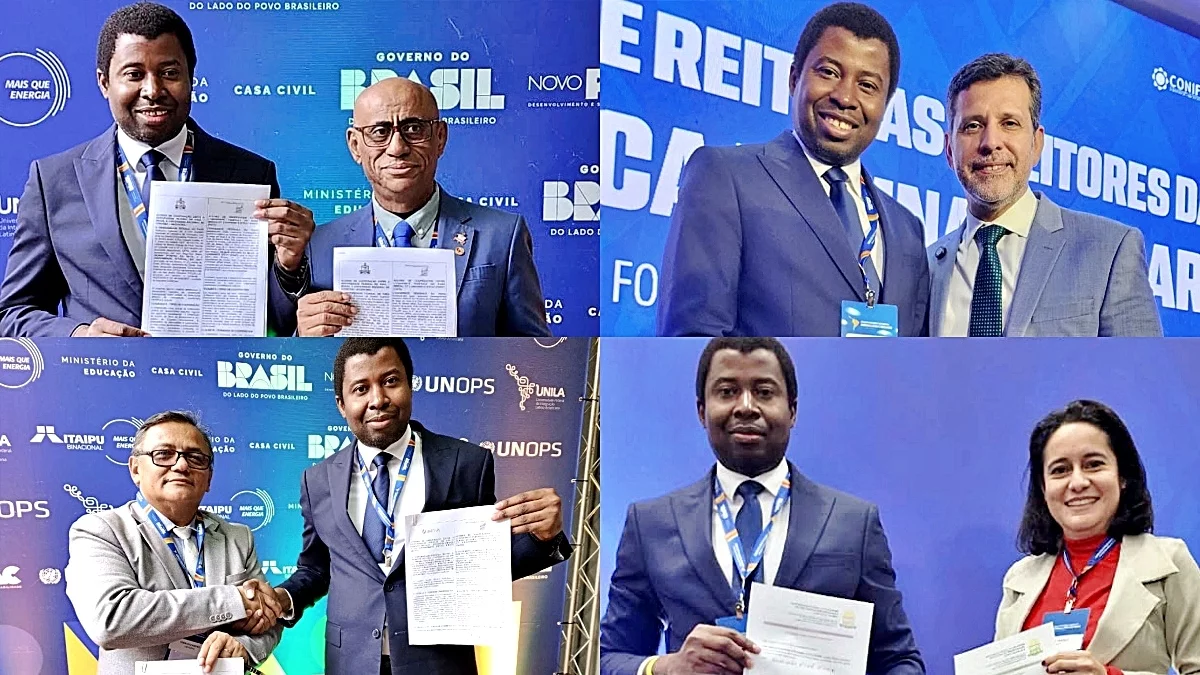
    In a landmark step for the State University of Haiti (UEH) to expand its global academic footprint, UEH Rector Professor Dieuseul Prédélus signed a series of strategic cooperation agreements with three leading Brazilian higher education institutions on June 30, 2026. The signing, which took place following an official invitation from Brazil’s Ministry of Education, partners UEH with the Federal University of Latin American Integration (UNILA), the Federal University of Pará (UFPA), and the Federal University of South and Southeast Pará (UNIFESSPA).

    Designed to formalize cross-border academic, scientific, and cultural collaboration, the new agreements run for an initial five-year term. Under the terms of the partnerships, the participating institutions will open new pathways for student, faculty, and administrative staff exchange across borders. They will also co-develop joint teaching curricula and collaborative research initiatives, host shared academic events including conferences and workshops, pool access to rare documentary and academic resources, and open shared use of specialized research laboratories and campus infrastructure for affiliated researchers and students.

    University leadership confirmed that the new Brazilian partnerships align directly with UEH’s long-running, intentional internationalization strategy. The core goal of this institutional push is to expand the university’s global connections, ultimately strengthening its capacity to deliver high-quality professional training, advance innovative research, and foster a culture of academic innovation that serves Haitian students and researchers. This latest round of agreements is not the final step in UEH’s current expansion push: university officials note that additional partnership deals with other Brazilian higher education institutions are already in the works and expected to be signed in the near future.

    The new Brazilian partnerships mark the latest in a series of international cooperation deals UEH has secured in recent months. Prior agreements have been finalized with academic institutions in the United States, Spain, Morocco, and Colombia, as the public Haitian university continues to build out its global network of collaborative partners.