
作者: admin

  • Dems raises ‘economic risks’ concerns despite growth streak

    Dems raises ‘economic risks’ concerns despite growth streak

    Even with nearly five years of uninterrupted economic expansion, Barbados remains far from insulated from growing global economic headwinds, the country’s main opposition Democratic Labour Party (DLP) has cautioned. The party highlights slowing growth momentum, overreliance on two key sectors, and unanswered questions about national fiscal strategy as the Caribbean nation prepares to enter negotiations for a new International Monetary Fund (IMF) financing arrangement.

    Last Wednesday, Central Bank Governor Dr. Kevin Greenidge announced that Barbados has recorded 20 straight quarters of positive economic growth, and also confirmed the country will soon open discussions with the IMF for a standby arrangement. This type of agreement is designed to give countries quick access to emergency funding if external economic shocks disrupt growth and stability.

    But in an official response to Greenidge’s announcement, DLP Shadow Finance Minister Senator Ryan Walters flagged what he calls a clear contradiction at the heart of the government’s economic messaging. “On one hand, officials claim the economy is performing excellently,” Walters noted. “On the other, the government is already moving to secure a contingency financing line with the IMF.”

    Walters pointed to concrete data showing a clear deceleration in growth between the first quarter of 2025 and the same period this year. While the 1.7% expansion recorded in Q1 2026 extends the unbroken growth streak, that figure marks a noticeable drop from the 2.6% growth seen in the first quarter of 2025. This slowdown, Walters argued, reinforces a long-held concern: without intentional, targeted diversification, Barbados’ economy will remain heavily exposed to external shifts, since growth is almost entirely driven by tourism and construction.

    The opposition leader warned that overreliance on these two sectors creates disproportionate vulnerability. Though tourist arrival numbers have now surpassed pre-pandemic levels, Walters said the country has not seen a corresponding rise in tourism-related foreign revenue. This indicates that average visitor spending has actually fallen, even as the government celebrates record arrival numbers. He also raised questions about the widely promoted domestic construction boom, noting that most projects appear to be funded by local financing rather than the foreign direct investment that would strengthen the broader economy.

    To build long-term resilience, Walters stressed that Barbados must reduce its dependence on tourism and construction by expanding into new high-potential sectors. He called for strategic investment in agro-processing, renewable alternative energy, and the creative economy, with a particular focus on film production, digital media, and local content development. “These sectors offer tangible opportunities to widen our economic base and build the shock resistance we need to sustain growth through global volatility,” he said.

    Beyond diversification, Walters demanded greater transparency from the ruling administration, calling on officials to provide a full, public breakdown of the latest economic data and ongoing government projects. He pointed to significant public capital allocations for delayed or underperforming projects that have not been restructured or reevaluated, noting that without clear information about public spending, it is impossible for policymakers or the public to accurately assess the long-term sustainability of current fiscal and economic trends.

    Walters also raised urgent concerns about the country’s fiscal sustainability and debt management framework. To date, he said, the government has not released a clear, credible strategy to meet upcoming debt obligations to lenders and the IMF, including an estimated $72.11 million in payments due in 2026. It remains unclear whether the government will cover these costs through existing fiscal reserves, improved tax revenue collection, or high-interest new borrowing, a path Walters called deeply concerning.

    Repeated refinancing of existing debt through new loans, he warned, will only put additional strain on the national economy. “Reliably rolling over old debt with new loans increases our exposure to global interest rate shocks, erodes international confidence in our fiscal management, and risks locking Barbados into a dangerous cycle where debt grows faster than the economy can generate the revenue needed to service it,” Walters explained.

    In closing, he emphasized that while steady headline growth is welcome, it has not translated to widespread benefits for most Barbadian households or improved public services. “Growth that comes without transparency, economic diversification, and tangible improvements to daily life and national development cannot be considered secure or sustainable for the long term,” he said.
  • WATCH: Vote Counting Begins in Barbuda, Walker takes early lead

    WATCH: Vote Counting Begins in Barbuda, Walker takes early lead

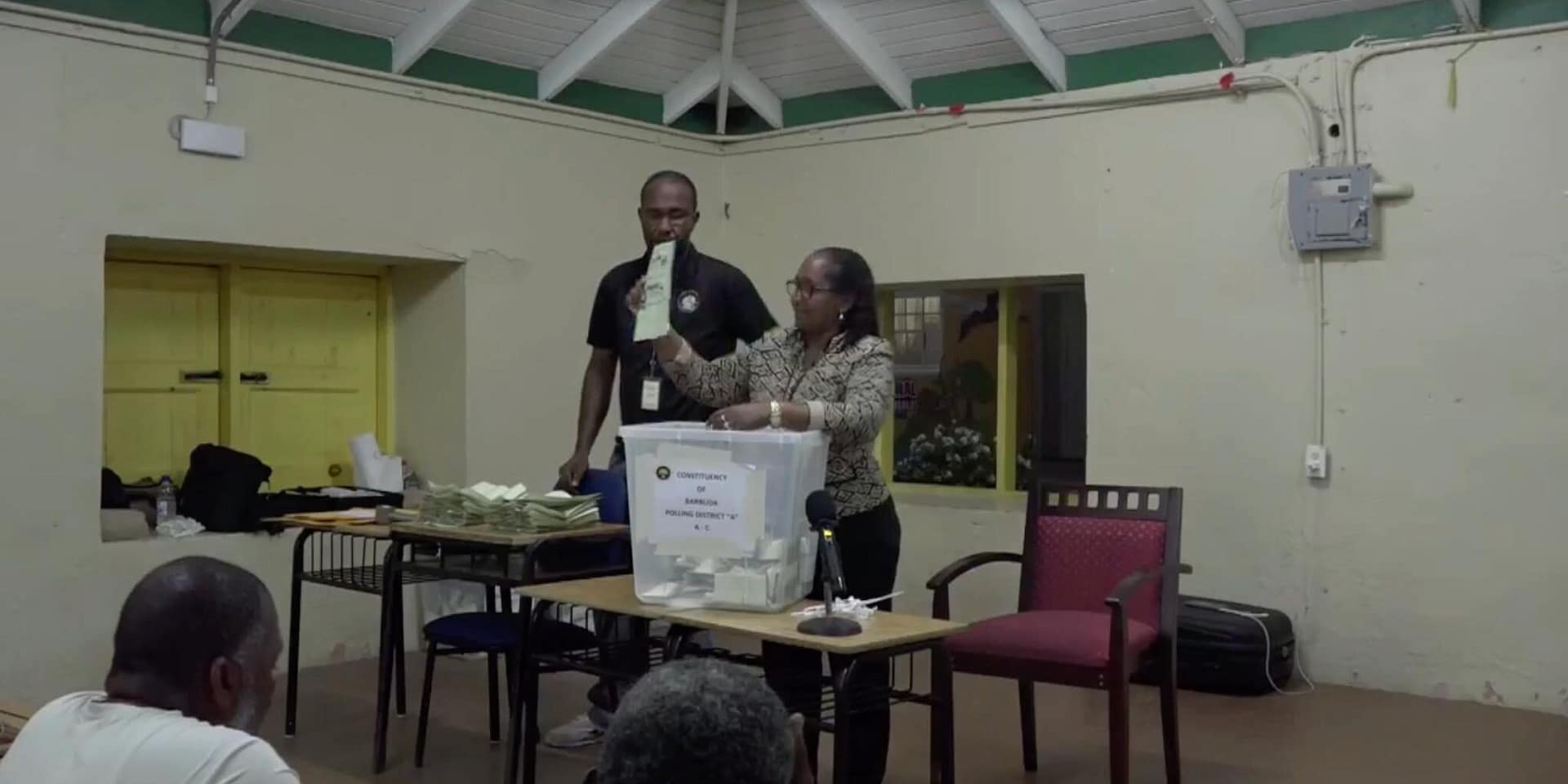
    Vote counting is progressing across polling stations in Barbuda following the closure of polls earlier this evening, with early partial results showing the sitting candidate holding a clear lead in the race for the constituency seat. The first official partial tally from Box 1, one of the local polling locations, puts incumbent Trevor Walker, the candidate for the Barbuda People’s Movement (BPM), at 128 votes. His challenger, Kendra Beazer of the Antigua and Barbuda Labour Party (ABLP), has secured 78 votes in the same box in this first count. This early result puts Walker ahead as election officials continue counting the remaining ballots from across the constituency. Walker has served as the elected representative for Barbuda for multiple terms, and he is currently working to defend his seat against a strong renewed challenge from the ABLP, which has focused its campaign on flipping the long-held BPM constituency. As of the latest update, counting operations remain ongoing, and electoral authorities have not yet announced any final official results for the race, with final numbers expected to be released once all ballots have been processed and verified.

  • Ariza Credit Union reports strong 2025 performance

    Ariza Credit Union reports strong 2025 performance

    Grenada-based Ariza Credit Union has capped another successful fiscal year with robust financial results, marking a series of notable milestones including a historic first for member benefit distribution at its 28 April Annual General Meeting hosted at the Grenada Trade Centre.

    For the 12-month period ending 31 December 2025, the member-owned financial cooperative reported an annual surplus of EC$11,183,343. After completing all statutory and mandatory reserve allocations, the institution retained EC$6,821,839 in unallocated surplus — a result that underscores its consistent financial strength, disciplined operational management, and enduring confidence from its membership base.

    In a break from longstanding convention, Ariza Credit Union distributed member returns totaling EC$2,586,609 on the same day the AGM was held, allowing attendees to access their dividends and loan interest rebates while the meeting was still in session. This innovative shift is being framed as a tangible demonstration of the cooperative’s core commitments to immediacy, full transparency, and direct value delivery to the people who own and use the institution.

    The full payout breaks down into two components: EC$1,450,578 in 5% dividends issued to holders of Equity and Qualifying Shares, and EC$1,136,031 in 3% rebates on interest members paid on loans over the fiscal year.

    Centered on the 2025 AGM theme ‘Membership Redefined: Empowering Members, Securing Our Future’, the gathering reinforced Ariza’s dual strategic focus: deepening collaborative relationships with its membership while positioning the organization for long-term, sustainable growth and systemic stability. In addressing attending members, the Board of Directors reaffirmed its ongoing pledge to prudent financial stewardship, emphasizing that the cooperative’s success must translate directly into tangible benefits for every member.

    The AGM also oversaw a series of structured leadership and governance transitions aligned with the cooperative’s bylaws. Outgoing board member Lyndonna Hillaire-Marshall, who completed two consecutive terms of service, was honored for her contributions. Two incumbent directors, Alana Twum-Barimah and Tricia St Bernard, won re-election to serve second consecutive terms on the Board. Dahelia Thomas, a former longstanding staff member of Ariza Credit Union, joined the board for her first elected term. On the institution’s Credit Committee, Desiree Stephen and Judy Pivotte were both re-elected to serve second terms.

    Mervyn Lord, Chief Executive Officer of Ariza Credit Union, commented that the strong 2025 financial results and smooth governance transition reflect the inherent strength of the member-owned cooperative model, as well as the unwavering trust members place in the institution’s leadership. Moving forward, Lord noted that Ariza will remain laser-focused on expanding member value, strengthening organizational financial resilience, and supporting long-term shared prosperity for its membership and the local community it serves.

    As it enters the new fiscal year, Ariza Credit Union maintains its core commitments to building institutional resilience, fostering member confidence, and delivering sustainable, shared value to both its membership and the broader Grenadian community.

  • Primary school football final to be played at Wildey AstroTurf

    Primary school football final to be played at Wildey AstroTurf

    As one of the longest-running youth football competitions on the island of Barbados enters its fourth decade of operation, it is getting the most transformative upgrade in its history, with organisers rolling out major changes designed to elevate the event’s regional profile and give rising young talent a world-class stage to showcase their skills.

    For 30 years, the BICO Primary School football tournament has nurtured grassroots football talent across Barbados, but this year’s edition will mark a series of firsts that set a new benchmark for youth sports events on the island. The announcement of the revamped schedule and format was made by Zahir Motara, senior coach at the National Sports Council (NSC), during the official launch of the 2024 tournament on Thursday.

    Motara confirmed that for the first time ever in the tournament’s history, both the semifinal and final rounds will be hosted at the Barbados Football Association (BFA) Technical Centre in Wildey — the same facility that plays host to international matches and the island’s top-tier Premier League. Most notably, the 2024 championship final scheduled for June 27 will be played under floodlights, a first for any primary school football final in Barbados’ history.

    This upgrade is no random change; it is the result of the NSC’s new tiered system framework for all major domestic youth sports events, developed in partnership with the BFA to deliver a more competitive, fan-friendly experience. “This venue will give our young players a professional match environment that truly matches the incredible talent and dedication they bring to the pitch every season,” Motara said, referring to the “dynamite Final Four” round that will kick off the event’s closing stage.

    To expand the competition’s reach beyond in-person spectators, organisers are also planning to live stream both the semifinal and final matches. This move will open the tournament up to thousands of football fans across the Caribbean region and around the globe, giving participating young players, event organisers and sponsoring partners the broad exposure their work deserves.

    Interest in the 2024 tournament has hit an all-time high, with more than 1,100 young athletes representing 70 primary schools from across Barbados registered to compete. The tournament will officially get underway on May 12, with play split across eight geographic zones named in honour of local Barbadian football icons: the Edward Smith and Frank Holder Zone, Dane Alleyne Zone, Dennis Leacock Zone, Reginald Haynes and Victor “Gas” Clarke Zone, Kenville “Cab” Layne Zone, Keith Griffith Zone, Ricardo Mickey Gibson Zone, and the Adrian Donovan and Michael Foster Zone. A total of 280 matches will be played across the group stage, with playoffs set to launch on June 10.

    Long-time sponsor BICO has been onboard for all but two of the tournament’s 30 years, and the company’s general manager Audley Grimes reaffirmed the brand’s commitment to nurturing Barbadian youth. “At BICO, we know our role in this community goes far beyond the products and services we provide. It is rooted in building up the next generation and strengthening the bonds that hold our communities together,” Grimes said. “This tournament lives out that belief, giving kids space to grow their confidence, learn teamwork, and build the discipline that will serve them for life.”

    West Terrace Primary will enter the 2024 tournament as the defending champions, ready to defend their title against a field of hungry rising teams across the island.

  • Corozal Man Acquitted of Child Rape Attempt

    Corozal Man Acquitted of Child Rape Attempt

    In a verdict that has sparked widespread public discussion, Belize’s Supreme Court has acquitted 46-year-old Jose Menjivar, a resident of Corozal District, on charges of attempted rape of a 13-year-old minor. Delivered on January 23, 2026 by Justice Raphael Morgan in the case of *The King v Jose Menjivar*, the not guilty finding turned on a core principle of Belizean criminal law: the prosecution must prove guilt beyond a reasonable doubt, even when the circumstances of the case are deeply disturbing.

    The case traces back to an incident alleged to have occurred on the evening of April 26, 2023, in Corozal. The alleged victim, a 13-year-old boy protected by the court pseudonym “Q” to safeguard his identity, claimed that Menjivar lured him into his home, ordered him to undress and enter an enclosed outdoor shower, joined him naked, stated explicitly he intended to rape Q while touching himself, and physically blocked Q from escaping when he tried to flee. According to Q’s testimony, he was only saved by the sudden arrival of his uncle, who pulled back the curtain covering the shower entrance, found both the boy and Menjivar naked and wet, and immediately escorted the distraught, crying child home. Q’s mother contacted law enforcement that same night.

    Prosecutors argued the incident fit the legal definition of attempted rape perfectly: the crime was only interrupted by the uncle’s unanticipated intervention, an external factor that legally satisfies the criteria for a criminal attempt under Belizean law. Consistent with Belizean procedural rules for serious violent and sexual offenses, the case was heard by a judge alone without a jury. In an unusual procedural turn, all 10 of the prosecution’s witnesses submitted agreed-upon testimony; their statements were entered into the court record without cross-examination, and the defense did not challenge the admissibility of the evidence. The defense presented no witnesses of its own, and Menjivar delivered an unsworn dock statement in his own defense.

    In his statement, Menjivar denied all allegations, claiming he was physically incapable of committing the offense at the time of the alleged incident, citing a chronic prostate condition, lingering aftereffects of a mini-stroke, and an unhealed broken foot. He claimed official medical records would back up this claim. However, Justice Morgan outright rejected this medical defense. Agreed medical evidence only documented an abdominal ultrasound conducted months before the incident and a single orthopedic clinic visit in January 2023 – neither of which proved any physical incapacity in April 2023. More critically, in a police interview Menjivar did not contest, he explicitly admitted to standing in the shower with Q, a statement that directly contradicted his claim of being wheelchair-bound or otherwise unable to physically accost the child.

    Even after throwing out Menjivar’s medical alibi, Justice Morgan was required to assess whether the prosecution’s evidence met the high legal bar of proving guilt beyond a reasonable doubt. After a granular review of the record, he concluded it did not, for three key reasons.

    First, the entire prosecution case rested exclusively on Q’s first-hand account of the events inside the shower. No other witness – not even the uncle who arrived at the peak of the incident – observed any of the specific acts Q alleged: that Menjivar forced him to undress, touched himself in a sexual manner, stated his intent to rape, or physically restrained Q from leaving. The uncle only confirmed he found the two naked together, nothing more.

    Second, Justice Morgan identified material, credibility-damaging inconsistencies between Q’s testimony and his uncle’s account. Q claimed he first stopped at his grandmother’s house, found it empty, and accepted Menjivar’s invitation into his home while searching for a missing pair of slippers. By contrast, the uncle testified he watched Q ride his bicycle directly to Menjivar’s home and enter without stopping at the grandmother’s residence at all. Q claimed Menjivar grabbed his arm to block his escape just as his uncle pulled back the curtain; the uncle saw no such physical restraint. Q also testified his uncle immediately recognized he was in danger and ordered him to leave, while the uncle recalled only asking both men what they were doing in the space.

    Third, the court found evidence supporting a plausible alternative explanation: Q may have had a motive to embellish or fabricate the allegations to avoid punishment from his father after being found naked in a shower with an adult stranger.

    In his written ruling, Justice Morgan emphasized that the acquittal does not equate to a finding that Menjivar did nothing wrong more broadly. He explicitly noted that being found naked in a bathroom with an underage minor is “a reprehensible and abhorrent act” that rightfully sparks public outrage. However, Menjivar was not charged with inappropriate conduct in general – he was charged with the specific criminal offense of attempted rape of a child, which requires specific proof of intent and actionable steps toward committing the crime. Given the inconsistencies in the evidence, the lack of corroboration for the core allegations, and the plausible alternative motive for Q’s account, the court could not reach the required degree of certainty to convict.

    Justice Morgan acknowledged the verdict would be difficult for many members of the public to accept, given the undisputed fact of an adult man and a naked minor found together in a private shower. But he reaffirmed that the burden of proof in all Belizean criminal cases rests entirely with the prosecution, and when reasonable doubt remains, the law requires an acquittal. “The Accused is not charged with simply being in the bathroom with a child,” the ruling noted. “Criminal law requires more than disturbing circumstances to sustain a conviction – it requires proof of every element of the charged offense, beyond any reasonable doubt.”

  • 420 MSMEs across 14 territories complete Project THRIVE

    420 MSMEs across 14 territories complete Project THRIVE

    Across the Caribbean region, a transformative partnership between two leading development-focused organizations has marked a major milestone in supporting small and medium-sized business growth. Republic Financial Holdings Limited (RFHL) and the Caribbean Export Development Agency (Caribbean Export) have officially wrapped up the first phase of Project THRIVE, a landmark capacity-building program tailored to unlock the export potential and strengthen the financial footing of micro, small and medium enterprises (MSMEs) operating across the Caribbean.

    Phase 1, branded as Business Capacity Building 1.0, drew 420 participating MSMEs from 14 distinct territories: Anguilla, Barbados, the British Virgin Islands, the Cayman Islands, Dominica, Ghana, Grenada, Grenada, Guyana, St Kitts and Nevis, St Lucia, St Maarten, St Vincent and the Grenadines, Suriname and Trinidad and Tobago. A standout demographic detail of the participating cohort is that 66% of all businesses are owned or led by women, a statistic that underscores both the program’s resonance with female entrepreneurs across the region and the growing ambition of women-led business communities to expand and scale. The group also represented a wide cross-section of key Caribbean industries, ranging from agriculture and agro-processing to manufacturing, retail, professional services and technology.

    Delivered by the Cloud Vision Academy, Phase 1 was structured around five targeted core modules designed to address the most pressing gaps for MSMEs looking to enter or expand in global export markets. The modules cover Business Strategy and Planning, Grant Proposal Writing, E-commerce Essentials, Export Marketing, and Cost and Financial Accounting. Each module was led by industry subject-matter experts and delivered through three interactive virtual sessions, a format that allowed participants to immediately apply new skills and frameworks to their own business operations, rather than just engaging with theoretical content.

    Participant feedback from Phase 1 has been overwhelmingly positive, with high levels of sustained engagement throughout the program and broad praise for the quality of expert facilitation and the real-world relevance of the curriculum. Building on this successful first phase, 50 participants selected from the top-performing 108 Phase 1 graduates will move forward to the program’s second stage: the Access to Finance Accelerator. This six-month intensive deep-dive development program will offer customized support including personalized business mentoring, one-on-one executive coaching, and targeted business development interventions designed to speed up growth and scale up export capacity. The Project THRIVE team will reach out to eligible participants in the coming week to share full details about the next phase of the initiative.

    Richard S Sammy, Group Vice President of Republic Financial Holdings Limited, emphasized the broader significance of the partnership and the program in remarks following the completion of Phase 1. “Project THRIVE embodies our commitment to elevating our MSMEs. We are deeply encouraged by the outstanding participation and congratulate all participants on their success. When MSMEs thrive, entire economies thrive, and together with our valued partner Caribbean Export, we look forward to advancing Phase 2 and delivering tangible impact across the region,” Sammy said.

    Damie Sinanan, Executive Director of the Caribbean Export Development Agency, echoed that sentiment, noting that the program aligns perfectly with the agency’s core mission. “Project THRIVE is precisely the kind of transformative, private-sector-led partnership that Caribbean Export was created to champion. The breadth of participation across territories — and the remarkable representation of women entrepreneurs — affirms that Caribbean businesses are ready to compete on a regional and global stage. We are proud to stand alongside Republic Bank in equipping the next generation of Caribbean exporters,” Sinanan added.

  • Polls Close Across Antigua and Barbuda; Counting Set to Begin

    Polls Close Across Antigua and Barbuda; Counting Set to Begin

    After a full day of orderly, widely praised balloting, polls have officially closed across Antigua and Barbuda in one of the Caribbean nation’s most closely watched general elections in recent history. The outcome of the vote will decide whether incumbent Prime Minister Gaston Browne makes history by securing an unprecedented fourth consecutive term leading the country.

    Voting operations kicked off precisely at 6 a.m. local time and wrapped up at 6 p.m., with election authorities confirming that any voter already waiting in queue before the closing deadline would still be permitted to cast their ballot. Now, all cast ballots are being secured ahead of transport to centralized counting centers, where official tabulation will get underway. Preliminary results are expected to trickle in overnight, with a final official projection likely by Friday morning.

    Across the nation’s 17 electoral constituencies, voters faced a diverse field of candidates. The main contest pits Browne’s ruling Antigua and Barbuda Labour Party (ABLP) against the opposition United Progressive Party (UPP) led by Jamale Pringle, alongside one candidate from the Barbuda People’s Movement (BPM) and three independent hopefuls.

    Election day unfolded without major incident, with organizers and voters alike describing the process as exceptionally smooth and efficient. Early morning saw strong voter turnout across multiple districts, while lines remained short for most of the day — an intentional improvement driven by the addition of new polling stations to streamline voter flow and reduce wait times.

    Independent election observer missions from leading regional and global bodies, including the Commonwealth, the Caribbean Community (CARICOM), and the Organization of American States (OAS), have issued initial positive assessments, confirming that the election was conducted in a free, fair and transparent manner, with no significant disruptive events reported.

    Throughout the weeks-long campaign season, the election was framed as a clear national choice between continuity and change. Browne, who is vying to break modern political records for the longest consecutive premiership in Antigua and Barbuda, centered his campaign on his administration’s track record of strong economic growth, large-scale infrastructure development, and what he termed a national “renaissance.” He argued that retaining his leadership is critical to sustaining the nation’s upward trajectory and raising living standards for all residents.

    In contrast, opposition leader Pringle cast the 2024 election as a critical opportunity for change after more than 10 years of ABLP incumbency. He centered his platform on addressing voter concerns over skyrocketing cost of living, unaddressed infrastructure gaps, alleged governance shortcomings, and widespread public dissatisfaction among key demographic groups of the electorate.

    Key policy issues that dominated campaign discourse included rising household living costs, persistent national water supply challenges, poor road conditions, growing crime rates, overall economic management, and international relations. The two major parties also put forward competing plans on public sector wages, tax policy, and expanded social support programs for vulnerable communities.

    On election day, both major parties publicly expressed confidence in their prospects, with candidates and party operatives reporting steady turnout in their traditional political strongholds. Election officials, backed by uniformed security personnel and accredited party agents at every polling location, maintained consistent order across all sites. The Antigua and Barbuda Electoral Commission also rolled out expanded access measures, including the additional polling stations and on-site voter ID support, to remove barriers to citizen participation.

    As counting teams prepare to work through the night to tabulate results, all national and regional attention now shifts to the incoming outcome. The final results will not only determine the makeup of the nation’s next parliament, but also set the policy direction of Antigua and Barbuda for the coming five-year term.

  • VS schenkt uitrusting aan KPS voor versterking criminaliteitsbestrijding

    VS schenkt uitrusting aan KPS voor versterking criminaliteitsbestrijding

    In a formal ceremony held at the Suriname Police Corps (Korps Politie Suriname, KPS) headquarters on Duisburglaan on April 30, the United States formally handed over a shipment of security equipment to Suriname’s law enforcement agency, in a move designed to strengthen local security services and expand the country’s capacity to combat organized and common crime.

    The handover was led by U.S. Chargé d’Affaires Paul Watzlavick, who officially presented the donated goods to Suriname’s Minister of Justice and Police Harish Monorath. Following the diplomatic handover, Monorath symbolically transferred the equipment to KPS Chief Commissioner Melvin Pinas, the top leader of Suriname’s national police force. Earlier in the same week, Watzlavick had already delivered a separate batch of specialized equipment to Commissioner Eshita Hunte, head of the KPS’s Serious Crime Division, for use by the agency’s elite Arrestation Team.

    During remarks delivered at the main ceremony, all three key stakeholders — Pinas, Watzlavick, and Monorath — emphasized the longstanding, productive bilateral security partnership between the United States and Suriname. All speakers reaffirmed that collaborative cross-border action is critical to tackling evolving criminal threats in all forms, from transnational drug trafficking to local violent crime. The event also highlighted the ongoing breadth of U.S.-Suriname security cooperation, which extends beyond one-time equipment donations to include sustained capacity building, specialized professional training, and targeted operational support for multiple agencies across Suriname’s security sector, with the KPS as a core priority partner.

    This latest donation is widely viewed as a meaningful contribution to ongoing efforts to modernize and strengthen Suriname’s national police force and reinforce the country’s overall national security architecture. The support aligns with years of bilateral cooperation focused on improving public safety and expanding law enforcement capacity across the South American nation.

  • Grenada strengthens cruise sector positioning

    Grenada strengthens cruise sector positioning

    Against a backdrop of intensifying competition in the Caribbean cruise tourism market, the Grenada Tourism Authority (GTA) has taken deliberate, collaborative steps to advance its long-term cruise sector strategy by joining two of the industry’s most high-profile professional gatherings: Seatrade Cruise Global and CLIA Cruise360.

    As the cruise industry’s flagship international conference, Seatrade Cruise Global provided Grenada’s cross-sector delegation with a critical platform to connect directly with C-suite executives from major global cruise lines and established industry partners. Headed by GTA Chairman Randall Dolland, the delegation united representatives from both public and private entities, including Nautical Development Manager Shanai St Bernard, Grenada Port Authority (GPA) General Manager Frank Redhead, GPA outreach lead Gail Ann Newton, and Huggins & Company Ltd private sector delegates Anya Chow Chung and Sheldon Alexander.

    During the event, the delegation centered discussions on lifting Grenada’s competitive standing in the regional cruise space, sharing timely updates on transformative destination development projects. Key initiatives highlighted included planned infrastructure and experience upgrades at the historic Fort George site, as well as planned enhancements to the popular Grand Etang National Park, a top natural attraction for incoming visitors.

    Dolland emphasized that the cruise segment remains one of the most vital pillars supporting Grenada’s overall tourism economy. “Our participation in Seatrade is rooted in a intentional, partnership-focused approach to deepening our connections with major cruise industry stakeholders,” he explained. “Our core goal is to preserve the high-quality visitor experience that Grenada is known for, while positioning the destination for sustainable, long-term growth in an increasingly crowded global cruise market.”

    The delegation also held productive talks with members of the Florida-Caribbean Cruise Association (FCCA), where stakeholders aligned on the ongoing importance of three core pillars for sustained competitiveness: consistent service excellence, ongoing workforce training, and the delivery of authentic, locally rooted visitor experiences that set Grenada apart from competing Caribbean destinations.

    Following the high-level meetings at Seatrade Cruise Global, GTA’s specialized nautical tourism team turned its focus to expanding direct consumer-facing visibility at CLIA Cruise360, the Cruise Lines International Association’s premier annual trade exhibition. This year’s event drew more than 1,000 active travel advisors from across the United States, a key source market for Caribbean cruise and leisure travel.

    At the trade show, the team engaged in one-on-one conversations with travel advisors, framing Grenada not just as a short stop on cruise itineraries, but as a full-service, experience-rich destination for extended trips. Notably, advisor interest extended far beyond traditional cruise calls, with many inquiring about multi-day post- or pre-cruise stays on the island. This demand reflects a broader global shift toward culturally immersive, multi-dimensional travel experiences in the Caribbean, a trend Grenada is well-positioned to capitalize on.

    St Bernard noted that direct engagement with travel advisors at Cruise360 creates a unique opportunity to shape how potential visitors perceive and plan trips to Grenada. “Travel advisors are on the front lines of shaping visitor experiences, so connecting with them directly is invaluable,” she said. “We’re seeing growing demand from travelers for destinations that offer a genuine, meaningful connection to local culture and nature, and Grenada’s greatest strengths are our people, our unique cultural heritage, and the authentic experiences we offer both on shore and beyond typical tourist hotspots.”

    Taken together, GTA’s participation in these two industry leading events reinforces the destination’s ongoing commitment to strengthening strategic industry partnerships, expanding its global market reach, and ensuring Grenada remains competitive, relevant, and responsive to the changing needs and expectations of modern travelers.

  • Caribbean Women in Leadership Congratulates Five Women Contesting Antigua and Barbuda General Election

    Caribbean Women in Leadership Congratulates Five Women Contesting Antigua and Barbuda General Election

    As Antigua and Barbuda prepares for its 2026 general election, a regional gender equity advocacy organization Caribbean Women in Leadership (CIWiL) Antigua and Barbuda is celebrating a key milestone for gender representation in the country’s political space: five women have stepped forward to contest parliamentary seats in the upcoming vote, a development the group says marks meaningful progress for inclusive democracy.

    CIWiL Antigua and Barbuda has publicly named each of the trailblazing candidates, who span independent and major party lines, reflecting growing gender diversity across the country’s political spectrum. The five candidates are Gail S. Pero, an independent contender running for the St. George constituency; Malaka Parker, who is representing the United Progressive Party (UPP) in St. John’s Rural North; Kiz Johnson of the Antigua and Barbuda Labour Party (ABLP), contesting the St. Philip South seat; Maria Bird-Browne, also of the ABLP, who is running in St. John’s Rural East; and sitting UPP Senator Pearl Quinn-Williams, who is seeking election in St. John’s City East.

    In a formal statement released recently, the organization emphasized that increased women’s participation in electoral politics delivers far-reaching benefits that strengthen Antigua and Barbuda’s democratic foundation. CIWiL pointed out that women in elected office bring unique, lived perspectives to legislative debates that are often overlooked when political spaces remain male-dominated. These diverse outlooks, the group noted, drive meaningful progress on a range of high-priority issues that directly impact families and communities across the country, including accessible public healthcare, affordable and reliable childcare, and more transparent, accountable governance. By bringing more diverse voices to the table, CIWiL argued, political institutions become more responsive to the needs of all citizens, ultimately reinforcing public trust in democracy.

    Beyond celebrating the candidates, CIWiL also issued a call to action for all eligible voters across Antigua and Barbuda to engage actively in the upcoming electoral process. The organization reminded citizens that every single vote carries weight, and collective participation is what shapes the long-term trajectory of the nation’s future. CIWiL’s announcement comes amid a broader regional push across the Caribbean to break down longstanding barriers that have kept women underrepresented in political leadership, with groups like CIWiL working to normalize female candidacy and encourage more women to pursue public office.