作者: admin

  • Marabella tenants win appeal in $3m flooding damage case

    Marabella tenants win appeal in $3m flooding damage case

    In a landmark split decision that reshapes landlord-tenant liability rules across Trinidad, the Court of Appeal has handed down a pivotal ruling that reverses a prior High Court judgment, opening the door for two affected commercial tenants to secure millions in compensation for property damage caused by an unforeseen plumbing failure.

    The legal dispute traces back to a 2018 flooding event at Marabella’s Allum’s Shopping Centre. A PVC angle valve connected to an upper-level unit’s kitchen sink, leased by local firm O.T.I. Trinidad Ltd, unexpectedly failed. The resulting leak seeped downward into five ground-floor commercial suites, two of which are operated by Western Industrial Solutions Ltd and entrepreneur Debera Rampersad, who runs the retail outlet Debera Fashion Step Up and Save. The damaged inventory and forced business interruptions pushed the two affected tenants to claim more than TT$3 million in total losses.

    When the case first went to trial, High Court Justice Avason Quinlan-Williams dismissed the claims against the property owner, J.T. Allum and Company Ltd. The trial judge ruled that commercial landlords cannot be held responsible for sudden plumbing failures that occur within spaces exclusively controlled and occupied by their tenants, clearing the company of any legal obligation to compensate the businesses for their losses.

    But the appellate court, a three-judge panel led by Chief Justice Ronnie Boodoosingh alongside Justices of Appeal Nolan Bereaux and James Aboud, rejected this lower-court interpretation of property law. In a 2-1 majority decision delivered Wednesday, the panel found that even though the landlord was not found to be negligent in causing the pipe failure, it still bears legal responsibility for the resulting damage under the law of private nuisance.

    Writing the lead judgment for the majority, Justice Bereaux — whose reasoning was backed by Chief Justice Boodoosingh — explained that the critical factor establishing liability is the landlord’s reserved right under all commercial leases for the property to enter tenant-occupied spaces to conduct inspections and complete necessary repairs. This retained right, the justice argued, is sufficient to uphold a nuisance claim against the property owner. He further noted that the landlord had previously argued in separate legal proceedings against the upper-floor tenant that the site’s plumbing was already in a state of disrepair, meaning the company cannot now claim the hidden defect was unidentifiable through reasonable inspection.

    Justice Bereaux also clarified a longstanding point of nuisance law: when a landlord explicitly retains the right to conduct repairs on a property, they can be held liable for damage caused to third parties even if they had no direct, actual knowledge of the hazardous defect before the incident occurred.

    Justice Aboud issued a dissent, arguing the appeal should have been thrown out. He characterized the pipe failure as an isolated, entirely unforeseeable event: the 10-year-old pipe joint had failed suddenly with no warning signs, and this does not meet the legal standard for a private nuisance. He also cautioned that the majority’s legal reasoning could impose an unfair and unreasonable burden on commercial landlords across the country, forcing them to conduct exhaustive searches for hidden defects in spaces fully occupied and controlled by their tenants.

    On the separate claim of negligence brought by the tenants, the appellate court was unanimous. The full panel agreed to dismiss the negligence claim, as no evidence presented during the trial linked the landlord’s actions or inactions to the pipe failure itself. The court also upheld the trial judge’s ruling to exclude proposed testimony from former landlord employee Vedesh Gopaul, finding his statements about the original plumbing installation were not relevant to the core legal questions in the case.

    The matter will now return to the High Court, where a Master will assess and determine the final amount of damages to be awarded to the two successful appellants. The appellate court also left in place an earlier unrelated order requiring Rampersad to settle all outstanding back rent owed to the property owner, which has no connection to the 2018 flooding incident. Attorneys Chanka Persadsingh and Anand Rampersad represented the two affected tenants, while Shankar Bidaisee, instructed by Rachael Jaggernauth, appeared on behalf of the landlord.

  • ECAB Announces Permanent Closure of Woods Branch Effective June 1, 2026

    ECAB Announces Permanent Closure of Woods Branch Effective June 1, 2026

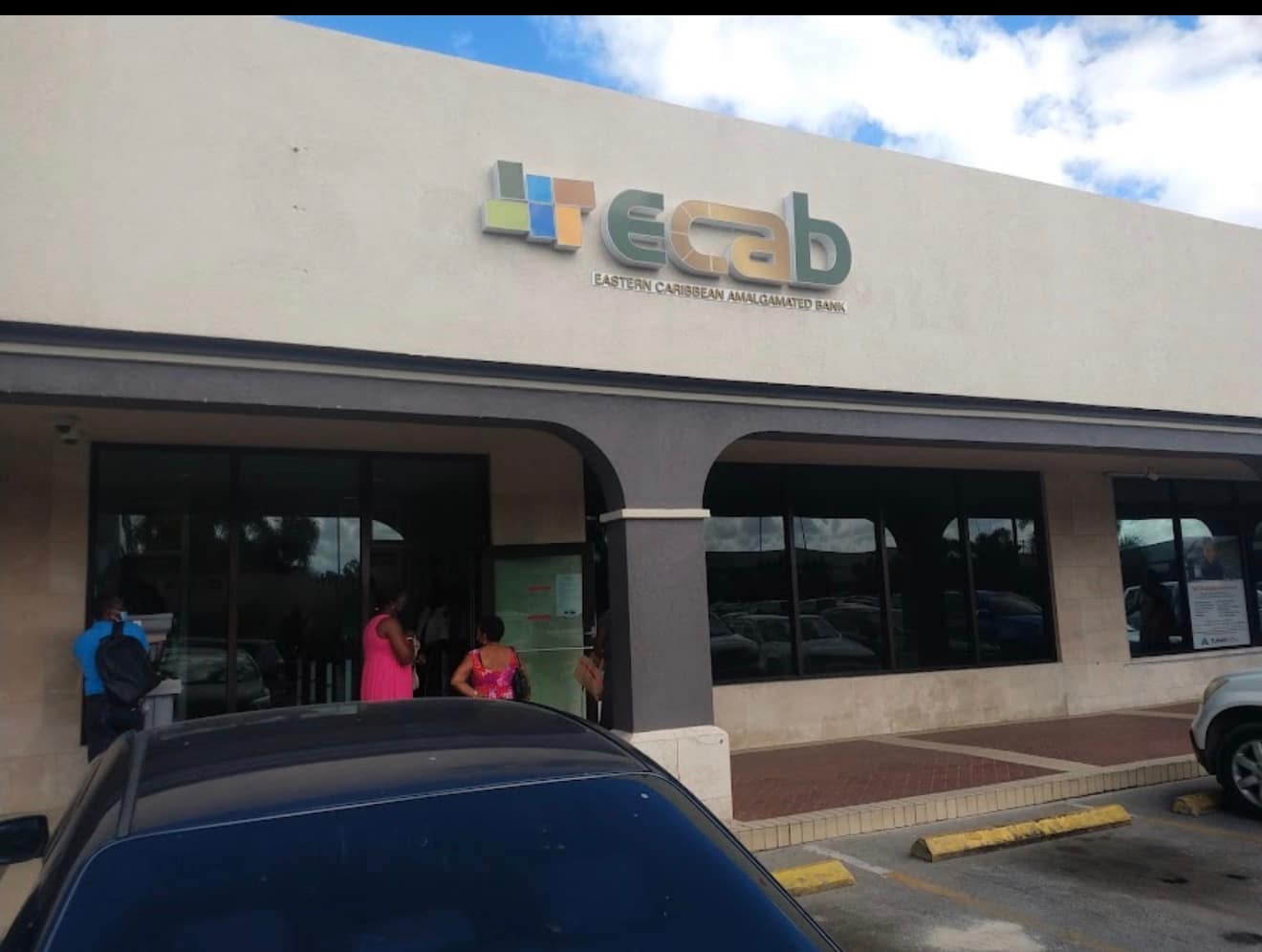
    In a formal announcement that has drawn attention from local business communities and area residents, the ECAB organization has confirmed that its Woods Branch location will cease all operations permanently starting on June 1, 2026. The planned shutdown marks the end of an era for the branch, which has served customers in the Woods region for an unspecified number of years. The announcement, released through official organizational channels, gives stakeholders and customers nearly three years advance notice to adjust their plans and make alternative arrangements for the services previously provided at this location. While specific details behind the decision to close the branch have not been fully disclosed at this stage, the multi-year lead time indicates that the organization has been working on long-term strategic planning that led to this final call. Customers who rely on the Woods Branch for regular services have been encouraged to reach out to ECAB’s central administration or other nearby branch locations to learn more about how the transition will impact their access to services moving forward. The company has also indicated that it will release additional updates, including information about staff transitions and service reallocation, in the months leading up to the 2026 shutdown date.

  • Regional cricket in mourning following death of Norman Gilbert

    Regional cricket in mourning following death of Norman Gilbert

    The Caribbean cricketing community is in mourning this week following the unexpected death of Norman Gilbert, a beloved former leader of Grenada’s cricket governing body and long-serving member of the Windward Islands Cricket Board. Dr. Kishore Shallow, president of Cricket West Indies (CWI), has released an official statement extending heartfelt sympathies to Gilbert’s loved ones and the regional cricketing fraternity after the sudden passing.

    In his address, Shallow highlighted the widespread respect Gilbert earned across the sport throughout his decades of service, pointing to his well-documented integrity, quiet humility, and rare ability to motivate everyone from emerging young players to senior cricket administrators and industry stakeholders. Shallow emphasized that Gilbert’s impact stretched far beyond his official roles, cementing his status as one of the most influential stewards of the game in the Eastern Caribbean.

    “On behalf of the entire Cricket West Indies organization, I want to extend our deepest condolences to Norman’s family, his close friends, and every member of the cricketing community across Grenada and the wider region,” Shallow wrote in the statement.

    Shallow remembered Gilbert as a deeply committed, forward-thinking leader who served cricket with exceptional distinction throughout his tenure. His consistent, unshakable commitment to growing and elevating cricket in Grenada, paired with his authentic enthusiasm for lifting up the sport at every level from grassroots to elite competition, has left a permanent, meaningful mark on the region’s cricketing ecosystem.

    Notably, Shallow noted that Gilbert’s contributions went far beyond the day-to-day work of sports administration. Gilbert was a true custodian of cricket who firmly believed in the game’s unique ability to bring divided communities together and improve life for residents across the island. “At this incredibly difficult time, the entire CWI family stands in full solidarity with the Grenada Cricket Association and the people of Grenada as they grieve this enormous loss,” Shallow added. “Norman’s legacy will endure long through the countless lives he touched, and the robust foundation he helped build for cricket in Grenada. May his soul rest in eternal peace.”

  • Student Named UK High Commissioner for a Day

    Student Named UK High Commissioner for a Day

    In a unique opportunity that bridges youth leadership development and international diplomacy, a young Belizean student has gained unprecedented hands-on experience in diplomatic operations after being selected for a signature outreach programme run by the British High Commission based in Belize.

    Nineteen-year-old Chloé Martinez earned the title of High Commissioner for a Day 2026, beating dozens of other applicants in a rigorous competitive selection process. Judges ultimately selected Martinez for her clear, forward-thinking policy vision, long-standing track record of local community engagement, and unwavering dedication to building inclusive, accessible leadership structures that lift up marginalized groups.

    During her one-day appointment, Martinez shadowed incumbent UK High Commissioner to Belize Alistair White, taking a seat at closed-door official meetings, sitting in on bilateral coordination discussions, and gaining first-hand insight into the quiet, behind-the-scenes work that drives successful diplomatic relations between the United Kingdom and Belize. The experience let Martinez move beyond the textbook understandings of diplomacy she had learned in the classroom, and see how negotiation, relationship-building, and cultural awareness shape daily diplomatic work.

    The programme wrapped up with a public Women’s Networking Event, which drew cross-sector attendees from Belize’s national government, private business sector, local civil society organizations, and the wider diplomatic corps based in the country. The interactive gathering centered on three core goals: expanding access to mentorship opportunities for emerging women leaders, growing female representation in senior decision-making roles, and strengthening intergenerational support networks that connect established women leaders with young people just starting their careers.

    In comments following the event, High Commissioner White emphasized that immersive programmes like High Commissioner for a Day fill a critical gap in youth development. He noted that the initiative is intentionally designed to give young women the practical, on-the-ground experience and built confidence they need to pursue senior leadership and decision-making roles across all sectors, both within Belize and internationally.

    Following Martinez’s selection, the British High Commission issued an official statement congratulating her on the achievement, and extended gratitude to all local and institutional partners that made the 2026 iteration of the programme possible. The statement reaffirmed the British government’s long-term commitment to supporting and empowering the next generation of women leaders across Belize, through targeted development initiatives and leadership programming.

  • Belize Fund Awards $643K to Boost Fisheries and Coastal Livelihoods

    Belize Fund Awards $643K to Boost Fisheries and Coastal Livelihoods

    Situated along Central America’s Caribbean coast, Belize has long built its identity and economic foundation around its rich marine ecosystems and vibrant coastal communities. In a major push to balance environmental stewardship with inclusive economic growth, the Belize Fund for a Sustainable Future has announced BZ$643,000 in grant funding for four local projects centered on strengthening sustainable fisheries, empowering coastal households, and expanding the nation’s growing blue economy.

    The single largest award, a BZ$500,000 grant, has been allocated to the Turneffe Atoll Sustainability Association. Turneffe Atoll, one of the most biologically significant coral atolls in the Caribbean, faces ongoing pressure from overfishing, unregulated activity, and climate change. The association will use the funding to upgrade fisheries management across the atoll through three core strategies: enhanced on-water enforcement of sustainable fishing rules, community-focused education for local fishers and stakeholders, and advanced data-driven planning that aligns catch limits with ecosystem health.

    Three smaller grants will direct support directly to community-led groups and local small enterprises, ensuring that benefits from conservation reach the people who rely on Belize’s marine resources most. Barranco Botanics, a local craft enterprise, will receive just over BZ$43,000 to scale up production of natural marine-based soaps crafted from locally harvested seaweed, creating new income streams that value sustainable marine extraction over industrial overexploitation.

    The Wabafu Fishermen Association will put its BZ$50,000 grant toward strengthening the organization’s internal governance and rolling out training programs to help members adopt verified sustainable fishing practices that qualify for premium market access. Meanwhile, Yugadan Fisherfolks Association Limited will use its nearly BZ$50,000 award to expand skills training and alternative livelihood opportunities for small-scale fishers based in the coastal community of Hopkins.

    Leandra Cho-Ricketts, executive director of the Belize Fund for a Sustainable Future, emphasized that targeted sustainable financing remains an indispensable tool for protecting Belize’s irreplaceable marine resources while lifting up the coastal communities that have stewarded these waters for generations. “Conservation cannot succeed if it leaves the people who depend on these oceans behind,” Cho-Ricketts noted. “These investments prove that environmental protection and economic opportunity can go hand in hand.”

    Founded in 2022, the Belize Fund operates as the national managing body for conservation financing tied to Belize’s landmark Blue Bonds agreement, a global model for debt-for-nature swaps that restructures national debt in exchange for binding commitments to marine protection and climate resilience. To date, the fund has directed hundreds of thousands of dollars to community-led projects that deliver both measurable environmental outcomes and long-term economic benefits for Belize’s coastal population, aligning with national goals to build a climate-resilient blue economy that works for all.

  • GOCA hosts ‘The Write Track’ Masterclass for Grenadian songwriters

    GOCA hosts ‘The Write Track’ Masterclass for Grenadian songwriters

    Grenada’s growing music sector is receiving targeted support from local authorities, as the Grenada Office of Creative Affairs (GOCA)—a branch of the country’s Ministry of Tourism, Creative Economy and Culture—recently concluded a two-day immersive masterclass designed exclusively for the island nation’s songwriting community.

    Titled “The Write Track,” this new workshop forms part of a sustained, strategic series of development programs rolled out by GOCA. The overarching goal of these initiatives is to foster skills expansion, facilitate cross-industry knowledge exchange, and accelerate professional advancement for both emerging and veteran creative talents working in Grenada’s music ecosystem.

    Ananda Johnson, Assistant Operations Manager at GOCA, emphasized that the organization’s focus on music development is no random choice, but a deliberate, long-term strategy. “We recognize that music is already a powerful, high-impact industry in Grenada, with untapped potential for significant growth and global market expansion,” Johnson explained. She pointed to the success of GOCA’s April 2025 music producer workshop, “Bring the Beat,” which delivered measurable improvements in the quality of musical output for the annual Spicemas festival—an outcome that aligns perfectly with the office’s strategic goals. “After gathering feedback from Grenada’s creative community, we identified clear skill gaps for local songwriters, so we developed this masterclass to fill those gaps. Our aim is to provide creators with practical tools, insider industry perspectives, and guided mentorship to help them refine their craft,” Johnson added.

    Leading the “The Write Track” workshop was Haile Alexander, a UK-based singer-songwriter with Grenadian roots who boasts an impressive professional resume, including writing credits for Grammy Award-winning artists Chris Brown and Tyla. Over the two-day session, Alexander and participating songwriters dived into both the creative and practical dimensions of songcraft, with a particular focus on narrative storytelling, emotional authenticity, and turning real-life personal experiences into music that resonates deeply with global audiences.

    Following the conclusion of the workshop, Alexander shared that the exchange proved mutually beneficial. “The energy in the room was incredible from start to finish. I got to share lessons I’ve learned through my years of professional songwriting, but I walked away having learned just as much from the participants,” he said. “I hope these creators keep building on this experience, keep honing their craft, and stay open to continuous learning.”

    The workshop was open to songwriters of all skill levels, and even drew music producers seeking to strengthen their collaborative partnerships with songwriters. For Thamara “Songbird” St Bernard, a Grenadian recording artist, the session was a transformative experience. “These two days were absolutely phenomenal. It showed me that creators are far more alike in our process than we often realize. We learned that there’s no strict ‘right’ or ‘wrong’ way to write music, and picked up new techniques to get into the right creative headspace to do our best work, all demonstrated clearly by Haile,” St Bernard shared. “I’m so grateful for what I learned, and it also confirmed that I’m already on the right path with my work. That kind of validation means so much to creators. GOCA’s work with these workshops is so necessary—they help us understand how intentional, strong songwriting can advance our entire careers.”

    GOCA’s investment in Grenada’s music economy extends far beyond “The Write Track.” Alongside the earlier “Bring the Beat” producer workshop, the office also runs “Sing Grenada,” a targeted music development program for young creators. It also offers targeted funding through the Music Producers’ Project, which allows eligible producers to access financial support to upgrade their home and professional recording studios. For more information on GOCA’s full suite of programs for local creatives, interested parties can visit the official website at creativeaffairs.gov.gd.

    This report was published by NOW Grenada, which notes that it is not responsible for the opinions and statements shared by program contributors. Readers can report any concerning content via the platform’s official abuse reporting channel.

  • Antigua & Barbuda Announces Closed Season for Lobster and Parrotfish Starting May 1, 2026

    Antigua & Barbuda Announces Closed Season for Lobster and Parrotfish Starting May 1, 2026

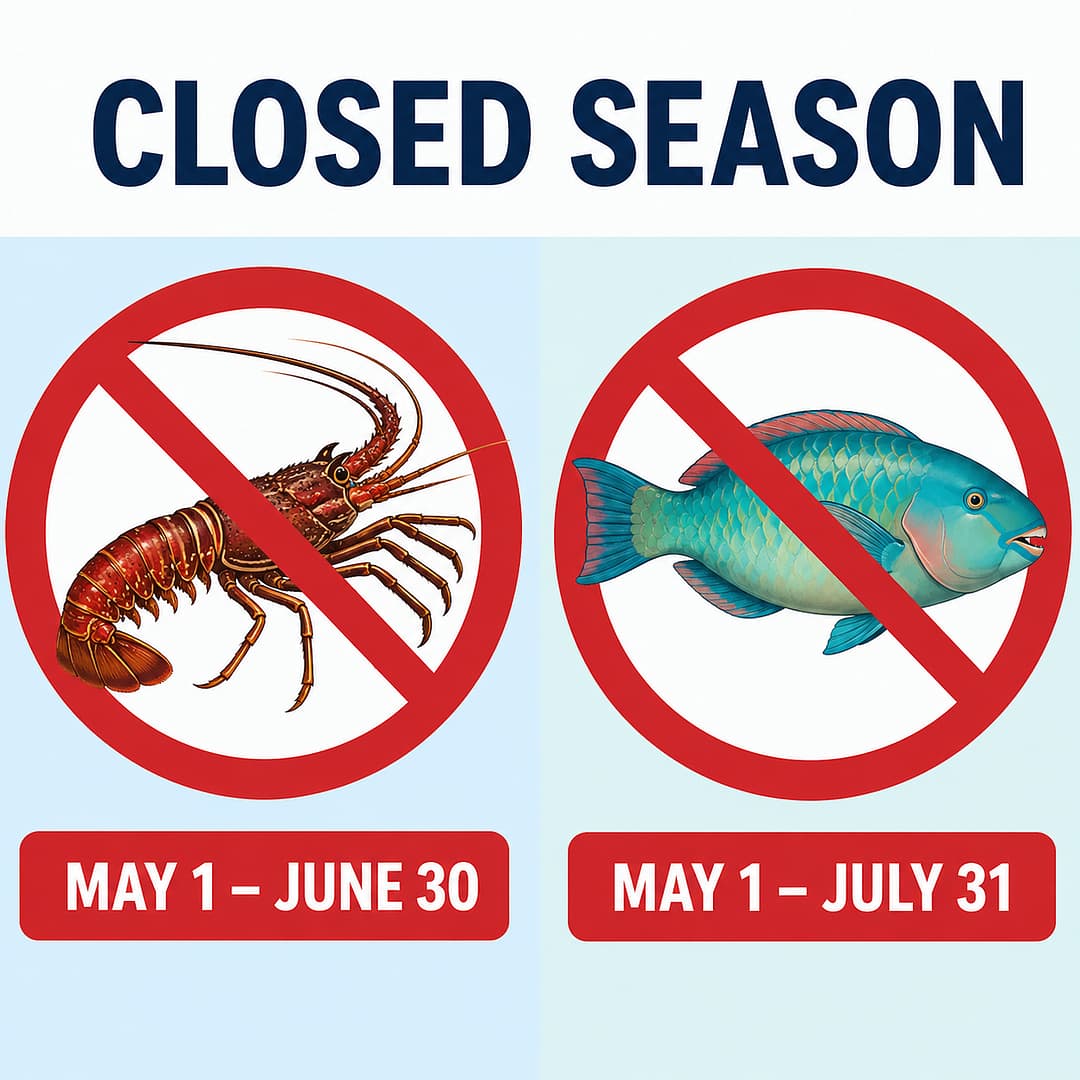
    Antigua & Barbuda’s coastal ecosystems and fishing industry are set to receive a major conservation boost, as the Antigua & Barbuda Defence Force (ABDF) in partnership with the national Fisheries Division has officially announced the 2026 annual closed fishing season for two ecologically and economically critical marine species: spiny lobster and chub (commonly known as parrotfish). Scheduled to go into full effect starting May 1, 2026, this regulatory measure is a longstanding requirement under the country’s national fisheries laws, designed to shield vulnerable populations of these species during their critical breeding cycles and secure the long-term sustainability of local marine resources.

    The closed season follows different timelines tailored to the biological needs of each species. For spiny lobster, the harvest and trade ban will run for two full months, from May 1 through June 30, 2026. For chub and parrotfish, the protection period is extended by an additional month, concluding on July 31, 2026. Across the entire duration of the closed season, a full set of restrictions applies to every person and entity operating within Antigua & Barbuda’s jurisdiction, including independent fishermen, commercial restaurants, seafood vendors, and seafood export businesses. All activities related to the targeted species are prohibited: this includes catching, selling, purchasing, and even possessing the regulated species during the ban.

    To ensure full compliance with the new regulations, joint enforcement teams from the ABDF and the Fisheries Division will carry out routine and targeted compliance checks across key locations nationwide, including commercial fishing ports, retail seafood markets, food service establishments, and coastal fishing access points. Authorities have confirmed that violations of the closed season rules will result in strict penalties, in line with national fisheries legislation. Penalties for non-compliance include fines reaching up to $50,000 XCD, the mandatory confiscation of any illegal catch, and potential criminal prosecution for repeat or severe offenders.

    Beyond meeting regulatory requirements, the closed season initiative delivers clear long-term benefits for both the environment and local communities that rely on fishing for their livelihoods. Protecting spiny lobster during their breeding period directly supports the maintenance of healthy, harvestable populations for future fishing seasons, which is critical given that lobster is a key export commodity and a core part of the local fishing economy. For parrotfish, the protection addresses the species’ outsize role in maintaining coral reef health: parrotfish graze on algae that would otherwise overgrow and kill coral reefs, making them essential to preserving the ecological balance of Antigua & Barbuda’s coastal reef systems, which in turn support tourism, protect shorelines, and sustain fish populations across the region.

    Overall, the annual closed season is a core part of Antigua & Barbuda’s broader strategy to conserve marine biodiversity and ensure that fishing remains a viable livelihood for current and future generations of coastal communities. In the public advisory accompanying the announcement, the ABDF has urged all stakeholders — from local residents and small-scale fishermen to large commercial vendors and hospitality businesses — to comply fully with the regulations. Authorities emphasize that coordinated public cooperation is essential to safeguarding the country’s valuable marine natural resources for generations to come.

  • DAIC calls for member participation in upcoming 2026 Annual General Meeting

    DAIC calls for member participation in upcoming 2026 Annual General Meeting

    The Dominica Association of Industry and Commerce (DAIC) has officially thrown open invitations for a diverse cross-section of the island’s business and policy community to join its 2026 Annual General Meeting, a landmark event centered on unpacking economic opportunities from the nation’s biggest infrastructure project. Scheduled to take place on Thursday, May 14, 2026, at the Prevo Cinemall Ballroom, the full day of discussions will kick off promptly at 1:00 PM.

    This year’s gathering centers on a forward-looking open forum themed “Beyond the Runway: Unlocking Private Sector Growth Through Dominica’s International Airport.” As the flagship centerpiece of the open session, Samuel Johnson, Chief Executive Officer of the International Airport Development Company (IADC), will deliver a keynote address breaking down the wide-ranging private sector opportunities tied to the $X billion infrastructure project, widely cited as the most transformative national development initiative in Dominica’s modern history.

    Johnson’s presentation is expected to map out actionable pathways for local and regional businesses to position themselves to capitalize on the expected surge in cross-sector economic activity once the airport becomes operational. Key sectors set to see outsized gains include hospitality, tourism, logistics, construction, professional business services, agriculture, international trade, transport, retail, and micro, small and medium enterprise (MSME) development. Following the keynote, attendees will have the opportunity to participate in an interactive question-and-answer session, allowing them to raise specific concerns and clarify details about upcoming opportunities directly with the IADC leader.

    The event’s schedule has been structured to separate open dialogue with the wider business community from internal DAIC governance business. The open session, which welcomes both DAIC members and non-member stakeholders, will run from 1:00 PM to 2:30 PM, followed by a 15-minute networking break designed to help attendees build professional connections. At 2:45 PM, the meeting will move into a closed session restricted exclusively to voting DAIC members, where the organization will conduct required statutory business, including annual performance and financial reports, discussions of governance updates, feedback on membership priorities, and the election of new DAIC Board Members.

    Pricing for the open session is scaled to ensure broad accessibility, with DAIC members able to register for Eastern Caribbean $125, and non-members paying a fee of Eastern Caribbean $200. Event organizers have noted that capacity at the venue is limited, and have urged interested participants to secure their spots as early as possible by confirming attendance in advance. For registration details, additional logistical information, or inquiries about the event, interested parties can reach the DAIC Secretariat via phone at 235-1962 or by email at the dedicated address [email protected].

  • Antigua and Barbuda Groups Invited to Apply for Grants to Tackle Plastic Pollution

    Antigua and Barbuda Groups Invited to Apply for Grants to Tackle Plastic Pollution

    On April 30, 2026, the International Union for Conservation of Nature (IUCN) announced the launch of a landmark grant initiative from its Regional Office for Mexico, Central America and the Caribbean (ORMACC) based in San José, Costa Rica, aimed at tackling the Caribbean’s growing plastic pollution crisis through community-led circular economy action. Titled the Sustainable Small Grants Programme (SSGP) and operating under the broader “Closing the Caribbean Plastic Tap” umbrella, the initiative opens applications for eligible groups across five Eastern Caribbean nations: Antigua and Barbuda, Grenada, Saint Lucia, St. Kitts and Nevis, and St. Vincent and the Grenadines.

    Backed by funding from the Italian Agency for Development Cooperation (AICS) and the Italian Ministry of Foreign Affairs and International Cooperation (MAECI), the SSGP carries a total program budget of €400,000, or approximately $430,000. Funding is split evenly across the five participating countries, with a maximum €80,000 allocated per nation. Individual grants to successful applicants will range from €30,000 to €80,000, designed to support the full implementation of locally tailored projects.

    Unlike top-down environmental interventions, the SSGP centers local leadership by extending eligibility to a wide range of community-rooted entities: micro, small, and medium-sized enterprises (MSMEs), community-based organizations (CBOs), non-governmental organizations, cooperatives, community associations, local schools, and even informal community groups, so long as they can prove a track record of meaningful local engagement. Funded projects will prioritize two key approaches to plastic waste management: upstream prevention, which cuts plastic production and consumption at the source, and midstream circularity, which reimagines plastic materials as reusable resources rather than disposable waste.

    The program is a core component of a wider regional strategy to eliminate plastic pollution at its origin by scaling up systems for waste reduction, product reuse, material recycling, and the adoption of sustainable alternative materials. All funded projects will be required to track and deliver measurable outcomes, both for environmental health and local socio-economic development. These outcomes will align with participating nations’ national climate and environmental priorities, as well as global sustainability commitments including the United Nations Sustainable Development Goals (SDGs) and the Global Biodiversity Framework (GBF).

    Applications for the first round of grants are open now, and interested eligible organizations have until 11:59 p.m. Atlantic Standard Time on May 31, 2026 to submit full proposals. Full application guidelines and submission details are available via the IUCN’s official engagement portal at https://engage.iucn.org/topic/sustainable-small-grants-programme-closing-caribbean-plastic-tap.

  • Antigua and Barbuda delegation participates in Transforming Global Education Summit at the United Nations

    Antigua and Barbuda delegation participates in Transforming Global Education Summit at the United Nations

    This week, a five-person cross-generational delegation from Antigua and Barbuda will travel to United Nations Headquarters in New York to join world leaders for the landmark Transforming Global Education Summit, a high-profile initiative aimed at modernizing education frameworks across small island developing states (SIDS).

    Convened on May 1 by the PVBLIC Foundation in partnership with the governments of Antigua and Barbuda, the Kingdom of Tonga, and the Learning Economy Foundation, the one-day gathering brings together a diverse cohort of stakeholders: heads of state, cabinet ministers, leaders of multilateral organizations, tech pioneers, veteran educators, private sector innovators, and youth advocates. Centered on the transformative theme “Redefining Education as Global Infrastructure,” the summit seeks to advance a cohesive, forward-thinking new model for national education systems that unifies policy design, technological integration, sustainable funding, and cross-border multilateral collaboration under one shared framework.

    Leading the Antigua and Barbuda contingent is Clare Browne, the nation’s Director of Education, alongside Dr. Jrucilla Samuel, Director of the country’s Youth Department. Three young leaders round out the delegation: Pia Nicholas, President of the National Youth Volunteer Corps and former CARICOM Youth Ambassador; Janet Simon, the incumbent CARICOM Youth Ambassador; and Chevaughn Burton, Assistant to the Safe Schools Focal Point. This mix of senior government officials and emerging youth voices underscores Antigua and Barbuda’s deep commitment to inclusive, youth-centered education reform – a priority that ensures young people have an active seat at the table when shaping the future of learning across the region.

    Antigua and Barbuda’s Permanent Mission to the United Nations has overseen all coordination for the delegation’s participation, working to guarantee the small island nation’s unique perspective on education development is centered in global discussions. “For countries like ours, education is not simply a social service, it is a matter of national resilience and sovereignty,” stated Ambassador Walton Webson, Permanent Representative of Antigua and Barbuda to the UN. “Small Island Developing States understand that our ability to adapt, innovate, and compete globally depends on how we invest in the knowledge and skills of our people,” he added.

    The delegation will play an active role across the summit’s official program. Browne will deliver opening remarks on Antigua and Barbuda’s behalf before joining the panel discussion focused specifically on challenges and opportunities for Small Island Developing States. Simon, the sitting CARICOM Youth Ambassador, is scheduled to address attendees during a separate panel titled “Scaling the Model: From Youth to National Development.” Dr. Samuel will take on moderation duties for a third high-profile panel, “Redefining Education Systems for the Future: Integrating Mental Health, Nutrition, and Holistic Youth Development as Global Priorities,” which will also feature input from the delegation’s youth members. Outside of plenary and panel sessions, the Antigua and Barbuda team is also set to hold targeted bilateral talks with representatives from the PVBLIC Foundation and other partner governments aligned with the nation’s development goals.