作者: admin

  • Northeast : €3 million from the EU to strengthen community schools

    Northeast : €3 million from the EU to strengthen community schools

    In a significant move to bolster education systems in crisis-affected regions, UNESCO has unveiled two major programs supported by €7.7 million in funding from the European Union. The initiatives specifically target Haiti and Afghanistan, where educational infrastructure faces severe challenges due to ongoing instability.

    The Haitian component, receiving €3 million in EU support, will focus on strengthening community schools in the country’s northeastern region. These institutions serve tens of thousands of students in rural areas where educational access remains particularly vulnerable. The comprehensive program aims to integrate these community schools into the national education system while enhancing adherence to quality teaching standards.

    UNESCO Director General Khaled El-Enany emphasized the critical nature of educational continuity during crises, stating: “In times of crisis, school is a refuge that must never falter, and access to education is a right that must be guaranteed. These initiatives reflect UNESCO’s determination to provide people with opportunities to learn, to work, and to thrive – including in the most fragile and crisis-affected contexts.”

    Haiti’s education system faces unprecedented challenges amid one of the most unstable periods in the nation’s recent history. Escalating violence and deepening socio-economic turmoil have severely undermined public institutions, strained social cohesion, and placed essential services – particularly education – at serious risk.

    The UNESCO program will foster community participation and facilitate dialogue between families, teachers, and educational leaders, recognizing schools as vital spaces that support social cohesion and trust. Additionally, UNESCO will collaborate closely with national authorities to enhance the collection and utilization of education data, thereby strengthening the overall governance and management of Haiti’s education system.

  • Legal Firestorm Over Police Transfer Raises Accountability Questions

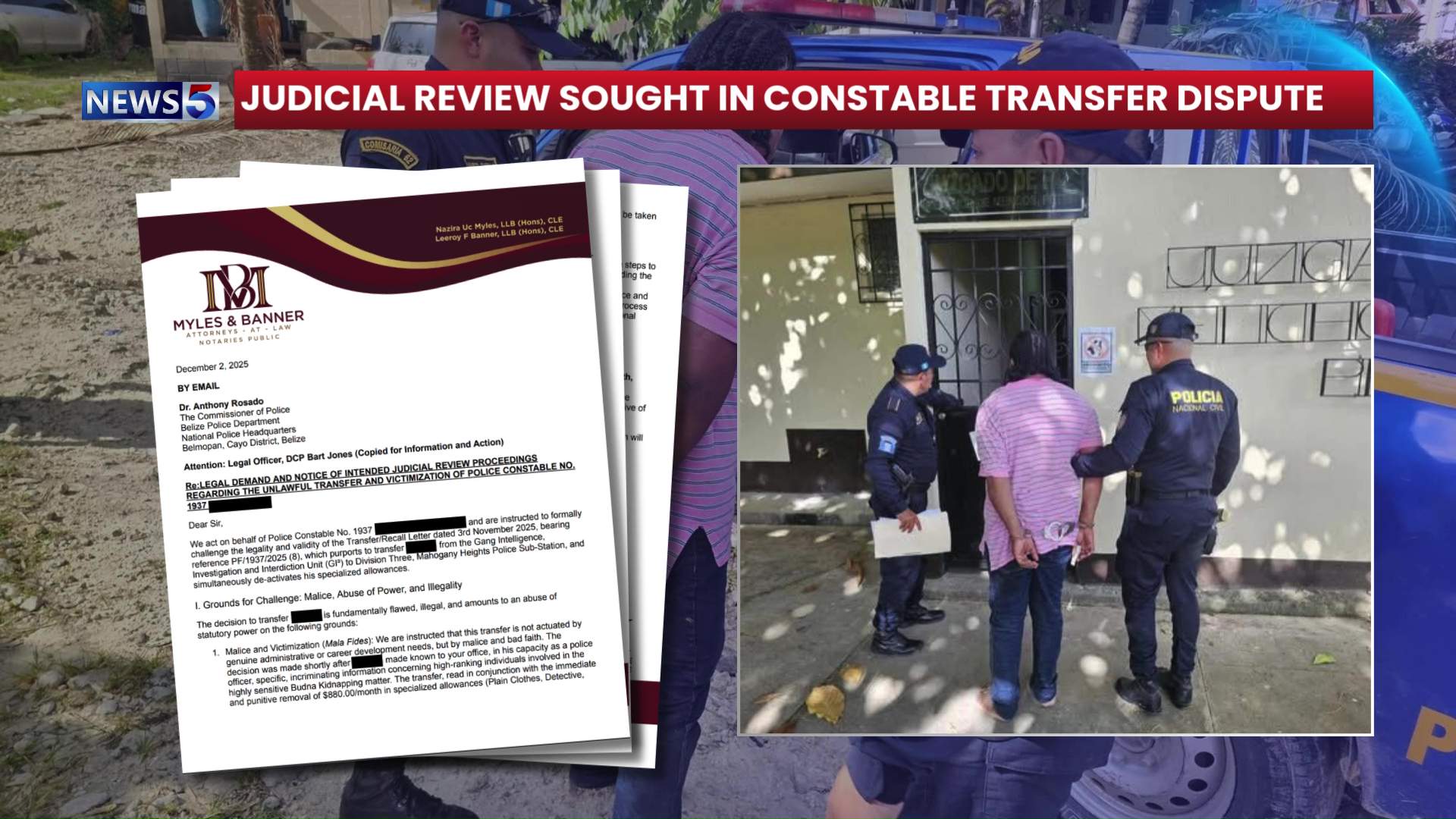
    Legal Firestorm Over Police Transfer Raises Accountability Questions

    A contentious legal battle has erupted within the Belize Police Department, challenging the legitimacy of a high-ranking official’s administrative authority. Commissioner of Police Dr. Anthony Rosado faces formal judicial scrutiny following allegations of wielding personnel transfers as instruments of retaliation rather than operational necessity.

    The controversy centers on the abrupt reassignment of a Police Constable from a specialized gang intelligence unit to a remote substation in Mahogany Heights. Legal representatives from Myles & Banner have issued a formal demand letter asserting this transfer constitutes unlawful punishment rather than routine administrative procedure. The constable’s relocation reportedly resulted in the loss of critical allowances and potentially derailed his career progression.

    According to court documents, the transfer appears connected to the officer’s disclosure of sensitive information pertaining to the high-profile Joseph Budna kidnapping investigation. The legal challenge cites multiple procedural irregularities, including the November implementation date falling outside standard July-August transfer windows and alleged violation of departmental policies explicitly prohibiting transfers as disciplinary measures.

    Legal precedent establishes that the Commissioner’s transfer authority, while extensive for officers below Inspector rank, must align with principles of fairness and reasonableness. The petition references landmark cases including Troy Bainton v. Commissioner of Police (2023) and Arzu vs. Commissioner of Police (2019), where courts previously intervened in instances of alleged power abuse.

    The constable’s attorneys contend their client had secured a performance-based agreement for promotion to Inspector, making the transfer particularly damaging to his professional trajectory. They characterize the reassignment as an act of bad faith intended to isolate and intimidate an officer for fulfilling his duties.

    Unless the decision is reversed by Friday, judicial review and injunction proceedings will commence, potentially establishing new boundaries for administrative authority within Belize’s law enforcement hierarchy. This case raises fundamental questions about accountability mechanisms, transparency in policing operations, and the permissible exercise of institutional power.

  • Public Health survey reveals major nursing shortage in Dominican Republic

    Public Health survey reveals major nursing shortage in Dominican Republic

    SANTO DOMINGO – A comprehensive health workforce survey conducted by the Ministry of Public Health has revealed a paradoxical situation in the Dominican Republic’s healthcare system. While the nation exceeds international benchmarks for overall medical personnel availability, it confronts an acute nursing deficit that threatens the quality of care delivery.

    The study demonstrates that the country achieves 56.3 doctors and nurses per 10,000 inhabitants, surpassing the WHO/PAHO target of 44.5. However, this achievement masks a critical imbalance: when examining nursing personnel separately, the density plummets to just 26 per 10,000 people—dramatically below the recommended standard of 70.6. This discrepancy indicates a shortage exceeding 48,000 nursing professionals to meet global norms.

    Demographic analysis reveals a predominantly female workforce (81.1%) with a youthful composition, as 58.3% of health professionals fall within the 25-44 age bracket. The sector demonstrates strong national representation with 99.7% Dominican staff members.

    Academic qualifications present a balanced educational landscape: 48.9% hold university degrees, 20.3% possess postgraduate qualifications, and 30.8% comprise technical staff. The workforce distribution shows physicians constituting 37.3% of personnel while nursing staff represents 32.1%, collectively accounting for nearly 70% of all healthcare workers.

    Geographically, the Ozama region concentrates 36.6% of the health sector’s workforce, with the National District alone hosting 23.9% of all positions. The census documented 107,174 active job positions, with an overwhelming 92.8% dedicated to direct patient care, highlighting the substantial operational demands on both public and private health services.

  • Belize Police Department Rethinks Crime-Fighting in a Digital Age

    Belize Police Department Rethinks Crime-Fighting in a Digital Age

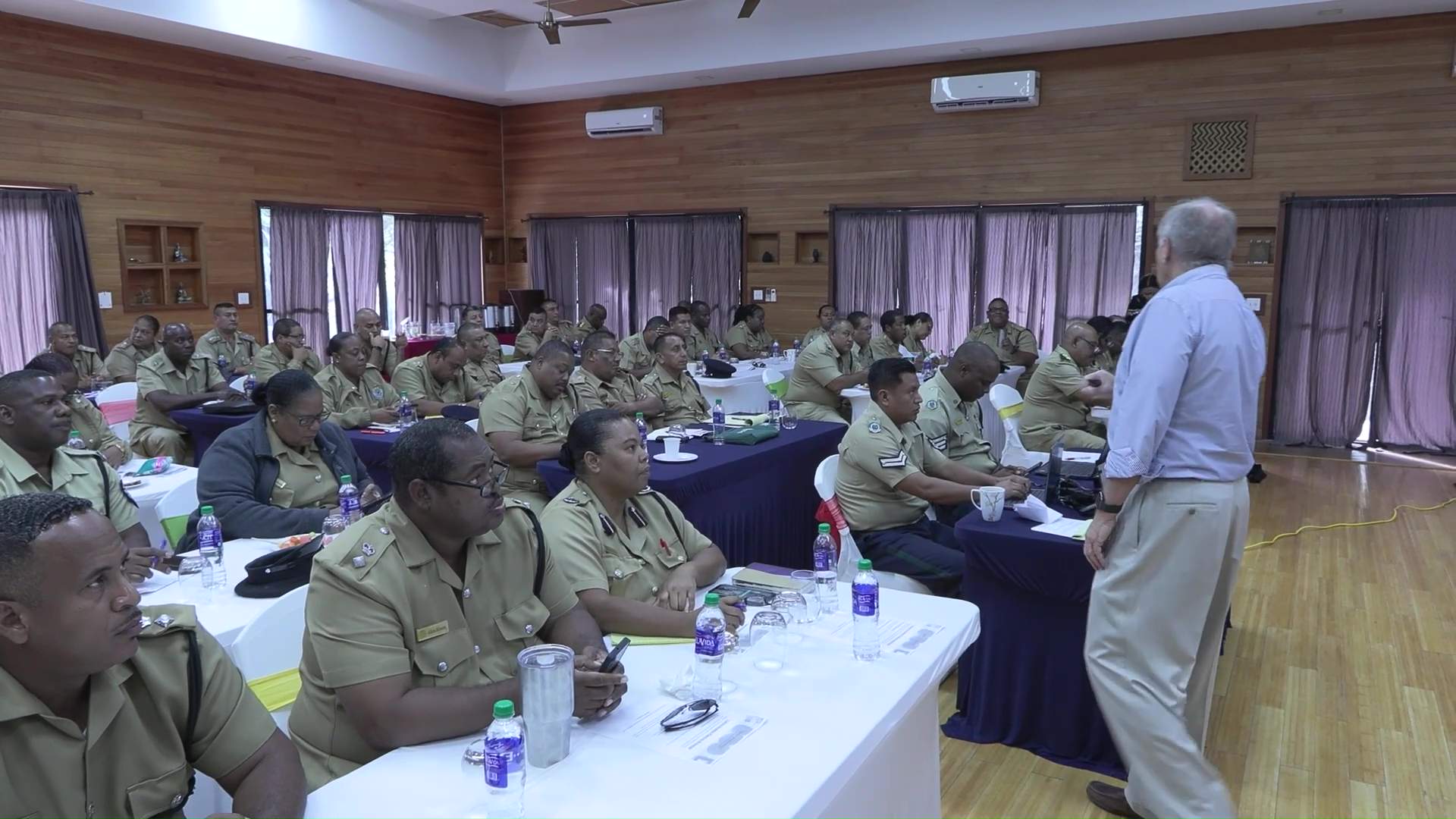
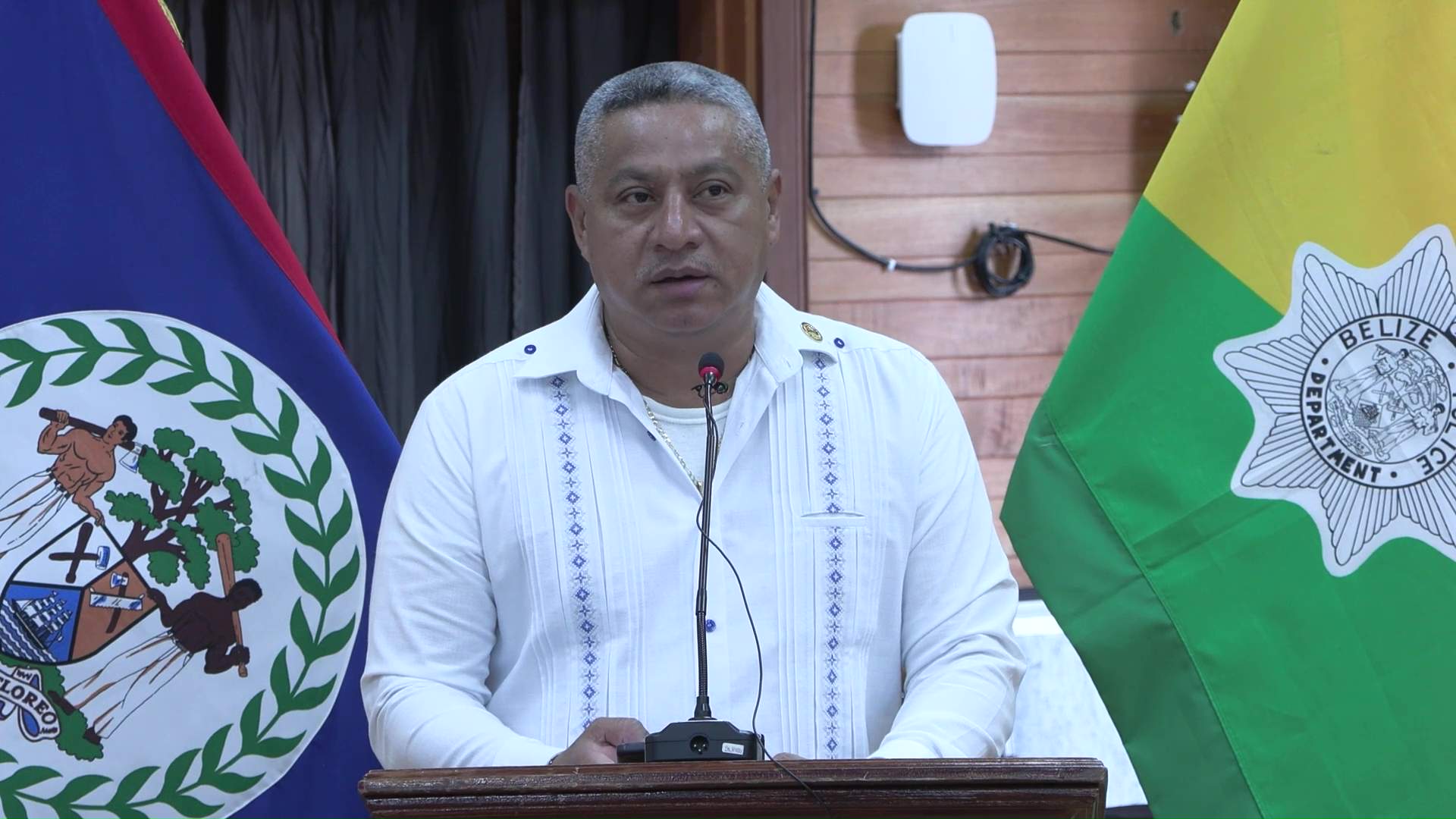
    Facing an unprecedented transformation in criminal activity, the Belize Police Department has initiated a comprehensive strategic planning workshop to address the complexities of modern law enforcement. Deputy Commissioner Bart Jones emphasized that this initiative represents a critical juncture for the department’s institutional development and operational modernization.

    The policing landscape has undergone radical changes with the emergence of borderless cybercrime and sophisticated transnational criminal networks. Commissioner Jones highlighted how criminal operations have increasingly migrated to digital platforms and social media, creating challenges that traditional policing methods are ill-equipped to handle simultaneously with rising public expectations for security and service.

    This strategic workshop serves as a platform for departmental leadership to evaluate emerging threats, reassess response protocols, and develop forward-looking strategies. The sessions focus on aligning operational tactics with the department’s core mission while incorporating technological adaptation and coordinated response mechanisms.

    Commissioner Jones framed the initiative as essential for organizational survival rather than mere administrative procedure. ‘Strategic planning transcends managerial exercise—it represents our toolkit for maintaining effectiveness and leadership within an increasingly complex security environment,’ he stated during the proceedings.

    The department’s commitment extends beyond tactical adjustments to encompass broader principles of integrity, professional competence, and purposeful vision in serving the Belizean public amid rapidly evolving criminal methodologies and societal expectations.

  • Belize Invests in Smarter, Future-Ready Policing

    Belize Invests in Smarter, Future-Ready Policing

    In response to rapidly evolving security challenges, Belize’s Ministry of Home Affairs has announced a comprehensive strategic training initiative designed to prepare law enforcement personnel for the future of policing. Minister Oscar Mira emphasized that the program represents a fundamental shift from routine administrative exercises to a deliberate investment in professional readiness.

    The initiative addresses multiple emerging challenges including technologically sophisticated crimes, heightened public expectations for accountability, and increasingly complex social dynamics. Minister Mira highlighted that policing methodologies that were effective five or ten years ago have become inadequate for contemporary security demands.

    ‘This workshop transcends conventional administrative exercises—it constitutes a strategic investment in our department’s professionalism and future preparedness,’ Minister Mira stated. ‘The program launches at a critical juncture as policing demands continue to evolve alongside rising public expectations.’

    The curriculum focuses on developing critical competencies for modern law enforcement, including decision-making under extreme pressure, response to violent crimes, investigative interviewing techniques, warrant execution protocols, and public order management. The minister emphasized that continuous training remains essential for officers to maintain current knowledge and tactical proficiency.

    The initiative recognizes that criminal behaviors have adapted to new technologies while community expectations regarding police accountability and performance have significantly increased. This training transformation aims to ensure Belize’s law enforcement capabilities remain effective in an unpredictable security landscape.

  • Mother Alleges Harsh Treatment of Jahreem Staine in Prison

    Mother Alleges Harsh Treatment of Jahreem Staine in Prison

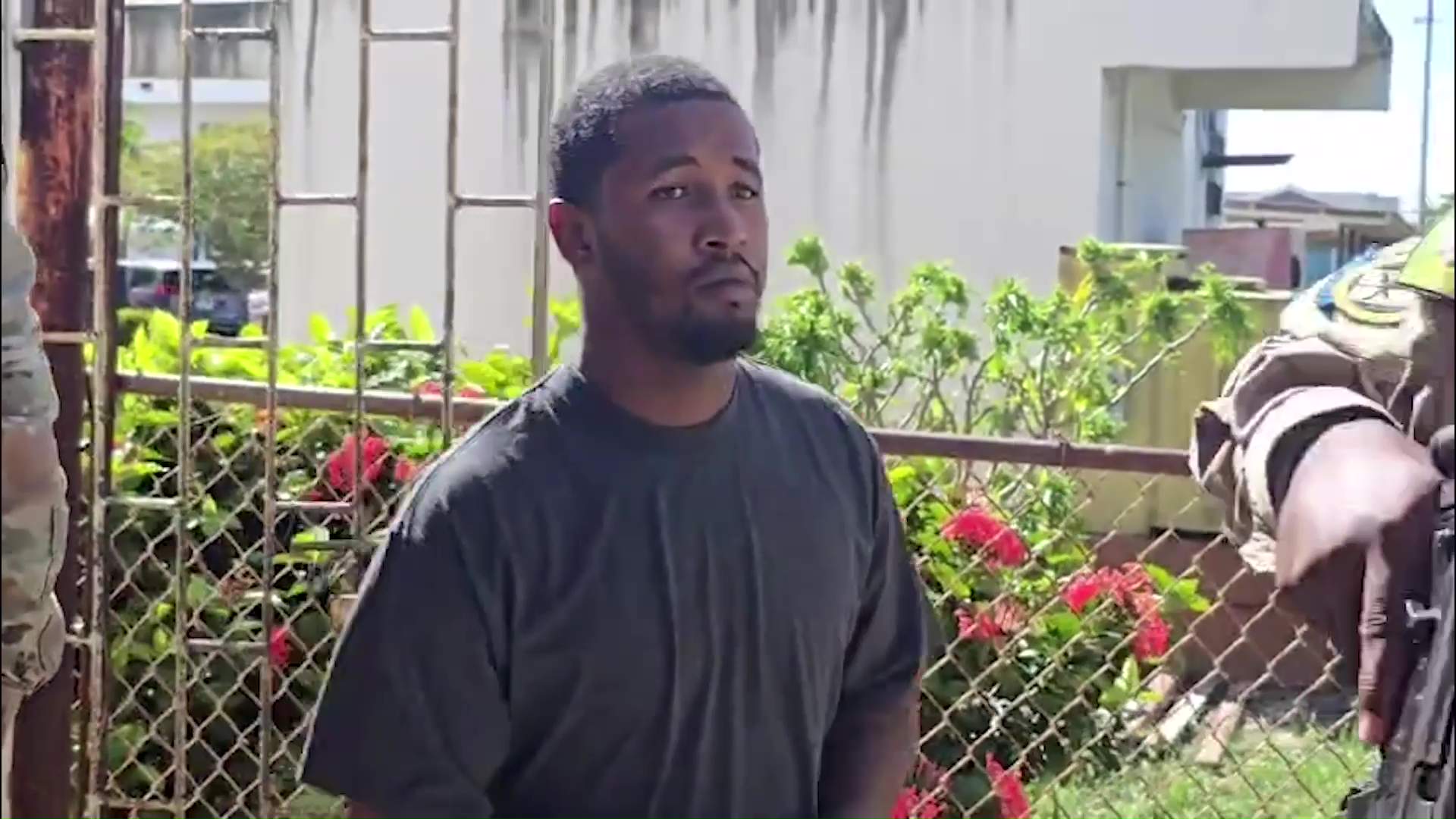
    A mother has come forward with alarming allegations of human rights abuses against her son, Jahreem Staine, who has been detained at Belize Central Prison since October 9th, 2025. The 22-year-old, known as “32,” is being held on contempt of court charges related to a judicial order violation.

    According to his distraught mother, who visited news offices to publicize her concerns, Staine was immediately placed in solitary confinement upon his arrival at the facility. She claims prison authorities have completely isolated him, denying all telephone privileges and cutting off any communication with family members.

    The situation reportedly escalated recently when correctional officers pepper-sprayed the detainee after alleging he had made threatening phone calls from confinement—an accusation his mother finds implausible given his complete isolation. She further described concerning interactions where medical complaints about blurred vision were dismissively attributed to pre-existing cataracts rather than addressing the pepper spray exposure.

    Emotional testimony revealed distressing conditions within the isolation unit, where Staine allegedly sleeps on a mere piece of sponge with minimal bedding and is confined to a space without adequate ventilation. His mother emphasized she isn’t seeking special treatment but rather basic humane conditions and due process, noting her son has been held for nearly two months without meaningful contact or proper procedural oversight.

    The case raises significant questions about prison conditions and human rights protections within Belize’s correctional system, particularly regarding the treatment of remand detainees who haven’t been convicted of crimes.

  • Feinsteins Take Atlantic Bank to Court Over Stake Bank Cruise Project

    Feinsteins Take Atlantic Bank to Court Over Stake Bank Cruise Project

    Prominent Belizean developers Michael and Melita Feinstein have initiated legal proceedings against Atlantic Bank Limited (ABL), Honduran construction firm OPSA, and court-appointed receiver Marlowe Neal, alleging an unlawful corporate takeover of their $250 million Stake Bank cruise port development. The lawsuit, filed in Belize’s Supreme Court, centers on ABL’s controversial declaration of loan default in March 2024, which enabled the installation of a receiver to assume control of Stake Bank Enterprises Ltd.

    The plaintiffs contend the bank acted without legal justification, asserting their project remained financially solvent and current on obligations. Court documents reveal the Feinsteins allege ABL systematically failed to apply available project funds toward loan payments before declaring default. Furthermore, the mortgage debenture instrument used to justify the receivership is described as improperly stamped and legally unenforceable under Belizean law.

    The comprehensive claim outlines what developers characterize as a coordinated conspiracy between banking and construction entities to deliberately oust them from one of Belize’s most significant tourism infrastructure projects. The defendants stand accused of multiple violations including breach of fiduciary duty, violation of Belize’s banking regulations, and reneging on $75 million in committed financing agreements.

    The Feinsteins seek judicial intervention to immediately remove the receiver, restore their operational control of the cruise port development, and award substantial damages for financial losses incurred since the takeover. The case represents a critical test for Belize’s financial governance and foreign investment protection frameworks, with potential implications for major infrastructure projects throughout the Caribbean region.

  • Customs Siblings Face Court in Massive Weed Bust

    Customs Siblings Face Court in Massive Weed Bust

    In a significant legal development, two siblings formerly associated with the Customs Department appeared before the Chief Magistrate on December 3, 2025, facing serious charges related to one of the nation’s largest marijuana importation cases. Cheryl Castillo-Moreno and Athlee Castillo arrived at Court #1 shortly before noon, where prosecutors presented them with extensive evidentiary documentation spanning ninety-five pages.

    The case originated from their October 2 arraignment, where both defendants were formally charged with abetment to import approximately 151 pounds of high-grade cannabis with an estimated street value reaching millions of dollars. According to investigative reports, the controlled substances were allegedly smuggled from the United States concealed within shipments falsely declared as ‘bath and body’ products.

    The investigation gained momentum when a customs official, prompted by multiple urgent calls demanding clearance authorization, grew suspicious and initiated a thorough inspection of the questionable consignment. Upon examination, authorities discovered meticulously sealed packages containing cannabis rather than the declared cosmetic items.

    Both defendants entered pleas of not guilty and were subsequently released on bail bonds set at $20,000 each, under stringent conditions including the surrender of all travel documentation. Their legal representative, prominent attorney Richard Bradley, addressed media outside the courtroom, characterizing the charges as “serious allegations yet to be substantiated.” Bradley further contextualized the case within Belize’s current legislative framework, noting the paradoxical nature of marijuana regulations that permit limited possession while prohibiting legal acquisition or distribution.

    The judicial proceedings have been adjourned until February 3, 2026, with the case attracting significant public and institutional attention regarding its implications for customs integrity and drug enforcement policies.

  • The system was restored, but the impact persists

    The system was restored, but the impact persists

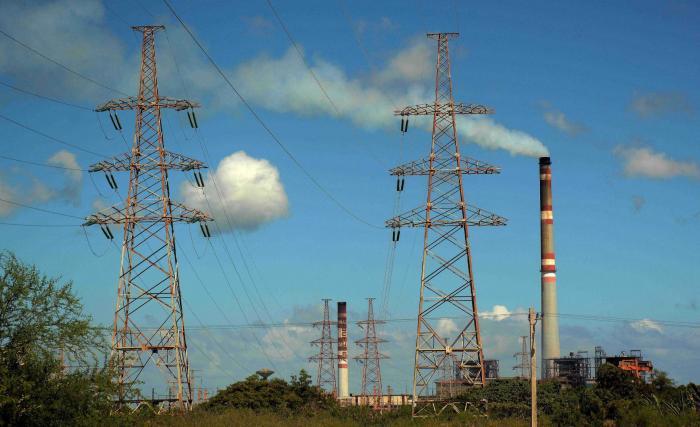
    Cuba is confronting a critical electricity generation crisis characterized by severe power shortages affecting the entire nation. The situation stems primarily from an acute fuel shortage that has rendered over 1,000 megawatts of distributed generation capacity inoperable, creating substantial deficits across the electrical grid.

    Engineer Lázaro Guerra Hernández, General Director of Electricity at Cuba’s Ministry of Energy and Mines (Minem), provided exclusive insights to Granma regarding the emergency. He confirmed that while the national electrical system has been technically restored following recent failures, generation capacity remains critically constrained due to fuel unavailability.

    The crisis intensified with the simultaneous shutdown of Unit 1 at the Felton power plant and planned maintenance at Energas facilities. However, authorities implemented contingency measures by postponing the complete shutdown of gas plants, maintaining approximately 320-330 MW of generation from Energas engines. This decision also secured continued gas supply for domestic use in Havana.

    Félix Estrada Rodríguez, Director of the National Load Dispatch Center, reported that Unit 6 at Mariel and Machine 1 at Santa Cruz had been successfully synchronized, bringing available generation to between 1,200-1,300 MW. Nevertheless, officials acknowledge that complex conditions and service disruptions will persist throughout the day.

    The Felton unit is expected to remain offline for approximately 36 hours for repairs, with its return anticipated to contribute over 200 MW to the system. The recent national grid separation on Wednesday morning was attributed to a failure in the interconnection between the Ernesto Guevara thermoelectric plant in Santa Cruz and the Antonio Guiteras facility in Matanzas, creating an uncontrollable power imbalance in the region.

  • Water Flows Again in Unitedville After Days of Dry Taps

    Water Flows Again in Unitedville After Days of Dry Taps

    Residents of Unitedville in Belize’s Cayo District have finally seen their water supply restored following several days of disruptive shortages. The resolution came after technicians replaced a critically damaged pump that had failed during a power outage last Thursday. While immediate relief has arrived through both pump repairs and emergency water truck deliveries, the incident has exposed deeper systemic issues plaguing this rural community.

    Behind the temporary fix lies a complex narrative of infrastructure challenges and community tensions. Santiago Juan, MIDH Zone Coordinator for Belmopan, confirmed that while the primary pump failure was promptly addressed, a secondary pump proved insufficient for village-wide distribution, leaving certain streets without water for up to three days.

    Terree Westby, a dedicated Unitedville Water Board member, countered social media claims of extended water deprivation, revealing the immense pressures faced by maintenance crews. Her team routinely works from dawn until dusk addressing issues, including what she describes as deliberate acts of sabotage against infrastructure. “They just wanna find fault,” Westby stated, emphasizing the challenges of managing natural elements and human interference beyond her control.

    Historical perspective comes from former five-time chairman Mike Juan, who oversaw the water system for fifteen years. He acknowledges the perennial nature of these crises, noting that every administration has struggled with drying wells and failing pumps. While praising current efforts by Minister Espat and water distribution teams, Juan highlighted the fundamental choice facing Unitedville: maintain the current community-managed system with its leniency toward payment delinquency, or transition to Belize Water Services’ national pipeline with stricter enforcement policies.

    The permanent solution—connecting to the national water grid—presents a socioeconomic dilemma. The current community board shows flexibility toward residents who fall behind on payments, sometimes for months or even years. Transitioning to the national utility would bring reliable service but also stricter billing enforcement, potentially leaving vulnerable households without water due to financial constraints.

    As Unitedville celebrates restored water access, the underlying questions about sustainable infrastructure investment, community governance models, and equitable resource distribution remain unresolved, ensuring that temporary solutions will likely precede the next dry spell.