作者: admin

  • ‘They said they would kill me’

    ‘They said they would kill me’

    Early yesterday morning, a coordinated string of violent home invasions swept through the quiet residential community of Longdenville, Trinidad, leaving one local survivor traumatized and highlighting a growing regional crime crisis that has put ordinary residents on high alert.

    A 44-year-old female resident of Raghunanan Road, one of the attack targets, spoke publicly to local media outlet Express on condition of anonymity, citing ongoing fears for her personal safety. She shared a harrowing minute-by-minute account of the 45-minute attack that unfolded just after 2:30 a.m., when she was the only person home.

    The incident began when unusual outdoor noises pulled her out of sleep. Checking her home security camera system, she immediately noticed something was wrong: all of her cameras had been shifted out of their normal positions. Spotting a stranger moving along the side of her home, she fumbled to call the national 999 emergency line, and had only just managed to blurt out her address when the three attackers forced their way into the property, cornering her in the bathroom where she had hidden.

    According to the victim, the assailants—who appeared to be in their early 20s, wore concealing ski masks, work boots, long-sleeve tees and dressed to look like local construction workers—were all armed with what she believes were pistols. They quickly seized her phone, throwing it into a toilet to cut off any potential communication with police, before demanding cash, gold jewelry and access to a safe, none of which the victim kept stored at her home.

    After stealing a small amount of cash from her wallet, the trio began ransacking every room of the property, turning over closets, opening cabinets and even searching inside kitchen appliances. One attacker ordered the others to bind the victim, cutting a cord from her own standing fan to tie her hands behind her back and force her to lie face down on the floor. Working up the courage to free herself while the men were distracted by looting, the victim managed to wiggle out of the loose bonds and made a desperate dash for the front door, only to be caught quickly by the assailants, who re-bound her more tightly—this time securing both her hands and feet before returning to their search.

    The attack took a more chilling turn when the criminals, frustrated by the small amount of valuables they had found, began pressing the victim for information about her neighbors. They demanded to know how many people lived in adjacent homes, where those neighbors worked, and if any of them kept large amounts of cash or valuables on the property. The victim told reporters she believes the gang was already scoping out their next target after coming up empty at her home. Throughout the ordeal, the men repeatedly threatened to kill her if she lied or did not cooperate, warning they would return later to harm her if she gave them false information.

    The invasion ended abruptly when the gang spotted the lights from a private security patrol the victim had hired to monitor her neighborhood. Panicked by the approaching patrol, the attackers fled out of the back of the property, running through the yard before escaping over a fence. After waiting several minutes to confirm the men were gone, the victim once again managed to wiggle free of her bonds and flag down the security team, who contacted local law enforcement.

    Police investigators later confirmed to the victim that her attack was one of three separate home invasions carried out in the Longdenville area overnight, all linked to the same criminal network. One of the other attacks, police said, targeted a home in a gated community, where six masked armed assailants carried out the robbery. A forensic check of the victim’s property revealed how the gang gained entry: they climbed over the back boundary wall of her home, broke through the steel burglar proofing on a side window, and squeezed one man through the opening to unlock the back door for the other two accomplices.

    In the wake of the traumatic attack, the victim slammed the ongoing state of violent crime across Trinidad, calling it “ridiculous” and noting she had taken every possible precaution to protect her home, including sturdy locked doors, burglar proofing, a professional alarm system and regular private security patrols. “I never thought something like this would happen to me,” she said. “I don’t know what else to do. My privacy was invaded.”

    She is now calling for policymakers to implement harsher criminal penalties for home invasion offenders, and demanding increased, more consistent patrols and vigilance from local police. Traumatized by the attack, she said she is even reconsidering her long-held opposition to personal gun ownership for self-defense, despite her discomfort with the idea. “I can’t see myself killing somebody, but at one point, I thought they were going to kill me because they were upset that I had nothing valuable,” she explained.

    The victim also acknowledged that the recent passage of new, stricter home invasion legislation by the national government was a direct response to this growing wave of violence. “It is innocent people being attacked. This is a pure home invasion looking to rob people and terrorise them,” she said. For her part, the attack has left her so shaken that she is now considering leaving the country entirely. “Sometimes, I consider migrating because I used to think I’m safe, but I don’t think I could ever feel safe again,” she added.

    This string of attacks is just the latest in a growing surge of home invasions across Central Trinidad over the past month. Reports of similar violent robberies have already been recorded in nearby communities including Chaguanas, Cunupia, and Freeport, leaving residential communities across the region on edge.
  • ‘Express’ wins appeal over police search

    ‘Express’ wins appeal over police search

    A landmark ruling from Trinidad and Tobago’s Court of Appeal has cemented critical protections for press freedom in the country, after the judiciary sided with Trinidad Express Newspapers Ltd in an appeal brought by state law enforcement and a senior police superintendent.

    The legal battle traces back to a 2020 investigative report published by the Express, written by veteran journalist Denyse Renne, which exposed questionable financial transactions linked to a high-ranking police official. In the wake of the publication, police launched a probe into alleged “tipping off” violations, led by Superintendent Wendell Lucas, and secured judicial search warrants to enter the newspaper’s Port of Spain headquarters. The stated goal of the operation was to unmask Renne’s confidential source.

    On March 11, 2020, law enforcement executed the second of the two approved warrants, entering the Express’ headquarters, Express House, and seizing four digital flash drives from the office of then-editor-in-chief Omatie Lyder. The media entities involved—parent company One Caribbean Media Ltd, the Express itself, and Lyder—immediately challenged the constitutionality of the warrants. They argued that the search violated fundamental rights enshrined in Trinidad and Tobago’s constitution, specifically the guarantee of press freedom outlined in Section 4(k).

    The case was first heard at the High Court, which ruled in favor of the media group and struck down both warrants as unconstitutional. Undeterred, the Office of the Attorney General and police appealed that ruling, asking the higher court to overturn the lower court’s decision.

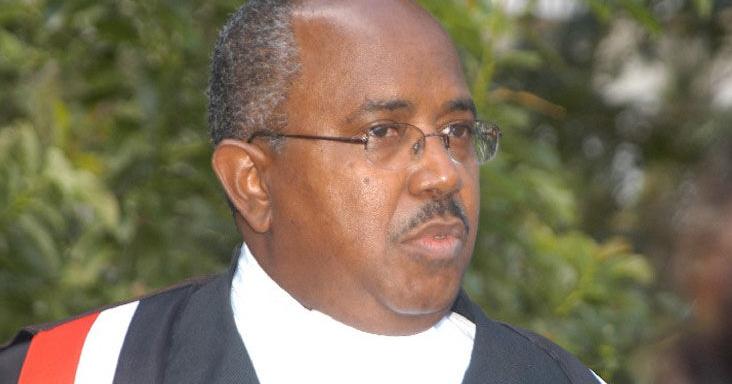
    In the judgment delivered Wednesday, a majority of the three-justice panel upheld the core of the High Court’s ruling that the executed search violated constitutional press freedom protections. Justices of Appeal Nolan Bereaux and Peter Rajkumar formed the majority, while Justice James Aboud issued a separate dissenting opinion, marking a clear split among the judiciary on the balance between police investigative powers and press rights.

    Writing the lead majority judgment, Justice Bereaux reaffirmed that the second search warrant was unlawful on two key grounds: first, police failed to submit sufficient evidence to justify granting the warrant, and second, the Justice of the Peace who approved the warrant did not conduct the required balancing of competing public interests. “The justice of the peace could neither be satisfied that there was probable cause for the search nor that the search struck the right balance,” Bereaux explained.

    The justice emphasized that when law enforcement seeks to search a media organization—especially for the purpose of identifying a confidential journalistic source—extraordinary care must be taken to balance the public interest in solving crime against the foundational role of a free press in democratic governance. “The sanctity of the confidentiality of journalistic sources is an essential element of the right to freedom of the press,” he added.

    The court also highlighted two additional flaws in the warrant: its overly broad scope, which allowed police to search nearly all of the newspaper’s electronic data without any restrictions or safeguards to protect unrelated confidential material, and the absence of any evidence that police had exhausted alternative, less intrusive investigation methods before targeting the newsroom.

    While the majority departed from the High Court on one narrow point—finding the first, never-executed warrant did not itself violate constitutional rights—it upheld the ruling that the second executed warrant and the seizure of the flash drives were unconstitutional. In a departure from the lower court’s order that damages be assessed at a later hearing, the appellate panel awarded the media respondents a fixed compensation sum of TT$25,000, framing the award as a deliberate step to vindicate the fundamental right to press freedom.

    In his concurring opinion, Justice Rajkumar echoed the majority’s concerns, agreeing that the warrants were impermissibly broad and failed to properly account for their harmful impact on journalistic work, including the risk of creating a chilling effect that would discourage sources from coming forward with information of public interest.

    In his dissenting opinion, Justice Aboud took an alternative position on the legal and constitutional questions raised by the case, underscoring the court’s internal division over how much latitude police should have to intrude on media operations in the course of criminal investigations.

    Legal teams for both sides were led by senior bar members: Sophia Chote SC, Peter Carter, and Samantha Ramsaran represented One Caribbean Media, the Express, and Lyder, while Senior Counsel Fyard Hosein, Rishi Dass, and Kadine Matthews argued the case for the state.

  • Chiverton returns to lead SKN tennis, eyes new home for sport

    Chiverton returns to lead SKN tennis, eyes new home for sport

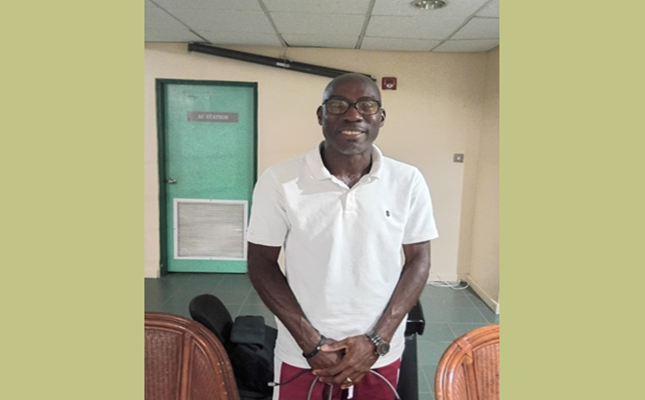
    BASSETERRE, St. Kitts – The St. Kitts and Nevis Tennis Association (SKNTA) has voted to reappoint Watkins Chiverton as its president during its annual general meeting on April 29, held at the Media Centre of the Warner Park Cricket Complex. Chiverton will lead the association for a new term, with his top priority being securing a permanent, dedicated venue for the sport across the island federation, following news that existing tennis courts have been cut from the upcoming redevelopment plans for Warner Park.

    Alongside Chiverton’s return to the top leadership role, the SKNTA confirmed its new executive committee, which remains largely consistent with the previous board. Walwyn Chiverton will stay on as vice president after running unopposed for the position. Zhonee Stapleton has been elected general secretary, with Tracey Wattley taking on the role of assistant secretary, and Neil Owen returning to his post as treasurer. Four additional executive committee members – Genelle Lake, Samuel Rowe, Jamoy Bryan, and Shamara Maynard – were also selected to round out the leadership team.

    In his post-election remarks, Chiverton emphasized that the new executive leadership enters office with a clear and ambitious mandate to grow tennis across St. Kitts and Nevis. A core part of this agenda is deepening collaborative ties with the International Tennis Federation’s regional development team. Chiverton explained that this partnership will focus specifically on narrowing the performance gap between Caribbean tennis players and competitors from Central America, who have consistently outperformed regional rivals in international competition in recent years.

    Chiverton highlighted that steady progress has been made over his previous term, most notably in expanding youth development programming that has built a stronger pipeline of emerging talent. Local players have also maintained a strong international presence, with national teams representing St. Kitts and Nevis in both the Billie Jean King Cup women’s international competition and the Davis Cup men’s tournament. To continue this upward trajectory, Chiverton noted the association will focus on expanding access to development opportunities, including more structured training, increased court time, and additional competitive match play. These investments, he argued, are critical to helping young players build experience and improve their technical, tactical, and mental skills to compete at the highest international levels.

    Despite the positive momentum across the sport, Chiverton highlighted a major looming threat to tennis development in the country: the loss of dedicated court space at Warner Park, the country’s primary multi-sport complex. Under the government’s proposed redevelopment plan for the site, existing tennis courts have been removed from the final design, leaving the SKNTA without a confirmed permanent base for its training and programming.

    The outgoing leader-turned-president called the facility shortage a significant challenge that puts recent progress at risk. “It puts us in a state of uncertainty,” he said. “At a time when we’re seeing real progress, not having a proper venue to train and host programmes is a serious risk.”

    Chiverton confirmed that high-level talks with government officials will be the association’s top priority in the coming weeks, as the SKNTA seeks formal commitments to protect tennis development and guarantee a permanent home for the sport. St. Kitts and Nevis has recorded one of the most consistent growth rates for tennis among Caribbean sporting bodies in recent years, and Chiverton warned that losing momentum now would constitute a major setback for the entire community.

    “What we need are clear commitments that the sport will continue to have a place to grow and thrive,” he added. Official discussions between SKNTA leadership and government representatives are expected to get underway within the next month.

  • Michael Joseph defeats Richard Lewis to win SJRW for the ABLP

    Michael Joseph defeats Richard Lewis to win SJRW for the ABLP

    As vote counting progresses in the St. John’s Rural West (SJRW) constituency by-election, partial results released midway through the tallying process show a clear early lead for candidate Michael Joseph of the Antigua-Barbuda Labour Party (ABLP).

    With 65 percent of all ballots cast already processed by election officials, Joseph has secured 1,223 valid votes so far. His main challenger, United Progressive Party (UPP) candidate Richard Lewis, trails the frontrunner with 903 counted valid votes to his name. Independent candidate Nigel Bascus has only captured 2 votes in the partial count, while 5 ballots have been formally rejected for failing to meet electoral validity standards.

    In total, 5,709 voters are officially registered to cast ballots in this SJRW constituency contest. Election workers continue to process the remaining uncounted ballots, with full final results expected to be released once all votes are verified and tallied. The outcome of this contest will shape the current legislative representation for the constituency, making the remaining counting process a closely watched event for both major political parties and local voters.

  • War with Iran enters third month as UN chief warns of deepening global impact

    War with Iran enters third month as UN chief warns of deepening global impact

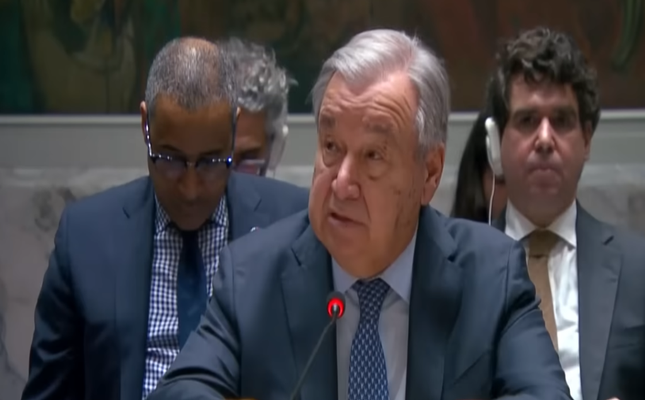
    As the conflict between the United States and Iran enters its third month, United Nations Secretary-General António Guterres has issued a stark warning about the accelerating, far-reaching global economic fallout from the fighting, even as a fragile, currently holding ceasefire hangs over the region. The conflict, which first erupted in February 2026, has severely disrupted shipping activity through the Strait of Hormuz and damaged critical regional energy infrastructure, triggering dramatic spikes in global energy prices and crippling oil production across the Middle East. In press remarks to reporters outside UN Headquarters in New York, Guterres emphasized that despite the temporary pause in active combat, the overall situation remains dangerously unstable.

    “I am deeply concerned about the curtailment of navigational rights and freedoms in the area of the Strait of Hormuz,” Guterres stated during the press briefing. The strategic waterway, a critical global trade chokepoint, carries approximately 20 percent of the world’s daily oil shipments, alongside large volumes of fertilizers and other essential commodities that underpin global food and manufacturing systems. Tensions between Washington and Tehran over control of and access to the strait have turned shipping disruptions into a systemic crisis, with ripple effects spreading through global energy, transportation, manufacturing, and food supply chains, Guterres explained.

    The UN chief stressed that the economic pain from the conflict is already being felt in every corner of the globe. “As with every conflict, the whole of humanity is paying the price — even if a few are reaping huge profits. The pain will be felt for a long time to come,” he added. Small island developing states in the Caribbean, including Saint Kitts and Nevis and The Bahamas, are already grappling with the fallout, as skyrocketing gasoline prices have placed unprecedented financial strain on working households and small businesses alike.

    To underscore the scope of the risk, Guterres outlined three distinct projected scenarios for the global economy based on how long the strait disruptions persist, noting that the negative impacts grow exponentially rather than gradually with time. In the most optimistic scenario, where the conflict ends immediately and the strait reopens to full traffic, global supply chains will still require months to fully recover. This would push global economic growth down from the projected 3.4 percent to 3.1 percent, while inflation would climb from 3.4 percent to 4.4 percent. Global merchandise trade growth would shrink from 4.7 percent recorded last year to just 2 percent, he projected, adding that the global economy, still recovering from the aftershocks of the COVID-19 pandemic and the ongoing war in Ukraine, would face further prolonged economic distress.

    In the second scenario, where shipping disruptions continue through the middle of 2026, global growth would drop to 2.5 percent and inflation would rise to 5.4 percent. This outcome would push an estimated 32 million additional people into extreme poverty worldwide. Worsening fertilizer shortages would cut global crop yields, leaving another 45 million people facing acute food insecurity, and erase decades of progress in international development almost overnight, Guterres warned.

    The most severe scenario forecasts that disruptions continuing through the end of 2026 would push global inflation above 6 percent and slow global growth to just 2 percent. “Immense suffering takes hold, especially among the world’s most vulnerable populations,” Guterres said. “And we confront the spectre of a global recession — with dramatic impacts on people, on the economy, and on political and social stability.”

    Guterres stressed that the cumulative harm is not linear: “These consequences are not cumulative. They are exponential. The longer this vital artery is choked, the harder it will be to reverse the damage — and the higher the cost to humanity.” He added that developing nations will bear the overwhelming brunt of the crisis, as pre-existing heavy debt burdens leave them with limited fiscal space to respond to rising prices, resulting in widespread job losses, deepening poverty, and worsening hunger.

    In closing, Guterres issued a clear call to all involved parties to immediately restore safe unimpeded passage through the Strait of Hormuz in full compliance with UN Security Council Resolution 2817. He also urged the full reopening of the waterway as a critical step to stabilize global commodity markets and prevent further irreversible economic damage from the ongoing conflict.

  • Anthony Smith brings All Saints West into the ABLP Column

    Anthony Smith brings All Saints West into the ABLP Column

    As vote counting continues in the Antigua and Barbuda general election, early results from Constituency ASW are starting to paint a clear picture of the preliminary race dynamics. Across the entire constituency, a total of 5,351 voters are officially registered to cast their ballots in this hotly contested electoral contest. As of the latest update, election officials have completed counting 80% of all ballots cast in the constituency. Early returns show the incumbent Antigua and Barbuda Labour Party (ABLP) candidate Anthony Smith Jr. holding a solid lead over his main challenger. Smith has secured 1,590 votes so far, putting him comfortably ahead of United Progressive Party (UPP) candidate Harold Lovell, who has accumulated 1,282 votes in the partial count. Election officials have also confirmed that 24 ballots cast in the constituency have been rejected, most commonly due to issues such as improper marking, voter irregularities, or damage that makes the voter’s choice unreadable. With roughly one-fifth of the constituency’s ballots still left to count, the race remains technically unresolved, though the current gap between the two leading candidates will be difficult for Lovell to close even with the remaining uncounted votes. This early result points to a strong performance for the ABLP in this key constituency, adding to the broader vote tally being compiled across the country as the nation waits for final official results.

  • Petrobras stopt olie-export naar VS in eerste kwartaal

    Petrobras stopt olie-export naar VS in eerste kwartaal

    A dramatic shift in global crude oil trade flows has taken shape in the first three months of 2026, as Brazil’s state-owned energy giant Petrobras has completely halted all crude oil and product exports to the United States. This sudden disruption is a direct consequence of the sweeping market changes sparked by the ongoing conflict in Iran, which has upended traditional supply chains and shifted demand patterns across the globe.

    The most notable realignment of trade routes has left China as Petrobras’ overwhelmingly dominant export market. During the first quarter of 2026, China absorbed roughly 62% of all crude oil exported by the Brazilian energy major, cementing its position as the company’s core trading partner. This marks a sharp jump from the first quarter of 2025, when China accounted for just 33% of Petrobras’ total exports. A key driver behind this surge in purchases was the prolonged closure of the Strait of Hormuz, a critical global chokepain for oil shipments that connects the Persian Gulf to international markets. In March alone, Chinese buyers snapped up record volumes of Brazilian crude to offset lost supply from Middle Eastern exporters.

    India has stepped into the role of Petrobras’ second-largest customer, taking roughly 15% of the company’s total exports in the first quarter, up marginally from 14% in the same period a year earlier. Petrobras has publicly framed India as a “strategic market”, highlighting the South Asian nation’s status as the world’s second-largest importer of seaborne crude oil, a key position that creates long-term growth opportunities for Brazilian exports.

    This dramatic expansion of exports to China and India has come at the expense of other key regional markets. The rest of Asia saw its share of Petrobras exports plummet from 28% in Q1 2025 to just 8% in the first three months of this year. Alongside the full halt to US exports – which previously held a 3% share of Petrobras shipments – exports to Europe also fell sharply, dropping from 19% a year earlier to just 8% in the most recent quarter.

    Against this shifting trade landscape, Petrobras has ramped up domestic production significantly. The company’s total domestic oil output climbed roughly 16% year-over-year to hit 2.58 million barrels per day in Q1 2026. Total combined sales of oil, natural gas, and refined products also rose around 12% from a year earlier, reaching 3.22 million barrels per day over the period.

    Global oil markets have remained highly volatile in recent weeks, driven entirely by growing supply uncertainty stemming from the US-Iran conflict. At the opening of trading on Thursday, US West Texas Intermediate (WTI) crude climbed 41 cents, or 0.43%, to hit $105.50 per barrel, after hitting an intraday peak of $110.93 earlier in the session – the highest price recorded since April 7. By market close, however, WTI had pulled back to settle at $105.07 per barrel, a drop of $1.81, or 1.69%, from the previous session.

    Despite the day’s volatile price swings, both WTI and global benchmark Brent crude are on track to notch their fourth consecutive monthly gain. This sustained upward trend reflects widespread market concern that the ongoing conflict in Iran could disrupt global oil supplies for an extended period, keeping upward pressure on prices through the coming months.

  • Dr. Philmore Benjamin has won St. Mary’s North for the ABLP

    Dr. Philmore Benjamin has won St. Mary’s North for the ABLP

    As vote counting continues in a local electoral constituency, partial results released by election officials show a clear early lead for the candidate from the Antigua Barbuda Labour Party (ABLP). With three-quarters of all ballots already processed, the contest has already revealed a sharp division among the constituency’s registered voter base, which totals 5,347 eligible participants.

    According to the official partial update from the election management body SMN, ABLP nominee Philmore Benjamin has secured 1,386 votes so far, putting him comfortably ahead of his main rival from the United Progressive Party (UPP). UPP candidate Johnathan Joseph has collected 988 votes to date, trailing Benjamin by nearly 400 votes with remaining ballots still to be counted.

    A total of 17 ballots cast in the constituency have been formally rejected over the course of counting, for reasons including mismarked selections, irregular markings, and other violations of electoral rules that disqualify them from being included in official candidate totals.

    As of the latest update, overall voter turnout across the constituency stands at 2,389 votes cast, which translates to a turnout rate of 44.68% of all registered electors. That figure means fewer than half of all eligible voters in the district have cast their ballots in this contest so far. Vote counting is ongoing, and full official results are expected once all remaining ballots are processed and verified.

  • Michael Freeland Turns St. George From Blue to Red

    Michael Freeland Turns St. George From Blue to Red

    After all ballots were counted in the SGEORGE constituency election, official full preliminary results have been finalized and released to the public. Data from the counting process shows that a total of 5,997 registered voters were eligible to cast ballots in this electoral contest. Every single ballot cast in the race has been successfully processed, with 100 percent of precinct results now reported. Among the candidates on the ballot, Michael Freeland running for the Antigua Barbuda Labour Party (ABLP) secured 2,198 votes, putting him in the lead of the final vote tally. Kelvin Dalso, representing the United Progressive Party (UPP), earned 1,359 votes in the final count. Independent candidate Gail Pero Georges finished the race with 55 votes cast in his favor. Additionally, 27 ballots were rejected during the verification process due to issues such as incorrect marking, damaged paper, or non-compliance with electoral rules. The release of these full results marks the conclusion of the official counting process for the constituency, with official certification of the results expected in the coming days.

  • Jadnanansing: Arbeid verdient waardering en eerlijke beloning

    Jadnanansing: Arbeid verdient waardering en eerlijke beloning

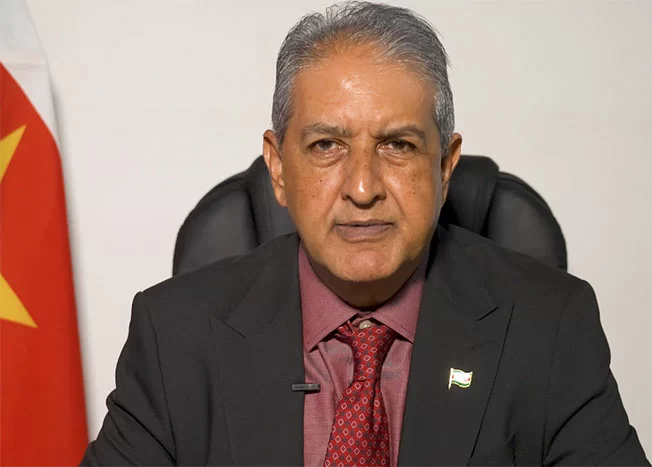
    On the annual observance of Labor Day, Raj Jadnanansing, Deputy Minister of Suriname’s Ministry of Health, Welfare and Labor, has issued a formal message paying tribute to all working people across the South American nation who contribute daily to the country’s ongoing development and nation-building efforts.

    In his official address, Jadnanansing emphasized that work forms the irreplaceable foundation of three core pillars of national progress: sustainable economic expansion, inclusive social development, and the preservation of individual human dignity. Going beyond a basic definition of work as the completion of routine tasks, he noted that employment grants people personal autonomy, long-term financial security, and the critical opportunity to build a better future for both themselves and their family members. Every worker, regardless of their occupation, job role, or sector of employment, makes an equally valuable contribution to Suriname’s overall advancement, the deputy minister added.

    Jadnanansing extended explicit recognition to workers across every major industry in Suriname, including healthcare, education, construction, retail and services, mining, agriculture, and white-collar office sectors. He stressed that the consistent dedication and hard work of these individuals lay the groundwork for all social progress and economic growth that the country achieves.

    At the same time, the deputy minister framed Labor Day as an occasion for reflection on the remaining challenges facing Suriname’s labor market. He openly acknowledged that gaps persist in ensuring fair working conditions, living wages, safe workplace environments, and accessible upskilling and training opportunities for all workers. To address these gaps, Jadnanansing confirmed that his ministry remains committed to improving the employability of Surinamese citizens through partnerships with key local institutions including the SAO, SPWE, SHTTC, and RACO. These efforts are designed to help Surinamese workers take full advantage of emerging economic opportunities, particularly in fast-growing new sectors such as sustainable energy and the country’s expanding oil and gas industry.

    In addition to outlining government action, Jadnanansing called on employers, workers, and national trade union movements to continue collaborating to build a shared culture of open dialogue, mutual respect, and collective problem-solving. He noted that only through this kind of collaborative approach can Suriname achieve long-term, sustainable progress that benefits all segments of society.

    Looking ahead to Suriname’s expected period of major economic transformation, the deputy minister reaffirmed that the national government will continue to advance policy and legislation that prioritizes social justice. He emphasized that all workers and their families must receive a fair share of the benefits from future economic growth, ensuring that development is inclusive rather than concentrated among a small subset of the population.