作者: admin

  • ABLP’s E.P Greene emerges as winner in St. Paul

    ABLP’s E.P Greene emerges as winner in St. Paul

    Election officials have released partial vote tallies for the electoral district of St. Paul, offering an early glimpse into how the local race is unfolding. Of the 3,321 registered voters eligible to cast ballots in this constituency, counting is currently complete for 64% of all ballots submitted.

    As of the latest update, candidates from two major parties have secured the bulk of the counted votes. Antigua Barbuda Labour Party (ABLP) candidate E. Paul Chet Greene has pulled out to a substantial early lead, collecting 939 votes from the counted precincts. Trailing behind Greene is United Progressive Party (UPP) challenger Franz De Freitas, who has earned 450 votes so far in the partial count. Independent candidate Alan Weston rounds out the field of contenders, having garnered 16 votes on counted ballots.

    Local election authorities also confirmed that five ballots cast in the St. Paul race have been rejected, most commonly due to issues such as improper marking, signature mismatches, or other procedural errors that invalidate the vote. Counting operations are still ongoing across remaining uncounted precincts, with official full results expected to be published once all ballots have been processed and verified.

  • Pringle Retains All Saints East & St. Luke for the UPP

    Pringle Retains All Saints East & St. Luke for the UPP

    As vote counting nears completion in the ASESL electoral constituency, preliminary official results have begun to take shape that paint a tight competitive race between the two leading candidates. According to the latest data released by election officials, a total of 4,220 registered voters are eligible to cast ballots in this constituency, with counting work currently at the 93% completion mark.

    Leading the preliminary vote count is United Progressive Party candidate Lars Jamale Pringle, who has secured 1,320 votes so far. Trailing closely behind Pringle is Antigua Barbuda Labour Party candidate Lamin Newton, who has accumulated 1,206 votes to date, putting him just 115 votes behind his opponent with just 7% of ballots remaining to be counted.

    In addition to the valid votes cast for the two candidates, election officials have confirmed that 12 ballots have been rejected for a variety of reasons, including irregular marking, incomplete voter information, and other procedural issues that invalidate the submissions.

    With counting still ongoing, neither candidate has yet claimed victory, and political observers note that the remaining uncounted ballots could still shift the final outcome, though Pringle’s current lead puts him in a strong position to secure the constituency seat. Local electoral authorities expect to release full final results within 24 hours once all remaining ballots are processed and verified.

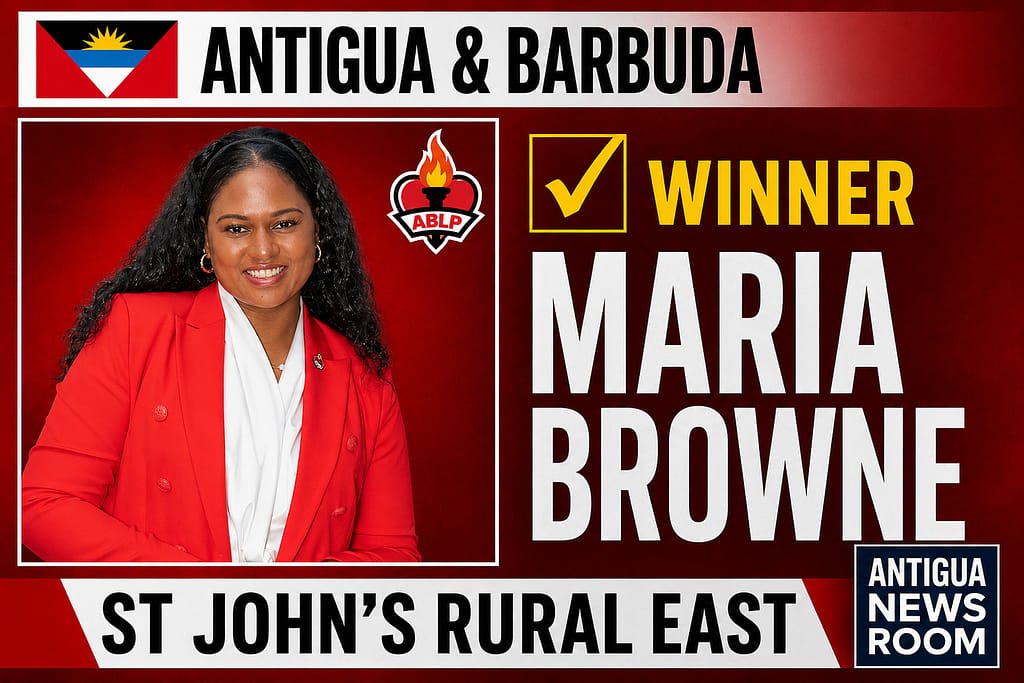
  • Maria Bird Browne Holds St John’s Rural East for ABLP

    Maria Bird Browne Holds St John’s Rural East for ABLP

    Incumbent candidate Maria Bird Browne of the Antigua Barbuda Labour Party (ABLP) has successfully held onto the St John’s Rural East parliamentary seat, securing a decisive victory over her opponent Ashworth Azille from the United Progressive Party (UPP) in Thursday’s general elections.

    With 87 percent of ballots counted from a total of 5,187 registered electors, the latest vote tally solidified Browne’s advantage: the ABLP candidate earned 1,794 votes, while Azille of the UPP collected just 872 votes. Preliminary counts also recorded 19 rejected ballots that were deemed invalid for tabulation.

    Browne’s win in the constituency reinforces the ABLP’s long-standing strong base of voter support in the rural district, marking a key gain for the party in the overall national election cycle. Political analysts note that the substantial margin of victory reflects sustained voter confidence in the incumbent’s representation and the ABLP’s policy platform among residents of St John’s Rural East.

  • National Education : Important Strategic Orientation Workshop in Haiti

    National Education : Important Strategic Orientation Workshop in Haiti

    Between April 24 and 27, 2026, nearly 100 top-tier leaders from Haiti’s Ministry of National Education gathered at Villa Saint-Viateur, located in the hilly Turgeau neighborhood of Port-au-Prince, for a landmark Strategic Orientation Workshop. The assembled delegation included the ministry’s Inspectors General, departmental coordinators, technical directors, and departmental directors, all brought together to align on a shared path for the country’s struggling education system. During the workshop, Minister of National Education Vijonet Déméro laid out his comprehensive vision for Haitian education, walking attendees through the specific priorities he plans to guide the ministry toward over the coming months. Over three days of collaborative discussion, participants coalesced around three core pillars that require urgent attention: cross-departmental strategic alignment, standardized administrative management, and stronger leadership at all levels of the organization. The targeted framework is designed to streamline operations across both central and decentralized ministry structures, and boost the effectiveness of every policy and program the institution rolls out. Conversation also extended to a range of pressing systemic challenges, including gaps in the ministry’s existing legal and governance framework, inconsistencies in educational supply chains and quality control, operational bottlenecks within departmental education directorates, ongoing management issues at public schools, and the persistent underfunding that blocks the implementation of existing education policy plans. In his opening address to the cohort, Minister Déméro called on attendees to prioritize strengthening the Ministry of National Education’s organizational culture, which he argued must center shared, widely understood and respected values, operational standards, and work practices across all teams. He equally emphasized that the ministry’s existing organizational structures — including coordination offices, technical directorates, and departmental directorates — must evolve to establish a clear, robust chain of command with unambiguous operational guidelines. For the organizational restructuring, Déméro noted the new framework will prioritize placing qualified, competent professionals in positions of responsibility, empowering these leaders to act with flexibility while upholding institutional directives and order. The minister systematically detailed a full slate of upcoming policy and infrastructure priorities during the workshop, including the ministry’s draft Organic Decree, a new proposed decree governing school opening and closing protocols, reforms to teacher appointment processes, upgrades to the digital e-document platform for issuing and legalizing academic certificates and transcripts, plans for new public school construction, commitments to bring electricity and internet access to all public schools and departmental public universities, and a proposal to launch a new national Institute for Digital Education. Ministry Director General Osny Jean Marie and Chief of Staff Ecclésiaste Thélémaque also led working sessions focused on key operational topics, including the evolving role of Departmental Directorates of Education (DDEs), pedagogical supervision standards, mandated teaching hours for national primary and secondary schools, and reforms to national state examination processes. Multiple interactive panel discussions gave attendees space to debate high-priority issues the ministry cannot afford to delay addressing. Key topics of debate included updates to the ministry’s legal framework, human resources management reforms spanning recruitment, appointments, and internal transfers, upgrades to the Education Management Information System (EMIS), improved school infrastructure management, updated operations manuals for DDEs and high schools, a new practical guide for school administration, formal school accreditation processes, and the ongoing Good Governance Engineering project, a joint initiative between the Ministry of Education and the Ministry of Economy and Finance carried out through the General Inspectorate of Finance. By the close of the workshop, participating senior leaders had put forward dozens of actionable proposals focused on institutional strengthening for the ministry, accelerating the shift to digital administration, improving internal cross-departmental coordination, and raising the quality of public services delivered to students, families, and education workers across Haiti.

  • Column: De beste vriend van wantrouwen

    Column: De beste vriend van wantrouwen

    Sometimes, it is not formal legislation, policy documents or official government procedures that reveal the deepest flaws of a country’s political culture, but small, unorthodox, and controversial incidents. The public uproar surrounding Jean “Saya” Mixon, an entrepreneur linked to Suriname’s Minister of Justice and Police Harish Monorath, is a striking case in point.

    Monorath confirmed to local outlet Sign-in TV that Mixon, who accompanied him during an official visit to the Geyersvlijt police station, was one of his four personal advisors. He clarified that the role is unpaid and that Mixon does not have an official office at the ministry, adding that he holds the authority to appoint advisors to his team as he sees fit.

    The revelation immediately ignited fierce backlash across social media and political circles. When Minister of Internal Affairs Marinus Bee told parliament on Thursday that Mixon could not hold an advisory position under the government’s formal appointment rules, many hoped Monorath’s misstep would be corrected transparently and properly. Instead, the parliamentary debate ended with the controversy more unresolved than when it began.

    Despite sharp criticisms and widespread demands that Monorath acknowledge and fix his error, the minister avoided meaningful accountability. He only conceded that Mixon does not hold an advisory position in a legal, formal sense — a semantic dodge that he treated as a full resolution to the controversy, as if clever wording could erase the reality of Mixon’s public role alongside a top cabinet official. To compound the confusion, Monorath added that Mixon is part of his “intelligence network.”

    This vague statement leaves a host of critical questions unanswered. Is this an official government role? An informal private network? A personal trust position? An information source? Who provides oversight for this position, what official powers come with it, and why was a person in this vague role openly accompanying the minister on an official visit to a police facility?

    Across all modern governments, the term “intelligence” is never casual. It relates directly to information gathering, national security, risk assessment, and confidentiality — core functions of state that demand clear protocols, strict oversight, and no room for ad-hoc political improvisation. When a cabinet minister treats this area lightly, it creates dangerous uncertainty about where the line between formal state authority and private political networks is drawn.

    Without issuing a public condemnation of Mixon as an individual, it is impossible to ignore that he is widely known as a controversial figure in Suriname. While legal status — whether convicted or acquitted of past charges — matters, good governance demands more than just adherence to the letter of the law. It requires political wisdom, moral judgment, and an acute awareness of public trust and institutional reputation. For a Minister of Justice and Police, the question of what signal an appointment sends to the public is non-negotiable.

    When a minister responsible for law enforcement openly appears alongside a controversial entrepreneur with an undefined official status, it fuels public doubt. That doubt spreads beyond ordinary citizens to police officers, international diplomatic partners, and foreign investors. No one argues that ministers should cut themselves off from informal contacts outside formal government structures; governance naturally draws insight from all layers of society. But those relationships should be managed discreetly, carefully, and with full awareness of associated risks, not paraded openly on official stages as if there is nothing out of the ordinary about the arrangement.

    The argument that Mixon does not draw a government salary is also no reassurance. Influence does not always come with a formal paycheck. Proximity to political power is often far more valuable than a regular wage. Access to top officials, informal status, expanded personal networks, and future political favors can deliver far more influence than a formal employment contract.

    Beyond the immediate controversy, this incident exposes a deeper pattern in Suriname’s governance culture: the normalization of informal advisors, personal confidants, and associates of top political leaders who operate entirely outside formal regulatory and oversight structures. No one knows exactly what these figures do, but their presence is an open secret across the political system.

    Suriname is a small, vulnerable nation that faces intense international scrutiny over its management of border control, anti-money laundering efforts, drug trafficking, counter-terrorism financing, and institutional resilience. Any hint of unclear informal power structures weakens the country’s standing on these critical global issues.

    Parliament also deserves criticism for its handling of the controversy. While both coalition and opposition lawmakers raised legitimate questions, the body ultimately accepted Monorath’s semantic dodge about Mixon’s formal legal status. When the country’s highest oversight body settles for wordplay instead of accountability, it robs itself of its purpose and becomes nothing more than a toothless tiger.

    It is fair to question whether the current government understands how fragile public and international trust in Suriname’s institutions really is. In an era of transnational organized crime and costly reputational damage, Suriname cannot afford to allow shadowy power centers to exist alongside formal state authority. Monorath had a clear opportunity to bring clarity to the situation, and instead he delivered confusion — the oldest and most reliable ally of public distrust.


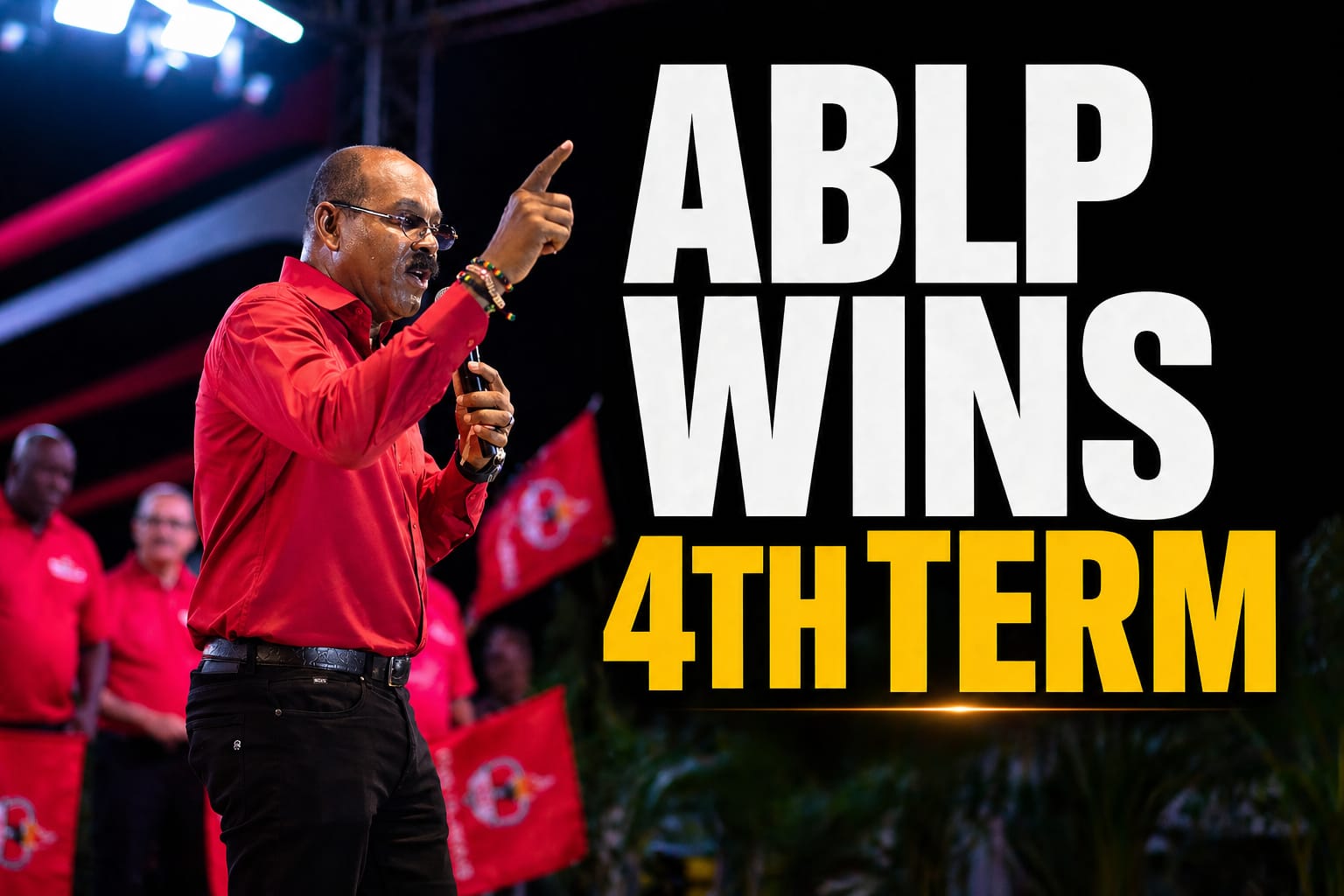
  • Gaston Browne Secures Historic Fourth Term, ABLP Wins General Election in grand style

    Gaston Browne Secures Historic Fourth Term, ABLP Wins General Election in grand style

    On Thursday, Antigua and Barbuda wrapped up its national general election, delivering a groundbreaking political milestone as Prime Minister Gaston Browne’s ruling Antigua and Barbuda Labour Party (ABLP) secured a fourth consecutive term in office — a feat never before achieved in the nation’s modern democratic history.

    Voting unfolded across the archipelago in a calm, organized fashion, with election officials expanding the number of polling stations to accommodate voters. Early turnout was robust, and independent monitors confirmed the entire electoral process met international standards for freedom and fairness. Vote counting stretched overnight into Friday morning, and as precinct results trickled in, ABLP’s consistent lead across key constituencies became increasingly clear. By the end of counting, the party had secured the required supermajority of more than 9 seats needed to form a new government, outperforming the main opposition United Progressive Party (UPP) led by Jamale Pringle, as well as all participating independent candidates.

    The landslide victory extends Browne’s tenure as Prime Minister past the 10-year mark, cementing ABLP’s longstanding hold on the country’s executive branch. Throughout the election campaign, Browne centered his platform on continuity of progress, highlighting his administration’s track record of robust economic growth, transformative public infrastructure projects, and a people-centered development agenda. He framed his leadership as a proven source of stability for the nation, urging voters to stick with a tested government that delivered tangible results.

    In contrast, the UPP ran on a platform of political change, arguing that more than a decade of continuous ABLP rule had left pressing public issues unaddressed. The opposition focused its messaging on voters’ growing concerns around the cost of living, called for improved governance standards, and pledged to upgrade underperforming public services. Despite these campaign challenges to the incumbent government, the electorate chose to renew their trust in ABLP, handing Browne the historic fourth mandate.

    Now that the results are finalized, all eyes have shifted to the incoming administration’s next steps. The new government is expected to be formally formed in the coming days, with political observers and citizens alike waiting for announcements of Cabinet appointments and clarification of the ABLP’s policy priorities for its unprecedented new term.

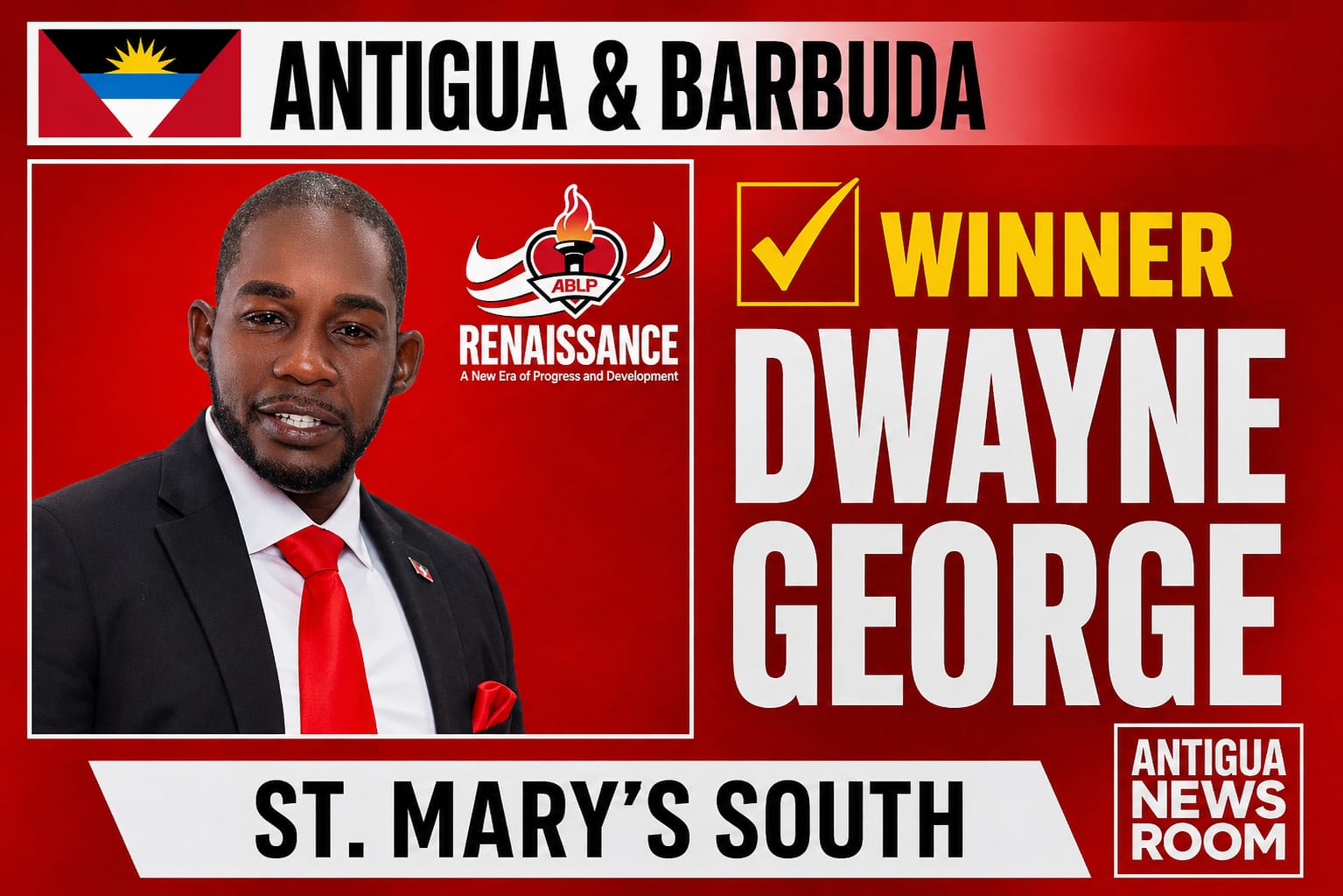
  • BREAKING: Dwayne George Defeats Simon to win St. Mary’s South

    BREAKING: Dwayne George Defeats Simon to win St. Mary’s South

    A tight electoral contest is unfolding as vote counting continues for a local electoral race, with 88% of all ballots already processed. According to the latest official figures released from counting stations, a total of 2,816 voters were officially registered to cast their ballots in this election.

    With most votes now tallied, Dwayne George, the candidate representing the Antigua Barbuda Labour Party (ABLP), has secured 899 votes so far, putting him ahead of his main competitor. Kelvin Simon, running on the ticket for the United Progressive Party (UPP), has accumulated 797 votes to date, trailing George by a margin of 97 votes with the remaining 12% of ballots still to be counted.

    Electoral officials have also confirmed that 10 ballots have been formally rejected, most commonly due to issues such as mismarked voting papers, signature irregularities, or other violations of electoral rules that disqualify the submission from being counted toward either candidate’s total.

    As counting teams prepare to process the outstanding ballots, the final outcome of the close race remains uncertain, with neither candidate yet able to claim a confirmed victory. Political observers note that the slim current margin means the outstanding ballots could still shift the final result if the remaining votes break heavily in favor of Simon. Electoral authorities have not yet announced an exact timeline for when full vote counting will be completed and the official final result declared.

  • Sir Steadroy continues ABLP dominance in St. John City South with emphatic victory

    Sir Steadroy continues ABLP dominance in St. John City South with emphatic victory

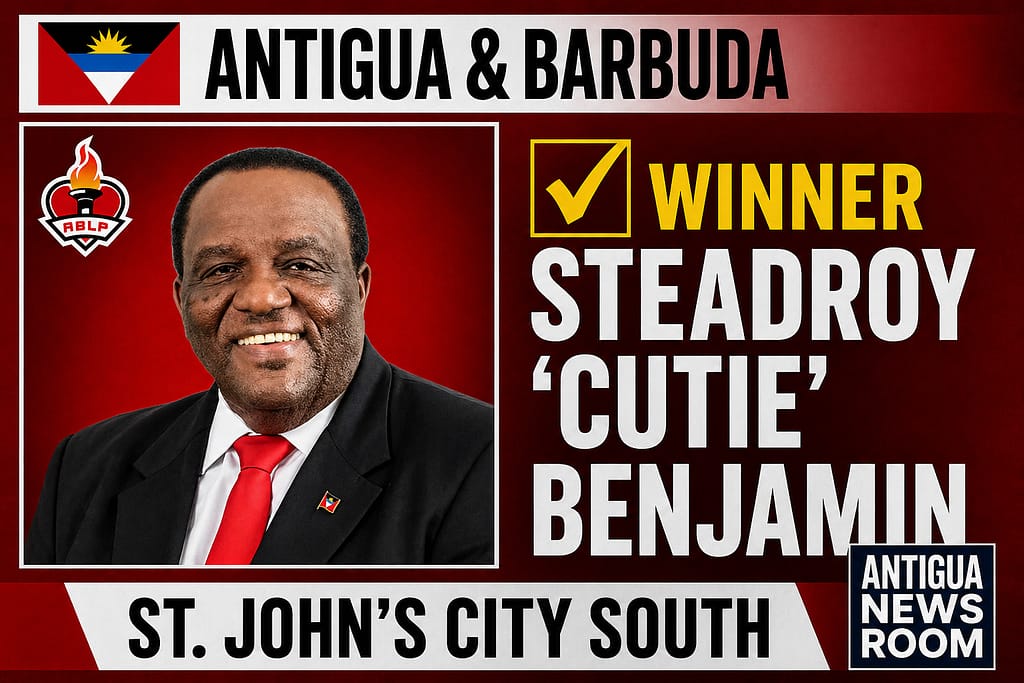
    In a decisive display of enduring voter confidence during Antigua and Barbuda’s general election held on Thursday, incumbent candidate Sir Steadroy “Cutie” Benjamin of the Antigua and Barbuda Labour Party (ABLP) successfully retained his seat for the St John’s City South constituency, securing a commanding majority of the vote against his challenger from the main opposition United Progressive Party (UPP).

    With 88% of all ballots counted as of the latest official update, election officials have recorded 854 votes in favor of Sir Steadroy, compared to just 337 votes cast for UPP challenger Adrian Williams. A total of 43 ballots were rejected during the counting process for failing to meet election validity requirements. Calculations based on the released figures show that Sir Steadroy captured 72.6% of valid votes, a margin that reflects the deep-rooted, long-term support he has built among constituents over his tenure in office.

    Thursday’s general election, which saw voters across the nation cast ballots to select their parliamentary representatives, delivered a clear mandate for Sir Steadroy in his constituency. The landslide result not only cements his political standing in St John’s City South but also signals that his track record of representation has resonated strongly with local residents, who turned out to reaffirm their support for the ABLP incumbent.

  • Fernandez Easily Keep St. John Rural North for the ABLP

    Fernandez Easily Keep St. John Rural North for the ABLP

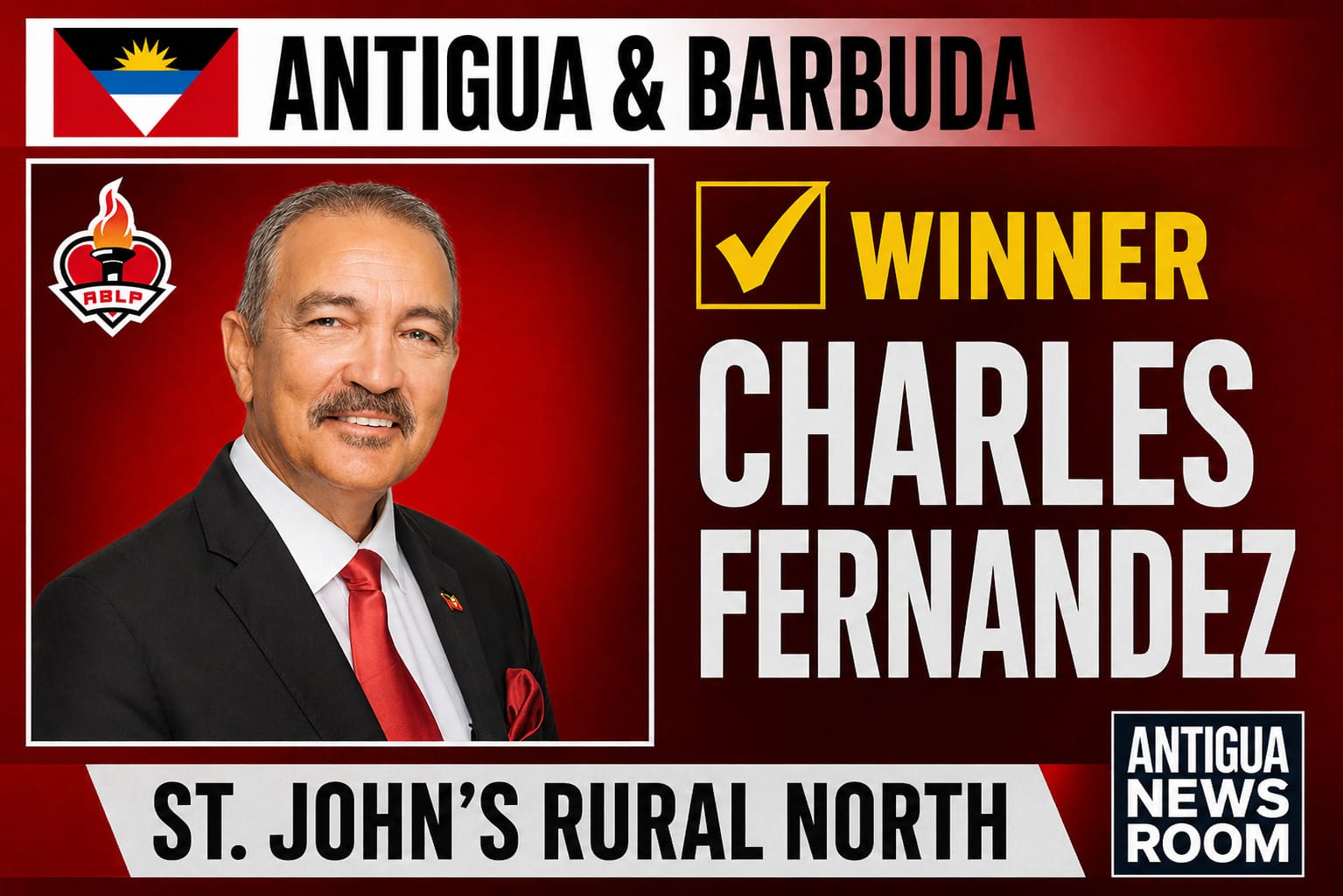
    Antigua and Barbuda’s general election held on Thursday delivered a decisive victory for the incumbent candidate Charles ‘Max’ Fernandez, who successfully retained the St John’s Rural North parliamentary seat for the Antigua and Barbuda Labour Party (ABLP). Fernandez defeated his main challenger, Malaka Parker, who contested the constituency on behalf of the United Progressive Party (UPP).

    Early vote counting confirmed a strong, steady lead for the sitting representative from the opening stages of the tabulation process. His comfortable margin of victory underscores the enduring political popularity and organizational strength of the ABLP within the St John’s Rural North region.

    When all valid ballots were counted, Fernandez secured a total of 1,301 votes, while Parker finished the contest with 833 votes in her favor. Election officials also confirmed that 20 ballots were rejected during the counting process due to irregularities that rendered them invalid per national electoral rules.

  • 2026 West Indies Championship: Round 3 Recap

    2026 West Indies Championship: Round 3 Recap

    The third and final round of group-stage play in the 2026 West Indies Championship delivered a series of thrilling results that finalized the tournament’s knockout structure, with two-time defending champions Guyana Harpy Eagles securing an automatic place in the final and Barbados Pride pulling off a dramatic upset to claim the final playoff spot.

    Hosting Jamaica Scorpions at Kingston’s Sabina Park, Barbados Pride turned in a dominant all-round performance to secure an innings and 11-run victory inside three days, a result that flipped the standings and pushed them into the playoff round at Jamaica’s expense. Winning the toss and electing to bat first, Pride posted an imposing first-innings total of 439, anchored by a 94 from Jonathan Drakes and an aggressive 84 from all-rounder Roston Chase. The knock marked Barbados’ fourth consecutive first-innings score over 300, highlighting the side’s consistent batting form through the group stage.

    The match was decided by spin, as Chase and left-arm spinner Joshua Bishop tore through Jamaica’s batting line-up to dismiss the home side for just 142 in their first turn at the crease. Holding a 297-run first-innings lead, Barbados enforced the follow-on, and Jamaica never recovered their momentum. Though the Scorpions improved to 286 in their second innings, Bishop delivered a match-winning five-wicket haul to finish with stunning match figures of 9 for 103. Barbados captain Kraigg Brathwaite later noted that Bishop’s selection was a strategic call, informed by his 9-wicket haul against Jamaica two years prior on similarly dry, spin-friendly pitches. “It is good to see his hard work paying off,” Brathwaite said, also praising his side’s mental resilience to bounce back from an opening-round defeat to Jamaica.

    The upset result flipped the tournament standings dramatically: Barbados climbed to 42.2 points to secure second place, while Jamaica slipped from a narrow 9.8-point advantage to finish third on 34 points, missing out on the playoff berth.

    At Coolidge Cricket Ground in Antigua, Guyana Harpy Eagles cemented their status as the tournament’s preeminent side, wrapping up a 93-run victory over Windwards Volcanoes to complete a 3-0 bilateral series sweep and finish the group stage top of the table on 63.8 points, well clear of the chasing pack. Opener Tagenarine Chanderpaul anchored Guyana’s batting through the match, scoring a patient 69 in the first innings before hitting an unbeaten 117 off 297 balls to rescue his side from 129/6 in the second innings, lifting the total to 299 all out.

    Left-arm spinner Gudakesh Motie led Guyana’s bowling attack, taking four wickets in each innings, with veteran Veerasammy Permaul chipping in with three scalps. Chasing a 318-run target to win, the Volcanoes were bowled out for 225, despite 64 from Alick Athanaze and a 74-run fourth-wicket stand between Athanaze and Johann Jeremiah. Even in victory, Guyana captain Tevin Imlach acknowledged room for growth ahead of the final. “The bowlers have been brilliant throughout this series, but our batting has some kinks to iron out,” he said. “Once we fix that, we can put up a complete performance in the final.”

    At the Antigua Recreation Ground, Trinidad and Tobago Red Force looked set to secure a round-three victory after dominating play against Leeward Islands Hurricanes, but a determined late batting rearguard from the Hurricanes forced an unlikely draw. Red Force captain Joshua Da Silva scored a career-best 220 off 304 balls, including 20 fours and two sixes, lifting his side to 522/9 declared. Pacer Anderson Phillip delivered a relentless bowling performance, finishing with eight wickets across the two innings. After being dismissed for 345 in their first innings and forced to follow on, the Hurricanes mounted a dramatic rescue on the final day of play.

    From a precarious 160/4 early on the final day, Keacy Carty scored a composed 147, while skipper Justin Greaves hit 122, putting on a 174-run fifth-wicket stand. An unbroken 112-run late-wicket stand between Rahkeem Cornwall (66 not out) and Jahmar Hamilton (50 not out) closed out the match, securing the draw. Despite missing out on a win, Da Silva remained upbeat about his side’s form, calling his first career double century “a great personal milestone” and praising Phillip’s match-winning effort.

    With group-stage play complete, the tournament now moves to its knockout phase. Barbados Pride will face Trinidad and Tobago Red Force in a one-off Qualifier match, with the winner advancing to challenge Guyana Harpy Eagles for the 2026 West Indies Championship title. With both sides coming off strong performances in round three, the Qualifier is set to be a tightly contested, can’t-miss clash.