作者: admin

  • No legal requirement

    No legal requirement

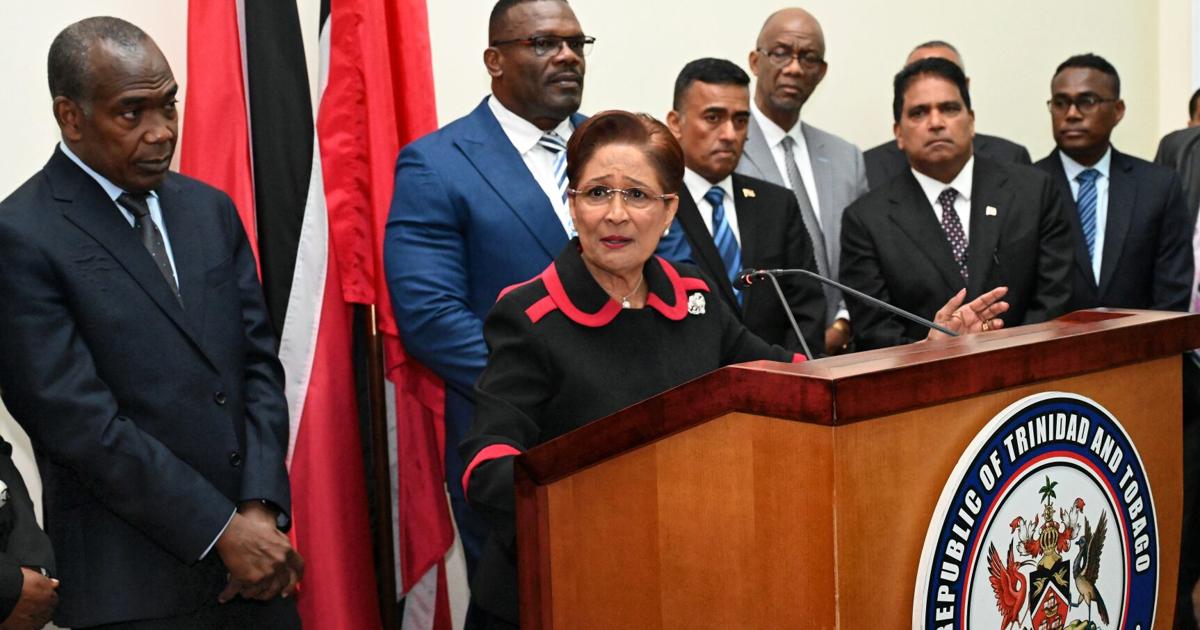
    For more than two months, Trinidad and Tobago has not held a formal post-Cabinet media briefing, sparking widespread debate over government communication practices and transparency standards. The final such briefing was held on May 7, when cabinet ministers addressed reporters on a broad spectrum of pressing public issues, from the high-profile triple homicide in Belmont’s Rifle Hill to regional security coordination following the Shield of the Americas summit, the country’s UN Security Council non-permanent seat bid, new UK visa requirements for Trinidad and Tobago citizens, and bilateral relations with neighboring Venezuela. That session was chaired by Wilfred Nicholas Morris, Minister in the Office of the Prime Minister.

    In recent interviews, two leading Trinidadian political scientists have offered divergent perspectives on the ongoing hiatus, while agreeing on a core legal point: there is no binding legal mandate requiring the government to host these formal press briefings.

    Dr. Bishnu Ragoonath, a prominent political scientist, explained that longstanding constitutional and procedural traditions frame Cabinet deliberations as inherently confidential. Cabinet meeting minutes and discussion notes are legally protected from public disclosure, he noted, and no constitutional clause or statutory law requires ministers to update the public immediately following every Cabinet gathering. Ragoonath added that post-Cabinet briefings emerged in recent decades as a voluntary practice for governments seeking to signal greater openness and align with modern good governance standards, not as a legally required obligation.

    While affirming the lack of a legal requirement, Ragoonath emphasized that transparency remains a foundational pillar of legitimate democratic governance. “I have always been one for accountability and transparency. Ethics is dependent upon integrity and accountability and transparency,” he stated. That said, he harshly criticized the current government’s broader communication strategy, arguing it is structurally inadequate and frequently fails to provide necessary context for major policy changes.

    Pointing to the recent suspension of the Military-Led Academic Training (MILAT) Programme as a key example, Ragoonath said officials only announced the termination of the program without offering any public explanation for the decision. He later learned through unconfirmed secondary sources that the program carried a price tag of roughly $135,000 per trainee, a cost that reportedly prompted the review. “If those were the facts which caused the review of the programme, come out and say it. Without giving context and without adequate background, one wonders whether or not there is a hidden agenda,” Ragoonath said.

    Dr. Indira Rampersad, another respected political scientist, shared Ragoonath’s conclusion that no legal obligation exists for post-Cabinet briefings, but pushed back on the framing that the current government is failing to communicate with the public. She argued that Prime Minister Kamla Persad-Bissessar and her cabinet have maintained consistent public outreach through alternative channels, making announcements and responding to reporter questions on all major policy topics. These include the mid-year budget review, national crime reduction initiatives, regional diplomatic affairs, and the country’s successful campaign for a UN Security Council non-permanent seat.

    Rampersad noted that the government’s approach is flexible: officials share information when they have updates to deliver, through whatever format works best, rather than adhering to a rigid requirement for a formal post-Cabinet briefing every time. She also pointed to practical logistical reasons that may explain the current hiatus, noting that Cabinet meetings often run well over schedule due to crowded policy agendas, leaving little time for an immediate press briefing.

    Further, Rampersad said the public has not been left uninformed, and ministers remain accessible to journalists for questions and comments. She also reminded observers that some matters, including ongoing criminal investigations and sensitive national security issues, cannot reasonably be discussed publicly by cabinet ministers for legal and public safety reasons.


  • ‘Petty politics’ over funding

    ‘Petty politics’ over funding

    A high-profile public dispute over delayed public servant salaries has broken out in Trinidad and Tobago, with Rural Development and Local Government Minister Khadijah Ameen accusing the Port of Spain City Corporation and its mayor of prioritizing petty political gain over worker stability.

    The conflict began last week, when Port of Spain Mayor Chinua Alleyne publicly raised alarm over delayed June paychecks for the city’s monthly-paid municipal employees. Alleyne claimed the central Local Government Ministry had dragged its feet on approving June payroll funding, warning that no financial provision had even been made for salary payments beyond the month of June. He added that City Hall had repeatedly alerted national government officials that the corporation would be unable to meet its payroll obligations, but those warnings were ignored. Just one day after his initial statement, however, Alleyne updated the public via his official Facebook page that the corporation had received a funding cheque — though he clarified the sum still did not cover payroll obligations past June.

    Minister Ameen pushed back against Alleyne’s narrative while speaking to reporters at a Venezuela earthquake relief donation drive in Woodbrook earlier this week, laying full blame for the delay at the feet of the city corporation. She explained that following a mandated public service salary increase, ministry officials required updated documentation from all municipal corporations to properly recalculate and audit payroll allocations. Meetings were held with Port of Spain representatives in March and again in April to outline these requirements, but the city failed to submit the necessary paperwork on time.

    According to Ameen, the situation moved toward resolution only after the city finally submitted its first set of documents the previous Friday. Ministry staff worked through the weekend to process the submission, but a second round of documents turned in on Sunday contained errors. City officials finalized corrections on Monday, clearing the way for full funding to be disbursed.

    Ameen confirmed that the cheque the corporation received covers all salary obligations from the mid-year budget review through the end of the current financial year, meaning all affected monthly-paid workers under the Public Services Association have now received their pay. She noted that daily-paid and contract municipal workers were never impacted by the administrative backlog.

    The minister went a step further, accusing Alleyne of seeking cheap political mileage by going public with the dispute before the issue could be resolved internally. She argued that the premature publicity caused unnecessary harm to workers, sharing that one employee contacted her in tears after a local credit union halted approval on her long-awaited loan over unfounded concerns about her job security.

    Ameen also pointed to broader administrative frictions with municipal corporations controlled by the opposition People’s National Movement (PNM), claiming petty political posturing often leads PNM-led bodies to avoid routine outreach that would prevent processing delays. She emphasized that she has maintained close coordination with public service unions to protect worker interests, and stressed that no politics will be allowed to jeopardize employee pay or job security. She issued a public assurance to all municipal workers across the country that their salaries are fully secure and all outstanding administrative issues have been resolved.

  • OPEC+ kondigt bescheiden productie-uitbreiding aan temidden dalende olieprijzen

    OPEC+ kondigt bescheiden productie-uitbreiding aan temidden dalende olieprijzen

    Seven major producer nations within the OPEC+ alliance have confirmed plans to implement a modest increase to collective oil production starting in August 2026, marking the fifth straight month of output expansions for the bloc. The decision comes as global fuel prices have fallen to levels not seen since before the outbreak of the US-Iran conflict earlier this year, easing pressure on energy markets worldwide.

    The Organization of the Petroleum Exporting Countries (OPEC) and its non-OPEC partner producers, collectively known as OPEC+, made the announcement Sunday, confirming that the seven participating countries — Saudi Arabia, Russia, Iraq, Kuwait, Kazakhstan, Algeria, and Oman — will add a total of 188,000 barrels of crude per day to global markets. In an official statement, the alliance emphasized that it will continue closely monitoring market dynamics and maintain a cautious, data-driven approach to preserve global market stability.

    Global oil prices have dropped sharply over the past month, driven by growing market optimism that followed a preliminary US-Iran agreement to de-escalate their conflict. Under the terms of the tentative deal, Iran has agreed to allow unimpeded passage of commercial vessels through the Strait of Hormuz, while the United States will lift its blockade on Iranian ports. Since the agreement was reached, the volume of commercial traffic through the strategic chokepoint has risen, though it has not yet returned to pre-conflict levels.

    The Strait of Hormuz is one of the world’s most critical energy infrastructure chokepoints, carrying roughly one-fifth of global oil trade before the outbreak of the conflict. Even with the preliminary de-escalation, regional tensions remain elevated. Iran’s joint military command recently issued a warning that oil tankers must only use Iran-approved shipping routes through the strait, threatening a “forceful response” for non-compliance.

    As negotiators work to finalize a permanent peace agreement, oil prices have continued their downward trend. As of Sunday evening, Brent crude, the global benchmark for oil pricing, traded around $72 per barrel. This price point matches levels recorded just before US and Israeli strikes on Iran in February, and marks a sharp decline from the March peak of nearly $120 per barrel.

    The US-Iran conflict triggered a global energy crisis earlier this year, when the blockade of the Strait of Hormuz left even prior incremental production hikes from OPEC+ unable to offset the massive disruption to global supply. At the start of the conflict, many major Middle Eastern oil producers were forced to cut output, as export routes were effectively closed. The latest estimate from S&P Global Energy projects that full production recovery across the Persian Gulf region will not be completed until the first quarter of 2027.

    Despite falling crude prices, energy analysts have repeatedly warned that consumer fuel and goods prices will remain elevated for a long period even after a full conflict resolution, as supply chain adjustments and post-crisis reconstruction take time to fully normalize global energy markets.

  • LISTEN: Antigua and Barbuda Considering US$100 Million Chinese Loan for Housing and Renewable Energy

    LISTEN: Antigua and Barbuda Considering US$100 Million Chinese Loan for Housing and Renewable Energy

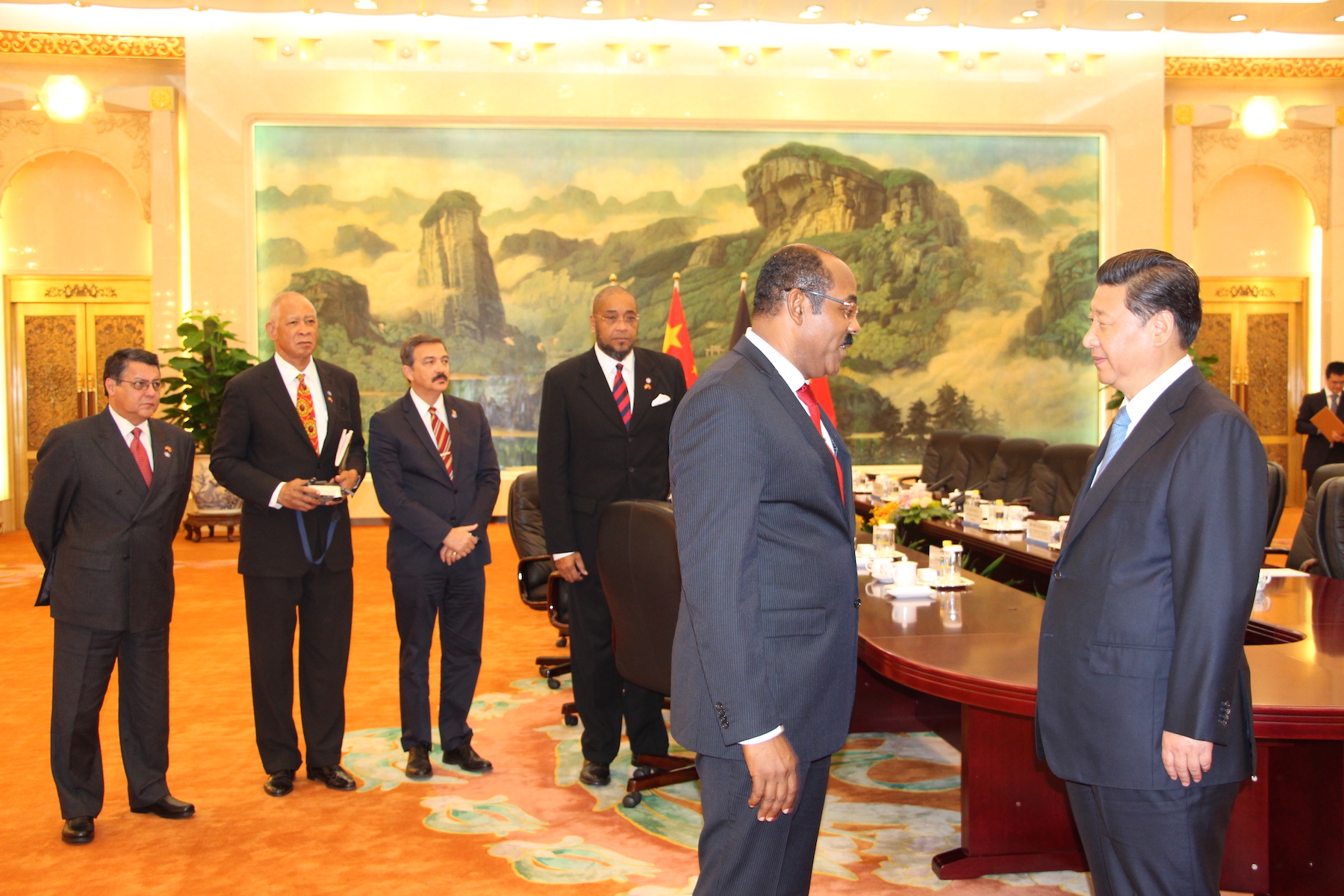
    The Caribbean nation of Antigua and Barbuda is actively exploring a new $100 million concessional loan from China to advance two key domestic development priorities: upgrading renewable energy infrastructure and expanding affordable housing stock, Prime Minister Gaston Browne confirmed in a recent public interview.

    Appearing as a guest on the local Brown and Brown Show this past Sunday, Browne framed the proposal as a feasible step forward, citing a notable improvement in the country’s fiscal position in recent years. He told listeners that Antigua and Barbuda’s debt-to-GDP ratio has dropped sharply to roughly 62%, putting it just two percentage points above the widely accepted international sustainability benchmark of 60%. This improved fiscal standing has created room for the government to take on targeted new borrowing to drive long-term growth, he argued.

    Under the draft plan being evaluated by the administration, $40 million of the requested loan would be dedicated to the construction of a utility-scale renewable energy facility, a project designed to cut the country’s reliance on expensive imported fossil fuels and lower energy costs for residents. The remaining $60 million would be channeled directly into expanding housing supply across both main islands of Antigua and Barbuda, as the country grapples with a persistent shortage of affordable quality housing.

    Browne emphasized that the current housing shortage is far larger than ongoing projects already underway can address. Currently, the government is utilizing a $20 million Chinese grant to build 100 new homes: 50 units in the Bolans community on Antigua, and another 50 on the island of Barbuda. Even with these new units coming online, the prime minister noted that the country still needs thousands of additional homes to meet unmet demand, requiring a large-scale scaling up of residential construction.

    The Antiguan leader added that his government has a long-standing policy of pursuing concessional financing from international partners to fund high-impact infrastructure and development projects, and he specifically highlighted the favorable terms of past Chinese lending. It was those low-interest terms, he said, that have helped the country steadily bring down its overall debt burden to the current improved level.

    Browne outlined the specific terms his administration would view as acceptable for the new loan: a 20-year repayment period, a 2% interest rate, and a five-year moratorium on principal payments, terms that match the favorable borrowing conditions the country has secured from China in the past.

    In a nod to multilateral openness, the prime minister also noted that the government would be equally willing to accept financing from the United States, should Washington be able to offer terms comparable to China’s concessional rates. “If they’re able to match the Chinese and we’re getting cheap money, we will borrow,” Browne stated, underscoring the government’s priority of securing the lowest-cost financing for national development regardless of the source.

  • Column: Het WK als spiegel van het leven

    Column: Het WK als spiegel van het leven

    For weeks now, the entire world has had one eye fixed firmly on the FIFA World Cup, a global quadrennial spectacle that stretches far beyond the boundaries of a simple sporting tournament. Across 90 minutes of play, under bright stadium lights and in the living rooms of millions of fans, the World Cup tells a universal story of hope, resilience and grit — themes that resonate more deeply than ever at a moment when global stability feels increasingly fragile.

    For billions of Brazilian football fans, the national team’s early exit in the round of 16 hit harder than most could have expected. For decades, Brazil was synonymous with beautiful, fluid football and an aura of invincibility that left opposing teams trembling before they even stepped onto the pitch. While the last three World Cup squads have not lived up to that legendary standard, the unwavering passion of the players and the Brazilian people for the beautiful game and their dream of lifting the trophy remains undimmed. This is the core power of sport: it is never only about triumph. It is about persistence, about getting back up after defeat, and about holding onto belief even when the odds are stacked against you.

    If you look beyond the green grass of the tournament pitches, the World Cup’s meaning grows even richer. In Gaza, a region torn apart by months of war and crippling uncertainty, Palestinian fans celebrated Morocco’s historic victories with unbridled joy. Amid the destruction and chaos of daily life, that moment of shared celebration offered a rare breath of peace, a small sliver of joy to hold onto when hope feels scarce. For Gaza’s people, this World Cup became a beacon, a quiet reminder that even in the deepest darkness, light can still break through.

    The Iranian national team also arrived at the tournament carrying an extraordinary weight, facing immense obstacles and widespread doubt on their road to Qatar. Yet they stepped onto the global stage as heroes, welcomed home with open arms regardless of their final results. Their journey is a powerful testament to perseverance and national pride, proof that sport can transcend political divides and break down barriers. For the Iranian team and their supporters, the World Cup was never just a series of matches — it was a symbol of hope and shared unity.

    Even tiny Cape Verde, a small island nation with barely half a million people, turned the global football spotlight into a stage to prove that courage and determination matter far more than size or global reputation. The underdog side pushed powerhouse Argentina to the absolute limit, turning unknown players into household names and putting their small nation firmly on the global football map. This World Cup has reinforced a timeless truth: respect and recognition are not reserved only for the world’s sporting giants. They belong to every team and every person brave enough to dream big and fight for their goal.

    At the same time, this tournament has also been a farewell. For a generation of the world’s biggest football superstars, this is their final appearance on the sport’s biggest global stage. Cristiano Ronaldo chases one last shot at glory with Portugal, while Lionel Messi dances his final World Cup tango with Argentina, bringing a passion to the pitch that will inspire generations of players to come. Neymar’s dream of leading Brazil to a sixth World Cup title crumbled early, a harsh reminder that even the biggest stars face the inherent vulnerability of sport. Meanwhile, Luka Modric continues to inspire his team and his country with tireless dedication, a beacon of experience and strength in a rapidly changing football landscape.

    These iconic players, who turned childhood dreams into global legend, are now confronting the quiet reality that their time on the world’s biggest stage is slowly drawing to a close. This makes the World Cup a beautiful paradox: it gives rising new stars a platform to shine, while also bidding farewell to the legends who defined the game for a generation, clearing the way for a new era. It reminds us that all dreams are vulnerable — they can come true, but they can also fall apart. And it is exactly that vulnerability that makes the beautiful game so deeply human, so universally relatable to people across every corner of the globe.

    In an era where war, poverty and uncertainty have become daily reality for billions of people around the world, this World Cup has shown that joy, hope and connection can be found anywhere: on the pitch, in packed stadiums, and in the hearts of millions of fans across the world.

    Brazil’s early fall, Morocco’s unexpected triumph, Iran’s defiant heroes and Cape Verde’s fearless underdog run are all chapters in this larger story. It is a story that reminds us that football is never only about winning or losing. It is about holding onto belief, and never stopping dreaming. In these divided, uncertain times, it is hope that binds us together, it is hope that pushes us forward, and it is the persistence to keep going that lets us prevail — both on the football pitch, and off it.

  • Derde helft WK 2026: Engeland overleeft Mexicaanse storm en rekent af met Azteca-trauma

    Derde helft WK 2026: Engeland overleeft Mexicaanse storm en rekent af met Azteca-trauma

    Sunday night at the 2026 FIFA World Cup delivered one of the most dramatic and emotionally charged matches in tournament history, as Thomas Tuchel’s England side fought tooth and nail to seal a 3-2 round of 16 victory over host nation Mexico at a roaring Estadio Azteca, booking their spot in the quarterfinals despite playing more than 30 minutes with 10 men. For England, the win was far more than just a place in the final eight: it closed a painful 40-year chapter in the nation’s football history, written at the very same stadium. It was at the 1986 World Cup that England fell to Argentina in a legendary quarterfinal clash at Azteca, where Diego Maradona scored both the infamous “Hand of God” goal and the iconic “Goal of the Century” – a defeat that has stood as one of the most bitter disappointments in English football ever since. This time, England left Mexico City with their heads held high, exorcising the ghosts of 1986.

    The match got off to a chaotic, physical start, with Declan Rice picking up a yellow card after just 60 seconds of play. England struck twice in quick succession just before halftime, putting themselves in a strong position early. Jude Bellingham opened the scoring in the 36th minute after a brilliant build-up from Bukayo Saka, and doubled the Three Lions’ lead barely two minutes later, tapping home a pinpoint cross from captain Harry Kane. Mexico did not fold, however, and Julián Quiñones cut the deficit in half right before the halftime whistle, giving the sold-out home crowd a spark of hope.

    The momentum looked set to swing completely in Mexico’s favor just after the break, when English defender Jarell Quansah was shown a straight red card in the 54th minute, forcing Tuchel’s side to play out the remaining 36 minutes plus stoppage time a man down. Against all odds, England extended their lead just six minutes later, as Harry Kane found the back of the net to make it 3-1.

    Mexico kept pressing, and Raúl Jiménez narrowed the gap to 3-2 in the 69th minute, turning the final stretch into a relentless siege on England’s goal. What followed was a masterclass in resilient, gutsy defensive football. For the final half hour of regulation time plus an astonishing 11 minutes of stoppage time, England barely crossed the halfway line, with every outfield player dropping behind the ball to protect their lead. There were no more attacking forays: every challenge, every aerial duel, every single second on the clock became a fight for survival.

    Match statistics highlight just how one-sided the late pressure was: England mustered only five total shots on goal across the entire 90-plus minutes, while Mexico launched 19 attempts on target or toward goal. Wave after wave of Mexican attack crashed against England’s defensive line, but goalkeeper and backline held firm time after time, with every last-ditch save celebrated as fiercely as a goal by the drained English players.

    For Mexico, the defeat is yet another devastating disappointment, crushing the host nation’s long-held dream of finally breaking through to the World Cup quarterfinals for the first time in decades. Buoyed by a raucous crowd of nearly 90,000 passionate fans that turned Estadio Azteca into a roaring sea of supporters, hope ran higher than ever that this would be the year El Tri broke their decades-long quarterfinal curse. Since reaching the quarterfinals as host nation back in 1986, Mexico has failed to advance past the round of 16 in every World Cup they have entered – a drought that remains unbroken even on home soil in 2026.

    When the final whistle blew, tears flowed across the stadium for Mexico. Fans hugged each other and wept in the stands, while Mexican players collapsed exhausted on the pitch, their World Cup journey over before the knockout stage’s final eight. England celebrated their hard-won victory with quiet composure, well aware that they had not only claimed a quarterfinal ticket but also laid to rest a shadow that had hung over English football for 40 years. For Mexico, there was only the painful, familiar conclusion: the quarterfinal curse still holds.

  • Zapping Haiti of July 6, 2026

    Zapping Haiti of July 6, 2026

    July 6, 2026 – A roundup of key developments spanning international sports, domestic security, diplomacy and political affairs out of Haiti and around the globe on Sunday.

    In international football, the 2026 FIFA World Cup delivered a stunning Round of 16 upset that will go down in Nordic football history. Norway, fielding one of the world’s most lethal strikers in Erling Haaland, knocked five-time champion Brazil out of the tournament with a last-gasp 2-1 victory that secured the Vikings’ first-ever trip to the World Cup quarter-finals. Haaland, who has dominated European club football for years, put his side ahead in the 79th minute before doubling the lead in the final minute of regulation. Brazilian legend Neymar, who came into the tournament chasing his first World Cup title, pulled one back from the penalty spot deep into 10 minutes of stoppage time, but it was not enough to avoid a historic early exit. This marks Brazil’s earliest World Cup elimination since 1990, and a visibly emotional Neymar confirmed to Brazilian broadcaster TV Globo that he was stepping away from international football after the defeat.

    Back in Haiti, domestic security forces successfully fended off an armed attack on critical infrastructure early Sunday morning. According to reports, heavily armed assailants launched an assault on the Teleco telecommunications site in the Obléon district of Kenscoff at approximately 1:00 a.m. on July 5. The attackers were met with immediate and firm resistance from members of the Haitian Armed Forces (FAd’H), who held their ground against the incursion until specialized reinforcements from the Haitian National Police (PNH) arrived on scene. The combined security forces forced the attackers to retreat, ending the assault without the attackers securing their objective.

    On the diplomatic front, Haiti’s Prime Minister Alix Didier Fils-Aimé released a formal message marking the 250th anniversary of the founding of the United States. “250 years after its birth, the United States of America remains one of the most significant democratic experiments in modern history,” Fils-Aimé said in the statement. “On this anniversary, Haiti salutes the American people and pays tribute to a nation that continues to uphold the ideal of liberty. We also rejoice in the long-standing friendship that unites our two peoples and our shared commitment to nurturing it for the benefit of future generations.”

    Political tensions are rising around upcoming electoral processes in Haiti, however, as a broad coalition of opposition and civil society groups say they have been locked out of negotiations over a new national electoral decree. A coalition made up of more than 20 political parties and civil society organizations issued a statement pushing back against government claims of inclusive consultations, saying they were never invited to participate in discussions or provide input on the electoral decree published on June 2, 2026. “The signatory organizations wish to set the record straight. At no point were they invited by the Government to participate in consultations or to provide feedback on the electoral decree of June 2, 2026. This gives a false impression of the consultation process and risks misleading national public opinion as well as international partners,” the coalition said.

    In global tennis news, Haitian-Japanese star Naomi Osaka notched a career-defining upset on one of the sport’s biggest stages, defeating world number one Aryna Sabalenka to qualify for the Wimbledon quarter-finals for the first time. Ranked 14th in the WTA rankings coming into the match, Osaka dominated the opening set 6-2 before closing out the win with a 7-6(2) victory in the second set on Centre Court. The result marks a major milestone in Osaka’s ongoing return to top-level competition after a series of injury and personal breaks from the tour.

    In domestic economic news, Haiti’s central bank, the Bank of the Republic of Haiti (BRH), has highlighted the growing impact of the country’s savings and credit cooperative (CEC) sector on national financial inclusion. As of the end of March 2026, the sector counts 62 licensed cooperatives, more than 1.48 million individual members, and holds a total of more than 38 billion gourdes in total assets. BRH commended the sector for its key role in financing local economic activity and expanding access to financial services across the country, confirming its standing as a core pillar of Haiti’s national financial system.

  • «The abolition of the death penalty in Haiti: a commitment to be preserved» dixit lawyer Jean Wilner Morin

    «The abolition of the death penalty in Haiti: a commitment to be preserved» dixit lawyer Jean Wilner Morin

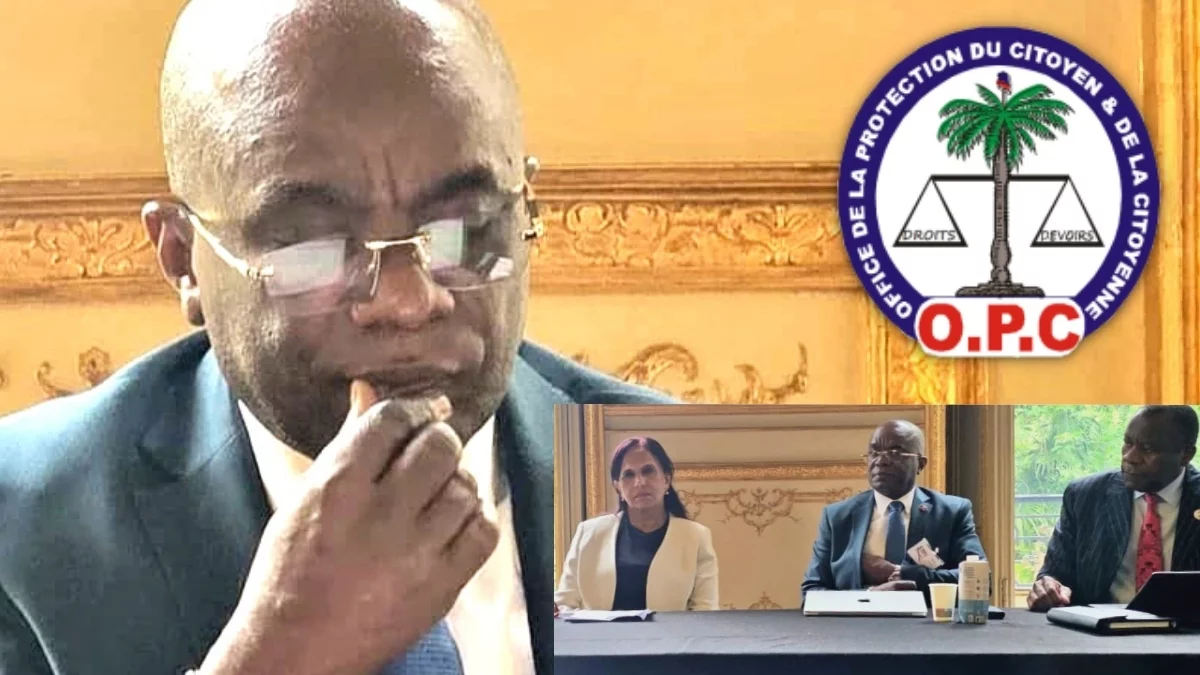
    When global anti-death penalty advocates gathered in Paris last week for the 9th World Congress Against the Death Penalty, Haiti’s top human rights oversight official brought a urgent, nuanced message from his violence-plagued nation: the hard-won abolition of capital punishment must be defended, even as the country grapples with a systemic breakdown that threatens the fundamental right to life every day.

    Jean Wilner Morin, Haiti’s Ombudsman, addressed a dedicated congress session focused on advancing life protection and the global elimination of capital punishment, delivering a talk titled “The Right to Life and the Abolition of the Death Penalty in Haiti: A Commitment to Uphold.” Morin opened his remarks grounding his advocacy in universal human rights principles: the right to life, he emphasized, serves as the irreplaceable foundation of all other fundamental human freedoms, a value formally codified in every core international human rights agreement. This universal recognition, he argued, places a non-negotiable legal and moral obligation on all sovereign states to shield every individual within their borders from arbitrary deprivation of life.

    Turning to Haiti’s own legal history, Morin walked the audience through the decades-long process that removed capital punishment from the country’s framework. Formal abolition was first enshrined as a constitutional principle in Article 20 of Haiti’s 1987 constitution, adopted nearly 40 years ago after the end of decades of authoritarian rule. That landmark constitutional commitment was solidified a year later, when a government decree issued in June 1988 fully struck all references to the death penalty from the country’s national legal code. Morin framed this step as one of the most significant advances for fundamental human rights in Haiti’s modern democratic history.

    But the ombudsman did not shy away from the profound challenges that now undermine that progress, laying bare the grim reality of the country’s ongoing security and institutional collapse. Haiti is currently grappling with an unprecedented security crisis marked by the rapid expansion of violent armed groups, widespread and repeated violations of basic human rights, and a judicial system that has been weakened to the point of near collapse. This confluence of crises has created a pervasive culture of impunity, Morin explained, that has opened the door to a surge in extrajudicial killings, mob lynchings, and vigilante justice – all practices that systematically violate the fundamental right to life that abolition was meant to protect.

    Morin stressed that the Haitian state’s obligation to protect the right to life extends far beyond simply maintaining the formal abolition of capital punishment. Upholding that core principle requires far more systemic action: active prevention of summary executions, aggressive prosecution of perpetrators of human rights abuses, sustained efforts to root out systemic impunity, and guarantees that all victims of violence have meaningful access to fair and effective justice.

    In closing, Morin outlined the defining challenge facing Haiti today: rebuilding respect for the rule of law by reconstructing a judicial system that is independent, accessible to all Haitian citizens, and effective at upholding the law. He reaffirmed that consistent respect for the right to life – from ending capital punishment to curbing extrajudicial violence – remains an essential precondition for consolidating Haiti’s fragile democracy, protecting all fundamental human rights, and rebuilding the Haitian people’s shattered trust in their public institutions.

  • Sports : 3 Grenadiers from the World Cup visit Haiti

    Sports : 3 Grenadiers from the World Cup visit Haiti

    In a moving display of national pride and unity, Haiti officially welcomed three of its star World Cup Grenadiers back to home soil Sunday, July 5, with an official greeting organized at Cap-Haïtien International Airport. Acting on instructions from Prime Minister Fils-Aimé, a high-level inter-ministerial delegation traveled to the northern airport to extend a warm, official welcome to national players Duckens Nazon, Martin Expérience, and Josué Duverger, who helped represent Haiti on the 2026 FIFA World Cup global stage.

    The welcoming delegation included senior government and local officials: Tourism Minister Stéphanie Smith, Tourism Ministry Director General Sinedie Saintil Dupuy, Youth and Sports Ministry Chief of Staff Innocent Joseph, Minister of Youth, Sports and Civic Action (MJSAC) Pythagore Dumas, Cap-Haïtien Mayor Michel St. Croix, Cap-Haïtien District Deputy Delegate Rulz Angrand, and Haitian National Police Departmental Director Divisional Commissioner Ernst Bouquet Dorfeuille. Youth Ambassador and prominent influencer Ariana Milagro Lafond also joined the event to show public support for the returning athletes.

    All attendees gathered to share gratitude and public support for the three players, turning the airport arrival into a landmark moment of shared patriotic unity for the Caribbean nation. Speaking on behalf of MJSAC, Minister Pythagore Dumas emphasized that the Haitian state owes deep thanks to the athletes, who carried the nation’s flag with honor and distinction throughout the 2026 World Cup tournament. Dumas reaffirmed that the Grenadiers serve as critical role models for young Haitians across the country, adding that their standout performances on the global pitch have strengthened the ministry’s commitment to expanding youth sports development and nurturing emerging homegrown athletic talent.

    In her official remarks to the crowd and the players, Tourism Minister Stéphanie Smith called on all Haitian citizens to follow the Grenadiers’ example, urging “all the sons and daughters of the Nation to become Ambassadors of our heritage, builders of trust, and agents of territorial recovery.” Smith extended warm personal thanks to the three players on behalf of Prime Minister Fils-Aimé and the entire Haitian government, before presenting the athletes with commemorative plaques honoring their historic World Cup appearances.

  • FAd’H : 665 new Recruits begin their Military Training

    FAd’H : 665 new Recruits begin their Military Training

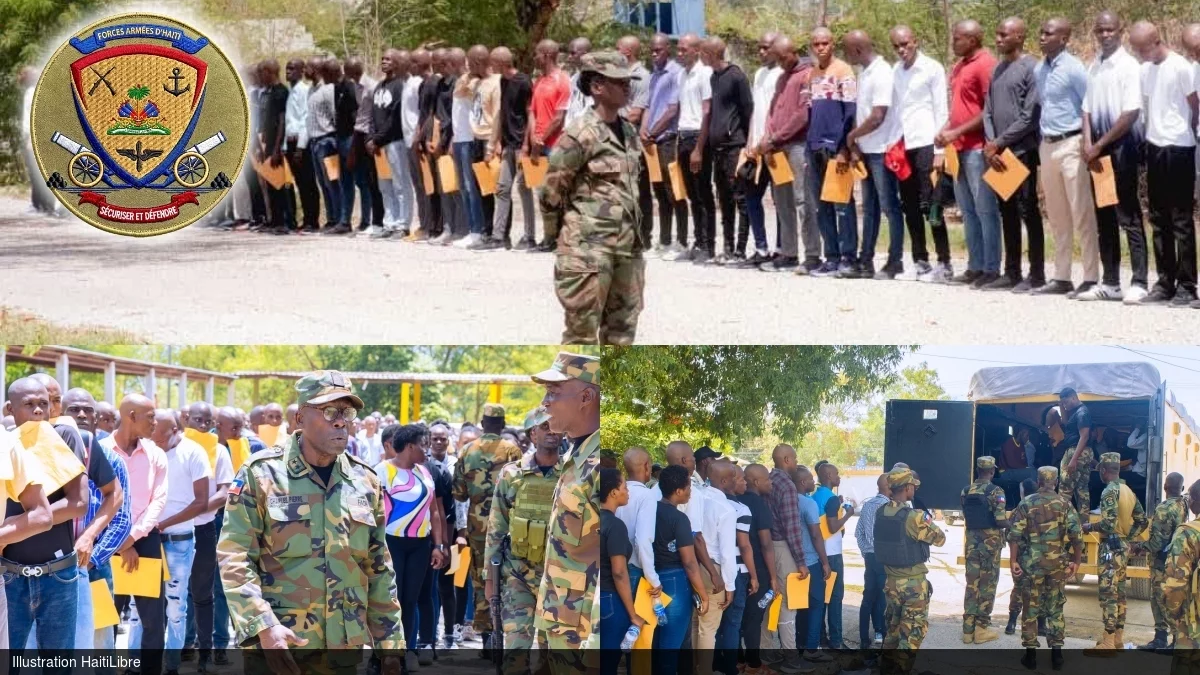
    On June 7, 2026, Haiti’s Ministry of Defense confirmed the completion of selection procedures for the latest cohort of recruits joining the Armed Forces of Haiti (FAd’H), with the final selection round wrapping up on July 5. After navigating a rigorous multi-stage vetting process that evaluated medical fitness, physical endurance, psychotechnical aptitude, and administrative eligibility, 665 candidates have officially earned a spot in the new recruit class, including 98 women who will move forward to start their foundational military training.

    This step marks a key milestone in the Haitian government’s broader strategic push to rebuild and modernize the country’s national armed forces. The administration has framed the expansion of FAd’H as a core priority to enhance the military’s operational capacity, ultimately building a professional, disciplined, and fully functional military institution that can effectively respond to persistent national security challenges and support long-term national development initiatives.

    Looking ahead, defense officials have announced that a second round of recruitment will launch immediately after this initial cohort is deployed to their active units. As part of this next phase, 2,000 additional candidates will be called to participate in the same standardized selection testing process that guided the current intake.

    To uphold core values of transparency, inclusivity, and equal opportunity, the upcoming selection process will draw from candidate pools registered at recruitment centers across all of Haiti’s major urban centers. This decentralized geographic approach is designed to ensure balanced regional representation in the armed forces, guaranteeing that any qualified applicant from across the country has an equal chance to serve in FAd’H ranks.