作者: admin

  • COMMENTARY: Once upon a time – Diplomacy in the image of our times [Shridath Ramphal Centre Trading Thoughts]

    COMMENTARY: Once upon a time – Diplomacy in the image of our times [Shridath Ramphal Centre Trading Thoughts]

    Over the past few months, cascading shifts in global political interaction have sparked urgent debate over whether core diplomatic practices are in terminal decline, or simply being reshaped to fit the norms of the digital age. This question resonates far beyond the corridors of foreign ministries, touching everyday citizens who feel the ripple effects of how global powers communicate and negotiate. For clarity, this analysis frames diplomacy as the formal practice of international dialogue and engagement between sovereign nation states.

    For centuries, diplomatic exchange relied on slow, deliberate methods: couriers traversed thousands of miles to carry encrypted written correspondence between capitals. Technological progress upended this system step by step: the telegraph, telephone, and fax machine cut communication time from weeks to minutes, making cross-border dialogue far more responsive. Today, the internet and social media have sparked the most dramatic shift yet, allowing sitting heads of state and government officials to communicate directly with global audiences and their foreign counterparts in real time, transforming both how diplomacy is conducted and the unwritten rules that govern it. This commentary examines the evolution of diplomatic norms, highlights troubling modern trends, and outlines actionable steps to restore professional standards to 21st century statecraft.

    The Golden Age of Traditional Diplomacy
    In its historic form, diplomacy was defined by intentional discretion and carefully guarded secrecy. Skilled diplomats relied on sharp intellectual acumen, refined social awareness, and tactical practical judgment to de-escalate tensions and broker agreements behind closed doors, far from the glare of public attention. Eloquence, mastery of nuanced language, and the ability to persuade through both written and oral rhetoric were non-negotiable core skills.

    As a scholar of diplomatic studies, the author recalls a famous lesson from her professor, attributed to former British Prime Minister Winston Churchill: that the mark of true tact is to tell someone they need to go to hell in such a way that they look forward to the journey. Equally important was the understanding that timing and setting matter: there is a time to speak publicly and a time to stay silent, even when tensions run high. While deviations from these norms have always occurred, today they have reached an unprecedented scale, even among the highest-ranking elected leaders.

    Digital Diplomacy in 2024: A Break from Historic Norms
    Digital diplomacy, the modern model of statecraft for the 21st century, leverages internet connectivity to enable real-time communication, streamlined information sharing, and more accessible knowledge management across borders. Beyond formal negotiations and official intergovernmental communication, many foreign ministries now use digital platforms to connect with citizens living abroad, project cultural influence, and shape public opinion in other nations. Since social media rose to global prominence, heads of state, embassy missions, and international non-governmental organizations have flocked to platforms ranging from X (formerly Twitter) to Facebook, Instagram, and LinkedIn to conduct public diplomacy, turning a 140-character post or a Reel into a tool of statecraft.

    But alongside these new efficiencies, worrying negative trends have taken root in digital diplomacy. Modern public diplomacy on social media is often the direct opposite of the discretion, eloquence, and professional standards that defined traditional diplomatic practice. Today’s social media feeds are flooded with a confrontational new style of statecraft, where sitting leaders use profanity and derogatory language to insult foreign leaders and entire nations. Two prominent examples include a provocative Easter message targeting the Iranian government posted to X, and the persistent name-calling that the Argentine president has used to refer to other regional leaders. Public disagreements on social media often devolve into back-and-forth shouting matches that resemble adolescent high school feuds more than professional diplomatic exchange.

    Major foreign policy announcements are now made off-the-cuff via social media posts, rather than through carefully crafted official statements shared via diplomatic channels. Regional and international disputes that have historically been resolved behind closed doors are now dragged into the public sphere, with tangible real-world consequences. These consequences go far beyond making diplomacy look unprofessional: the ongoing deadly conflict in the Middle East is often reduced to trivial memes and satirical viral videos on social media even as thousands of innocent civilians lose their lives. Trade policy and tariff decisions announced via public social media posts create immediate uncertainty that ripples through global markets, leaving businesses facing falling demand and consumers stuck with higher everyday prices.

    There is no question that diplomatic standards have shifted dramatically in the digital age. The way many current leaders wield digital diplomacy has eroded decades of careful trust-building between nations and shaped global public perceptions of statecraft in deeply negative ways. Sitting political leaders routinely post and share content that fuels division and animosity between populations, undermining progress toward cooperative, positive cross-border relations. What we are seeing today is a redefinition of diplomacy led not by career-trained diplomatic practitioners, but by populist leaders who are meant to serve as role models for current citizens and future generations. The author notes that an extraterrestrial observer visiting Earth today would likely struggle to tell the difference between a head of state and a controversial social media influencer, based on how modern leaders conduct themselves online.

    Reclaiming Professional Standards for Digital Diplomacy
    This shift raises an obvious question: what can be done to reverse these harmful trends? The author argues that ordinary citizens are not powerless to push for change. Global voters can demand that political leaders adhere to basic professional standards when engaging in international dialogue, and can use their vote during elections to reject candidates whose confrontational, unprofessional online behavior contributes to the erosion of diplomatic norms. At the international level, multilateral institutions such as the United Nations should develop clear binding codes of conduct that outline expected norms for digital diplomatic engagement for all member states. These are modest, reasonable demands that do not require overarching systemic change to implement.

    While the world currently faces many crises that are outside of human control, how leaders engage with one another and shape global public opinion is a choice that can be adjusted. A baseline level of diplomatic sophistication is required to foster open, smooth dialogue, cut down on unnecessary cross-border friction, and prevent the kinds of dangerous miscalculations that can escalate into open conflict. Formal diplomatic protocol and measured, thoughtful language will always have a place in international engagement, whether interactions happen in person at an embassy summit or in a public post on a social media platform.

    Ultimately, traditional diplomacy as the world once knew it is in clear decline, reshaped by the dynamics of the current era: respect for international law has dwindled, core multilateral systems and institutions are facing unprecedented upheaval, and the global order has reverted to a dynamic described more than two millennia ago by ancient historian Thucydides: the strong do whatever they are able to, and the weak must accept whatever suffering they must endure to survive.

    This analysis was originally published by the Shridath Rampal Centre on April 30, with author Vanessa Mason serving as Research Assistant at the Shridath Ramphal Centre for International Trade Law, Policy & Services at The University of the West Indies, Cave Hill.


  • Beurs-exposant benadrukt hoogwaardige kwaliteit Surinaamse producten

    Beurs-exposant benadrukt hoogwaardige kwaliteit Surinaamse producten

    As Suriname’s three-day national Agricultural Trade Show prepared to wrap up its 2026 edition on May 3, local producers, government officials and industry innovators gathered at the KKF venue to showcase the country’s growing push toward agricultural self-reliance and global competitiveness. Organized by the country’s Ministry of Agriculture, Livestock and Fisheries (LVV), this year’s event broke new ground by prioritizing technological innovation to rejuvenate an aging sector, drawing more than 200 participating exhibitors across agricultural, livestock and fishing value chains.

    For small local producers like Golden Honey Bee, the trade show offers a critical platform to highlight the quality of homegrown Surinamese goods. The family-owned beekeeping operation, led by beekeeper Shivangi Vermeijs-Mahabali, showcased its full line of artisanal, locally made products: raw honey with and without honeycomb, cold-pressed honey, cold-pressed coconut oil, and beeswax balm. This year, the brand expanded its portfolio with a new offering: 100% bean-to-bar single-origin Surinamese chocolate, which has already proven a hit with visitors. “Agriculture truly needs to become a core pillar of Suriname’s economy, so we don’t have to rely so heavily on imports,” Vermeijs-Mahabali explained during a tour of the booth attended by Agriculture Minister Mike Noersalim. “Our Surinamese products are top quality, and we’re proud to deliver a meaningful contribution to the sector.”

    What sets this year’s edition apart from previous trade shows is its intentional focus on attracting young people back to agriculture through cutting-edge tools and innovation, according to event coordinator Shantie Shiamrai. “We’ve noticed the sector is facing rapid aging, so we want to make agriculture more appealing by integrating new technologies that make work faster and more efficient,” she noted. To that end, the LVV has spotlighted several modern solutions that are accessible for Surinamese producers, including drone technology that can automate core farm tasks from fertilizing and seeding to irrigating and spraying crops.

    Shiamrai explained that drones cut down work time from days to just a few hours, and the innovation has already drawn intense interest from attendees across both crop and livestock operations. Also on display was vertical farming using modular tower systems, a sustainable innovation that cuts water use and allows year-round crop production in limited spaces. Beyond production technology, the trade show also highlights major progress in local food processing. Many participating companies have upgraded their packaging and labeling to meet international standards, with finished products that match the quality of imported goods, Shiamrai said. “Right now we still import far too much, but we need to capitalize on what we already produce here and start exporting more of our own goods,” she added.

    The country’s fishing sector, which already has a well-established export focus, used the event to showcase updates that help it meet increasingly strict requirements from key international markets including the European Union and the United States. Thomas Willems, research and statistics coordinator for the Directorate of Fisheries, explained that ongoing research and adoption of sustainable fishing practices are critical to keeping the sector competitive and compliant with global market standards. At his team’s booth, Willems showcased modified fishing gear designed to reduce bycatch of protected species, including Turtle Excluder Devices that prevent sea turtles from becoming trapped in nets, and Dolphin Pinger acoustic deterrents that keep dolphins away from fishing gear.

    Following the opening of the event last Friday, President Jennifer Simons toured dozens of exhibition stands to meet producers and innovators, underscoring the government’s commitment to growing the domestic agricultural sector. As the event closed on the evening of May 3, organizers said the 2026 edition marked a key milestone in Suriname’s transition toward greater food self-sufficiency, sustainable production and expanded global market access for local goods.

  • Ishowspeed gets a crash course in how to pronounce ANTIGUA

    Ishowspeed gets a crash course in how to pronounce ANTIGUA

    Popular internet personality and live streamer IShowSpeed recently went viral for an unexpected viral moment when he received a public, on-camera crash course in correctly pronouncing the Caribbean nation of Antigua.

    The incident unfolded during one of the young creator’s high-energy live broadcasts, when a topic related to the island nation came up in conversation. Known for his unfiltered, fast-paced on-camera style, IShowSpeed initially mispronounced the country’s name multiple times, drawing quick corrections from viewers and guests joining the stream. What started as a small misstep quickly turned into an impromptu pronunciation lesson, with multiple people walking the streamer through the proper syllable stress and phonetics of “Antigua” step by step.

    Clips of the lighthearted interaction spread rapidly across major social media platforms within hours, with many users sharing the clip for its relatable, unplanned humor. Fans and casual observers alike praised the moment for its casual authenticity, noting that even high-profile public figures regularly make small mistakes when pronouncing less familiar place names. The viral moment also sparked a small wave of new attention for Antigua and Barbuda, with many internet users saying the clip introduced them to the island nation for the first time.

    As of the latest counts, the original clip of the pronunciation crash course has accumulated tens of millions of views across TikTok, X (formerly Twitter), and Instagram Reels, with countless creators making their own reaction and commentary clips responding to the viral moment.

  • WATCH: Ishowspeed reacts after trying famous Antiguan food

    WATCH: Ishowspeed reacts after trying famous Antiguan food

    Even when battling a sudden overnight stomach illness, popular internet content creator IShowSpeed could not turn down the chance to try one of Antigua’s most iconic local dishes. The creator, who has built a massive global following for his unfiltered, spontaneous on-camera reactions, made headlines after sharing the moment just moments after he opened up about feeling unwell.

    Shortly after sharing that he had been up overnight dealing with a nasty stomach bug that left him feeling weak and out of sorts, the creator was presented with Antigua’s famous Chopp-up, a hearty traditional platter that includes saltfish, crispy fried dumplings and sweet fried plantain. Against all expectations, the streamer abandoned his plans to stick to bland, gentle food to recover and dug right into the flavorful local spread.

    The short clip of his reaction, which has not been detailed in full in this report, quickly captured attention online, with many fans joking about the irresistible pull of authentic Caribbean comfort food. For many followers, the moment perfectly encapsulated the creator’s signature personality: unplanned, unapologetic, and always willing to prioritize a good meal over feeling under the weather.

  • Island‑wide blackout linked to rodent interference

    Island‑wide blackout linked to rodent interference

    A widespread, unplanned blackout that cut electricity access to every part of Saint Lucia for nearly two hours on Friday evening traces its root cause to rodent activity damaging a key 11-kilovolt circuit breaker, preliminary findings from local power authorities confirm.

    In an official public notice released Saturday, Saint Lucia Electricity Services Limited (LUCELEC) outlined the timeline of the disruption, noting the fault first emerged at the utility’s Cul-de-Sac power network at roughly 9:37 p.m. Once the damage to the breaker was detected, the company’s pre-programmed automatic protection mechanism triggered immediately. This safety system, engineered to isolate localized faults and stop catastrophic harm to critical grid infrastructure, initiated a full shutdown of the entire island’s power supply to contain the incident.

    LUCELEC representatives emphasized that wildlife-related grid disruptions are statistically uncommon, and noted that such risks are standard considerations for power operators across the globe. To address this hazard, the utility has implemented multiple overlapping safety protocols designed to isolate small-scale faults before they can escalate into system-wide outages, though those safeguards failed to prevent Friday’s disruption.

    Once the immediate fault was identified, crews launched a full round of inspections and system integrity checks. Power restoration work got underway at 10:31 p.m., with service brought back incrementally to communities across the island. By 11:15 p.m., full power service had been restored to all residential and commercial customers, LUCELEC confirmed.

    The utility has issued a formal apology to all Saint Lucian customers for the disruption to daily routines and business operations caused by the unplanned outage. Officials added that a full, in-depth technical review of the incident has already been launched to identify gaps in existing protection systems and prevent similar events in the future.

    While island-wide blackouts have been rare in Saint Lucia in recent years, Friday’s incident marks the second such system-wide disruption the country has experienced in 2024, following a similar outage that impacted the entire island on March 6.

  • WATCH: American streamer Ishowspeed goes live in Antigua to millions of viewers

    WATCH: American streamer Ishowspeed goes live in Antigua to millions of viewers

    The submitted news material provided only contains the phrase “Watch Live Here:” and no additional detailed information about the event, topic, or context of the planned live stream. Without supplementary details including the event type, participating parties, scheduled time, location, or core subject of the live broadcast, it is impossible to provide a complete, accurate news report. Readers seeking to access the relevant live stream are advised to obtain the full missing context from the original publishing source to understand what content will be covered in the broadcast.

  • Speid’s Cavalier announces acquisition of Butler’s Chapelton Maroons home

    Speid’s Cavalier announces acquisition of Butler’s Chapelton Maroons home

    CLARENDON, Jamaica — One of Jamaica’s most storied top-flight football clubs, Cavalier Football Club, has closed a deal to take over Turner’s Oval in Clarendon, marking the venue as its new official home base, the club has confirmed.

    The acquisition was first brought to public attention this Monday, when the Jamaica Premier League (JPL) shared the news via an Instagram post that paired the announcement with a visual of the Clarendon-based sporting facility. Following the social media reveal, Cavalier’s long-serving president Rudolph Speid formally verified the development in a brief comment to local media outlet Observer Online.

    When pressed for additional details on whether the club would shift its affiliation to the Clarendon Football Association following the move, Speid offered a similarly concise, direct negative response.

    The acquisition carries unexpected off-pitch drama, however: Turner’s Oval currently serves as the home ground for Chapelton Maroons, another JPL side owned by Speid’s long-time adversary Craig Butler. The two football executives have been locked in a bitter public feud for years, a conflict that has escalated beyond club football politics into legal proceedings. Just recently, Speid, who leads the Cavalier organization, filed a defamation lawsuit against Butler, who heads the Phoenix-based football program that includes Chapelton Maroons.

    Founded in 1962 by Leighton Duncan, Cavalier FC — nicknamed the Duncan Destroyers for its aggressive playing style over the decades — has relied on a public government-owned venue, Stadium East, as its home match location for many years up until this acquisition.

  • CVSS to strengthen western Jamaica’s civil society with three-day training workshop

    CVSS to strengthen western Jamaica’s civil society with three-day training workshop

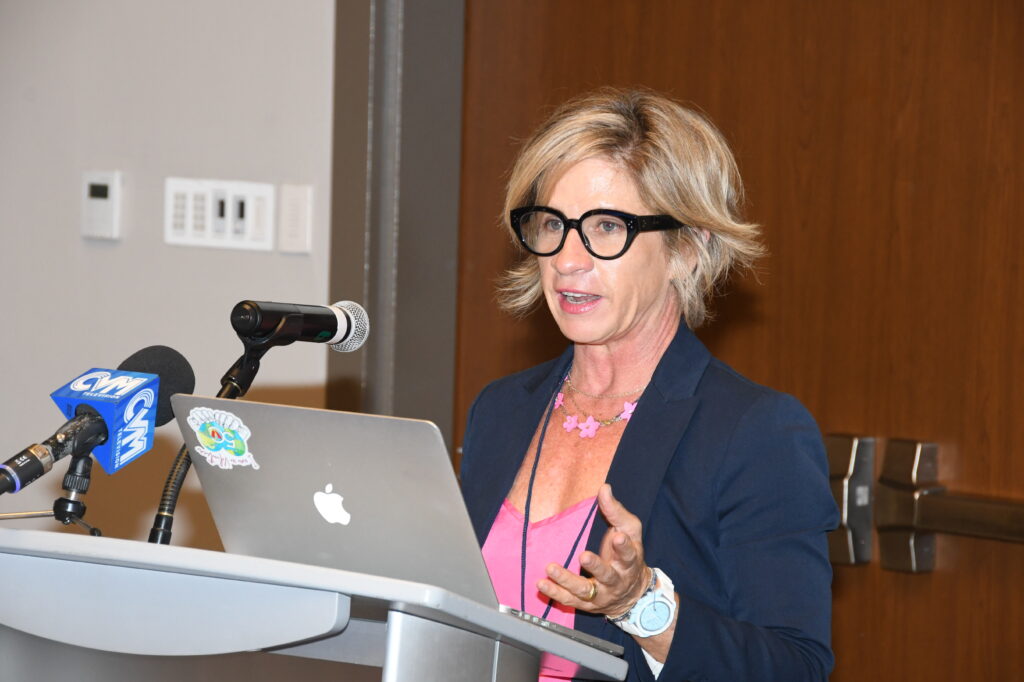
    KINGSTON, Jamaica — Jamaica’s peak civil society coordinating body, the Council of Voluntary Social Services (CVSS), has kicked off a three-day targeted training workshop series for civil society organizations (CSOs) across the country’s western region, running from May 12 to 14. Centered on the theme “From Idea to Impact – The Project Cycle,” the initiative is crafted to address longstanding operational gaps among community-focused groups.

    Funded through the European Union’s AIM Programme, this intensive capacity-building effort aims to elevate the role of local community-based organizations (CBOs) and non-governmental organizations (NGOs) as effective drivers of inclusive governance and national development, CVSS outlined in an official public statement.

    CVSS Executive Director Nancy Pinchas explained that the workshop curriculum was not developed arbitrarily. Following months of widespread consultations with CSOs across western Jamaica and systematic needs assessments, the training series was customized to directly tackle the most pressing capacity gaps that local organizations identified: weaknesses in project design, end-to-end management, and regulatory accountability.

    The workshop is structured into four hands-on, interactive sessions, each led by a seasoned industry specialist with deep roots in Jamaica’s non-profit sector. Social transformation expert Damion Hylton leads the session on Community Engagement and Prioritization, which focuses on centering community voices in project planning. Monitoring, Evaluation, and Learning (MEL) — a core competency for demonstrating impact — is facilitated by leading MEL specialist Zahra Miller. Seasoned non-profit advisor Sannia Laing Sutherland delivers a two-part deep dive into Project Proposal Writing, covering everything from aligning proposals to donor requirements to articulating clear community outcomes. Gender equity expert Carla Moore facilitates the “Gender and Human Rights: Change G.E.A.R.S.” session, which integrates inclusive practices into project design and delivery.

    Pinchas emphasized that every facilitator brings decades of on-the-ground experience in Jamaica’s civil society space, ensuring that learning outcomes are practical, context-specific, and focused on tangible results. She added that data collected from pre-training and post-training assessments of earlier workshop iterations held across the country confirm that participants leave with measurable gains in both technical knowledge and professional confidence across all core project management competencies.

    “ We see every day that CSOs across Jamaica have the passion and the creative ideas to transform the communities they serve, but too many lack the targeted technical support to turn those ideas into structured, sustainable initiatives that deliver long-term impact,” Pinchas said. “This training series exists to bridge that gap — it’s about equipping organizations with the practical tools they need to design robust projects, measure their social impact accurately, and uphold consistent accountability to the communities that rely on their work.”

    Looking ahead to upcoming regulatory changes for Jamaica’s non-profit sector, Pinchas noted that capacity-building initiatives like this are more critical than ever. As the country prepares to implement a new legislative framework for non-profits, these trainings ensure local organizations are prepared, operationally resilient, and well-positioned to make meaningful contributions to national development goals.

    This Montego Bay-based workshop series is part of CVSS’s ongoing commitment to decentralizing access to professional development, bringing critical training directly to grassroots organizations outside of the capital, Kingston. It builds on the success of similar training sessions held in Kingston earlier this year, and forms part of a broader national push to equip CSOs across all regions of Jamaica with the skills to design, implement, and sustain impactful initiatives that advance social inclusion, transparent governance, and community-level resilience.

    The workshop is scheduled to conclude on the afternoon of May 14, with a collaborative networking lunch that will include closing remarks, a celebration of participant achievements, and opportunities to build connections across western Jamaica’s civil society community. Beyond the core project management curriculum, the event also includes a dedicated discussion session on upcoming sector legislation, ahead of the planned rollout of Jamaica’s new Non-Profit Organisations (NPO) Act in October 2026.

    The proposed new legislation is designed to modernize the country’s outdated regulatory framework for non-profit groups. Once implemented, it will directly impact thousands of organizations across Jamaica that deliver essential services in areas including disaster response, social protection for vulnerable populations, and local community development.

  • Manchester High kicks off night football

    Manchester High kicks off night football

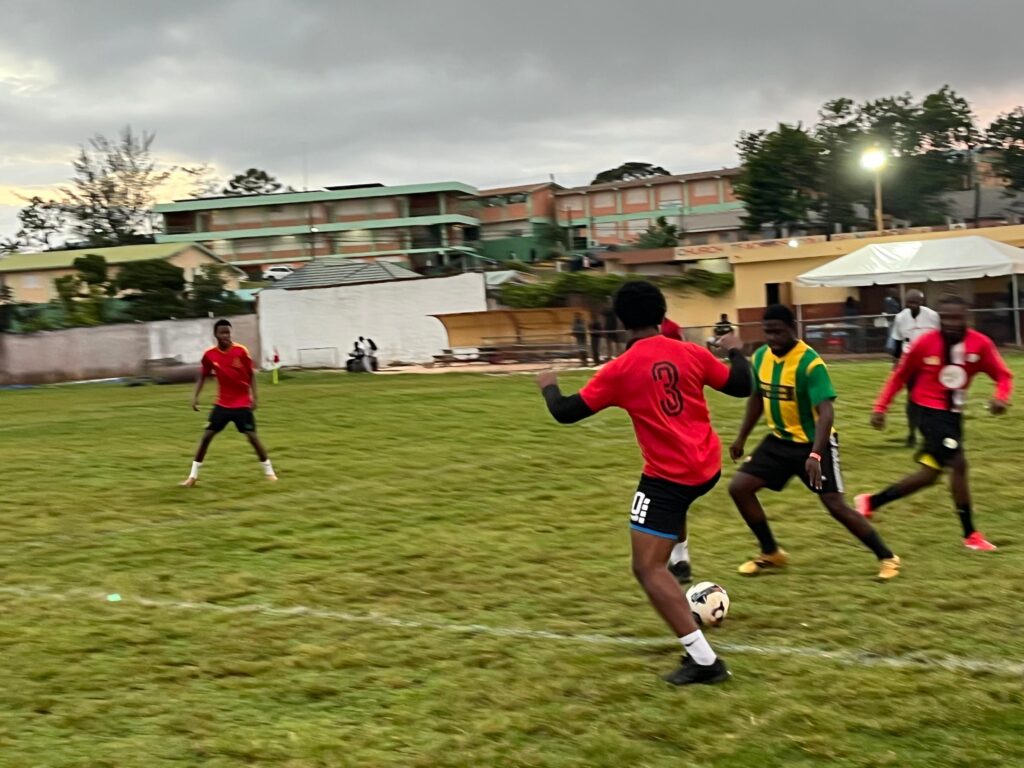
    MANCHESTER, Jamaica — A historic first has come to the playing fields of Manchester High School, where the campus grounds have been completely reimagined in recent weeks to host the school’s inaugural community night football competition, branded “Under Di Light”.

    This fast-paced 7-a-side tournament is the product of a collaborative partnership between the school, local auto dealership Julex Auto Sales, and regional football organizing group Footballin90. The weekly competition kicked off on Sunday, April 19, on Manchester High’s main pitch, and is scheduled to run through a final championship round on June 21.

    Okevie Lambert, head football coach at Manchester High, outlined the core mission of the new event in a recent public statement, noting that the title-sponsored tournament has brought a professional-grade match experience to the local area. To date, six squads drawn from nearby communities have competed, drawing large, family-focused crowds of local spectators to the school grounds.

    Jasford Gabriel, principal of Manchester High School, described the tournament as a milestone moment not only for the institution but for the entire Manchester region. Calling the event an unprecedented new chapter for the school, Gabriel emphasized that the night football setup creates a welcoming, family-friendly atmosphere that offers young people a safe, positive form of recreation.

    Beyond providing community entertainment, Gabriel noted the tournament delivers meaningful developmental benefits for participating athletes, and highlighted that Manchester High’s venue is ideally suited for night-time play. “Competing against seasoned former players who have found success in the sport pushes our young athletes to raise their game, and the fast pace of 7v7 play hones their skills faster than many traditional formats,” Gabriel explained. He added that the school’s expansive grounds offer flexible viewing for spectators, with elevated areas close to the pitch that put fans right in the middle of the action, giving the tournament huge long-term growth potential.

    Gabriel also reserved special praise for title sponsor Julex Auto Sales and the school’s in-house event organizing team for pulling off the successful launch of the competition. “I cannot thank Julex Auto Sales enough for their commitment to this event. Owner Boswell Smith has a long track record of supporting our school’s programs, and he stepped forward immediately to serve as title sponsor when we first proposed the idea,” Gabriel said. “Smith truly cares about young people in this community, and he consistently invests in their future. What makes this achievement even more impressive is that the organizing team put the entire tournament together in a very short timeline, and the level of operational and event organization has been incredibly high.”

  • Disruption in motor vehicle registration services islandwide, says TAJ

    Disruption in motor vehicle registration services islandwide, says TAJ

    KINGSTON, Jamaica — Tax Administration Jamaica (TAJ) has issued a public advisory confirming that all motor vehicle registration-related transactions are currently unavailable across every tax office in the country, as well as through the agency’s online eServices portal. The service suspension, which is temporary, stems from unplanned system disruptions that have knocked offline the core platform used to process these high-demand automotive transactions.

    The outage has impacted a full range of registration services, leaving Jamaican motorists unable to complete routine and new transactions alike. These include new vehicle registration applications, annual registration renewals, vehicle ownership transfers, and purchases of new official registration plates.

    Fortunately, the disruption has not spread to all TAJ services, and two key automotive-related payment services remain fully operational. Drivers can still submit payments for motor vehicle certificates of fitness and settle outstanding traffic ticket fines both through the TAJ eServices online platform and in-person at any local tax office across the island.

    TAJ confirmed in its Monday statement that its in-house technical team and third-party service partners have already mobilized to diagnose and resolve the root cause of the system outage. The agency said crews are working around the clock to full restore all affected services as quickly as possible. In closing, TAJ apologized to the public for the unplanned inconvenience, and expressed gratitude to Jamaican motorists for their patience, understanding, and cooperation while the agency works to bring all systems back online.