
作者: admin

  • Advantage to Arsenal as Man City held in six-goal Everton thriller

    Advantage to Arsenal as Man City held in six-goal Everton thriller

    LIVERPOOL, United Kingdom (AFP) — In a chaotic, title-shifting Premier League clash at Goodison Park (Hill Dickinson Stadium) on Monday, Jeremy Doku’s 97th-minute thunderbolt snatched a 3-3 draw for reigning champions Manchester City against Everton — but a catastrophic second-half defensive collapse has put the fight for the English crown firmly back in Arsenal’s hands.

    Mikel Arteta’s Gunners, who currently sit atop the league table, now hold all the cards in their quest to end a 20-year trophy drought: three wins from their remaining three fixtures will secure them the first Premier League title of their 21st-century history. Manchester City, the serial title winners hunting a seventh championship in nine seasons, sit five points back with one game in hand, but their messy implosion on Merseyside has left their hopes of retaining the crown hanging by a thread.

    Pep Guardiola’s side looked set to cruise to three crucial points after a dominant first half, where they pinned Everton deep inside their own half for nearly 45 minutes. The breakthrough finally came two minutes before the break, when Rayan Cherki threaded through Doku, who curled a clinical finish into the top right corner past Everton goalkeeper Jordan Pickford. The hosts survived a major moment of danger before halftime too: defender Michael Keane escaped a red card for a reckless, sliding tackle on Doku, receiving only a yellow card — a call that would prove pivotal by the final whistle.

    The second half, however, quickly descended into chaos for City, as a string of uncharacteristic basic defensive mistakes handed Everton all three goals. First, a slack, underhit backpass from Marc Guehi left striker Thierno Barry one-on-one with City keeper Gianluigi Donnarumma, and Barry slotted home to equalize. Minutes later, another turnovers: Abdukodir Khusanov was caught in possession by Iliman Ndiaye, and while Guehi made a last-ditch block to stop the immediate chance, the resulting corner saw Jake O’Brien rise unmarked to head Everton into the lead. A rapid Everton counter-attack soon extended the home side’s advantage, with Barry poking home his second from a deflected cross to make it 3-1, leaving City stunned.

    But Guardiola’s side refused to fold completely. Straight from the restart, Mateo Kovacic played a through ball to Erling Haaland, who finished clinically to cut Everton’s lead to 3-2. Then, in stoppage time deep into the seventh minute of added time, Doku produced a moment of individual magic to fire home a sensational equalizer, salvaging a point for the visitors and dashing Everton’s hopes of claiming a pivotal win for their own European aspirations.

    Speaking after the match, Guardiola acknowledged that the title race is no longer in City’s control. “It’s better than losing, It shows what type of team they are,” he said of his side’s late fightback. “It’s not in our hands. Before it was, now it’s not. We have games left. We will see what happens.”

    Arsenal, who have picked up two wins since City’s last league outing, have now built a comfortable buffer at the top of the table. Their remaining fixtures start with a trip to relegation-battling West Ham United this Sunday, followed by a home clash against already-relegated Burnley and a final-day away game against Crystal Palace.

    City entered the match under extra pressure after a two-week gap between their regular league outings, caused by Guardiola rotating his entire first team for last weekend’s FA Cup semi-final win over Southampton. Many expected the side to look rusty after the extended break, but they started sharp, controlling possession and pinning Everton back for the entire first half. That control dissolved completely after the break, however, with individual errors handing the hosts three goals and turning a certain win into a scrappy draw that benefits only Arsenal in the title race. While the point keeps City mathematically in the hunt, it is Arsenal that now hold every advantage in the run-in to the 2024/25 Premier League campaign.

  • Drug kingpin ‘El Chapo’ requests transfer from US to Mexico

    Drug kingpin ‘El Chapo’ requests transfer from US to Mexico

    Court documents made public this week have revealed that notorious Mexican drug kingpin Joaquin “El Chapo” Guzman is formally asking U.S. judicial authorities to move him from a U.S. correctional facility back to his home country to serve out the remainder of his life sentence, which he has described as excessively harsh punishment.

    Guzman, once the leader of the powerful Sinaloa Cartel, was extradited to the United States in 2017 following two high-profile escapes from Mexican maximum-security prisons. He was ultimately convicted on a sweeping array of charges including transnational drug trafficking and large-scale money laundering, and is currently serving his life term at the supermax ADX Florence facility in Colorado, one of the most secure correctional institutions in the U.S.

    Agence France-Presse obtained three separate handwritten letters penned by Guzman, all of which were officially filed with U.S. courts on Monday. In one of the documents, written in English, Guzman stated that his correspondence raised points about unproven critical evidence used to secure his conviction. The letter, addressed to the U.S. District Court for the Eastern District of New York, asks authorities to acknowledge his right to be transferred back to his native country. Guzman did not explicitly clarify that his request is to complete his sentence in a Mexican prison, but the implication of the appeal is clear.

    In a second letter dated April 20, Guzman alleged that his repeated formal requests for access to court documents tied to his conviction have been ignored by authorities. He added that even the documents themselves would not justify what he calls his “cruel punishment”, claiming that the guilty verdict handed down in his 2019 trial was fundamentally unfair. Guzman also noted that he has waited three years for a ruling on his appeal, and invoked legal protections laid out in the First through Fifth Amendments of the U.S. Constitution to support his claims.

    This latest round of public complaints is not the first time Guzman has pushed back against his treatment in U.S. custody. Past letters released from prison have repeatedly raised grievances about extreme social isolation, inadequate conditions in his cell, and severely restricted access to family visits from his loved ones.

  • Commissioner urges Jamaicans to de-escalate conflicts amid violent encounters

    Commissioner urges Jamaicans to de-escalate conflicts amid violent encounters

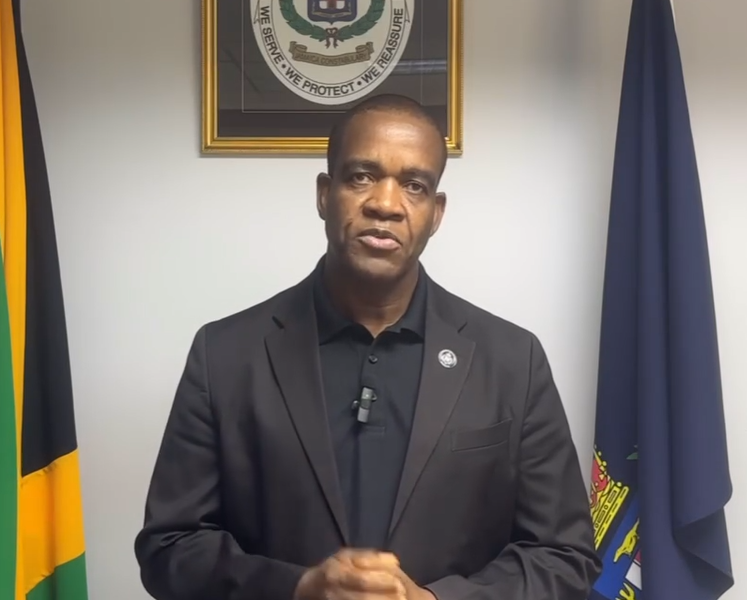
    KINGSTON, Jamaica — As violent clashes continue to claim lives across the island nation, Jamaica’s top law enforcement leader is pushing for collective action from citizens, while doubling down on the police force’s official commitment to reducing tension during public interactions. In his weekly address published as a newspaper column, Police Commissioner Dr. Kevin Blake sounded the alarm over a recent string of fatal violent incidents that have shaken communities across the country.

    “Unfortunately, we continue to see a number of violent confrontations where some have resulted in lives being lost,” Blake shared in the column, opening with a candid reflection on the current state of violent encounters between police, criminals and members of the public. The commissioner made explicit that the core mission of the Jamaica Constabulary Force (JCF) in every interaction with the public, particularly high-stakes confrontations, is to defuse tension before it escalates into harm.

    “Our main objective in any confrontation involving ourselves and the public is to de-escalate,” he emphasized. Beyond outlining the force’s internal protocols, Blake extended a urgent public appeal to all law-abiding Jamaicans to take shared responsibility for preventing unnecessary deaths. He asked residents to join law enforcement in urging the violent offenders that officers target on a daily basis to avoid resorting to deadly force during encounters with police.

    Blake stressed that fatal outcomes are never the intended goal of JCF operations, pushing back against any narrative that frames lethal shootings as an acceptable end to police work. “Fatal shootings do not benefit anyone. It is never a desired end state,” he added. The commissioner also highlighted that internal discipline within the force is a non-negotiable pillar of the JCF’s approach, noting that every serving officer is required to operate within the force’s established operating guidelines at all times.

    “In addition to our obligation under the use of force policy, I expect every single member to exercise discipline of self,” Blake said. For the JCF, centering de-escalation tactics, professional conduct, and unwavering adherence to the rule of law remains central to its broader strategy to cut down on violent crime and protect both citizens and officers across Jamaica.

  • Tufton urges citizens to return to local health centres

    Tufton urges citizens to return to local health centres

    Nearly seven months after Hurricane Melissa slammed into western Jamaica, destroying critical community healthcare infrastructure, the island nation is on the cusp of fully restoring primary care access for rural residents, with top health officials calling on locals to re-engage with local clinics to manage chronic conditions and reduce strain on overloaded hospitals.

    Jamaica’s Minister of Health and Wellness Dr Christopher Tufton made the announcement during an April 30 press briefing, held immediately after he completed an inspection tour of the Black River Hospital and Health Centre in the parish of St Elizabeth, one of the regions hardest hit by last October’s storm. Of the 23 public health centres operating across St Elizabeth before the hurricane, 10 suffered severe structural damage that forced temporary closures and pushed thousands of patients to seek care at already crowded regional hospitals.

    As of late April, all but one of the damaged clinics have completed repairs and resumed full operations, Tufton confirmed. The lone outlier, the Black River Health Centre, is currently undergoing final reconstruction work, with care currently being delivered out of a temporary container-based facility set up on the clinic’s original compound. Tufton projected that the full restoration will be finished by late May or early June, bringing all 23 St Elizabeth health centres back online to serve local communities.

    The nationwide push to reopen storm-damaged primary care facilities is a core component of Jamaica’s broader public health strategy, which aims to center primary and preventive care rather than rely on overstretched hospital services. By encouraging patients to return to community clinics for routine chronic disease management, preventive health screenings, and prescription refills, officials hope to decongest acute care hospitals, extend essential services to underserved rural populations, and reduce the rate of preventable hospitalizations that strain both the public health system and household finances.

    Currently, only around 80% of former primary care patients have resumed regular visits to their local clinics, a gap Tufton attributes to lingering disruption from the hurricane. Recognizing the trauma that storm-affected communities have endured, the ministry has launched a targeted community outreach effort, with community health aides and primary care teams going door-to-door to encourage residents of all ages to return to routine care.

    “ We understand the trauma that they have been through, but we don’t want them to neglect their chronic illnesses, their screening opportunities, and their access to drugs, ” Tufton said, noting that consistent primary care is the foundation of long-term public health, national economic resilience, and protection for Jamaica’s most vulnerable populations.

    The initiative also incorporates a data-driven framework to track progress: officials will monitor key metrics including patient re-engagement rates, completion of preventive screenings, and adherence to ongoing treatment plans to refine outreach efforts and address gaps in access.

    Once full restoration is complete, the Black River Hospital – which was also heavily damaged by the storm – will operate close to 150 beds, a capacity that reflects the growing demand for expanded healthcare services across western Jamaica.

  • WATCH: Swaby urges united action to protect youth, prioritise children’s mental health

    WATCH: Swaby urges united action to protect youth, prioritise children’s mental health

    On a quiet, reflective Sunday in downtown Kingston, Jamaica, community members, grieving families, and civic leaders gathered at the Secret Garden for a special candlelight vigil, a core event marking the island’s annual Child’s Month. This year’s national observance carries a urgent, targeted theme: “Prioritising Our Children’s Mental Health: Strong Minds, Safer Future”, turning public attention to a crisis that has long flown under the radar. Opening the ceremony, Kingston Mayor Andrew Swaby issued a stirring call for cross-societal unity to confront the unseen suffering plaguing thousands of Jamaican young people.

    Swaby drew sharp attention to the “silent battles” that many of the nation’s children wage every day away from public view: unaddressed trauma, persistent fear, systemic neglect, and crippling emotional pain. Too often, he emphasized, these hidden struggles do not remain hidden forever – they escalate and end in irreversible, devastating loss of young life, a cost that no community can afford to bear. For Swaby, the vigil was far more than a memorial to the children whose lives were cut short by tragic circumstances. He framed it as a “sacred pause” – a moment for the entire nation to stop, reflect, and remember that every child who died carried unique potential, unfulfilled promise, and inherent purpose that was lost to systemic inaction.

    Attendees took part in solemn, intentional rituals to honor the fallen: lighting candles that cut through the dim garden air, laying wreaths to mark grief and remembrance, and observing a minute of complete silence to hold space for the pain of grieving families. When the moment ended, Swaby challenged every segment of Jamaican society to confront an uncomfotable question: Is the nation truly doing enough to lift up and support its young people?

    Protecting children, he stressed, is not the responsibility of a single government agency or one group – it is a shared duty that binds together families, educators, community leaders, and every Jamaican citizen. The gathering’s glowing candles, he said, were not just symbols of remembrance; they represented a collective promise to the nation’s young: that the country will commit to protecting children, nurturing their mental well-being, and building a more secure future for coming generations.

    Beyond a call for individual action, Swaby pushed for systemic change, demanding stronger, more robust institutional frameworks that address the root causes of harm to children. He named pervasive community violence and crippling social pressures as two of the most damaging underlying forces, and called for a collective reimagination of Jamaican communities – spaces where every child can grow feeling safe, seen, and valued. Extending sincere condolences to all families in attendance who had lost a child, Swaby urged continued targeted support for those affected by tragedy and a renewed commitment to cross-group collaboration that puts children’s safety and well-being at the center of national priorities. The ceremony closed with a quiet, peaceful procession through the Secret Garden, as attendees carried their candles through the green space, carrying the mayor’s call back to their homes and communities.

  • Gov’t announces $1.4b second phase of GO Road Rehab Programme

    Gov’t announces $1.4b second phase of GO Road Rehab Programme

    KINGSTON, Jamaica — Jamaican authorities have unveiled the second stage of the landmark GO Road Rehabilitation Programme, a $1.4 billion infrastructure investment designed to upgrade critical arterial routes spanning the Caribbean island. The announcement, shared via an official release from the Ministry of Works, outlines that the initiative will center on high-traffic road corridors that underpin public transit, cross-border and domestic commerce, emergency response access, the national tourism sector, and the everyday commute of Jamaican residents. This phase forms a core component of the government’s broader national infrastructure improvement strategy, which integrates immediate repair works with long-term rehabilitation projects already underway, including the national SPARK development initiative and the Accelerated Bridge Programme.

    Robert Nesta Morgan, the minister tasked with overseeing public works, emphasized that the launch of the second phase is a direct response to widespread feedback from road users across the country. Motorists, daily commuters, public transport operators, local business associations, and community groups have repeatedly raised urgent concerns about the deteriorating condition of the island’s major road networks, prompting the government to accelerate this phase of works.

    “We have listened closely to the calls from the Jamaican public. We recognize the deep frustration that poor road conditions have caused for regular road users, and we acknowledge that thousands of Jamaicans now struggle with arduous daily commutes because of the damaged state of many key thoroughfares,” Morgan stated in the official announcement. “This second phase of the GO Road Rehab Programme is built to deliver fast action on our highest-priority roads, rolling out tangible, meaningful upgrades exactly where they are needed most urgently.”

    Morgan further explained that the island’s entire road network has faced unprecedented strain over recent months, driven by extended periods of extreme rainfall and the lasting damage left behind by Hurricane Melissa. Even as emergency repair and preliminary rehabilitation works have continued nonstop since the storm, many major corridors have continued to decline. Key issues include saturated road foundations that compromise structural integrity, clogged and damaged drainage systems that cannot handle heavy downpours,大面积 failed pavement sections, and widespread structural stress across infrastructure exposed to repeated severe weather events.

    “Many of our roads already had underlying structural vulnerabilities before the hurricane hit, and Hurricane Melissa exacerbated and exposed these weaknesses for all to see. On top of that, much of the island has received well above average rainfall over the past six months, putting even more pressure on already compromised infrastructure,” Morgan added. “That is why the government is taking a layered approach, combining emergency spot repairs, targeted resurfacing, full drainage system upgrades, and large-scale full rehabilitation works across priority corridors.”

    Under the scope of Phase Two, works will include precision patching of damaged pavement sections, full resurfacing of high-wear routes, targeted upgrades to drainage systems where flooding and water damage are recurring issues, and additional improvement works tailored to the findings of technical assessments carried out by the National Works Agency (NWA). Priority ranking for works will be based on three core metrics: total daily traffic volume, the severity of surface deterioration, and the route’s strategic importance to local communities and national economic activity.

    The National Works Agency will take full charge of project implementation for the second phase, and has committed to publishing regular public updates as work schedules are confirmed and construction gets underway across different sites.

  • Amazon to provide delivery for any business, not just its own merchants

    Amazon to provide delivery for any business, not just its own merchants

    In a transformative move that is reshaping the global logistics industry, e-commerce and technology giant Amazon announced on Monday that it is opening its decades-old, sprawling shipping and delivery infrastructure to third-party businesses of all sizes — not just merchants that operate on the company’s own e-commerce platform.

    The newly launched offering, branded as Amazon Supply Chain Services (ASCS), allows participating companies to outsource their entire end-to-end supply chain operations to Amazon, from transporting manufactured goods across international oceans to storing inventory in Amazon’s network of climate-controlled warehouses, and ultimately delivering finished products directly to consumers’ homes seven days a week. Major established consumer brands including Procter & Gamble, 3M, Lands’ End, and American Outfitters American Eagle have already finalized partnerships to integrate ASCS into their operations, signaling early industry confidence in the new service.

    Amazon framed this ambitious expansion as a parallel to the 2006 launch of Amazon Web Services (AWS), the company’s game-changing cloud computing division that revolutionized the global tech sector. AWS was originally developed as an internal tool to handle Amazon’s own massive data storage and computing needs, before the company recognized the broader market demand and turned it into one of its most profitable business units, generating more than $80 billion in annual revenue today. Leadership at Amazon believes the same playbook will work for logistics: the company has already spent billions building out its delivery network for its own retail and marketplace operations, and now it can monetize excess capacity by opening the system to outside businesses.

    Prior to this launch, Amazon’s robust logistics capabilities were largely limited to sellers participating in Fulfillment by Amazon (FBA), a program that lets third-party merchants selling on Amazon’s marketplace outsource packing, shipping, and customer service to the company. Since FBA launched in 2006, participants have shipped more than 80 billion items through the program, demonstrating the proven scale and reliability of Amazon’s operations. But until the launch of ASCS, businesses that sold through their own websites, brick-and-mortar stores, or other e-commerce platforms could not access Amazon’s logistics network.

    The entry of Amazon into the third-party logistics market sets up a new era of direct competition with established global shipping and delivery giants including UPS, FedEx, and DHL. The market reacted swiftly to the news on Wall Street: legacy logistics provider UPS saw its share price drop 10% by market close, while competitor FedEx fell 9% as investors priced in the increased competitive pressure. Amazon, by contrast, saw its own stock tick up around 1% on the announcement as investors reacted positively to the company’s new high-growth revenue stream.

  • PAHO urges countries to invest in midwifery

    PAHO urges countries to invest in midwifery

    Ahead of Tuesday’s International Day of the Midwife, the Pan American Health Organization (PAHO) released a sobering assessment of midwifery systems across the Americas and Caribbean on Monday, highlighting widespread regulatory gaps that hold back life-saving maternal and reproductive care across the region.

    According to the UN health agency’s analysis, only 60% of countries in the region have a national regulatory body that clearly outlines the full scope of practice for professional midwives, and just half have implemented formal systems for regular license renewal and ongoing quality assurance. PAHO officials emphasize that these systemic gaps prevent regional health systems from unlocking the full potential of midwifery personnel, leaving millions without access to consistent, high-quality, respectful maternity care.

    At present, PAHO data collected through the National Health Workforce Accounts platform counts more than 78,000 active midwifery professionals across the Americas, translating to an average density of 3.5 midwives per 10,000 people. However, this regional average masks stark geographic inequities: subregions including Central America and many parts of the Caribbean report critically low midwife densities, ranging from just 0.1 to 13.5 per 10,000 people. PAHO notes these disparities highlight the urgent need to expand midwife training, improve equitable distribution of the workforce, and boost retention of professionals in underserved high-need areas.

    Despite these challenges, there are signs of progress across the region. Three-quarters of countries in the Americas now formally recognize midwifery as a distinct profession separate from nursing, a key milestone that paves the way for specialized education, greater professional autonomy, and clear regulatory frameworks that allow midwives to practice to the full extent of their training. Currently, 160 accredited professional midwifery training programs operate across the region, many of which have integrated modern digital learning tools, interprofessional education opportunities, and diverse clinical training settings to better prepare graduates. On average, 88% of these program graduates meet all core midwifery competency requirements, equipping them to deliver comprehensive care spanning sexual and reproductive health, pregnancy, childbirth, and postnatal care.

    PAHO is currently collaborating closely with member states to strengthen midwifery systems and the broader regional health workforce. The agency supports data-driven national workforce planning, the development and modernization of midwifery education and training curricula, and the advancement of clear regulation and formal professional recognition. It also prioritizes the integration of midwives into interprofessional health care teams, and promotes the adoption of evidence-based clinical guidelines to raise care standards, including the expansion of respectful person-centered maternity care.

    Benjamín Puertas, Unit Chief of Human Resources for Health at PAHO, emphasized that strengthening the midwifery workforce is a core strategic priority for the entire region. “Midwives are essential to expanding access to care, particularly in rural and underserved areas, and to ensuring continuity of high-quality services for women and newborns,” Puertas stated.

    PAHO officials stress that when midwifery personnel are adequately trained, fully supported, and properly integrated into national health systems, they can deliver up to 90% of all essential sexual, reproductive, maternal, newborn, and adolescent health interventions. Beyond improving pregnancy and birth safety, well-integrated midwifery also boosts broader public health outcomes including sexual health, adolescent health, disease prevention, and community-wide health promotion. Rooted in respectful, culturally congruent care that centers the unique social and community contexts of patients, midwifery also helps build long-term community trust in health services and advances broader health equity across populations. To unlock these benefits, PAHO is urging all regional governments to prioritize investment in midwifery as a foundational pillar of building resilient, equitable, people-centered national health systems.

  • US downs Iran missiles and drones, destroys six of Tehran’s boats

    US downs Iran missiles and drones, destroys six of Tehran’s boats

    Fresh escalations in long-running tensions between the United States and Iran have spilled into open hostilities in the strategically critical Strait of Hormuz, with a top American military commander confirming that US forces shot down multiple Iranian missiles and drones, and destroyed a number of Tehran’s small attack boats. The violent confrontation unfolded just one day after former US President Donald Trump announced a new US-led maritime security initiative dubbed “Project Freedom,” designed to facilitate unimpeded commercial shipping transit through the chokehold that accounts for a huge share of global oil and gas exports.

    Admiral Brad Cooper, head of US Central Command (CENTCOM), told reporters on Monday that US Apache attack helicopters and Seahawk maritime helicopters targeted six Iranian small craft that were posing an active threat to commercial shipping transiting the waterway. Beyond the strikes on surface vessels, Cooper confirmed that US defense systems successfully intercepted and engaged every Iranian missile and drone launched toward both American naval assets and civilian commercial ships in the area.

    Cooper clarified the breakdown of the Iranian attacks: while a number of cruise missiles were fired directly at US Navy warships, the majority of Iranian munitions—including multiple drones—were aimed at civilian commercial vessels. “We defended both ourselves and, consistent with our commitment, we defended all the commercial ships,” Cooper said, outlining the core mission of the new initiative.

    Notably, former President Trump offered a slightly different account in a post to his Truth Social platform, claiming that seven Iranian boats had been struck. He added that as of his posting, most transits through the Strait had proceeded without incident, though he acknowledged that a South Korean-flagged vessel had been hit, offering no additional context or details on the damage or crew status of the ship.

    The latest clash comes in the wake of broader open hostilities that began in late February, when US and Israeli forces launched a joint military campaign against Iran. In response, Iran moved to close the Strait of Hormuz, the vital chokepoint for global energy exports, and US forces subsequently implemented a naval blockade of Iranian port facilities.

    Earlier on Monday, Iranian state television reported that the country’s navy had launched cruise missiles, rockets, and combat drones near US destroyers transiting the Strait, framing the action as a deliberate “warning shot” against American naval presence in the waterway.

    CENTCOM confirmed Monday that two American guided-missile destroyers had completed a transit through the Strait into the Persian Gulf as part of Project Freedom, while two US-flagged commercial merchant ships transited in the opposite direction and are now continuing their voyages without incident. Cooper pushed back against framing the initiative as a traditional escorted transit operation, explaining that the US military has assembled a multi-layered defensive posture instead of direct escorting.

    This defensive framework includes surface combatants, rotary-wing aircraft, fixed-wing fighter jets, airborne early warning systems, and electronic warfare capabilities, creating what Cooper described as a much more robust defensive network than standard point-to-point escort missions. Over the preceding two weeks, Cooper added, US forces used advanced, unspecified “exquisite technology” to clear a secure transit corridor through the Strait, and has now positioned the layered defensive “umbrella” to protect commercial traffic using the route.

    While the end goal is to establish a fully open two-way transit corridor, Cooper noted that the immediate priority is facilitating the exit of commercial ships that have been stuck in the Persian Gulf since Iran closed the waterway. Data from global maritime intelligence firm AXSMarine shows that as of April 29, more than 900 commercial vessels were anchored or idling in the Gulf, waiting for access to open shipping lanes.

  • Britney Spears admits to reckless driving in plea deal

    Britney Spears admits to reckless driving in plea deal

    In a court resolution that closes one chapter of the pop star’s long-running public struggles, 44-year-old Britney Spears has accepted a plea deal that spares her from jail time after pleading guilty to a reduced charge of reckless driving involving alcohol. The case stems from a March arrest in Ventura County, located just outside Los Angeles, where California highway patrol officers pulled the Grammy-winning singer over after observing her driving erratically along a local freeway.

    Originally, Spears faced a felony charge of driving under the influence, but prosecutors agreed to downgrade the charge to reckless driving involving alcohol, drugs, or a combination of both as part of the negotiated plea deal that was formally approved by Ventura County court on Monday. Following the hearing, Spears’ legal representative Michael Goldstein spoke to reporters outside the courthouse, confirming that the judge handed down a 12-month probation sentence to the singer.

    While Goldstein acknowledged that no defendant enters a guilty plea satisfied with the outcome, he noted that the resolution allows Spears to move past the legal entanglement, a result all parties involved are comfortable with. He also highlighted that prosecutors acknowledged the ongoing positive wellness steps Spears has taken in recent years to prioritize her mental and physical health.

    As core terms of the plea agreement, Spears is required to complete a court-monitored substance abuse education program and attend regular sessions with licensed mental health providers. Judge Matthew Nemerson additionally issued a standing order requiring that any controlled substances Spears possesses must be accompanied by a valid, up-to-date prescription from a licensed medical provider. Prosecutors have not released any public details regarding what substances were allegedly detected in Spears’ system during her arrest, and Goldstein declined to offer additional comment on that aspect of the case.

    Shortly after her arrest earlier this year, Spears’ representatives confirmed to U.S. entertainment outlets that the singer had voluntarily admitted herself to an in-patient rehabilitation facility to address wellness concerns. Monday’s court hearing marks the latest development in a decades-long trajectory of public and personal upheaval for the singer, who rose to global fame as the defining teen pop icon of the late 1990s.

    Spears’ debut single …Baby One More Time catapulted her to unprecedented commercial success in 1998, launching a career that produced dozens of chart-topping hits and sold-out world tours. In recent years, however, she has stepped back from the spotlight and largely retired from active recording and performing. Her career has been intertwined with well-documented personal challenges: following a very public 2007 mental health crisis, Spears was placed under a 13-year conservatorship controlled by her father Jamie Spears, which governed every aspect of her personal life, career, and financial assets, even during a years-long Las Vegas concert residency. After a massive international grassroots movement dubbed #FreeBritney built public support for ending the arrangement, a Los Angeles court formally terminated the conservatorship in 2021.

    In her 2023 bestselling memoir *The Woman in Me*, Spears publicly addressed long-standing rumors about substance use, writing that she never used hard illicit drugs and does not believe she has an alcohol use disorder. She did acknowledge that she had been prescribed Adderall, a common stimulant medication used to treat attention deficit hyperactivity disorder, for years.