作者: admin

  • ‘NGC part of all cross-border talks’

    ‘NGC part of all cross-border talks’

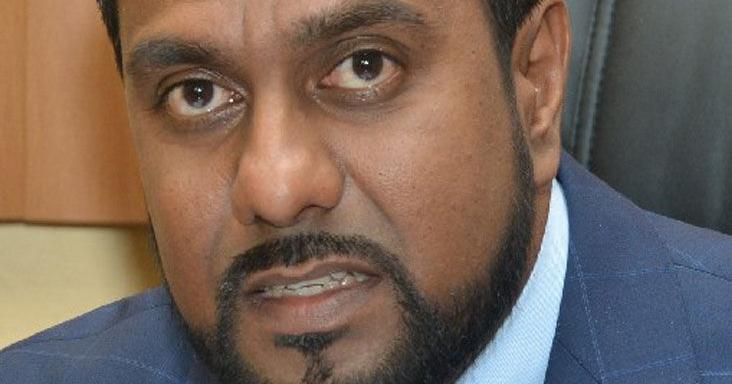
    A week of rapid diplomatic and commercial developments in cross-border energy cooperation between Trinidad and Tobago and Venezuela has clarified the role of the National Gas Company of Trinidad and Tobago (NGC), with Chairman Gerald Ramdeen confirming that the state-owned entity is a core partner in every cross-border natural gas exploration and development agreement active in Venezuelan waters.

    Ramdeen made the remarks Friday during a gas supply agreement signing ceremony hosted at Port of Spain’s Hyatt Regency, addressing widespread public interest sparked by Thursday’s formalization of a strategic partnership between British energy giant BP and Venezuela’s acting President Delcy Rodriguez. He told reporters that technical discussions between BP’s London-based leadership team had already advanced to advanced stages by Wednesday, focused specifically on the cross-border Manakin-Cocuina field, adding he was legally barred from disclosing further confidential details of the ongoing negotiations.

    Despite public speculation and conflicting commentary around the projects, Ramdeen emphasized that development work for three key assets — Dragon, Manakin-Cocuina and Loran-Manatee — is progressing at maximum speed, with the shared goal of delivering gas to Trinidad and Tobago’s processing infrastructure as quickly as possible. He confirmed that NGC is partnering on all three projects alongside BP Trinidad and Tobago (bpTT) and global energy major Shell.

    Addressing competition for rights to the Loran field from other market players, Ramdeen asserted that all cross-border gas from the region must ultimately flow to Trinidad and Tobago for commercialization. “No part of these gas reserves can be turned into marketable product without access to Trinidad and Tobago’s infrastructure. That is the only existing facility in the region capable of monetizing these resources, so all parties have no choice but to route development through our country,” he explained.

    One major barrier to the projects had been the revocation of U.S. Office of Foreign Assets Control (OFAC) specific licenses for the Dragon and Manakin-Cocuina initiatives, but Ramdeen noted that a broader general license has since been issued that permits all market participants to pursue operations in Venezuela. He added that this updated regulatory framework came about in large part due to advocacy from NGC: when the first round of general licenses was issued, only a small set of pre-named entities were permitted to conduct energy business in Venezuela, a restriction that has since been lifted to cover all qualified players.

    When asked about the upcoming government-led negotiation delegation to Caracas, Ramdeen confirmed that the Ministry of Foreign and Caricom Affairs holds full oversight of the diplomatic process, and that he has not yet been invited to join the delegation by Minister Sean Sobers. He stressed that from NGC’s operational perspective, technical work is moving forward without delay, with joint teams from the Ministry of Energy, NGC and each project partner already advancing exploration and planning. Ramdeen predicted that tangible progress on the projects will become publicly visible in the coming weeks and months, demonstrating how much work has already been completed behind the scenes.

    He added that NGC holds daily and weekly discussions with all joint venture partners involved in cross-border gas projects, including the Dragon field, which is located within Venezuelan territorial waters. “These cross-border reserves deliver mutual benefits to both the people of Venezuela and the people of Trinidad and Tobago. NGC, working alongside the Ministry of Energy, the government and Cabinet under the leadership of the Prime Minister, is prioritizing bringing these resources to market as quickly as possible on the most favorable terms for all stakeholders,” Ramdeen said.

    The NGC chairman also addressed ongoing confidential talks with Canadian fertilizer giant Nutrien, noting that negotiations have reached a critical juncture. He declined to share additional details to avoid creating unsupported public expectations, while confirming that discussions have proceeded positively to date. Ramdeen did, however, raise concerns over a breach of confidentiality: unapproved public statements about the talks, which did not come from either NGC or Nutrien, have disrupted the process, as both parties have committed to negotiating in a confidential environment to advance discussions effectively.

    The Energy Chamber of Trinidad and Tobago later confirmed in an official release that BP and Venezuela had formally signed the strategic cooperation memorandum of understanding to develop the Cocuina-Manakin field. The agreement aims to leverage BP’s advanced technical expertise to unlock large natural gas reserves on Venezuela’s Deltana Platform, a development that is expected to strengthen Venezuela’s long-term energy independence and boost its role as a key regional energy supplier.

    The Cocuina portion of the field, part of the currently inactive Deltana Platform project on the Venezuelan side, extends across the maritime border into Trinidadian waters, where a BP subsidiary already operates the asset as Block 5b. In the announcement, Rodriguez framed the agreement as opening a new chapter in Venezuela’s diplomatic and commercial relations with the international community, marking the reopening of a BP representative office in Caracas that will be led by a Venezuelan national.

    “BP’s return is a clear demonstration of the future we aim to forge for Venezuela and its international energy relations,” Rodriguez said, calling for mutually beneficial cooperation to drive development and improve living standards for the Venezuelan people. The agreement is part of a broader trend of Venezuela reopening its oil and gas sector to foreign investment: in recent months, the country has signed new exploration and development deals with other major international energy firms, including Italy’s Eni and Spain’s Repsol.

    Reuters also reported that BP’s Executive Vice President for Gas and Low Carbon Energy William Lin confirmed the company is eager to partner with Venezuela on exploration of the Loran area, as well as other initiatives including gas commercialization. Global energy major Shell has also publicly confirmed its interest in developing the Loran field.
  • A WIN FOR MOM

    A WIN FOR MOM

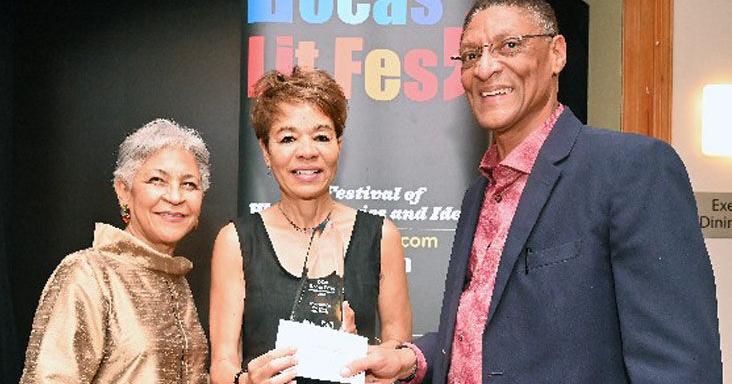
    On a memorable Saturday evening in Port of Spain at the annual Bocas Lit Fest prize-giving ceremony, literary history was made as Guyanese-Canadian writer Tessa McWatt claimed the overall 2026 OCM Bocas Prize, becoming the first author from Guyana to take home the region’s most prestigious literary honor. In an intimate, emotionally charged acceptance speech delivered at the Old Fire Station venue on Abercromby Street, McWatt centered her landmark win on the woman at the heart of her award-winning memoir: her mother.

    Born in Guyana and now based in Canada while holding a creative writing professorship at the UK’s University of East Anglia, McWatt opened her remarks by expressing heartfelt gratitude for the chance to finally attend the festival in person. The 2020 iteration of the event saw McWatt unable to travel from London due to global COVID-19 pandemic restrictions, making this in-person acceptance a full-circle moment for the long-connected Caribbean writer. “For someone who left the Caribbean at a young age, this event and others like it keep me connected to my essence,” she told the packed audience.

    McWatt’s winning work, *The Snag: A Mother, a Forest, and Wild Grief*, is a deeply personal memoir that weaves together themes of familial loss, inherited memory, and natural renewal, with her mother serving as the book’s emotional anchor. “This honour is really for my mother, the central figure of this book — the proud Guyanese woman who bore me,” McWatt said. “She is my heart’s guide.”

    The author shared that even as her mother lives with declining cognitive health in a care home, a copy of the memoir now rests beside her bed, and McWatt visits regularly. Before traveling to Trinidad and Tobago for the ceremony, McWatt told her mother of the nomination, and received a characteristically vibrant response: “She said, ‘Oh, I’m coming—bring me.’” McWatt drew warm laughter and applause from the crowd as she recalled her mother’s lifelong love of Caribbean culture, noting that even into her seventies, she traveled annually to Trinidad’s Carnival, “jumping up in a band wearing very little.”

    Though her mother can no longer read due to her dementia, McWatt said her mother still recognizes herself in the memoir’s photographs, including one of her playing piano. *The Snag* confronts the grief and complexity of caring for a parent with dementia, while drawing parallels between the natural cycles of the forest—decay and regrowth—to process the experience. A well-established author with 11 published books spanning fiction, non-fiction, short stories, essays, and musical libretti, McWatt struck a humble tone, emphasizing that she never expected to claim the top prize. “I told her the book was nominated for a very important prize, but I wasn’t going to win because the writers I was up against were among the very best in the world,” she explained. “I told her I had already won, just being on the list among these incredible writers.” She closed her remarks by thanking her network of supporters, from family and friends to her literary agent and publishing teams across Canada and the UK. This is not McWatt’s first recognition from the OCM Bocas Prize: she took home the non-fiction category award in 2021 for *Shame on Me: An Anatomy of Race and Belonging*.

    Saturday’s ceremony also celebrated other standout contributors to Caribbean literature. Canisia Lubrin won the prize’s poetry category for *The World After Rain*, while Justin Haynes took home the fiction award for his debut novel *Ibis*. The 2026 Bocas Henry Swanzy Award for Distinguished Service to Caribbean Letters went to Guyanese-Canadian literary scholar and critic Frank Birbalsingh, marking a second Guyanese-Canadian honoree of the night.

    The 16th edition of the Bocas Lit Fest, one of the world’s premier celebrations of Caribbean literary work, concluded the following evening with a rousing grand finale: the National Poetry Slam held at the National Academy for the Performing Arts.

  • Manhunt for two suspects

    Manhunt for two suspects

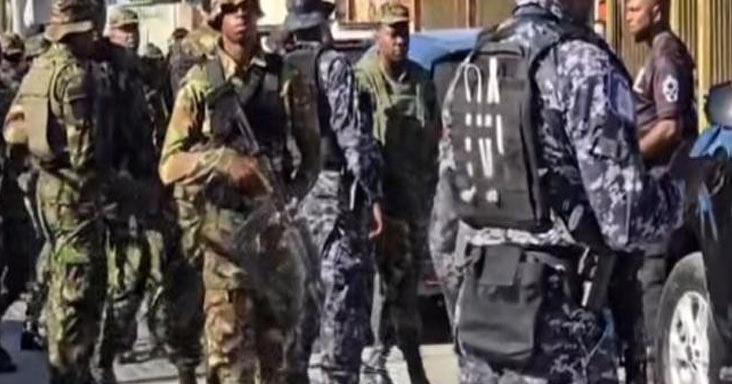
    A massive coordinated manhunt is still underway across central Trinidad for two suspects who fled the scene of a fatal early-morning home invasion that left four suspects dead in a police-military operation on Saturday. Two other people connected to the incident are currently in law enforcement custody, but investigators have not yet closed the case as they work to track down the remaining fugitives and dismantle a suspected criminal ring linked to a string of recent break-ins in the region.

    Law enforcement insiders shared new updates on Sunday, confirming that one of the two detainees is being held at the Caroni Police Station. The second arrested suspect was injured during an exchange of gunfire with responding officers and remains under constant police supervision at a local medical facility, where he is receiving treatment for his wounds.

    Senior law enforcement officials confirmed that the two detainees are being held within the 48-hour detention window permitted under Trinidad’s existing legal framework. When this initial period comes to an end, investigating officers are prepared to submit a formal request to a senior officer ranked above Assistant Superintendent of Police to extend the detention period by up to seven additional days. Sources close to the investigation also told local outlet Express that authorities are already evaluating the use of extraordinary emergency measures, specifically a preventative detention order (PDO). This legal tool would allow officials to hold the detainees for the full duration of the active state of emergency (SoE) currently in place across the country.

    The entire operation was triggered by a reported home invasion in the community of Cunupia early Saturday. Local police received an urgent call about the break-in and launched a rapid response, bringing in military support to contain the scene. The confrontation escalated into a shootout that left four of the suspected intruders dead. Two people were taken into custody at the scene, while two others managed to evade capture and escape.

    In the days following the confrontation, police have maintained a visibly increased presence in the communities affected by the recent string of home invasions. Investigators are actively following up on every tip and lead they receive, with the dual goal of capturing the two remaining fugitives and breaking up the organized criminal network believed to be responsible for the recent wave of break-ins across central Trinidad.

    As the search operation moves forward, government and law enforcement officials are calling on local residents to stay alert to any unusual or suspicious activity in their neighborhoods. Members of the public with any information that could help investigators locate the two at-large suspects are urged to come forward and share their tips with authorities.

  • ICJ begins hearing today on Essequibo dispute

    ICJ begins hearing today on Essequibo dispute

    One of the longest-running territorial disputes in the Western Hemisphere is set to take a critical new step this week, as the United Nations’ highest court for inter-state disputes begins a seven-day public hearing into the conflicting claims over Guyana’s Essequibo region between the South American neighbors Guyana and Venezuela.

    The oral proceedings, open to the public, are scheduled to take place at the iconic Peace Palace in The Hague, the Netherlands, the permanent headquarters of the International Court of Justice (ICJ). The hearing centers on the legal status of the 1899 Arbitral Award, a century-old border ruling that forms the core of the conflict between the two nations.

    The dispute traces its origins back to 1899, when an international tribunal based in Paris issued the Arbitral Award that granted control of roughly two-thirds of the contested 159,000-square-kilometer Essequibo region to British Guiana, the predecessor state to modern-day independent Guyana. For decades, Venezuela has rejected the legitimacy of the ruling, arguing that the 1899 process was riddled with procedural and legal flaws. Under the terms of the 1966 Geneva Agreement, signed as Guyana prepared for independence from Britain, both countries agreed to pursue a negotiated settlement to the dispute.

    The legal journey to the ICJ began in 2018, when Guyana formally submitted an application to the court, initiating official proceedings against Venezuela. Guyana’s filing asked the court to confirm the legal validity and binding force of the 1899 Arbitral Award that established the border between the two states.

    From the outset, Venezuela has disputed the ICJ’s authority to hear the case. Shortly after Guyana filed its claim, Venezuela notified the court that it rejected ICJ jurisdiction and would not participate in the proceedings. That position was challenged in a December 2020 ICJ ruling, which found that the court did have the legal authority to hear the application, including questions related to the validity of the 1899 award and the final settlement of the land border dispute.

    Venezuela filed a formal preliminary objection to this ruling in June 2022. In response, the ICJ issued a follow-up judgment this past April, rejecting Venezuela’s objection and confirming that it could proceed to adjudicate the substance of Guyana’s claims, within the bounds of the jurisdiction outlined in the 2020 ruling. This decision clears the way for this week’s public hearings on the merits of the dispute.

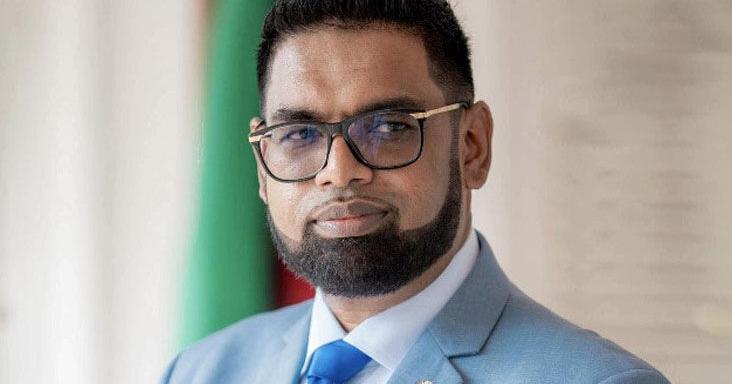
    The dispute re-emerged in global headlines just days before the hearing, after Venezuela’s acting President Delcy Rodriguez wore a map-shaped brooch depicting Venezuela as including the entire Essequibo region during a diplomatic engagement with the Caribbean Community (Caricom). The move drew an immediate rebuke from Guyana’s President Dr. Irfaan Ali, who sent a formal letter to Caricom Chairman Dr. Terrance Drew. In the letter, Ali argued that using a Caricom-hosted event to advance a territorial claim against another Caricom member state risks being interpreted as the regional body acquiescing to or tolerating the claim.

    Ali reaffirmed Guyana’s long-held position that the dispute is properly before the ICJ for a binding final ruling. “Guyana remains fully committed to the peaceful resolution of this matter in accordance with international law,” he stated. “We continue to repose our confidence in the court and to respect its processes and eventual judgement.”

    Rodriguez assumed the role of acting President of Venezuela earlier this year, after a U.S. military operation led to the capture of former President Nicolas Maduro, who is currently detained and awaiting trial on criminal charges in a New York court.

  • I won’t be bullied

    I won’t be bullied

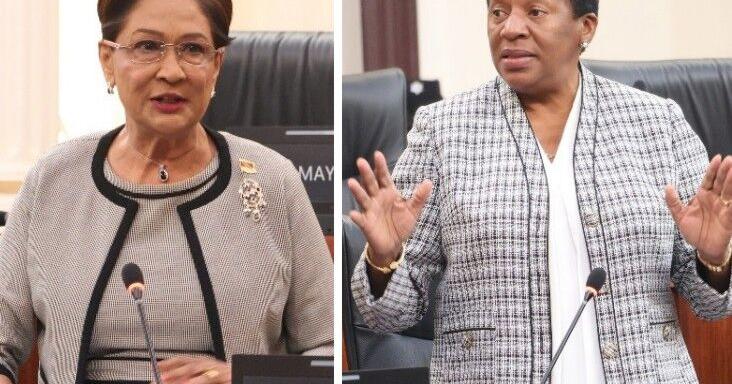
    A sharp exchange of public accusations has escalated political tensions in Trinidad and Tobago, after Opposition Leader Pennelope Beckles issued a fiery rejection of claims from Prime Minister Kamla Persad-Bissessar that the main opposition People’s National Movement (PNM) has been hijacked and controlled by unelected “fake elite financiers”.

    The verbal confrontation traces back to a chaotic parliamentary sitting last Friday, when the entire PNM bloc staged a mass walkout from the chamber after Deputy House Speaker Dr. Aiyna Ali shut down the opposition’s protests. The unrest began when PNM leaders objected to the inclusion of Opposition Senator Faris Al-Rawi in the debate over the adoption of the Special Report from the Public Administration and Appropriations Committee (PAAC). Al-Rawi and fellow PNM Senator Janelle John-Bates had helped former health minister Terrence Deyalsingh draft his witness statement submitted to the committee. In the wake of the controversy, John-Bates publicly offered her resignation from the Senate, with Beckles confirming Friday that she is still reviewing whether to accept the departure.

    During the heated debate, Beckles’ leadership of the opposition was publicly labeled as “weak” by ruling party figures. Shortly after the walkout, Persad-Bissessar took to social media to amplify the criticism, claiming that Al-Rawi — the PNM’s public relations officer — remained untouchable and protected by the party’s hidden backers. She argued that the entire PNM now operates solely to serve the interests of its secret financiers, alleging that Beckles was installed by these outside forces to replace the old PNM leadership and cannot defy their demands. The Prime Minister further claimed that the PNM’s walkout was not triggered by the government’s call for John-Bates’ removal, but by the demand that Beckles remove Al-Rawi over his role in the scandal.

    In her formal response released via social media on the following day, Beckles struck back with equally harsh criticism, labeling the prime minister’s claims as baseless, desperate, and embarrassing. She dismissed the accusations of outside financial control as wild, spurious attacks from a leader who has run out of factual arguments, describing the social media outburst as nothing more than a childish political tantrum. Opening her response with a firm declaration of “I will not be bullied,” Beckles pushed back against Persad-Bissessar’s narrative, pointing out that the prime minister herself occupies a vulnerable, isolated position amid growing discontent.

    Beckles emphasized that as PNM leader, all decisions about parliamentary representation will follow due process, and the ruling government has no right to dictate how the opposition manages its own members. She went on to attack the governing bloc, noting that multiple current government legislators are out on bail, hold falsified professional qualifications, face active court proceedings, and post vulgar, inappropriate content on public social media platforms — yet the prime minister has not taken action against any of these figures.

    The opposition leader also defended the PNM’s decision to walk out of parliament, framing the move as a principled stand against a government that abused its parliamentary majority, ignored established standing orders, and allowed proceedings to descend into political theater and chaos. She highlighted a key contradiction in the prime minister’s criticism: Persad-Bissessar was not present for Friday’s sitting or the debate at all, yet she is now issuing sweeping judgments on events she did not witness first-hand. Beckles argued that if the prime minister wants to lecture on proper parliamentary conduct, she must first show consistent attendance in the chamber to fulfill her responsibilities to the public and understand the issues on the ground.

    Beckles also accused the government of manufacturing selective outrage to inflate a minor procedural issue, while ignoring serious procedural breaches outlined in the PAAC Minority Report. She insisted that all parliamentary misconduct must be investigated with the same level of scrutiny, and that a single universal standard of conduct applied equally to all lawmakers is essential to protecting public trust and upholding the proper function of Trinidad and Tobago’s democratic institutions. Closing her statement, Beckles reaffirmed that the PNM will not be intimidated by the ruling party’s attacks, and will continue to act responsibly, uphold due process, and defend the interests of all Trinidad and Tobago citizens.

  • Hormuz-conflict houdt olieprijzen stevig boven $100

    Hormuz-conflict houdt olieprijzen stevig boven $100

    Global oil prices edged lower in early trading on Monday, driven by a new announcement from former U.S. President Donald Trump outlining planned American military action to free commercial vessels detained in the strategic Strait of Hormuz. Even with this pledge of intervention, persistent uncertainty around stalled U.S.-Iran peace talks has kept upward pressure on prices, leaving benchmarks holding firmly above the $100 per barrel threshold.

    Brent crude futures fell 64 cents, a 0.59% drop, to settle at $107.53 per barrel, while U.S. West Texas Intermediate (WTI) crude declined 84 cents, or 0.82%, to hit $101.10 per barrel. Both benchmarks already recorded significant losses in trading on the prior Friday, extending a period of volatile price swings tied to Middle East geopolitics.

    In a post to his Truth Social platform on Sunday, Trump stated that the U.S. has committed to escorting vessels from other nations safely through the narrow waterway, allowing commercial shipping traffic to resume unimpeded. “For the good of Iran, the Middle East, and the United States, we will provide this escort protection,” Trump wrote in the post.

    Despite Trump’s public statement, regional geopolitical tensions remain elevated. Negotiations between Washington and Tehran have hit repeated snags, with both sides refusing to back away from their core non-negotiable positions. While Trump has prioritized reaching a new nuclear deal with the Iranian government as a top policy goal, Tehran has proposed setting nuclear discussions aside temporarily until the ongoing regional conflict ends and blockades in the Persian Gulf are lifted.

    In a separate development over the weekend, OPEC+ announced it would raise collective oil production targets for June, with seven member nations set to add a combined 188,000 barrels per day to global output. This marks the third consecutive month of production increases from the alliance, though the planned hike was scaled back slightly following the United Arab Emirates’ withdrawal from OPEC earlier this year. Even with the announced target increase, actual growth in global oil supply remains constrained by the ongoing conflict in the region and persistent shipping disruptions in the Strait of Hormuz, a chokepoint through which roughly 20% of global oil supplies pass each day.

  • Republic Bank and Cricket West Indies renew commitment for 2026 primary schools ‘Five For Fun’ Cricket Programme

    Republic Bank and Cricket West Indies renew commitment for 2026 primary schools ‘Five For Fun’ Cricket Programme

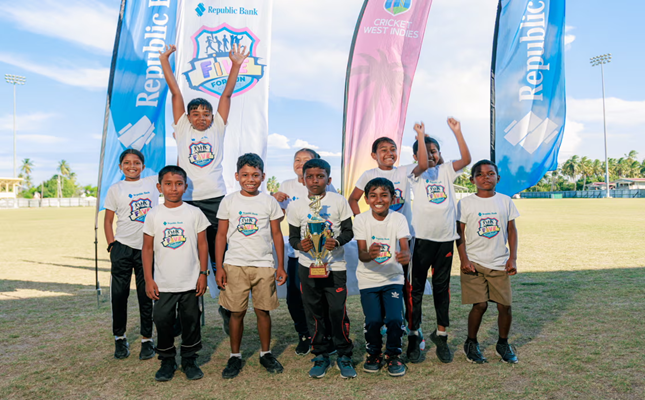
    In an exciting development for grassroots youth cricket across the Caribbean, Republic Bank and Cricket West Indies (CWI) have formally renewed their collaborative partnership for the 2026 iteration of the popular Primary Schools ‘Five for Fun’ Cricket Programme, reaffirming their long-held shared dedication to nurturing young talent and strengthening community cricket across the region.

    Now marking its sixth consecutive year of operation, the fast-paced, inclusive initiative has cemented its status as a foundational pillar of youth cricket development in the Caribbean. Tailored specifically for children aged 7 to 11, the program opens the door to structured access to cricket — the region’s most culturally unifying national pastime — welcoming participants of all genders. Unlike traditional competitive cricket formats, Five for Fun introduces young learners to the core rules and skills of the game through a dynamic, modern framework that prioritizes participation, fun, and the development of transferable life skills over winning at all costs.

    The 2026 competition season is scheduled to run from April through September, with activities hosted across five established Caribbean locations: Saint Lucia, Saint Kitts, Nevis, Guyana and Trinidad and Tobago. In a key milestone for the program’s growth this year, organizers have expanded the regional footprint to include Barbados for the first time ever. When the season kicks off, more than 320 primary schools across 187 local communities are expected to take part, engaging over 10,000 young students in professional structured coaching sessions and low-pressure competitive matches.

    Richard S. Sammy, Group Vice President of Republic Financial Holdings and Vice President of Republic Bank, emphasized the institution’s core belief in the transformative power of recreational sport in a statement on the partnership renewal. “At Republic Bank, we believe in the power of sport as a conduit for building confidence, character, and transforming lives. Our continued partnership with Cricket West Indies through the Republic Bank Five for Fun Cricket Programme reflects our commitment to youth development and strengthening communities across the Caribbean,” Sammy explained. “Through this initiative, we are not only introducing children to the joy of cricket, but also helping them develop important life skills such as teamwork, discipline, resilience, and ambition. These lessons extend far beyond the field and help prepare them for success in every aspect of life. We are proud to support a programme that creates meaningful pathways for the next generation, both in sport and in leadership across our region.”

    CWI Chief Executive Officer Chris Dehring echoed this enthusiasm, highlighting the unique value of the long-running public-private partnership for Caribbean communities. “Cricket West Indies is tremendously proud of our continued partnership with Republic Bank on the Republic Bank Five for Fun Cricket programme, as it continues to grow as a vital grassroots initiative, combining cricket development with life skills in a safe and engaging environment where young boys and girls can learn, express themselves, thrive and grow,” Dehring said. “It reflects a shared commitment to ensuring cricket remains a meaningful part of the school experience, while creating clear development pathways for young talent across the Caribbean to progress both on and off the field.”

    The Five for Fun Programme operates as a core component of the Caribbean’s broader regional cricket development ecosystem, working in close coordination with local and national stakeholders including regional Ministries of Education and Sport, national Cricket Associations, public primary school systems, local community cricket clubs, and other community partners. This integrated collaborative model has already delivered proven results: several program alumni have already progressed to represent their home countries at both the national junior and senior international cricket levels.

    As the program continues to expand its reach and impact across the Caribbean, it has emerged as a leading example of how intentional strategic partnerships between private enterprise and sporting governing bodies can integrate sport and education to empower the next generation of both Caribbean cricketers and community leaders.

  • Column: Integriteit, meer dan een modewoord

    Column: Integriteit, meer dan een modewoord

    In modern public discourse, the term “integrity” is everywhere—dropped in workplace meetings, political speeches, and casual conversations, universally celebrated as a critical value. But how often do people actually live up to the standard it sets? Far from being just a trendy buzzword or an abstract ideal to be cited on special occasions, integrity is the bedrock of ethical action, the foundation of mutual trust, and the cornerstone of a fair, functional society.

    Contrary to common framing that holds only leaders and politicians accountable to standards of integrity, the concept is just as often missing from the everyday choices of ordinary people. It starts with small, seemingly inconsequential decisions: a white lie to avoid conflict, a partially truthful answer to dodge criticism, shifting blame to another person for a mistake one made. What looks harmless at first can quickly snowball, eroding public trust and sowing deep-seated division and suspicion across communities. That makes integrity an ongoing personal responsibility that requires intentional attention every single day, especially in the small, unobserved choices that add up to shape collective culture.

    So what exactly is integrity, at its core? It means remaining steadfast to your own core values and principles, even when staying true comes at a cost. It stands for unwavering honesty, consistent reliability, and radical transparency. It requires taking full ownership of your actions and aligning your words with your deeds at all times. Put simply, integrity is the bridge that connects what we claim to stand for and what we actually do, and the social glue that holds together personal relationships, institutions, and entire societies.

    This standard must apply across every sphere of life: the workplace, personal friendships, public governance, and even online interactions. Whether it is a high-stakes business decision, a private conversation with a loved one, or the public bond between voters and elected officials, that foundational bond collapses without integrity. Even so, it is common to see people weaponize the language of integrity to advance their own self-serving interests, rather than actually practicing what they preach. When power, wealth, or social status is on the line, most people take the easy way out, lacking the courage to be honest or own up to their mistakes.

    Nowhere is this gap more visible than during election campaigns. Candidates make sweeping, ambitious promises to win over voters. Even though most voters know only a tiny fraction of those pledges will ever be fulfilled, we still hold out hope that this election cycle will be different. Time and time again, that hope gives way to disappointment, trapping communities in a vicious cycle of broken trust and unmet expectations.

    The chasm between public rhetoric and private action is staggering. Politicians who preach honesty while engaging in corrupt backroom deals; corporate CEOs who promise transparency while hiding critical information from stakeholders and the public. This persistent gap systematically erodes public trust, fuels widespread cynicism, and deepens social division—at a moment when collective unity is more important than ever, draining the energy needed to tackle shared challenges.

    Even with these widespread failures, integrity remains irreplaceable to a healthy society. It is the foundation of mutual trust and the cement that holds communities together. Without it, people lose sight of our shared humanity and conflict becomes inevitable. Beyond its social benefits, integrity also brings deep personal fulfillment: it lets people look at themselves in the mirror with a clear, unburdened conscience.

    The encouraging takeaway? Change starts with individual action. Integrity does not require grand, headline-grabbing gestures. It only requires a deliberate, daily choice: to be honest, take responsibility, and act consistently with your values, even when no one is watching to hold you accountable. Of course, we also need leaders who model these values publicly, and institutions and workplaces that reward and prioritize integrity rather than punishing it or turning a blind eye to compromise. Only then can we build an environment where public trust can take root and grow.

    It is long past time to stop only talking about integrity and start actually living it. Because without integrity, all words are empty, and without mutual trust, our communities are lost.

  • “We believe that a better world is possible, as Fidel taught us”

    “We believe that a better world is possible, as Fidel taught us”

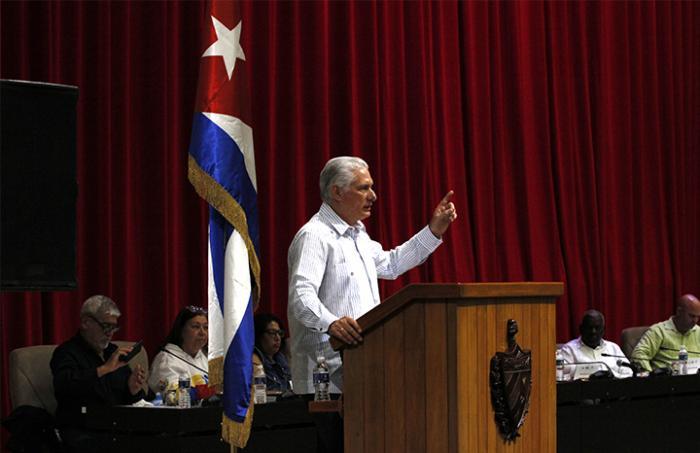
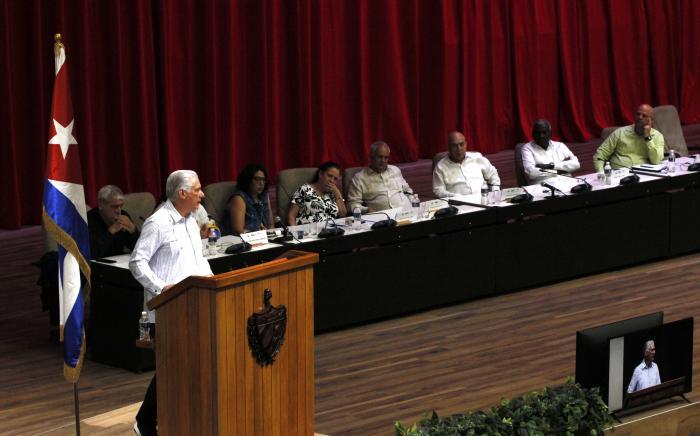
    Against the backdrop of 2026, the centennial year of iconic Cuban revolutionary leader Fidel Castro Ruz, Miguel Mario Díaz-Canel Bermúdez, First Secretary of the Central Committee of the Communist Party of Cuba and President of the Republic, delivered a stirring closing address to delegates at the International Meeting of Solidarity with Cuba, held at Havana’s Convention Center on May 2. Opening his speech with a resounding affirmation that solidarity can never be blocked by force or coercion, Díaz-Canel extended profound gratitude to attendees who traveled from every corner of the globe to stand with the Cuban people, acknowledging that such open support for Cuba requires immense courage amid escalating international pressure from the United States.

    Díaz-Canel rooted his remarks in the core ideological legacy Fidel Castro passed to the Cuban nation: the conviction that a better world, built on social justice that prioritizes people over profit and market forces, remains not just a dream but an achievable goal. Addressing the longstanding U.S. characterization of Cuba as an “extraordinary and unusual threat” to U.S. national security, he pushed back forcefully against the claim, noting Cuba has a decades-long track record as a peacemaking hub. The island has hosted landmark regional peace dialogues for Latin America and the Caribbean, and even facilitated a historic meeting between the Catholic Church and Russian Orthodox Church to mend a 1,500-year-old theological schism. The only “threat” Cuba poses, Díaz-Canel argued, is the example of unyielding resistance and creative resilience it sets for other nations resisting imperial domination.

    He broke down the defining values of international solidarity into three core pillars. First, solidarity is rooted in collective compassion: following Fidel’s teaching, true solidarity means sharing what one has, not just discarding what is left over. Second, international solidarity acts as a critical strategic rear guard for nations facing aggression, with every global mobilization, donation and public demonstration breathing life into the Cuban struggle against the decades-long U.S. economic blockade. Third, solidarity is an act of active resistance against global exclusion: it forces the international community to confront unjust U.S. policies, including the baseless designation of Cuba as a state sponsor of terrorism.

    The address came one day after a historic mass mobilization of the Cuban people marking May Day in the centennial year of Fidel Castro’s birth. Díaz-Canel highlighted two landmark victories the Cuban people delivered that day: first, more than 80% of all eligible Cuban voters aged 17 and older signed a petition in support of the Cuban Revolution, the homeland and socialism, directly opposing intensified U.S. blockades, energy coercion and threats of military aggression. Second, more than 5 million Cubans marched in mass demonstrations in Havana and every city across the island to defend their nation’s sovereignty. He emphasized that this outpouring of support defied the predictions of Cuba’s enemies, who spent millions of dollars in propaganda efforts claiming Cuban youth would abandon the revolution and that popular participation would be negligible. Instead, a new generation of Cubans, raised in the centennial of Fidel Castro, turned out en masse to defend their political system, proving their opponents “got their fingers caught in the door” as Cuban saying goes.

    Turning to global affairs, Díaz-Canel argued that the current crisis of global capitalism and deep credibility collapse of the U.S. political establishment among its own people has fueled a resurgence of far-right ultra-conservatism and fascism across the globe. The current U.S. government, he claimed, is a fascist administration that has overseen a wave of genocidal aggression across the Global South, from the ongoing atrocities against Palestinian and Lebanese peoples to the targeting of Iran and Venezuela. He outlined the multi-front war the U.S. is waging: an ideological war to impose hegemonic domination over all nations; a cultural war to sever Global South peoples from their historical roots and identity; and a media war that uses digital platforms, corporate outlets and coordinated disinformation to spread lies, manufacture consent for aggression and destroy the reputation of targeted nations.

    Díaz-Canel detailed how this asymmetric media war has been deployed against Cuba’s allies: against Venezuela, the U.S. manufactured a false narrative of a “narco-state” to politically lynch legitimate President Nicolás Maduro, justify a naval blockade, deploy the largest U.S. military presence in the Caribbean in two decades, and ultimately abduct Maduro to stand trial in the U.S. — a lie that was exposed when the supposed “Cartel of the Suns” disappeared immediately after Maduro’s abduction, even as the damage to Venezuela remained. Against Iran, the U.S. spread false claims that the country’s civilian nuclear program was aimed at building a nuclear weapon, justifying a full-scale war that the Iranian people are now resisting heroically, even as no Iranian nuclear weapon has ever materialized. The only power openly threatening nuclear use today, he noted, is the U.S. government itself.

    Against Cuba, the U.S. has deployed a similar playbook, spreading false narratives of human rights abuses, economic collapse and state failure, while claiming to care about the welfare of the Cuban people. Díaz-Canel called this a cynical absurdity: if the U.S. truly cared about Cubans, it would immediately lift the decades-long blockade that is the root cause of all of the nation’s most pressing economic challenges. Beyond disinformation, the U.S. has pressured scores of foreign governments to cut off the solidarity-based medical cooperation Cuba provides to low-income and developing nations, coercing some Latin American leaders to curtail or sever diplomatic ties with Cuba to curry favor with Washington.

    The economic pressure on Cuba escalated dramatically in late 2025, when Cuba was cut off from oil imports following the imposition of an energy blockade against U.S.-targeted Venezuela, leaving the nation without consistent fuel supplies for four months until a shipment from Russia stabilized the country’s electricity grid — a supply that is now running low with no clear timeline for the next delivery. As if this hardship was not enough, Díaz-Canel revealed that the U.S. had issued a new executive order imposing harsh new sanctions on Cuba on May Day itself, a deliberate “gift” in response to the Cuban people’s massive show of unity.

    The new sanctions are structured around three core pillars explicitly designed to collapse the Cuban economy and force regime change: first, expanded sectoral sanctions targeting Cuba’s most critical economic sectors — energy, defense, mining and financial services — blocking any U.S. property dealings with entities operating in these areas, building on more than 60 years of blockade that intensified under Trump in 2019, was maintained by the Biden administration, and expanded further in the second Trump term. Second, the order imposes global financial persecution, threatening to cut any third-country bank off from the U.S. financial system if it conducts transactions with Cuban entities, further tightening the international noose around Cuba. Third, the sanctions are implemented immediately with no adjustment period, eliminating any opportunity for timely legal appeal.

    Díaz-Canel framed the new executive order as a blatant act of unilateral interference in Cuba’s internal affairs, an unacceptable attempt to impose a political model through economic coercion that undermines core multilateral principles. Beyond targeting Cuba, the policy destabilizes the entire Latin American and Caribbean region by forcing the international community to make an impossible choice: maintain relations with Cuba, or retain access to the U.S. market and financial system. He issued a forceful call to the global community: what is being done to Cuba, Palestine, Iran and Venezuela today will be done to any nation that defies U.S. hegemony tomorrow, so the world can no longer tolerate this abuse of power. Standing with Cuba today means standing for the fundamental principle of national dignity for all peoples, he argued, and no one should expect Cuba to surrender its sovereignty.

    Díaz-Canel acknowledged that the cumulative weight of more than 60 years of blockade, the lingering economic damage of the COVID-19 pandemic, and these new intensified coercive measures have created an extremely difficult situation for the Cuban people, designed to force social unrest through collective punishment and economic suffocation. But he emphasized that Cuba is not passive in the face of this aggression: the government has spent months preparing a comprehensive set of updated plans and programs to address the crisis, rooted in three core national priorities.

    First, Cuba has boosted national defense readiness in response to growing threats of U.S. military aggression. Díaz-Canel stressed that Cuba is a nation of peace that has always advocated for resolving differences through dialogue, but the Cuban people do not fear war. Citing the example of 32 Cuban fighters who died confronting elite U.S. forces during the attempt to abduct Maduro in Venezuela — holding off a technologically superior force for more than 45 minutes when the U.S. expected the operation to end in minutes — he argued that millions of Cubans would display the same courage in defense of their homeland. Cuba’s defensive doctrine, developed by Fidel Castro and refined by subsequent military leaders, ensures every Cuban man and woman has a role and a mission to defend the homeland, revolution and socialism.

    Second, Cuba has developed a comprehensive economic and social development program through a nationwide popular consultation process held in late 2025 and early 2026, which incorporated input, criticism and proposals from grassroots communities across the island. The program is built on three core pillars: macroeconomic stabilization, expanded domestic production and increased exports; national sovereignty and sustainability, focused on achieving food sovereignty through domestic production (even amid fuel and resource shortages) via expanded agroecological practices, and energy independence through a rapid transition to renewable energy. Díaz-Canel noted that over the past year, Cuba expanded renewable energy capacity from 3% to 10% of total electricity generation, adding more than 1,000 megawatts of solar capacity, and is pursuing further growth targeting full energy self-sufficiency by 2050 using domestic resources the U.S. can never block: sunlight, wind, river and ocean currents, biogas and biomass. Cuba has also developed domestic technology to refine its own crude oil, and is now working to expand domestic production to meet national fuel needs.

    The third non-negotiable pillar of Cuba’s response is a commitment to avoiding austerity shock policies, centering social justice in all reforms. Every measure is designed to mitigate growing inequality, with targeted support for vulnerable people, families and communities to ensure no one is left behind — a core principle of Cuban socialism that the nation will never abandon.

    Díaz-Canel closed by reaffirming that even amid unprecedented pressure, Cuba retains its dreams of a just, prosperous and independent future, and counts on international solidarity to help spread the truth about Cuba amid the global media siege. The Cuban people remain committed to being a beacon of hope for marginalized and oppressed peoples across the globe, and will never betray the trust that global solidarity activists have placed in them. He ended with a series of resounding calls: long live peace, down with war, down with the blockade, long live international workers, long live international solidarity, Cuba will never be alone, and onward to victory.

  • Cuba, May Day, Raúl Castro, Miguel Díaz-Canel

    Cuba, May Day, Raúl Castro, Miguel Díaz-Canel

    On May 1, 2026, at the closing ceremony of the International Meeting of Solidarity with Cuba, an event themed “For a World Without Blockade: Active Solidarity on Fidel’s Centennial,” Cuban President Miguel Díaz-Canel Bermúdez delivered a bold and clear address pushing back against long-standing narratives advanced by the United States that frame the Caribbean island as a national security threat.

    Díaz-Canel, who also serves as First Secretary of the Communist Party of Cuba, stressed that Cuba poses no extraordinary or unusual threat to the U.S., leaving no legal or ethical justification for any form of military aggression against the island nation. To counter the depiction of Cuba as a destabilizing force, he pointed to the country’s long track record of international peace mediation, including its pivotal role in facilitating the historic high-level meeting between the Vatican and the Russian Orthodox Church, a milestone that helped ease religious and geopolitical tensions globally.

    The Cuban leader emphasized that the Cuban people remain steadfast in their commitment to serving as a beacon of progressive hope in the Caribbean for communities and movements across the world that share the vision of a more fair and equitable global order.

    He framed this year’s May Day celebration as a defining moment of national unity, noting that more than 80 percent of Cubans over the age of 16 signed a national petition calling for global peace and opposing foreign military aggression, while approximately five million citizens joined peaceful marches across the country to defend national sovereignty and reject interventionism. Against persistent international narratives that label Cuba a “failed state,” Díaz-Canel pushed back firmly: “This is not the failed state they try to portray.”

    He particularly highlighted the role of Cuban youth in the nationwide mobilization, noting that young Cubans stepped forward as core organizers and participants in the anti-imperialist marches to defend the Cuban Revolution, echoing the courage and commitment of the generation that supported Fidel Castro during the centennial of his birth. This collective mobilization, he stressed, has persisted even amid severe economic headwinds driven by the ongoing tightening of the decades-long U.S. economic blockade against the island.

    In his remarks, Díaz-Canel also called global attention to a coordinated international information campaign that manipulates and distorts Cuba’s reality to force the Cuban people to abandon their cultural roots, collective national identity, and independent political path. He warned that this campaign constitutes a full-scale media war waged across both digital social networks and traditional mainstream media, aimed at spreading white supremacist ideology, stoking xenophobia, and smearing the reputations of Cuban leaders and institutions.

    The nation’s greatest source of strength, the president affirmed, comes not from institutions or resources, but from its people: working-class citizens who are building a dignified, self-determined future for the country. This domestic power, he added, is amplified by the global solidarity the country has received from progressive movements around the world. “This is a moment of global struggle against selfishness, for resistance and creativity,” he told attendees.

    Díaz-Canel also outlined the country’s ongoing domestic development priorities, noting that Cuba is currently advancing projects to transform its national energy matrix by scaling up renewable energy infrastructure. The country also aims to achieve full food sovereignty through expanded investment in science, technology and local innovation. Acknowledging that short-term challenges remain inevitable amid the current pressure campaign, he emphasized that the country continues to make incremental progress, sustain development work, and uphold its long-term vision.

    “Every Cuban has a role in the defense and a role to play; therefore, we will resist,” Díaz-Canel said, adding that “the Cuban people are not afraid.” He pointed to the country’s recent achievement in domestic crude oil refining, a milestone that many foreign analysts claimed Cuba would never be able to achieve independently. Now, the country is working to double that domestic production to strengthen energy security, he noted.

    Looking forward, Díaz-Canel reaffirmed that Cuba will remain a just, inclusive nation that welcomes all members of society, and will continue to extend international solidarity to marginalized just causes across the globe. These causes, he said, include the Palestinian people’s struggle for self-determination, the Bolivarian Revolution in Venezuela, and the push for the freedom of Venezuelan President Nicolás Maduro and his wife.

    He closed his address with three resounding slogans: “Long live International Workers’ Day! Long live solidarity among peoples! Cuba is not alone!”