A notice has been issued calling on audiences to tune into a live broadcast. However, at the time of this announcement, no additional context, specific details regarding the subject of the live stream, participating individuals, scheduled air time or location have been released to the public. This brief notification leaves potential viewers without critical information needed to plan to watch the live event, and it remains unclear when further details about the broadcast will be made available.
作者: admin
-
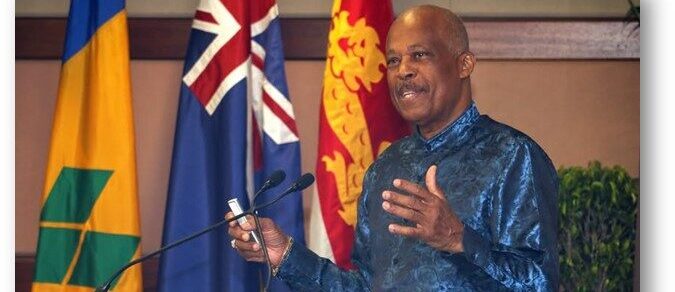
UWI Vice-Chancellor’s report broadcast set for May 8
The University of the West Indies (UWI) has announced that its Vice-Chancellor, Professor Sir Hilary Beckles, will present his official annual report covering the 2024/2025 academic year to the institution’s top governing body, the University Council, in a publicly accessible live broadcast on Friday, May 8, 2026.
Per an official statement released by the regional higher education institution, Professor Beckles’ presentation will lay out the university’s most important milestones from the past academic year, a full review of the institution’s overall performance, and its planned strategic trajectory for the coming years. The report will specifically highlight UWI’s ongoing work to advance its core long-term priorities: strengthening institutional resilience to navigate shifting educational and economic landscapes, building capacity to address emerging global and regional challenges, and expanding the university’s impact and standing across the Caribbean and worldwide.
As the highest governing authority in the UWI system, the University Council holds responsibility for supervising all of the university’s administrative and operational affairs, including the appointment of senior leadership. The body is currently chaired by Chancellor Dodridge Miller, who oversees the Council’s deliberations and formal decision-making processes.
To make this key annual governance event accessible to students, faculty, alumni, and members of the public across the region, the full proceedings will be broadcast live via UWItv. The broadcast is scheduled to kick off at 10:00 a.m. Atlantic Standard Time (Eastern Caribbean time) and 9:00 a.m. Eastern Standard Time (Jamaica time). Interested viewers can stream the event live through the official UWItv website at www.uwitv.global, or access the broadcast on UWItv via FLOW EVO cable television services.
-
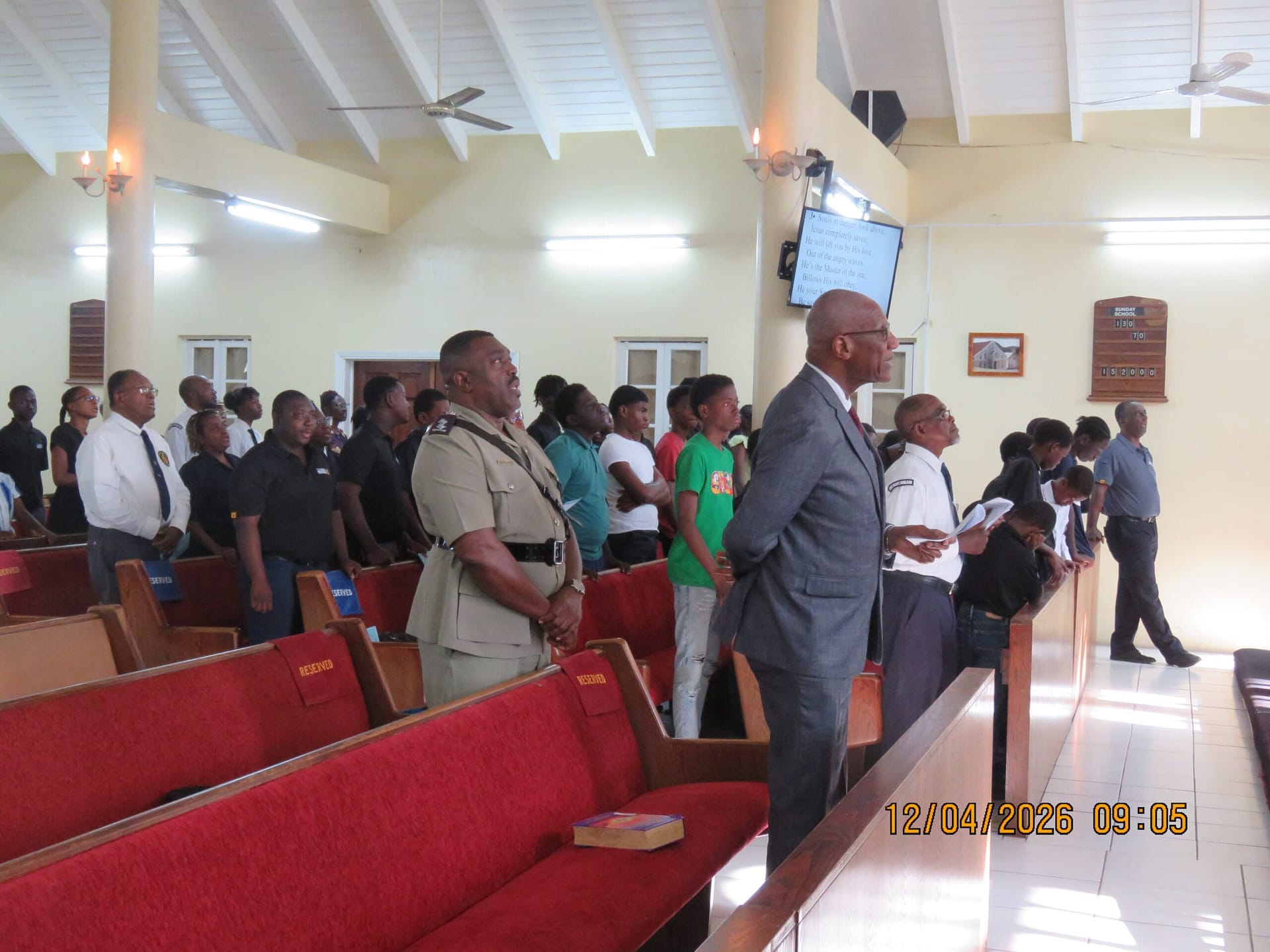
The Boy’s Brigade 2026 Week of Activities Celebrates Leadership, Faith, and Service Among Youth
St. John’s, Antigua and Barbuda – The dual-island nation of Antigua and Barbuda wrapped up its annual Boys’ Brigade Week 2026 on April 12, a six-day national observance centered on the mission of growing the next generation of principled leaders while fostering strong personal character among young male participants. Held from April 7 to 12 under the official theme “Raising Leaders, Building Character,” this year’s gathering drew top public figures, including Sir Rodney Williams, Governor General of Antigua and Barbuda, who took a central role in the week’s closing ceremonies.
Over the six days of programming, organizers put together a diverse slate of activities designed to nurture three core pillars for members: leadership capability, personal discipline, and community service. Participants kicked off the week with a media engagement session to share the Brigade’s work with broader audiences across the country. Next came a community outreach project, where members delivered a donation to the Care Project at Holberton Hospital, one of the nation’s leading public healthcare facilities. Young participants also got the chance to build hands-on leadership skills through dedicated training workshops, before taking part in a public March of Witness that wound through the central streets of St. John’s. The week also included a two-night overnight camp and a casual beach picnic for members and their families at popular local spot Pigeon Point.
The entire observance reached its ceremonial conclusion on Sunday, April 12 with a special intercessory Church Service held at Baxter Methodist Church. Both Governor General Sir Rodney Williams and his wife Her Excellency Lady Williams, who serves alongside the Governor General as joint Patron of the national Boys’ Brigade, were in attendance for the service. In his formal remarks to attendees, the Governor General offered high praise for the youth organization’s decades-long commitment to fostering positive youth development across Antigua and Barbuda.
“As Patrons of the Boys’ Brigade in Antigua and Barbuda, Lady Williams and I take particular pride in the role the Brigade continues to play in shaping the character, discipline, and spiritual foundation of our young men,” Sir Rodney shared. He went on to frame the organization as a critical anchor for young people navigating an increasingly complex modern world, calling it “a beacon of faith, discipline, and service” that delivers consistent, trusted mentorship and guidance to growing boys and young men.
The Governor General emphasized that youth-serving groups like the Boys’ Brigade fill an irreplaceable role in instilling core values of integrity, community leadership, and service to others, adding that their grassroots work remains foundational to long-term national progress. He also extended specific recognition to the unsung contributors that make the Brigade’s work possible: chaplains, program officers, volunteer leaders, participating parents, and community supporters, whose consistent dedication leaves a lasting positive mark on the lives of hundreds of young men across the country.
Sir Rodney also highlighted the longstanding productive partnership between the Boys’ Brigade and the Office of the Governor General. Beyond Boys’ Brigade Week, the organization regularly contributes to key national observances, including annual Commonwealth Day activities, and collaborates on initiatives designed to boost civic engagement and participation among the nation’s youth.
After the closing church service concluded, the Governor General moved to the parade ground to take the official salute from marching Brigade members, who delivered a disciplined, high-spirited public display of their training. The parade capped off a full week of activities that stayed true to the organization’s core mission of centering faith, community fellowship, and intentional character development for participants.
Today, the Boys’ Brigade in Antigua and Barbuda stands as a long-trusted cornerstone of the nation’s youth development ecosystem. For generations, the organization has nurtured young men rooted in Christian values, personal discipline, and a commitment to serving their country, building a legacy that continues to benefit communities across the islands.
-
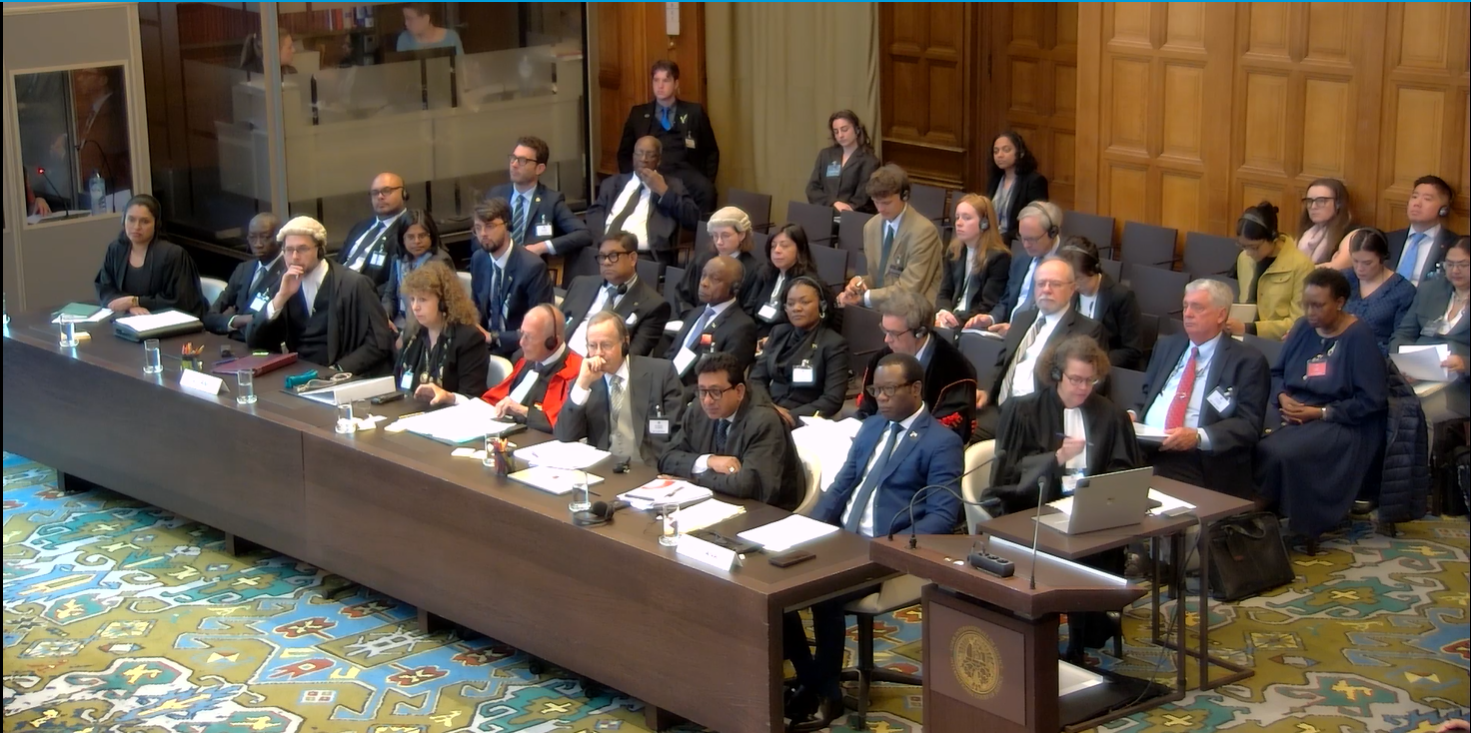
No irregularities in Venezuela-Guyana boundary dispute settlement process – Guyana tells World Court
On Monday, 4 May 2026, oral proceedings on the merits of the long-running Guyana-Venezuela border dispute kicked off at the International Court of Justice (ICJ), with Guyana formally dismissing decades of Venezuelan claims alleging procedural irregularity and foul play in the 1899 territorial settlement that granted Guyana control over the resource-rich Essequibo Region.
Venezuela’s core challenges to the dispute’s legal framework center on two key documents: the 1897 Treaty of Arbitration between Caracas and the United Kingdom, which established the process to resolve the boundary conflict, and the 1899 Arbitral Tribunal Award that allocated the Essequibo territory to what would later become Guyana. Caracas claims the 1897 deal was negotiated without its full consent, included coercive pressure, and contained procedural flaws that ultimately led to an unjust 1899 ruling that stripped Venezuela of the territory.
Appearing before the ICJ panel of judges on Guyana’s behalf, lead counsel Paul Reichler systematically refuted every one of Venezuela’s allegations, backing his arguments with declassified contemporary correspondence between Venezuela, the United Kingdom and the United States. Reichler emphasized that Venezuela has no legitimate legal or factual basis to invalidate either the 1897 Treaty or the 1899 arbitral award.
Reichler also outlined the long history of the dispute, noting that Venezuela publicly accepted, respected and abided by the 1899 award for more than 60 years before formally challenging its validity in a 1962 letter to the United Nations Secretary-General. Crucially, Reichler added, even when Venezuela reversed its position on the 1899 award, it continued to recognize the 1897 Treaty as a binding legal agreement in subsequent UN submissions – a contradiction that undermines its current challenge to the treaty’s validity.
Reichler dismissed Venezuelan claims that the United States colluded with the United Kingdom to advance British interests at Venezuela’s expense. He pointed to surviving contemporary documentary evidence that directly contradicts allegations that the 1897 treaty was negotiated behind Venezuela’s back, without input from Venezuelan representatives, or that it ignored Caracas’ core interests. He confirmed that the final text of the 1897 Treaty fully incorporated Venezuela’s position on both the legal principle of prescription and the continuing validity of the 1850 bilateral agreement, and that contemporary records show Venezuela explicitly agreed that the United States had properly protected its interests during negotiations.
Another key Venezuelan claim is that the 1897 Treaty was reached without its full consent and barred it from appointing its own arbitrator to the tribunal. Reichler labeled this argument as entirely groundless, citing archival records showing the draft treaty shared with Caracas in November 1896 explicitly addressed arbitrator appointments. Under Article Two of the final treaty, the five-member tribunal would have two members nominated by the U.S. Supreme Court, two by the British High Court of Justice, and a fifth appointed by the four nominees. The structure left open the explicit possibility that U.S. justices would nominate a Venezuelan candidate – a provision that British negotiators openly opposed, Reichler confirmed.
On Venezuela’s argument that the 1897 Treaty was signed under coercion, a violation of Article 52 of the 1969 Vienna Convention on the Law of Treaties, Reichler noted that the convention’s provisions do not apply retroactively to agreements concluded decades before the treaty entered into force. He also rejected Venezuela’s claims that the alleged Anglo-American conspiracy amounts to fraud under Article 49 of the convention, as well as claims that Venezuela ratified the 1897 Treaty under a mistake of fact, as defined in Article 48, after being told the agreement protected its interests only to see those interests sidelined during the 1899 arbitration.
Reichler confirmed that while the 1897 arbitration agreement was primarily negotiated directly by then-British Ambassador to the U.S. Lord Pauncefote and U.S. Secretary of State Richard Olney on Venezuela’s behalf, Caracas raised no objections to the negotiation process at the time.
Guyana’s full delegation to the ICJ hearing includes Foreign Minister Hugh Todd, Attorney General Anil Nandlall, Guyana’s Agent to the ICJ Carl Greenidge, and Donnette Streete, Director of Frontiers at the Guyanese Ministry of Foreign Affairs. The ICJ’s merits hearing will now proceed, with Venezuela expected to present its own arguments in the coming days, as the court works to resolve a territorial conflict that has lingered for more than a century.
-

Young Antiguan Artist Gets Global Spotlight After Giving IShowSpeed Hand-Drawn Portrait
A rising young creative from the Caribbean nation of Antigua and Barbuda has earned sudden global recognition after a spontaneous on-camera encounter with one of the internet’s biggest streaming personalities.
During IShowSpeed’s high-profile visit to the twin-island country, 19-year-old Lemuel Richards seized the chance to share his handcrafted work with the streamer, presenting him with an intricately detailed, personally created portrait. The exchange unfolded live on IShowSpeed’s broadcast, which draws millions of viewers from across the globe, turning a small local interaction into a viral moment for the emerging artist.
Footage of the meeting shows IShowSpeed reacting with genuine surprise and heartfelt gratitude, immediately holding the finished portrait up to his broadcast camera to give his worldwide audience an up-close look at Richards’ skill. Within minutes of the live stream going out, social media platforms flooded with praise for the young Antiguan creator, with viewers commending both the technical precision of his drawing and his boldness in approaching the global star to share his work.
The unexpected breakthrough moment does more than just lift Richards’ personal career: it also puts a spotlight on the underrecognized creative talent among Antigua and Barbuda’s young generation, introducing a new community of artists to an enormous international audience that may not have previously engaged with local Caribbean creative work.
-
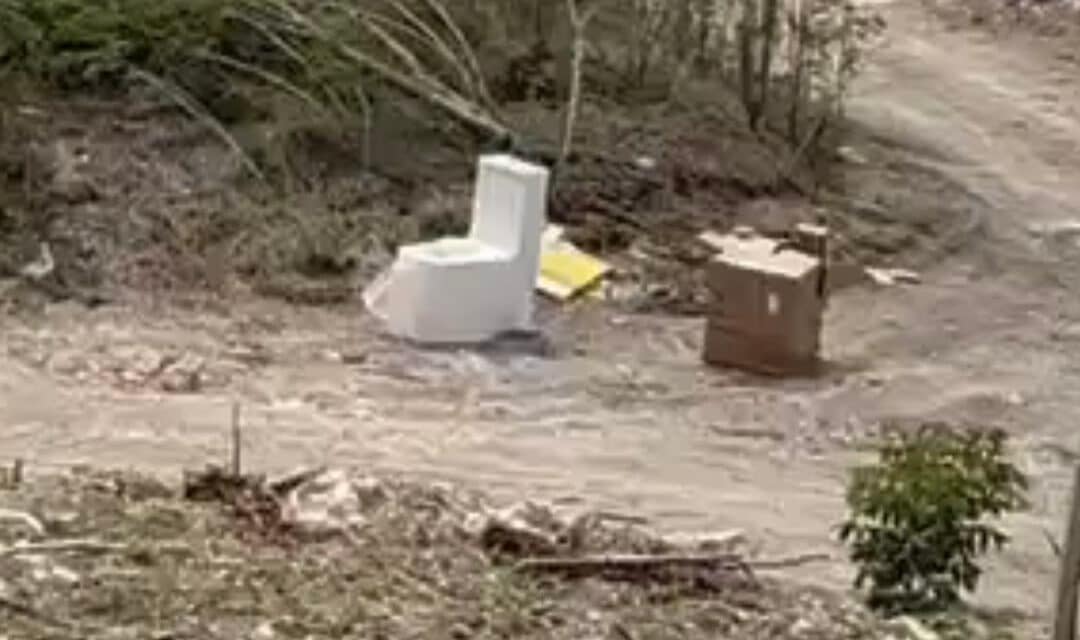
Thieves Make Off With 26 Toilets From Affordable Homes Site
A non-profit housing organization focused on delivering low-cost accommodation in Antigua is reeling after a brazen theft that set back its community-focused construction work last week. Affordable Homes Antigua confirmed that thieves targeted an on-site storage container, making off with 26 toilets alongside a range of other essential building materials needed for the ongoing project.
In a public statement shared on the organization’s online platforms, representatives shared that the team was deeply shaken by the incident, describing the losses as a substantial, unexpected blow to the project’s timeline and operational capacity. As of the organization’s latest update, no information has been released regarding the specific location of the affected construction site, nor has the total monetary value of the stolen goods been disclosed. It also remains unconfirmed whether local law enforcement has been contacted to investigate the crime, and no persons of interest have been publicly named in connection with the theft.
The incident has thrown a spotlight on a long-running issue that plagues construction sectors across many growing regions: inadequate security at active building sites. As Antigua has seen a steady uptick in residential construction activity in recent months, experts and industry insiders note that opportunistic theft of building materials has become an increasingly common problem, often stalling progress on projects aimed at addressing housing insecurity for low-income and working-class communities.
-
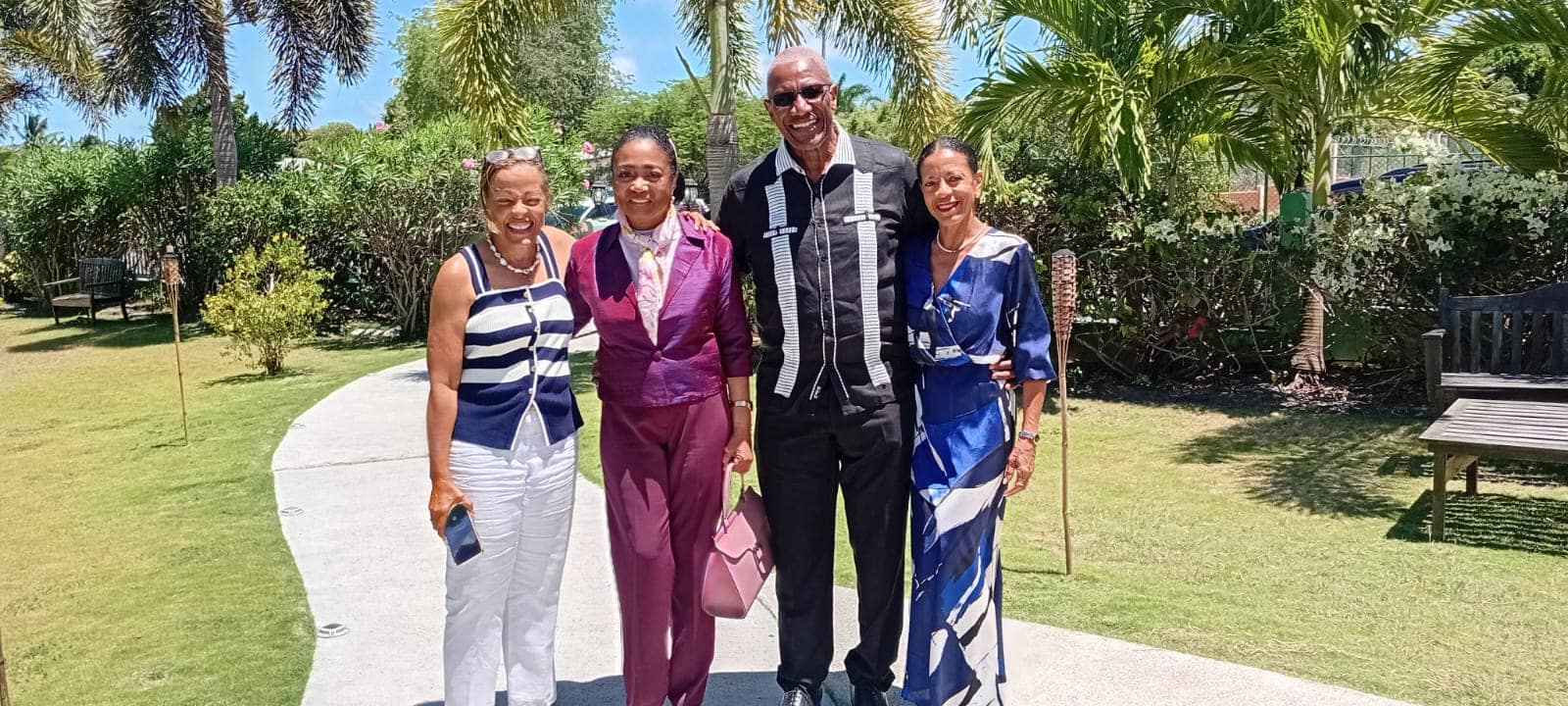
Governor General and Lady Williams Attend St. John Hospice Fundraiser at Casa Palmadita
On Sunday, May 3, 2026, a community-focused fundraising event dubbed “Wash You Foot and Come” brought together dozens of engaged locals and dignitaries at Casa Palmadita in Fitches Creek, with the highest-profile guests being Governor General of Antigua and Barbuda Sir Rodney Williams and his wife Lady Williams. The event was organized to benefit St. John Hospice, a palliative care institution that counts the couple as its official patrons.
For years, St. John Hospice has filled a critical gap in Antigua and Barbuda’s care ecosystem, delivering specialized, compassionate end-of-life support to terminally ill residents and their loved ones navigating the emotional and practical challenges of serious illness. Unlike many healthcare services that focus on curative treatment, the hospice centers its work on upholding patient dignity, reducing physical discomfort, and surrounding patients and families with emotional support — a mission that has earned it deep respect across the nation.
In opening remarks delivered to the gathered crowd, Sir Rodney Williams highlighted the quiet but transformative impact of the hospice’s work. He praised the organization for staying rooted in core values of dignity, comfort, and radical empathy, and urged all attendees to continue their long-term support of the institution beyond the one-day fundraiser. He noted that sustained backing, whether through financial donations, hands-on volunteer work, or public advocacy to expand the hospice’s reach, remains essential to keeping the organization’s critical services running.
Following his remarks, Lady Williams presented a sizable donation on behalf of The Halo Foundation, a long-standing partner of St. John Hospice, to Charlene Selkridge, chair of the event’s planning committee. The Halo Foundation has built its mission around supporting vulnerable community members, and its ongoing partnership with the hospice aligns with its core commitments to care, compassion, and public service. This latest contribution marks another chapter in the foundation’s years of investment in palliative care across the country.
The day’s program was smoothly run by Colin Maynard, the newest appointee to the St. John Hospice Board of Directors, who stepped into the role of Master of Ceremonies. Between appeals for support and formal remarks, guests were treated to a lively lineup of local musical entertainment: Armani Gomes performed on the steelpan, Garrett Gill took on guitar duties, and Jevonte played keyboard, adding a warm, community-focused tone to the gathering.
Before the event concluded, Sir Rodney and Lady Williams extended formal thanks to every group that contributed to its success, from Selkridge and the entire planning committee to the hospice’s board, executive leadership, frontline care staff, volunteer caregivers, corporate sponsors, the performing artists, and every individual attendee who gave their time or money to the cause.
Beyond raising the critical operating funds the hospice relies on to continue its work, the fundraiser also achieved a second key goal: it raised public awareness of the irreplaceable role St. John Hospice plays in supporting families across Antigua and Barbuda. By bringing community members together in a spirit of generosity and fellowship, organizers helped more locals understand the value of palliative care and the ongoing need for collective support to sustain the service for years to come.
-
Guyana tells World Court that Spain or Venezuela never ran Essequibo
On Monday, 4 May 2026, legal and diplomatic representatives of Guyana laid out a comprehensive, evidence-backed case before the International Court of Justice (ICJ), refuting Venezuela’s long-standing territorial claim to the 160,000-square-kilometer Essequibo region by documenting Guyana’s continuous, uninterrupted administration of the territory and challenging the legitimacy of Venezuela’s legal arguments.
This week marks a critical milestone in the decades-long border dispute, as the ICJ convenes to hear the merits of Guyana’s case centered on the legal validity of the 1899 Arbitral Tribunal Award, the original agreement that formalized the land boundary between the two neighboring South American nations.
Speaking on behalf of Guyana’s Ministry of Foreign Affairs, Ambassador Donnette Streete, Director of the Frontiers Division, told the UN’s highest judicial body that neither historical colonial power Spain nor modern Venezuela ever exercised governing control over Essequibo. Streete outlined the territory’s deep demographic and administrative ties to Guyana, noting that Dutch settlers were the first Europeans to occupy the region, which was later populated by descendants of enslaved Africans and indentured Asian workers brought to the area by Dutch and British colonial rulers between the 17th and 19th centuries. Today, Essequibo is fully integrated into Guyana’s national governance: the region elects nine representatives to Guyana’s national parliament, Guyana collects all regional taxes, manages public services, and leads conservation efforts to protect the area’s extraordinary biodiversity. According to Guyana’s 2022 national census, more than 313,000 people call Essequibo home – accounting for over one-third of the country’s total population, including nine indigenous groups that have inhabited the land long before the formation of modern national borders.
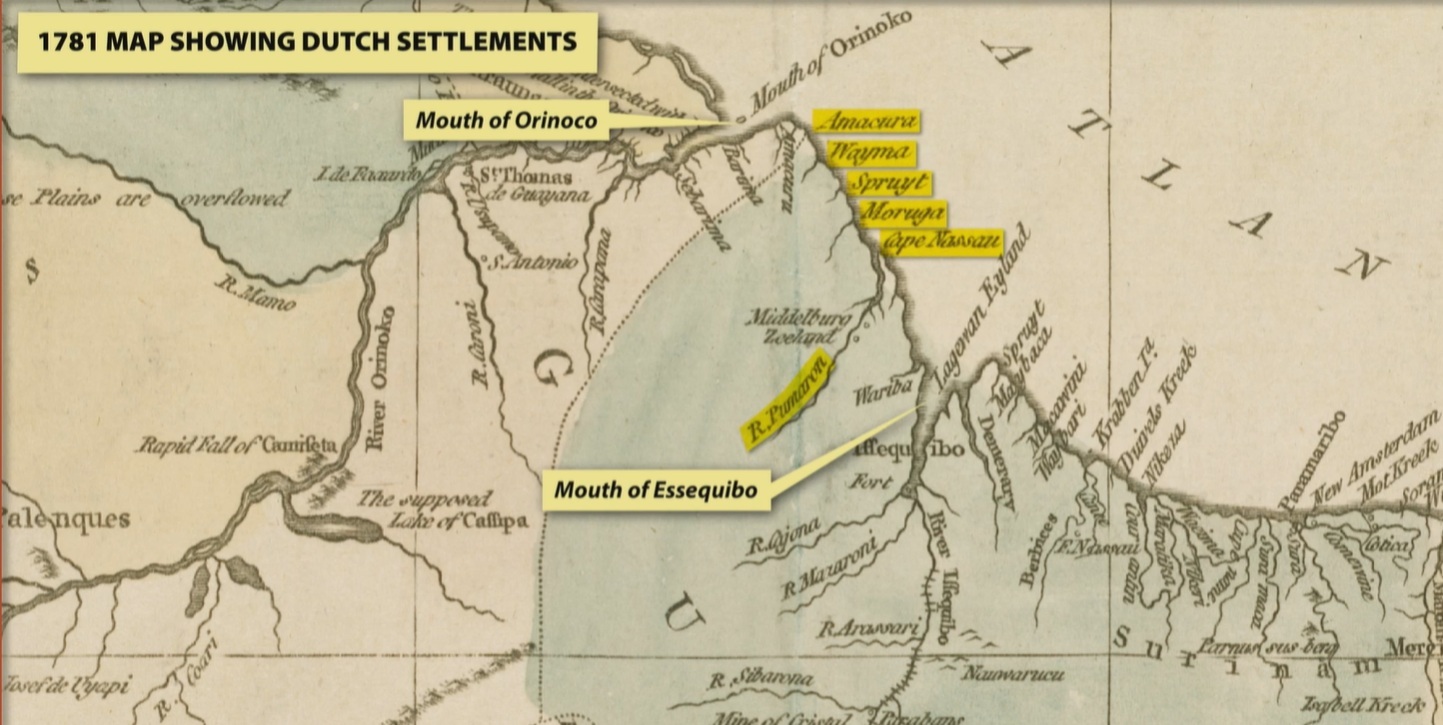
Carl Greenidge, Guyana’s lead agent before the ICJ for the case, supported Streete’s arguments with extensive cartographic and historical evidence. He presented maps demonstrating that the farthest eastern Spanish colonial outposts never reached Essequibo, sitting roughly 650 kilometers outside the region’s boundaries. To further prove early Dutch administrative control, Greenidge highlighted that 35 locations across Essequibo still retain their original Dutch place names to this day.
Greenidge walked the court through the documented timeline of European settlement: “Post-Columbian history of what is now Guyana begins with the arrival of the Dutch in 1598, the first Europeans to establish permanent settlements in the territory. By 1616, they had formally founded the Colony of Essequibo, constructed Fort Kykoveral along the Mazaruni River – west of the Essequibo River – as their official seat of government, and began administering the territory stretching west all the way to the Orinoco River. Five years later, in 1621, the Dutch West India Company took over formal governance of the colony, and the administrative capital was relocated to Fort Zealandia in 1744.”
He emphasized that Spanish colonial forces never established a presence east of the Orinoco, where Essequibo is located: “The Spanish were nowhere to be found, not east of the Orinoco, at any rate. Their nearest outpost was San Tome on the banks of the Orinoco, the easternmost Spanish settlement ever established. The Spanish Governor of that outpost was candid about his inability to extend control further east, writing that the settlement was already far too distant from all other Spanish positions to expand governance.”
Earlier in the day, Guyana’s Foreign Minister Hugh Todd opened the proceedings by calling on Venezuela to commit to abiding by the ICJ’s final ruling. “Guyana reiterates its pledge to honor and comply with the court’s judgment whatever it may be, as it is bound to do in any event by the United Nations Charter and the Statute of the court. Guyana hopes that Venezuela would make the same pledge,” Todd stated.
Leading international public international law expert Pierre d’Argent, one of Guyana’s legal team members, grounded the case in prior ICJ precedent. He referenced the court’s 2020 and 2023 rulings on preliminary matters in the dispute, noting that Venezuela has never directly challenged the long-standing legal principle of res judicata – the rule that finalized court judgments are binding. D’Argent added that Venezuela has not filed a formal application for review under Article 61 of the ICJ Statute, the only legal pathway to challenge a binding res judicata ruling. “It must be concluded therefore that Venezuela has not discovered any new fact of such a nature that, had it been known earlier, would be a decisive factor on the conclusions reached by the court in its judgments of 2020 and 2023,” d’Argent argued. “In these conditions, these judgments remain res judicata for the parties and for the court itself.”
Another senior member of Guyana’s legal team, Paul Reichler, reminded the court that Venezuela itself accepted, respected, and complied with the 1899 Arbitral Award for more than 60 years after it was issued. Venezuela only first formally challenged the award’s validity in February 1962, in a letter from its Permanent Representative to the UN Secretary-General. At that time, Reichler noted, Venezuela explicitly reaffirmed that it still recognized the 1897 border treaty – the agreement that established the original arbitral process – as a valid binding international treaty. It was not until 1963, 66 years after Venezuela ratified the 1897 treaty, that the country first raised objections to the treaty itself.
-
President roept jongeren op kansen te benutten na komst stroom Langu-gebied
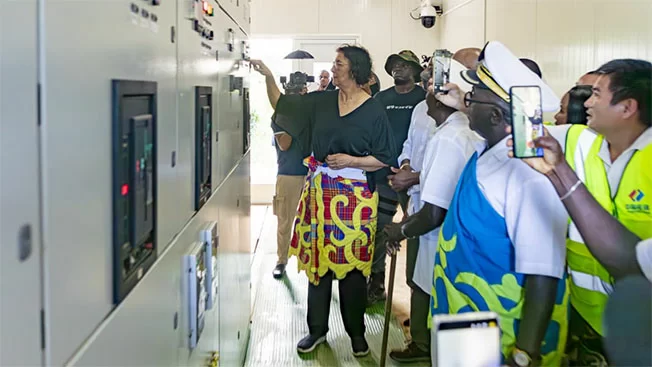
A landmark renewable energy development in Suriname has brought permanent, round-the-clock electricity to 1,300 households in the rural Boven-Suriname region, following the official inauguration of a new solar power facility in the Langu area by President Jennifer Simons.
During the opening ceremony held on Sunday, President Simons emphasized that reliable access to energy is a foundational requirement for driving inclusive development across Suriname’s inland territories. She used the occasion to call on local young people to seize the new opportunities unlocked by consistent electricity access. “Take this chance to study harder and build meaningful futures for yourselves in our society,” the president told attendees. For other community members, she highlighted that the new power infrastructure can also be leveraged to grow local economic activity, encouraging residents to develop community-led initiatives such as eco-tourism camps to foster self-sufficient local growth.
The president noted that expanding electricity access across Suriname’s inland regions has been a years-long priority for the government. Planning for the broader electrification initiative first launched in 2019, with the core goal of delivering continuous power across the entire Boven-Suriname area. This newly completed solar facility forms part of the second phase of the national Suriname Villages Micro-grid Solar Project. According to the Suriname Communication Service, the construction and implementation of the project is being carried out by two experienced Chinese state-owned energy infrastructure firms, PowerChina and Sinohydro.
David Abiamofo, Suriname’s Minister of Natural Resources, outlined that the administration’s policy focuses on delivering long-term, structural solutions to improve living standards in inland communities. “The development we are pursuing for the interior is not just occasional access to power – it is 24-hour electricity every single day,” Abiamofo stated. He also expressed praise for the progress the government has delivered on this agenda, noting that “they say self-praise is unseemly, but I want to compliment the government of Suriname. Since we began work from Atjoni, almost all villages now have access to 24/7 power, and today it is Langu’s turn to benefit.”
Moving forward, Minister Abiamofo confirmed that the government is actively pursuing additional funding from regional and international development organizations to support further infrastructure projects across inland areas, acknowledging that public funding alone is not sufficient to deliver all planned improvements. Following the completion of the electrification project, the government’s next priority for the Langu area and surrounding communities is upgrading access to clean drinking water. In total, 26 villages across the region will gain access to safe, reliable drinking water through the upcoming initiative, and work on the water project is already underway, with the minister asking local communities for a small amount of additional patience as construction progresses.