作者: admin

  • New trade order?

    New trade order?

    Against a backdrop of rising geopolitical instability and interconnected global markets, India’s Foreign Affairs Minister Dr. Subrahmanyam Jaishankar has delivered a clear call to action for Jamaican business leaders: expand into new markets and build diversified supply chains, as shifting political landscapes continue to upend long-standing global trade patterns.

    Jaishankar shared his insights during a Monday ministerial luncheon hosted by Jamaica’s Ministry of Industry, Investment and Commerce at Kingston’s AC Hotel, where he framed modern commerce as inherently tied to global political dynamics. He emphasized that businesses can no longer afford to operate ignoring cross-border spillover effects from global crises, pointing to three major recent disruptions that have reshaped international trade: the COVID-19 pandemic, the ongoing Russia-Ukraine conflict, and escalating tensions in the Middle East.

    “In our deeply globalized world, any crisis or conflict anywhere carries global consequences,” Jaishankar explained. “Thousands of miles can separate us from a conflict zone, but events there still shape energy prices, drive global inflation, impact national fiscal deficits, and even threaten political stability in smaller nations, as we saw after the invasion of Ukraine.”

    The minister noted that years of repeated trade disruptions have laid bare the critical risks of overreliance on a narrow set of traditional supply routes and trading partners, a risk amplified by growing global trends toward economic nationalism and domestic protectionism.

    “The COVID-19 pandemic proved that supply chain reliability cannot be taken for granted,” he said. “Years of volatile tariff policy have also shown that market access is not guaranteed. At the same time, rapid technological advancement has opened new pathways for business growth and new global partnerships. Just as we see the global political order shifting, a parallel transformation is underway in global commerce. Every nation is now actively seeking new, alternative trading partners.”

    Against this shifting landscape, Jaishankar encouraged Jamaican and Caribbean businesses to broaden their strategic outlook and carve out new positions in a rapidly evolving global economy, where nations across the world are prioritizing the development of alternative, more resilient trade networks.

    “In today’s uncertain world, the key question is how we build more strategic options, how we expand our partnerships, how we diversify our connections,” he said. “This is the same advice I give to Indian businesses: go out, explore new markets, leverage regional hubs, pursue nearshoring opportunities. You cannot afford to limit your operations to your home market in this new climate.”

    To illustrate his point, Jaishankar shared India’s own recent experience adapting to supply chain disruption. When conflict in the Gulf region threatened critical liquefied petroleum gas (LPG) supplies— a primary cooking fuel for hundreds of millions of Indian households— via the Strait of Hormuz, New Delhi was forced to rapidly secure alternative suppliers. That scramble ultimately opened new, durable trade opportunities with partners across Latin America and the Caribbean, Jaishankar said.

    “Ten years ago, we would never have considered this region as a major LPG supplier, and the economic logistics would have been far too prohibitive anyway,” he noted.

    He also highlighted the fast-growing commercial ties between India and the broader Latin American and Caribbean region, where annual bilateral trade now nears $50 billion and continues to climb year over year.

    Jaishankar added that major advancements in global logistics, infrastructure development, and digital technology have dramatically eroded the barriers that geography once created for small and mid-sized economies. This shift opens unprecedented new opportunities for nations like Jamaica to deepen bilateral trade and investment links with major global economies like India, he said.

    He pointed to India’s own massive recent infrastructure expansion— including new interstate highways, expanded airports, and upgraded national rail networks— alongside its booming digital economy as proof of the country’s growing competitiveness and capacity to expand global commercial partnerships.

    As India continues to establish itself as a leading global economic power, Jaishankar confirmed that the country is eager to strengthen trade and investment ties with Jamaica and the wider Caribbean. Both regions stand to benefit from searching out new opportunities to offset global uncertainty, he said.

    “I know Jamaica has a great deal to offer, from its strategic geographic location to its growing domestic demand, to its ongoing post-pandemic recovery and national modernization agenda,” Jaishankar told gathered business leaders. “I am confident that across a wide range of sectors, we will see Indian companies, Indian expertise, and Indian innovation expand their presence here far more than ever before. I urge you to explore the mutual opportunities this new partnership can deliver.”

  • Advantage Arsenal as Man City held in six-goal Everton thriller

    Advantage Arsenal as Man City held in six-goal Everton thriller

    LIVERPOOL, England — A dramatic 97th-minute goal from Jeremy Doku rescued a 3-3 draw for Manchester City away to Everton in a crucial Monday night Premier League clash, but a shocking second-half defensive collapse has shifted the title race destiny firmly into Arsenal’s hands. The Gunners now stand on the cusp of ending their 20-year wait for an English top-flight crown, needing only to win all three of their remaining fixtures to secure the championship.

    Currently five points behind Arsenal’s lead, Pep Guardiola’s side hold one game in hand but face an uphill battle to retain their crown after their implosion at Goodison Park (officially the Hill Dickinson Stadium) on Monday. City looked set to cruise to three points after a dominant first half that ended with Doku opening the scoring, but a string of uncharacteristic basic mistakes let the hosts storm to a 3-1 lead, with young striker Thierno bagging a brace and defender Jake O’Brien adding a second with a headed goal from a corner.

    Erling Haaland pulled one back for City immediately after Everton’s third, before Doku’s sensational late long-range strike snatched a point that keeps the defending champions in the race, albeit as outsiders now. “It’s better than losing. It shows what type of team we have,” Guardiola said of his side’s late fightback after the full-time whistle. “The title wasn’t in our hands before? Wait — before this game it was, now it is not. We still have games left to play, and we will see what happens going forward.”

    Arsenal’s remaining fixtures see them travel to face relegation-battling West Ham United this coming Sunday, before hosting already-relegated Burnley and closing out the season with an away trip to Crystal Palace. The Gunners have picked up six points from two games since City’s last league outing, steadily building the pressure on Guardiola’s men ahead of Monday’s crunch clash.

    City’s first team entered the match having not played a full competitive fixture in nearly two weeks, after Guardiola made sweeping changes to his line-up for last weekend’s FA Cup semi-final victory over Southampton. Contrary to fears of rustiness, the visitors looked sharp from kick-off, pinning Everton deep inside their own half for virtually the entire opening 45 minutes.

    The breakthrough finally came two minutes before half-time, when Rayan Cherki slid a pass into Doku, who curled a clinical finish past Everton goalkeeper Jordan Pickford into the top right corner of the net. Before the break, Everton escaped any greater damage when Michael Keane avoided a red card for a reckless lunging tackle on Doku, receiving only a yellow card — a decision that would prove pivotal to the final outcome.

    The second half quickly unravelled for City, who failed to clear repeated warnings of an incoming Everton equaliser. City goalkeeper Gianluigi Donnarumma parried an effort from Iliman Ndiaye back into the penalty area, but Merlin Rohl failed to capitalize on the loose rebound. Ndiaye later squandered another clear chance created by a Matheus Nunes error, unable to beat the big Italian goalkeeper a second time.

    When Everton’s equaliser did arrive, it was gifted by City’s own defensive lapse: a underhit backpass from Marc Guehi put Barry one-on-one with Donnarumma, and the striker calmly slotted home to level the score. Just moments later, another careless mistake from City handed the hosts their second goal. Abdukodir Khusanov was caught in possession by Ndiaye, and though Guehi made a last-ditch tackle to stop the initial chance, O’Brien rose highest at the resulting corner to nod Everton into the lead.

    A rapid Everton counter-attack soon extended their advantage, with Barry poking home his second from a deflected Rohl cross to put the hosts 3-1 up, leaving City’s title hopes hanging by a thread. But within seconds of the restart, City pulled one back: Mateo Kovacic played a perfectly weighted through ball to Haaland, who made no mistake to cut the deficit to one goal.

    In stoppage time, Doku struck a sensational effort to level the score, dashing Everton’s hopes of claiming a huge three points that would have boosted their own push for European qualification next season. Yet for City, the late point may prove too little, too late to stop Arsenal from ending their long title drought and claiming the Premier League crown that City have held for four consecutive seasons, as they chase a seventh domestic championship in nine years.

  • Arteta warns Atletico will face Arsenal ‘beasts’ in Champions League

    Arteta warns Atletico will face Arsenal ‘beasts’ in Champions League

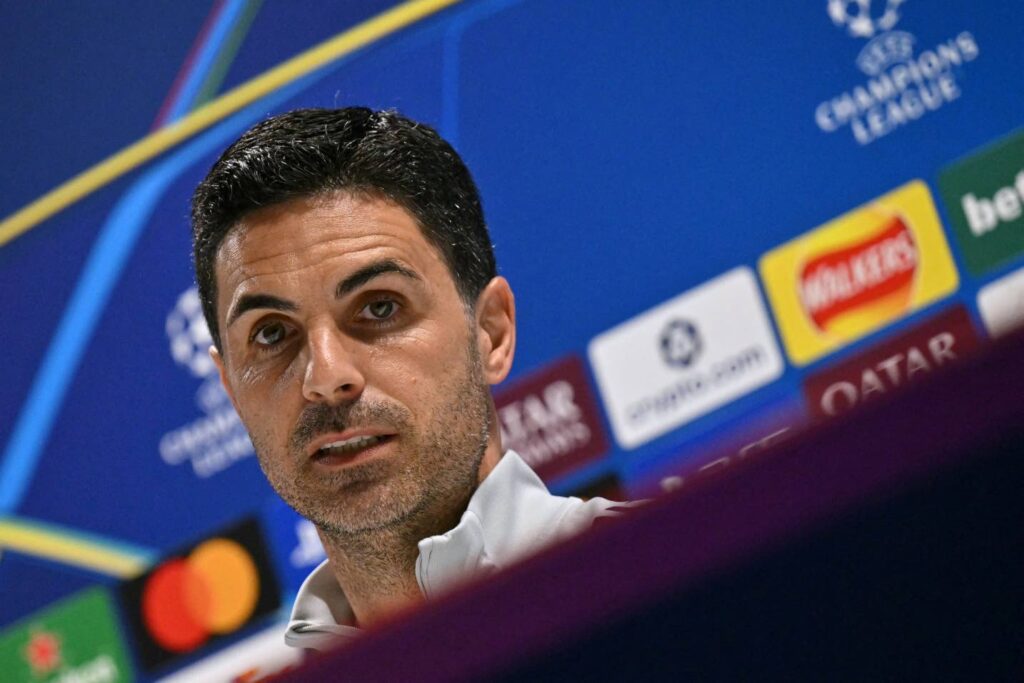
    LONDON – Ahead of a pivotal second leg of the UEFA Champions League semi-final at the Emirates Stadium on Tuesday, Arsenal manager Mikel Arteta has issued a fierce rallying cry, saying his side will take to the pitch with the hunger and intensity of “beasts” as they chase a historic first appearance in the competition’s final in nearly two decades.

    Arsenal heads into the home leg with a solid foundation, having secured a hard-fought 1-1 draw against Atletico Madrid in the opening match held in the Spanish capital last week. For the North London club, this fixture represents far more than just a single game: it has been 20 years since the Gunners last reached the Champions League final, where they ultimately fell to Barcelona in 2006. To date, the club has never lifted European football’s most prestigious club trophy.

    The result marks a second consecutive season that Arsenal has advanced to the Champions League semi-finals, a milestone that adds extra motivation to Arteta’s squad. Last year, the club was eliminated at this stage by Paris Saint-Germain, and Arteta made clear on Monday that his players are determined to go one step further in 2025.

    “We will take to the pitch as beasts tomorrow and enjoy the moment and go for it,” Arteta told reporters ahead of the game. “I can’t wait. I feel the energy among the team and our supporters. This is the moment that we want to live together. We have worked hard as a club and as a team after 20 years to be in this position again — and we are so hungry to get through to that final. It is a feeling of huge excitement so let’s push hard, because something amazing is going to happen.”

    A major boost for Arsenal comes in the form of fitness updates on key first-team players. Captain Martin Odegaard, who missed the side’s 2-0 Premier League win over Fulham this past Saturday, is fit and available for selection. German forward Kai Havertz, who has sat out the last two matches with a knee injury, is also in contention to feature.

    Beyond the Champions League milestone, the club is also chasing a long-awaited piece of major silverware. Currently leading the Premier League table, Arsenal has not won a top trophy since lifting the FA Cup in 2020, adding another layer of urgency to this run.

    When asked if he had envisioned Odegaard lifting the Champions League trophy at the final in Budapest at the end of May, Arteta said that this vision has been a core part of his plan for the club since he took the job. “I did that many years ago and it was the thing that I had in mind for this club,” he said. “You can never promise to win major trophies, but you can promise to work every single day by implementing the vision and being determined with the ideas and the decisions to make this club one of the best in Europe. Here we are. Now we have to make the next step.”

    Contrary to his approach in last season’s semi-final decider against PSG, Arteta opted against issuing a direct public call to fans to roar the side over the line this time around. Last year, he urged supporters to “bring their boots and kick every ball” alongside the team, but on Monday he noted that the stakes of the fixture speak for themselves.

    “I don’t think a message is needed. It’s what is at stake that says it all,” he said. “But, I can’t wait to live this moment with our supporters, our people, and generate something really, really special to get into that final. Let’s live this together. Go grab it and let’s make it happen.”

    The winner of the tie will advance to the May 30 final in Budapest, where they will face off against either Bayern Munich or Paris Saint-Germain for the Champions League crown.

  • Support for education tourism push in Mandeville, but…

    Support for education tourism push in Mandeville, but…

    MANDEVILLE, Jamaica — Local education leaders in Mandeville are sounding a note of cautious optimism following a recent government announcement that the central Jamaican town has been selected as one of four national hubs for targeted education tourism development. While the broader initiative has been widely welcomed as a potential economic boost for the region, senior administrators from the area’s two largest tertiary institutions are urging authorities to prioritize long-overdue urban planning and infrastructure upgrades before the project moves forward.

    The framework for the project was laid out last month when Jamaica’s Minister of Tourism Edmund Bartlett confirmed that Mandeville would receive targeted investment to grow its education tourism footprint. Now, Dr. Garth Anderson, principal of Church Teachers’ College (CTC), and Victorine Petrekin, who leads the hospitality and tourism programme at Northern Caribbean University (NCU), are calling for targeted government action to address longstanding systemic gaps that they say could derail the project’s potential.

    Mandeville has long been labeled a de facto university town, with a concentration of post-secondary institutions that dates back decades. As Anderson notes, conversations about formalizing this status stretch back years, when the area was home to an additional Catholic college that has since closed. Today, CTC, NCU and Knox Community College anchor the town’s education sector, and Anderson argues that formalizing the education tourism project could deliver far-reaching benefits beyond the classroom.

    “If we can finally move this idea of a designated university town from discussion to implementation, we can unlock ripple effects across our local economy: creating new jobs, driving investment, and even addressing some of the most persistent social ills that impact our communities and the broader Jamaican society,” Anderson explained.

    But to unlock those gains, Anderson says core infrastructure challenges must be addressed first. Foremost among these is the region’s decades-long struggle with chronic water scarcity, a crisis that has left thousands of households across Manchester and the wider south-central part of the country dependent on rainwater harvesting to meet daily needs. This water shortage, in turn, has created a housing crisis, as the town cannot expand residential capacity to accommodate the growing student population.

    “We simply do not have enough on-campus and off-campus housing to accommodate all the prospective students who want to attend our tertiary institutions,” Anderson noted. “Beyond housing, our overstretched transportation system is another critical bottleneck. Mandeville has grown far more crowded over the years, and the current transport network cannot support a large influx of new students and education tourists.”

    For her part, Petrekin emphasized that NCU has already been laying critical groundwork for a thriving education tourism sector, by training a new generation of local hospitality and tourism professionals. The university already draws a significant cohort of international students, who she says are attracted by NCU’s combination of hands-on vocational training and its strong focus on ethical and moral principles, which resonates with students from a wide range of religious and cultural backgrounds.

    Petrekin echoed Anderson’s call for targeted government investment, urging that a portion of national tourism revenue be allocated to expanding access to education for young Jamaicans interested in building careers in the sector. She noted that Manchester and Jamaica’s south coast are uniquely positioned to grow niche segments including ecotourism and rural tourism, and investing in local training would ensure that community members benefit directly from the growth of education tourism. “If we set aside a share of tourism funding to train the next generation of local workers, we will see far more young people pursue careers in this growing sector, and the entire region will benefit,” Petrekin said.

    Across the board, local stakeholders support the education tourism initiative, but their message to government is clear: infrastructure and workforce development must come first to turn the plan’s potential into tangible, shared growth for Mandeville.

  • Simeone laughs off ‘cheaper’ hotel switch ahead of CL semi-final

    Simeone laughs off ‘cheaper’ hotel switch ahead of CL semi-final

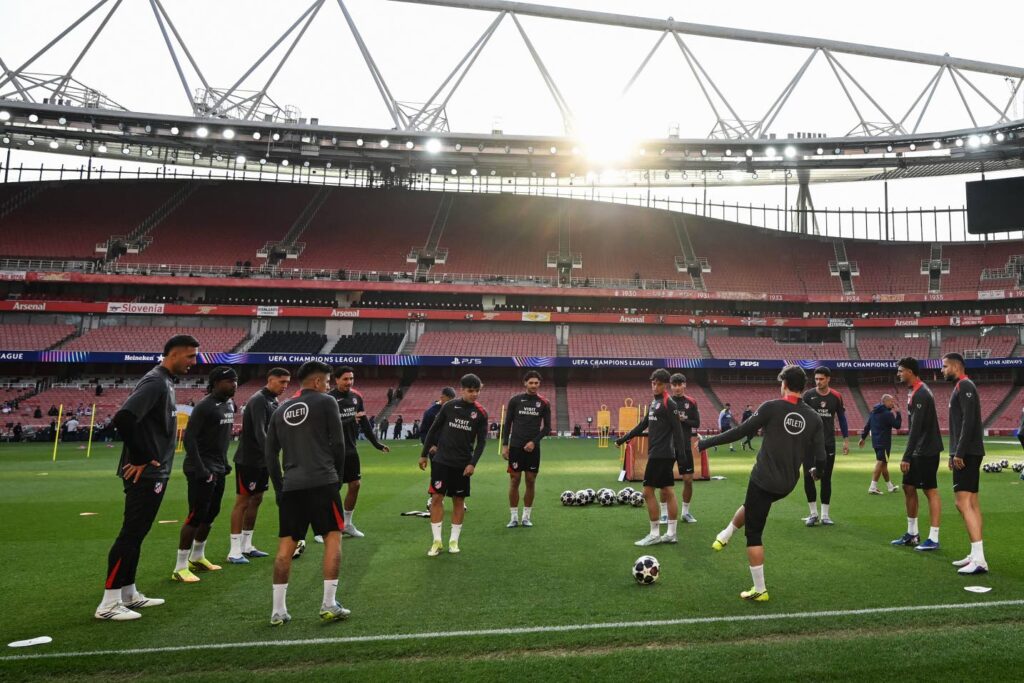
    LONDON, England – Ahead of the decisive second leg of the UEFA Champions League semi-final between Atletico Madrid and Arsenal at Emirates Stadium on Tuesday, Atletico head coach Diego Simeone has laughed off widespread speculation that the club’s last-minute switch of London hotels was driven by bad-luck superstition.

    Back in October during the group stage of this season’s competition, Atletico stayed at the Marriott Hotel near London’s iconic Regent Park ahead of their away fixture against the Gunners – a match that ended in a bruising 4-0 defeat for the Spanish side. With the two legs of the semi-final deadlocked at 1-0 apiece after the opening clash in Madrid, Simeone and his squad opted to skip the familiar Marriott this time around, setting up their pre-match base at the Courthouse Hotel in the Shoreditch district of East London, hundreds of meters across the British capital from their original accommodation.

    Multiple sports outlets had previously reported that Simeone ordered the hotel swap out of a fear that staying in the same venue that hosted the squad before their 4-0 group-stage defeat would bring negative fortune to his side ahead of the make-or-break second leg. But when pressed on the reasoning for the change during a pre-match press conference on Monday, the famously intense Atletico boss delivered a blunt, straightforward response that shut down the superstition rumors entirely.

    “The hotel was cheaper. That’s why we changed,” Simeone told reporters.

    Beyond the off-pitch hotel talk, there is positive fitness news for Atletico ahead of Tuesday’s high-stakes clash: in-form forward Julian Alvarez, who bagged a penalty in the first leg to level the tie, has shaken off a recent injury concern and will be available for selection. The Argentine, who has notched 20 goals across all competitions this campaign, missed Atletico’s La Liga win over Valencia last weekend but made the trip to London with the rest of the squad.

    Speaking about Alvarez, a former Manchester City striker who spent years competing in the English Premier League, Simeone highlighted his unique value for the upcoming fixture. “Julian Alvarez is important in this game because he knows the English league very well,” Simeone said. “He played really well last week, and I hope he can bring what he needs in the game tomorrow. As coaches, we have to think about what could happen but it is down to the players. We have to manage our emotions and play as well as possible.”

    The match also carries extra personal significance for Atletico legend Antoine Griezmann, who is set to depart the club at the end of the season to join MLS side Orlando City. If Atletico fails to progress to the Champions League final in Istanbul, Tuesday’s clash will mark the 35-year-old’s final appearance in European football’s most prestigious club competition. Across his two stints with Atletico, Griezmann has racked up 212 goals in 494 appearances for the club, cementing his status as one of the greatest players in the club’s modern history.

    When asked about the potential milestone of his last Champions League outing in Europe, Griezmann said he was putting that thought aside to focus entirely on the result. “It is not something I am thinking about. I am looking forward to the game tomorrow,” he explained. “I hope we can have the right attitude, and play with the right pressure, and build on our second-half performance from the first leg.”

    Looking ahead to the tie, Griezmann said Atletico remains fully focused on reaching the final, a goal every aspiring young footballer dreams of. “Every time we start a Champions League campaign you can see yourself lifting the trophy — and any child in their bedroom would do the same,” he said. “We are just two games away now and we have to get it right — tactically, defensively, and going forward. And, of course, we need more goals.”

    With the tie evenly poised, both sides will take the pitch at Emirates Stadium on Tuesday night knowing just one 90 minutes stands between them and a spot in the 2024-25 Champions League final.

  • Zhané’s Hey Mr DJ goes platinum in New Zealand

    Zhané’s Hey Mr DJ goes platinum in New Zealand

    Three decades ago, the infectious R&B track “Hey Mr DJ” by American female duo Zhané took global music charts by storm, peaking at the sixth spot on the U.S. Billboard Hot 100. The single quickly found success across international markets too: it cracked the top 10 in Australia, Canada, and the Netherlands, and landed at number 26 on the UK Official Singles Chart. After earning gold certifications in the United States and Australia decades earlier, the track earned its latest milestone two weeks ago, when it was awarded platinum certification by music regulators in New Zealand.

    In a recent candid interview with the *Jamaica Observer*, Renee Neufville — one half of Zhané, alongside bandmate Jean Morris — opened up about the unexpected decades-long success of the track, revealing that she never anticipated the song would resonate with millions of listeners around the world. “I didn’t know that I was writing a hit record. It took me literally 30 minutes to write that song,” shared Neufville, who was born in Brooklyn, New York to Jamaican immigrant parents. “However, it is one of a few hit records that God has blessed me to create. So I have to give the honour and the glory to Him.”

    Neufville explained that even after finishing the writing and recording process, she only trusted her own artistic judgment, with no way of knowing the track would connect with mainstream audiences. “When I completed the record I just knew it was right to me. One cannot assume that that would resonate to others; I tried my best to trust my own taste and judgement. I didn’t know that it was going to be a hit,” she said. She also recalled the surreal first moment she heard the song playing on major U.S. radio, calling it a milestone she still cherishes to this day. “All I could think about was how big God can be. Here is something that you take for granted — your singing voice. I knew we were embarking on something bigger than ourselves. The music itself was considered feel-good music. That was a very powerful moment, one that I never took for granted to this day.”

    Produced by Kay-Gee, then an in-house producer for iconic rap group Naughty By Nature, “Hey Mr DJ” was recorded in a simple basement home studio. The track’s iconic beat draws from a sample of Michael Wycoff’s early 1980s track “Looking Up to You”: Neufville recalls that as soon as Kay-Gee played the 8-bar loop from a cassette tape, the melody came to her instantly. Beyond its own success, the track has had a lasting impact on pop and R&B, directly inspiring hits including Rihanna’s breakout debut single “Pon De Replay”, as well as tracks from Madonna and Missy Elliott. “It has been a cultural staple in our music,” Neufville noted, adding that at the time of recording, she was a student at Philadelphia’s Temple University working a part-time job to make ends meet.

    Zhané released two full-length studio albums during their time together. Their 1994 debut *pronounced Jah-Nay*, released under Motown Records, went platinum and spawned a string of additional hit singles including “Groove Thang”, “Vibe”, “You’re Sorry Now” and “Sending My Love”. Their 1997 follow-up *Saturday Night* also produced fan-favorite hits “Request Line” and “Crush”. After the duo disbanded to pursue individual projects, Morris launched a new musical project with her husband called The Baylor Project in the early 2000s, which has earned the pair multiple Grammy Award nominations.

    For her part, Neufville spent years touring and recording with jazz legend Roy Hargrove’s Collective RH Factor. Today, she prioritizes time with family, caring for her 87-year-old father Albert, a former Jamaican teacher who retired to the U.S. Neufville’s mother Joyce, a former registered nurse at Kingston Public Hospital, passed away several years ago. Her family has deep roots across Jamaica: her parents moved to Brooklyn in the 1960s after marrying, her older brothers were born in Jamaica, the family once owned a home in the Kingston neighborhood of Mona, and she still has extended family spread across the island. Notable Jamaican cultural figures count among her relatives: 1960s ska star Millie Small was married to her mother’s uncle, and retired champion sprinter Marilyn Neufville is her father’s cousin.

    In recent years, Neufville has earned new recognition for her trailblazing contribution to Black American music. Last year, she was inducted into the National Museum of African American Music, honored for her work shaping African American cultural expression as a songwriter. She also recently contributed expert commentary to the documentary about iconic Jamaican dancehall artist Sister Nancy, *Bam Bam*. Neufville performed on a bill with Sister Nancy last December and says the legend is still as captivating as ever. “Sister Nancy and I shared a bill in December last year and she’s still got it. She’s finally reaping the benefits. She truly is a legend,” she said.

    Now, 33 years after “Hey Mr DJ” took the world by storm, Neufville is gearing up to release new music. She has finished mixing a brand-new track titled “I Am”, an affirmative anthem crafted for modern audiences, and is preparing to release her eighth EP, also named *I Am*, later this year. “I have completed mixing a new song written for the people for times such as these. It’s called I Am. It’s a song about affirmation and it’s coming soon. I am looking forward to putting out more new music this year,” she shared.

  • Fashion Radar: Loeri, The Organic Mum

    Fashion Radar: Loeri, The Organic Mum

    Ahead of this year’s Mother’s Day, which falls on Sunday, May 10, Tuesday Style Fashion (TSF) is shining its weekly retail spotlight on Loeri Robinson, a Jamaican mumtrepreneur building a mission-driven wellness brand rooted in organic principles.

    Robinson’s connection to wellness and self-care dates back to her teenage years, when she first developed a passion for spa experiences and healthy living that would shape her long-term career path. Early on, she built a professional foundation in the insurance and investment industry, drawn by a core personal mission: empowering people to make choices that improve both their own quality of life and the well-being of their loved ones.

    But as Robinson worked as a financial advisor helping clients strengthen their financial security, she began to notice a critical pattern across the many clients she served. A large number of her clients struggled with chronic health conditions, and her close work with them gave her a unique front-row seat to observe how people approach medical treatment and long-term health management.

    What struck her most was the outsize role that intentional nutrition and consistent, holistic self-care play in both preventing and managing illness. This observation sparked a complete career pivot, leading her to first launch her own spa business. To deepen her expertise and source high-quality products aligned with her values, Robinson traveled to international wellness expos, where she attended specialized workshops and conducted deep dives into organic wellness offerings. She prioritized finding products that were not only safe and beneficial for consumers but also practical and enjoyable to use.

    That journey of exploration and entrepreneurship ultimately led to the launch of Unwind Distributors, her organic wellness distribution company. What began as a side passion project has grown into a thriving enterprise, and today Robinson leads a business she is proud to stand behind—one focused on uplifting and nurturing health and wellness across Jamaica.

  • YOUNG MAN’S GAME

    YOUNG MAN’S GAME

    The Wray and Nephew Jamaica Premier League (JPL) is undergoing a striking generational shift, with competition organizers laying out an ambitious long-term goal to cut the league’s average player age to 19 in the coming years. This push for youth integration comes as ongoing data already shows a steady downward trend in the competition’s average age over the past decade, signaling growing buy-in from club leadership across the country.

    Owen Hill, Chief Executive Officer of Professional Football Jamaica Limited (PFJL), the governing body that oversees the JPL, outlined that the strategic vision goes far beyond simply lowering age statistics. The dual core goals of the initiative are to accelerate elite player development and boost the market value of Jamaican talent for domestic and international transfer opportunities. As the 2025-26 season wraps up its regular round this Wednesday, the highly anticipated playoff phase is scheduled to kick off this Sunday, capping 39 weeks of competitive action across the league.

    New data compiled from official league registration rolls, analyzed by the Jamaica Observer, reveals just how far the youth shift has already progressed: of the 580 total registered players for the 2025-26 campaign, 162 are 20 years old or younger. This figure is actually conservative, as it does not account for players who turned 21 during the season, which runs from August through May. A decade ago, the league’s average age sat at 26, with every club’s roster averaging at least 24 years old. Today, that average has fallen to 24.5, a 1.5-year drop that reflects the growing commitment to giving young prospects minutes in top-flight competition.

    Current team breakdowns highlight the range of approaches across the league. Two-time defending champions Cavalier once again field the youngest roster in the JPL, with an average age of just over 20. Harbour View, Arnett Gardens, and Chapelton Maroons have also fully embraced the youth movement, boasting average ages below 24. At the other end of the spectrum, Tivoli Gardens and Spanish Town Police maintain the oldest squads, with an average age of 27.

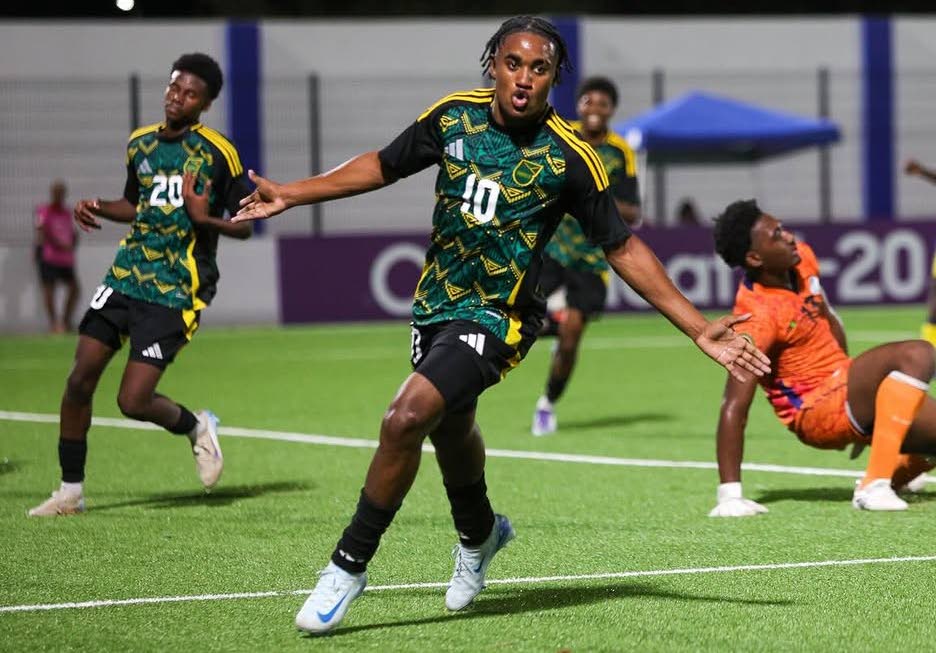
    The success of young integrated players already speaks to the promise of the strategy. Twenty-year-old Christopher Ainsworth, a utility left-sided midfielder for Cavalier, has started every one of the club’s 38 regular season matches this campaign, notching nine goals and adding five assists. His standout performances have already earned him three call-ups and caps for Jamaica’s senior men’s national team, the Reggae Boyz. Ainsworth is far from the only young prospect making an impact: a wave of national under-17 and under-20 team players have stepped into key roles across the league, including Arnett Gardens’ Giovanni Taylor, Mount Pleasant’s Jabarie Howell, Chapelton Maroons’ Sean Leighton, Waterhouse’s Jamone Lyle, and Montego Bay United’s Nashordo Gibbs.

    Hill emphasized that the shift toward youth is not a top-down mandate, but a growing consensus among progressive club owners and administrators. “It’s a bigger vision that is shared by most forward-thinking football administrators and lovers,” he explained. “There is a cohort of us who believe that once you lower the average age of players competing in the top league, the opportunities for long-term success grow exponentially.” He added that the link between early senior exposure and higher market value is unambiguous: “Globally, when players matriculate into top-flight competition at an earlier age, their market value rises — that’s a direct relationship you can’t ignore. Beyond market value, early opportunities build young players’ confidence, and it expands the league’s fan base too: supporters from their high schools, local communities, and broader Caribbean networks follow their progress, growing the sport’s reach overall. We’re very grateful that clubs have embraced this vision and are now delivering on it.”

    Leijeigh Williams, a leading football analyst and JPL match commentator, traced the rising number of impactful under-20 players back to major investments in Jamaican grassroots football development over the past decade. Citing a long-held observation from legendary former Arsenal manager Arsene Wenger, Williams noted that “young players do not make astronomical gains in their technical ability after age 16 to 17. The biggest gains come from preparing them physically and mentally for the senior game.” That preparation, he argued, is now being delivered by the expanding network of elite youth academies across Jamaica. “The growth of academies has prepared younger players mentally, professionally, and physically to compete at the senior level,” he said. “That’s why we’re seeing an influx of young teenagers and under-21 players making a serious impact across the JPL right now.”

    When highlighting standout young talent from this season, Williams pointed to Mount Pleasant attacking midfielder Powell as his pick for young player of the season. “He’s notched five goals this campaign, and practically every one of them has been a spectacular finish,” Williams noted. “After finishing his run in the Manning Cup high school competition and rejoining Mount Pleasant in January, he’s made an immediate impact on a title-contending team in a crucial attacking midfield role. For me, he’s been the standout young prospect of the season.”

    For Hill and the PFJL, the current progress is encouraging, but there is still more work to do to hit the 19-year average age target. “Young players just need consistent opportunities and high-level exposure,” Hill explained. “The more minutes they log in top-flight competition, the brighter their transfer prospects become. Our strategy is clear: we work to empower and promote this approach across our club network. A number of clubs have fully bought into this vision, they’re executing it, and they’re already seeing strong results.” He added that the 19-year target is not an arbitrary number: “We’re dreaming of the day we can say our league’s average age is 19. That’s a goal we’ve deliberately set because if players are logging meaningful minutes at the senior professional level at that age, their future trajectory is set, and their value rises immediately.”

    Beyond domestic success, Williams argued that this intentional focus on youth integration will strengthen Jamaica’s pipeline of talent for international competition. “We saw the under-17 national team qualify for the U-17 World Cup, and the under-20 team currently has a strong chance of qualifying for their own World Cup,” he noted. “This early matriculation into senior football has been a missing link in Jamaican football for decades. Now, we’re getting players primed and ready for top competition at a younger age, and when they succeed in senior football this early, it can only bode incredibly well for their long-term development.”

  • Forensic gap

    Forensic gap

    A senior ballistics expert with nearly two decades of forensic experience has delivered key testimony in the high-profile murder trial of six current and former members of the Jamaica Constabulary Force (JCF), revealing that most expended bullet cartridges recovered from the scene of a 2013 fatal shooting failed to match any of the firearms submitted for forensic analysis. The January 12, 2013 incident on Acadia Drive in St Andrew left three men — Matthew Lee, Mark Allen, and Ucliffe Dyer — dead following what police reported as an armed shootout, with a fourth individual reportedly escaping the encounter. Now, more than a decade later, six JCF officers — Sergeant Simroy Mott, Corporal Donovan Fullerton, Constables Andrew Smith, Sheldon Richards, Orandy Rose, and Richard Lynch — stand trial on three counts of murder; Fullerton faces an additional charge of submitting a false statement to Jamaica’s Independent Commission of Investigations.

    Testifying before a seven-member jury at the Home Circuit Court on Monday, the testifying police superintendent, who has 16 years of service with the JCF and 19 years of specialized experience in ballistics analysis, detailed the chain of evidence and his forensic findings. A total of 11 firearms, a large collection of expended bullet casings, and multiple bullet fragments were collected from the shooting scene and sent to Jamaica’s government-run forensic laboratory for testing. Among the evidence submitted were three 5.56-caliber JCF service rifles, three 9mm service pistols, two illegally held firearms that investigators claimed were recovered from the three deceased men, and dozens of unused and expended ammunition rounds recovered from the scene.

    When processed through the laboratory’s computerized ballistics matching system, the vast majority of the expended cartridges recovered from the site failed to produce a positive match to any of the submitted firearms. The expert explained that a definitive ballistics match requires agreement on both class characteristics (general traits shared by weapons of the same model and caliber) and individual unique tool marks left by a specific weapon’s firing pin and barrel on each cartridge. For most of the casings in question, he said, there was insufficient matching of the unique individual marks to confirm a specific weapon fired the round.

    While the superintendent confirmed the unmatched cartridges were consistent with ammunition fired by M16-style 5.56 rifles, the standard service weapon for JCF officers involved in the operation, he could not tie them to any specific weapon submitted for testing. He outlined multiple plausible explanations for the lack of a match: poor quality reproduction of tool marks on the cartridge casings, irregularities in the ammunition itself, wear or damage to the firing weapon, or the possibility that the actual weapon that fired the casings was never turned over to investigators for examination. Notably, the expert did confirm that spent casings matching the two illegal firearms seized from the scene were found at the site.

    The testimony was not without procedural controversy. Attorney Hugh Wildman, who represents four of the six accused officers, raised a formal objection to prosecutor Kathy-Ann Pyke’s line of questioning regarding the firearms and cartridge evidence. Wildman argued that the evidence in question had never been formally tendered to the court, making it improper for the witness to testify about it. The objection stemmed from earlier testimony from the detective constable responsible for packaging the evidence, who admitted he could not definitively confirm that the items tested by the forensic lab were the same items presented in sealed packages to the court. The packages have never been opened in court, so their contents have never been formally entered into the official trial record. Despite Wildman’s objection, the presiding judge allowed Pyke to continue her questioning.

    The trial is scheduled to resume proceedings on the following day, with more testimony expected from prosecution witnesses as the case unfolds. The legal team for the accused also includes Althea Grant-Coppin and John Jacobs.

  • Guyana vraagt ICJ om bevestiging van grens met Venezuela

    Guyana vraagt ICJ om bevestiging van grens met Venezuela

    One of Latin America’s longest-running border disputes, centered on the resource-rich Esequibo region, has moved into open oral hearings at the International Court of Justice (ICJ) in The Hague, with Guyana calling on the United Nations’ highest court to formally invalidate Venezuela’s territorial claims to the contested area.

    The 160,000-square-kilometer Esequibo region, a largely jungle-covered territory straddling the Esequibo River, plus its adjacent offshore waters, has been a source of tension between the two neighboring South American nations since the colonial era. The discovery of massive new oil and natural gas reserves in the offshore area in recent decades has turned the long-simmering conflict into a critical threat to regional stability, Guyana argues.

    Addressing the panel of ICJ judges at the opening of the week-long proceedings, Guyana’s Minister of Foreign Affairs Hugh Hilton Todd framed Venezuela’s claim as an existential threat to his country. “The territorial ambitions of a larger, more powerful neighbor have not only undermined our peace and security, they have held back our national development for generations,” Todd told the court. He added that Venezuela’s claim encompasses more than two-thirds of Guyana’s entire current sovereign territory, making the dispute a matter of survival for the small Caribbean nation.

    The roots of the conflict stretch back to an 1899 arbitration ruling that established the modern border between Venezuela and what was then British Guiana, a British colony. That ruling awarded the Esequibo region to British Guiana, a decision that Venezuela has repeatedly rejected as invalid since the early 20th century. In 2018, amid rising tensions over newly discovered offshore oil reserves, Guyana formally brought the case to the ICJ, asking the court to uphold the 1899 border settlement and confirm its full sovereignty over the entire Esequibo area.

    Tensions escalated dramatically in late 2023, when Venezuela held a national referendum on the dispute in which Venezuelan voters overwhelmingly rejected the ICJ’s jurisdiction over the case and backed the government’s plan to establish a new Venezuelan state covering all of Esequibo. In early 2024, Venezuela formally proclaimed the new state, a move that Guyana and much of the international community condemned as a violation of international law.

    A major shift in Venezuela’s political landscape occurred in January 2025, when former Venezuelan president Nicolás Maduro and his wife were detained by U.S. forces, leading to the installation of a new interim government that currently administers Venezuelan state affairs. This interim government will have the opportunity to present its formal position on the dispute to the ICJ later this week, court schedules confirm.

    Legal observers expect a final binding ruling from the ICJ within the next several months. While ICJ decisions are legally binding and irreversible under international law, the court itself does not hold independent enforcement power. Any implementation of the court’s final ruling will depend on intervention and support from the United Nations Security Council, leaving open questions about how the decision will be put into practice regardless of which side prevails.