Just days after the United States and Iran reached a fragile truce aimed at de-escalating months of open hostilities, the ceasefire has all but collapsed following a wave of new mutual strikes that have sent tensions across the Middle East soaring once again.
Iranian officials confirmed Thursday that U.S. military forces carried out fresh airstrikes on targets in the southern coastal province of Bushehr, hitting sites located near the country’s Bushehr Nuclear Power Plant and a key commercial fishing port. While Washington has not yet publicly verified these latest attacks, U.S. Central Command previously acknowledged launching overnight strikes on roughly 90 Iranian targets along the country’s Persian Gulf coastline just hours before.
In a swift retaliatory move, Iran’s Islamic Revolutionary Guard Corps (IRGC) announced it had fired 10 ballistic missiles at a major U.S. military installation located in neighboring Jordan. Jordanian government officials later corroborated the incident, confirming the missiles entered Jordanian airspace before being intercepted and destroyed by the country’s air defense systems. No casualties or infrastructure damage were reported on Jordanian soil following the exchange.
The resumption of large-scale hostilities comes barely one week after U.S. and Iranian negotiators, mediated by third-party states, announced a ceasefire agreement designed to end weeks of cross-border strikes and tit-for-tat attacks. Both sides have since traded accusations of violating the truce terms, with each blaming the other for intentionally undermining efforts to restore regional stability.
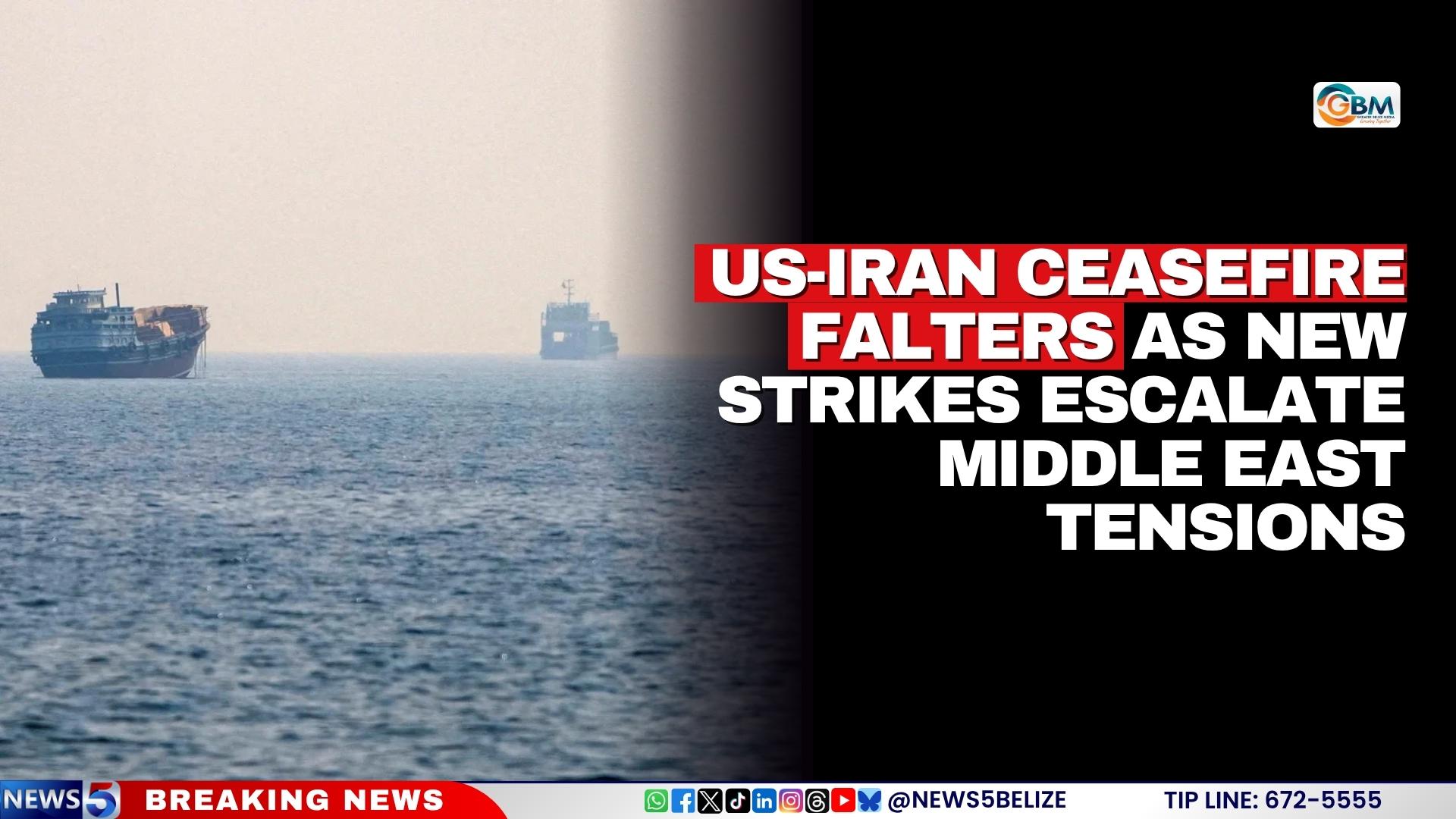
Beyond direct military confrontation, the renewed violence has already disrupted critical global energy infrastructure. The Strait of Hormuz, the world’s most important oil chokepoint through which roughly 20% of global oil supplies pass daily, has seen a sharp slowdown in commercial maritime shipping due to heightened military activity and threats of traffic restrictions. In a parallel development, Iranian authorities have reportedly moved to ramp up crude oil exports from Kharg Island, the country’s primary oil export terminal, amid the market uncertainty.
Even as fighting continues, diplomatic efforts to pull the two sides back from the brink are already underway. Pakistan and Qatar, the two states that mediated the original ceasefire talks between Washington and Tehran, have reactivated backchannels to restart negotiations. Pakistan’s Ministry of Foreign Affairs issued an urgent public call for de-escalation this week, noting “there is no alternative to continued engagement, dialogue and diplomacy to achieve shared goal of peace in the region.”
The latest escalation also unfolds against a sensitive domestic backdrop in Iran: the country is currently in the national mourning period for former Supreme Leader Ali Khamenei, with final funeral ceremonies scheduled this week. Regional observers are closely monitoring the events for any public appearance by Khamenei’s newly appointed successor, Mojtaba Khamenei, as political analysts assess how the leadership transition may shape Iran’s future foreign policy trajectory amid the ongoing crisis.