作者: admin

  • CCJ grants a stay in Guyanese extradition matter

    CCJ grants a stay in Guyanese extradition matter

    PORT OF SPAIN, TRINIDAD AND TOBAGO – The Caribbean Court of Justice (CCJ) has intervened in a politically charged extradition case involving Guyanese opposition leader Azruddin Mohamed and his associate Nazar Mohamed. During a procedural conference convened on March 25, 2026, the regional court imposed a temporary stay on extradition proceedings pending its decision on the applicants’ request for special leave.

    The case originates from an October 30, 2025 extradition request by the United States government, seeking the Mohameds’ transfer to face an eleven-count criminal indictment alleging conspiracy, mail and wire fraud, and money laundering. Following the request, Guyanese authorities issued an Authority to Proceed under the Fugitive Offenders Act and obtained arrest warrants, initiating formal extradition proceedings.

    The applicants previously challenged the validity of the extradition process through judicial review proceedings in domestic courts, arguing against the legality of the Minister of Home Affairs’ decision to proceed. Both the High Court (February 4, 2026) and Court of Appeal (March 17, 2026) dismissed these challenges and refused to stay the proceedings.

    The CCJ, recognizing the matter’s urgency and constitutional significance, established an expedited timeline for consideration. Presided over by Justice Winston Anderson alongside Justices Rajnauth-Lee and Ononaiwu, the court directed respondents to file opposition affidavits by April 2, 2026. Written submissions must be completed by April 10, with reply submissions due by April 15.

    The special leave application hearing is scheduled for April 21, 2026, at 9:00 AM Atlantic Standard Time, to be conducted via video conference and livestreamed on the court’s YouTube channel. This proceeding will determine whether the CCJ will hear the substantive appeal against the Guyanese courts’ decisions.

    Legal representation features prominent Caribbean jurists, including Senior Counsel Fyard Hosein leading the appellants’ team, while the respondents are represented by Douglas Mendes, SC, and Attorney General Mohabir Anil Nandlall, among others. The outcome could set significant precedents for regional judicial review and extradition protocols within the Caribbean Community.

  • Iran Rejects Trump’s 15-Point Peace Plan to End the War

    Iran Rejects Trump’s 15-Point Peace Plan to End the War

    In a significant diplomatic development, Iran has formally rejected a comprehensive 15-point peace proposal delivered by the United States through Pakistani intermediaries. The initiative, designed to de-escalate ongoing Middle East conflicts, encountered immediate resistance from Tehran officials who characterized it as an attempt to impose American terms.

    Iranian state media conveyed the government’s firm position, quoting senior officials who declared Tehran would not accept Washington’s predetermined conditions or timeline for peace negotiations. Rather than embracing the American proposal, Iranian authorities presented counter-demands including the cessation of what they termed “U.S. and Israeli aggression and targeted assassinations,” alongside formal recognition of Iran’s sovereign control over the strategic Strait of Hormuz—a critical maritime corridor for global oil transportation.

    The diplomatic rejection coincided with heightened military preparations as President Trump authorized the deployment of over 1,000 soldiers from the 82nd Airborne Division to the region. While these troops remain stationed stateside according to NBC News reports, their imminent deployment signals potential escalation.

    Adding to the tense atmosphere, Iranian Parliament Speaker Mohammad Bagher Ghalibaf issued a stark warning via social media, emphasizing that Iranian forces are closely monitoring U.S. military movements. “Do not test our resolve to defend our land,” he declared, underscoring Tehran’s preparedness to respond to perceived provocations. This development highlights the widening gap between diplomatic overtures and military posturing in the increasingly volatile Middle East region.

  • ELECTORAL OFFICE Introduces weekly voter confirmation services in Roseau

    ELECTORAL OFFICE Introduces weekly voter confirmation services in Roseau

    OpenAI has officially acknowledged a significant technical malfunction affecting the voice functionality of its ChatGPT service. The AI research company confirmed the system failure on its official communication channels, attributing the disruption to an undisclosed open-source component within its complex software infrastructure.

    The incident, which temporarily disabled voice-based interactions with the AI assistant, prompted immediate investigation by OpenAI’s engineering teams. Company representatives clarified that the issue stemmed not from internal proprietary code but from an external open-source element integrated into their system architecture.

    Technology analysts note this disclosure marks a notable transparency shift for AI developers, who typically maintain secrecy regarding system vulnerabilities. The admission highlights the industry-wide challenge of managing dependencies in complex AI systems that increasingly rely on open-source foundations.

    OpenAI has assured users that service has been fully restored following the implementation of a technical resolution. The company maintains that no user data was compromised during the incident, though independent security experts continue to scrutinize the implications of such vulnerabilities in large-language model platforms.

    The temporary outage affected users across multiple regions, demonstrating the critical infrastructure role that AI assistants now play in daily digital interactions. Industry observers suggest this incident may prompt broader discussions about dependency management and fault tolerance in rapidly evolving AI ecosystems.

  • Uitbetaling SRD 1000 tijdelijk vertraagd, overheid garandeert uitkering

    Uitbetaling SRD 1000 tijdelijk vertraagd, overheid garandeert uitkering

    The Surinamese government has officially notified citizens of a temporary postponement in distributing the promised SRD 1000 financial assistance to vulnerable populations, including disabled individuals, economically disadvantaged households, and Old Age Pension (AOV) recipients. Originally scheduled for March disbursement, the payment process has encountered administrative hurdles that have slowed implementation.

    According to Vincent Fernandes, Director of the Ministry of Finance and Planning, the delay stems from final-stage documentation processing that has temporarily halted further advancement of the payment procedures. Fernandes emphasized through the Suriname Communication Service that despite the current setback, the government remains fully committed to honoring its financial commitment to these vulnerable groups.

    Government agencies are now collaborating intensively to complete the necessary formalities and expedite the payment process. Officials have appealed for understanding and patience from affected beneficiaries and the broader public, assuring that additional updates will be provided as soon as clearer timelines for distribution are established.

    The SRD 1000 benefit program represents part of the government’s social welfare initiatives designed to support those most affected by economic challenges. While the temporary delay may cause inconvenience, authorities maintain that the complete distribution will proceed once administrative processes are finalized.

  • McMaster University launches Africa and Black Diaspora Studies Institute

    McMaster University launches Africa and Black Diaspora Studies Institute

    A significant academic celebration recently unfolded as McMaster University honored the profound contributions of Grenadian and broader Caribbean figures to Canadian society. The event served as a platform to recognize the enduring legacy of individuals who have shaped cultural and social landscapes.

    Among those celebrated was the late Nicholas Brathwaite, a former Prime Minister of Grenada remembered for his pivotal role in the nation’s political development. The ceremony also paid tribute to Jean Augustine, a trailblazing Grenadian-Canadian politician who became the first Black woman elected to Canada’s Parliament, setting a precedent for future generations.

    Contemporary voices were equally highlighted, including Lincoln Depradine, an accomplished journalist and cultural commentator whose work with publications like The Caribbean Camera has documented the Caribbean diaspora experience. The arts were represented through figures like Keziah Gibbs and the PETNA Foundation, organizations dedicated to preserving and promoting Caribbean artistic expression and cultural heritage.

    University officials, including representative Susan Tighe, emphasized the institution’s commitment to diversifying academic narratives and acknowledging the multicultural fabric that strengthens both academic discourse and national identity. The event underscored the importance of recognizing immigrant contributions to Canada’s development, particularly from Caribbean nations that have maintained strong cultural ties while fostering integration and success in Canadian society.

  • Mexico Says They Are Keeping Cuban Doctors

    Mexico Says They Are Keeping Cuban Doctors

    In a decisive move that challenges Washington’s foreign policy objectives, Mexican President Claudia Sheinbaum has publicly reaffirmed her nation’s commitment to its medical cooperation agreement with Cuba. The announcement positions Mexico in direct opposition to a U.S.-led campaign that has persuaded multiple Western Hemisphere nations to terminate similar arrangements.

    Speaking at her regular morning press conference, President Sheinbaum characterized the bilateral health initiative as mutually beneficial, emphasizing its critical importance for Mexico’s underserved populations. She invoked the crucial assistance provided by Cuban medical brigades during the peak of the COVID-19 crisis and their ongoing role in remote regions where healthcare infrastructure remains inadequate.

    This declaration comes amid sustained criticism from the United States government, which has consistently denounced Cuba’s international medical missions as instruments of ‘forced labor’ and ‘human trafficking.’ The Trump administration previously intensified efforts to diplomatically isolate Cuba through stringent economic measures, including restrictions on oil imports, while actively encouraging regional partners to dismantle their healthcare collaborations with Havana. Several Caribbean and Central American nations—including Honduras, Jamaica, Guyana, and Costa Rica—have complied with these appeals by repatriating Cuban medical personnel.

    President Sheinbaum countered these allegations by highlighting the practical benefits of the program, noting that Cuban healthcare professionals demonstrate willingness to serve in geographically isolated and resource-limited areas where attracting Mexican medical specialists has proven challenging. Beyond addressing immediate public health needs, she framed the cooperation as a continuation of Mexico’s longstanding diplomatic solidarity with Cuba, suggesting the partnership strengthens bilateral relations while delivering essential services to vulnerable communities.

  • Power Beneath the Surface: Mark Brantley’s Bid to Make Nevis a Caribbean Geothermal Energy Power

    Power Beneath the Surface: Mark Brantley’s Bid to Make Nevis a Caribbean Geothermal Energy Power

    The Eastern Caribbean island of Nevis is spearheading an ambitious energy transformation through the development of its volcanic geothermal resources, a project that could redefine its economic future while establishing a replicable model for small island nations globally. Under the leadership of Premier Mark Brantley, the Nevis Island Administration is mobilizing significant multilateral financing to harness the island’s substantial geothermal potential, currently trapped beneath its dormant volcano.

    Nevis residents currently endure electricity rates exceeding 40 US cents per kilowatt-hour—among the highest in the Western Hemisphere and approximately triple the United States average. Nearly every cent of this expenditure flows out of the island to foreign oil suppliers, leaving the local economy vulnerable to global price fluctuations driven by distant conflicts and crises. Premier Brantley, who serves as both the island’s elected leader and Minister of Energy, has declared this arrangement untenable.

    The cornerstone of Brantley’s strategy leverages Nevis Peak, a dormant volcano sitting atop geothermal reservoirs identified as among the most significant in the Caribbean basin. The island’s position above a tectonic plate boundary brings geothermal heat closer to the surface than at most comparable sites, reducing both extraction costs and technical complexity.

    The project’s initial phase targets a 10-to-30-megawatt geothermal power plant, sufficient to meet the island’s entire domestic electricity demand. Successful implementation would slash electricity costs below US$0.15 per kilowatt-hour—less than half the current rate—while insulating consumers from global commodity market volatility.

    Beyond domestic energy security, the administration envisions transforming Nevis into a regional energy exporter. With surplus capacity, the island could develop green hydrogen and ammonia production, high-density data centers, ship-to-shore power systems, and food processing facilities. Future phases might enable electricity exports to neighboring islands including St. Kitts, Anguilla, and Antigua via subsea cable.

    The economic implications extend beyond power generation. Affordable geothermal energy enables large-scale desalination, addressing freshwater constraints while reducing dependence on food imports. This creates a cascade effect: cheaper energy enables cheaper water, which strengthens domestic agriculture, reduces import dependency, and builds economic resilience rarely achieved by small island states.

    Premier Brantley deliberately compares Nevis’s potential trajectory to Norway’s transformation through resource development, though he emphasizes the renewable distinction: “Nevis will become an energy economy and the Norway of the Caribbean. Unlike Norway, we will power our transformation with renewable energy.”

    The project has assembled an impressive financing coalition including the Caribbean Development Bank, Inter-American Development Bank, and Saudi Fund for Development, which have collectively committed US$37 million toward the current drilling phase. The Green Climate Fund and Italian government have also contributed to the broader financing structure. After previous setbacks, five internationally recognized drilling firms submitted bids in July 2025, representing the most competitive tender the project has seen.

    This institutional backing represents a form of public due diligence, with each organization concluding after independent assessment that Nevis is executing a credible plan. Daniel Best, Director of Projects at the Caribbean Development Bank, noted: “A 10-megawatt geothermal power plant on Nevis can generate more than 100% of the domestic demand. If successful, the project will go a long way to helping the Federation realize their sustainable energy goals.”

    The regional context illustrates the long-term commitment required for geothermal success. Guadeloupe’s Bouillante plant traces its origins to 1960s exploratory drilling, only commissioning its first unit in 1986. Dominica’s geothermal program began around 2010 and reached commercial commissioning in early 2026 after a 15-year journey involving financing restructurings and construction delays.

    For development finance institutions and private investors monitoring the Caribbean’s energy transition, Nevis represents a small island state with a confirmed resource base, committed multilateral backing, and clear delivery targets. As Premier Brantley frames it: “We are seeing the potential for energy security, water security, food security, economic security and environmental protection flowing from this resource development. This allows us not only to better secure Nevis’ future but also accelerates our achievement of the United Nations Sustainable Development Goals.”

    The project carries generational significance—the moment when an island that has consistently outperformed its circumstances finally builds the structural foundations its people have long deserved. When the first geothermal electrons reach the grid, residents paying 40 cents per kilowatt-hour today will have tangible evidence of what two decades of persistence and strategic coalition-building can achieve.


  • DJ Quest Nominated for International DJ of the Year at Caribbean Music Awards

    DJ Quest Nominated for International DJ of the Year at Caribbean Music Awards

    In a landmark achievement for Antiguan musical talent, renowned disc jockey DJ Quest has received an official nomination for the 2026 Caribbean Music Awards. The artist has been shortlisted in the highly competitive Male – International DJ of the Year category, positioning him among the Caribbean region’s most distinguished electronic music performers.

    This nomination represents a substantial career milestone for the Antiguan entertainer, signaling his expanding influence within the international music industry. The recognition serves as testament to his artistic development and growing prominence across Caribbean entertainment markets.

    The announcement has triggered widespread enthusiasm throughout Antigua and Barbuda, with both public supporters and cultural figures mobilizing to endorse the nominated artist. Community members are actively encouraging nationwide participation in the preliminary voting process to bolster DJ Quest’s candidacy.

    Industry analysts perceive this development as a significant advancement for Antigua and Barbuda’s music sector, potentially enhancing the dual-island nation’s visibility within regional and international entertainment circuits. The nomination underscores the country’s emerging capacity to produce world-class musical talent capable of competing at the highest levels.

    The awards organization has officially commenced public voting procedures, initiating a crucial phase where fan support could determine the final outcome. Supporters are coordinating digital campaigns to secure victory for the Antiguan nominee throughout the voting period.

  • Meta and YouTube found liable in social media addiction trial

    Meta and YouTube found liable in social media addiction trial

    In a groundbreaking legal decision with far-reaching implications for the technology sector, a California jury has delivered a decisive verdict against Meta and YouTube, holding both companies fully liable for intentionally designing addictive platforms that caused substantial mental harm to a young user.

    The jury determined following an extensive seven-week trial in Los Angeles Superior Court that both tech giants acted negligently in their platform designs, were aware of the dangerous nature of these designs, failed to adequately warn users of associated risks, and directly caused significant psychological injury to the plaintiff.

    The case centered on Kaley, a now 20-year-old California woman who, along with her mother, initiated legal proceedings against Meta, Google’s YouTube, Snap, and TikTok. The lawsuit alleged these platforms deliberately engineered addictive experiences that hooked her during childhood, ultimately leading to diagnosed anxiety, body dysmorphia, and suicidal ideation. Snap and TikTok previously settled their portions of the case before trial proceedings commenced.

    After more than eight days of deliberation, jurors apportioned responsibility between the remaining defendants, assigning Meta 70% liability and YouTube 30% for the plaintiff’s damages. The court ordered the companies to pay $3 million in compensatory damages, with additional punitive damages potentially forthcoming.

    This verdict arrives amid escalating legal challenges for major technology firms. Both companies are scheduled to face trial later this year in the first of hundreds of similar lawsuits filed by school districts and state attorneys general nationwide—a legal campaign some commentators have likened to ‘Big Tech’s Big Tobacco moment.’

    The decision follows closely on another adverse ruling for Meta, where a New Mexico jury found the company liable just one day prior for violating state consumer protection laws and failing to safeguard children from sexual predators on its platforms.

    Meta has indicated it will challenge the verdict, with a spokesperson stating, ‘We respectfully disagree with the verdict and are evaluating our legal options.’ Google’s YouTube has not immediately responded to requests for comment. Both companies had previously denied the lawsuit’s core allegations, contested the notion that their platforms could be addictive, and highlighted recent safety enhancements including parental oversight tools and enhanced teen privacy protections.

  • Richard Lewis Says Voters Should Judge Candidates Individually, Not Party Labels

    Richard Lewis Says Voters Should Judge Candidates Individually, Not Party Labels

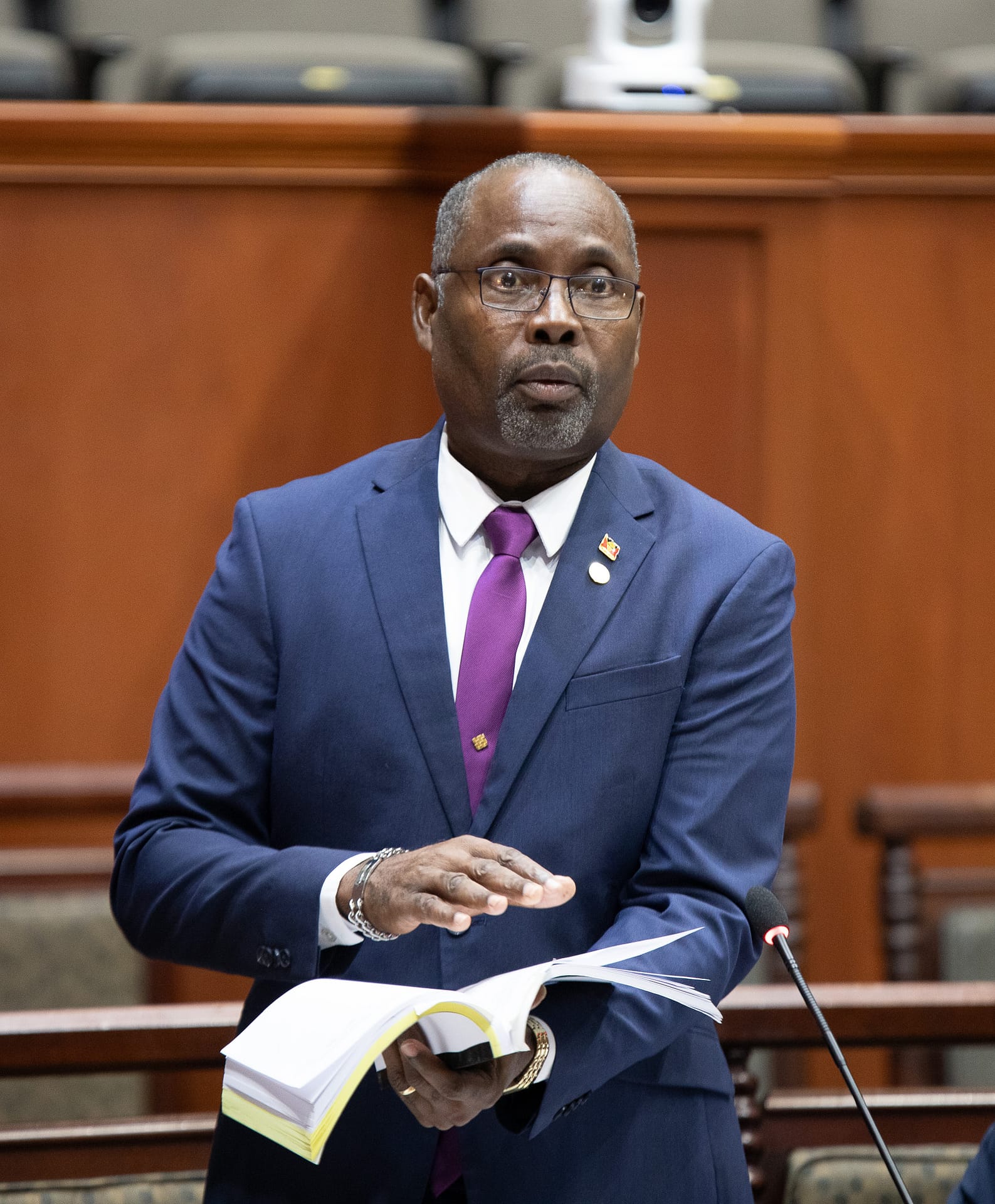
    With general elections approaching in Antigua and Barbuda, Parliament member Richard Lewis is advocating for a fundamental shift in voter mentality. The representative for St. John’s Rural West contends that electoral decisions should prioritize individual candidate merit over blind party allegiance.

    In a recent appearance on Observer AM, Lewis elaborated on the nation’s electoral framework, characterizing it as a system of 17 distinct constituency elections rather than a single partisan contest. This structure, he argues, inherently demands personalized accountability from each representative.

    “While political teams demonstrate unity during campaigns, electoral outcomes are ultimately determined at the hyper-local level,” Lewis stated, acknowledging party collaboration while emphasizing constituency sovereignty.

    The MP presented his own record as a case study, urging constituents to evaluate his performance based on tangible deliverables rather than broader perceptions of his United Progressive Party (UPP). Citing three years of consistent engagement, Lewis highlighted his hands-on approach: “My representation has been performance-based since day one. I approach my constituents with a record I am proud of, confident in the work accomplished.”

    This constituency-first philosophy emerges amid growing voter dissatisfaction with both major political parties. Lewis positions individual accountability as particularly crucial in the current climate of political skepticism.

    His strategy underscores a deeper philosophy of governance—that effective representation stems from direct constituent engagement rather than party propaganda. “My constituents know I remain accessible and committed to their service,” Lewis affirmed, signaling his dedication to continued grassroots connection.

    This emphasis on localized performance metrics suggests a strategic pivot in campaign approaches as Antigua and Barbuda’s political parties prepare for what observers anticipate to be a highly competitive election cycle.