作者: admin

  • COMMENTARY: Read Across Jamaica Day media bliss or impactful

    COMMENTARY: Read Across Jamaica Day media bliss or impactful

    Across education systems worldwide, a troubling gap has emerged: boys are consistently falling behind girls in reading and literacy proficiency, a trend that experts warn risks long-term harm to academic outcomes and social development if left unaddressed. International standardized assessments, including the Progress in International Reading Literacy Study (PIRLS) and the Programme for International Student Assessment (PISA), have documented steady declines in average male literacy scores across dozens of countries in recent years, with the gap particularly stark in Jamaica.

    According to a landmark report from the Jamaica Education Transformation Commission (JETC), chaired by Professor Orlando Patterson, the majority of Jamaican primary school students struggle with basic literacy. Data from the 2019 Primary Exit Profile (PEP) exam, the national assessment for final-year primary students, underscores the scale of the crisis: 33 percent of students are either completely unable to read or only possess very basic reading skills, 56 percent face similar barriers to writing, and 58 percent cannot effectively locate and extract information from written texts.

    Beyond simple word recognition, true literacy relies on reading comprehension — an area where the vast majority of struggling students face their biggest challenges. Experts trace part of this negative attitude toward reading to deep-rooted cultural associations: for generations, many children were ordered to read as a punishment for misbehavior, framing the activity as a punitive chore rather than an enjoyable or rewarding pursuit. This perception persists for many students today, and it hits boys especially hard.

    A major driving force behind boys’ declining reading performance is the persistence of harmful cultural stereotypes that frame reading-intensive subjects like English Language, English Literature, and History as “soft” or feminine pursuits, in contrast to “hard” STEM fields such as mathematics and physics that are widely perceived as more rigorous and masculine. Former educator Kurt Hickling, who has researched gender disparities in literacy, notes that this stereotype is reinforced by data: girls outperform boys at nearly every education level globally in reading habits and comprehension, mirroring broader gender gaps in academic literacy. While girls typically gravitate toward fiction and long-form reading for pleasure, boys often prefer visual media such as comics, heavily illustrated books, and non-fiction — a difference that learning environments rarely accommodate.

    One-off public awareness events have also been called out for failing to deliver lasting change. Critics note that Jamaica’s annual Read Across Jamaica Day, held during Education Week, has become little more than a photo opportunity that generates positive media coverage for participants but does nothing to address the underlying crisis for the hundreds of struggling readers enrolled in Jamaican schools each year. After media attention fades, most schools return to the same under-resourced, complacent systems that allowed the literacy gap to widen in the first place. Each academic year, hundreds of underprepared primary students transition to secondary school, unable to engage with the requirements of the National Standards Curriculum, trapped in a cycle of underachievement.

    Experts argue that closing this gap requires intentional, gender-specific intervention that addresses structural barriers and cultural stereotypes. In an era dominated by short-form, AI-curated bite-sized content, educators must meet boys where they are: most boys are tactile, visual learners who process information differently from the pace and structure that current education systems are designed for. While systemic gender discrimination has disproportionately harmed women and girls for centuries, advocates point out that rigid gender norms also create unique disadvantages for boys. Many boys experience their school environment as inherently feminized, and boys who prioritize academic excellence are often ridiculed as effeminate by peers and even adults in communities where male academic achievement is devalued. Forcing active, tactile learners to sit confined in a classroom for five to six hours a day runs directly counter to how boys naturally learn, creating a cycle of disengagement that starts early and worsens over time. True gender equality, experts emphasize, requires challenging and dismantling destructive stereotypes for all genders, not just addressing one side of systemic inequality.

    To reverse the trend of declining male literacy, experts have outlined a series of targeted solutions. An inclusive education system must meet the unique needs of all students, including creating safe, non-judgmental spaces for boys to engage with reading without stigma. Communities must also reevaluate the harmful social norms that glorify “dunce culture” — a widespread attitude that frames academic underachievement as cool or desirable, particularly for boys — and redefine success to value literacy and education.

    A core recommendation is “de-feminizing” the education system to remove barriers that discourage boys from engaging with reading. If left unaddressed, widespread male underachievement risks fueling the spread of toxic hyper-masculinity that further harms communities. Hickling proposes targeted literacy sessions that bring boys together with male peers in controlled learning environments, a structure that encourages more active interaction with reading material. He also calls on textbook publishers to integrate more graphics and visual elements into learning materials to align with boys’ preference for visual content, and to incorporate physical movement and multimedia learning activities that hold the attention of tactile learners. Above all, improving literacy outcomes for boys requires consistent, intentional effort rather than one-off ceremonial events.

    As award-winning author Kate DiCamillo once noted: reading should never be presented to children as a boring chore or an obligation. It should be offered to them as what it is: a precious gift that expands the mind, opens new worlds, and enables personal growth.

    Wayne Campbell is an educator and social commentator focused on how development policy intersects with culture and gender issues. Kurt Hickling is a former educator currently with the Charlotte Area Transit System.

  • PM Says Barbuda to Become ‘Smart Island’ Powered Fully by Green Energy

    PM Says Barbuda to Become ‘Smart Island’ Powered Fully by Green Energy

    Antigua and Barbuda’s Prime Minister Gaston Browne has announced an ambitious government initiative to transition Barbuda into the Caribbean’s first fully renewable-powered, technology-forward smart island, a centerpiece of a broader strategy to carve out the territory’s niche as a premium luxury and innovation-driven tourism hub.

    Speaking during an interview with local radio station Pointe FM this past Saturday, Browne outlined the foundational step of the plan: expanding Barbuda’s existing solar energy infrastructure to deliver round-the-clock, all-green electricity across the entire island. Currently, the small Caribbean island only runs on renewable energy for roughly 12 hours each day, with the remaining power supply reliant on polluting fossil fuels. To close this gap, the administration is moving forward with installing 2 to 3 megawatts of new solar generation capacity paired with utility-scale battery storage systems, a combination that will eliminate fossil fuel dependence entirely.

    “What we are building is a completely green renewable energy facility that will power every corner of Barbuda,” Browne told listeners. “Right now, we get 12 hours of green power a day. Our goal is to get to 24 hours, so that Barbuda becomes a fully organic, green island.”

    This energy transition is not an isolated project, but the backbone of a long-term economic development vision that integrates cutting-edge digital infrastructure, modernized public utilities, and expanded high-end tourism. Browne emphasized that the ultimate goal is to position Barbuda as a global standout among Caribbean travel and second-home destinations by blending sustainable development, luxury amenities, and leading-edge technology.

    The government aims to build a tech ecosystem that keeps Barbuda at the forefront of emerging innovations, including artificial intelligence, to attract high-net-worth homeowners and long-term investors from North America and Europe. “Our plan is to make Barbuda a smart island and a world-class luxury destination,” Browne said. “When it comes to AI and other emerging technologies, we intend to keep Barbuda on the cutting edge. Before long, Barbuda will be home to vacation and permanent residences for some of the wealthiest people from North America and Europe.”

    By combining environmental sustainability, technological advancement, and exclusive luxury development, the administration hopes to differentiate Barbuda from competing regional tourism markets, creating a unique value proposition that drives long-term economic growth while upholding the island’s natural environmental heritage.

  • COMMENTARY: A great voice falls silent – Remembering Jeff Charles, gentleman broadcaster and architect of Caribbean Broadcasting excellence

    COMMENTARY: A great voice falls silent – Remembering Jeff Charles, gentleman broadcaster and architect of Caribbean Broadcasting excellence

    On May 23, 2026, the Caribbean media landscape lost one of its most towering figures: Jeff Charles, a pioneering broadcaster whose voice shaped generations of listeners across Dominica and the wider region. For countless Dominicans who came of age alongside his career, Charles was far more than a familiar voice on the airwaves — he was a formative influence, who turned early broadcasting from a simple communication tool into a cornerstone of public trust and civic education at a time when the industry carried profound social responsibility.

    My first in-person encounter with Charles dates back to 1968, when I peered into the cramped radio studio tucked behind Roseau Public Library on Victoria Street. That unassuming building hosted Dominica’s branch of the Windward Islands Broadcasting Service (WIBS), a trailblazing regional network launched in 1955 that connected Dominica, Grenada, St. Lucia, and St. Vincent via shortwave transmission. Records from dbcradio.net show WIBS operated under the West Indies Broadcasting Council until the early 1970s, when the regional network was gradually replaced by emerging national broadcasters including Radio Dominica and later DBS Radio. To a wide-eyed young boy standing outside that modest studio, radio felt like pure magic — and the voices that entered our homes were larger than life. None loomed larger than Jeff Charles.

    Before he claimed his place as a broadcasting legend, Charles built a reputation as a respected educator at Dominica Grammar School. He was part of a generation of Caribbean teachers who understood that rhetorical skill, lifelong learning, and public service were inextricably linked. His command of English was flawless: polished but never stilted, authoritative but always approachable. Listeners tuned in not only to get news and updates, but to learn how to use language with intention and care. Rarely, if ever, did a grammatical mistake, awkward phrasing, or embarrassing verbal blunder slip into his broadcasts. For Charles, broadcasting demanded precision, discipline, and deep respect for every person listening.

    Today, that commitment to linguistic excellence is a far too rare standard across modern airwaves. Careless, redundant phrasing has become commonplace: broadcasters say “reversing back at a fast rate of speed” when reverse already implies backward movement, or “rain was falling heavily” when rain naturally falls. More precise alternatives are simple: “reversing” or “backing up” for the first, and “raining heavily,” “pouring,” or “coming down in sheets” for the second. Charles embodied an older broadcasting ethos where language mattered deeply, where a broadcaster’s job was to elevate public discourse rather than dilute it.

    The ripple effect of Charles’ masterful oratory and uncompromising professional standards still shapes Caribbean media today. Through direct mentorship and the quiet influence of his example, he nurtured generations of leading Dominican broadcasters and media personalities, from Dennis Joseph and Irving Knight to Ferdinand Frampton, Michael Peters, Tim Durand, Shermaine Green-Brown, Ted Daley, Ken Richards, and Felix Henderson. Many who followed in his footsteps inherited, consciously or not, his measured cadence, unflinching seriousness, rigorous discipline, and reverence for language. His influence stretched far beyond his own time on the air, embedding itself into the very culture of Caribbean radio journalism.

    Charles also helped put Dominica on the regional map during the landmark 1975 Cricket World Cup, where he joined legendary commentators Tony Cozier and Joseph ‘Reds’ Perreira to deliver live ball-by-ball coverage to millions of listeners across the Caribbean. During West Indies’ dramatic, comeback victory over Pakistan, his stirring commentary lifted audiences through moments of near despair, reminding the Caribbean crowd that “hope springs eternal in the human breast.” In that moment, Charles proved that great broadcasters do more than describe events — they name shared emotion, sustain collective morale, and give voice to the aspirations of an entire people.

    A telling anecdote from Charles’ teaching years, shared by the late Dr. Clayton Shillingford of the Dominica Academy of Arts and Sciences, offers a window into his character. According to Shillingford, he and Charles clashed with then Education Minister W.S. Stevens over a perceived etiquette slight: the pair, alongside fellow teacher Simon Richards, walked out mid-speech that Stevens was delivering at the school, in what the minister saw as disrespect. The three, dubbed “the three rebels,” were formally disciplined. As recent graduates of the University of the West Indies, it has been speculated that these bright young educators viewed Stevens as falling short of their academic standards, though this has never been confirmed. Regardless of the details, the incident revealed the unapologetic confidence, assertiveness, and intellectual energy that defined the post-colonial generation of young Caribbean professionals, who were determined to challenge outdated hierarchies and reimagine Caribbean public life on their own terms.

    Yet reflecting on Charles’ legacy is not without sadness. After leaving Dominica to pursue advanced academic studies — reportedly completing a PhD in communications from Stanford University — he grew increasingly disconnected from Dominican public life and diaspora networks. It is possible he felt his decades of contributions to the nation were never fully appreciated. I personally extended an invitation for him to join the Dominica Academy of Arts and Sciences, so that young Dominicans could learn from his decades of experience in academia and broadcasting, but he declined the offer. In hindsight, this stands as a missed opportunity not just for Charles, but for the entire nation.

    My final glimpse of Charles came in 2024, during the remote funeral services for his close friend Dr. Clayton Shillingford. Through our mutual acquaintance Julius Corbette, I obtained his contact information and attempted to arrange an interview either last year or earlier this year. Though he answered the phone twice, he was unable to speak. There is something almost poetic, and deeply haunting, about that final silence from a man whose voice once captured the admiration of an entire region.

    Even so, history will hold Jeff Charles in high esteem. He helped lay the foundational framework for Dominican broadcasting during the pivotal era of national awakening and Caribbean self-definition. He brought dignity to the microphone and uncompromising excellence to public communication. His voice educated, inspired, comforted, and lifted up countless listeners across multiple generations.

    A great voice has fallen silent, but its echoes will never fade. Our thoughts and prayers are with his wife Susan and all his family during this time of grief. May God welcome his soul into eternal glory, and may Dominica never forget the immeasurable contributions of Jeff Charles — teacher, scholar, gentleman, and one of the finest voices to ever grace Caribbean radio.

  • Jonge landbouwers in Nickerie kiezen steeds meer voor andere landbouwgewassen, naast rijst

    Jonge landbouwers in Nickerie kiezen steeds meer voor andere landbouwgewassen, naast rijst

    For generations, the coastal Surinamese district of Nickerie has been synonymous with rice cultivation, earning its reputation as the nation’s rice heartland. Today, however, a quiet shift is underway: local farmers are increasingly embracing crop diversification, adding citrus, coconut, banana, and other tropical fruit varieties to their agricultural operations, with some producers now managing plantations of thousands of citrus trees.

    This growing transition toward diversified fruit production has been supported by targeted capacity-building initiatives led by Suriname’s Ministry of Agriculture, Livestock and Fisheries (LVV). Last week, a four-day Citrus Cultivation Technique training program wrapped up in Nickerie, designed to upskill local farmers and agricultural extension officers, with senior LVV officials on hand to mark the conclusion of the course. The program, which is part of the broader Strengthening of Citrus Production project funded by the Inter-American Development Bank (IDB), aims to boost national citrus output by equipping producers with science-based growing skills.

    William Waidoe, Deputy Director of the LVV’s Western Region, highlighted that diversification is already well underway across Nickerie beyond just citrus: some producers have moved into aquaculture, while others have scaled up commercial banana plantations. “Our role is to support this transition by delivering the targeted training producers need to succeed,” Waidoe explained, noting that Nickerie boasts extensive areas of land perfectly suited to commercial citrus cultivation. The training modules cover practical, high-priority topics including disease prevention and management, pruning techniques, and sustainable soil management.

    Rayen Toekoen, Acting Director of the LVV’s Directorate of Agricultural Research, Marketing and Processing, pointed to a notable trend that signals long-term momentum for the sector: strong interest from young producers. Even as Suriname attracts growing international attention for its emerging oil and gas sector, Toekoen noted that more young people are recognizing agriculture’s enduring role as a core economic pillar and a cornerstone of national food security. “Everyone is looking to oil and gas, but we cannot neglect our own domestic food production and food sovereignty,” Toekoen said. “That’s why the ministry is working to encourage young people to build careers in agriculture.”

    Participants across age groups shared that the four-day course delivered actionable, practical knowledge that addressed longstanding challenges they faced on their farms. Teroen Lakhai, a young farmer who has worked in agriculture alongside his father from a young age, said the training finally solved a mystery that had plagued his citrus groves for years. “We had been fighting a persistent disease killing our trees for a long time, but we never knew it was HLB (Huanglongbing),” he explained, referencing the devastating bacterial infection that impacts citrus crops globally. “Now we understand what we’re dealing with, and how to manage it properly.”

    Vikash Jurawan, who manages a large diversified plantation growing coconut, passion fruit, mangoes, oranges, grapefruit and soursop, called the program highly instructive, emphasizing that successful agriculture requires patience and long-term investment. “When you plant today, you don’t harvest and earn revenue in two months,” he noted. “It takes time, but the payoff is worth the wait.” For Davy Permaul, a new citrus grower who followed his father — a veteran rice and horticulture producer — into agriculture, the course provided foundational knowledge to start his operation, particularly in identifying and managing common pests and diseases.

    Soesila Udit-Ramautar, head of the LVV’s Fruit Tree Research department and team leader for the IDB-funded citrus project, outlined the program’s national rollout timeline. Training sessions launched in December in the districts of Groningen and Saramacca, followed by courses in Wanica, Para, and most recently Nickerie. Additional sessions will be rolled out across other Surinamese districts in the coming months to expand access to citrus growing training nationwide.

  • City Blasters complete undefeated SPL title-winning season

    City Blasters complete undefeated SPL title-winning season

    The sixth edition of the Saint Lucia Premier League (SPL) T20, a tournament defined by unexpected twists and standout individual performances, wrapped up in dramatic fashion on May 23, as the undefeated City Blasters claimed the championship title with a lopsided 73-run victory over the Choiseul Craft Masters at the iconic Francis “Baba” Lastic Grounds in Gros Islet.

    The two finalists took wildly different trajectories to reach the season’s climax. The City Blasters, the league’s most consistent squad throughout the tournament, finished at the top of the group stage standings and secured their final berth with a win over Gros Islet in the first qualifying round, never dropping a match across the entire campaign. In stark contrast, the Choiseul Craft Masters narrowly scraped into the playoff bracket as the fourth-seeded team, forcing themselves to fight through two elimination matches to earn a spot in the finale: they first upset the Micoud Eagles in the eliminator, then knocked out the Soufriere Titans in the second qualifier to book their place against the tournament favorites.

    Hours before the first ball was bowled, rain threatened to delay or even cancel the title decider, but the passing inclement weather failed to put a damper on the electric matchday atmosphere. The ground filled to capacity well before kickoff, with thousands of passionate fans, most clad in the Craft Masters’ signature orange, packing the stands to cheer on their underdog side. While the weather did not stop the match, the wet outfield and leftover moisture from the storm forced organizers to reduce the contest from the standard 20 overs per side to 18 overs.

    Winning the toss and electing to bat first, the City Blasters turned the shortened format into an opportunity to showcase their explosive batting power. Overseas import Ryshon Williams led the charge with a blistering half-century, smashing 52 runs off only 17 deliveries to set the tone for the innings. Additional valuable contributions came from Vernillius Gabriel (37 runs), Blasters captain Stephen Naitram (41 runs), and all-rounder McKenny Clarke (35 runs), pushing the side to a daunting total of 219 runs by the end of their 18 overs. For the Craft Masters, medium-pacer Alvinus Simon was the most effective bowler on the day, finishing with impressive figures of three wickets for 36 runs.

    Chasing a revised target of 220 runs to claim the title, the Craft Masters needed career-defining performances from their star batting line-up to pull off an upset. Instead, the top order collapsed almost immediately. Star batter Alick Athanaze, who had hit a century on his tournament debut just one match prior, fell leg before wicket to Blasters bowler Dillon John on the very first ball he faced, leaving the side reeling early. Wickets continued to tumble at regular intervals, with Clarke emerging as the match-winning bowler for the Blasters, finishing with extraordinary figures of four wickets for only 10 runs from 2.5 overs. While tournament Most Valuable Player Junior Henry chipped in with a quick 29 runs off 13 deliveries, and tailender Bronté Bess scored a late 33, the Craft Masters were eventually bowled out all out for 146 runs, 73 runs short of the target.

    Following the final wicket, Blasters captain Naitram shared his unbridled joy at lifting the SPL 6 trophy after an undefeated season, crediting his squad’s depth and consistent performance for the title win. The team, hailing from Saint Lucia’s capital, continued to celebrate their championship victory long into the night.

  • Haynesville man charged with murder

    Haynesville man charged with murder

    A fatal stabbing incident that claimed the life of a 38-year-old man in Barbados last week has led to formal murder charges against a local resident, according to official updates from the Barbados Police Service.

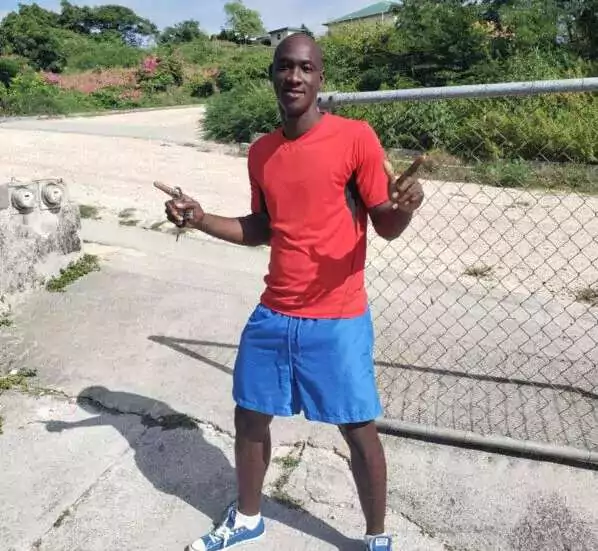
    Dwayne Demar Garnes, 38, a resident of Haynesville’s Block 20D, has been officially accused in the death of Andre Maynard. Maynard, also 38, who lived in Redmans Village, St Thomas, lost his life on 19 May during a violent altercation that broke out in the St James district.

    Law enforcement officers were dispatched to the scene after receiving urgent reports of a heated dispute between two men in Haynesville. Upon arrival, first responders confirmed Maynard was already deceased at the location of the incident.

    Following the completion of initial investigative procedures, police took Garnes into custody and filed the formal murder charge. The accused is set to make his first court appearance at the Holetown Magistrates’ Court this coming Tuesday, 26 May, where the legal process surrounding the case will officially begin. As of the latest updates, no additional details about the motive behind the dispute or the circumstances leading up to the stabbing have been released to the public by law enforcement.

  • WEATHER: Flood Watch in Effect for Dominica

    WEATHER: Flood Watch in Effect for Dominica

    The current submission provided for news processing only contains social media sharing controls and an image link, with no full core news text, background details, event descriptions or other essential journalistic information included. Without the complete original news content that outlines the specific event, key figures, timeline, and core claims being reported, it is impossible to conduct a full structured rewrite, in-depth analysis, or accurate contextualization of the purported story. This incomplete input prevents adherence to the required news processing standards, as all work relies on access to the full original journalistic material to ensure accuracy and completeness of the final output.

  • Air Peace Flight Lands in Barbados

    Air Peace Flight Lands in Barbados

    In a development that signals growing connectivity between West Africa and the Caribbean, Nigeria’s leading private airline Air Peace has successfully landed one of its commercial flights in Barbados. This landing represents a significant step forward for the carrier’s ongoing expansion strategy beyond its traditional regional operating base in West Africa.

    Air Peace, which was founded in 2013, has built a reputation for expanding Nigeria’s air access to global markets over the past decade. Prior to this landing, the airline had already expanded its routes to cover major destinations across the Middle East, Asia, and other parts of Africa, as well as select European cities. The arrival in Bridgetown, Barbados’ capital, opens up a new direct air link between West Africa and the Eastern Caribbean, a region that has long lacked convenient direct connections from African markets.

    Industry analysts note that this new route has the potential to boost multiple sectors, including tourism, trade, and cultural exchange between the two regions. For African travelers seeking access to the Caribbean, the direct service eliminates the need for inconvenient layovers in European or North American hubs, cutting down travel time and reducing overall travel costs. Similarly, Caribbean tourists looking to visit West Africa will now have a more streamlined travel option.

    Barbadian aviation officials have welcomed the new service, highlighting that increased air connectivity aligns with the island nation’s post-pandemic tourism recovery strategy, which aims to attract visitor markets from beyond North America and Europe. Air Peace representatives have not yet released full details on the frequency of this new route or long-term operational plans, but the successful landing is widely viewed as the first step in establishing a regular service between Nigeria and Barbados.

  • Antigua’s Unruly Union Wins Caribana Barbuda Classic Horse Race

    Antigua’s Unruly Union Wins Caribana Barbuda Classic Horse Race

    One of the Caribbean’s most anticipated annual sporting showdowns wrapped up with a thrilling victory for Antigua at the 26th Caribana Barbuda Classic Horse Racing Competition, held at Barbuda’s iconic Coronation Park. In the marquee match-up between the two neighboring islands that served as a centerpiece event for 2026 Caribana celebrations, local favorite Unruly Union delivered a dominant, crowd-pleasing performance to secure the top prize.

    Ridden with precision and strategic skill by Antiguan jockey Junior “Ritical” Walters, Unruly Union held off challengers across the track to cross the finish line first. The winning colt is owned by Dr. Baba Thwaites and conditioned for competition by veteran trainer Devon O’Garo, whose preparation paid off in the high-stakes feature race.

    Organized annually by the Barbuda Turf Club in partnership with State Insurance Company Limited, this year’s event stretched across seven competitive races and drew a packed crowd of racing enthusiasts and casual spectators alike. For locals and returning visitors, the Caribana Barbuda Classic is far more than a single-day competition: it is one of Barbuda’s most cherished long-standing sporting traditions, drawing crowds year after year to celebrate equestrian talent across the region.

    Sunday’s victory for Unruly Union capped off a memorable edition of the race, adding a new exciting chapter to the event’s 26-year history. As has become the norm, the competition once again solidified its status as one of the unmissable highlights of the broader Caribana festival, drawing attention to equestrian sport across the Eastern Caribbean.

  • Falcons Crowned Champions, Eagles 2 Secure Second Place, Momentum Claims Men’s Title

    Falcons Crowned Champions, Eagles 2 Secure Second Place, Momentum Claims Men’s Title

    Antigua and Barbuda’s grassroots volleyball landscape is undergoing a transformative shift, driven by the Chargers Volleyball organization, whose youth development system has claimed three of the top positions in the country’s national Development Division competitions. This unprecedented sweep stands as a powerful validation of the program’s years-long commitment to structured training, disciplined growth, and intentional investment in young athletic talent.

    In the women’s division, the Chargers-affiliated Falcons team claimed the coveted national championship title after wrapping up an entirely undefeated season, while a second Chargers development squad, Eagles 2, secured a solid second-place finish. The 1-2 finish cements Chargers Volleyball’s status as the undisputed leading force in female youth volleyball development across the nation.

    For the men’s division, the organization’s Momentum team matched the Falcons’ perfect season record, storming to a first-place victory to claim the men’s Development Division crown. The win underscores the rapidly expanding depth, competitive edge, and technical progress of the Chargers organization’s male youth development pipeline.

    Program leaders emphasize that these three top finishes are not a stroke of luck, but the outcome of years of collective effort that extended far beyond the court. Countless extra training hours, one-on-one mentorship, creative community fundraising to overcome logistical barriers, and steadfast emotional support have formed the foundation of the program’s success. Coaches, parent volunteers, community supporters, and the young athletes themselves all persisted through setbacks to bring the program to this milestone.

    For Chargers Volleyball, this achievement means far more than collecting trophies or climbing league standings. It marks the realization of a founding vision to grow volleyball from the ground up in Antigua and Barbuda.

    Rosemarie Simon, head coach of the Chargers female program, spoke to the depth of commitment her young athletes demonstrated throughout the 2024 season. “What fans see on match day is just the final chapter of a very long journey,” Simon explained. “These young women pushed through grueling training sessions, made personal sacrifices, lifted each other up through losses, and grew stronger mentally and emotionally every single week. Both Falcons and Eagles 2 earned these results through discipline, teamwork, and heart. This is concrete proof that investing in intentional youth development delivers results.”

    Simon also highlighted the critical role that family and community support played in the program’s success. “Our parents have been absolutely phenomenal,” she said. “Their constant encouragement, help with transportation to practices and games, personal sacrifices, and unwavering belief in what we’re building made this possible. We’ve worked hard to build a family culture here at Chargers, and every single person has a share in this success.”

    Meanwhile, Frank Schwartz, head coach of the Chargers men’s program, attributed Momentum’s championship run to the team’s culture of persistence and personal accountability. “Momentum’s title didn’t happen overnight — it came from consistent hard work every single week,” Schwartz said. “These young men bought into our development process completely. They showed up to every training session ready to push, accepted feedback to improve their game, and held each other accountable to get better. What makes me most proud isn’t the trophy itself — it’s the growth I’ve seen in their character, confidence, and self-discipline over the course of the season.”

    Schwartz added that these results are just the first step in the organization’s long-term goals, pointing to the growing strength of its development pipeline as a sign of bigger things to come for Antigua and Barbuda volleyball. “This is only the beginning,” he noted. “Chargers Volleyball is building a sustainable system where young athletes can develop properly at their own pace, instead of rushing talent before it’s ready. If we keep investing in our youth, the future of volleyball in this country is incredibly bright.”

    Across Antigua and Barbuda’s tight-knit volleyball community, the Chargers organization’s success has earned growing recognition as one of the most active and impactful youth sports development programs in the nation. From new beginners learning basic fundamentals to competitive athletes fighting for national titles, Chargers Volleyball continues to prove that when young people are given consistent structure, genuine encouragement, and equal opportunity, extraordinary outcomes are possible.

    As the 2024 Development Division season comes to a close with Falcons at the top of the women’s podium, Eagles 2 in second, and Momentum leading the men’s division, one fact has become impossible to ignore: Chargers Volleyball is not just building competitive volleyball teams. It is building a lasting legacy for the future of the sport in Antigua and Barbuda.