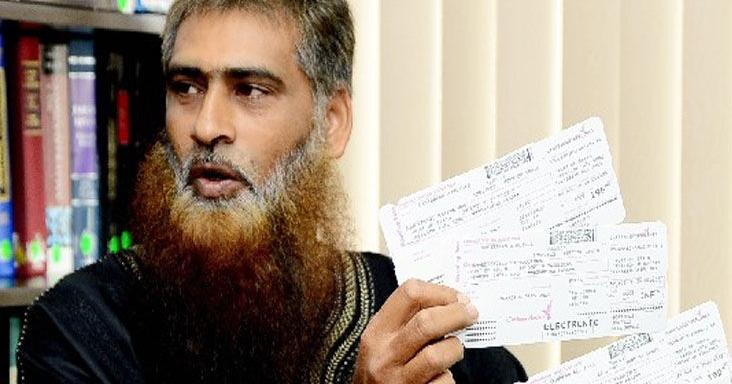
More than a decade after being swept up in a high-profile 2011 anti-crime dragnet that he claims was a politically fabricated frame-up, a 60-year-old Trinidadian man is still demanding official compensation for the irreversible damage done to his reputation, livelihood and family bonds.
Ashmeed Mohammed, who now runs a small chicken processing operation and maintains a small farm in the rural community of Rio Claro, is one of approximately 17 Muslim men detained in August 2011 over unsubstantiated claims that they had plotted to assassinate then-Prime Minister Kamla Persad-Bissessar, her Attorney General Anand Ramlogan, and multiple sitting cabinet ministers. The false plot was the core justification the ruling United National Congress (UNC) government used to impose a nationwide state of emergency that lasted from August 21 to December 5 that year, a move framed as a aggressive response to rising violent crime at a time when the opposition People’s National Movement (PNM) was heavily criticizing the administration for failing to address public safety concerns.
Mohammed says the entire assassination plot narrative was invented from thin air to shore up the UNC’s political standing, with local Muslim communities deliberately targeted to create the illusion of decisive action against a major national threat. He points to what he calls a deeply suspicious coincidence: the date the government claimed the plot was scheduled to launch was exactly the day authorities carried out the coordinated arrests. At the time of his arrest, Mohammed was running a successful import business out of La Romaine, supplying cooking oil to local Chinese restaurants along with event rental equipment like tents, tables and chairs. He was arrested immediately after leaving a bank, where he had just processed a wire transfer to China for an incoming shipment. Police surrounded him with drawn weapons, detaining him on initial claims of illegal weapons and drug possession.
Over the course of his two-week detention, Mohammed says authorities never presented a shred of evidence linking him to any criminal activity, nor did any senior official question him about the alleged assassination plot. It was not until three days after his arrest that a police officer at the Santa Rosa detention center privately informed him he was being held on treason charges connected to the purported plot. The officer even acknowledged that many people within law enforcement already suspected the government had manufactured the entire scheme, asking Mohammed to keep their conversation confidential.
He told the *Sunday Express* via WhatsApp that he had no prior connection to 80% of the other men arrested alongside him. Only a handful were familiar acquaintances from his local mosque, including the late Ashmeed Choate, who later died in Syria. Other high-profile detainees named by Mohammed, including David “Buffy” Milliard and Selwyn “Robocop” Alexis, were people he had only heard of before the arrest, never met.
The aftermath of the unfounded allegations destroyed Mohammed’s life piece by piece. Even though he was never charged or convicted of any crime, all of his domestic and international bank accounts were immediately shut down, forcing him to abandon his import business entirely. He describes the experience as both religious targeting of Muslim residents and deliberate economic ruin.
The damage extended far beyond his career, fracturing his entire family. Even some immediate relatives cut off contact with him after his release, many out of fear that police would monitor their homes if they associated with him. Others, he says, were die-hard political loyalists of the UNC who fully accepted the government’s false narrative and believed he genuinely planned to harm party leadership. Mohammed, who even had a personal and business relationship with a sitting UNC cabinet minister at the time of his arrest—their wives were both connected to the local Chinese community, and the pair socialized regularly—says this political blind spot affects hardline supporters of both major Trinidadian parties, acting as a form of brainwashing that stops voters from acknowledging wrongdoing by their preferred group. Ironically, the minister Mohammed was supposedly part of a plot to kill was the same official he had counted as a personal friend. When Mohammed sought an explanation from him days after his release, the minister flew into a rage and dismissed him out of hand; now that the minister is out of office, Mohammed says he greets him with friendly hugs whenever they meet.
Unable to face the constant stigma and public scrutiny in La Romaine, Mohammed retreated to rural Rio Claro, where he has kept a low profile ever since. He has spent hundreds of thousands of Trinidadian dollars on legal efforts to secure compensation from the state, but all attempts have failed. Looking back, he says he and the other exonorated detainees made a mistake by pursuing the case through the courts rather than pushing aggressively for an out-of-court settlement, adding that he believes the government once offered a settlement that the group failed to negotiate properly.
Now that the UNC has returned to national power, Mohammed says the administration has a moral obligation to redress the injustice it committed. For his part, he says he would accept a grant of state land to expand his current farming business as fair compensation, arguing that after more than a decade of harm, the government can even resolve the matter off the official record if it chooses. “The lies told by the government left a lasting stain on my name and my life,” he says. “All I want now is what is fair for me and my family, who have paid this price alongside me.”