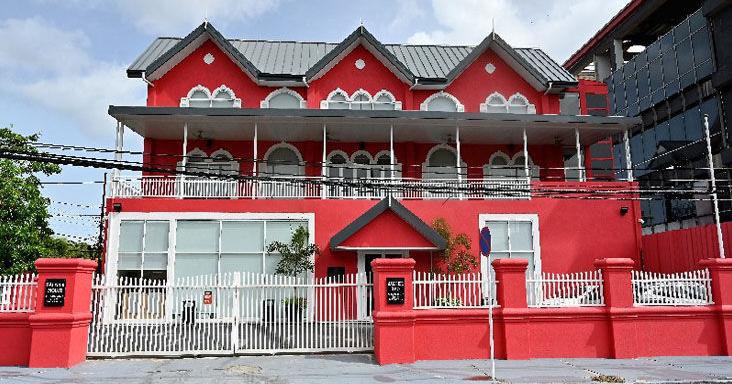
A high-stakes legal conflict has broken out in Trinidad and Tobago, centered on the funding of the People’s National Movement’s (PNM) new party headquarters, Balisier House, located in Port of Spain’s Tranquillity Street. The clash began after High Court Judge Margaret Mohammed granted a court order on Friday that compels the PNM to disclose the sources of funding behind the multimillion-dollar construction project, a move the ruling political party has decried as a politically motivated attack.
The court order stems from an ongoing investigation by the Trinidad and Tobago Police Service (TTPS). In July 2026, Police Commissioner Allister Guevarro appointed acting Assistant Commissioner Ramdath Phillip to lead the probe, and subsequently authorized Phillip to file an application for a Preliminary Unexplained Wealth Order (PUWO) under the 2019 Civil Asset Recovery and Management and Unexplained Wealth Act, Section 58(1). The application names PNM trustees as the first respondent and the PNM, represented by its general secretary, as the second. The Commissioner of Police is represented by a high-profile legal team including King’s Counsel Anthony Peto and junior counsel Thomas Cleaver of London’s Blackstone Chambers, with local attorney Dayadai Harripaul acting as instructing counsel.
In an affidavit supporting the application, Phillip referenced a report from UK-based international consultants Berkeley Research Group (UK) Ltd, commissioned by the Office of the Attorney General. The report estimates the total completed construction cost of Balisier House will reach roughly TT$118.4 million, with around TT$73.272 million of work already finished. Phillip stated that investigators have not been able to identify any legitimate source of PNM income large enough to fund a project of this scale, prompting the request for the court order.
Responding to the public revelation of the court order, PNM chairman Marvin Gonzales issued a scathing three-page media statement announcing that the party has assembled its own full legal team to challenge the order, and will pursue every available legal remedy to protect the party and its members. As of the statement’s release, Gonzales confirmed the PNM had not received official correspondence or formal service of the High Court order from any state body, in line with court rules that give police seven days from the order’s granting to complete service.
Gonzales rejected the claims laid out in the police application, dismissing the cost estimates as “grossly exaggerated” and denying any wrongdoing in the project’s funding. He explained that the PNM has owned the land and original Balisier House structure for more than 65 years, and the current redevelopment was never conducted or funded in secret. For over 15 years, Gonzales said, the party has raised funds for the project through open, legal means: official party events, public fundraising appeals, and voluntary donations from thousands of party members, supporters, and backers who view the headquarters as a key democratic institution for Trinidad and Tobago.
The PNM chairman framed the entire investigation as the latest step in a coordinated smear campaign orchestrated by the incumbent ruling United National Congress (UNC). He claimed the effort first began with unsubstantiated public attacks, then escalated when UNC lawmakers abused parliamentary privilege to make unproven allegations under legislative immunity. Gonzales accused the TTPS of cooperating with a political witch hunt, noting that it was the PNM that originally introduced campaign finance reform legislation in Trinidad and Tobago – a bill the UNC refused to support.
“Today, the very same political party that rejected campaign finance reform and has been at the centre of well-documented corruption, political kickback and bid-rigging scandals now seeks to cast suspicion on the lawful fundraising activities of the People’s National Movement,” Gonzales said. He accused the UNC government of prioritizing partisan attacks over pressing national issues including economic stagnation, rising crime, unemployment, and gaps in healthcare and education, arguing the administration is weaponizing state institutions to target its main political opposition.
Gonzales warned that the case fits a growing, dangerous pattern of state-sponsored political intimidation over the UNC’s 14 months in office. He claimed the ruling party has increasingly sought to silence political dissent, using state bodies to collect personal information on opposition figures that could be misused for partisan gain. He called the misuse of state power a threat to all Trinidad and Tobago citizens, regardless of political affiliation, and reaffirmed the PNM’s commitment to defending not only its own legacy but the constitutional democratic rights of all citizens.
In closing, Gonzales expressed confidence in the eventual outcome of the legal battle: “We remain confident that truth will prevail over propaganda, justice will prevail over political persecution and democracy will prevail over tyranny.”