作者: admin

  • APUA Reports Progress on Rehabilitation of Crabbs Water Storage Tank

    APUA Reports Progress on Rehabilitation of Crabbs Water Storage Tank

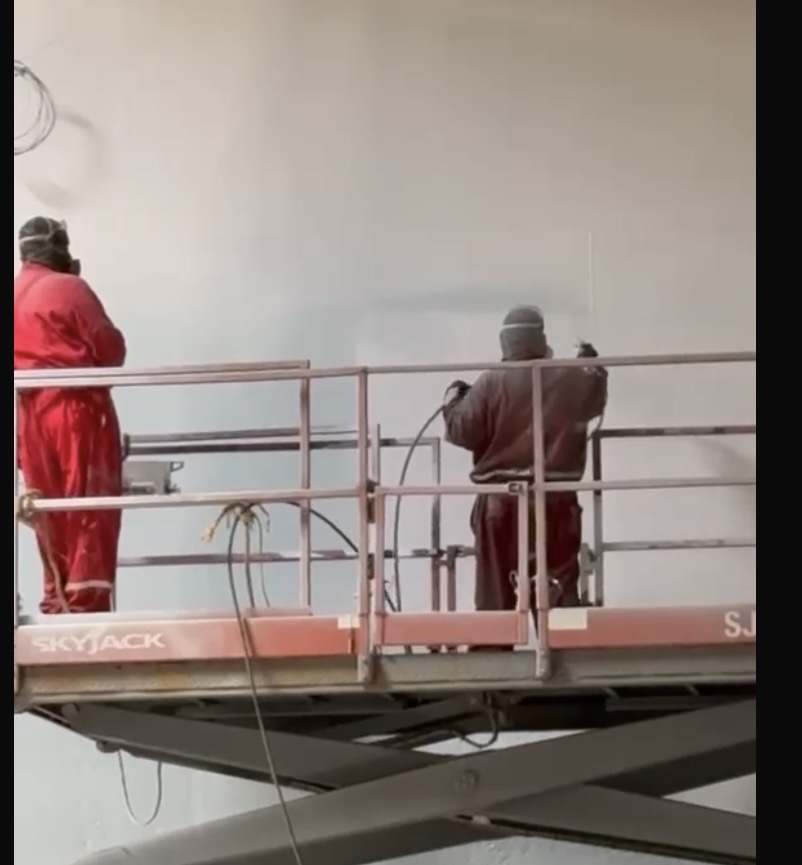
    The Antigua Public Utilities Authority (APUA) has recently released an update on the rehabilitation project for the 1.5 million imperial gallon water storage tank located at Crabbs, confirming that work is moving forward at a consistent pace and a critical milestone has already been achieved.

    Per the official update from the state-run utilities regulator, contractors working on the site have successfully completed the application of the first protective coat to the tank’s inner structure, marking the end of one of the project’s most foundational early phases. Restoration operations are continuing on schedule as the team works through the remaining scope of work.

    Beyond the interior coating work, the comprehensive rehabilitation initiative includes two other major upgrades: a full replacement of the tank’s existing base, and the installation of new corrosion-resistant protective rings across the structure. Both of these targeted upgrades are designed to deliver long-term benefits, including a significant extension of the tank’s overall service life and a marked improvement in its operational reliability for the local water supply network.

    At the time of the update, APUA has not yet shared a formal projected timeline for the full completion of the rehabilitation work.

  • Derde helft WK 2026: Messi tussen voetbal, slavernij, racisme en nationale identiteit

    Derde helft WK 2026: Messi tussen voetbal, slavernij, racisme en nationale identiteit

    For decades, a national football jersey has stood for far more than just 11 athletes stepping onto the pitch. For millions of fans across the globe, it carries layers of meaning tied to history, colonialism, slavery, migration, national pride, political ideology and core societal values. This shift explains why Lionel Messi, widely lauded as the greatest footballer of his generation, is no longer judged solely on his on-pitch performances – he has become the global face of Argentina, a nation with a deeply complex history of ethnicity and national identity. This intersection of sport and society is particularly visible in Suriname during the World Cup, where tournament fandom is shaped as much by history, politics, identity, migration and cultural values as it is by 90 minutes of play.

    For millions of people around the world, Messi remains first and foremost a once-in-a-generation footballing talent. His unrivaled technical skill, game-changing vision, understated public persona and trophy cabinet packed with every major honor in the sport have cemented his status as a global icon. To many of his fans, Messi exists separate from politics; they evaluate him exclusively on what he delivers on the pitch.

    But this separation between sports star and national identity is no longer a given. Across social media, an increasing number of posts frame Messi not just as a footballer, but as a symbolic representative of Argentina, tying his public image to a range of political and social conversations. Critics point to the Argentine government’s vote against a United Nations resolution condemning the transatlantic slave trade, ongoing debates over the lack of Black Argentine representation in the national team, and past racism controversies tied to Argentine football. For some observers in Suriname, these issues mean Surinamese football fans should not support Messi or Argentina during the World Cup.

    This reaction is emotionally understandable, but it demands nuance. Can a top professional athlete reasonably be held responsible for the policy decisions of their home country’s government? Sovereign states make political choices; footballers represent their nations only on the sporting field. To date, Messi has not made any public statement on the UN vote in question, so holding him personally accountable for a decision made by Argentina’s elected government is a difficult position to defend.

    That said, this does not mean the broader social conversation taking place is unwarranted. Football has not been a politically neutral pastime for many years. National teams have evolved into powerful symbols of their home countries, and fans naturally tie individual players to national history, colonial power dynamics, migration histories, human rights and contemporary political movements. This means footballers often end up as the focal point of public debates that extend far beyond the sport itself.

    Argentina’s history of ethnicity and national identity adds additional layers to this conversation. While the nation has a long, rich Afro-Argentine history, that legacy was largely underrepresented in mainstream national narratives for centuries. This gap has sparked international discussions about representation, national identity and how Argentina presents itself to the world. Past incidents, in which Argentine players or fans have been accused of racist language and behavior, have further fueled this ongoing debate.

    For Suriname, this conversation carries unique weight. The nation’s identity is defined by its extraordinary ethnic diversity: Afro-Surinamese, Hindustani, Javanese, Indigenous peoples, Maroons, Chinese, Europeans and people of mixed heritage collectively shape the country’s national character. As a result, issues like slavery, colonialism, discrimination and equity are not abstract academic concepts – they are central to Suriname’s collective national history. It is therefore understandable that many Surinamese feel more acutely sensitive to discussions of racism or political positions tied to the lingering legacy of slavery. But this raises a core question: should admiration for a footballer like Messi be contingent on the political choices made by his country of birth?

    In practice, there is no simple answer to this question. One camp argues that sport can never be separated from social responsibility, meaning athletes must be held accountable for the actions of the nations they represent. The opposing side believes football is meant to unite people, and individual athletes should not be blamed for political decisions over which they have no direct control. Both perspectives deserve to be taken seriously.

    This same double standard can be observed when we compare how fans treat players from other nations. Few people hold English striker Harry Kane personally responsible for the United Kingdom’s centuries of colonial violence. Portuguese icon Cristiano Ronaldo is almost never judged on Portugal’s historic role in the transatlantic slave trade. French star Kylian Mbappé is not held accountable for France’s controversial migration policies. Egyptian winger Mohamed Salah is rarely called out to answer for Egypt’s domestic political landscape.
    what many observers also overlook in this debate is the fact that Messi has spent the vast majority of his life outside Argentina. Born in Rosario, Argentina in 1987, Messi moved to Barcelona at age 13 to join FC Barcelona’s famed youth academy. He lived in the Barcelona region for nearly 20 years starting in 2000, before a short two-year stay in Paris during his time at Paris Saint-Germain. Since 2023, he has resided in the United States, where he plays for Major League Soccer’s Inter Miami CF. While he retains strong cultural ties to his country of birth, most of his childhood and adult life has been spent in Spain.

    The World Cup has made clear that modern football is increasingly about far more than football itself. Fans do not choose which team or player to support based only on on-pitch quality. Historical connections, shared language or culture, political beliefs and core social values all shape fandom. As a result, a win or a loss carries meaning that stretches far beyond the final score on the scoreboard.

    The World Cup has never been only a sports tournament. Fans often gravitate toward a specific nation because they have family ties there, share a language, have a shared migration or colonial history, or connect with its cultural identity. That is why so many Surinamese cheer for the Netherlands, while others feel a closer bond to Brazil for its signature attacking style of play, and still others support Ghana, Senegal or Morocco because of shared connections to the African continent.

    For many fans, Messi will always remain a footballing genius. For others, he is inextricably tied to the nation whose public face he has become. This tension is likely to persist long after the final whistle of the World Cup. Perhaps that is both the great strength and the defining challenge of modern football: the game brings people together, but it also forces us to confront the big questions that divide our societies. It pushes us to reflect on identity, history, responsibility and how we view nations, athletes and one another. Ultimately, a World Cup always tells us as much about the world we live in as it does about the game played on the pitch.

  • CARICOM Backs Guyana’s Bid to Host UN Climate Summit in 2030

    CARICOM Backs Guyana’s Bid to Host UN Climate Summit in 2030

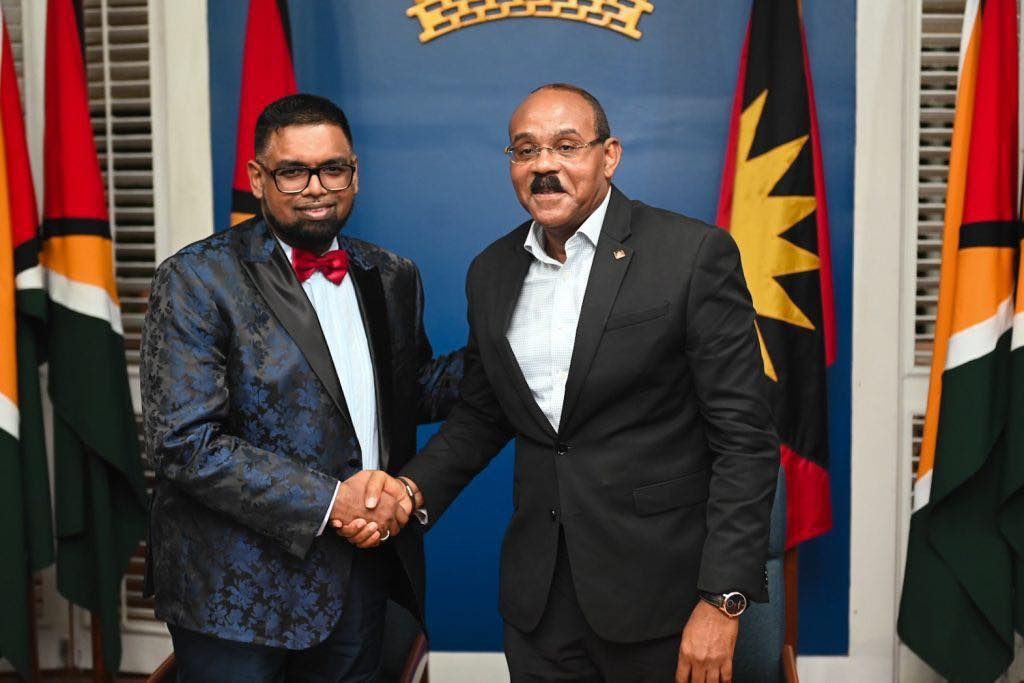
    At the 51st Regular Meeting of the Caribbean Community (CARICOM) Conference of Heads of Government held in Saint Lucia, regional leaders have thrown their full collective weight behind Guyana’s historic campaign to host the 35th United Nations Climate Change Conference (COP35) in 2030. The unanimous endorsement marks a major milestone for the Caribbean, a region on the frontlines of climate change impacts despite contributing very little to global greenhouse gas emissions.

    Beyond backing Guyana’s hosting bid, heads of government also formally approved the CARICOM Climate Diplomacy and COP35 Framework (2026–2030), a cohesive strategic document designed to unify the bloc’s advocacy for member state interests in global climate talks. Official meeting communiqué details outline that the framework will not only align the bloc’s diplomatic engagement ahead of COP31 – scheduled for November 2026 in Antalya, Türkiye – but also anchor long-term regional climate goals for the coming half-decade.

    During deliberations, leaders reaffirmed two non-negotiable core priorities for the Caribbean in international climate negotiations: holding global warming to the critical 1.5°C threshold above pre-industrial levels, and securing formal international recognition of the unique vulnerabilities faced by Small Island Developing States (SIDS) across the globe. Many Caribbean nations fall into this category, facing existential threats from sea-level rise, intensifying tropical storms, and coastal erosion that disrupt livelihoods and economies.

    As part of the bloc’s coordinated climate action in the lead-up to 2030, CARICOM has called for high-level global participation in the Second Global Biodiversity Alliance Summit, set to be hosted by Guyana between October 26 and 28, 2026. The summit will build momentum for the region’s broader climate and conservation agenda ahead of COP35.

    If Guyana’s bid succeeds, it will make history as the first CARICOM member state to ever host a United Nations Climate Change Conference. Hosting the high-stakes global gathering would bring unprecedented international attention to the Caribbean’s ongoing climate struggle, amplifying the region’s calls for increased climate finance from major global emitters and greater investment in climate resilience infrastructure for vulnerable SIDS.

  • Grondbezitters in Coronie opgeroepen percelen te ontwikkelen

    Grondbezitters in Coronie opgeroepen percelen te ontwikkelen

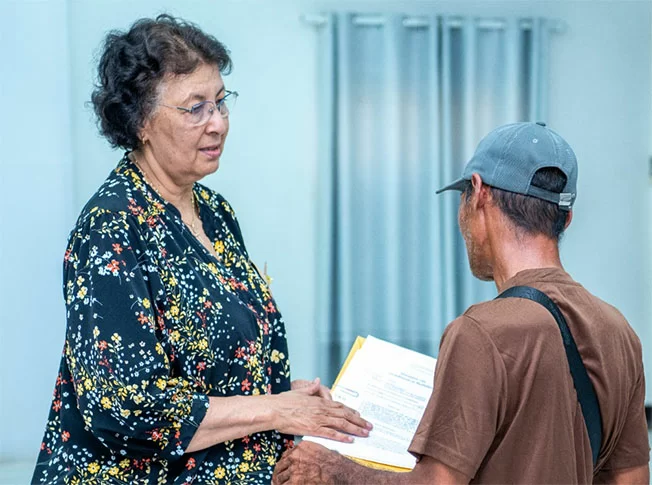
    On July 13, Suriname’s government announced sweeping updates to national land policy during a landmark ceremony in the Coronie district, where 24 local residents officially received their long-awaited land ownership documents. The new measures, led by President Jennifer Simons, are designed to close loopholes in current legislation that have allowed large swathes of allocated state land to sit unused or be repurposed illegally for years, creating land shortages for local residents looking to build homes or expand agricultural operations.

    During the official title handover event, which also featured Land Policy and Forest Management Minister Stanley Soeropawiro in attendance, President Simons laid out the core changes coming to national land law. The updated legislation will serve two key purposes: it will strengthen legal protections and tenure security for legitimate landholders, while also establishing clear mandatory guidelines for the intended use of every parcel allocated by the state. “We are revising the law not only to solidify the ownership title you receive today, but also to enforce the requirement that you use this land for the purpose it was granted to you,” Simons told the gathered recipients. Under the new rules, the state will retain the right to reclaim any parcel that is left unused for multiple consecutive years or repurposed for activities that do not match the approved allocation terms.

    The Coronie title distribution came just one day after the government issued more than 180 land documents in the neighboring Nickerie district, marking a broader push by the administration to clear backlogs in pending land applications across the country. Simons also confirmed that the government is developing a new national financing program to help new landowners build homes at affordable, below-market interest rates, addressing a key barrier to development for low-income residents. She added that old, unresolved land applications in Coronie will be prioritized to clear the district’s lengthy backlog of requests.

    Minister Soeropawiro emphasized that balanced land management in Coronie goes far beyond housing and agriculture, highlighting the district’s unique coastal ecosystem that depends on intact mangrove forests for natural storm protection and biodiversity conservation. Any new land allocation in the district will account for the critical role of these natural habitats, he noted, ensuring environmental protection remains a core priority alongside local development.

    Bronto Somohardjo, chair of the permanent committee for Land Policy and Forest Management in the National Assembly of Suriname, pointed out a long-standing inequity in Coronie’s land distribution: in past decades, large portions of available land were allocated to foundations based outside the district, leaving few parcels available for local residents. The new policy reforms will include a review of these existing allocations to free up more unused land for Coronie residents, he confirmed.

    Multiple members of the National Assembly echoed the government’s call for responsible land use. Lawmaker Le-Roy Doorson urged new landholders to develop their parcels rather than sell them for quick profit, emphasizing that sustained use will drive both personal and district-wide growth. Fellow parliament member Ivanildo Plein highlighted the suite of supporting government policies alongside the land allocation, including low-interest mortgage access, expanded access to agricultural land, and government-backed support for marketing local agricultural products, which together create unprecedented opportunities for smallholder farmers and new landowners. Steven Reyme, another lawmaker, stressed that secure land ownership creates intergenerational wealth, noting that “Land gives a family a stable foundation, and creates a lasting legacy to pass down to children and grandchildren.”

    Closing the ceremony, President Simons offered her congratulations to the 24 new landowners, expressing her hope that they will leverage their new parcels to build a more prosperous future for themselves and for the entire Coronie district.

  • Young condemns ‘orchestrated attack’ on PNM

    Young condemns ‘orchestrated attack’ on PNM

    In a sharp rebuke issued yesterday, former Trinidad and Tobago Prime Minister Stuart Young has levied serious accusations against the current People’s National Movement (UNC)-led government, claiming it is orchestrating a systematic campaign of political persecution against the People’s National Movement (PNM). Young has publicly called on the ruling administration to uphold constitutional principles and address all alleged wrongdoing exclusively through established legal frameworks and due process. Young frames the coordinated push against the PNM as far more than a partisan dispute, arguing that it represents a fundamental threat to the nation’s democratic foundations. In his statement distributed to local media outlets, Young threw his full support behind a previous address by PNM chairman Marvin Gonzales, who first publicly denounced the string of political attacks targeting the opposition party.

    “I unreservedly condemn these unprincipled attacks,” Young stated in the release. He emphasized that while any proven illegal activity or corrupt behavior must be properly investigated and sanctioned, these actions must follow formal legal protocols, free from partisan political meddling. “Make no mistake about it: this is a direct attack on the core of our democracy,” Young added. He doubled down on his claims, confirming that the UNC administration has carried out deliberate, targeted political persecution and victimization of PNM members and affiliates for an extended period.

    As key evidence of the government’s targeting, Young pointed to mass terminations of thousands of low-income and vulnerable workers employed through state-run programs including CEPEP, URP, and national reforestation initiatives, as well as layoffs across dozens of state-owned entities spanning multiple ministries, energy giants Heritage Petroleum and Paria Fuel Trading, the National Gas Company, National Energy, Phoenix Park Gas Processors Ltd, the Water and Sewerage Authority (WASA), the Housing Development Corporation (HDC), and the Trinidad and Tobago Electricity Commission (T&TEC). He argued that the UNC leadership is deliberately diverting public attention from core governance failures with misleading rhetoric and distraction tactics, warning that the country is entering one of the most perilous periods in its modern political history.

    Beyond the political targeting claims, Young sounded a urgent alarm over the nation’s growing fiscal instability, revealing that the ruling government has withdrawn more than US$500 million from the country’s critical Heritage and Stabilisation Fund (HSF) over the past 12 months without any public transparency or advance notification to citizens. He also noted that the administration has taken on more than US$1.8 billion in new high-interest foreign currency debt, at a time when the country’s foreign exchange earnings are declining. “Our overall national indebtedness has reached a dangerously high threshold,” Young asserted. “Even a single late payment or default on any state-backed loan could push us over a fiscal cliff with devastating long-term consequences.”

    Young, who previously served as the country’s energy minister, also warned that the nation’s critical energy sector is currently facing a deepening crisis, noting that two of the country’s largest petrochemical producers, Nutrien and Methanex, have completely ceased operations in recent months. He added that the current government has also failed to participate in critical cross-border natural gas negotiations with neighboring Venezuela in Caracas, adding that this is just one of many growing warning signs threatening the nation’s key economic driver.

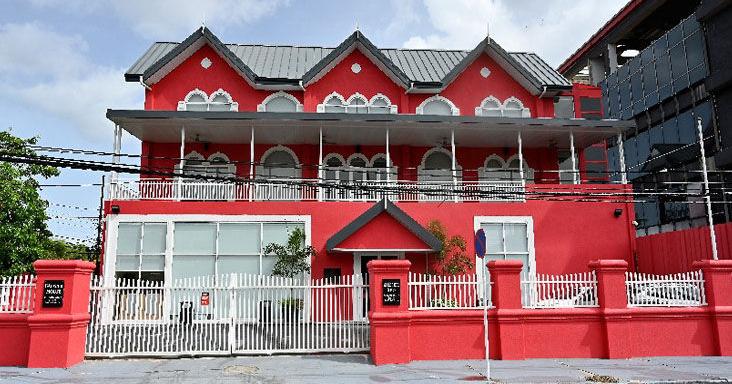
    In a related development yesterday, PNM Treasurer and former government minister Robert Le Hunte pushed back against recent government claims about the cost of the party’s new Balisier House headquarters in Port of Spain, describing the published figures as “grossly exaggerated”. In a telephone interview with media, Le Hunte rejected the ruling administration’s claim that the party has spent some TT$118 million on constructing the new facility. Le Hunte stated that based on his professional assessment, the cited price point is wildly inflated for the size and scope of the building in question. He also confirmed that he has not been given access to any of the documentation the state is referencing as part of its ongoing investigation into the source of funding for the construction project.

  • FLOODS IN SOUTH

    FLOODS IN SOUTH

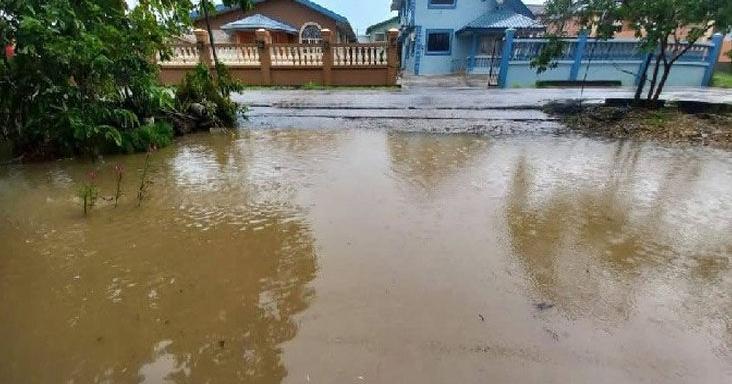
    Intense overnight rainfall across southern Trinidad has sparked dangerous flash flooding, forcing an elderly pensioner to evacuate her flood-swamped residence in Barrackpore as local authorities move forward with long-planned infrastructure and drainage upgrades to address recurring flooding in the region.

    The resident, who lives alone on Cumuto South Trace, has dealt with repeated flooding episodes for years: even 10 to 15 minutes of steady rainfall is enough to send water surging into her property, according to local councillor Joseph Lorant. When floodwaters rose rapidly this week, knee-high levels inundated the ground floor of her home. Though the property has an upper level she could retreat to, mobility impairments that make climbing stairs difficult left her with no option but to flee the premises entirely for safety.

    Lorant confirmed that the pensioner was the only resident displaced by flooding in her immediate neighborhood during this latest rain event, though the heavy downpour triggered flash flood events across multiple communities in Moruga and other districts of Barrackpore.

    For years, local crews have repeatedly cleared the waterway near the pensioner’s home to reduce flooding, but persistent blockages in key drainage sections have kept the problem unresolved. Now, after gaining the resident’s approval to conduct private land remedial works, officials are preparing targeted interventions to fix the issue long-term. Lorant explained that immediate steps will include targeted dredging of the local waterway to improve drainage flow, which will serve as a temporary solution until permanent infrastructure upgrades—including the construction of new box drains—can be completed.

    Across the wider Penal/Debe region, this week’s flooding has also offered a real-world test of a groundbreaking new drain and waterway maintenance initiative launched two months ago. The VAC master cleaning programme, which uses specialized high-pressure machinery and vacuum extraction to clear blockages from underground culverts, has already delivered measurable improvements, according to Penal/Debe Regional Corporation chairman Gowtam Maharaj.

    Unlike traditional maintenance that only cleared surface blockages, the new programme reaches deep into closed underground culverts—the primary source of most urban street flash flooding, Maharaj explained. Crews have already serviced high-risk areas including town centers and major road junctions, pulling out a surprising array of discarded debris that had clogged drainage systems for years: plywood sheets, fallen logs, discarded mattresses, and hundreds of plastic bottles, among other waste.

    Maharaj noted that while flash flooding did occur this week, water levels receded far faster than in past events, a improvement he directly attributes to the new maintenance programme. He added that coordinated work between the regional corporation, which uses smaller excavators for local drainage clearing, and the Ministry of Works, which handles large-scale river maintenance, also supported faster water run-off after the downpour. Following this week’s flood events, crews will expand the VAC programme to new areas including the front of a Barrackpore secondary school and other sites where minor flooding was reported. In addition to drainage work, the corporation’s disaster management unit quickly responded to a separate incident, clearing a fallen tree that blocked a local road after the heavy rain.

    Officials say they remain optimistic that the combination of targeted remedial works for high-risk private properties and expanded systematic drainage maintenance will reduce future flood risk for vulnerable residents across the region.

  • Grief over scout leader

    Grief over scout leader

    A beloved Trinidadian scout leader has died suddenly while leading a youth expedition along the country’s northern coast, leaving the local scouting community mourning a dedicated mentor who touched hundreds of young lives. Renold Ramdial, 52, a resident of Princes Town and father of two children, passed away just days after celebrating his 52nd birthday, while on a multi-day expedition with his unit, the Fifth Naparima Scout Group, in Blanchisseuse.

    The group had departed for the coastal area on Thursday, with plans to return to their home base on Monday. After Ramdial suffered an unexpected medical emergency during the trip, fellow group members immediately administered cardiopulmonary resuscitation in an attempt to save his life. Members of the Trinidad and Tobago Coast Guard also responded to the emergency to provide support, and Ramdial was rushed to the local Blanchisseuse Health Centre for urgent treatment. Despite all coordinated rescue and medical efforts, he was pronounced dead at the facility.

    Grief-stricken by the sudden loss of their leader, the expedition group cut their trip short and returned to San Fernando on Saturday, rather than completing their planned schedule. That same day, the South Central Scout District, the regional governing body for Ramdial’s unit, issued an official public statement via Facebook honoring his decades of service to the scouting movement.

    “Leader Renold dedicated his time, energy and heart to developing young people through the Scout Movement,” the post read. The statement emphasized that Ramdial’s consistent commitment to scouting values and his lifelong willingness to put service above self left an indelible mark on every scout, fellow leader, and family that he interacted with over his years in the movement.

    On behalf of the district commissioner, executive committee, all scout leaders, and registered members of the South Central Scout District, the organization extended its deepest condolences to Ramdial’s immediate family, his friends, the entire Fifth Naparima Scout Group, and the wider national scouting fraternity. The post closed with a reflection on core scouting principles that guided Ramdial’s life: “As scouts, we remember that, a scout leaves this world better than they found it and Leader Renold’s legacy of service, leadership and dedication will continue to inspire all of us.”

  • Produce the evidence

    Produce the evidence

    A bitter political row has broken out in Trinidad and Tobago after the national police secured High Court approval to compel the main opposition People’s National Movement (PNM) to disclose the source of funding for its multimillion-dollar Port of Spain headquarters, Balisier House. The conflict has escalated into a war of words between incumbent Prime Minister Kamla Persad-Bissessar, leader of the governing United National Congress (UNC), and PNM leadership over allegations of partisan political interference in independent state institutions.

  • US$20,000 in quake aid for V’zuela

    US$20,000 in quake aid for V’zuela

    Weeks after a pair of powerful earthquakes struck Venezuela on June 24, leaving more than 4,000 dead and thousands more displaced, the humanitarian situation in the hardest-hit regions remains catastrophic, according to a leading Trinidad and Tobago-based aid group.

    The Concerned Muslims of Trinidad and Tobago (CMTT), which has already completed its first cross-border relief mission in partnership with two international NGOs, has issued an urgent appeal for continued public support, as hundreds of vulnerable Venezuelans – including children and elderly residents – still lack access to basic food and safe shelter.

    In a telephone interview with *Express* from Caracas on Monday, CMTT public relations officer Imtiaz Mohammed detailed the outcomes of the group’s initial $20,000 relief operation, which was carried out alongside U.S.-based Helping Hands USA and U.K.-based Muslim Hands UK. All funds raised were used to source emergency supplies directly within Caracas, with a total of 500 food hampers distributed across two displacement camps over the weekend: 250 hampers at a government-run camp in the capital, and another 250 at a camp in the hard-hit coastal town of La Guaira.

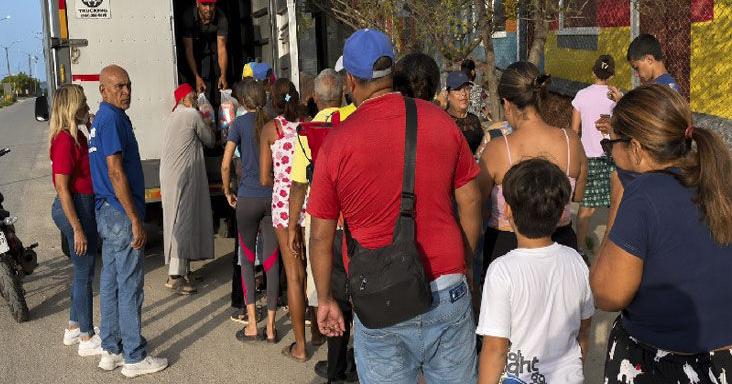
    Mohammed described the on-ground distribution process as fraught with difficulty, often chaotic especially in La Guaira, where desperate displaced people rushed arriving relief trucks amid widespread anxiety over unmet basic needs. Footage of the distribution shared by Mohammed shows long lines of survivors, including large numbers of young people, waiting to receive assistance. Each hamper contains staple food items that have become scarce for earthquake-affected households, including rice, flour, beans and cooking oil.

    Beyond the immediate chaos of aid delivery, Mohammed outlined structural barriers slowing recovery efforts: most heavily damaged regions are under heavy patrol by Venezuelan national security forces, and the absence of sufficient heavy rescue equipment has dragged out search and recovery operations for missing residents. Current reports indicate thousands of people remain unaccounted for, while entire neighborhoods of homes, local schools and small businesses have been completely destroyed. For survivors who have lost everything, Mohammed emphasized that short-term aid is not enough – long-term sustained support will be required to help affected communities regain a sense of normalcy.

    The CMTT is currently collecting donations of food and sanitary supplies, and is already preparing its second aid shipment from Trinidad and Tobago to Venezuela, which the group expects to finalize in the coming days.

    CMTT is not the only local organization mobilizing to support Venezuela’s earthquake survivors. Across Trinidad and Tobago, multiple NGOs and individual volunteer groups have launched ongoing collection drives for non-perishable food, prescription medicine, personal hygiene products, and construction materials for emergency shelter.

    On the same day of Mohammed’s appeal, nearly 200 volunteers from Sewa International TT gathered at the National Council for Indian Culture facility in Chaguanas to assemble 1,000 pre-packed emergency relief buckets for displaced Venezuelan families. The event was attended by senior guests including Venezuelan Ambassador to Trinidad and Tobago Álvaro Sánchez Cordero, Office of the Prime Minister Minister Darrell Allahar, Sewa International TT president Revan Teelucksingh, and Proman head of corporate communications Colin Greaves. Ambassador Sánchez Cordero extended his formal gratitude to the volunteers and organizers for their show of international solidarity in the wake of Venezuela’s crisis.

    The twin June 24 earthquakes have left a devastating humanitarian mark on the country, with an official death toll exceeding 4,000 and tens of thousands of residents left without permanent housing.

  • In the dark on  party finance

    In the dark on party finance

    A recent High Court ruling forcing a major political party to disclose funding for a high-profile construction project has reignited longstanding calls for comprehensive campaign finance regulation in Trinidad and Tobago, with the local chapter of global anti-corruption watchdog Transparency International (TTTI) drawing a sharp distinction between the power of existing asset recovery laws and the dangerous gaps still plaguing the country’s political accountability framework.

    On Friday, Justice Margaret Mohammed granted a court order requested by the Trinidad and Tobago Police Service (TTPS), compelling the ruling People’s National Movement (PNM) to explain the source of funding used to build Balisier House, the party’s headquarters in Port of Spain. When reached for comment Saturday, TTTI framed the ruling as a clear demonstration of the value of the 2019 Civil Asset Recovery and Management and Unexplained Wealth Act, calling the legislation a robust, effective tool that lives up to its design.

    Unlike previous regulatory frameworks, the 2019 act gives courts formal authority to force any individual or organization—regardless of political standing—to account for assets that appear to far outstrip their confirmed legal income. TTTI emphasized this is exactly the sort of accountability mechanism the organization has campaigned for over years of anti-corruption advocacy, noting the court’s order proves the law delivers on its promised purpose.

    However, TTTI was quick to point out a critical transparency gap that still undermines the country’s political system: there is currently no equivalent legal requirement for proactive transparency around how political parties raise money in the first place. The Unexplained Wealth Act only acts after the fact, once a criminal investigation has already been opened, leaving the public completely blind to party financing until a scandal forces disclosure through the courts.

    “Trinidad and Tobago still has no law requiring parties to proactively disclose their donors, funding sources, or spending as they raise and spend it,” the organization wrote in an emailed response to the *Trinidad Express*. Current regulation only goes as far as capping individual candidate election spending at 50,000 Trinidad and Tobago dollars, with no spending limits and no mandatory disclosure requirements for political parties as entities. Notably, even the national Constitution and the existing Representation of the People Act do not formally define a political party for regulatory purposes, creating a foundational legal loophole.

    TTTI argues that while the Unexplained Wealth Act has already proven effective at enabling investigators and courts to scrutinize suspicious unexplained assets, the absence of binding campaign finance rules means the public cannot access information about political party financing until formal legal proceedings are underway. “The tools that exposed this matter work. What is missing is the tool that would have made this kind of financing visible years earlier, before it needed a court order to surface,” the statement read.

    The watchdog noted that the long-proposed Representation of the People (Amendment) Bill would directly address this gap. The proposed legislation would introduce mandatory registration for all political parties, require public release of audited annual financial statements, mandate disclosure of all donations above a set threshold, and establish an independent oversight body to enforce the rules. In light of the Balisier House ruling, TTTI has renewed its urgent call for parliament to pass the long-delayed campaign finance reform legislation, saying the measures are critical to strengthening transparency and accountability across Trinidad and Tobago’s political system.

    Speaking to the broader public implications of the Balisier House investigation, TTTI explained that the case underscores a long-standing problem: political financing in the country can remain hidden from public view for years, only coming to light through court orders or criminal probes rather than routine, proactive disclosure. The organization described the current political financing framework as a “serious accountability deficit” that affects all administrations and political parties, regardless of which holds power.

    TTTI stressed that when voters have no way to know who is funding the political parties they support, they cannot accurately judge whether government policies and public contracts are being awarded to serve the public good, or to advance the private interests of party donors. This lack of transparency, the organization added, does not just erode trust in the individual party facing scrutiny—it undermines public confidence in the entire political system as a whole.

    “The lesson for Trinidad and Tobago isn’t about this case alone—it’s that we need the guardrails Parliament has left sitting on the table: campaign finance disclosure, spending limits for parties, and an independent body with real power to enforce them, before the next election cycle, not after the next scandal,” TTTI concluded.