作者: admin

  • Dominica Freedom Party criticizes gov’t, warns of economic risks following reported EU call to phase out CBI programmes

    Dominica Freedom Party criticizes gov’t, warns of economic risks following reported EU call to phase out CBI programmes

    A major political controversy has erupted in Dominica this week after the opposition Dominica Freedom Party (DFP) launched a scathing attack on the ruling administration’s management of the country’s high-stakes Citizenship by Investment (CBI) programme, following fresh reports that the European Union has formally demanded regional governments wind down these citizenship schemes.

    The DFP’s official statement, dated July 13, 2026, confirms the party first learned of the EU’s formal request through public comments made by Antigua and Barbuda Prime Minister Gaston Browne. Browne has already confirmed that the EU raised its formal concerns about CBI programmes with all member states of the Organisation of Eastern Caribbean States (OECS) starting in June 2026.

    Just last week, leaders of Eastern Caribbean nations that currently run active CBI programmes gathered in Dominica for an emergency summit. At the close of the meeting, the leaders agreed to adopt a coordinated regional strategy to strengthen the programme’s regulatory frameworks and defend the scheme, which they collectively characterize as a critical lifeline for their small, vulnerable national economies.

    Per the DFP’s breakdown, the EU has officially ordered all participating countries to phase out their CBI programmes, with Antigua and Barbuda explicitly given a deadline of June 1, 2028, to end the scheme. Browne has also confirmed that identical formal communications have been dispatched to all other OECS countries running CBI programmes, including Dominica. Unlike the Dominican administration, Browne has already publicly pushed back against the EU’s demand, arguing that CBI revenue is an irreplaceable core income stream for small island developing states that have very few alternative economic development options.

    The core of the DFP’s criticism centers on the Dominican government’s decision to remain silent on the issue rather than address the public about the potential risks. The opposition party warns that any country that fails to comply with the EU’s phase-out mandate by 2028 could lose its visa-free travel access to all EU member states—a change that would immediately destroy the value and viability of regional CBI programmes, as investment demand relies entirely on the visa-free benefit.

    The DFP notes that this looming outcome is far from unexpected. As far back as the 2019 Dominican general election campaign, the party warned that Dominica was at risk of losing its CBI programme due to lax due diligence procedures, unaddressed ethical concerns, and potential security risks that the scheme posed to European nations. Today, the party also says it has long flagged the extreme danger of Dominica’s overreliance on CBI revenue to fund basic government operations.

    To back this claim, the DFP cites figures from the government’s 2025/2026 national fiscal budget, which projects that 56.7% of all the country’s recurrent government revenue will come directly from the CBI programme. Non-CBI recurrent revenue is budgeted at just 456.2 million Eastern Caribbean dollars, while total projected recurrent expenditure stands at 679.9 million Eastern Caribbean dollars—creating a massive gap that is currently filled by CBI proceeds.

    If the CBI programme is forced to end by 2028, the DFP argues the Dominican government will be forced to make agonizing fiscal adjustments: deep cuts to recurrent public spending, a sharp increase in public borrowing, tax hikes across the board, or some combination of all three. These changes, the party says, would directly impact core public services that rely on government funding, including salaries for public sector workers, the National Employment Programme, the Yes We Care social safety net programme, public healthcare services, road maintenance, and other routine government operations. In a worst-case scenario, the country could face delayed salary payments for public workers, struggles to meet sovereign debt obligations, declining road infrastructure, and widespread shortages of critical medical supplies.

    The loss of CBI funding would also derail progress on major long-term capital projects, including the planned new international airport, the party adds. The combination of steep spending cuts and large tax increases would place unprecedented additional strain on Dominica’s already fragile small economy.

    Framing the entire crisis as a direct consequence of poor governance by the current administration, the DFP said in its statement: “The way out of our current and impending worsening malaise is certainly not by entrusting the same government to take the country out of the mess in which it has placed the nation.” The party went further, accusing the ruling Dominica Labour Party (DLP) administration of systemic incompetence and widespread corruption, claiming that misappropriation of public funds is the administration’s most consistent trait.

    Looking ahead, the DFP says it has already begun stepped-up organizational preparations to navigate what it expects to be a prolonged period of severe economic challenge. The opposition plans to release a detailed set of alternative policy proposals to the public in the coming months, arguing that Dominica must adopt integrity, transparency, and good governance as the core foundations for long-term national development.

    In closing, the DFP acknowledged that the short-term economic damage of losing the CBI programme “may not be avoidable,” but argued that the crisis could ultimately serve as an opportunity to put the country on a more sustainable economic trajectory under new national leadership.

  • UN agency warns of impact of El Niño conditions

    UN agency warns of impact of El Niño conditions

    As communities across the globe prepare for the disruptive and dangerous impacts of the 2026 El Niño weather pattern, a top United Nations humanitarian official has sounded an urgent alarm, warning that the phenomenon could trigger catastrophic humanitarian consequences for millions of vulnerable people worldwide.

    El Niño, a cyclical climate pattern driven by abnormal warming of surface waters in the central and eastern Pacific Ocean, typically brings extended heatwaves, severe droughts, and extreme flooding to multiple regions across the globe. As of mid-July 2026, dangerous extreme heat has already swept across large swathes of Europe and the United States, leaving dozens of heat-related deaths in its wake and disrupting daily life for millions of residents.

    In an official statement released from Washington D.C., Tom Fletcher, UN Under-Secretary-General for Humanitarian Affairs and Emergency Relief Coordinator, outlined that extreme weather driven by this year’s El Niño is projected to devastate vulnerable communities across Latin America, Eastern and Southern Africa, Asia, and the Pacific. Fletcher drew a parallel to the 2023–2024 El Niño event, which left more than tens of millions of people globally in urgent need of life-saving support including food, nutritional aid, clean drinking water, sanitation services, medical care, agricultural assistance, and emergency protection.

    Fletcher emphasized that current projections paint a far grimmer picture for the 2026 event, noting that it arrives at a moment of already cascading global crises: widespread armed conflict, rapidly growing displaced populations, and skyrocketing prices for fuel, fertilizer, and staple foods that have pushed the world’s most vulnerable households to the breaking point. Compounding these pressures, the international humanitarian system is already operating under severe strain amid deep funding cuts that have limited its ability to respond to large-scale emergencies.

    To boost global preparedness and reduce avoidable loss of life and livelihoods, Fletcher announced that the United Nations is making up to $100 million available from its Central Emergency Response Fund (CERF) to enable early action in at-risk countries before conditions deteriorate into full-blown disasters. “Building on hard-won lessons from past events, we are innovating, coordinating across the entire humanitarian community, and moving ahead with targeted action now,” Fletcher said. “Our planning leverages far more accurate and sophisticated weather forecasting than ever before. More than $20 million in early funding has already been allocated for anticipatory action across six high-risk countries. Through CERF’s dedicated Climate Action Account, we are directly investing in vulnerable communities to help them strengthen their ability to withstand coming climate shocks.”

    Fletcher stressed that early, flexible pre-disaster financing is far more effective and less costly than launching emergency response after a disaster has already struck. He also issued a call to the broader international community, urging global leaders to prioritize conflict resolution to reduce strain on vulnerable populations, expand support for displaced communities, and ramp up ambitious, coordinated action to address the root causes of climate change that are amplifying extreme weather events. “The choice facing the global community is unambiguous: we can either sit back and wait for disaster to strike, or we can invest now in long-term resilience for vulnerable communities,” he added.

    Beyond large global regions, small island developing states are also bracing for impact. In the Federation of St. Kitts and Nevis, local officials have confirmed that El Niño conditions are expected to persist through the second half of 2026, bringing extended dry conditions that will reduce annual rainfall and put unprecedented additional pressure on the country’s already limited water supply. Local authorities have already rolled out targeted measures to protect the nation’s water reserves and are urging all residents to adopt strict water conservation practices to avoid widespread shortages in the coming months.

  • Hon. E.P. Chet Greene Summer Camp Welcomes More Than 200 Children

    Hon. E.P. Chet Greene Summer Camp Welcomes More Than 200 Children

    One of the most anticipated community-focused youth events in Antigua and Barbuda, the annual Hon. E.P. Chet Greene Summer Camp, has opened its doors to welcome more than 200 children from across the country. The summer camp, named in honor of the prominent Antiguan politician who currently serves as the country’s Minister of Foreign Affairs, International Trade, and Immigration, has become a beloved seasonal tradition that combines learning, recreation, and community building for young residents. Unlike traditional academic programs, the camp is designed to provide a safe, engaging space for children aged 6 to 16 to explore new interests, build meaningful social connections with peers from different neighborhoods, and stay active during the extended summer school break. Camp organizers have put together a diverse schedule of activities that caters to a wide range of interests, including outdoor sports like soccer and volleyball, creative arts and crafts workshops, introductory STEM sessions that introduce young participants to basic coding and robotics, and life skills training focused on topics like financial literacy and personal safety. Local community leaders, volunteer educators, and youth development workers have partnered to staff the camp, with many donating their time to ensure the program remains accessible to children from all socioeconomic backgrounds. In a opening address to campers and their families, representatives of the ministry highlighted that the camp aligns with the government’s broader youth development goals, which prioritize expanding opportunities for young people to grow and thrive outside of the formal classroom setting. Many parents have expressed appreciation for the program, noting that it provides a affordable, supervised option for children while many working parents remain on the job during the summer months. Camp officials confirmed that the 2024 session will run for four weeks, concluding with a closing ceremony that will showcase camper projects and award certificates of participation to all attendees.

  • Fire breaks out at a pub in Bangkok, killing at least 27 people

    Fire breaks out at a pub in Bangkok, killing at least 27 people

    A catastrophic overnight blaze that has become Bangkok’s deadliest fire in 17 years ripped through a popular music bar in the Thai capital early Sunday, leaving at least 27 people dead and 25 others in critical, hospitalized condition, local authorities confirmed.

    The fire erupted at Rong Beer Na Ladprao, a single-story music venue located in northern Bangkok, shortly before midnight on Sunday. Eyewitness accounts and on-site photos show panicked patrons fleeing the structure as towering flames burst through the roof and dense black smoke billowed into the night sky. In the wake of the disaster, scattered personal items, including dozens of lost shoes left by people scrambling to escape, litter the ground surrounding the gutted building.

    It took approximately 30 minutes for firefighting teams to bring the blaze under full control, according to Bangkok city officials. By dawn on Monday, the entire site had been cordoned off as dozens of forensic investigators began a painstaking search through charred rubble to pinpoint the fire’s origin. The building’s street-facing windows were blown outward by the force of heat and smoke, leaving debris including warped, burned televisions, speakers and an electric guitar scattered across the adjacent sidewalk. Through the shattered glass, onlookers can see the full scale of the destruction: blackened, burned-out tables still stand inside the venue, many holding intact empty beer bottles that survived the inferno.

    Thailand’s national police chief Kittharath Punpetch told reporters Monday after visiting the site that most of the deceased were found trapped in windowless bathrooms near the venue’s rear exit. It is believed these patrons fled to the bathrooms to escape advancing flames and smoke in the main hall, but were ultimately unable to escape. Multiple safety and access issues likely blocked escape routes for those inside, Kittharath explained. The rear exit was never accessed by fleeing patrons, and may have been blocked by a temporary table set up in the main hall to sell candy, or left undiscovered because the power failure left the venue completely dark. Access to a second exit near the kitchen area was also narrowed by installed shelving units and employee lockers, he added. Investigators have also found preliminary evidence that at least some of the venue’s required exit doors may have been locked at the time of the fire.

    Investigators are currently focusing their examination on the ceiling above the bar’s performance stage, where decorative building materials were found. Police will conduct forensic testing to determine if flammable materials were used in the venue’s interior decor, and will also inspect the quality and installation of electrical wiring running through the ceiling area. Thai Prime Minister Anutin Charnvirakul told reporters that a musician performing on stage during the fire gave a firsthand account that matches the investigative focus: the performer told the prime minister he spotted smoke leaking from a circuit breaker near the stage moments before the venue lost power, followed by an explosion that allowed thick smoke to rapidly fill the entire space.

    Data from Bangkok’s Erawan emergency services center puts the total number of injured at 73, with 25 of those patients fighting for life in critical condition. Bangkok Governor Chadchart Sittipunt confirmed that most of the fatalities were caused by smoke inhalation, rather than burns. Authorities are currently working to identify all victims, as many of the deceased were not carrying personal identification at the time of the fire.

    On Monday morning, Buddhist monks traveled to the disaster site to conduct spiritual rituals and pray for the souls of the victims. Medical personnel distributed face masks to local residents and people gathering near the site to protect against residual toxic smoke and fumes still emanating from the burned structure. Local officials also set up a dedicated registration station to collect information from relatives arriving at the site searching for missing loved ones.

    Sukanya Wongwongwai, a local Thai singer, told reporters she had been performing at a nearby venue when she heard news of the fire, and rushed to Rong Beer Na Ladprao after learning several members of her band were scheduled to perform at the bar that night. As of Monday, she confirmed one of her bandmates had been killed in the blaze, three are hospitalized with injuries, and one remains unaccounted for. “From what I heard from people who were inside, when the fire started everything went dark immediately,” she said. “The power was out and there was smoke everywhere, so they couldn’t locate other people or find the exits.”

    This disaster is the latest deadly fire to strike a Thai entertainment venue in recent decades. In 2022, a fire at another music bar in eastern Thailand killed 14 people. The deadliest blaze in Thailand’s recent history dates back to 2009, when a New Year’s Eve celebration at Bangkok’s Santika nightclub caught fire after indoor fireworks ignited the blaze, killing 66 people and injuring more than 200 others.

  • More Than 250 Volunteers Complete CHOGM 2026 Training as Recruitment Drive Continues

    More Than 250 Volunteers Complete CHOGM 2026 Training as Recruitment Drive Continues

    Preparations for the 2026 Commonwealth Heads of Government Meeting (CHOGM) in Antigua and Barbuda have reached a key milestone, with more than 250 aspiring volunteers successfully completing the first round of official training for the high-profile international summit. The full-day interactive training workshop was hosted on Saturday at the nation’s Multipurpose Cultural Centre, marking a critical step in the Organising Committee’s goal of recruiting a total of 500 volunteers to support the four-day event scheduled to run from November 1 to November 4 this year.

    Anika Kentish, the official Volunteer Coordinator for the 2026 CHOGM, highlighted that participants embraced the training curriculum with widespread enthusiasm. The programme was carefully designed to build core competencies required for supporting a global diplomatic gathering, covering foundational topics ranging from an overview of the Commonwealth association and the specific mandate of CHOGM to core professional skills such as customer service excellence, cross-cultural communication, collaborative teamwork, professional standards, and ethical conduct for working with international delegates.

    Kentish also noted that public interest and demand for volunteer positions has already outpaced that of recent major international events hosted by Antigua and Barbuda, including the 2024 Fourth International Conference on Small Island Developing States (SIDS4) and the 2023 Organisation of American States (OAS) General Assembly. This higher demand reflects the broad public excitement across the country to welcome heads of state, senior diplomats, and delegations from all 56 Commonwealth member states.

    Looking ahead, additional training phases are planned following the conclusion of Antigua and Barbuda’s annual Carnival celebrations. These upcoming sessions will include specialized leadership development tracks for team leads and venue managers, as well as role-specific skills training for volunteers assigned to specialized positions across the summit. Organisers reaffirmed that volunteers will be a cornerstone of the summit’s successful delivery, serving as frontline representatives of Antigua and Barbuda’s hospitality while supporting all logistical and operational aspects of the historic gathering.

  • St. John’s Hospice Holds Annual General Meeting at Government House

    St. John’s Hospice Holds Annual General Meeting at Government House

    On July 9, 2026, St. John’s Hospice gathered key stakeholders and its royal patrons for its annual general meeting, convened this year at the historic Government House of Antigua and Barbuda. The event brought together the hospice’s full Board of Directors, alongside the organization’s Patrons: His Excellency The Rt. Hon. Sir Rodney Williams, GCMG, KGN, KSt.J, Governor-General of Antigua and Barbuda, and Her Excellency Lady Williams.

    Chaired by St. John’s Hospice President Pedro Corbin, the meeting began promptly at 10 a.m. with the annual Chairman’s Report, which offered a comprehensive review of the organization’s activities and milestones across the 2025 fiscal year, closing on December 31. Corbin’s address outlined progress across four core priorities: strengthening the hospice’s institutional governance frameworks, expanding targeted fundraising campaigns, completing critical infrastructure upgrades, and advancing strategic plans to secure the organization’s long-term operational stability.

    Following the chairman’s presentation, Treasurer Pauline Walker delivered the official audited financial statements for the same 12-month period. The documents confirmed a small but stable operating surplus for the year, offering clear evidence of the hospice’s careful, responsible financial leadership. Board members used the moment to publicly acknowledge the ongoing support of the hospice’s broad network of givers, including individual donors, unpaid volunteers, corporate collaborators, and community partners. These contributions, the board emphasized, remain the backbone of the hospice’s core mission: delivering compassionate, person-centered end-of-life care to those in need across the country.

    In his featured remarks to the assembly, Governor-General Sir Rodney Williams offered high praise for the board, leadership team, paid staff, and volunteer corps of St. John’s Hospice. He commended the group for its unwavering dedication to delivering accessible, high-quality palliative care to the people of Antigua and Barbuda, highlighting the organization’s robust governance, prudent fiscal management, and consistent commitment to treating patients and their family members with respect and empathy.

    Sir Rodney Williams encouraged the board to continue building on the momentum of recent achievements, and issued a call to action for the broader Antigua and Barbuda community to back the hospice’s work. Whether through donating time as a volunteer, amplifying the organization’s mission through advocacy, or contributing charitable funds, community support remains critical, he noted, adding that St. John’s Hospice has grown into an irreplaceable national institution and a point of collective pride for the country.

    After the formal business of the AGM concluded, board members were invited to take a guided tour of the newly renovated sections of Government House itself. The tour gave attendees a first-hand look at the significant restoration progress completed at the site, one of the nation’s most culturally significant historic landmarks. It also highlighted the ongoing work to protect the building’s unique architectural heritage and cultural legacy for future generations.

    The St. John’s Hospice Board extended sincere gratitude for the opportunity to tour the restored space, and joined the Governor-General and Lady Williams in encouraging all citizens and residents of Antigua and Barbuda to visit the landmark and support its ongoing restoration and preservation efforts. A photo from the event captures Sir Rodney Williams, presiding at the head of the meeting table, with Lady Williams seated to his left and Hospice President Pedro Corbin seated to his right, alongside the full board in attendance.

  • Antigua and Barbuda Bulldogs Reach Next Stage of FIBA AmeriCup Qualifiers

    Antigua and Barbuda Bulldogs Reach Next Stage of FIBA AmeriCup Qualifiers

    The senior men’s national basketball team of Antigua and Barbuda, widely known as the Bulldogs, has secured their spot in the second round of the FIBA AmeriCup Qualifiers following a dominant performance in their opening group stage campaign.Competing in Group A in Guyana, the Bulldogs delivered a standout 86-57 victory against Turks and Caicos in their final group matchup on Sunday night, a win that pushed them to the top of the group standings. Across their four group-stage games, the team wrapped up the first phase of the competition with an impressive 3-1 win-loss record, outperforming other contenders to claim their progression ticket.Leaders of the country’s governing basketball body voiced widespread celebration after the landmark result. “What a moment for our country and our team. Congratulations to the Bulldogs!” stated Honorable Michael Freeland, President of the Antigua and Barbuda Basketball Association (ABBA). Freeland also extended gratitude to key stakeholders that made the team’s run possible, adding “Special thank you to the Government of Antigua and Barbuda, all of our private donors, the Executive and the planning committee who made this trip possible as well. This victory is for all of us.”ABBA General Secretary Carlena Knight-Humphreys echoed this excitement, praising the on-court effort of every member of the Bulldogs delegation. “First off, congratulations to my team, the players, coaching staff and the other officials. We did it! Thank you all for your hard work and dedication,” she said. Like Freeland, Knight-Humphreys highlighted the critical support from public and private partners back home, noting “I also must thank the Government of Antigua and Barbuda and all our private partners who ensured we got to Guyana.”The general secretary added that while the team will enjoy their group stage triumph, focus has already shifted to the upcoming second round. “What a journey it has been up to this point but while the celebrations will continue, we look ahead to the next round of games and we hope that many others will come on board and support the team for this next chapter,” she said.Antigua and Barbuda joins Barbados, which claimed progression from Group B, in the second round of qualifiers scheduled to take place between November 23 and December 1. Already confirmed participants for the second round include Nicaragua, Venezuela, Jamaica, Cuba and Costa Rica, though one South American qualifying spot still remains undecided. Officials have not yet announced which country will host the second round of matches.Following their successful campaign in Guyana, the Bulldogs team is scheduled to return home to Antigua and Barbuda on Monday.

  • More Than 1,100 Sign Petition to Protect Public Access to Jolly Harbour Beach

    More Than 1,100 Sign Petition to Protect Public Access to Jolly Harbour Beach

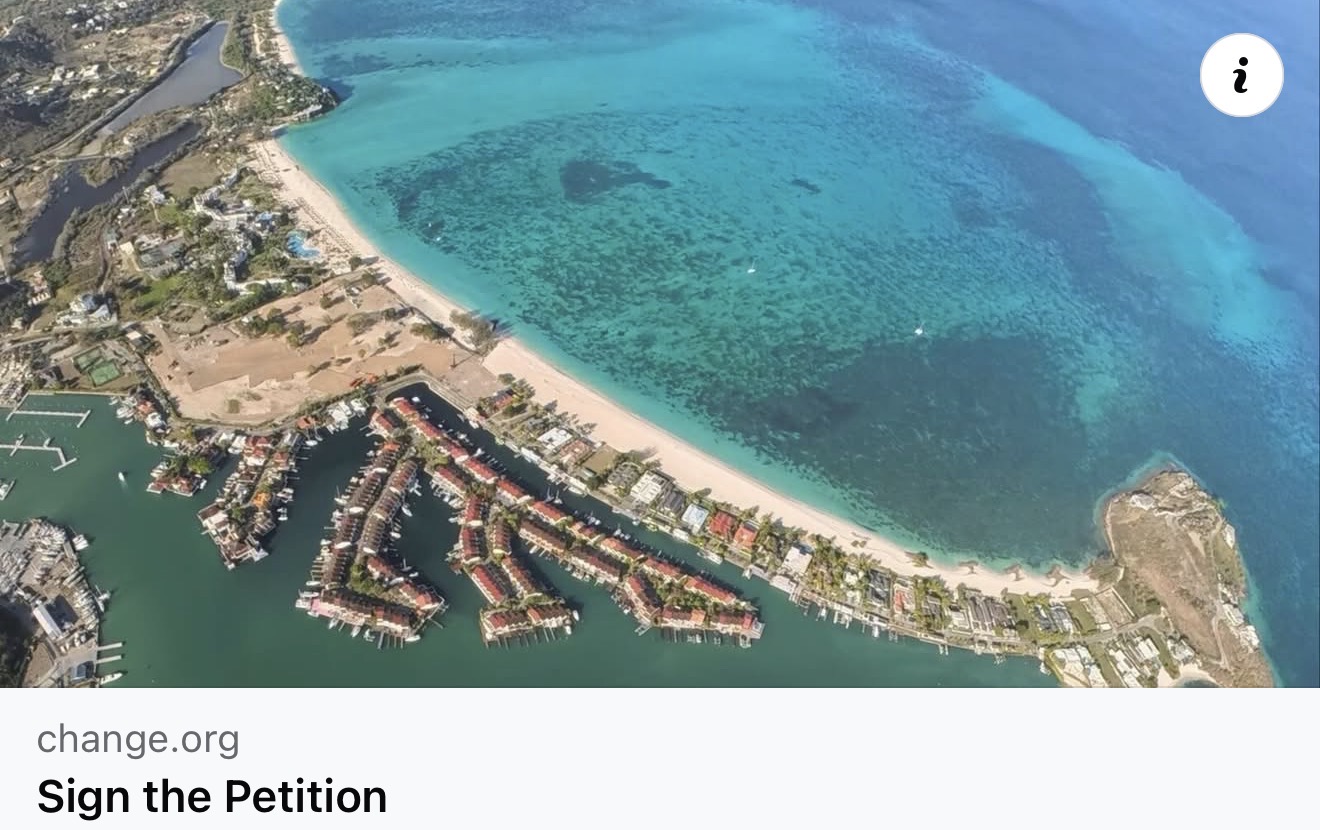
    A growing public advocacy campaign centered on coastal access rights has gained traction in Antigua and Barbuda, as more than 1,100 citizens and stakeholders have added their names to an online petition demanding that Prime Minister Gaston Browne and his national Cabinet intervene to safeguard public parking and unobstructed public entry to Jolly Harbour Beach. The campaign was launched by the Antigua Conservation Society on the advocacy platform Change.org, and by the time of initial media reporting, the petition had collected 1,186 verified signatures — 203 of which were added in a single 24-hour window on the Sunday following the petition’s launch.

    Framed as an issue of broader public principle rather than just a single parking lot dispute, the petition argues that the future of Jolly Harbour Beach access sets a critical precedent for all of Antigua and Barbuda’s shorelines, which are legally and culturally understood to be public resources open to all. “We respectfully ask you and your Cabinet to protect long-standing public access to Jolly Harbour Beach by preserving practical public parking and convenient beach access for the people of Antigua and Barbuda,” the formal petition text reads.

    Campaign organizers emphasize that the existing public parking area at the heart of the debate was included in the original master plan for the Jolly Harbour development, and has functioned as a community and visitor amenity for decades. It serves a wide range of users, from local Antiguan residents and small business operators to international tourists, yacht owners, and guests staying at nearby villas. If parking capacity is reduced as part of upcoming development plans, organizers warn, ordinary members of the public will face growing barriers to visiting one of the country’s most beloved coastal destinations.

    The petition also underscores the deep historical and cultural roots of human connection to the Jolly Harbour coastline, noting that archaeological research confirms human habitation and use of the area stretches back roughly 5,000 years. Protecting permanent public access to the shoreline, organizers argue, is not only a commitment to current beachgoers but also a responsibility to future generations of Antiguans.

    Beyond safeguarding access at Jolly Harbour, the campaign calls on the Browne administration to embed requirements for adequate public parking and unobstructed shore access into all future coastal development projects across the nation. To broaden support for the campaign, petition organizers have encouraged signatories to add personal comments explaining why public coastal access matters to them, and to share the petition across social media and personal networks to raise public awareness of the issue.

  • Antigua’s Laurel Jonas Earns Graduation from JCI Japan Academy

    Antigua’s Laurel Jonas Earns Graduation from JCI Japan Academy

    The Junior Chamber International (JCI) branch of Antigua has publicly extended warm congratulations to one of its top national leaders, National Executive Vice President Laurel Jonas, following her successful completion of the 39th annual JCI Japan Academy training program.

    This year’s iteration of the prestigious academy, a renowned global leadership development initiative hosted by JCI Japan, centered on the core theme “Evolve with True Heart,” which guided participants through immersive learning focused on both professional skill-building and value-aligned personal growth. Over the course of the program, Jonas engaged with a diverse cohort of young leaders from across the globe, taking part in workshops, collaborative projects, and mentorship sessions designed to refine modern leadership capabilities.

    In an official congratulatory statement shared by the organization, JCI Antigua framed Jonas’ graduation as a major milestone that underscores her ongoing commitment to expanding her leadership capacity and advancing personal development. The branch specifically highlighted Jonas’ consistent dedication, contagious passion for community service, and unwavering commitment to JCI’s mission of developing young active citizens as key factors that enabled her to successfully meet all of the academy’s rigorous requirements.

    Looking ahead, JCI Antigua expressed full confidence that the new insights, cross-cultural perspectives, and practical skills Jonas gained during her time at the Japan-based academy will translate to meaningful positive outcomes for both the local JCI Antigua organization and the broader Antiguan community it serves. Closing out the announcement, the organization reaffirmed its pride in Jonas’ achievement with a simple, celebratory message: “Congratulations, NEVP.”

  • APUA Reports Progress on Rehabilitation of Crabbs Water Storage Tank

    APUA Reports Progress on Rehabilitation of Crabbs Water Storage Tank

    The Antigua Public Utilities Authority (APUA) has recently released an update on the rehabilitation project for the 1.5 million imperial gallon water storage tank located at Crabbs, confirming that work is moving forward at a consistent pace and a critical milestone has already been achieved.

    Per the official update from the state-run utilities regulator, contractors working on the site have successfully completed the application of the first protective coat to the tank’s inner structure, marking the end of one of the project’s most foundational early phases. Restoration operations are continuing on schedule as the team works through the remaining scope of work.

    Beyond the interior coating work, the comprehensive rehabilitation initiative includes two other major upgrades: a full replacement of the tank’s existing base, and the installation of new corrosion-resistant protective rings across the structure. Both of these targeted upgrades are designed to deliver long-term benefits, including a significant extension of the tank’s overall service life and a marked improvement in its operational reliability for the local water supply network.

    At the time of the update, APUA has not yet shared a formal projected timeline for the full completion of the rehabilitation work.