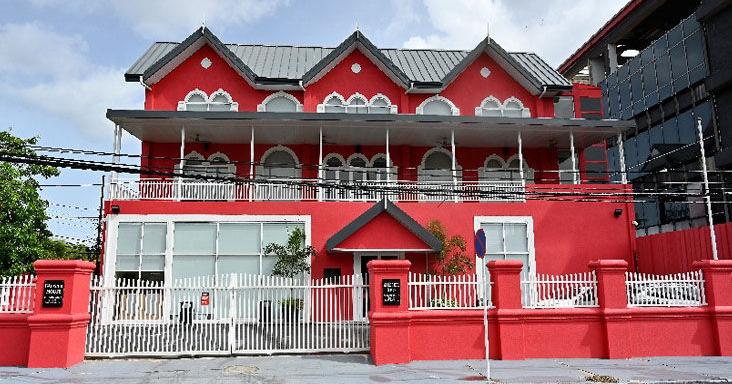
A recent High Court ruling forcing a major political party to disclose funding for a high-profile construction project has reignited longstanding calls for comprehensive campaign finance regulation in Trinidad and Tobago, with the local chapter of global anti-corruption watchdog Transparency International (TTTI) drawing a sharp distinction between the power of existing asset recovery laws and the dangerous gaps still plaguing the country’s political accountability framework.
On Friday, Justice Margaret Mohammed granted a court order requested by the Trinidad and Tobago Police Service (TTPS), compelling the ruling People’s National Movement (PNM) to explain the source of funding used to build Balisier House, the party’s headquarters in Port of Spain. When reached for comment Saturday, TTTI framed the ruling as a clear demonstration of the value of the 2019 Civil Asset Recovery and Management and Unexplained Wealth Act, calling the legislation a robust, effective tool that lives up to its design.
Unlike previous regulatory frameworks, the 2019 act gives courts formal authority to force any individual or organization—regardless of political standing—to account for assets that appear to far outstrip their confirmed legal income. TTTI emphasized this is exactly the sort of accountability mechanism the organization has campaigned for over years of anti-corruption advocacy, noting the court’s order proves the law delivers on its promised purpose.
However, TTTI was quick to point out a critical transparency gap that still undermines the country’s political system: there is currently no equivalent legal requirement for proactive transparency around how political parties raise money in the first place. The Unexplained Wealth Act only acts after the fact, once a criminal investigation has already been opened, leaving the public completely blind to party financing until a scandal forces disclosure through the courts.
“Trinidad and Tobago still has no law requiring parties to proactively disclose their donors, funding sources, or spending as they raise and spend it,” the organization wrote in an emailed response to the *Trinidad Express*. Current regulation only goes as far as capping individual candidate election spending at 50,000 Trinidad and Tobago dollars, with no spending limits and no mandatory disclosure requirements for political parties as entities. Notably, even the national Constitution and the existing Representation of the People Act do not formally define a political party for regulatory purposes, creating a foundational legal loophole.
TTTI argues that while the Unexplained Wealth Act has already proven effective at enabling investigators and courts to scrutinize suspicious unexplained assets, the absence of binding campaign finance rules means the public cannot access information about political party financing until formal legal proceedings are underway. “The tools that exposed this matter work. What is missing is the tool that would have made this kind of financing visible years earlier, before it needed a court order to surface,” the statement read.
The watchdog noted that the long-proposed Representation of the People (Amendment) Bill would directly address this gap. The proposed legislation would introduce mandatory registration for all political parties, require public release of audited annual financial statements, mandate disclosure of all donations above a set threshold, and establish an independent oversight body to enforce the rules. In light of the Balisier House ruling, TTTI has renewed its urgent call for parliament to pass the long-delayed campaign finance reform legislation, saying the measures are critical to strengthening transparency and accountability across Trinidad and Tobago’s political system.
Speaking to the broader public implications of the Balisier House investigation, TTTI explained that the case underscores a long-standing problem: political financing in the country can remain hidden from public view for years, only coming to light through court orders or criminal probes rather than routine, proactive disclosure. The organization described the current political financing framework as a “serious accountability deficit” that affects all administrations and political parties, regardless of which holds power.
TTTI stressed that when voters have no way to know who is funding the political parties they support, they cannot accurately judge whether government policies and public contracts are being awarded to serve the public good, or to advance the private interests of party donors. This lack of transparency, the organization added, does not just erode trust in the individual party facing scrutiny—it undermines public confidence in the entire political system as a whole.
“The lesson for Trinidad and Tobago isn’t about this case alone—it’s that we need the guardrails Parliament has left sitting on the table: campaign finance disclosure, spending limits for parties, and an independent body with real power to enforce them, before the next election cycle, not after the next scandal,” TTTI concluded.