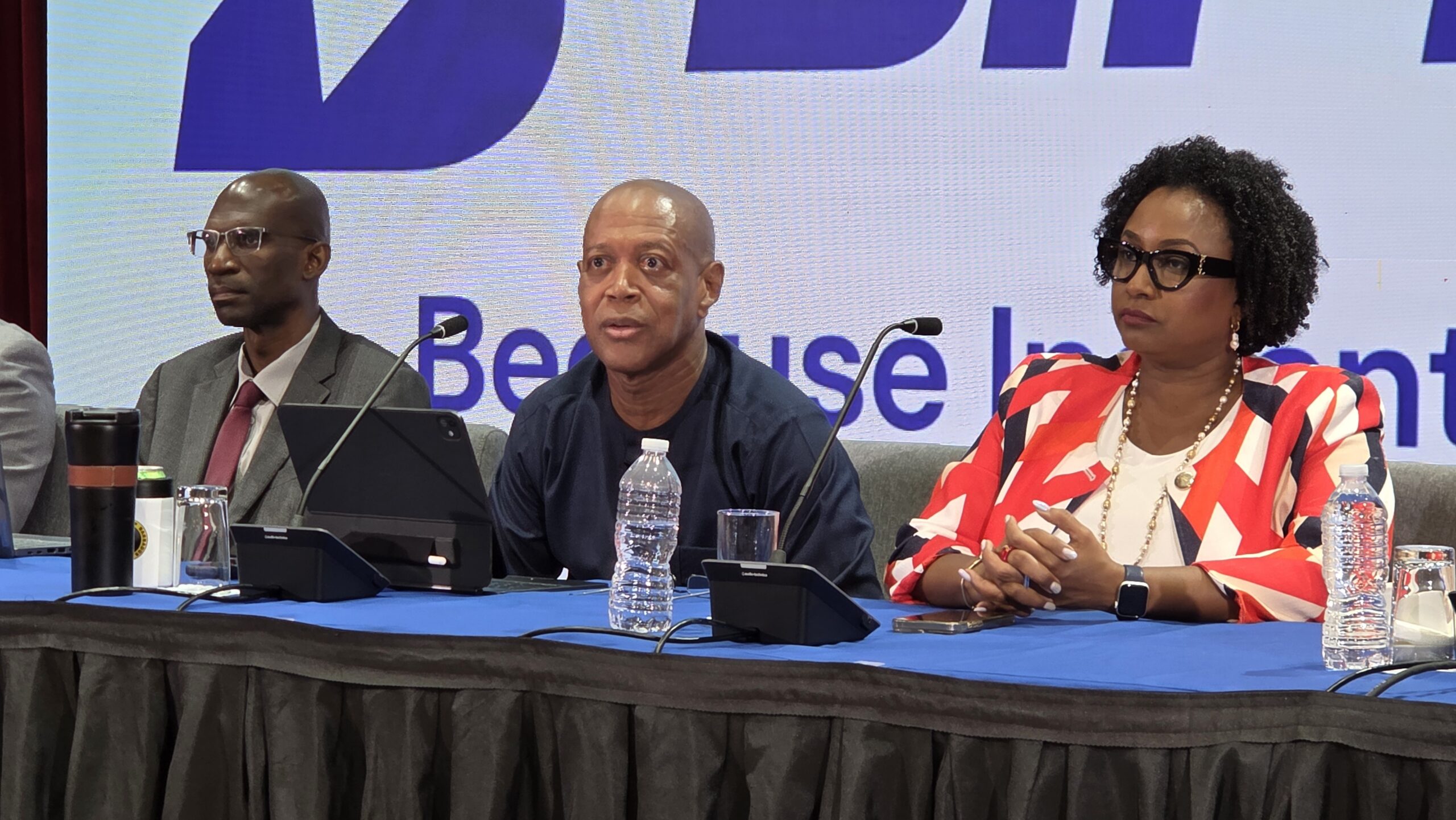
Barbados’ new instant payment platform BimPay has seen impressive early adoption, processing 750,000 transactions worth a total of $1.3 billion in its first full month since launching on June 12. But behind the strong uptake, the platform has been plagued by persistent operational problems that the governor of the Central Bank of Barbados, Dr. Kevin Greenidge, says stem largely from partner financial institutions. Now the regulator is stepping in with strict new requirements to resolve customer-facing delays and errors, while pushing institutions to align their BimPay practices with existing customer standards.
Dr. Greenidge confirmed that the platform has recorded a 0.2% failure rate since going live. While this figure may seem small, it has tangible impacts on everyday Barbadians: delayed salary deposits for workers, missed pension payments for retirees, and widespread customer frustration. Other commonly reported issues include inaccessible authentication tokens for account linking, arbitrary low spending limits, and general transaction processing delays. To address these harms proactively, the Central Bank has imposed a new mandate requiring financial institutions to issue provisional credits to customers affected by payment failures. Under the rule, if a salary or pension fails to process on time due to an institutional error, the bank must immediately credit the customer’s account before reconciling the error later. “You, as a person, should not have to wait on their systems, and that is the standard that we have set, and that is something that we continue to push,” Greenidge told reporters.
The governor added that this provisional credit requirement is already delivering improved outcomes for customers, and has explicitly banned institutions from charging late fees to customers for errors that originate from BimPay system delays. Greenidge also noted that some failures stem from preventable human error, such as incorrect account numbers entered during payroll submission, but the majority of ongoing issues trace back to financial institutions’ own systems and policies.
One particularly troubling practice the Central Bank is cracking down on is the imposition of artificially low spending limits on BimPay compared to banks’ own proprietary digital platforms. Greenidge explained that this inconsistent policy is unjustified: a customer with the same risk profile, same bank account, and same existing $2,000 daily spending limit on their bank’s native app may be capped at just $500 when using BimPay, the national instant payment platform. “Nothing about the customer has changed. The only thing that has changed is the app they’re using. It makes no sense. It is not correct,” he said. “Our position is this: a lower limit cannot simply be imposed because the customer is using the national payments app.” Going forward, any deviation from a customer’s existing spending limit for BimPay transactions must be formally justified and submitted to the Central Bank for official approval.
Two common transaction confirmation issues have also been traced to institutional processing gaps: in one scenario, funds arrive at the recipient’s bank but are not immediately posted to their account. In the other, the sending customer receives a confirmation that their transaction was successful, even though their bank never completed the transfer or debited their account. Greenidge emphasized that BimPay was designed from the start as an instant payment system, with all participating institutions having signed an agreement committing to complete transfers within a maximum of 10 seconds, with a target of five seconds. “Money should not be held in a suspended account or credited to a recipient as a pending credit letter. It must be instant,” he said, confirming that the Central Bank is conducting a full review of all institutions to eliminate any unnecessary queuing or processing delays.
A major onboarding friction point has also emerged: out of 24,000 users who downloaded and registered for the BimPay app, only 14,000 successfully completed the process of linking their bank account to the platform’s e-wallet. Greenidge said this 10,000-user gap is almost entirely due to poor design choices by financial institutions, many of which buried the BimPay token generation link deep within their digital banking channels, mislabeled the tool, or required customers to navigate multiple unnecessary layers of menus to access it. “If a customer can’t find the door, they can’t come in. It’s simple as that,” he noted. “Persons have therefore registered and downloaded [the app], interested in using it, they are trying to link, could not find their way, and just give up.”
To resolve this onboarding barrier, the Central Bank has released a unified customer access standard requiring all financial institutions to place the BimPay token generation button prominently on the homepage of their mobile banking apps and online banking portals, with clear labeling. As of the latest update, some institutions have already adjusted their platforms to meet the new rule, while others have been ordered to revise their access flow to comply with the regulator’s requirements.