作者: admin

  • UN pushes regional crime action plan

    UN pushes regional crime action plan

    Across multiple Caribbean island states, surging violent crime has emerged as a pressing cross-border systemic threat, and a joint United Nations and regional bloc initiative is now moving forward to address the crisis, a senior United Nations Development Programme (UNDP) official has confirmed.

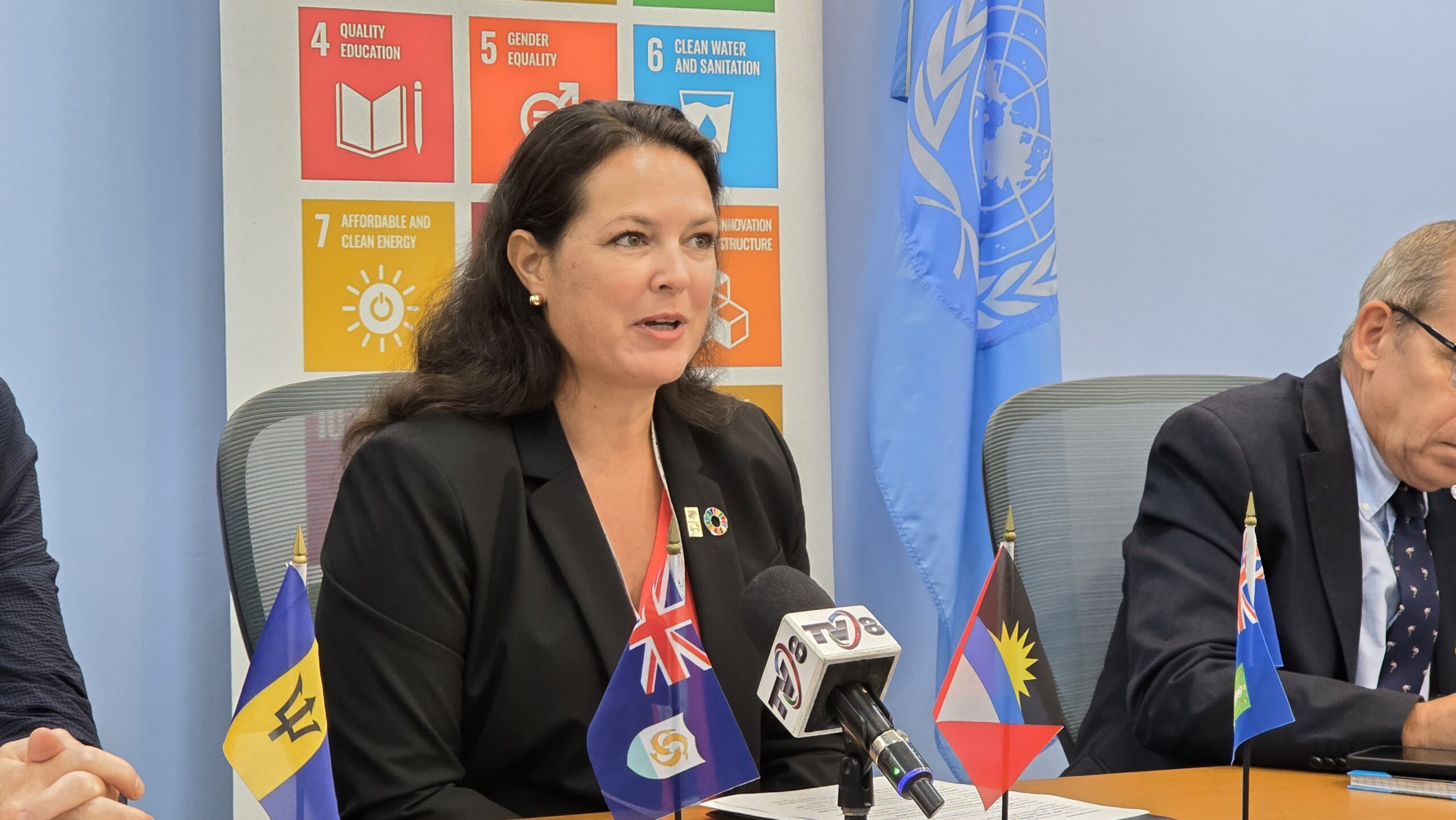
    Speaking at this week’s official launch of the UN Eastern Caribbean 2025 Annual Results Report in Bridgetown, Barbados, Stephanie Ziebell, Deputy Resident Representative for UNDP Barbados and the Eastern Caribbean, outlined that regional heads of government will gather later this month in St. Kitts, hosted by Prime Minister Dr. Terrance Drew, for a high-level UN-CARICOM dialogue to finalize next steps and set core priorities for the new anti-crime framework.

    This collaborative effort builds on high-level strategic talks held earlier in 2025, and marks the first evidence-based, region-wide assessment of transnational crime and violence in the Caribbean, framing the issue as a shared systemic challenge rather than an isolated national problem. Currently, two core products are in development: a joint diagnostic report that maps the scope of the crisis, and a formal CARICOM-UN Action Plan to guide coordinated response.

    Ziebell explained that the diagnostic phase is focused on unpacking the deep-rooted drivers of crime, identifying structural weaknesses in regional and national security and justice systems, and pinpointing the most urgent reforms needed to reverse upward violence trends. The subsequent action plan will translate these findings into a unified regional framework, outlining clear practical priorities, shared accountability standards, and defined roles for CARICOM institutions, individual member states, and UN implementing partners.

    The broader UN strategy for advancing peace, public safety and access to justice across the Eastern Caribbean centers on two foundational pillars: strengthening institutional capacity and building more resilient, safer communities. Ziebell emphasized that all work is rooted in data-driven analysis, cross-stakeholder partnership, and a deliberate commitment to conflict-sensitive and gender-responsive policy design. “Justice and safety must be accessible for everyone, especially women and girls, persons with disabilities, and people at the margins, so that no one is left behind,” she said.

    Beyond addressing violent crime broadly, the UN has already been active in supporting regional efforts to counter gender-based violence, shore up human rights protections, and improve cross-border law enforcement coordination. Ziebell outlined that the UN has helped national governments strengthen prevention and response frameworks for gender-based violence, reinforce national human rights institutions, advance regional agreements targeting domestic abuse and transnational organized crime, upgrade border management protocols, build forensic science capacity, and deepen cooperative work between national law enforcement agencies.

    She also highlighted the Canada-funded PACE Justice Programme, a multi-country initiative currently being rolled out across eight Caribbean nations including Barbados, Antigua and Barbuda, Dominica, St. Lucia, and St. Kitts and Nevis. The program is focused on modernizing outdated criminal justice systems and cutting crippling case backlogs that erode public confidence. To date, support provided through PACE Justice has included new court equipment, technical assistance for digital case management systems, specialized training for crime scene investigators, capacity-building workshops for justice sector personnel, tools to expand restorative justice practices, coordination support for national attorneys general, work to harmonize standard operating procedures across jurisdictions, planning for AI integration in justice systems, and facilitated dialogues focused on reducing case backlogs.

    These targeted reforms are designed to improve the quality of criminal investigations, uphold consistent due process standards, and rebuild public trust in national justice systems. Ziebell added that robust, functional institutions are a critical buffer for Caribbean societies, which face overlapping threats from climate disasters, economic volatility, and growing insecurity. “These systems help societies withstand shocks, whether those shocks come from disasters, economic stress, or rising forms of violence and insecurity,” she noted.

    Closing her remarks at the report launch, Ziebell reaffirmed the UNDP and United Nations’ long-term commitment to partnering with Caribbean national governments, civil society organizations, and global development partners to expand evidence-based crime prevention and expand equitable access to justice for all people across the region.

  • PM Skerrit commiserates with families affected by recent disasters

    PM Skerrit commiserates with families affected by recent disasters

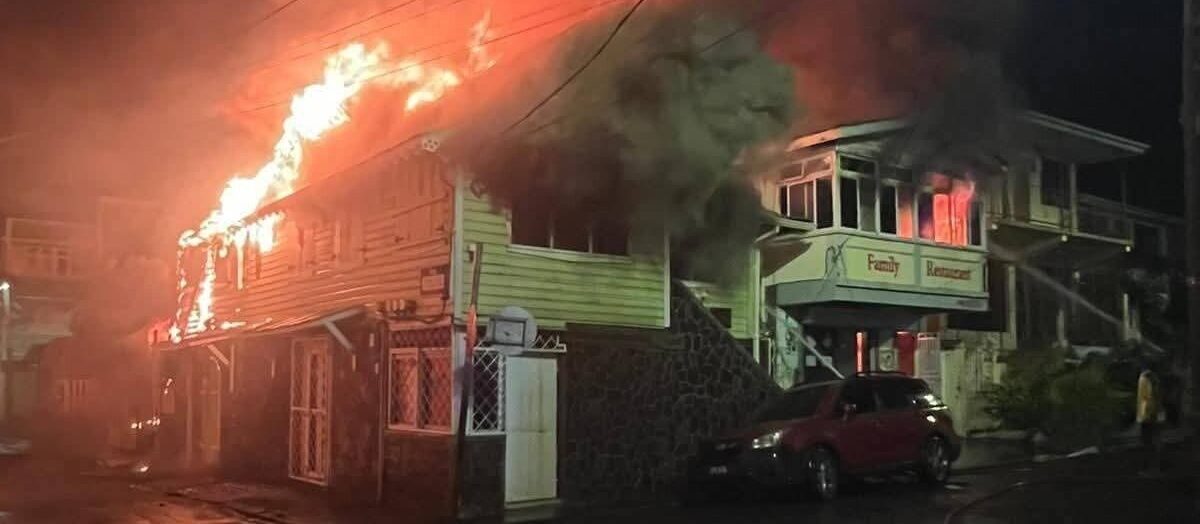
    Early on the morning of May 6, 2026, a large overnight fire broke out in the capital city of Roseau, Dominica, leaving a trail of widespread destruction across multiple city structures. The blaze has displaced dozens of local families and erased the primary livelihoods of small business owners in the affected area, marking the second major fire to hit the city in just a few months – a pattern that senior government officials have labeled deeply alarming. In a press briefing shortly after the incident, Prime Minister Roosevelt Skerrit has publicly reaffirmed the Dominican government’s unwavering solidarity with all those impacted by the disaster. “To the families and businesses affected, the government of Dominica stands firmly with you. We understand the trauma and uncertainty that come with such devastating loss,” Skerrit stated. He confirmed that all relevant government social support agencies have already been mobilized to deliver immediate emergency aid to impacted households, ensuring no affected person goes without critical assistance during this challenging period. Addressing growing public concern over the repeated fire incidents, Skerrit emphasized that the emerging dangerous trend cannot be overlooked by his administration. “This is the second significant fire in the city within a very short span of time. That is not something any responsible government can ignore or dismiss. It is a matter that demands urgent and serious attention and investigation,” he added. While initial on-site investigations have already launched, the Prime Minister announced his government will mandate a full, independent and comprehensive inquiry into both recent fires, covering root causes, surrounding circumstances, and all contributing factors that may have allowed the incidents to occur. “We owe that to the affected families, the business community, and every citizen who calls Roseau home,” Skerrit said. Beyond the investigation, the Prime Minister outlined plans to overhaul the capital’s fire safety framework, including strengthening existing regulations, ramping up enforcement of fire codes, and implementing new preventive measures to better protect residents’ lives and property moving forward. He also offered public praise for the Dominican Fire and Ambulance Services, which quickly launched a public outreach campaign to educate residents and business owners on fire prevention, best safety practices, and emergency response preparedness in the wake of the blaze. “The government remains committed to the safety, security, and well-being of every citizen and resident of this country. And I assure all of you that we will treat this matter with the urgency and seriousness it deserves,” Skerrit asserted. Alongside updates on the Roseau fire response, the Prime Minister also provided a progress report on recovery efforts for communities in eastern and northeastern Dominica impacted by a recent trough-driven weather system that triggered flooding and landslides across the island starting April 27. Skerrit reaffirmed that the government would stand with all affected families and communities until full recovery is completed, and extended thanks to emergency personnel, community volunteers, and public workers for their round-the-clock response efforts. Official impact assessments have confirmed severe damage to communities across Atkinson, Antrizle, Salybia, Sineku, Bataka, Crayfish River, St Cyr, Gullet River, Mahaut River, Concord, Marigot, Wesley, Dipax, Tranto, San Sauveur, Petite Soufriere, and Morpo. On infrastructure recovery, Skerrit reported that work crews have already cleared all blocked roadways from landslide debris, restoring primary access to cut-off communities. Priority work has focused on repairing the Calixte Bridge and key road links connecting Castle Bruce, San Sauveur, and the Kalinago Territory, which were among the hardest hit areas. For households damaged by the weather event, Skerrit stated that damage assessments for compromised properties in the Atkinson area are nearly complete, and coordination is underway through local government bodies to deliver temporary housing support and construction materials for rebuilding. Utility provider DOMLEC and water authority DOWASCO have also made significant progress restoring critical services, with power and water access already restored to nearly all affected areas, with only small isolated locations still undergoing active repairs. Skerrit commended the two agencies for their extraordinarily fast response to the outages. Agricultural ministry teams are currently conducting on-the-ground surveys to document crop and livestock losses across impacted farming communities, data that will be used to design targeted relief packages for affected agricultural producers. Looking ahead, the Prime Minister announced that the Dominican Cabinet will soon review updated recovery assessments and approve additional budget allocations to speed up rebuilding work. The government’s core priorities remain unchanged: restoring safe travel access across impacted areas, supporting families displaced by both disasters, and rebuilding infrastructure to be more resilient against future extreme weather and fire risks. Skerrit also urged residents living in affected regions to remain vigilant around flood-prone waterways and unstable slopes that remain at risk of landslides as recovery work continues.

  • Villa Resident Found Dead at Home Amid Health Struggles

    Villa Resident Found Dead at Home Amid Health Struggles

    A quiet residential neighborhood in Villa was shaken this Tuesday by a grim discovery that has left local residents reeling: the remains of Henry Waterman, a long-time community member, were found inside his private home after days of growing concern from neighbors.

    Waterman, originally from Barbados, built a decades-long career as an educator at Antigua and Barbuda’s Mary E. Pigott Primary School, and had resided in the country for multiple years before his passing. According to accounts from people living nearby, the retired educator had been navigating a series of debilitating health and personal struggles in recent years, which gradually pushed him to withdraw from regular social interactions within the community.

    The chain of events that led to the discovery began on Monday, when a close relative left a delivery of food at Waterman’s door. When the untouched package was still in place the next afternoon, neighbors’ vague worry shifted to urgent alarm. Compounding their concern was a putrid, unusual odor that began wafting from the property, paired with a sudden, abnormal surge in flies swarming around the home’s exterior.

    Local residents organized a welfare check of the residence soon after these red flags emerged. Inside the home, searchers found Waterman’s body, which had already reached an advanced state of decomposition. Emergency responders and investigating officers were dispatched to the scene immediately: a team from the local police force and the district’s medical official arrived to process the site, where Waterman was officially pronounced dead. Authorities have since opened a formal investigation to determine the exact cause and circumstances of his death, leaving the Villa community processing the shock of losing one of their long-time members.

  • OPINION: From DCash to Fast Payments. The ECCB’s Quiet Financial Reset

    OPINION: From DCash to Fast Payments. The ECCB’s Quiet Financial Reset

    For half a decade, the Eastern Caribbean financial sector has been anchored on a bold vision: a central bank-issued digital wallet called DCash that would redefine how people manage daily transactions across the region. Unveiled as a public pilot in 2021 across four Eastern Caribbean nations — Antigua & Barbuda, Grenada, St. Kitts & Nevis, and St. Lucia — the project was framed as a revolutionary Retail Central Bank Digital Currency (CBDC) by the Eastern Caribbean Central Bank (ECCB). It promised to transform everything from local market purchases of fresh goods to informal peer-to-peer payments, positioning the small island bloc as a global leader in fintech innovation. But a quiet policy shift buried in the ECCB Monetary Council’s 112th Meeting Communique, published May 4, 2026, reveals a major strategic course correction: the regional authority has officially suspended development of the DCash 2.0 upgrade, bringing the original CBDC experiment to a close while opening a new chapter for digital financial integration across the Caribbean. The decision to pull back on DCash 2.0 is not a full rejection of digital currency innovation, but rather a quiet acknowledgment of a core truth that often plagues new financial technologies: most consumers do not crave an entirely new currency. What they actually want is a faster, more seamless way to use the money they already hold. For small island developing economies like those in the Eastern Caribbean Currency Union (ECCU), this dynamic is even more pronounced: consumer trust in established financial systems far outweighs excitement for untested novelty. While locals were willing to test the DCash app for small, occasional transactions, they remained hesitant to move their salaries, long-term savings, and core monthly spending to a standalone digital system disconnected from their traditional bank accounts. This structural friction proved to be DCash’s insurmountable barrier. The project required users to adopt an entirely separate digital financial ecosystem, cut off from the incumbent banking infrastructure that most residents already relied on. Despite years of outreach and pilot adjustments, widespread mass adoption never materialized, prompting regional leaders to re-evaluate their approach. Instead of abandoning digital financial modernization entirely, the ECCB has reframed its priorities, shifting away from flashy retail-facing CBDC experiments to a far more practical, infrastructure-focused goal: building deeper, more interconnected financial markets across the region. Dubbing the shift an upgrade to the financial “pipes” of the ECCU, the central bank is now centering its work on the Fast Payment System (FPS), a project that upgrades the underlying infrastructure of existing local banks rather than building a parallel standalone system. The core objective of FPS is straightforward: to enable consumers and businesses to send standard Eastern Caribbean (EC) dollars to any recipient across the region instantly, at any time of day or night, using nothing more than a mobile number or a QR code. Under the new framework, cross-institutional transfers that once took multiple business days to clear will arrive in seconds, regardless of whether the sender and recipient hold accounts at different banks — for example, Republic Bank and the Grenada Co-operative Bank. This shift aligns with broader global open banking principles, which prioritize interoperability and seamless data and fund sharing between competing financial institutions. Even more consequential for regional economic growth is the ECCB’s new commitment to launching a pilot of the CARICOM Payments and Settlement System (CAPSS), a project designed to tackle one of the most long-standing barriers to intra-regional trade: the punitive “cross-border tax” on international payments. For decades, Eastern Caribbean businesses looking to pay suppliers in other CARICOM nations like Trinidad and Tobago or Barbados have been forced to convert their local currency to U.S. dollars first, incurring exorbitant wire transfer fees and unfavorable exchange rates that eat into already thin profit margins. By joining the CAPSS initiative, the ECCU is helping to build a unified regional settlement infrastructure that will allow businesses to conduct cross-border transactions directly in local currencies. Under the new system, participating central banks will handle currency settlement behind the scenes, eliminating the need for intermediate U.S. dollar conversions and cutting down on excessive fees. ECCB Governor Timothy Antoine has long promoted “The Big Push,” an ambitious regional strategy aimed at doubling the size of the ECCU economy by 2035. Viewed through that lens, the suspension of DCash 2.0 is far from the failure it might appear to be at first glance. It is instead a strategic adjustment, prioritizing tangible, widespread utility over the flashy optics of being an early CBDC adopter. The central bank is moving away from the crypto-adjacent hype that surrounded early retail CBDC experimentation and refocusing on the unglamorous, critical work of repairing the region’s fragmented, outdated cross-border banking infrastructure. In the global financial sector, the most transformative changes are rarely the flashy retail-facing apps that draw headline attention. More often, they are the incremental upgrades to the hidden “plumbing” that underpins all everyday transactions. For the Eastern Caribbean, that plumbing is about to get a much-needed upgrade.

  • Loss-and-damage fund may come to fishing industry’s aid

    Loss-and-damage fund may come to fishing industry’s aid

    As the Caribbean fishing sector slowly rebuilds from the catastrophic damage wrought by Hurricane Beryl two years ago, a landmark United Nations climate fund is preparing to deliver targeted new grant funding to support recovery efforts across the region.

    The Fund for Responding to Loss and Damage (FRLD), created under the UN Framework Convention on Climate Change, was designed specifically to support climate-vulnerable nations grappling with the irreversible impacts of climate-driven extreme weather. Now, the fund’s executive director Ibrahima Cheikh Diong is on the ground in Barbados, the small island nation that led global advocacy to establish the financing mechanism, to collect government funding requests ahead of the 2026 Atlantic hurricane season, which kicks off next month.

    Barbados has emerged as a global leader in pushing for equitable climate finance, with Prime Minister Mia Mottley becoming one of the most prominent voices in international climate negotiations and a key architect of the fund’s operational framework, the Barbados Implementation Modalities (BIM). On Tuesday, Diong held talks with Deputy Prime Minister Santia Bradshaw to outline the fund’s planned support, a day before he revisited the Bridgetown Fisheries Complex – the facility that bore the worst of Hurricane Beryl’s damage, losing dozens of fishing vessels and sustaining major structural harm.

    Earlier this year, the FRLD rolled out a $250 million early intervention grant package under the BIM framework, a milestone for developing nations that bear the brunt of climate change despite contributing the least to global emissions. For Diong, the return trip to Barbados carries deep personal and symbolic meaning: he was on the island in the thick of Hurricane Beryl in 2024, and witnessed firsthand the storm’s destruction and the Barbadian people’s resilience during the initial rebuilding phase.

    “I was in Barbados in the middle of Hurricane Beryl. I had a chance to go on the ground and see the damage caused by the hurricane, the resilience of the people of Barbados and the work the government has been doing in rebuilding. So, coming back here, I would like to go back and visit on the ground and see what has happened since the last time I was here,” Diong said.

    He added that the visit is also an opportunity to update the Barbadian government on the fund’s progress, acknowledging that Mottley has been the mechanism’s most vocal global champion. “It was here in Barbados a year ago that we launched the Barbados Implementation Modalities (BIM). It is very symbolic to come back and brief the government on progress we have made so far. The whole purpose of the meeting is really to update [Deputy Prime Minister Bradshaw] on the progress we made; and looking ahead, where do we stand on the fund, and hopefully get some support from the government in continuing to advocate for this fund.”

    To date, the FRLD has secured $820 million in converted pledges from donor nations around the world, with $440 million already transferred and ready for disbursement. A year ago, the fund’s board approved the $250 million early intervention program, which provides 100% grant funding rather than loans to avoid adding to indebted developing nations’ debt burdens – a response to repeated calls from vulnerable countries that cannot afford to take on new borrowing to recover from climate disasters.

    Per the BIM agreement reached in Barbados, at least 50% of all early intervention funding is earmarked for Small Island Developing States (SIDS) and Least Developed Countries (LDCs) – a group that includes Barbados. Initial allocations to eligible countries will range from $5 million to $20 million, with individual nations setting their own funding priorities based on their specific recovery and resilience needs.

    Diong is currently facilitating a two-day workshop for CARICOM member states to help governments prepare their funding requests, and reminded regional representatives that June 15 is the firm deadline for submission, with no extensions planned unless the FRLD board votes to approve one. After requests are submitted, the FRLD board will meet in late July to finalize allocations before forwarding recommendations to the fund’s trustee, the World Bank, for disbursement.

    “It’s up to the countries, based on their needs, how much they would like to come to FRLD for funding, or other funds as well; ultimately, knowing that when you put that US$5m to US$20m it will be enough to meet their demands. So, we are looking at the gaps we are filling in, and making sure that what we provide can be put to use very quickly, so we can respond,” Diong explained.

    Hurricane Beryl made history as the earliest-forming Category 5 hurricane ever recorded in the Atlantic, hitting Barbados as a Category 3 storm in 2024 when it passed roughly 150 kilometers south of the island. While the storm only caused moderate damage to general public infrastructure and did not spark a full-scale humanitarian crisis, it completely destroyed most of Barbados’ fishing fleet, which is only now slowly recovering. Total economic losses from the storm reached $193 million, equal to 0.15% of Barbados’ total GDP. 58% of that total came from physical damage, 36% from ongoing economic losses, and 5% from unplanned recovery costs. Four key sectors – tourism, fisheries, agriculture, and environmental infrastructure – accounted for 84% of all storm-related impacts. Beryl’s unprecedented early formation and disproportionate impact on Barbados underscores the growing volatility of global climate patterns, which continues to amplify the climate vulnerability of Caribbean SIDS that face existential risk from rising seas and intensifying extreme weather.

  • SLBMC Medical Director Pays Tribute to Nurses on International Nurses Day

    SLBMC Medical Director Pays Tribute to Nurses on International Nurses Day

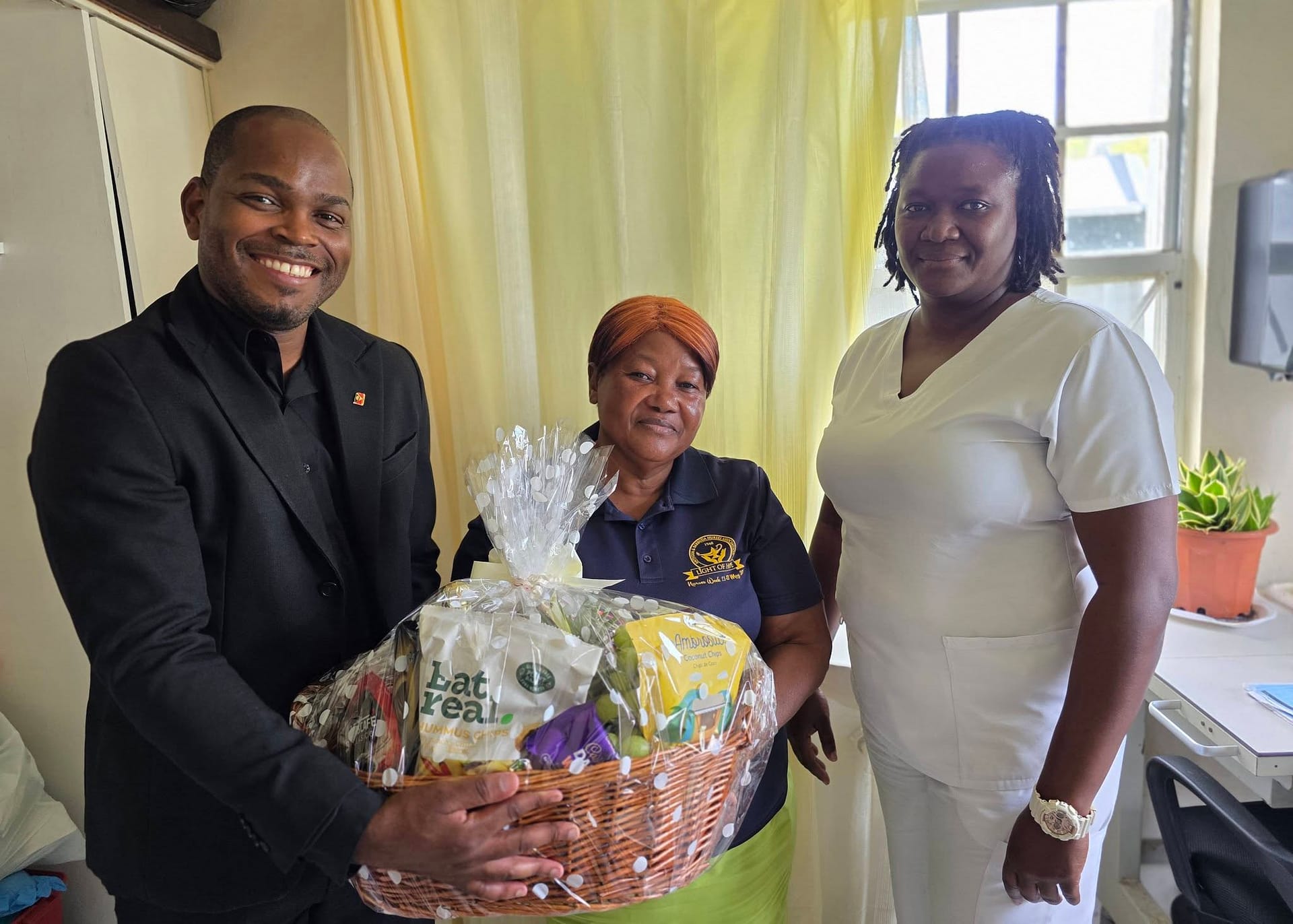
    Every year on May 12, the global healthcare community pauses to mark International Nurses Day, a moment dedicated to honoring the outsized contributions that nursing professionals make to public health and patient wellbeing around the world. This year, Dr. Shivon Belle Jarvis, Medical Director of Antigua and Barbuda’s Sir Lester Bird Medical Centre, used the annual observance as an opportunity to deliver a heartfelt message of appreciation to her facility’s nursing staff, lauding their unshakable dedication to patient care and framing their work as foundational to the future of effective healthcare delivery.

    In her address, Dr. Jarvis emphasized that the global public health goal of “Health for All” is entirely unachievable without the consistent, frontline contributions of nursing teams. Unlike many public health initiatives that rely on high-level policy or cutting-edge technology, universal access to quality care stands or falls on the daily work of nurses, who are often the first point of contact for patients and the most consistent presence throughout a person’s care journey.

    Against this backdrop, Dr. Jarvis outlined clear institutional responsibilities to support the nursing workforce. She argued that fostering leadership pathways, funding and facilitating ongoing professional development, granting meaningful autonomy within frameworks of shared hospital governance, providing structured mentorship opportunities for early-career nurses, and prioritizing the mental health and wellness of nursing staff are not optional perks—they are core obligations that every healthcare institution must meet to retain and empower its teams.

    Beyond institutional commitments, Dr. Jarvis called for sustained, targeted public and private investment in the nursing profession globally. Adequate resourcing, she noted, is the only way to create an environment where nurses can grow their careers, avoid burnout, and continue delivering the high-standard care that patients depend on. She closed by reminding nursing staff that their core professional values—commitment to patients, camaraderie with colleagues, and empathetic care—are the guiding principles that will drive the entire healthcare sector toward a brighter, more equitable future. “You are Our Nurses, you are indeed our future, and lives will continue to be saved once you are empowered,” she told the facility’s team in her closing remarks.

  • Venezuela’s acting president defends country’s territory and rejects Trump’s 51st state remarks

    Venezuela’s acting president defends country’s territory and rejects Trump’s 51st state remarks

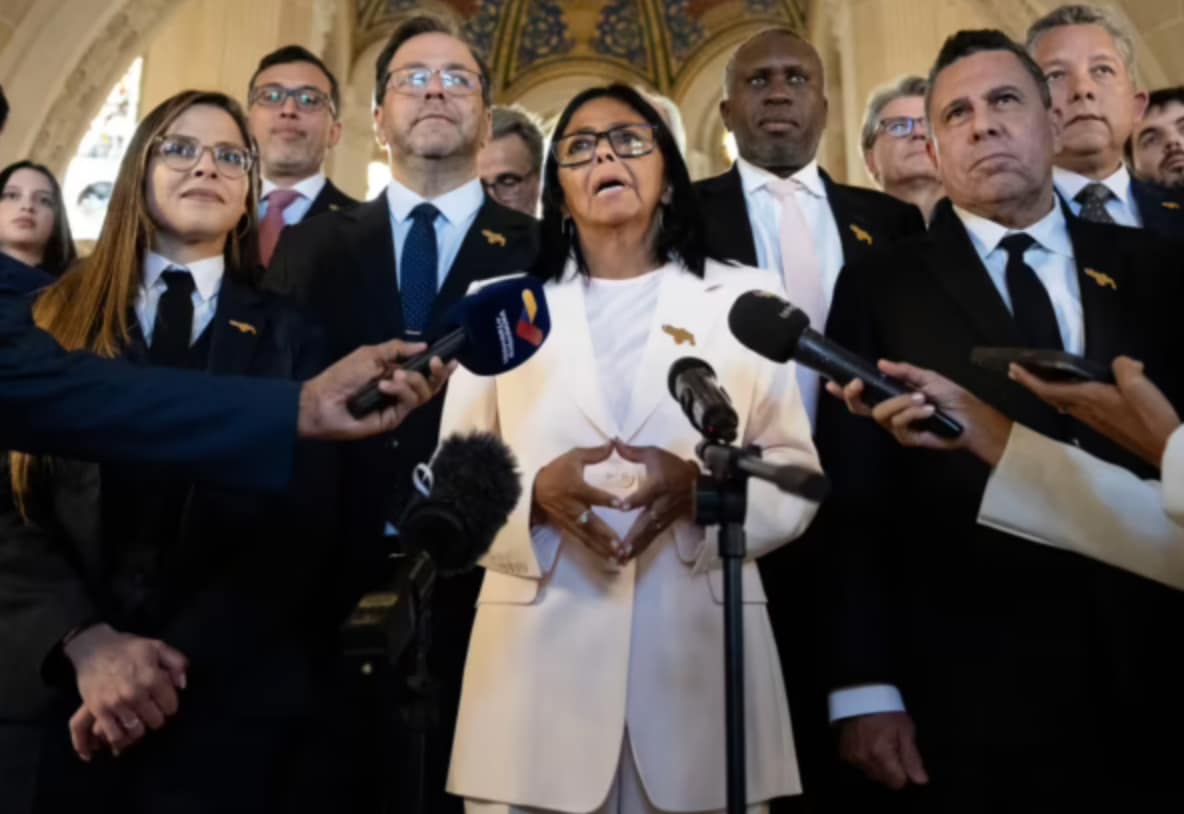
    On Monday, as Venezuela wrapped up its arguments before the International Court of Justice (ICJ) in The Hague in a long-running territorial dispute with neighboring Guyana, acting Venezuelan President Delcy Rodríguez pushed back firmly on an unexpected remark from former U.S. President Donald Trump, who said he was “seriously considering” the idea of Venezuela becoming the 51st U.S. state.

    Speaking to reporters on the final day of public hearings over the resource-rich Essequibo region, Rodríguez made clear that Venezuela has no intention of giving up its sovereignty to become part of the United States. The acting president, who assumed office in January after a U.S. military operation removed former President Nicolás Maduro from power, emphasized that Venezuela will stand firm in protecting its national sovereignty, territorial integrity, independent history, and self-determination. “We are not a colony, we are a free and sovereign nation,” she stated.

    To date, the full context and motivation behind Trump’s remark remain unconfirmed. The White House did not issue an immediate response to requests for clarification on the comment, which is not an isolated statement: Trump has previously made similar offhand remarks about annexing Canada. Later, White House spokesperson Anna Kelly declined to elaborate on any potential Trump administration plans for Venezuela during an interview with Fox News, noting only that the U.S. president is well-known for challenging established norms and praised Rodríguez for what she described as extremely productive cooperation with the United States. Rodríguez for her part added that Venezuelan and U.S. officials have maintained open lines of communication, focused on building mutual cooperation and understanding.

    The core focus of Rodríguez’s visit to The Hague was defending Venezuela’s decades-old claim to the Essequibo region, a 62,000-square-mile territory that makes up nearly two-thirds of Guyana’s current national land area. Long a source of tension between the two South American nations, the dispute has gained new urgency in recent years amid major offshore oil discoveries that have turned Guyana from one of South America’s smallest and poorest economies into a fast-growing major energy producer. The region itself is already rich in gold, diamonds, and valuable timber, while nearby offshore blocks currently produce roughly 900,000 barrels of oil per day – a volume nearly matching Venezuela’s current daily production of around 1 million barrels.

    Venezuela has laid claim to Essequibo since the Spanish colonial era, when the jungle territory fell within the boundaries of Spanish colonial holdings that would later become independent Venezuela. However, an 1899 arbitration ruling mediated by representatives from Britain, Russia, and the United States set the international border along the Essequibo River, awarding nearly the entire disputed territory to Guyana (then a British colony). Venezuela has long rejected that 1899 decision, arguing that a 1966 Geneva agreement signed to resolve the dispute effectively invalidated the 19th-century arbitration ruling and called for negotiated settlement between the two parties.

    The dispute escalated after 2015, when energy giant ExxonMobil announced a major commercial oil discovery off the Essequibo coast. In 2018, Guyana formally brought the case to the ICJ, the United Nations’ highest court for inter-state disputes, asking judges to uphold the 1899 border ruling. Tensions flared further in 2023, when then-President Maduro organized a national referendum on converting Essequibo into a Venezuelan state and threatened to annex the region by force. Maduro was removed from power and captured by U.S. forces during a January operation in Caracas, and is currently being held in New York to face trial on drug trafficking charges, to which he has pleaded not guilty.

    Rodríguez did not reference the 2023 referendum in her ICJ remarks, but told judges that only bilateral political negotiations, not a binding judicial ruling, can resolve the century-old border dispute. She accused Guyana of acting opportunistically by bringing the case to the court while the negotiation mechanisms outlined in the 1966 Geneva agreement were still fully operational. “At a time when the mechanisms established in the Geneva agreement were still fully in force, Guyana unilaterally chose to shift the dispute from the negotiating arena to a judicial resolution,” she told the court. “This change was not accidental; it coincided with the discovery in 2015 of the oil field that would become world-renowned.”

    When the hearings opened last week, Guyana’s Foreign Minister Hugh Hilton Todd framed the dispute as a long-standing threat to Guyana’s sovereign existence, telling the panel of international judges that the conflict “has been a blight on our existence as a sovereign state from the very beginning,” noting that 70% of Guyana’s current territory is at stake in the ruling.

    Court observers expect the ICJ will take several months to issue a final, legally binding ruling on the case. Venezuela has repeatedly stressed that its decision to participate in the public hearings does not constitute consent to the court’s jurisdiction over the dispute, nor recognition of the court’s authority to issue a binding ruling on the border question.

  • Jamaican Man Pleads Guilty to Cannabis Trafficking Case

    Jamaican Man Pleads Guilty to Cannabis Trafficking Case

    More than a year after law enforcement seized nearly a quarter-million dollars worth of cannabis at a major Caribbean port, a Jamaican national has formally admitted guilt to drug trafficking offenses. Damar Sappleton, who has resided in the Bendals area of Antigua, entered his guilty plea on Wednesday before High Court Judge John Spencer, wrapping up the initial phase of a high-profile narcotics case stretching back to early 2024. The legal proceedings originated from a coordinated joint enforcement operation conducted by local police and customs officials on 8 March 2024 at Deep Water Harbour. During a routine inspection of cargo at the busy port, officers uncovered 41 pounds of concealed cannabis stashed inside two unmarked shipping boxes. Investigators later assessed that the seized narcotics would have carried an estimated street value of approximately $246,000 if sold on the local market. Following his plea, Sappleton was immediately remanded into official custody, with his sentencing hearing scheduled to take place at the High Court on 5 June. Legal observers note that the conviction closes a key chapter in a major anti-narcotics enforcement effort at the island’s primary commercial port, which remains a common transit point for drug trafficking operations targeting the Caribbean region.

  • Health Minister Completes Visits to Antigua’s Public Clinics for Nurses Week

    Health Minister Completes Visits to Antigua’s Public Clinics for Nurses Week

    As Nurses Week drew to a close across Antigua and Barbuda, the nation’s Minister of Health has completed a full circuit of public health clinics spread across the country, capping off a week of activities designed to honor the contributions of frontline nursing staff.

    The scheduled tour, planned intentionally to coincide with the annual recognition of nurses, gave the top health official a first-hand opportunity to engage directly with nursing teams at every public clinic, hear their on-the-ground challenges, recognize their daily efforts, and gain unfiltered insight into the operational needs of local primary care facilities.

    Throughout the week of visits, the minister met with nurses across rural and urban clinics, discussing a range of pressing topics from staffing shortages and equipment gaps to workplace support and ongoing professional development opportunities. Unlike formal pre-arranged inspection visits, this tour was structured around open dialogue, with many nurses sharing unvarnished feedback about the conditions they face while delivering care to local communities.

    In remarks following the completion of the tour, the health minister emphasized that nursing staff form the backbone of Antigua’s public health system, noting that their consistent, compassionate work is central to keeping communities healthy and ensuring the entire public health network functions effectively. The minister also reaffirmed the government’s commitment to addressing the key concerns raised during the visits, with a focus on improving working conditions, expanding training opportunities, and upgrading outdated infrastructure across public clinics in the coming months.

    The tour comes as Antigua’s health sector continues recovering from the lingering impacts of the COVID-19 pandemic, which placed unprecedented strain on frontline nursing workers across the nation. Health sector observers note that this high-profile engagement from the country’s top health official signals growing government recognition of the need to prioritize nursing workforce issues as part of broader public health system reform.

    Community health advocates have welcomed the move, saying that direct engagement between leadership and frontline staff is a critical first step toward resolving longstanding gaps in primary care delivery across Antigua. Many expect that the insights gathered during the tour will translate to tangible policy changes that benefit both nursing staff and the patients who rely on public clinic services every day.

  • Driver’s Family Expresses Condolences After Fatal All Saints Road Accident, Cooperating With Investigation

    Driver’s Family Expresses Condolences After Fatal All Saints Road Accident, Cooperating With Investigation

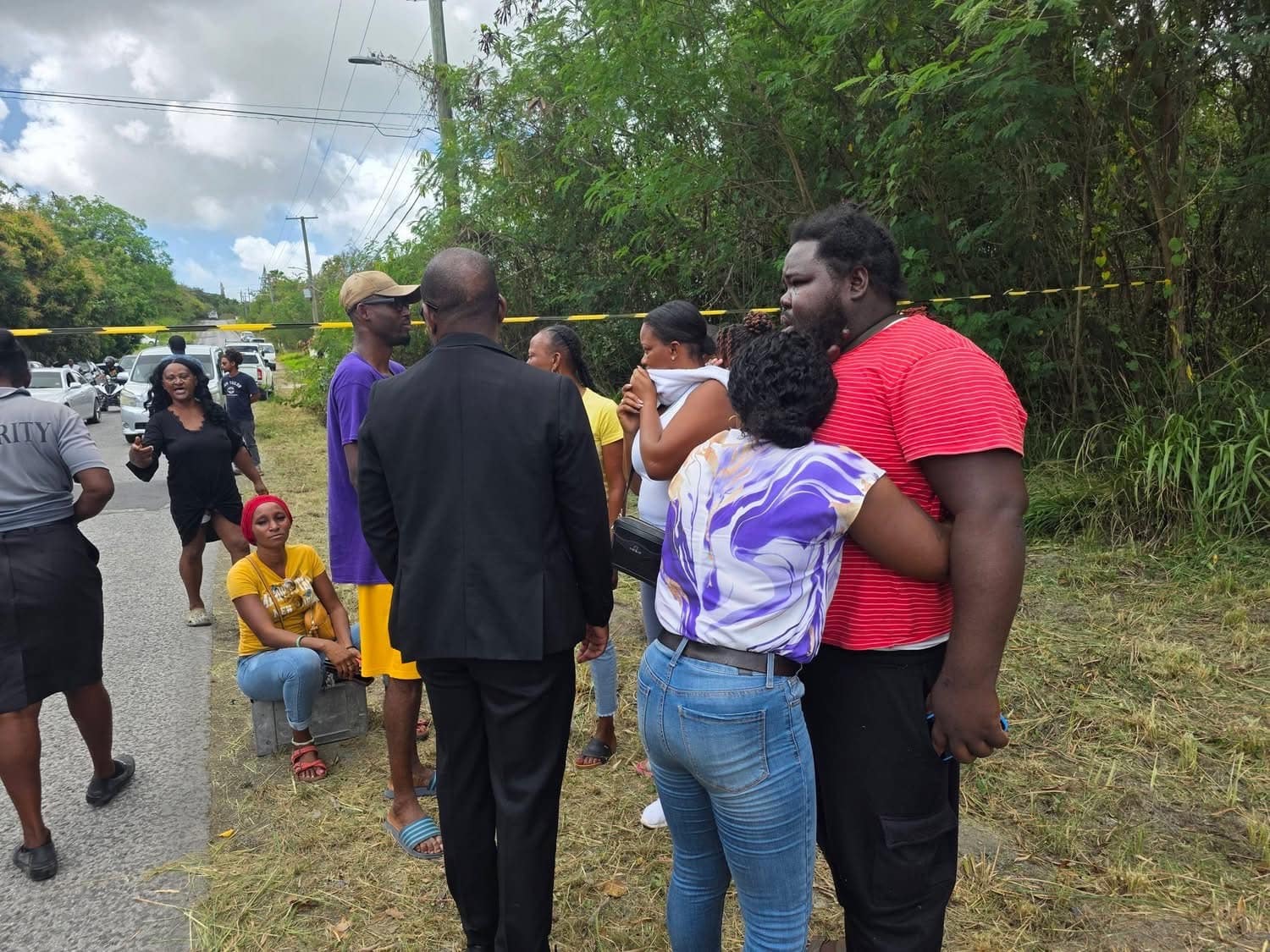
    A devastating fatal accident on All Saints Road on May 12, 2026 has left two families and an entire local community reeling from grief, as the family of the driver involved has broken their silence to share their profound sorrow over the loss of Okeen Lightfoot, the victim who died in the incident.

    In an open statement addressed to the victim’s family, loved ones, and the broader community, the driver’s relatives said their entire household has been left heartbroken and deeply shaken by the tragic chain of events that unfolded that Tuesday. They emphasized that no language can adequately capture the depth of their regret for the loss of life and the overwhelming suffering this tragedy has inflicted on all those touched by it.

    The family extended their unreserved, deepest condolences, spiritual prayers, and heartfelt sympathy to Lightfoot’s family and loved ones, acknowledging that countless people are navigating crippling pain, complicated grief, and a desperate search for clarity in the wake of the sudden, violent incident. “Our son and our entire family are deeply shaken and devastated by what has happened,” the statement read.

    Citing respect for the ongoing official investigation into the crash, the driver’s family noted that they are constrained in what details they can share publicly at this stage of the process. Even so, they stressed to local residents that they are fully cooperating with law enforcement and other authorities as investigators work to unpack every circumstance and factor that led to the accident.

    The statement closed with a note of solidarity for all those impacted by the crash. “Our thoughts and prayers remain with everyone affected by this tragedy — for the family who lost their loved one, for all first responders involved, and for all those carrying emotional pain in the aftermath of this incident,” the statement concluded, signed sincerely by the entire family of the driver.