作者: admin

  • Antigua And Barbuda Nominates H.E. María Fernanda Espinosa As Candidate For Un Secretary-General

    Antigua And Barbuda Nominates H.E. María Fernanda Espinosa As Candidate For Un Secretary-General

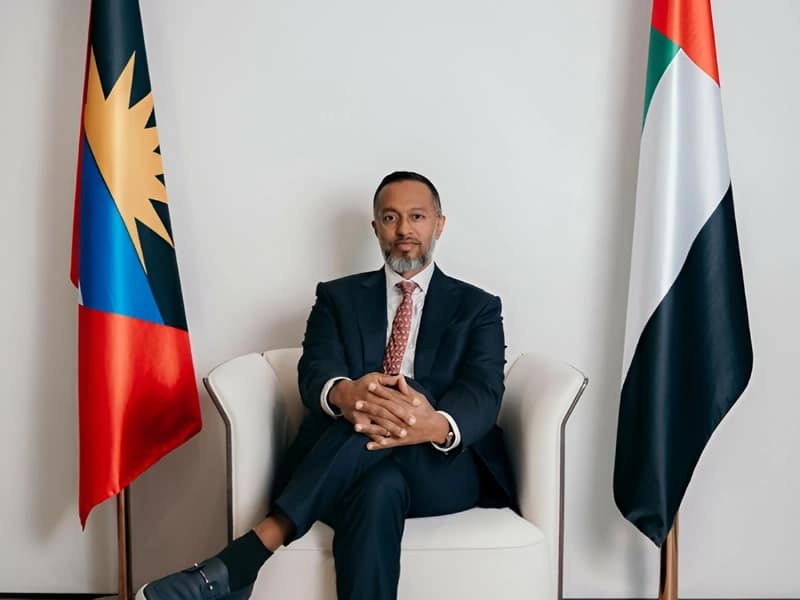
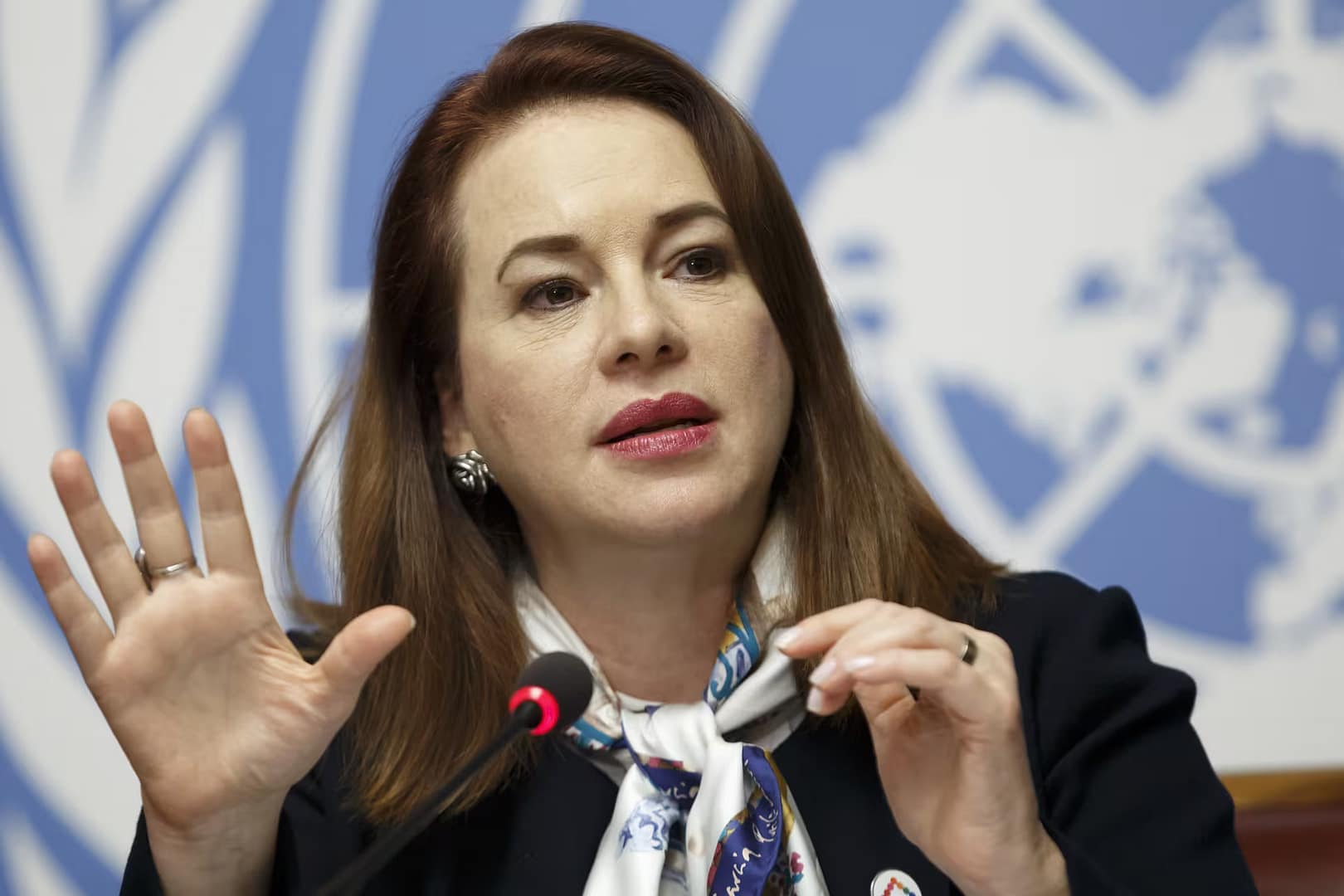
    Antigua and Barbuda has officially put forward Her Excellency María Fernanda Espinosa Garcés, a veteran Ecuadorian diplomat and former United Nations General Assembly President, as its candidate for the next United Nations Secretary-General. The nomination was formally submitted to the heads of both the UN General Assembly and Security Council, aligned with the established selection process outlined in a joint November 25, 2025 document.

  • Caribbean Countries to Get Priority Access to Pandemic Flu Vaccines

    Caribbean Countries to Get Priority Access to Pandemic Flu Vaccines

    Against a backdrop of persistent global zoonotic disease threats and hard-won lessons from the COVID-19 pandemic, the Pan American Health Organization (PAHO) has announced a groundbreaking public-private partnership with CSL Seqirus to reserve a dedicated supply of pandemic influenza vaccines for countries across Latin America and the Caribbean. This historic agreement creates a formal, pre-negotiated mechanism that locks in a fixed percentage of CSL Seqirus’ global pandemic influenza vaccine output for participating PAHO member states, guaranteeing eligible nations early access to an pre-allocated initial stock of doses when a public health emergency strikes.

    PAHO Director Dr. Jarbas Barbosa framed the agreement as a direct correction to gaps in global pandemic preparedness exposed by COVID-19, and a transformative leap forward for regional health security across the Americas. “Through our Regional Revolving Funds, countries are joining forces to secure a reserved share of vaccine production, helping protect those at risk when it matters most,” Barbosa explained. Leveraging CSL Seqirus’ decades of specialized experience in influenza research and large-scale vaccine manufacturing, the deal tasks the company with leading vaccine development and supporting targeted technology transfer to build regional capacity.

    A portion of vaccine production will be based at Argentina’s Sinergium Biotech, a partnership that directly addresses another critical lesson from the COVID-19 pandemic: the urgent need to strengthen local manufacturing capabilities and regional supply chain resilience. For CSL Seqirus, the partnership marks a first-of-its-kind commitment to pandemic preparedness in the region, bringing together pre-reserved doses, local production infrastructure, and long-term cross-sector collaboration. “We’re proud to establish this kind of partnership in Latin America and the Caribbean for the first time,” said David Ross, Executive Vice President and General Manager of CSL Seqirus.

    Alejandro Gil, President and CEO of Sinergium Biotech, noted that the collaboration builds on 15 years of capacity building and long-standing partnerships with both PAHO and CSL Seqirus. “The infrastructure and human resource capacities developed at Sinergium over the past 15 years now enable us to guarantee countries in the region access to quality products to respond to future pandemics, in line with the regional strategies defined by PAHO,” Gil said, adding that the work is a source of great pride for the firm.

    Negotiated over 12 months following an international competitive procurement process, the agreement is designed to cut down the timeline for securing life-saving vaccines during a pandemic, when global demand skyrockets and competition for limited supplies leaves many nations locked out. Critically, it is one of the first pre-pandemic supply arrangements specifically tailored to improve access for middle-income countries, which have long faced systemic disadvantages in competitive global vaccine markets.

    PAHO’s Regional Revolving Funds allow participating countries to pool their demand and negotiate as a unified bloc, putting Latin American and Caribbean nations on par with higher-income countries when it comes to securing favorable contract terms. This structure directly advances more equitable access to vaccines in a market that has historically favored wealthy nations. When a pandemic is declared, PAHO will allocate the reserved doses according to epidemiological data and public health risk, with top priority given to the region’s most vulnerable populations. By locking in supply in advance and establishing clear, pre-agreed allocation rules, the agreement shifts the region from a reactive, after-the-fact response model to a proactive, prepared approach.

    Barbosa emphasized that the deal marks an unprecedented shift for the region: “For the first time, countries of the Americas are positioning themselves on more equal footing in a future global health emergency—not as individual markets, but as a region. This agreement shows what is possible when we act together to leverage the power of pooled procurement.” As avian influenza and other emerging zoonotic threats continue to circulate globally, PAHO reiterated that sustained investment in pandemic preparedness remains an urgent public health priority. Virologists and global public health experts consistently identify influenza viruses, particularly those with zoonotic origins, as among the highest probability causes of the next global pandemic.

  • APUA Stops Taking Water From Potworks Reservoir Due to Drought

    APUA Stops Taking Water From Potworks Reservoir Due to Drought

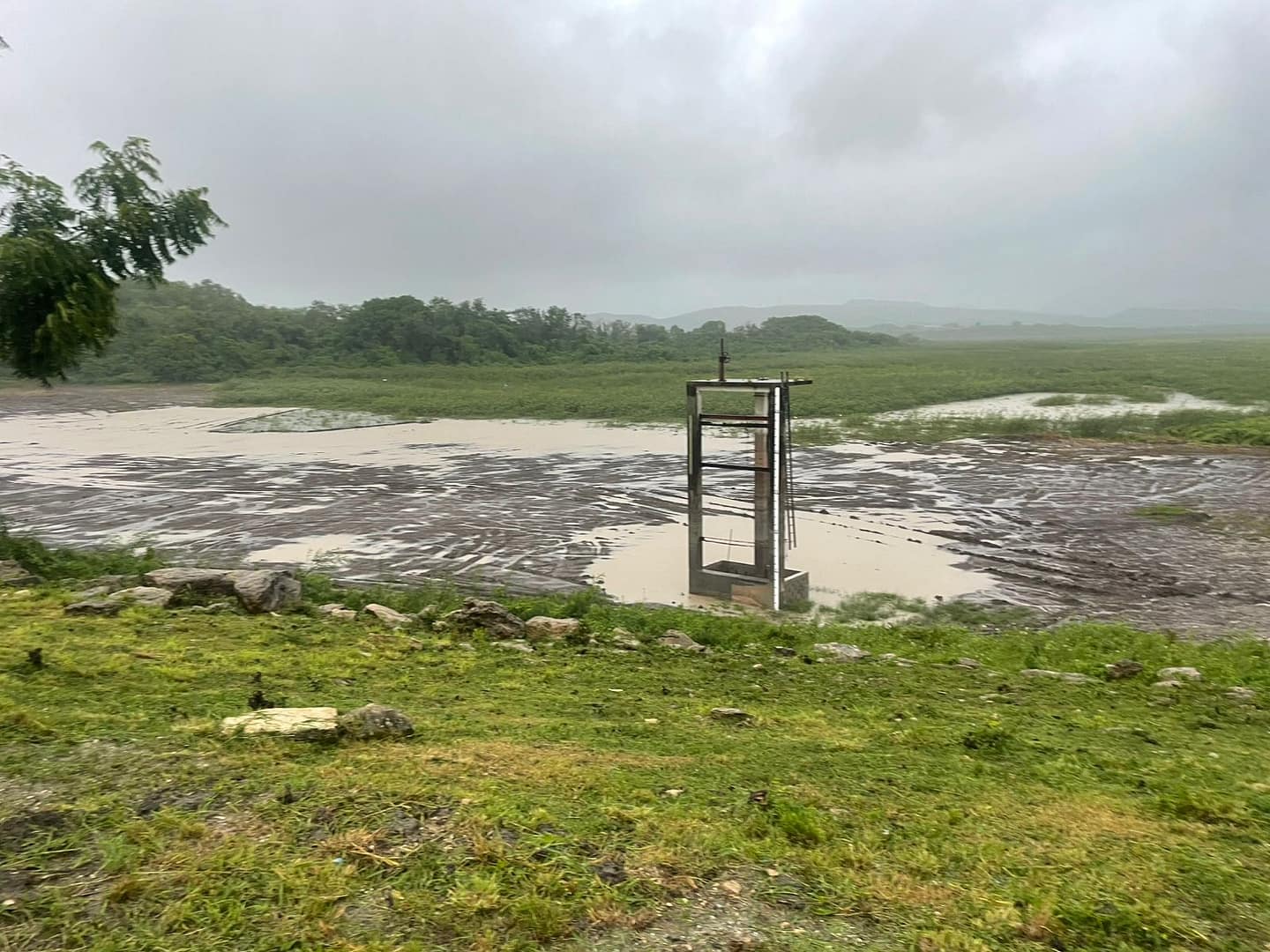
    A worsening drought across the island nation has forced the Antigua Public Utilities Authority (APUA) Water Business Unit to suspend all water pumping operations from Potworks Reservoir, the country’s largest surface water catchment, after water levels dropped to critically low thresholds that make continued extraction unsafe and unsustainable.

    For months prior to the shutdown, Potworks Reservoir fed the adjacent Delaps Water Treatment Facility, which supplied treated water to dozens of residential communities across the island’s southeastern region. The facility contributed an average of 1.2 million imperial gallons of potable water to the national distribution network daily, making it a key component of the country’s water supply infrastructure. However, months of persistent below-average rainfall and prolonged drought have pushed reservoir levels far below the minimum required for continued extraction.

    Southeastern communities that previously relied on the Potworks-Delaps system will now receive water from two existing reverse osmosis facilities: the Crabbs Reverse Osmosis Plant and the Barnacle Point Reverse Osmosis Facility. APUA officials noted that investments in desalination infrastructure over the past 12 months have already bolstered the national water grid’s resilience, allowing the utility to offset the full loss of Potworks’ output without a drastic reduction in overall daily production.

    Across all active supply systems — which include reverse osmosis desalination and groundwater extraction — the Water Business Unit still maintains a total daily output of roughly 8.5 million imperial gallons of potable water. Even with this consistent production, the utility warns that rising demand, driven by steady population growth, expanding tourism development, new housing projects, and overall economic expansion, puts continued pressure on the supply network.

    During the transition to the new supply routing, some customers may experience temporary disruptions to service, reduced water pressure, or longer gaps between scheduled water deliveries. These issues are most likely to impact customers living in elevated areas of the southeastern region. The full list of affected communities includes American Road, All Saints Road, Belmont, Bethesda, Biggins, Buckleys, Folly Hill, Horsford Hill, John Hughes, Liberta, Ottos New Town, Patterson, Radio Range, St. Clair Heights, Swetes, Wallings, and portions of Falmouth.

    To address the long-term gap left by the Potworks shutdown and improve regional transmission capacity, APUA is in the final stages of constructing new transmission lines in the Herbert’s area, which will carry additional water from the Crabbs and Barnacle Point facilities to affected communities. The utility is also on track to commission a brand-new 3.2 million imperial gallon per day reverse osmosis facility before the end of the year, while the organization’s hydrology team continues exploratory work to identify and develop new groundwater reserves through new well drilling initiatives.

    APUA emphasized that reliable access to potable water is a foundational requirement for the island’s daily life and economic activity, and has moved to reassure residents that multiple long-term projects to strengthen and expand the national water system remain actively in progress. The organization is encouraging all customers across the island to continue practicing voluntary water conservation and maintain emergency water storage where possible, to help mitigate the ongoing impacts of the drought.

    In closing, APUA expressed sincere gratitude to the public for their patience and understanding as utility teams work to adapt to drought conditions and preserve reliable water service for all communities across the island.

  • ABEC Demands Retraction, Threatens Legal Action Over Bruce Goodwin Allegations

    ABEC Demands Retraction, Threatens Legal Action Over Bruce Goodwin Allegations

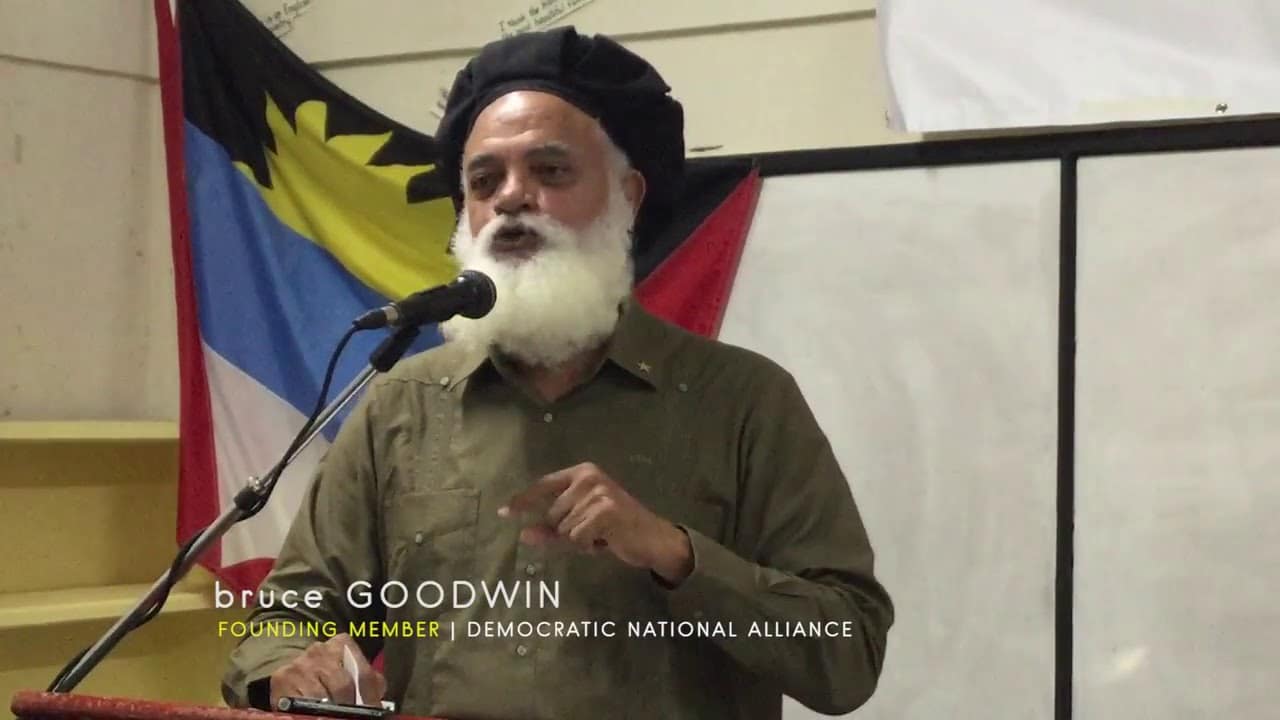
    The Antigua and Barbuda Electoral Commission (ABEC) has issued a firm public rebuke of its former chair Bruce Goodwin, demanding he immediately withdraw a series of incendiary unproven claims that the commission has compromised its institutional independence and cast doubt over the legitimacy of the 2026 April 30 general election. Goodwin made the allegations during a recent appearance on *Eye on the Issues*, a local current affairs program hosted by Louisa Tully, prompting the unusually strongly worded official statement released by ABEC on Tuesday.

    In the statement, ABEC categorically rejected every claim Goodwin put forward, describing his comments as false, reckless, malicious, and completely unsupported by any credible evidence. The commission emphasized that all of its internal policies, operational frameworks, and procedural rules remain fully compliant with national law, and that it has operated with unwavering transparency and institutional independence since its establishment. ABEC flatly denied widespread claims in Goodwin’s remarks that the body has been “captured by the State,” controlled by partisan political interests, or maintains inappropriate improper ties to any government apparatus, calling any assertion to the contrary a scandalous and deeply irresponsible distortion of fact.

    ABEC expressed particular disappointment that these damaging allegations came from a former leader of the organization, noting that Goodwin should be uniquely aware of the critical constitutional role the commission’s independence plays in upholding Antigua and Barbuda’s democratic system. The body warned that unsubstantiated public misinformation of this kind does lasting damage to public trust in core democratic institutions, framing Goodwin’s comments as not just an attack on individual commissioners and staff, but on the integrity of the entire electoral process itself.

    The commission also came out in full defense of all its personnel, including the Supervisor of Elections, appointed commissioners, administrative staff, and election scrutineers, affirming that every team member has consistently carried out their statutory duties with professionalism, integrity, and relentless commitment to fair process. ABEC further clarified that any individual holding credible evidence of actual electoral misconduct should submit that evidence to the appropriate statutory authorities through established channels, rather than airing unproven accusations in public to sow public distrust.

    “The dissemination of serious accusations in the public domain, without proof and in a manner calculated to inflame suspicion and disrepute, is a reckless abuse of public commentary and an affront to responsible democratic engagement,” the commission’s statement read.

    ABEC also highlighted the long-standing practice of inviting local, regional, and international independent observer groups to monitor all stages of its electoral processes, noting that the full transparency of the commission’s operations would be clearly evident to any independent monitoring mission. The body closed by urging the general public to disregard Goodwin’s unsubstantiated claims, and reaffirmed its unwavering commitment to upholding impartiality, full compliance with the law, and radical transparency in all aspects of electoral administration moving forward. It also warned that it is fully prepared to pursue all available legal avenues to defend its reputation, institutional independence, and the integrity of the national electoral process.

  • Leisure : Did you know ? #23

    Leisure : Did you know ? #23

    For casual learners and bird enthusiasts alike, a fun new installment of HaitiLibre’s popular “Did You Know?” trivia series shares a little-known linguistic detail about the vocalizations of large birds of prey, while also announcing a major expansion of the outlet’s free general knowledge quiz platform.

    Most people have heard the sharp, echoing cries of large diurnal raptors, but few know the specific French term for this distinct call: “glides.” This precise label refers to the short, shrill cry these apex avian predators use, not for hunting—golden eagles, for example, hunt in complete silence to ambush unsuspecting prey—but for intra-pair communication and defending critical nesting territories. The high-frequency sound travels exceptionally well across open plains and rugged mountain landscapes, making it perfectly adapted to the raptors’ natural habitats. Beyond golden eagles, buzzards also produce a version of this call, with a high-pitched tone that is often compared to a very shrill cat’s meow.

    This specific terminology showcases the depth and nuance of French ornithological vocabulary, which carefully differentiates vocal terms for raptors, farmyard fowl, and passerine songbirds. Beyond its linguistic precision, the term “glides” evokes the power and constant vigilance that have made these masters of the sky enduring symbols of majesty dating back to ancient civilizations.

    The fun fact originates from answer explanation sheets for the HaitiLibre Quiz platform, a free general knowledge resource that lets users test their knowledge across a wide range of topics, from local Haitian culture and history to global affairs and specialized niche subjects. Open to all audiences without any required registration, the platform offers three difficulty tiers—normal, intermediate, and advanced—for every quiz, and supports both French and English interfaces to accommodate a broad user base.

    As part of the platform’s monthly content update rolled out on May 4, 2026, 30 brand new quizzes were added to the catalog, pushing the total number of available games past the 100 mark to 119 total. New quizzes are added every month to keep content fresh for returning visitors. Users can access the full platform at any time at https://quiz.haitilibre.com, explore past installments of the “Did You Know?” series via HaitiLibre’s main news site, share the resource with friends, and submit feedback to the platform’s team.

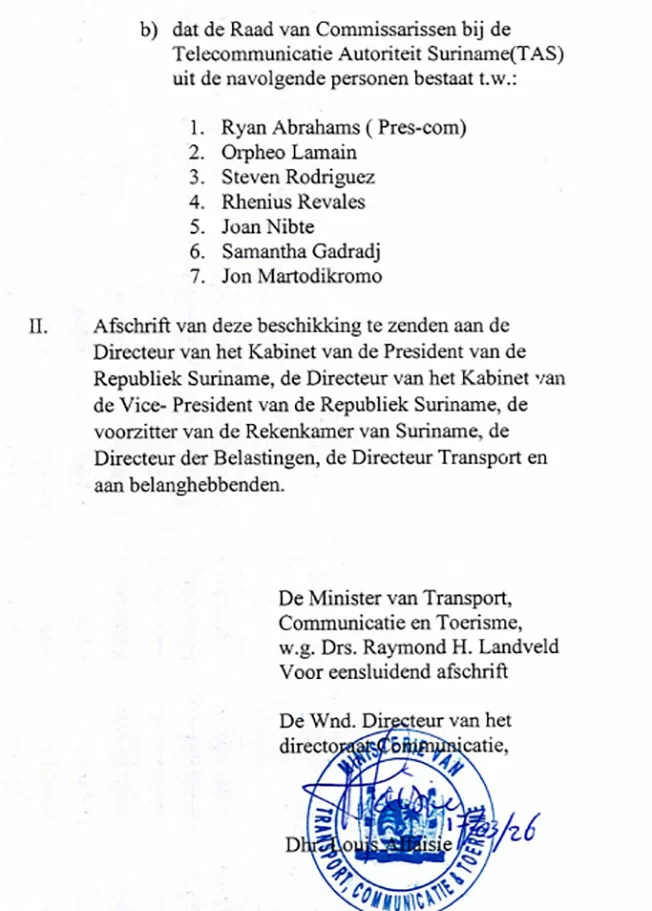
  • Ryan Abrahams officieel benoemd bij TAS, maar functie gaat naar Scheek

    Ryan Abrahams officieel benoemd bij TAS, maar functie gaat naar Scheek

    Political circles in Suriname are abuzz with speculation after conflicting appointments to the key leadership post of the Telecommunicatie Autoriteit Suriname (TAS) created an unprecedented administrative and political controversy.

    In February 2026, an official ministerial decree from Suriname’s Ministry of Transport, Communication and Tourism formally named Ryan Abrahams as the new president-commissioner of the TAS Board of Commissioners, effective February 5. That same order also granted an honorable discharge to the outgoing officeholder, Donaghy Malone, with official gratitude extended for his past service to the regulator. The decree explicitly outlined the full composition of the new board, confirming Abrahams in the top leadership role.

    However, in a sudden and unpublicized shift, Emanuel Scheek has now been installed in the same president-commissioner position. Crucially, no public announcement has been made confirming that the original 2026 ministerial decree appointing Abrahams has been formally revoked, leaving the legal status of both appointments and the TAS board’s leadership in uncertainty.

    The confusion has been amplified by the recent political appointment of Ryan Abrahams’ father, Ramon Abrahams — who also serves as vice-chair of the National Democratic Party (NDP) — as a state advisor just two weeks prior. The elder Abrahams has publicly denied any involvement in building the current ruling coalition, only re-emerging in public political life over the past fortnight after an extended period out of the spotlight.

    Local media outlet Starnieuws has confirmed that Suriname President Jennifer Simons is scheduled to hold a closed-door meeting with Ryan Abrahams on the day of the report. As of press time, no details have been released about what topics will be on the agenda for the discussion. To date, no government official or TAS representative has issued an official statement explaining the sudden leadership change or clarifying the conflicting appointments, intensifying ongoing political speculation across the country.

  • Tribute in Haiti to nurses

    Tribute in Haiti to nurses

    On May 12, 2026, Haiti’s Ministry of Public Health and Population (MSPP) joined national health institutions, international organizations, and government bodies to celebrate International Nurses Day, centering the 2026 observance on the theme “Our nurses. Our future. The power of nurses to act saves lives.” The official commemorative ceremony was held at the MSPP’s nursing directorate, drawing a high-profile guest list that included Public Health Minister Dr. Bertrand Sinal, Minister for the Status of Women Pedrica Saint Jean, top executives from the MSPP and the National Ambulance Center (CAN), and delegated representatives from the Pan American Health Organization/World Health Organization (PAHO/WHO), UNICEF, and the Panos Institute.

    In her opening address to attendees, Carine Reveil Jean Baptiste, Director of the MSPP Nursing Directorate, extended formal congratulations to every nurse practicing across Haiti’s public and private health systems. She highlighted the consistent, often underrecognized work of nursing staff to elevate care standards and advance population well-being, even amid systemic and national challenges.

    Gabriel Timothée, Director General of the MSPP, followed with remarks emphasizing the irreplaceable role nurses hold in keeping the national health system functional. He reminded the audience that nurses remain on call day and night at patient bedsides, delivering consistent care with unwavering professionalism and commitment to their mission.

    Minister Dr. Sinal used the occasion to reaffirm that nursing workforce issues have been a top policy priority since he assumed his role at the head of the public health ministry. He shared tangible progress on this commitment, noting that nearly half of all recent senior and frontline staffing appointments published by the ministry have been for nursing positions, signaling the government’s investment in strengthening the nursing workforce.

    As a key component of the national celebrations, the General Directorate of the Office of Workplace Accident, Sickness and Maternity Insurance (OFATMA) issued a formal statement paying tribute to Haiti’s nurses. The statement acknowledged that nurses carry out their daily work with remarkable professionalism, courage, and humanity while serving OFATMA beneficiaries and the broader Haitian population. It noted that despite severe socioeconomic and security challenges that define Haiti’s current national context, nursing staff continue to fulfill their duties with extraordinary dedication, compassion, and a relentless sense of duty, framing their work not merely as an occupation, but as a life-giving vocation. OFATMA closed its statement by expressing profound gratitude for nurses’ exemplary commitment and their irreplaceable contribution to the country’s social and health protection systems.

    Minister Pedrica Saint Jean, who leads the Ministry for the Status of Women and Women’s Rights, also delivered a formal address honoring Haiti’s nursing workforce, the majority of whom are women. She paid respect to the courage, dedication, and professionalism that nurses demonstrate daily while caring for populations across the country, often working in underresourced, challenging conditions. Saint Jean described nurses as the foundational force holding Haiti’s healthcare system together, noting that they carry out a fundamental human and social mission: to treat, comfort, listen to, and save the lives of Haitian citizens. From major urban hospitals and local clinics to rural maternity wards and isolated remote communities, and in the midst of ongoing public health emergencies, their unwavering commitment stands as a powerful symbol of national solidarity and resilience. Saint Jean closed by reaffirming her solidarity with all Haitian nurses, thanking them for their invaluable contribution to the health, dignity, and well-being of the Haitian people, ending with the tribute: “Honor and Merit to Haitian nurses, guardians of life and human dignity.”

  • Presentation of 308 internship letters to graduating students of the École Normale Supérieure of Haiti

    Presentation of 308 internship letters to graduating students of the École Normale Supérieure of Haiti

    In a formal ceremony held earlier this week, Haiti’s Minister of National Education Vijonet Déméro formally delivered 308 internship placement letters to the leadership board of the École Normale Supérieure (ENS), marking a key step in strengthening the country’s public secondary education workforce. The internship placements are reserved for ENS graduating students who are preparing to complete their final requirements for official teacher certification.

    Addressing attendees at the event, Minister Déméro opened by praising the participating students for their long-standing dedication to Haiti’s education sector and their willingness to pass on their expertise, technical skills, and professional standards to the next generation of learners. He emphasized the critical role the new interns will play in supporting secondary education across the country, urging them to approach their assignments with rigor and serve as thoughtful, effective mentors for high school and secondary students.

    The minister also outlined the clear framework governing the three-month posting, including defining the legal rights and core responsibilities of the interns, as well as the specific oversight roles of three key participating bodies: ENS’s board of directors, local school administrations, and Haiti’s 10 regional Departmental Directorates of Education (DDE). At the conclusion of the 12-week placement, each intern is required to submit a comprehensive final report, which will serve as a mandatory component of their evaluation for earning a fully accredited teacher training diploma.

    Beyond the internship initiative, Déméro used the ceremony as a platform to announce progress on a broader push to formalize Haiti’s public education workforce. To date, he confirmed, he has signed more than 600 official appointment letters for newly hired teachers and school principals across all 10 DDE regions, filling long-vacant roles at national primary and secondary schools. Moving forward, the ministry plans to regularize the employment status of an additional 1,200 under-contract teachers in the coming months, with the pace of the process tied to available government funding for education.

    Dieuseul Prédélus, rector of the State University of Haiti (UEH), which oversees the École Normale Supérieure, praised the Ministry of National Education’s sustained commitment to integrating more qualified, formally certified personnel into Haiti’s public education system, noting that the move will help address long-standing staffing gaps and improve learning outcomes for students across the country.

  • PPP calls US congresswoman’s rebuke of Venezuela’s interim President “forceful”

    PPP calls US congresswoman’s rebuke of Venezuela’s interim President “forceful”

    On Tuesday, May 12, 2026, Guyana’s governing People’s Progressive Party Civic (PPPC) publicly praised a forceful statement from U.S. Republican Congresswoman María Elvira Salazar backing Guyana’s territorial sovereignty amid escalating tensions with Venezuela over a long-running border dispute. Salazar, who chairs the House Foreign Affairs Subcommittee on Western Hemisphere Affairs, made her remarks on the social platform X one day after Venezuelan interim president Delcy Rodriguez delivered a provocative address to the International Court of Justice (ICJ) during oral hearings on the merits of the border case.

    During her Monday appearance before the United Nations’ highest judicial body, Rodriguez doubled down on Venezuela’s rejection of any ICJ ruling on the validity of the 1899 Arbitral Tribunal Award that established the current land boundary between the two South American nations. She insisted that the 1966 Geneva Agreement—signed by Venezuela and the United Kingdom shortly before Guyana gained independence—remains the only legally valid framework for resolving the dispute through bilateral negotiations. Rodriguez warned that any ICJ judgment on the 1899 award would not resolve tensions, stating, “No judgment by this court on the territorial controversy will provide a definitive solution acceptable to both parties. On the contrary, it will exacerbate the differences between the parties, and will lead the parties to entrench themselves in their respective positions, distancing them from the practical, satisfactory and mutually acceptable settlement to which they committed in 1966 by signing the Geneva agreement.”

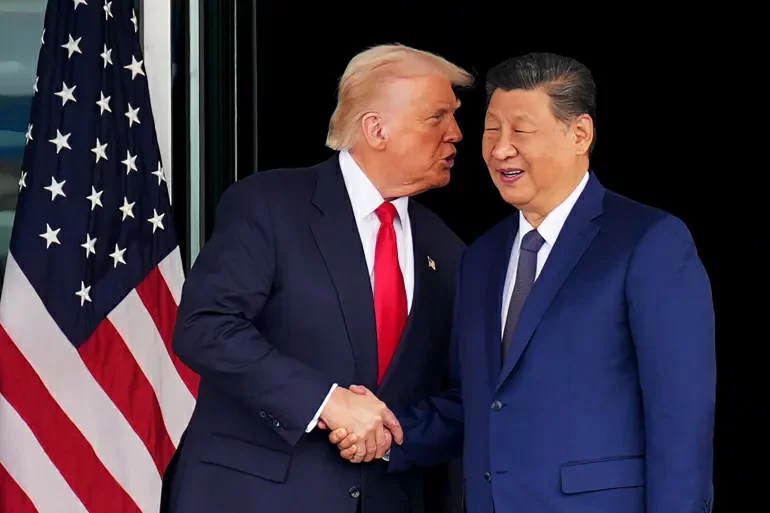
    Salazar pushed back sharply against Rodriguez’s comments and her repeated threats to Guyana’s territorial integrity in her X post. She argued that Rodriguez mistakenly believes she can manipulate U.S. President Donald Trump the same way she and former ousted Venezuelan president Nicolás Maduro “tricked and destroyed” Venezuela. “Delcy should stop threatening Guyana and start learning from it,” Salazar wrote. She also warned Rodriguez against sending confidential correspondence to President Trump, emphasizing, “You don’t deal with him through secret letters while trying to steal territory from a free and sovereign nation like Guyana.”

    Beyond addressing the border dispute, Salazar commended Guyana’s prudent management of its new oil wealth, noting that in less than a decade, the South American nation has set a stark contrast with Maduro’s regime in Venezuela. “Unlike the Maduro regime, Guyana didn’t rob its people. They managed their oil wealth responsibly, created a sovereign wealth fund, and saw GDP per capita quadruple in just five years,” she added.

    As of Tuesday, Guyana’s national government had not issued an official public response to Salazar’s social media statement. The ICJ is on track to issue its binding ruling on the border dispute by the end of 2026 or in the first quarter of 2027, a decision that will shape the future of regional security and territorial claims in northeastern South America.

  • Religieuze organisaties krijgen grondpapieren voor sociale projecten

    Religieuze organisaties krijgen grondpapieren voor sociale projecten

    After nearly two years of waiting for official approval, Suriname’s Sanatan Dharm religious organization has become the first recipient of land allocation documents from the national government, unlocking the green light for a slate of impact-focused community development projects. The formal handover ceremony took place Tuesday at the Cabinet of the President, where Suriname President Jennifer Simons presented the official land papers to representatives from the organization.

    Sanatan Dharm board chair Sherwankoemar Ramsoedit described the long-awaited approval as a transformative breakthrough for the group, which had seen all planned development work stalled for months without the official land disposition. “In one word: wonderful. It could not have gone any better,” Ramsoedit shared in a statement via Suriname’s Communication Service (CDS).

    The organization has outlined a multi-faceted community service plan for the newly allocated land, including a full vocational training institute, a senior citizen care shelter, and an outpatient polyclinic that will provide routine health screenings and blood testing services for local residents. These facilities are designed to form the core of a broader public welfare initiative that will serve vulnerable communities across the region.

    Ramsoedit emphasized that the approval process had stretched on for between 18 and 24 months, and the absence of official land documentation left the organization unable to move forward with any concrete construction or planning work. On behalf of the Sanatan Dharm board, he extended his gratitude to President Simons and Hanisha Jairam, whom he credited with playing a critical role in facilitating negotiations and moving the application process forward.

    Moving forward, the organization’s leadership will turn its full attention to detailed project planning and the next stages of development. Per Ramsoedit, President Simons has committed that the national government will continue coordinating with relevant ministries and regulatory bodies to support the organization in completing the remaining procedural steps for the project, ensuring the community services can open their doors to residents as soon as possible. This land allocation launch marks the start of a national government program to distribute land disposition approvals to religious groups across the country for public projects including shelters, orphanages, and cemeteries.