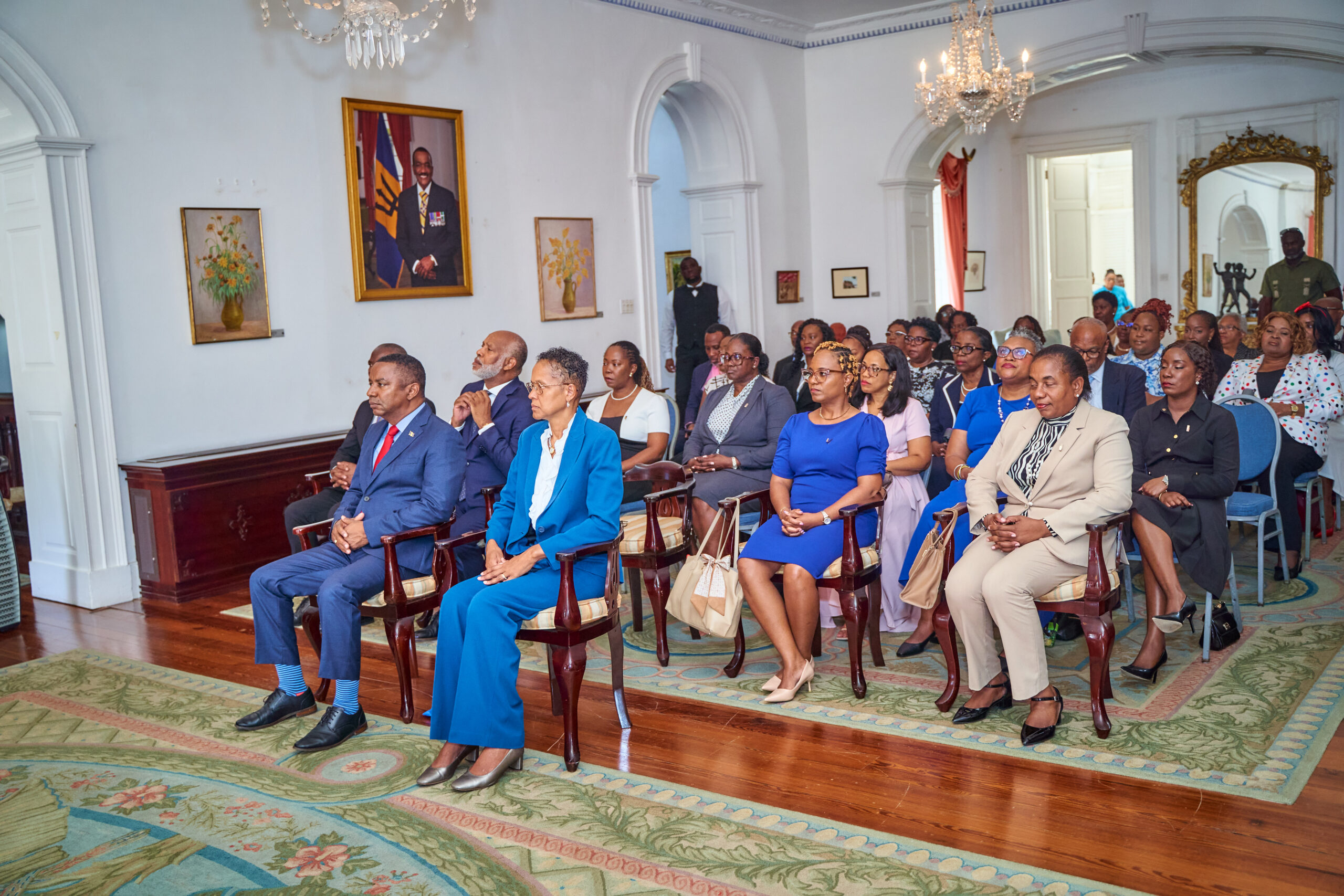
In a formal ceremony held Wednesday at Barbados’ State House, 33 senior government and financial sector officials received the Caribbean nation’s third-highest civilian honor, capping years of coordinated work to lift the country off two critical international financial watchlists that had threatened its global economic standing. The awardees came from two core working groups: the Financial Action Task Force (FATF) Action Plan Implementation Team and the International Business Unit Economic Substance Team. Their collective effort culminated in two landmark delistings that have reshaped Barbados’ reputation as a global financial hub: the island was removed from the FATF’s monitoring-focused grey list in 2024, which triggered an automatic removal from the United Kingdom’s high-risk third country register, and formally taken off the European Union’s blacklist of high-risk non-EU jurisdictions on August 5, 2025. Barbadis President Jeffery Bostic used the ceremony to recognize the years of behind-the-scenes work and sacrifice that made the delistings possible, emphasizing the significance of the honor being conferred. The award granted to the officials is the third-highest distinction in the Order of Barbados, ranking only below the Freedom of Barbados and the Order of the Republic. “I want to offer my sincerest congratulations to you on what I consider to be a very significant achievement,” Bostic told the gathered honourees. “That is something to be very proud of. We all are very proud of what we’ve been able to do and to achieve.” Bostic also extended formal gratitude on behalf of the entire nation for the team’s consistent commitment to public service, noting that their relentless dedication delivered long-term benefits to Barbados’ economy. Deputy Prime Minister Santia Bradshaw echoed the president’s praise, highlighting the grueling long hours and meticulous policy changes the teams implemented to meet international regulatory standards. “The country owes you a debt of gratitude for the dedication, the commitment, and I’m sure the long hours of unbroken service and sacrifice that you’ve made,” Bradshaw said. She added that the successful delistings have already delivered tangible economic results, restoring investor confidence and strengthening growth prospects for Barbados’ key international business sector. “It has allowed us to be able to have investors certainly turning their attention back to Barbados,” she noted. Industry and policy observers have widely framed these dual delistings as a transformative milestone for Barbados, which has long positioned itself as a leading offshore international business and financial center. Inclusion on global anti-money laundering and counter-terrorism financing watchlists like the FATF grey list and EU blacklist carries significant economic risks: it can undermine international investor trust, raise transaction costs for cross-border business, damage the overall credibility of a country’s financial regulatory framework, and deter foreign direct investment. Wednesday’s honors ceremony marks a formal national recognition of the critical role these public servants played in protecting Barbados’ economic future and securing its position in the global financial system.
作者: admin
-

Saint-Martin proposes regional Caribbean network for film and audiovisual industries
In a landmark presentation at the 49th Meeting of the Organisation of Eastern Caribbean States (OECS) Commission on April 30, 2026, Saint-Martin has put forward a bold proposal to unify the Caribbean’s fragmented film and audiovisual sectors through the establishment of a specialized regional knowledge network. The initiative, which is backed by Saint-Martin President Louis Mussington and First Vice President Alain Richardson, was laid out to assembled OECS commissioners by Saint-Martin’s representative Cyrielle Cuirassier.
Drawing on latest data from three leading United Nations agencies – UNESCO, the World Intellectual Property Organization, and the United Nations Conference on Trade and Development – Cuirassier highlighted the rapidly expanding global footprint of cultural and creative industries. She underscored that the creative sector has outpaced long-standing traditional industries including automotive manufacturing and pharmaceuticals in annual growth, both on a global scale and within France, setting the context for the Caribbean region to capture similar economic gains.
“The Caribbean holds unmatched cultural richness and untapped creative potential,” Cuirassier told the full commission. “Film and audiovisual production are powerful catalysts for inclusive economic growth, local job creation, and the strengthening of regional cultural identity. Now is the moment for our bloc to build a coordinated institutional structure that allows us to unlock the full value of this opportunity.”
As part of the proposal, Cuirassier called for an initial regional benchmarking assessment to map existing production resources, institutional governance frameworks, and key industry stakeholders across all OECS member territories. To kick off the collaborative process, she asked attending commissioners to share dedicated institutional contacts, laying the groundwork for future broad consultations on the plan.
Cuirassier also held bilateral discussions with OECS Director General Didacus Jules and his senior leadership team, connecting the new proposal to the organization’s existing creative industries study completed in August 2025. She clarified that Saint-Martin’s targeted initiative, focused exclusively on film and audiovisual work, is designed to complement rather than replace the broader creative economy agenda already being advanced by the OECS.
For Saint-Martin, which gained official Associate Member status in the OECS just over a year ago in March 2025, the proposal is a core component of a wider strategic push to establish the territory as a leading regional hub for film and audiovisual production. According to the joint press release announcing the plan, the initiative will evolve into a formal network cooperation agreement, which will be tabled through official OECS institutional channels following consultations with interested member states. The presentation at the commission meeting also served to reaffirm Saint-Martin’s commitment to active regional engagement, developing cross-border projects that deliver shared economic and cultural benefits across the entire Caribbean.
Addressing the longstanding challenge of limited regional scale, Cuirassier emphasized: “Individually, Caribbean creative industries do not have the critical mass required to compete effectively in the global marketplace. Working together, we can reverse that reality, and the OECS provides the natural institutional framework to turn this vision into action.”
The 49th OECS Commission Meeting brought together Director General Dr. Jules, senior OECS leadership, and ambassador-level commissioners from all member governments. The session followed the 3rd Meeting of OECS Associate Members held on March 31, 2026, which Cuirassier also attended as part of Saint-Martin’s delegation.
-
US having “private conversations” about security following Venezuela’s stance on ICJ
As tensions escalate over the decades-long territorial dispute between Venezuela and Guyana over the resource-rich Essequibo Region, a senior U.S. diplomat has confirmed that Washington is holding closed-door diplomatic negotiations to de-escalate the crisis, after Venezuela’s leader rejected any binding ruling from the International Court of Justice (ICJ) on the conflict.
U.S. Under Secretary of State for Economic Affairs Jacob Helberg made the announcement Wednesday during a press briefing at the U.S. Embassy in Georgetown, Guyana, at the conclusion of a one-day official visit to the South American nation. Helberg emphasized that the U.S. is keeping close watch over ongoing proceedings at the ICJ, and agrees that regional security is a foundational requirement for economic growth and prosperity across the hemisphere.
“Ultimately a lot of those conversations right now will be private, and we believe that we can make progress through private conversations,” Helberg told reporters, declining to disclose which parties are participating in the backchannel discussions. The comment came in response to a question from Demerara Waves Online News, which asked whether the U.S. was prepared to step in as a mediator to preserve hemispheric stability and energy security, should Venezuela maintain its hardline stance against the ICJ’s authority.
The territorial dispute carries major energy stakes: ExxonMobil and multiple other U.S. oil firms hold offshore exploration concessions in the Essequibo Region, and have tied their long-term development plans to a binding ICJ ruling on the conflict, which is expected to be issued either by the end of 2026 or in the first quarter of 2027.
The standoff reached a new flashpoint earlier this week, following dramatic developments from both Caracas and Washington. On Monday, Venezuelan Interim President Delcy Rodriguez told the ICJ that her government would refuse to abide by any court decision that upholds the 1899 Arbitral Tribunal Award, the agreement Guyana recognizes as the final settlement of its shared border with Venezuela. Rodriguez reaffirmed Venezuela’s long-held position that the dispute can only be resolved through bilateral negotiations, based on Caracas’s interpretation of the 1966 Geneva Agreement signed between Venezuela and the United Kingdom, which was Guyana’s colonial ruler at the time. Notably, Venezuela omits reference to a key clause in the 1966 deal that permitted the U.N. Secretary General to refer the unresolved conflict to an adjudicatory body like the ICJ; the U.N. took that step, clearing the way for Guyana to file its formal case with the court.
During her ICJ appearance, Rodriguez repeated her longstanding accusations that Guyana has colluded with ExxonMobil, the U.S. government and U.S. Southern Command to carry out what she frames as an imperialist plot to seize the Essequibo Region from Venezuela.
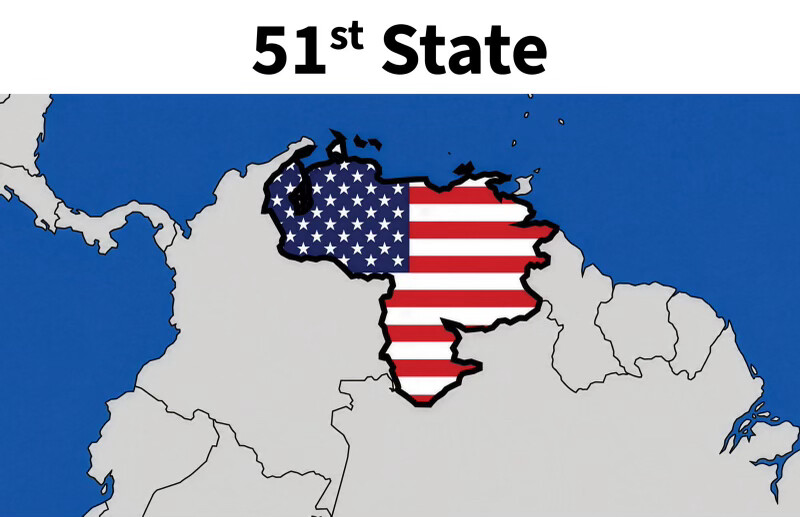
A day before Helberg’s visit to Guyana, U.S. President Donald Trump drew global attention to the dispute with a post on his Truth Social account, shared to X (formerly Twitter). The post included a map of Venezuela that omitted the entire Essequibo Region, alongside a fully recognized map of Guyana that includes the contested territory shaded within the U.S.-shaded map of Venezuela.
The decades-old dispute has flared in recent years following the discovery of massive oil reserves offshore Essequibo, turning a long-simmering territorial conflict into a high-stakes issue for global energy markets and regional security in South America.
-

Ancient Maya Site Enters the Solar Age
One of Belize’s most celebrated and frequently visited ancient Maya archaeological landmarks, Xunantunich, has marked a historic shift toward sustainable operation by connecting to a solar energy system for the first time since the site opened to visitors nearly 30 years ago. The new renewable energy infrastructure was formally commissioned as a collaborative project between Belize Electricity Limited (BEL) and the country’s National Institute of Culture and History (NICH).
This 100% clean solar system is engineered to meet all of the heritage site’s daily energy needs around the clock, powering every operational system from the entrance ticket scanners to site-wide lighting, communication networks, and administrative facilities. Beyond meeting current energy demands, the solar setup also paves the way for long-term upgrades, including the rollout of expanded e-ticketing services and more robust modern communication systems that will improve visitor experience.
Data from the project shows the system produces up to 1,500 kilowatt-hours of emission-free energy each month, a volume sufficient to power multiple average residential homes across Belize for the same period. As a top international tourist destination that draws archaeology enthusiasts and cultural travelers from every corner of the globe, the transition to solar has been described as a long-overdue milestone for the protected site. Both BEL and NICH emphasized that the project embodies the two institutions’ shared commitment to protecting Belize’s irreplaceable cultural heritage while advancing the country’s transition to renewable, low-carbon energy sources.
-
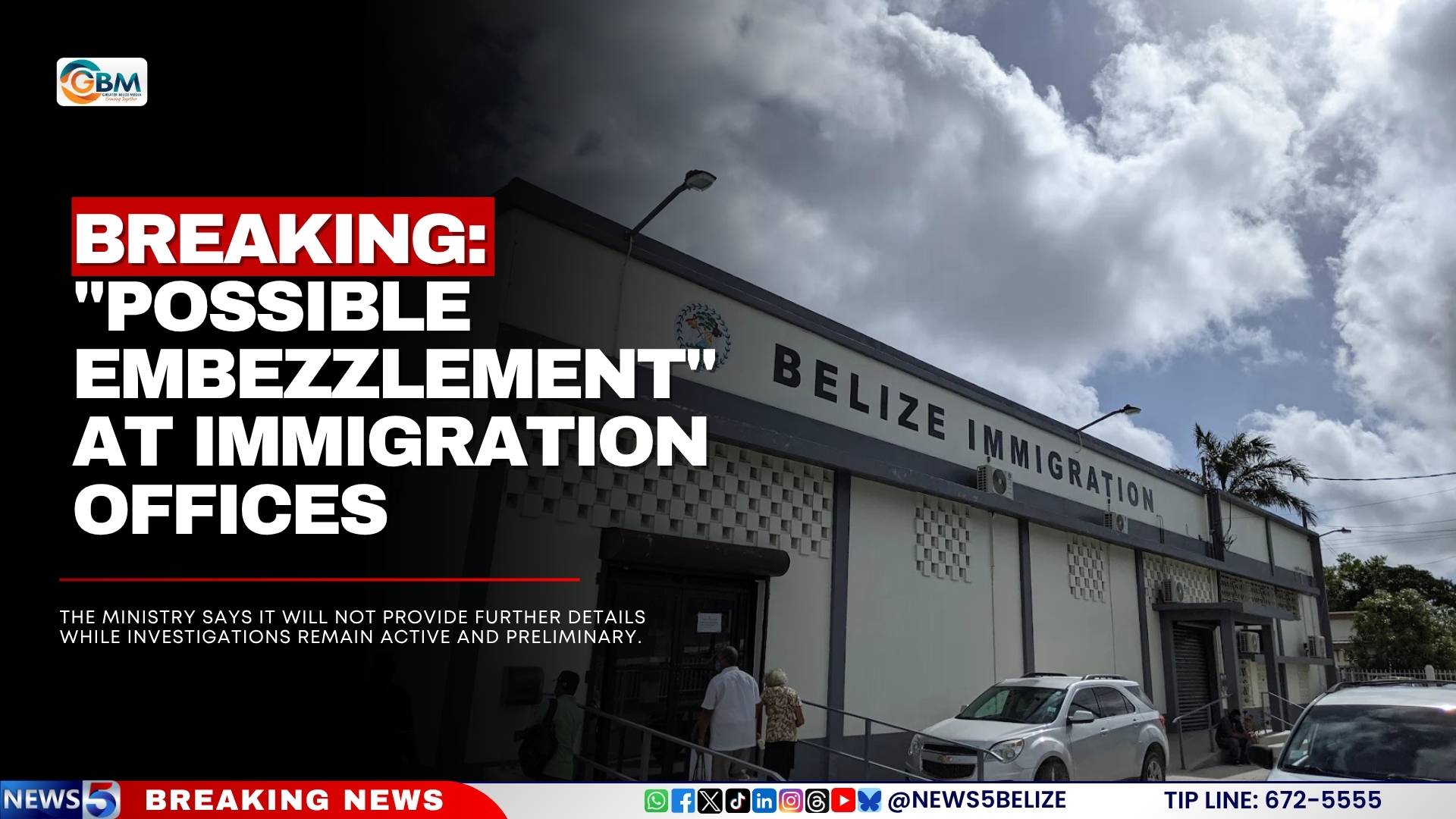
BREAKING: “Possible Embezzlement” at Immigration Offices
In a developing breaking story dated May 13, 2026, Belize’s Ministry of Immigration has opened two separate internal investigations into serious misconduct allegations at two of its key regional offices, putting the government’s public accountability commitments to an early test amid ongoing system modernization efforts.
The first investigation centers on reported financial irregularities at the Belize City Immigration Department office, with claims of potential embezzlement of public funds prompting the internal review. Ministry officials confirmed that preliminary inquiries are already underway to map out exactly what misconduct may have occurred and how far it extends. In an official statement, the agency emphasized that any issue touching on public fund management, institutional accountability and professional integrity is being handled with the highest possible priority, noting that investigations remain in their early active stages with no final conclusions drawn yet.
Per the Ministry’s public guidance, if preliminary findings uncover concrete evidence of criminal activity related to the embezzlement claims, the next steps will include a comprehensive independent financial audit, followed by a formal referral of the entire case to the Belize Police Department for a full criminal investigation.
Alongside the financial probe, a separate internal review at the Belmopan Immigration Office has identified two missing Nationality Certificates. The Ministry has already compiled internal documentation related to the missing documents, and confirmed it will submit an official incident report to the Belize Police Department this week to launch a formal criminal probe. Investigators have not yet reached a conclusion on the cause of the missing certificates, with three potential scenarios still on the table: administrative error from misprinting, accidental loss, or intentional theft.
These two investigations come at a time when the Ministry is actively working to overhaul and modernize the country’s nationality application process. Earlier in 2026, the agency launched a consultancy project focused on full digitization of the nationality processing workflow. The stated goals of the digital upgrade are explicitly to boost transparency and accountability, strengthen internal monitoring frameworks, and close procedural gaps that leave the system vulnerable to issues like missing documentation and unauthorized financial activity.
Amid the active preliminary probes, the Ministry has announced it will not release any further details on the investigations to avoid compromising ongoing work, leaving the public waiting for updates as the inquiries progress.
-
Power is being restored to communities across Antigua
Residents of Antigua woke or went about their daily routines facing an unexpected, island-wide blackout on Wednesday, after a critical equipment failure triggered a total collapse of the island’s power grid. The Antigua Public Utilities Authority (APUA), the government-run body responsible for managing the country’s public energy infrastructure, confirmed the outage stemmed from an unforeseen fault along the Cassada #2 Feeder, located in close proximity to one of the island’s primary electrical substations. According to APUA’s official statement, the fault spread quickly through the grid, overwhelming system protections and causing a complete, albeit temporary, shutdown of power distribution across the entire nation that left all customers without electricity.
In a public update released shortly after the outage began, APUA reported that its trained emergency response crews have already been deployed across Antigua, working systematically to isolate the damaged section of infrastructure, repair the fault, and bring the full grid back online step-by-step. Utility officials noted that restoration work has been progressing smoothly and safely per emergency protocols, with current projections indicating full restoration of normal power operations will be completed within a window of 90 minutes to two hours from the time of the initial collapse.
APUA went on to issue a formal apology to all Antiguan residential and commercial customers for the widespread disruption to daily life, acknowledging that unplanned outages create significant inconvenience for households, businesses, and essential services across the island. The authority also closed its statement by thanking the public for its patience and understanding as crews prioritize both safety and speed to return power to every community.
-
Countdown on: ‘One year’ to prove compliance with global regulators
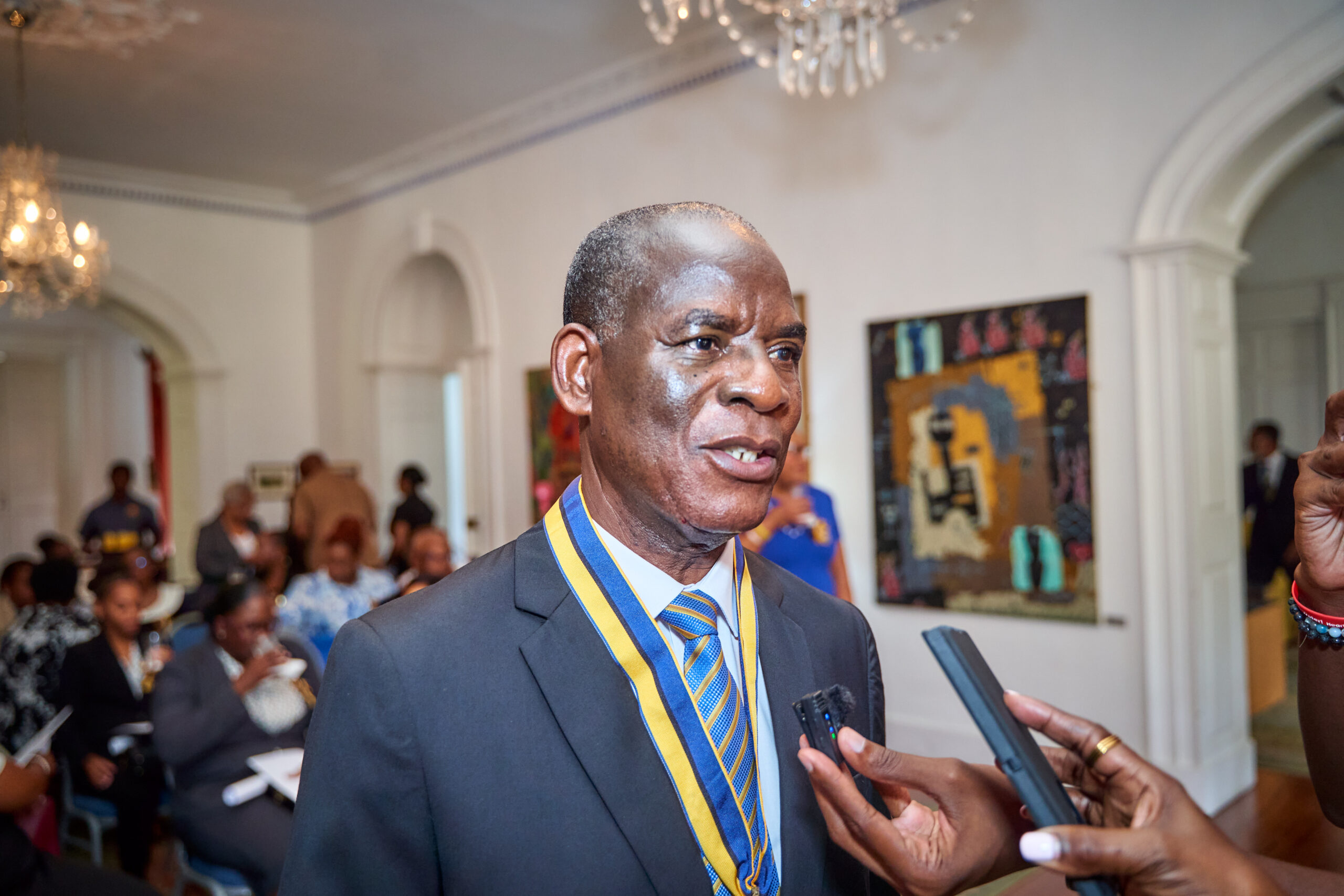
On Wednesday, as Barbados honored the team that steered the country off two major global anti-money laundering risk lists, Senate President Reginald Farley delivered a stark warning: the island nation has just over a year to prove its ongoing compliance with tightened international anti-money laundering and counter-terrorist financing standards, or it could be pushed back onto harmful grey and blacklists.
Farley was a core member of the working group that secured Barbados’ removal from the Financial Action Task Force (FATF) grey list and the European Union’s blacklist of high-risk financial jurisdictions, a milestone achieved earlier this year after more than seven years of sweeping regulatory reform. During a national honours ceremony at State House recognizing the efforts of the FATF Action Plan Implementation Team and the International Business Unit Economic Substance Team, he laid out the strict timeline for the upcoming compliance assessment.
“Between now and June next year, we essentially have to prove to the international financial community that we have a system which is compliant with the new arrangements,” Farley told reporters on Wednesday. The delisting achieved earlier this year was the end result of a years-long reform process launched after a 2016–2017 mutual evaluation identified critical gaps in Barbados’ regulatory framework. At that time, FATF issued a formal action plan with binding deadlines for the country to address its deficiencies, a process that dominated the work of financial regulators and government officials for nearly a decade.
Though Barbados has retained its off-list status to date, Farley confirmed that a high-stakes re-evaluation is scheduled for June 2027. Over the coming months, Barbados will first submit a series of detailed written reports to international assessors, before a review team travels to the island for what Farley called the “final test.” During the on-site visit, assessors will interview stakeholders across the private sector, national law enforcement agencies, and top financial regulators. Their mandate: verify that Barbados’ domestic laws, regulatory frameworks, and enforcement mechanisms are robust enough to counter money laundering, block terrorist financing, and stop the proliferation of weapons of mass destruction.
“As a member of the international community, one of the requirements is that all countries must show they are not even unwittingly being used as a funnel for money to fund terrorist activity or the spread of weapons of mass destruction,” Farley explained. Against a backdrop of stricter global standards for the fifth round of FATF evaluations, the Senate President stressed that Barbados cannot afford to ease its reform efforts. “We have a responsibility to redouble our efforts to ensure that under the new tightened rules of this next fifth round, we do not find ourselves on any negative listing,” he said.
Back in February of this year, when Barbados secured its delisting, Finance Minister Ryan Straughn called the achievement a major breakthrough after more than seven years of relentless work. He emphasized that the milestone clears the way for Barbados to position itself as a leading, fully compliant international investment hub aligned with all global tax and regulatory standards. “Over the last seven and a half years, the government has worked to address every issue highlighted on the EU black list, working alongside FATF and the OECD,” Straughn said at the time. “We did this because the reputation of Barbados required a complete overhaul, to demonstrate that we are a well-run jurisdiction.”
Leading regional economists echoed that optimism when the delisting was announced. Dr. Don Marshall, director and senior research fellow at the Sir Arthur Lewis Institute of Social and Economic Studies (SALISES), framed the removal from the lists as a transformative boost to Barbados’ national brand. He noted that the economic benefits of the improved reputation would be felt almost immediately, helping to stabilize existing international businesses operating on the island and attract new foreign direct investment.
For the upcoming assessment, Farley has reaffirmed Barbados’ commitment to meeting all global requirements, pledging that the government will allocate the necessary financial and technical resources, and pass any new legislation needed to preserve international confidence in the country’s financial sector. He also outlined the coordinated governance structure that guides Barbados’ anti-money laundering (AML) efforts: overall responsibility falls to the Office of the Attorney General through the national AML Authority, which works in close coordination with law enforcement, customs, the Barbados Revenue Authority, the Central Bank of Barbados, and the Financial Services Commission via a formal AML Network that holds regular coordination meetings.
“We do have governance structures in place, a coherent strategy, and a national action plan mapping where we are and what we need to deliver to meet our goals by the end of this process in June 2027,” Farley said.
-
Trump Lands in Beijing While Iran War Still on the Table
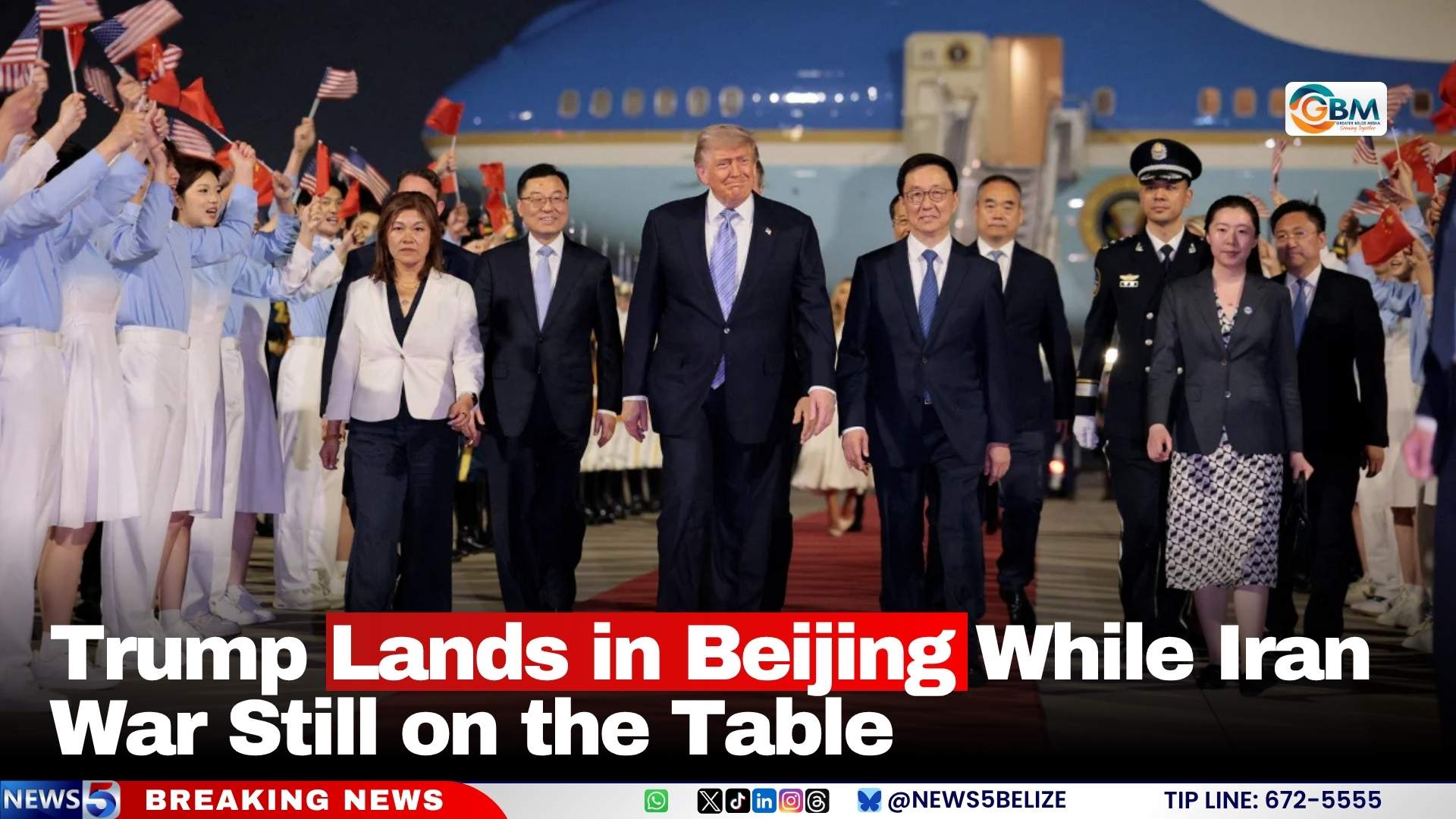
On May 13, 2026, U.S. President Donald Trump touched down in Beijing, kicking off a long-awaited bilateral summit with Chinese President Xi Jinping – his first visit to the country since 2017. The high-profile diplomatic trip was originally postponed earlier this year, after Trump pushed back the travel schedule betting that the ongoing armed conflict between the U.S. and Iran would reach a resolution within a matter of weeks. To date, however, no permanent peace agreement has been finalized between the two sides, leaving the threat of sustained conflict hanging over the summit.
The welcoming ceremony for Trump’s delegation followed longstanding diplomatic protocol, featuring full ceremonial pomp and public crowds gathered to wave both the flags of the United States and China. Joining Trump on the trip are multiple senior White House and cabinet officials, alongside more than a dozen top American business leaders – including Apple CEO Tim Cook and Tesla CEO Elon Musk, highlighting the strong economic and commercial components of the summit’s agenda.
While trade cooperation and technological collaboration are core topics on the meeting schedule, the unresolved U.S.-Iran standoff is poised to take center stage during bilateral discussions. The U.S. has maintained a strict naval blockade around the Strait of Hormuz, a critical global maritime chokepoint that handles roughly a fifth of the world’s daily oil trade. For China, the world’s largest importer of Iranian crude, the ongoing closure and heightened military activity in the strait has created significant energy security and economic risks.
According to reporting from CNN, the Trump administration is expected to push China to leverage its longstanding economic and diplomatic influence with Tehran to help de-escalate tensions. Trump has publicly framed the current fragile lull in hostilities as being on “massive life support”, making clear he aims to secure Chinese backing to reopen the strait to commercial shipping and reach a permanent ceasefire between the U.S. and Iran. Official working meetings between Trump and President Xi are scheduled to unfold over the coming two days, with global markets and diplomatic observers closely watching for outcomes that could reshape regional security and international trade flows.
-
Volksgezondheid: risico op hantavirus in Suriname momenteel zeer laag
Following an international hantavirus scare linked to a recent cruise ship infection that resulted in one fatality, Suriname’s Ministry of Public Health, Welfare and Labor is reassuring the public there is no cause for panic, while urging heightened awareness across the country.
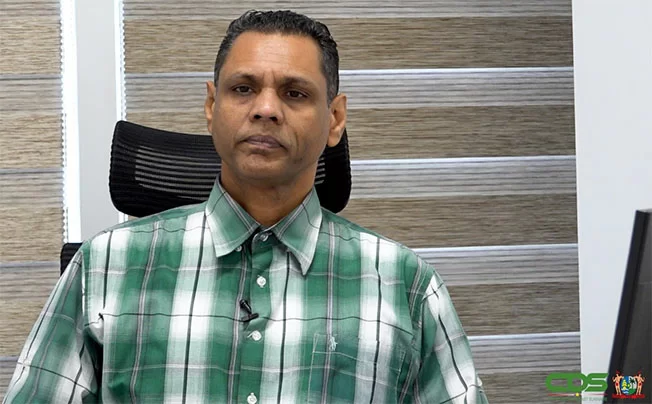
Rakesh Gajadhar Sukul, Director of Public Health of Suriname, confirmed that the overall risk of a hantavirus outbreak for Suriname and other Caribbean nations remains low, despite global concern sparked by the incident involving a Netherlands-registered cruise vessel. Two passengers on the ship developed flu-like symptoms that rapidly progressed into severe pneumonia, with one patient ultimately succumbing to the infection. Subsequent testing confirmed the cause was hantavirus, which the couple contracted after exposure to infected rodents during a trip to Argentina.
Gajadhar Sukul shared official guidance via the Suriname Communication Service, explaining that hantavirus is primarily transmitted through the urine, feces, and saliva of infected rodents. The Caribbean Public Health Agency (CARPHA) has corroborated the assessment that regional risk is limited, a conclusion that is largely based on the fact that the specific rodent species that carry the virus are not native to the Caribbean region.
The director emphasized that hantavirus is not a newly emerging pathogen; medical science has documented the virus since the 1950s. After exposure, symptoms develop between one and six weeks, starting with flu-like indicators including fever, fatigue, and muscle aches. In severe cases, the infection advances to life-threatening severe pneumonia. Of particular note, the Andes variant involved in the cruise ship incident can spread between humans through close contact, and carries a 35% to 40% mortality rate for severe cases.
Suriname’s health authorities are currently focusing their efforts on prevention and public hygiene. While the virus-carrying rodents are not present locally, Gajadhar Sukul stressed that Suriname must remain alert to other rodent-borne diseases already present in the region, such as Weil’s disease. The ministry is calling on all communities to avoid contact with rodents and maintain clean living environments. Simple preventive measures including sealing gaps and openings in residential structures, storing food in secure rodent-proof containers, and preventing waste accumulation can drastically lower the risk of any rodent-borne infection, according to the official.
In addition to community hygiene guidance, the Suriname government has partnered with the Maritime Authority of Suriname (MAS) to implement stricter inspections for shipping and import activities. This enhanced screening is designed to prevent new pathogens from being introduced to the country’s borders.
Gajadhar Sukul noted that while drastic large-scale public health measures are not justified at this time, sustained vigilance remains a critical priority. “We need to keep the virus out of our borders, while also ensuring we can deploy a rapid response if any suspected cases do arise,” he said.
Beyond hantavirus, the ministry continues to prioritize public health monitoring and education for other common vector-borne diseases endemic to the region, including dengue, Zika, chikungunya, and malaria. “We urge all residents to follow official public health guidance, and help eliminate conditions that create breeding grounds for rodents. This is how we protect not just ourselves, but our entire community,” the public health director stated.
-
Guyana, US to hold technical talks on bauxite, other investment opportunities
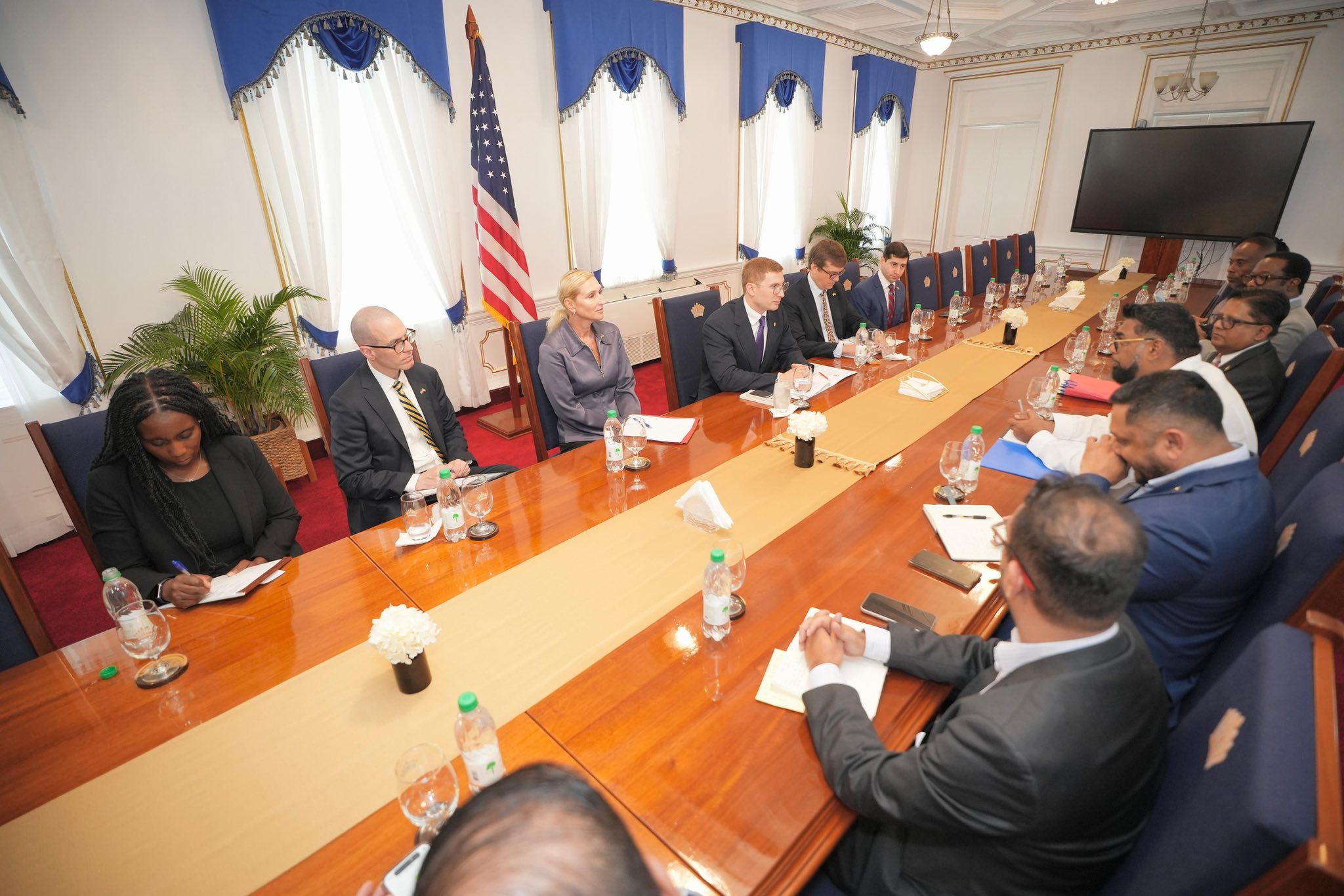
On Wednesday, May 13, 2026, a high-stakes bilateral meeting between Guyanese President Dr. Irfaan Ali and visiting U.S. Under Secretary of State for Economic Affairs Jacob Helberg opened a new chapter in bilateral economic cooperation, with plans for deepened engagement on targeted investments spanning multiple key industries. The diplomatic gathering, held at Guyana’s State House, included senior delegations from both sides: Helberg was accompanied by U.S. Ambassador to Guyana Nicole Theriot, while President Ali was joined by cabinet ministers Dr. Ashni Singh, Hugh Todd, Vickram Bharrat and Zulfikar Ally, alongside Foreign Secretary Robert Persaud and National Intelligence and Security Agency Director Colonel Sheldon Howell.
Shortly after the closed-door talks, during a press briefing at the U.S. Embassy ahead of wrapping up his one-day official visit to the South American nation, Helberg outlined the tangible outcomes of the discussions, revealing that detailed technical working-level talks will follow the high-level dialogue, with a potential permanent bilateral working group under consideration to maintain consistent progress and accountability on cooperation commitments.
A core focus of the talks was expanding private investment in Guyana’s already established bauxite mining sector. Currently, two operators—China’s BOSAI Minerals and U.S.-owned First Bauxite—run active production operations in the country, while Russian firm RUSAL is on track to restart its Guyanese activities later this year, after suspending operations in 2018 amid a major labor dispute. Helberg noted that discussions centered on expanding bauxite output and market access, with new U.S. investment targeting two key enablers: critical transportation infrastructure, particularly road networks, and cutting-edge autonomous trucking technology. These upgrades, he explained, would act as a catalyst to move more Guyanese bauxite to global markets faster and more efficiently.
Beyond the bauxite sector, Helberg highlighted a wide range of untapped investment opportunities for U.S. firms in Guyana. Pointing to the $55 trillion in liquid assets held by the U.S. private sector—what he called the world’s largest single pool of investment capital that would deliver mutual benefits to both Guyana and the United States—he identified promising sectors including data center development, tourism expansion, agricultural and food technology, and broader digital innovation. A key highlighted area of potential cooperation is partnership between Guyana and Silicon Valley, the global epicenter of high-tech innovation. Helberg noted that Guyana offers unique advantages for Silicon Valley firms, from testing new emerging technologies to establishing permanent local operations. He also outlined a transformative potential for artificial intelligence integration: AI-powered logistics infrastructure could position Guyana as a key regional hub that cuts transit times for northern Brazilian goods accessing Caribbean markets.
Closing his remarks, Helberg offered strong praise for the Guyanese government’s approach to economic growth, noting that he left the meeting confident in President Ali’s decisive leadership. “I can confidently say after this trip that President Ali does bring a level of decisiveness that really avails an opportunity to be transformative for the country of Guyana,” he said.