
作者: admin

  • Travel expert warns volatile airfares could hurt tourism

    Travel expert warns volatile airfares could hurt tourism

    At the inaugural Love Caribbean: Jamaica Edition 2026 conference hosted this week at Princess Grand Jamaica in Green Island, Hanover, a veteran travel industry specialist has sounded the alarm over volatile airline ticket pricing, urging immediate coordinated action between air carriers and local accommodation providers to protect Jamaica’s core tourism sector.

    Claire Robinson, a destination wedding expert and travel agency owner with decades of cross-sector experience including a previous role at the now-shuttered Air Jamaica, laid out her concerns during a panel discussion Tuesday, highlighting recurring disruptions that have eroded client trust. Robinson, who has been named a Destination Jamaica Top 50 Travel Advisor for nine straight years and currently operates Claire Skies Travel from the United States, explained that today’s extreme price swings create impossible barriers for travel planners. Even when agents hold quoted combined airfare and hotel packages for just 24 hours to let clients decide, she noted, return calls often reveal ticket prices have jumped dramatically—far beyond minor, expected adjustments.

    The vast majority of global airlines now rely on dynamic pricing frameworks, which adjust ticket values in real time based on variables like booking demand, route popularity, and operating costs. Looking back to her earlier career in aviation, Robinson recalled a far more stable pricing environment, when promotional weekend fares from Baltimore to Jamaica remained fixed for an entire travel season. While she acknowledged that shifting industry conditions—most notably sustained high fuel costs that have pushed up airline operating expenses—have transformed the sector, she argued that daily, unpredictable price fluctuations pose a systemic risk to Jamaica’s entire tourism ecosystem.

    “Without aligned collaboration across all parts of the travel industry, we are setting ourselves up for major challenges in the years ahead,” Robinson warned, emphasizing that the current volatility will ultimately drive away prospective visitors who are deterred by unpredictable pricing.

    In response to Robinson’s comments, Jamaica’s Deputy Director of Tourism Philip Rose, who also attended the four-day industry conference, pushed back on the critique, noting that existing partnerships between airlines and large Jamaican resorts are already well established. The Jamaica Tourist Board regularly brings both sides together at conferences and strategic planning meetings to coordinate on critical planning, from airline flight capacity planning to resort expansion projects, Rose explained.

    “These two segments of the industry work hand in hand on core growth initiatives,” he said. On the topic of pricing itself, Rose framed dynamic pricing as a standard market practice that aligns with how any industry operates: businesses set prices based on what consumers are willing to pay.

    As a long-standing top global travel destination, Jamaica draws consistent high demand, and both resorts and airlines operate as commercial entities that need to turn a profit, Rose noted. Far more concerning than fluctuating prices, he argued, is the risk of deep price drops that would cheapen Jamaica’s brand as a premium travel destination—a outcome that he said has not occurred in Jamaica’s modern tourism history and is unlikely to emerge anytime soon.

    The 2026 conference, which ran from Monday to Thursday, brought together hundreds of wedding planners, travel advisors, and travel industry leaders to focus on the fast-growing niche of destination weddings and romance travel—one of the most lucrative segments of Jamaica’s tourism economy.

  • ‘Journey to Kingston’

    ‘Journey to Kingston’

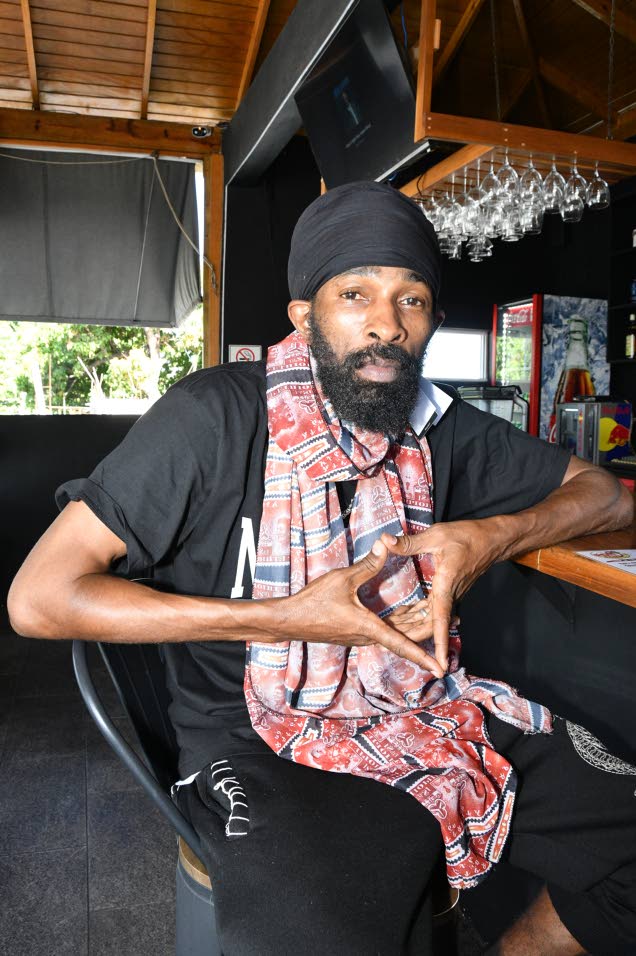
    Veteran dancehall performer Spragga Benz is not settling for a standard private birthday party to mark his latest milestone. Instead, the Jamaican entertainer has built an ambitious multi-city tour experience titled ‘Journey to Kingston’, designed to honor his decades-long career, his closest collaborators, and the cultural roots that shaped his iconic sound.

    The cross-continental event series will launch its first stop on May 30 in Miramar, Florida, before moving to a second showing in Philadelphia, and wrapping with a star-studded flagship showcase in Kingston, Jamaica — the city that the artist says remains the heart of both his personal identity and artistic practice. In a lighthearted interview, Spragga Benz teased that the opening Florida event will feature a stacked lineup including fellow dancehall greats Wayne Wonder and Agent Sasco, with surprise guests making unannounced appearances throughout the night. He framed the opening stop as an energetic ‘Camperdown takeover’, nodding to his Jamaican artistic origins.

    Beyond the fanfare of a birthday celebration, Spragga Benz emphasized that the core vision for the series centers on reflection and gratitude for the community that has supported his career across more than 40 years. The tour is designed as a tribute to the peers, mentors, and fans who have walked alongside him throughout his evolution as an artist. ‘It’s going to be a celebration of my journey in music to this point; people who I met along the way, great friends who always support each other, and we’re getting the opportunity now to showcase it in a really clean and classical manner,’ he explained.

    The final Kingston showcase will carry unique cultural and personal weight, with a innovative format that reimagines traditional dancehall performance. Spragga Benz plans to blend decades of reggae and dancehall nostalgia with full orchestral arrangements, transforming the event from a standard concert into a one-of-a-kind cultural experience. The lineup will include appearances from multiple members of the iconic Marley family: Stephen, Damian, and Ky-Mani Marley will share the stage alongside rising young talent including Mystic and Yohan. Orchestral accompaniment will be provided by musicians from the Edna Manley College of the Visual and Performing Arts School of Music, one of the Caribbean’s most prestigious performing arts institutions, a choice Spragga Benz says aligns with his goal of framing Kingston as a culturally rich classical city. ‘We have Edna Manley College of the Visual and Performing Arts School of Music, which is one of the top schools of music in the Caribbean, so we are supposed to showcase the thing, and not just in a boogu-yagga way,’ he noted.

    The performances will pull heavily from what Spragga Benz’s longtime collaborator and friend Wayne Wonder playfully calls their ‘lion-logue’ — a sprawling, decades-spanning catalog of beloved hit tracks that sets veteran industry artists apart from newer acts. Spragga Benz noted that even he could perform for a full two hours drawing just from his own most iconic work, and the combined lineup would have no shortage of fan favorites. Instead of rushing through dozens of tracks to fill time, the team has curated a tight setlist of songs that hold deep personal meaning from across their collective journey in the industry. ‘Each of us combined, it is going to be something special. We won’t be doing every song from our catalogue, just specially chosen songs that mean a lot to us along our journey coming up,’ he said.

    The celebratory tour also mirrors the remarkable evolution of Spragga Benz’s career, which has expanded far beyond the boundaries of dancehall music. From starting out as a young emerging artist to expanding into film and other areas of the entertainment industry, growth has been a consistent throughline in his decades-long career. ‘My career has moved a lot from where it started from, definitely, because now I’m even involved in movies and other aspects of entertainment as well. And, for a person who never even saw themselves as an artiste or deejay, it’s been a good ride for me,’ he reflected. ‘I see a lot of growth along the way for me.’

    That same theme of gratitude, maturity, and growth is central to Spragga Benz’s newest single, *Hallelujah*, a track born from a period of deep personal introspection. He explains that the song centers on the importance of giving thanks for life’s blessings, and reflects the perspective he has gained with age. ‘Yuh haffi give thanks inna everything and give thanks for the giving of thanks. As we are talking about the journey and growth in life. I see a lot of growth in myself, and Hallelujah kinda talk about a lot of that,’ he said. ‘At one stage, as an entertainer, I was definitely out there, but now, at this age, I see that I don’t need to be certain places or do and say certain things. And we have enough experience now to try impart knowledge to others and show them certain things never work and advise them to regroup when things aren’t working.’

    For Spragga Benz, the track captures the quiet peace and balance he has found in this stage of his life, a far cry from the chaotic pace of his earlier career. ‘I can kick back inna mi pajamas right now and be a better father, that’s what Hallelujah is for me,’ he said. He added that the track’s concept was inspired by his longtime friend Banka, who helped shape the song’s core narrative, and that the track’s music video was filmed on location in Barbados, capturing the laid-back, grateful energy of the song.

    As anticipation builds for the Journey to Kingston series, the event is shaping up to be far more than a retrospective of a legendary career. Instead, it offers a carefully curated look at an artist who continues to grow and evolve, honoring his Jamaican roots, celebrating the community that lifted him up, and sharing the hard-won wisdom that comes with decades in the entertainment industry.

  • Dream Catcher untouchable in Portmore Stakes romp

    Dream Catcher untouchable in Portmore Stakes romp

    On Sunday, May 10, 2026, Caymanas Park played host to the Portmore Stakes, the last major prep race for the coming season’s coveted Classic events, and bay filly Dream Catcher turned the 7½-furlong (1,500-meter) contest into a one-horse showcase. Trained by leading conditioner Jason DaCosta and ridden with tactical patience by jockey Tevin Foster, Dream Catcher crossed the finish line an dominant 8¼ lengths clear of the field, stopping the timer at 1:34.3 with consistent intermediate splits of 23.0, 46.0, 1:13.4, and 1:27.1.

    The Jamaica Observer’s Supreme Racing Guide broke down the top-finishing fillies and their prospects for the upcoming 1000 Guineas, highlighting just how comprehensive Dream Catcher’s victory was. Sitting off the early leaders through the first three-quarters of the race, Dream Catcher entered the home stretch in fourth position before unleashing a devastating late acceleration that swept past her rivals as if they were stationary. The performance was an almost exact repeat of her earlier dominant win in the Thornbird Stakes, leaving no question that she is the undisputed top runner in her three-year-old filly division. With back-to-back stakes victories over the same crop, Dream Catcher enters the 1000 Guineas as the overwhelming favorite, and experts agree only a career-best performance from another contender will be enough to deny her on Classic day.

    Second place went to Taylor Made, who rebounded impressively from a disappointing finish in the Thornbird Stakes. An equipment adjustment sharpened her reaction out of the starting gate, and she raced among the front runners for the full trip, hitting the lead as the field turned for home. She looked poised to hold on until her stablemate Dream Catcher swept past her in just a few strides. While she could not match the winner’s explosive closing speed, her strong effort confirms she remains competitive at the highest level, and she is expected to be a solid contender for a placing in the 1000 Guineas.

    Third place went to Lexi Lou, who put in a gritty performance after racing near the front through most of the contest. She could not match Dream Catcher’s late burst and was outfinished by Taylor Made in the final furlong, but her tenacity suggests she will be a dangerous competitor in lower-level fields once the top filly moves on to the Classics.

    Sky Is The Limit entered the Portmore Stakes with long odds and ran exactly to expectations, finishing fourth. She never challenged the early pace but closed steadily through the final stretch to secure the position. While the performance was not eye-catching, it adds to her consistent record of solid runs, and she is one to watch as Classic distances increase later in the season.

    Passion And Beyond, bred to excel over longer distances, was expected to perform well but ran a steady, even race that left her short of contention in the sprint finish. She lacked the closing acceleration to challenge the front runners, but experts believe she will improve when moving to longer races, and she should not be counted out for the 1000 Guineas or the Jamaica Oaks.

    Pippa, stepping up to stakes competition after an impressive debut win, found the Portmore Stakes a step too far in class. She remained in contention through most of the race but faded in the final stretch, running out of steam. The outing is viewed as a valuable learning experience, and she is expected to improve with the added race time under her belt.

    Aliya’s Will ran true to form, plugging along through the race without ever threatening the leading contenders. Her performance confirms she will need to drop down in class to find competitive success.

    Pre-race favorite Another Wow turned in a surprisingly underwhelming run, trailing the field from the starting break and never finding her racing rhythm. She was beaten well before the final stretch, but connections remain confident she is a better runner than this result suggests and expect her to bounce back in her next start.

    One Ianzha Links was never in the mix, outpaced from the opening strides and unable to respond when the race accelerated.

    The race ended on an unfortunate note for Victorious Links, whose jockey fell from the saddle mid-race. Experts note no fair assessment of her performance can be made from the outing.

    Following the race, DaCosta greeted Dream Catcher and Foster back in the winner’s circle, capturing a memorable moment for the dominant favorite ahead of the 1000 Guineas.

  • BMW X1 sDrive18i: Excellent introduction

    BMW X1 sDrive18i: Excellent introduction

    As the entry-level model in BMW’s popular X-series of sport activity vehicles, the 2026 X1 is strategically positioned to introduce new drivers to the premium German automotive lifestyle, giving them a compelling first taste of the quality and performance that defines higher-tier models in the brand’s lineup. Unlike the brand’s past “Russian doll” design philosophy that saw nearly identical styling scaled across all models, BMW’s modern design approach leans into distinct visual identities for each vehicle while retaining core brand design DNA that makes every BMW instantly recognizable. The 2026 X1 embodies this shift perfectly.

    The latest iteration of the X1 has grown in dimensions, and BMW has used that extra space to craft a more rugged, squared-off silhouette that still carries all the classic familial design cues buyers expect. The most noticeable exterior updates live at the rear, where the 2026 model features a unique, one-of-a-kind light signature that sets it apart from larger X-series siblings. For buyers looking for a sportier aesthetic, the available M Sport package adds 18-inch performance wheels, while the high-gloss shadow line trim swaps standard bright exterior accents for a streamlined, monochromatic finish that leans into a modern, understated luxury vibe. From the side, upright proportions and large, smooth body panels give the X1 a substantial, mature presence, with a subtly extended roof edge that accentuates its flowing, dynamic silhouette.

    Step up to the 2026 X1, and the convenience of keyless entry immediately preps the vehicle for your departure. Inside, a thick, tactile leather steering wheel sits in front of a power-adjustable driver’s seat with memory functionality, and both front-row seats strike an ideal balance between bolstered support for spirited driving and plush cushioning for long highway stretches. Staying true to BMW’s traditional craftsmanship, the entire cabin is trimmed in high-quality materials that match the solid, premium build quality, with an ergonomic layout that integrates cutting-edge tech into a clean, modern dashboard. Unique details like the sculpted door handles add subtle character to the interior design.

    Leveraging its increased exterior footprint, the 2026 X1 delivers expansive passenger space and a full array of storage solutions that meet the practical demands of the compact SUV segment. A standard panoramic sunroof amplifies the sense of openness during daytime drives, while after dark, it pairs with configurable ambient lighting to enhance the cabin’s refined, welcoming atmosphere. At the heart of the X1’s tech suite is the BMW Live Cockpit Plus system, which pairs two crisp full-digital displays: a 10.25-inch customizable instrument cluster and a 10.7-inch central infotainment touchscreen. Both displays offer sharp graphics and flexible customization options to put every piece of information a driver needs front and center.

    BMW’s latest iDrive infotainment system operates with responsive, smooth performance, and added connectivity comes via BMW Connected Plus Unlimited, which stores driver profile presets, delivers real-time active local navigation, and enables the native BMW voice assistant to control most of the vehicle’s automatic and powered convenience features.

    No BMW would live up to the brand’s reputation without engaging driving dynamics, and the X1 sDrive18i does not disappoint. Its 1.5-litre turbocharged three-cylinder engine has been upgraded with extra power and torque, now pushing out 156 horsepower and 170 lb-ft of torque to the front wheels through a quick-shifting seven-speed dual-clutch automatic transmission. This output delivers more than enough low-end and midrange pulling power to feel playful whether you’re navigating crowded city streets or carving through winding backcountry roads. The wide, accessible torque band lets the X1 accelerate quickly to maneuver through gaps in highway traffic and hold its own in fast-moving conditions, and its compact footprint and snappy transmission make it agile on narrow country lanes, darting smoothly from corner to corner. Despite its punchy performance, the engine still delivers commendable fuel efficiency for daily driving.

    The X1’s chassis matches the engine’s performance, with a ride tune that balances sporty responsiveness with compliant comfort, keeping the vehicle composed over rough pavement while inspiring confidence through sharp steering and dependable braking.

    After multiple generations of refinement, the X1 has evolved into a standout luxury compact SUV that can hold its own even in its base sDrive18i trim, packing plenty of modern technology, premium amenities, generous passenger space, and engaging driving dynamics. But it also succeeds in its core role as an entry point to the BMW brand: by delivering such a satisfying premium experience, the 2026 X1 lays a clear foundation that encourages owners to move up through the BMW model lineup as their needs and budgets grow, cementing its place as the perfect introduction to the BMW ecosystem.

  • BIG MAN TIME

    BIG MAN TIME

    Against all pre-playoff predictions that wrote them off as title contenders, two-time defending Jamaica Premier League (JPL) champions Cavalier FC have pulled off one of the most dramatic comebacks in this season’s knockout competition, securing their spot in Sunday’s semi-final showdown with Montego Bay United after a 2-0 second-leg quarter-final victory over Waterhouse at Kingston’s National Stadium on May 13. The win sealed a 4-2 aggregate triumph for Cavalier, capping a stunning reversal after the club fell 0-2 behind in the first leg of the tie.

    Goals from Dwayne Allen in the 29th minute and club talisman Christopher Ainsworth 50 minutes later locked in the result for Cavalier, who scored four unanswered goals across both legs to turn the tide of the series. What makes the comeback even more remarkable is the long-standing drought Cavalier had against Wednesday’s opponent: the club had not beaten Waterhouse in their previous six meetings, but assistant coach David Laylor revealed the entire squad never doubted the seventh meeting would deliver a different outcome.

    “Everyone from the players to the coaching staff believed we were at least two goals stronger than them,” Laylor explained post-match. “They went up 2-0 in the first leg, and we still pulled two back. Once we kept a clean sheet, we knew we had what it took to get the winning goals. That was always the game plan.”

    Cavalier’s road to the semi-finals has been far from smooth. The club entered a rebuilding phase this year after losing several key stars from their back-to-back title runs, including Reggae Boyz internationals Richard King, Dwayne “Busy” Atkinson and Jalmaro Calvin. The transition showed in early results: the club failed to defend its Concacaf Caribbean Cup crown and spent much of the regular season mired in mid-table, dropping as low as eighth at one point. Even their final fifth-place finish – secured after a late surge that earned 16 points from a possible 21 in their final five matches – marked their lowest league standing in four years.

    While heavyweights Mount Pleasant Football Academy and semi-final opponents Montego Bay United have drawn most of the media praise and fan support this season, Laylor said outsiders have made a mistake counting out the two-time reigning champions. “I don’t understand why anyone would doubt this club,” he said. “We are the defending champions, we won it two years running. When we get to the playoffs, we raise our game to a whole different level, a whole different intensity. We didn’t come this far just to make up the numbers – we’re here to win.”

    A victory on Sunday would send Cavalier to the final, and put the club within touching distance of its fourth JPL title in five seasons. For Waterhouse, by contrast, the result extends a 20-year wait for a league title that shows no sign of ending.

    The 2026 season has already brought major off-pitch change for Cavalier: Argentine manager Javier Ainstein replaced long-serving head coach Marcel Gayle in January, with Gayle shifting to a role as an assistant coach on the bench. Tasked with guiding the rebuilding squad back to the top of Jamaican football, Ainstein remains uncertain whether he will stay at the club beyond the current season. “Maybe,” he said of a contract extension. “In football, you always have to stay cautious. I have a contract in place, but you never know what the future holds.”

    For Waterhouse midfielder Omani Leacock, the collapse against Cavalier – after a promising 2-0 first-leg lead – highlights key lessons the club must absorb to compete for honours in future campaigns. “Honestly, we didn’t play the football we’re used to playing,” Leacock said. “We struggled all night, and I think it comes down to experience at this high level. A lot of our lads aren’t used to these knockout pressure matches. I think we can learn from this, come back stronger next year, and stay true to our style no matter what the atmosphere or the crowd throws at us.”

  • Cummings pledges ‘every effort’ amidst ‘super critical’ Grenadine water crisis

    Cummings pledges ‘every effort’ amidst ‘super critical’ Grenadine water crisis

    A devastating combination of historic low rainfall, lingering storm damage, and growing demand has pushed the Grenadine Islands of St. Vincent and the Grenadines into what health authorities are calling a “super critical” water shortage, prompting emergency relief measures while the government moves forward with long-overdue infrastructure projects to end chronic water insecurity in the region.

    In a radio interview with NBC Radio on May 14, 2026, Health Minister Daniel Cummings — a former general manager of the country’s Central Water and Sewerage Authority (CWSA) — explained that while the entire nation is grappling with drought conditions amplified by the 2021 eruption of La Soufriere volcano, the most severe crisis is concentrated in the smaller Grenadine islands. Unlike mainland St. Vincent, which draws water from natural rivers and mountain springs, the Grenadines have no permanent surface streams and limited groundwater reserves, leaving the chain almost entirely dependent on harvested rainwater stored in private household tanks and public catchment systems.

    Cummings outlined three overlapping factors that pushed the region into its current emergency. First, the 2025 wet season brought just 687.1 millimeters of rainfall across the country — less than half the average recorded over the previous four years, which saw between 1,455 mm and 1,552 mm of rain annually. Second, Hurricane Beryl, which made landfall in July 2024, caused widespread damage to the region’s rain-harvesting infrastructure: many rooftops and their water-channeling guttering systems were destroyed, hundreds of private storage tanks were shattered or contaminated after being breached, and public hillside catchment systems that feed large communal storage tanks were also severely damaged. Third, growing domestic and commercial demand for water has stretched already depleted reserves even thinner.

    The lingering impacts of the 2021 La Soufriere eruption have also worsened national water stress, Cummings added. The volcanic blast destroyed vast swathes of mountain vegetation on mainland St. Vincent, reducing the natural retention of rainfall and lowering output from the rivers and springs that supply the mainland. Combined with the ongoing rainfall deficit, this has left the country with far less available water to meet population needs.

    Since mid-January 2026, the CWSA has been urging all residents to activate their personal household water storage plans as drought conditions worsened. Now, facing an acute crisis in the Grenadines, the authority is relying on what Cummings calls an expensive and stopgap but unavoidable emergency measure: shipping bulk water by sea to the southernmost islands of the chain, including Union Island, before distributing it to communities via trucks. The CWSA has rented multiple private vessels to accommodate the emergency deliveries, and service frequency is being adjusted in real time based on need — for example, officials added a second delivery to the southern Grenadines within three days after the first shipment proved insufficient to meet demand.

    “The transportation of water by boats and subsequently by trucks to the various parts of the Grenadine islands is the most expensive and improper way of doing it, but it has got to be done, because the situation is now super critical,” Cummings said, adding that the agency will continue emergency deliveries for as long as they are required. He praised CWSA staff for their rapid response, noting that the agency is performing beautifully within its current operational constraints.

    To address gaps in equitable distribution, the CWSA has implemented a new oversight system: a dedicated CWSA staff member is now posted on each Grenadine island to supervise water distribution, ensuring that no resident is left without access to water for extended periods. The agency is also continuously monitoring storage levels, community demand, and delivery intervals to make proactive adjustments to supply, to maintain a minimum baseline of water access for all residents. As the official June 1 start of the 2026 rainy season approaches, CWSA teams are also working to clean and sanitize damaged public storage tanks to capture as much rainfall as possible when wet weather arrives.

    Looking beyond emergency relief, Cummings confirmed the country is on track to secure roughly US$53 million in investment for long-term water infrastructure in the Grenadines, including desalination plants, expanded storage facilities, and a full transmission and distribution network. The minister, who first developed these plans when he led the CWSA in the early 2000s, said the projects will finally bring the Grenadines a reliable year-round piped water supply matching the system that has served neighboring Grenada’s Grenadine islands — Carriacou and Petite Martinique — for decades. Emergency water shipments and other short-term measures are only a stopgap, he noted, and the long-awaited infrastructure projects will address the root of the Grenadines’ chronic water insecurity.

  • Xi Warns Trump on Taiwan as U.S.-China Talks Focus on Global Tensions

    Xi Warns Trump on Taiwan as U.S.-China Talks Focus on Global Tensions

    On May 14, 2026, the first day of high-level bilateral talks between Chinese President Xi Jinping and U.S. President Donald Trump concluded in Beijing, bringing the world’s two largest economies together to address a raft of pressing global and bilateral issues against a backdrop of longstanding geopolitical friction. The summit opened with formal ceremonial welcomes, followed by closed-door bilateral discussions, a state banquet held at Beijing’s iconic Great Hall of the People, and cultural excursions across the capital, with a second day of negotiations scheduled ahead of Trump’s departure on Friday.

    In his address at the state banquet, President Xi framed the bilateral relationship between China and the United States as the most consequential bilateral partnership for global stability and prosperity. He stressed that both nations bear a shared responsibility to manage ties responsibly, noting, “We must make it work and never mess it up.” Yet Xi also issued a firm, clear warning on the Taiwan issue, which has remained the single most sensitive flashpoint in U.S.-China relations for decades. Xi identified Taiwan as the most important core issue in bilateral ties, cautioning that any mismanagement of the question would trigger a “very dangerous situation” with far-reaching consequences for both countries and the broader Asia-Pacific region.

    The long-running dispute over Taiwan remains a persistent source of friction: Beijing views the self-governing island as an inalienable part of Chinese territory and has repeatedly pledged to achieve reunification, reserving the right to use military force if necessary. The United States, meanwhile, maintains unofficial diplomatic and security ties with Taipei, and continues to supply defensive military equipment to the island under its longstanding one-China policy framework. Following the first day of talks, U.S. Secretary of State Marco Rubio reaffirmed that Washington’s Taiwan policy remains unchanged, emphasizing that any unilateral, forced alteration to the status quo across the Taiwan Strait would damage the interests of both China and the United States.

    Beyond the Taiwan issue, the first day of talks focused heavily on the escalating regional conflict involving Iran and its cascading risks to global energy security. Senior White House officials confirmed that both leaders reached a shared agreement that the Strait of Hormuz, the strategic waterway through which roughly a fifth of global oil supplies pass each day, must remain open to commercial shipping and must not be militarized by any party.

    Rubio added that U.S. negotiators brought up longstanding American concerns over Iran’s nuclear development program during the discussions, though the U.S. side did not formally request direct intervention or assistance from China on the issue. Chinese representatives, for their part, reiterated Beijing’s longstanding public position that it opposes the development of nuclear weapons by Iran, aligning with the international community’s non-proliferation goals.

    A notable feature of President Trump’s visit is the delegation of top American business leaders accompanying him, including high-profile figures Tesla and SpaceX CEO Elon Musk, Apple CEO Tim Cook, and NVIDIA CEO Jensen Huang. Trump told reporters during the trip that the executives joined the visit to demonstrate respect for bilateral commercial ties and to work toward strengthening economic cooperation between U.S. firms and Chinese partners. The talks are expected to produce further clarity on bilateral economic and trade commitments when negotiations conclude on Friday.

  • Leacock defends decision to put police in schools

    Leacock defends decision to put police in schools

    The government of St. Vincent and the Grenadines is moving forward with a controversial plan to station full-time regular police officers at all schools across the country, defying growing public criticism from legal and community leaders who warn the policy will militarize the nation’s education system. Deputy Prime Minister and National Security Minister St. Clair Leacock confirmed the policy’s progression in an interview with local broadcaster NBC on Wednesday, announcing that two Assistant Commissioners of Police, Benzil Samuel and Hezron Ballantyne, will oversee the rollout and management of school security operations nationwide.

    Currently, only a subset of St. Vincent and the Grenadines’ schools have dedicated security personnel, Leacock explained. Larger campuses with 300 or more enrolled students currently rely on auxiliary police officers, but the minister argued these part-time and less trained personnel are stretched too thin to address rising safety concerns, and their authority is often not respected by students in the way that sworn regular police officers would be.

    The plan has drawn sharp pushback from prominent local voices, including Jomo Thomas, a well-known lawyer and social commentator. Thomas has argued that deploying uniformed police to school campuses does nothing to address the root causes of youth violence, and instead risks turning academic institutions into securitized spaces that mirror the punitive school environment seen in many United States public schools. He went so far as to label the proposal a “horrible suggestion” that erodes the foundations of a open, supportive learning environment.

    Leacock pushed back against these criticisms in his Wednesday remarks, emphasizing that the new police deployment is designed not just to crack down on student misbehavior, but to stabilize overall public safety across school campuses and their surrounding communities. While opponents argue that no police presence belongs in educational spaces, the minister made clear the government rejects this position, noting that the policy was developed through months of evidence-based engagement with education leaders and community stakeholders.

    Leacock explained that the national police high command has held extensive consultations with school principals, parent-teacher associations across the country, and completed independent site assessments to confirm the scope of safety challenges. He added that school leaders themselves have repeatedly requested law enforcement intervention to address ongoing issues that educators do not have the training or authority to resolve.

    The core goal of the new deployment, Leacock said, is to curb the unacceptable patterns of dangerous behavior that have plagued public spaces, including school campuses, in recent weeks. The minister declined to overstate the scale of the challenges facing the school system, but noted that the issues are already an open secret among the public, with principals regularly flagging growing concerns including weapons possession on campus, drug trafficking among students, and violent confrontations that put staff and peers at risk.

    Asked who should address these threats if not law enforcement, Leacock questioned why the public would expect untrained teachers to enter dangerous confrontations with students armed with weapons, or forgo routine searches to intercept contraband before it enters campus. Addressing these complex safety threats is the core responsibility of specialized, trained law enforcement, the minister concluded, reaffirming that the government will not abandon the plan despite continued opposition.

  • OECS workshop advances regional agenda for port reform and maritime digitalisation

    OECS workshop advances regional agenda for port reform and maritime digitalisation

    Between April 28 and 30, 2026, key stakeholders from across the Eastern Caribbean gathered in the island nation of Saint Lucia for a landmark high-level workshop focused on catalyzing urgent reform, digital transformation, and cross-border cooperation for the region’s port and maritime sectors. Hosted at the Bay Gardens Hotel, the three-day event was coordinated by the Organisation of Eastern Caribbean States (OECS) Commission, in strategic partnership with the World Bank and the European Union, bringing together cabinet ministers, senior public servants, top port and customs officials, regional maritime and logistics industry leaders, and global technical experts.

    This workshop forms a core preparatory step for the upcoming Caribbean Connectivity and Logistics Regional Programme, a major initiative backed by World Bank financing. It also laid critical groundwork for shaping future EU investment in the region’s maritime transport sector under the bloc’s Global Gateway Strategy. Central to all deliberations were two overlapping goals: upgrading outdated Eastern Caribbean maritime infrastructure and gateways, and forging stronger, more integrated collaboration between national customs and port authorities.

    Opening the formal proceedings, Shawn Edwards, Saint Lucia’s Minister for Infrastructure, Port Services and Energy, framed port system transformation as an existential priority for small island developing states across the region. “As global shipping shifts toward larger vessels and greater industry consolidation, we are already grappling with exorbitant freight costs, limited shipping route options, and chronic infrastructural gaps,” Edwards explained. “Against this backdrop, reform, digitalization, and cross-sector cooperation are not optional upgrades—they are non-negotiable requirements for our long-term economic growth and resilience.” Edwards emphasized that regional ports must continuously evolve to keep pace with the changing demands of the global economy.

    Darwin Telemaque, Chairman of the Port Management Association of the Caribbean, echoed Edwards’ call for urgent, decisive action to overhaul outdated port operations and regulatory frameworks across the region. Telemaque noted that many Eastern Caribbean ports still operate under bureaucratic and structural systems inherited from the mid-20th century, creating unnecessary barriers to growth. “The region is crying out for sweeping regulatory reform,” he said. “It is past time to free the private sector and ordinary citizens from the outdated shackles that have held back our ports for decades.”

    Alexander Agosti, Country Representative for Eastern Caribbean Countries at the World Bank, stressed that sustained political commitment is critical to unlocking long-term gains in port efficiency. Agosti pointed out that underperforming port systems drive up the cost of doing business across the Caribbean and limit access to new economic opportunities for local communities. He reaffirmed the World Bank’s ongoing commitment to supporting regional cooperation and building the institutional capacity required to implement durable, far-reaching reforms.

    For the European Union, Ambassador-designate Fiona Ramsey used the gathering to announce new financing mobilized through the Global Gateway Strategy to support maritime transport infrastructure modernization across the Eastern Caribbean. Ramsey noted that maritime shipping is the backbone of global trade, carrying 80% of total global trade volume by measure of size—and that figure rises to 90% for intra-regional trade across the Caribbean. She emphasized that coordinated regional integration is key to avoiding wasteful duplication of costly infrastructure projects, while unlocking new economic opportunities for local businesses, smallholder farmers, and emerging entrepreneurs.

    Ricardo James, Head of Trade Policy Development at the OECS Commission, also addressed attendees, highlighting the urgent need to strengthen implementation of existing regional trade and transport agreements and frameworks, including those established under the Revised Treaties of Basseterre and Chaguaramas. “We already have strong frameworks in place—now we need to activate and reactivate them,” James said. “We must use these existing agreements to set a clear agenda and work program to address the persistent challenges facing our transport sector.”

    Over the course of the three-day workshop, participants engaged in targeted working sessions to map the full range of challenges and opportunities tied to port reform, digital innovation, and enhanced customs cooperation. Port and customs leaders from across the region shared on-the-ground experiences with technological upgrades and cross-agency operational coordination, while representatives from the World Bank, International Maritime Organization, and European Union presented findings from ongoing research and outlined the technical support packages available to OECS member states.

    By the close of the event, attendees reached a broad consensus on the need to accelerate legislative, policy, regulatory, and institutional reforms designed to improve maritime transport governance, boost operational efficiency, and attract much-needed private and public investment in port infrastructure and integrated logistics systems. Discussions also repeatedly emphasized the value of breaking down silos between customs and port operations, through updated legal frameworks, restructured core business processes, and the widespread adoption of digital, data-driven management systems.

    In their closing statement, participants reaffirmed the urgent need to roll out practical, actionable reforms to strengthen port governance, secure sustainable long-term financing, and advance digital transformation across the entire Caribbean. The workshop also underscored the critical importance of coordinated regional action among OECS members and the wider CARICOM bloc to boost connectivity, transparency, and climate and economic resilience across the regional maritime sector.

  • Man Injured After Vehicle Crashes Into Tree on Airport Road

    Man Injured After Vehicle Crashes Into Tree on Airport Road

    On Thursday, local emergency response teams were dispatched to the scene of a road traffic incident along Airport Road, following reports that a passenger vehicle had veered off the roadway and collided with a stationary tree.

    Early official updates confirm that one male occupant of the vehicle sustained unspecified injuries in the crash. He was quickly evacuated by emergency medical services to the Sir Lester Bird Medical Centre, where he has been admitted for ongoing medical care. As of the latest update, medical authorities have not released any further details regarding the severity or nature of the man’s injuries to protect patient privacy.

    At this stage, the root causes and specific sequence of events that led to the collision remain unconfirmed, with multiple potential factors still under review. While first responders and crash investigation teams secured and processed the accident site, passing motorists faced significant traffic disruptions and extended travel delays along the route.

    Local law enforcement agencies have announced that a full formal investigation into the incident is now underway to clarify the circumstances of the crash and determine any contributing factors.