作者: admin

  • Throwing sprat to catch whale

    Throwing sprat to catch whale

    The old adage of “casting a sprat to catch a whale” has taken on a bitter new meaning in the context of St. Vincent and the Grenadines’ education sector, where the “whale” pulled to the surface is not a prize, but a decades-long, systemic crisis of underperformance and inequity.

    Recent public debate surrounding the all-girls Girls’ High School (GHS) has exposed a deeper community dysfunction than any issue tied to the institution alone: a widespread reluctance to engage with constructive criticism, with many critics choosing to attack the messenger rather than grapple with the core message of the assessment.

    While some readers grasped the central call for urgent, system-wide school oversight, and others aired personal grievances specific to GHS, a large share of observers rejected the entire critique out of hand. The core claim at the heart of the analysis, however, is impossible to dismiss: St. Vincent and the Grenadines’ public education system is failing its students and its national development goals. Oversight frameworks are chronically weak, core policies remain outdated after decades without revision, and the Ministry of Education has failed to uphold its mandatory review, monitoring, and evaluation duties outlined in the 2002 Education for All national policy.

    The author of the critique, writing under the pseudonym Critical Observer, poses two searing questions that have gone unanswered by education officials: When was the last full review of national education policy conducted? And more importantly, are current policies actually structured to help students develop into critical thinkers prepared to thrive in adult life and the modern workforce?

    Former GHS students describe the elite institution as largely unchanged from the rigid grammar school model of 40 years ago. While preserving tradition can hold cultural value, when tradition hardens into inflexible class hierarchies, narrow definitions of achievement, and exclusionary practices, it becomes a direct barrier to individual student growth and broader national progress.

    Multiple longstanding problematic practices have been documented at GHS: student and, in some cases, teacher perpetrated bullying; consistent favouritism toward children from wealthy households; prefect eligibility tied to a student’s ability to pay for extracurricular activities; exclusive overseas learning opportunities priced far out of reach for low-income students; and graduation events that cost upwards of $120,000, pushing already cash-strapped families into unsustainable debt.

    These systemic inequities do more than erode individual student self-esteem: they entrench cross-generational class inequality, weaken core civic values, and exacerbate widespread societal strains, including the island nation’s growing youth mental health crisis.

    Critics of the assessment often point to GHS’s track record of producing high-achieving, prominent alumni, but the author challenges this claim, asking whether that success stems from the school’s institutional structure, or from the outsized parental support and raw individual ambition of the students the school attracts. Even as GHS consistently enrolls the top-performing female students in the national CPEA examinations, the fundamental question remains: does its current curriculum actually prepare young women for life beyond secondary school?

    National economic and social data underscore the urgency of reform. In 2015, national youth unemployment hit 22.5%. For a small island nation of just 110,000 people grappling with more than $3 billion in national debt and a persistently high homicide rate, St. Vincent and the Grenadines cannot afford a system that produces graduates with formal qualifications but none of the practical skills needed to contribute to the workforce. Local employers regularly report that new school-leavers lack both the hard technical skills and soft professional attitude required for entry-level work; a shocking number struggle to complete basic, essential tasks like filling out a passport application form.

    Education officials often point to rising graduation rates and higher exam pass rates as proof of progress, but the author argues that a system that prioritizes formal credentials over actual merit fuels systemic corruption and long-term economic stagnation. What the nation needs is not just more graduates with certificates, but engaged, skilled citizens capable of contributing meaning to inclusive national growth.

    The takeaway from this assessment is unavoidable: St. Vincent and the Grenadines’ education system requires consistent independent oversight, evidence-based analysis, and urgent structural reform. Before dismissing calls for change, the author urges the public and education leaders to confront the hard truths laid out in the critique. The future of the nation’s children, and the future of the country itself, depends on meaningful action.
  • Education Minister Daryll Matthew Attends Global AI Education Conference in China

    Education Minister Daryll Matthew Attends Global AI Education Conference in China

    From May 11 to 13, the eastern Chinese city of Hangzhou has become the global hub for conversations reshaping the future of learning, playing host to the 2026 World Digital Education Conference. This year’s landmark gathering, centered on the theme “AI+Education: Transformation, Development, Governance,” draws together cabinet-level education officials, pioneering tech innovators, veteran educators and cross-sector leaders from every corner of the globe, united by a shared goal of exploring artificial intelligence’s evolving role in reimagining 21st-century education.

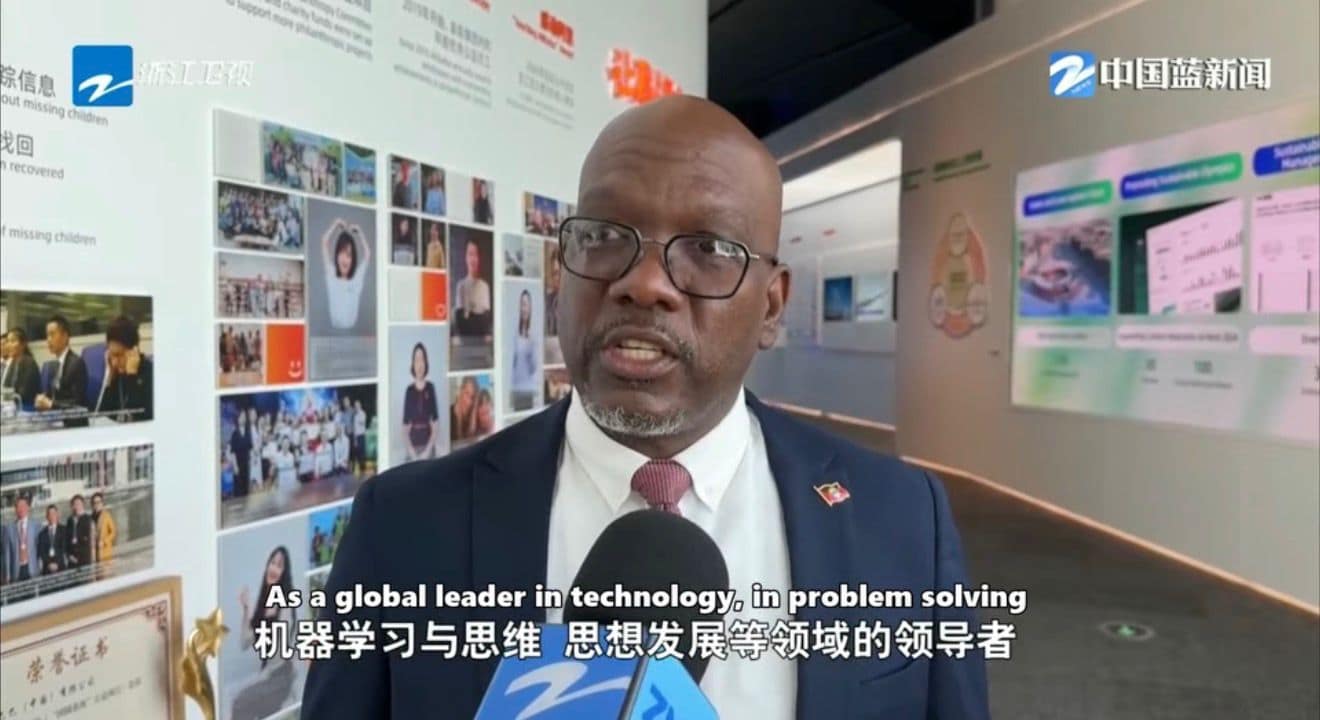
    Among the high-level delegates in attendance is Daryll Matthew, Education Minister of Antigua and Barbuda, who traveled to China to take part in the collaborative dialogue. In his remarks during the conference, Matthew offered substantial praise for China’s decades-long trajectory of technological progress and breakthrough innovation. He emphasized that over the past 30 to 40 years, China has cemented its position as a worldwide leader across key technology spaces, including machine learning, large-scale problem solving, and iterative development of cutting-edge technological solutions.

    “China has emerged over the last three or four decades as a global leader in technology, in problem solving, in machine learning and in thinking, in thought development,” Matthew stated publicly during the event.

    For small island developing states like Antigua and Barbuda, the conference serves as a critical opportunity to access cutting-edge insights and scalable models for digital education. Matthew made clear that his nation intends to leverage the ideas and innovative frameworks showcased at the gathering to strengthen its own education ecosystem over the coming years. “And I’m hoping that we can over time adopt in my country of Antigua and Barbuda,” he added, highlighting the long-term ambition for knowledge-sharing and policy adoption.

    Beyond individual national partnerships, the conference is structured to advance global collective action: participating stakeholders are working collaboratively to map out how AI can modernize outdated education systems, elevate student learning results, and contribute to the United Nations’ sustainable development goals. At the same time, delegates are actively debating and building consensus around frameworks for inclusive, responsible governance that ensures AI integration in education is equitable, secure, and accessible to learners across all income and regional groups.

  • ASP Frankie Thomas Wins Top Caribbean Community Policing Award

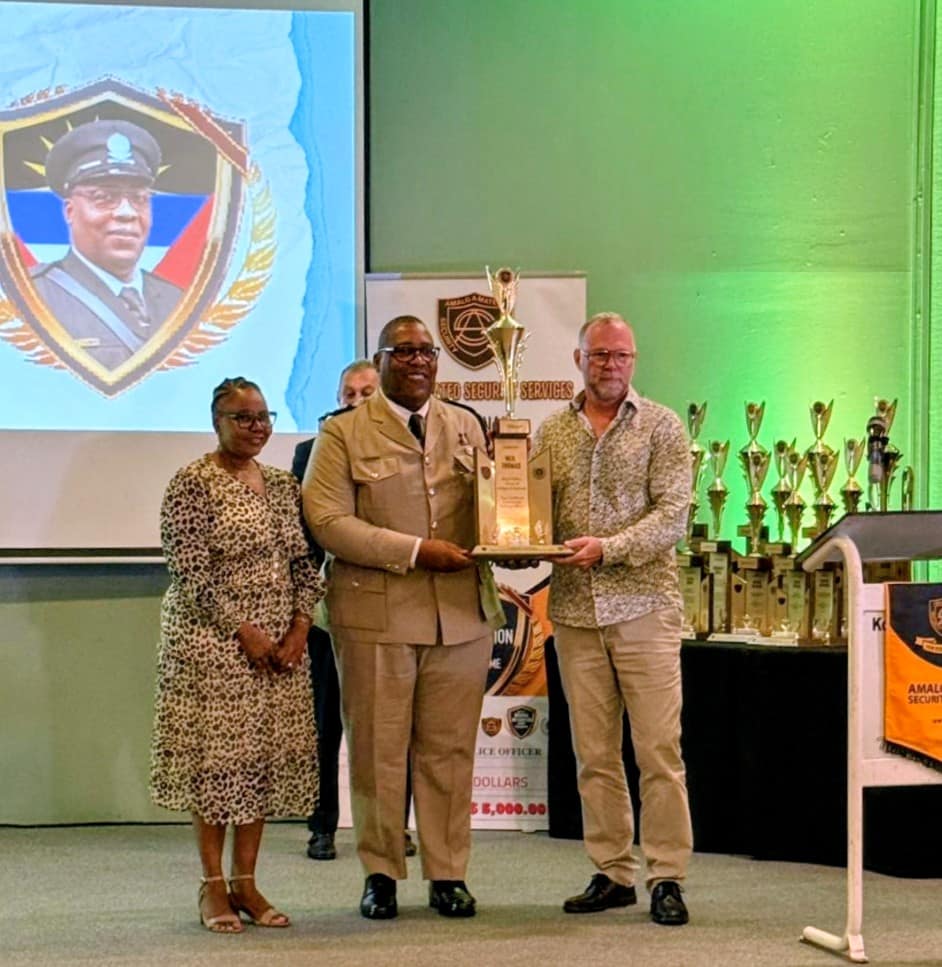
    ASP Frankie Thomas Wins Top Caribbean Community Policing Award

    A senior law enforcement official from Antigua and Barbuda has earned one of the Caribbean’s most prestigious awards for excellence in community-focused policing, cementing the region’s reputation for dedicated public safety work.

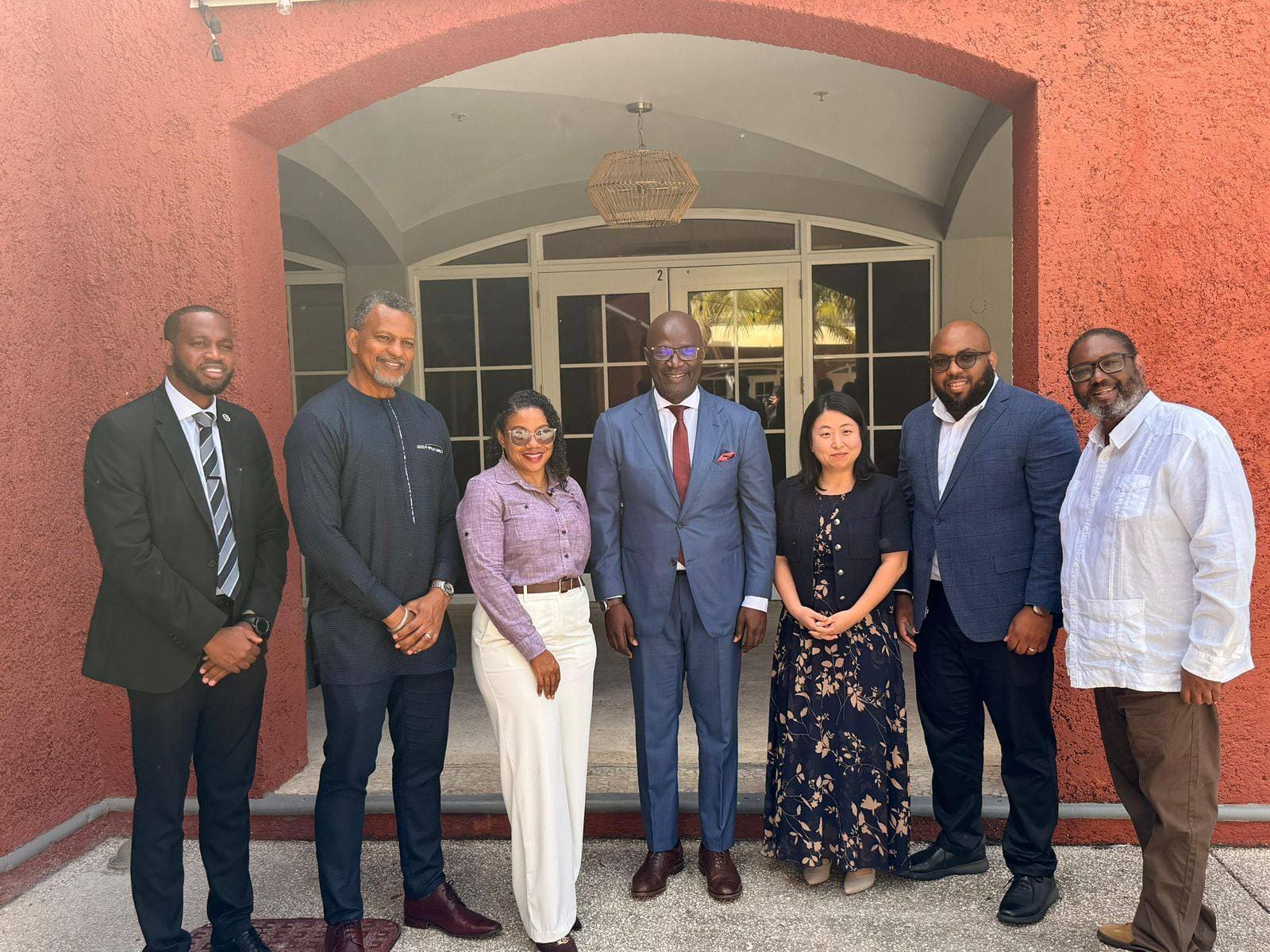
    Assistant Superintendent of Police Frankie Thomas of the Royal Police Force of Antigua and Barbuda was awarded the Amalgamated Security Services Limited (ASSL) Top Caribbean Community Policing Award at an official ceremony hosted jointly by the Association of Caribbean Commissioners of Police (ACCP) and ASSL in Paramaribo, Suriname, on May 12.

    In remarks delivered after accepting the award, Thomas spoke of his mixed feelings of excitement and humility at being selected for the regional honor. He dedicated the recognition to his mother, his longtime biggest supporter, as well as everyone who has lifted him up during his entire career in law enforcement.

    Beyond expressing gratitude, Thomas reaffirmed his ongoing commitment to deepening the collaborative ties between local police forces and the communities they serve. He urged fellow officers both within the Royal Police Force of Antigua and Barbuda and across the Caribbean to prioritize police-public partnerships, framing these connections as a core pillar of boosting public safety and building lasting public trust in law enforcement.

    Thomas also offered thanks to divine providence for the opportunity, and extended special appreciation to organizers ASSL and ACCP for selecting him for the distinguished prize. He singled out former Royal Police Force Commissioner Atlee Rodney, now Deputy Director of the Regional Security System (RSS), for years of steady guidance and encouragement, and also recognized current police leadership, his team, and fellow colleagues for their unwavering support throughout his career.

    The annual ASSL/ACCP Regional Recognition Awards Program was launched back in 2015 as a collaborative initiative between the two organizations. The program was created to shine a spotlight on exceptional Caribbean law enforcement officers who demonstrate outstanding performance in policing, public safety advancement, and community engagement work. The awards are split into three distinct categories: the Top Caribbean Community Policing Officer, which recognizes work to strengthen police-community ties; the Top Caribbean Crime Fighter, which honors officers with extraordinary success in crime detection and investigation; and the Top Caribbean Career Move, which celebrates major professional milestones and advancement within the law enforcement field.

    Following the announcement of Thomas’s win, Royal Police Force Commissioner Everton Jeffers offered warm, sincere congratulations to the assistant superintendent, praising him for bringing regional acclaim to the entire Royal Police Force of Antigua and Barbuda. The service’s top administration also commended Thomas for his years of dedication, consistent professionalism, and unwavering commitment to community-centered policing, extending well wishes for continued success in all his future work in law enforcement.

  • Chinese Embassy Hosts International Chinese Language Day Event in Antigua and Barbuda

    Chinese Embassy Hosts International Chinese Language Day Event in Antigua and Barbuda

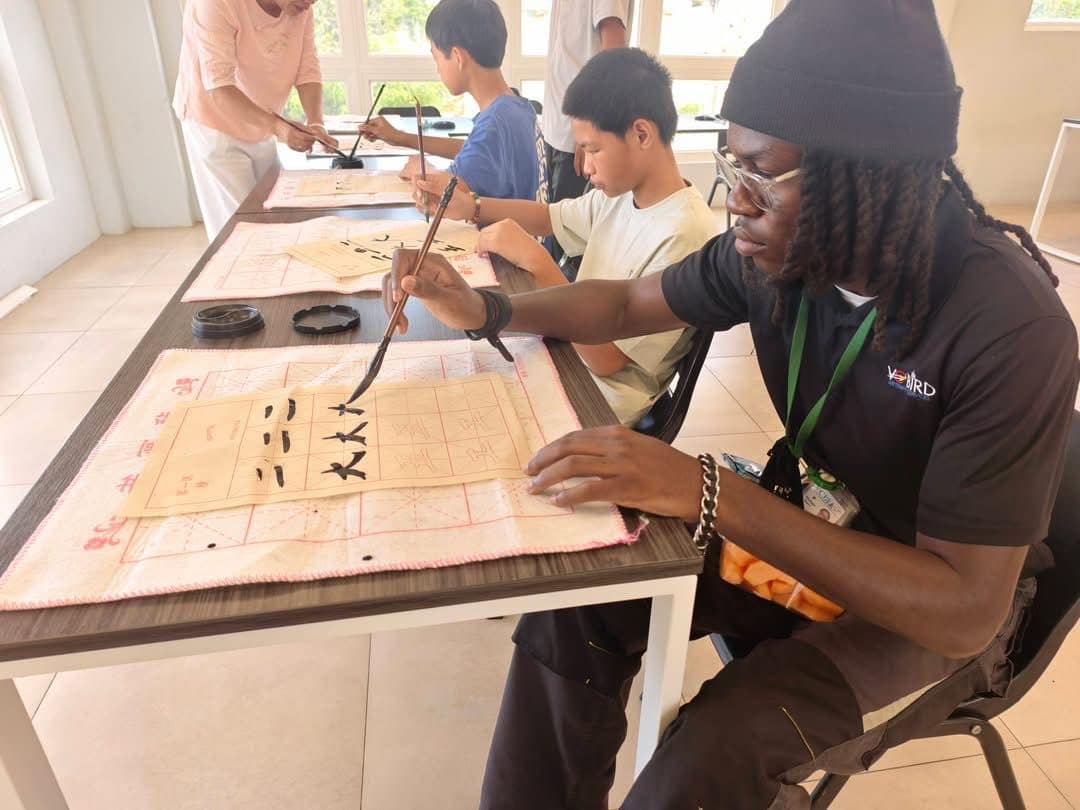
    On May 9, a vibrant celebration of International Chinese Language Day brought together students, cultural lovers, community members and diplomatic representatives in Antigua and Barbuda, co-hosted by the local Chinese Embassy and organized by the Confucius Institute. The cross-cultural gathering drew a diverse crowd, ranging from university students to local Chinese community members and Antiguans and Barbudans with a growing passion for Chinese language and cultural learning, with Chinese Ambassador Jiang Wei gracing the event as a key guest. In her remarks shared by the Chinese Embassy, Ambassador Jiang framed language as far more than a tool of communication: she positioned it as a foundational bridge that fosters deeper mutual understanding between distinct civilizations and creates lasting, close connections between people from different national backgrounds. She further shared her expectation that this inclusive celebration would inspire a growing number of residents across Antigua and Barbuda to start their Chinese language learning journeys, and in turn, lay stronger groundwork for enduring people-to-people and cultural exchanges between China and the Caribbean island nation. Beyond opening remarks, the full day of programming was designed to immerse attendees in tangible Chinese cultural experiences. Scheduled educational lectures covered core themes of traditional Chinese culture, while hands-on activity sessions introduced guests to the structure, history and artistry of Chinese characters and centuries-old traditional Chinese artistic practices. A series of interactive booths spread across the venue let participants try their hand at a wide range of cultural activities: from writing traditional Chinese calligraphy to decorating hand-painted lacquer fans, testing their skill at the ancient pitch-pot throwing game, creating traditional paper rubbing art, and trying on the iconic traditional Hanfu clothing to experience Chinese sartorial culture first-hand. Event organizers emphasized that the gathering was built with a clear dual purpose: to leverage Chinese language and culture as an accessible platform for nurturing wider public appreciation for Chinese traditions, while simultaneously strengthening cross-community connections and bonds among all attendees within the local Antigua and Barbuda community.

  • US drops $15,000 visa deposit for foreign fans with World Cup tickets

    US drops $15,000 visa deposit for foreign fans with World Cup tickets

    In a move aimed at facilitating fan attendance for the upcoming 2026 FIFA World Cup co-hosted by the United States, Canada, and Mexico, the Trump administration has announced that it will waive the mandatory $15,000 visa deposit requirement for football fans traveling from 50 pre-designated restricted countries, so long as visitors hold valid match tickets for the tournament.

    Five countries that have successfully qualified for the June 11 tournament – Algeria, Cape Verde, Ivory Coast, Senegal, and Tunisia – fall within the group of 50 nations originally subject to the bond rule. “We are waiving visa bonds for qualified fans who bought World Cup tickets,” Assistant Secretary of State for Consular Affairs Mora Namdar confirmed in an official statement shared with the BBC.

    The controversial visa bond requirement was first rolled out in August of last year as part of a 12-month pilot program tied to the administration’s broader immigration enforcement agenda. According to official documentation published by the U.S. State Department, the policy was designed to cut down on rates of visa overstays and address cases where applicant screening and vetting data was deemed incomplete. The full deposit would be refunded to visitors once they departed the U.S. at the end of their approved stay. Prior to this new announcement, only participating World Cup players and coaching staff had been granted exemption from the bond rule; ordinary ticket-holding fans were not included until Wednesday’s official update.

    Global governing body FIFA has praised the decision, framing it as evidence of productive ongoing collaboration between the organization and the Trump White House to deliver a standout 2026 tournament. “The announcement demonstrates the ongoing collaboration with the White House to deliver a successful, record-breaking and unforgettable global event,” FIFA said in a statement, adding, “We are grateful to the Administration for the ongoing partnership.”

    Despite the new exemption for fans, several key restrictions remain in place for travelers from the affected group of countries. Travelers from Iran and Haiti still face full entry bans to the U.S., though players and coaches from both nations are exempt for tournament-related travel. Fans from Ivory Coast and Senegal, both of which earned qualification for 2026, still face partial travel restrictions under the administration’s expanded entry ban policy. Human rights organizations have previously raised repeated concerns about the disproportionate impact of the bond policy and broader entry restrictions on vulnerable travelers, warning that the rules create unnecessary barriers to global participation in the world’s biggest sporting event.

  • Opposition Leader criticises move to put police in schools

    Opposition Leader criticises move to put police in schools

    A growing political debate over how to address school violence in St. Vincent and the Grenadines has intensified, with opposition leader Ralph Gonsalves becoming the latest high-profile figure to reject the current government’s proposal to deploy uniformed police officers to campuses across the country. Gonsalves, a former national security minister and prime minister whose Unity Labour Party ended a 25-year incumbency after November’s general election, laid out his criticism of the policy during a Wednesday interview on Star Radio’s *Morning Commed* program.

    Gonsalves argued that stationing permanent police personnel in schools is a misdirected, heavy-handed response that will ultimately create more problems than it solves, rather than getting to the root of disciplinary and violence issues. He stressed that instead of rushing to implement the security measure, the country must first hold a comprehensive, sustained national conversation and open consultation to build a consensus on how to tackle school violence.

    The opposition leader’s stance aligns with earlier public criticism from Jomo Thomas, a former House of Assembly speaker, practicing lawyer, and prominent social commentator. Thomas has warned that embedding police in school campuses risks pushing the national education system toward militarization, creating a pervasively securitized learning environment that mirrors the model seen in many U.S. public schools — where students are routinely screened through metal detectors and electronic gates, and patrolled by armed security personnel.

    National Security Minister St. Clair Leacock, who first announced the policy, has framed the deployment as a necessary response to growing public concern over school violence. Under the government’s plan, two Assistant Commissioners of Police, Benzil Samuel and Hezron Ballantyne, will oversee the new school security initiative.

    Gonsalves drew a clear distinction between the government’s full deployment plan and a limited advisory role: he noted that having a senior police officer attached to the Ministry of Education to provide guidance on safety issues is a reasonable measure that he does not oppose. Where the plan fails, he argued, is in its refusal to address the underlying socioeconomic and educational root causes of school unrest. Without addressing these foundational issues, he said, even increased on-campus security will fail to resolve safety problems, and the policy itself will become a new problem requiring additional fixes down the line.

    Drawing on his experience leading the country through the 2005 introduction of universal secondary education, Gonsalves explained that expanding access to secondary schooling brought a more diverse student population to campuses, alongside a more complex set of challenges. Many students now grapple with unstable home environments rooted in socioeconomic inequality, while others live with undiagnosed or unaddressed learning differences such as attention-deficit/hyperactivity disorder (ADHD) and dyslexia. To properly support these students, he argued, the government should prioritize training teachers to identify learning needs and allocate dedicated resources to support struggling students, rather than turning to armed security.

    Gonsalves pushed back against the narrative that SVG’s schools are overrun by gang activity, a framing he said is being used to justify the heavy-handed policy. While he acknowledged that serious disciplinary issues and isolated incidents of student violence do occur — and that teachers deserve to work in safe environments — he emphasized that the problem has been exaggerated to support a policy that is not proportional to the actual scale of the challenge. The former prime minister added that he remains connected to school communities across the country, and his on-the-ground understanding does not match the alarmist narrative being pushed by the current administration. He concluded that if the government moves forward with the plan, it will only introduce new, unintended problems that the country will be forced to address later.

  • Antigua and Barbuda Celebrates Newest Centenarian Ruth Henry

    Antigua and Barbuda Celebrates Newest Centenarian Ruth Henry

    On a warm Wednesday morning, a celebration filled with joyous laughter, soul-stirring hymns, and heartfelt tributes from across generations gathered to honor a remarkable pillar of the Antigua and Barbuda community: Ruth Henrietta Georgiana Henry, who marked her 100th birthday surrounded by loved ones, government leaders, and neighbors whose lives she transformed over decades of selfless service.

    Hosted jointly by Governor General Sir Rodney Williams and the national Community Development and Citizens Engagement Division, the event shone a spotlight on Henry’s decades-long legacy as an esteemed educator, dedicated church leader, and beloved community advocate. Renowned across the nation for her sharp discipline, creative vision, and unwavering Christian faith, Henry has left an indelible mark on public life in the country.

    As a centerpiece of the occasion, the Antigua and Barbuda government presented Henry with a EC$10,000 grant through a newly launched national initiative created to recognize citizens who reach the 100-year milestone. Minister of Urban and Social Transformation Rawdon Turner delivered the cheque on behalf of Prime Minister Gaston Browne, confirming that the financial award fulfills a key campaign promise from the current administration to honor the nation’s longest-living citizens in a tangible, meaningful way. The grant forms one part of a broader government program that offers both financial support and formal national recognition to Antiguans and Barbudans who achieve the rare centenarian milestone.

    Throughout the celebratory ceremony, speakers took turns reflecting on Henry’s far-reaching influence, which extends far beyond the walls of the James Memorial School, where she spent years shaping young minds. Recollections ranged from her decades of church ministry to her work organizing youth summer camps and leading local community initiatives that brought neighbors together for generations.

    Governor General Sir Rodney Williams praised Henry as a woman whose entire life has been defined by service and intentional purpose, noting that even at 100 years old, she retains sharp mental acuity and continues to pursue her favorite pastimes: reading, solving puzzles, and creating handcrafted works of art. He also shared a beloved, lighthearted anecdote from the morning, recalling that Henry earned the affectionate nickname “useful junk” for her legendary ability to transform discarded everyday items into beautiful, functional creations.

    Minister of State Kiz Johnson echoed Williams’ praise, framing the nation’s centenarians as irreplaceable “national treasures” whose life experience and wisdom form the foundation of modern Antigua and Barbuda. Senator Shenella Govia, who grew up in the same community as Henry, shared personal memories of the centenarian’s leadership, recalling her warm but firm approach to guiding generations of local children.

    The memorable morning closed with thunderous applause, warm embraces, and intimate tributes from Henry’s own family, capping a celebration that honored not just her extraordinary longevity, but a life of service that has touched every generation of the community she calls home.

  • Antigua and Barbuda Participates in Regional Workshop on Accessing the Fund for Responding to Loss and Damage

    Antigua and Barbuda Participates in Regional Workshop on Accessing the Fund for Responding to Loss and Damage

    As Small Island Developing States (SIDS) continue to grapple with the escalating impacts of climate change, a critical regional training gathering took place this May in Bridgetown, Barbados, focused on unlocking vital funding for climate-related loss and damage. From May 12 to 13, 2026, the Caribbean Training Workshop for National Focal Points and Alternates on Accessing the Fund for Responding to Loss and Damage (FRLD) brought together regional stakeholders, with Antigua and Barbuda among the participating nations.

    The collaborative event was co-hosted by two key institutional actors: the FRLD Secretariat and the Caribbean Development Bank (CDB), designed to equip regional representatives with the knowledge and tools needed to access the new global climate fund. Antigua and Barbuda sent two high-level delegates to the workshop: Mr. Peter Abraham Jr., Director of Debt Management and Climate Finance in the Ministry of Finance and the country’s official National Focal Point for the FRLD, alongside Ambassador Ruleta Camacho Thomas, Climate Ambassador and the nation’s Alternate Focal Point for the fund.

    A core goal of the workshop was to unify Caribbean nations around a clearer understanding of how the FRLD operates, and to guide countries through the process of developing funding requests under the Barbados Implementation Modalities — the fund’s inaugural start-up financing framework. Working sessions centered on key practical topics, including the fund’s governance structure and day-to-day operations, eligibility and access rules, direct budget support pathways, country-led implementation frameworks, and institutional partnership arrangements. A major priority was supporting attendees to craft technically robust, investment-ready proposals ahead of the June 15, 2026 deadline for the FRLD’s first operational funding window.

    During the workshop, participants received key updates on the fund’s initial financing round: the FRLD has officially opened its first $250 million grant window, with individual country requests able to range from $5 million to $20 million. Crucially for vulnerable nations, at least 50 percent of all allocations are reserved for Small Island Developing States and Least Developed Countries, a provision designed to address historical inequities in climate finance access.

    Attendees also got an early look at the upcoming FRLD Country Support System, a tailored assistance mechanism built specifically to help nations with funding proposal preparation, institutional capacity building, and the development of national frameworks for direct access to FRLD financing. Set to become operational after the FRLD Board reviews the plan in July 2026, the support system will allocate up to $250,000 per year to individual countries for technical and institutional strengthening activities.

    To make learning actionable, the workshop integrated peer learning through country case studies, giving Caribbean nations space to share on-the-ground experiences and proven strategies for addressing the full spectrum of climate-driven loss and damage. These discussions covered impacts ranging from damaged critical infrastructure, disrupted food and water security, lost livelihoods, degraded ecosystems, and disproportionate harm to vulnerable coastal communities.

    Following the workshop, Ambassador Camacho Thomas highlighted that the gathering delivered valuable strategic clarity around how the FRLD will function in practice. She reinforced that SIDS like Antigua and Barbuda need fast, efficient access to climate finance that is tailored to their unique climate vulnerabilities and national context, a need that the workshop helped center in regional discussions.

    For his part, Mr. Abraham stressed that coordinated national planning and cross-agency collaboration are essential to putting together competitive funding proposals that align with Antigua and Barbuda’s national priorities and long-term development goals. He noted that these internal efforts will position the country to successfully access the finance it needs when the first window opens.

    Moving forward, the Government of Antigua and Barbuda reaffirmed its ongoing commitment to strengthening national climate resilience systems, and will continue advocating for simplified, equitable, and accessible climate finance frameworks that meet the specific needs of Small Island Developing States on the frontlines of the climate crisis.

  • The Brooklyn Tabernacle Choir in Grenada

    The Brooklyn Tabernacle Choir in Grenada

    A major free public worship event is set to take place at Grenada’s iconic National Stadium on Friday, June 12, 2026, bringing one of the most decorated gospel groups in the world to the tri-island nation. Organized by Country Cold, Grenada’s Ministry of Mental Health, Wellness and Religious Affairs, and local broadcaster Power of Worship Radio, the evening will feature the world-famous Brooklyn Tabernacle Choir, an ensemble that has claimed seven Grammy Awards over its celebrated career. Designed as a community-focused gathering, the Night of Worship carries a core mission of delivering hope and heartfelt encouragement to residents across Grenada, its sister island Carriacou, and the smaller dependency of Petite Martinique. As a reminder to audiences, NOW Grenada, the platform sharing this announcement, notes that it does not assume responsibility for opinions, statements, or third-party media content shared by contributors to the outlet. Users who encounter inappropriate content related to event promotions or contributor submissions are invited to use the platform’s designated reporting channel to flag concerns.

  • Antigua and Barbuda Records Strongest Tourism Start With 7% Visitor Increase

    Antigua and Barbuda Records Strongest Tourism Start With 7% Visitor Increase

    Antigua and Barbuda’s tourism industry has kicked off 2026 with one of the strongest opening quarters in the nation’s history, posting a solid 7% year-over-year rise in international visitor arrivals, new industry data shows.

    Statistics unveiled at the annual Caribbean Travel Marketplace confirm the twin-island nation hosted 110,830 international visitors between January and March, with every month of the quarter breaking previous arrival records. Growth accelerated steadily across the three-month period: starting at 5% in January, climbing to 8% by March, which set an all-time record for the highest single-month visitor volume in Antigua and Barbuda’s history.

    Colin James, chief executive officer of the Antigua and Barbuda Tourism Authority, called the start to 2026 “phenomenal”, pointing to robust demand gains from the key U.S. market and surging traveler interest from across Europe as core drivers of the uptick.

    Beyond the record arrival numbers, tourism leaders are advancing a deliberate strategy to diversify the nation’s tourism offerings beyond traditional leisure travel. A major priority is tapping into the global meetings, incentives, conferences and exhibitions (MICE) segment, and the country is already hosting multiple regional and international industry events on its shores this quarter.

    Two key infrastructure investments are laying the groundwork for even stronger growth in cruise tourism, one of the sector’s fastest-growing segments. Officials project a 22% annual increase in cruise ship arrivals for 2026, a gain supported by expanded home-porting operations and a $30 million comprehensive upgrade to the nation’s main cruise terminal.

    The country is also positioning itself to capture higher-value tourism demand through a wave of new luxury hospitality developments. High-profile projects from global brands including Nobu, Nikki Beach, and Marriott International are in the pipeline, set to boost the country’s appeal to high-spending travelers seeking premium vacation experiences.

    Amid ongoing geopolitical turbulence that has disrupted travel patterns in other popular global destinations, Antigua and Barbuda has leaned into its reputation as a safe, stable, and welcoming getaway to attract travelers seeking worry-free vacations, tourism officials added.

    Even with the historic quarterly gains, sector leaders acknowledge headwinds that continue to challenge the industry. James highlighted that soaring global oil prices and steadily climbing operational costs remain persistent pressing concerns for tourism businesses and workers across all segments of the sector.