作者: admin

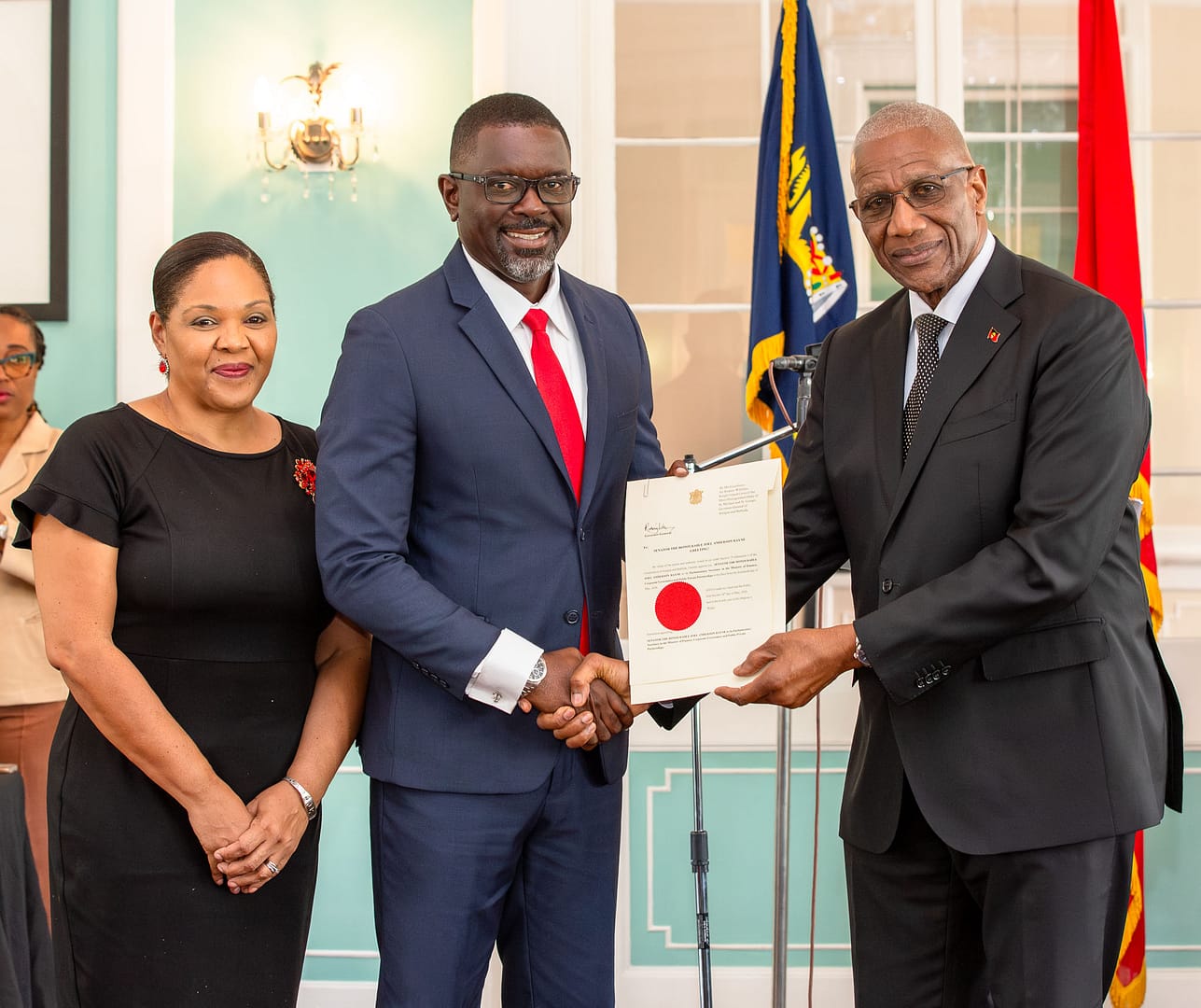
  • Joel Rayne Says Rapid Promotion to Parliamentary Secretary Feels “Surreal”

    Joel Rayne Says Rapid Promotion to Parliamentary Secretary Feels “Surreal”

    For newly minted Parliamentary Secretary Joel Rayne, the speed with which he has climbed the political ranks has been nothing short of extraordinary. In a recent public comment on his unexpected career jump, Rayne opened up about the disorienting yet exciting experience of stepping into his new role so much faster than he or most political observers anticipated.

    Unlike many aspiring politicians who spend years or even decades working their way through party ranks, building name recognition and waiting for an opening to emerge at the parliamentary leadership level, Rayne’s ascent has cut short that typical timeline dramatically. He noted that even just a few months ago, he never would have predicted that he would be holding the position of Parliamentary Secretary this early in his political career, calling the entire progression “surreal” to capture how unexpected and out-of-the-ordinary the shift has felt.

    Political insiders point to a combination of recent vacancies within the ruling party structure and Rayne’s strong performance in his previous parliamentary roles as the driving forces behind the accelerated promotion. Since taking office, Rayne has already begun familiarizing himself with the portfolio responsibilities that come with the new position, meeting with senior parliamentary staff and other government officials to get up to speed on ongoing policy initiatives. While many have noted the unusual speed of his promotion, Rayne has expressed gratitude for the opportunity to serve in this new capacity and says he is eager to take on the added responsibilities that come with the role.

  • Antigua and Barbuda Among CARICOM Nations With Lowest Forest Cover, FAO Report Finds

    Antigua and Barbuda Among CARICOM Nations With Lowest Forest Cover, FAO Report Finds

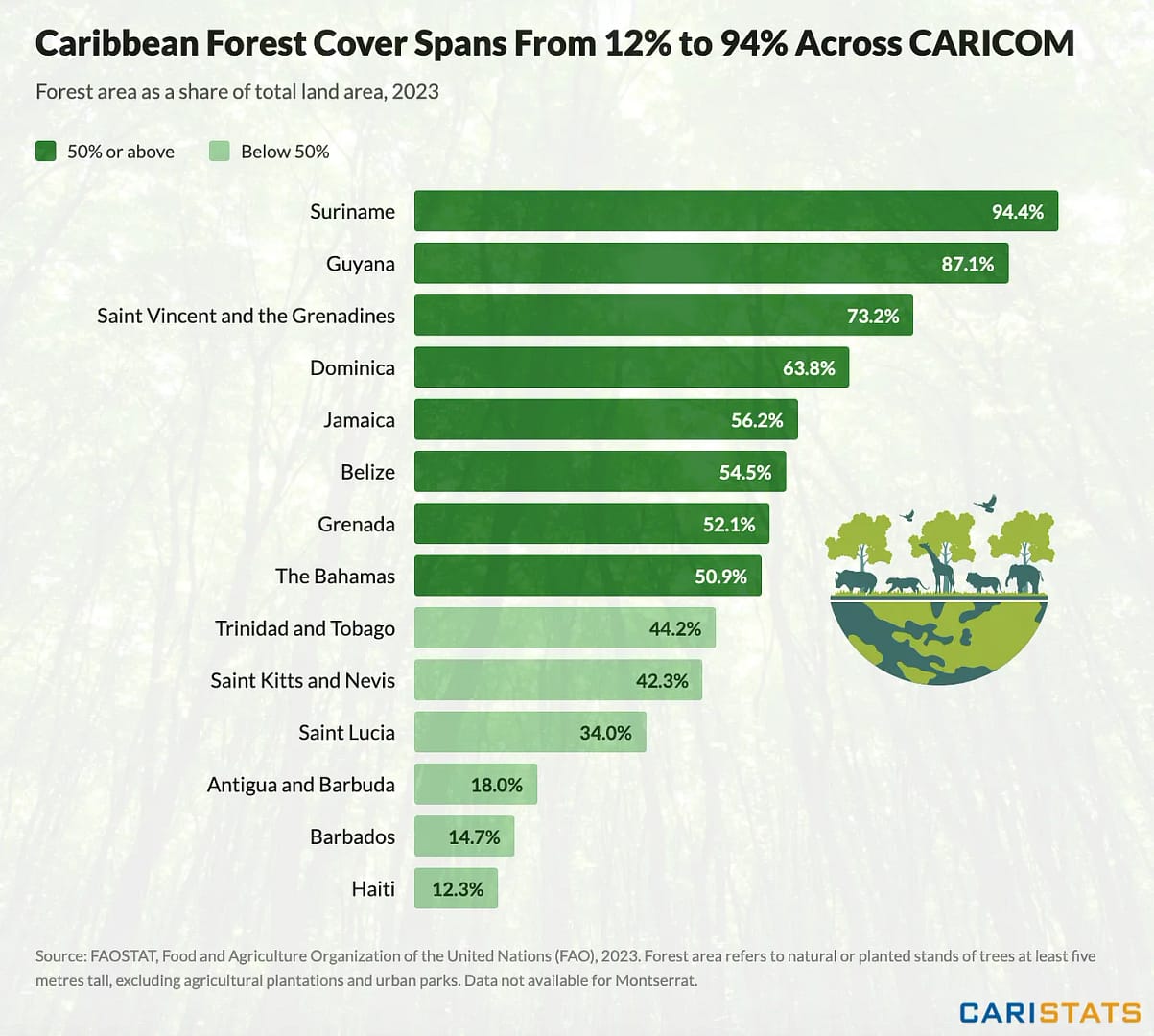
    New 2023 data released by the United Nations Food and Agriculture Organization (FAO) has uncovered a striking divergence in forest coverage across member states of the Caribbean Community (CARICOM), with percentages ranging from just 12% up to nearly 95% of total national land area. Leading the region in forest retention are Suriname and Guyana, which claim 94.4% and 87.1% forest cover respectively – rankings that place both nations among the most heavily forested countries globally. Notably, their forest coverage shares outpace those of two of the world’s largest rainforest nations, Brazil and Indonesia, a key environmental distinction that has been largely overlooked in most mainstream economic conversations focused on the Caribbean. Following the two regional leaders at the upper end of the spectrum are Saint Vincent and the Grenadines, which reports 73.2% forest cover, and Dominica at 63.8%. Jamaica, Belize, Grenada, and The Bahamas all fall into a solid middle-upper bracket, with forest coverage ranging between 50% and 57% of their total land. Mid-range rankings go to Trinidad and Tobago, Saint Kitts and Nevis, and Saint Lucia. At the lowest end of the regional distribution are Antigua and Barbuda and Barbados. For the purpose of this FAO analysis, forest area is defined as any natural or planted stand of trees that reach at least five meters in height, with commercial agricultural plantations and urban green spaces like city parks explicitly excluded from calculations. No data was collected for Montserrat for this 2023 assessment. The wide variation in forest coverage across the bloc is largely attributed to fundamental geographic and ecological differences between member states. Each CARICOM nation has distinct land area profiles, terrain types, and histories of land use that have shaped how much forest land remains intact today. Beyond their ecological value, forests across the Caribbean play a foundational role in supporting regional biodiversity, maintaining healthy watershed systems that supply clean water to communities, and underpinning the rapidly growing carbon credit and climate finance sectors that hold significant economic potential for the region moving forward.

  • ESFN Launches Summer Internship Program for Youths in Antigua

    ESFN Launches Summer Internship Program for Youths in Antigua

    The EcoShores Sustainable Futures Network (ESFN), a registered non-profit working across Small Island Developing States (SIDS) and the Southern United States, has opened applications for its 2026 Summer Internship Program, targeted at young people based in Antigua. The initiative was crafted to build hands-on, career-ready skills across environmental stewardship, digital storytelling, strategic communication, and youth leadership, addressing longstanding gaps in practical development opportunities for emerging leaders in island communities.

    Spanning six to eight weeks across the summer months, the program will operate through a flexible hybrid structure that combines structured virtual training modules with curated in-person gatherings and on-the-ground field experience. Unlike traditional classroom-based learning programs, this internship places participants directly at the center of active local projects spanning environmental outreach, community organizing, and cross-island youth development across Antigua and Barbuda.

    Interns will choose from five specialized focus tracks aligned with their interests and career goals: media and digital communication, journalism and communication, environment and conservation, finance and program support, and public health and community wellness. The environment and conservation track, tailored for young people passionate about geography, biodiversity, and coastal protection, includes immersive fieldwork, introductory training in geographic information systems (GIS) and mapping, hands-on work in waste management systems, and targeted conservation projects focused on ecologically critical habitats including wetlands, mangrove forests, and nearshore coastal zones. The finance and program support track, designed for aspiring business and operations professionals, offers exposure to core skills including financial literacy, non-profit administrative processes, and coordination of fundraising and sponsorship activities. For those interested in the intersection of planetary and human health, the public health and community wellness track combines community outreach, applied research and data collection, and development of youth-centered wellness programming that connects environmental health to individual well-being.

    One of the program’s most innovative components is a youth leadership and public speaking initiative modeled after the popular TED Talk framework. Participants will walk through every step of developing, refining, and delivering their own original ideas and youth-led community projects, with a deliberate focus on boosting communication competency, building personal confidence, and translating ideas into actionable initiatives. This portion of the program draws on collaborative learning frameworks rooted in Southern-led international youth development and resilience-focused approaches that center local knowledge.

    Beyond professional skill-building, all interns will take part in ESFN’s existing Community Swim Program, a community-facing initiative that builds water safety competence, personal confidence, and marine ecological literacy. This hands-on component includes integrated data collection activities that connect recreational swimming to environmental education, reinforcing the program’s core message that personal growth and conservation action are deeply interconnected.

    Registration for the 2026 internship is currently open via the official ESFN program application portal. All applicants are required to submit a short written or video statement as part of their application package, and selected candidates will be contacted directly by program coordinators. In addition to recruiting participating interns, ESFN is actively seeking support from partner organizations, donors, and community stakeholders to expand program access and impact. Financial and in-kind support allows the organization to offer more youth the opportunity to gain practical work experience, expand community-wide environmental awareness, and nurture the next generation of sustainability leaders. Interested sponsors and individual donors can connect with ESFN to fund the overall program, sponsor an individual intern, or support a specific focus track.

    ESFN’s core mission centers on advancing sustainability, environmental conservation, and community empowerment across SIDS and the Southern U.S., with a particular focus on addressing pressing global challenges including climate justice, biodiversity loss, youth underdevelopment, technological innovation, and accessible environmental education. The organization runs a range of community-focused initiatives beyond the summer internship, including the Volunteer Explorer Program, annual World Wetlands Day awareness campaigns, the Build Your Future career development program, the Community Swim Program, and the Endeavour publication. Through these efforts, ESFN works to cultivate innovative, locally rooted solutions and inspire collective action to protect vulnerable marine and coastal ecosystems, with a long-term goal of building a more resilient and sustainable future for all. The organization also prioritizes supporting creative media and cultural expression from marginalized vulnerable communities, with an explicit focus on centering youth voices in all its work.

  • Regional hoteliers push back against Booking.com move to charge commissions on taxes

    Regional hoteliers push back against Booking.com move to charge commissions on taxes

    A sweeping new policy change from global travel giant Booking.com has ignited fierce pushback across the Caribbean tourism industry, with regional hoteliers and industry bodies threatening legislative action and vowing to block the controversial change in the bloc. The policy, rolled out without prior consultation with Caribbean stakeholders, would for the first time require accommodation providers to pay commissions to Booking.com not just on base room rates, service charges and resort fees—the traditional model for commission calculations—but also on Value Added Tax (VAT), goods and services tax (GST), and other mandatory government-imposed taxes that hoteliers never retain as revenue.

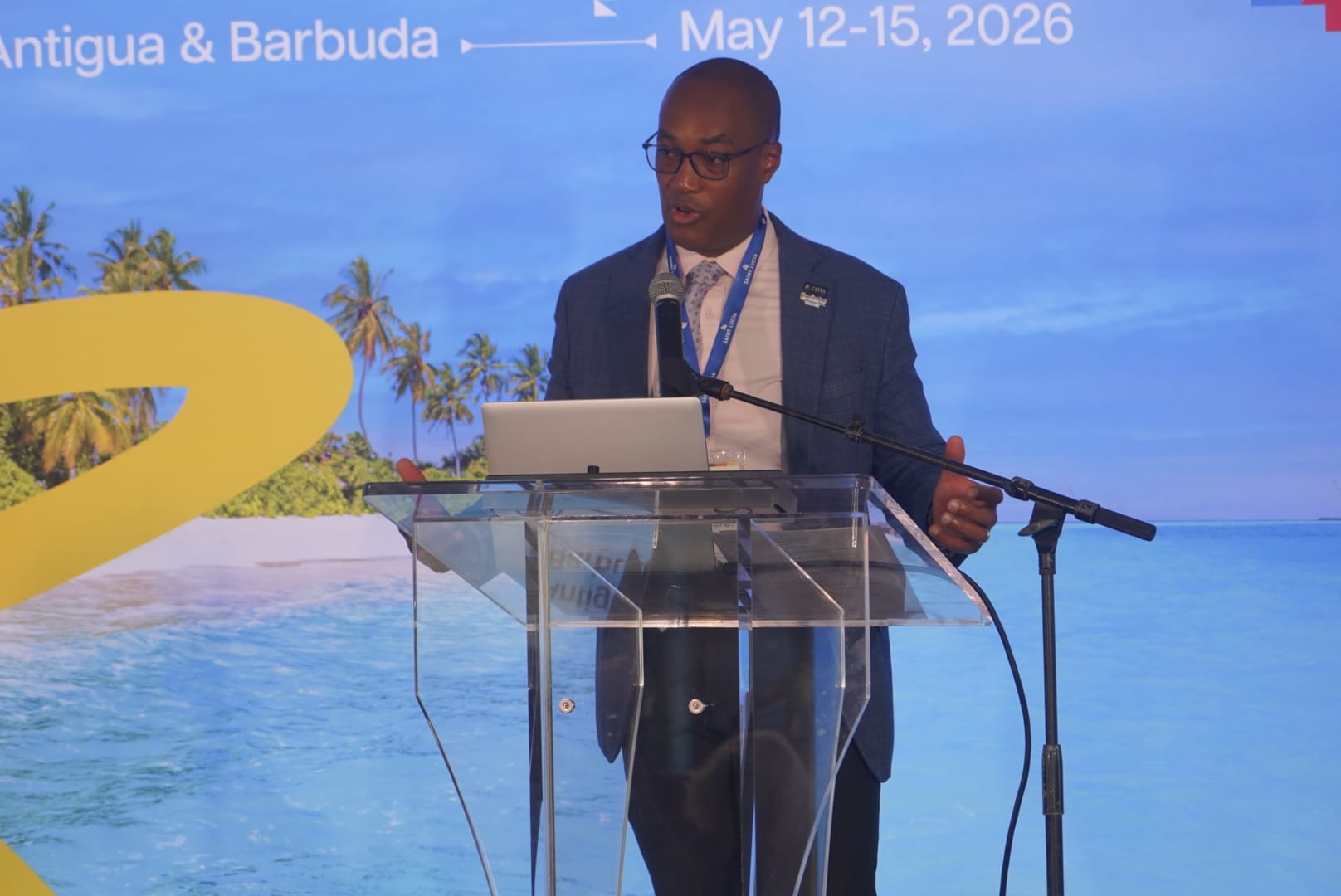
    The policy was scheduled to launch across the region on May 15, 2026, after the company privately notified individual hotel associations in Barbados and Grenada of the change. Those local groups quickly raised the alarm with the Caribbean Hotel and Tourism Association (CHTA), bringing the issue to the forefront of discussions at the organization’s 44th annual general meeting, hosted this year in St. John’s, Antigua and Barbuda.

    Outgoing CHTA President Sanovnik Destang explained in interviews on the sidelines of the conference that the existing industry standard has long tied commission calculations only to actual revenue that hoteliers collect from guest stays. “They’re changing this now to also include VAT, GST, and other government taxes, which, as you know, is not revenue to the hotel,” Destang clarified.

    During the conference, CHTA representatives held direct, high-stakes talks with Booking.com officials to register firm opposition to the change. Booking.com has defended the policy as part of a global rollout that is already implemented in multiple markets around the world, but regional stakeholders argue that one-size-fits-all global business practices do not automatically translate to the Caribbean’s unique tourism regulatory landscape.

    CHTA officials note that while the practice may be allowed in some jurisdictions, it violates existing commercial laws in multiple Caribbean territories, though the organization has not yet named specific countries. The trade body is already coordinating directly with national tourism ministers and finance ministers across the region to draft and pass new legislation that would explicitly ban the practice, if it is not already prohibited under existing local laws.

    Destang emphasized that the policy is not just legally questionable—it is fundamentally unfair from a commercial perspective. “It’s not fair to expect hotels to pay commissions of 15 percent, whatever percent — or 18 percent in some cases — on VAT, GST, and other taxes that hotels do not retain in the first place. So we’ve drawn a line in the sand at CHTA,” he said. He also criticized Booking.com for implementing the change unilaterally, with no advance warning, input, or consultation with the regional industry bodies that represent thousands of small and large accommodation providers across the Caribbean.

    The CHTA has pledged an unwavering campaign to block the policy, stating that it will not be accepted under any circumstances across the Caribbean. The standoff marks one of the biggest conflicts between global online travel agencies and regional tourism operators in recent Caribbean history, with potential implications for industry revenues and regulatory policy across the bloc.”

  • ‘Lies and deception to extend SoE’

    ‘Lies and deception to extend SoE’

    A sharp political dispute has erupted in Trinidad and Tobago over an alleged national security threat targeting parliamentarians, with the country’s main opposition accusing the ruling government of orchestrating a deliberate deception to pave the way for extending a national state of emergency.

    Marvin Gonzales, Opposition Chief Whip and Member of Parliament for the Arouca/Lopinot constituency, laid out the opposition’s explosive claims during a press briefing held Monday at the Office of the Leader of the Opposition in downtown Port of Spain. The accusation comes in direct response to comments Attorney General John Jeremie made during a Wednesday sitting of the House of Representatives, where he revealed a purported gang-related national security incident that occurred the prior Friday.

    According to Jeremie’s official statement, delivered during debate on the 2026 Parole Bill, the threat originated from a gang member based in the Belmont community. The incident, he said, was severe enough to mandate stepped-up security protocols for the entire Parliament complex and additional personal protection for multiple high-ranking government officials. Jeremie noted his comments were authorized by the country’s top police official, Police Commissioner Allister Guevarro.

    When contacted for verification last Wednesday, Guevarro confirmed that the Trinidad and Tobago Police Service (TTPS) had responded to a security incident requiring enhanced protective measures at Parliament and for a small cohort of government leaders. He emphasized the service acted out of an abundance of caution, following all established national security protocols. Citing legal and operational obligations related to national security, Guevarro declined to disclose further details about the incident, the police response, or the specific individuals impacted by the enhanced protections.

    But Gonzales directly contradicted the official narrative, telling reporters that the day of the alleged incident was completely routine in Parliament, with no visible increase in law enforcement presence and no official notification to opposition lawmakers about any threat to their safety. He stated that opposition parliamentarians, including the Leader of the Opposition, received no briefings about security risks to the Red House (Trinidad and Tobago’s parliament building), its surrounding precincts, or the parliamentary chamber itself.

    Gonzales pointed to only one unusual occurrence that Friday: ruling party parliamentarians departed the building far earlier than expected, ahead of a scheduled late-night sitting that had been anticipated given the day’s legislative agenda. He explained that the early exit was tied to a pre-planned event at the Diplomatic Center for a visiting Indian minister, not a sudden security emergency. Beyond that pre-scheduled commitment, he said, there were no deviations from normal security arrangements around the complex.

    “No one informed us of any security concerns, or advised us to take extra precautions when moving outside the building — nothing of the sort happened,” Gonzales said. “That is why I maintain what the Attorney General announced is nothing more than a grand deception and a deliberate distraction.”

    The opposition chief whip argued that Jeremie’s revelation was a calculated political move to build public support for extending the current state of emergency. He noted that neither Defence Minister Wayne Sturge nor Homeland Security Minister Roger Alexander made any mention of a parliament threat during their remarks to the chamber that same Friday.

    Gonzales accused the current government of repeatedly misleading the public about the justifications for implementing and maintaining a state of emergency, saying the administration has a consistent track record of falsehoods to keep the measure in place. “What happened this week, which made front-page headlines across the country yesterday, is the government, through the Attorney General, laying the groundwork to extend the state of emergency in Trinidad and Tobago by way of lies and deception,” he added.

  • PNM raises procurement red flags

    PNM raises procurement red flags

    Trinidad and Tobago’s main opposition party, the People’s National Movement (PNM), has levelled serious accusations against the ruling United National Congress (UNC) administration, claiming the government is leveraging a newly created state-owned housing entity to funnel taxpayer funds to political campaign backers. The allegations were formally brought forward during a press briefing hosted at the Office of the Opposition Leader in Port of Spain by Malabar/Mausica Member of Parliament Dominic Romain.

    At the heart of the controversy is LandmarkTT Properties Ltd, a special-purpose state enterprise incorporated in 2026 under the Ministry of Land and Legal Affairs. The firm was established to roll out a new public-private partnership model for unsubsidized, premium residential development across the country. However, the entity is already facing scrutiny from the national procurement regulator over its handling of the $100 million Allamby Residential Development project slated for Corinth, San Fernando.

    Romain pointed to ongoing questions around the project’s procurement process, noting that irregularities have already been flagged in the request for proposal phase. He claimed last-minute adjustments to bidding requirements put multiple competing contractors at an unfair disadvantage, while unsuccessful bidders have publicly raised concerns about a lack of transparency around the project’s scope and its $100 million price tag. Adding to the red flags, Romain noted that LandmarkTT’s official website remains incomplete even as the company has begun asking prospective homebuyers to join a so-called “priority access list” for its luxury properties. He also argued that the government’s broader approach of repurposing public land for private luxury development benefits connected private interests rather than addressing widespread affordable housing needs.

    Drawing a parallel to a past controversial project under a previous UNC administration, Romain recalled the Victoria Keys development in Diego Martin, where eligibility criteria were relaxed to include higher-income applicants— a change that ultimately allowed party allies and financiers to access benefits, he claimed. He added that Land and Legal Affairs Minister Saddam Hosein has repeatedly dodged press inquiries about LandmarkTT and the Allamby project, leaving critical questions unanswered.

    The allegations align with a formal inquiry launched by the Office of Procurement Regulation (OPR). In correspondence dated April 20, the regulator wrote to LandmarkTT addressing complaints that the state enterprise bypassed mandatory open bidding in favor of a selective tendering process for the Allamby contract, a move that potentially violates the Public Procurement and Disposal of Public Property Act. The OPR warned that given the contract’s $100 million value, the risks of adverse financial and economic outcomes are significantly heightened, particularly for high-value, high-risk procurement where failure to secure value for public money has broad consequences. Romain also questioned the vetting and hiring process for senior leadership and staff at LandmarkTT, accusing the government of attempting to mislead the public about the entity’s true purpose.

    In separate remarks at the same press briefing, Diego Martin West MP Hans des Vignes raised a separate set of concerns, warning that reduced state funding for sports, cultural, and youth programs could create conditions for a repeat of the notorious LifeSport corruption scandal that rocked previous administrations.

    Romain closed by calling on all Trinidad and Tobago citizens to remain vigilant about how the UNC government manages national public assets, and to demand full transparency and accountability for all government procurement processes.

  • Threats against MPs a challenge to stability

    Threats against MPs a challenge to stability

    Fresh security concerns are rippling across Trinidad and Tobago this week after the Attorney General confirmed that several government parliamentarians have been upgraded to enhanced protection levels, following a direct threat from an organized gang member. The disclosure, which was delivered to Parliament by Attorney General John Jeremie earlier this week, has been formally verified by Commissioner of Police Allister Guevarro, prompting sharp analysis from security experts and former law enforcement leaders over what the incident signals for national stability.

    Regional security consultant Dr. Garvin Heerah, a former head of Trinidad and Tobago’s National Operations Centre, framed the threats as far more than an isolated security incident. In an interview with local outlet *Express* on Thursday, Heerah argued that this act represents a deliberate, direct challenge to the legitimacy of state authority, the country’s democratic foundations, and public trust in national governance.

    Heerah emphasized that the incident demands urgent, serious attention, particularly against the current backdrop of surging violent crime in the Belmont neighborhood and a tense overall national security climate. He noted that the development lays bare a shifting dynamic among organized criminal groups: growing operational confidence and a more aggressive psychological posture that targets state institutions, rather than just rival gangs.

    “When criminal actors are bold enough to threaten elected representatives and shape the national mood through fear, intimidation, and coercive communication, this moves far beyond typical gang rivalry or street-level violence,” Heerah explained. “It crosses into what can only be described as criminal encroachment on core state institutions.”

    Heerah connected the timing of the threats to the country’s ongoing state of emergency, intensified anti-gang enforcement operations, and a string of high-profile violent attacks in Belmont, including a recent triple murder and multiple non-fatal shootings. He explained that criminal networks typically lash out aggressively when they face sustained pressure from law enforcement: when authorities are disrupting their financial assets, dismantling their territorial control, and gathering actionable intelligence on their operations. These aggressive responses, Heerah argued, are often symbolic acts designed to demonstrate that the group still retains power and the ability to carry out retaliation against the state.

    “This issue cannot be viewed as just a series of isolated threats,” Heerah stressed. “It has to be understood within the broader framework of strategic criminal messaging. Criminal organizations rely heavily on public perception, and the fact that elected officials now need heightened protection sends a clear signal that these groups feel emboldened enough to challenge the state on a psychological level.”

    From a regional perspective, Heerah classified the development as extremely serious, pointing to a clear pattern across Latin America and the Caribbean where transnational and local criminal groups evolve. What begins as illicit activity focused on drug trafficking and street violence often progresses into attempts to seize influence over governance structures, law enforcement policy, and even electoral outcomes. He named Mexico, Haiti, Colombia, Jamaica, and multiple Central American nations as examples where criminal organizations have systematically tested state authority by targeting politicians, judges, journalists, police officers, and trial witnesses with intimidation and violence.

    “The lesson for Trinidad and Tobago is unambiguous: early recognition and decisive intervention are critical to containing this threat,” Heerah said. He warned that once criminal groups become convinced they can manipulate democratic systems through fear, intimidation, and strategic violence, the issue evolves from a routine law enforcement problem into a fundamental threat to national stability. Even so, Heerah urged against unnecessary public panic and media sensationalism, noting that authorities must strike a careful balance between transparency for the public and protecting the operational secrecy needed for intelligence gathering, threat assessment, and protective detail for elected leaders.

    Former Commissioner of Police Gary Griffith, who described the public disclosure of the threats as an “alarming revelation”, offered a separate take on the incident. Griffith argued that the threats are proof that current government anti-crime initiatives are successfully disrupting criminal operations. Drawing on his own tenure as the nation’s top law enforcement officer, Griffith shared that he received 43 separate death threats during his time in office. “If I had seen a drop in death threats while I was serving, that would have been the thing to worry about — it would have meant I wasn’t doing my job to disrupt these groups,” he said.

    Griffith explained that threats against senior officials are a clear sign that criminal networks are frustrated, because government and law enforcement actions are cutting into their illicit profits, disrupting their business models, and limiting their operational space. Rather than exiting the trade, he noted, criminal groups typically respond by trying to neutralize or eliminate the officials who are disrupting their activities.

    While Griffith acknowledged that the threats themselves are concerning, he raised questions about the decision by Commissioner of Police Guevarro to approve the public disclosure of the information. He noted that while the Attorney General was simply following the approval granted to him to share the news with Parliament, senior police leaders need clearer judgment around what information should be made public and what should remain restricted on a need-to-know basis.

    Throughout his tenure and in the years before and after, Griffith said there have been multiple plots targeting senior government and law enforcement figures. In each case, he said his approach was to either eliminate the threat or implement enhanced security measures quietly, without broadcasting sensitive details to the general public. “That is what the Commissioner of Police should have done in this case,” Griffith argued. He added that the public disclosure has already amplified nationwide fear and could cause lasting damage to Trinidad and Tobago’s international reputation as a stable, safe nation.
  • Search intensifies  for missing Angelo

    Search intensifies for missing Angelo

    A multi-agency search operation for a missing two-year-old, Angelo Tobias Plaza, in Tobago has been boosted by the arrival of the specialized Hunters Search and Rescue Team (HSRT), a volunteer group with extensive experience in land and coastal search missions.

    HSRT members made their way to the coastal island after the toddler’s reported disappearance on Monday night, touching down in Tobago shortly after dark on Wednesday. Before launching their on-the-ground operations, the team held an early morning strategy session Thursday with leadership from the Tobago Emergency Management Agency (TEMA), including TEMA director Allan Stewart, to align on search parameters and review existing case details.

    HSRT leader Vallence Rambharat told local media outlet Express on Thursday that the team’s core mission throughout the search is to deliver long-awaited closure to Angelo’s grieving family, regardless of the outcome.

    “We stay always above the noise. Our strength really is in field searching, we are good with marine searches along the coastline as well, and we stick to that, we don’t hear any noise circulating around us,” Rambharat said, emphasizing the team’s focused, data-driven approach to the operation.

    On Thursday, HSRT members conducted thorough line searches of the Goodwood Bay coastline and the wooded and residential areas surrounding Angelo’s home in the small coastal village of Goodwood. Drawing on the team’s two decades of search experience and proprietary analytical framework, Rambharat explained that the team has calculated a high probability of locating Angelo’s remains in the near vicinity of the bay.

    Rambharat pushed back on widespread misinformation circulating locally that the distance from Angelo’s home to the beach stretched 3,000 meters, a distance too far for a toddler to travel unaided. To test the claim, the team conducted a field test: recreating a toddler’s slow, unsteady pace over the route, the team clocked the 200-foot journey at just one minute and ten seconds, confirming that a young child could easily make the trip unobserved.

    “Therefore, the possibility of a toddler walking to the beach in this instance is also possible, highly probable, and therefore we working these two analytics that we have done for the morning and we are doing some beach patrols, we are studying the ocean currents,” Rambharat added.

    The search effort has grown steadily since Angelo was first reported missing on Monday night, with land, sea, and aerial missions already conducted by local emergency responders. On Wednesday, Trinidad and Tobago Defence Force personnel joined Trinidad and Tobago Police Service officers to expand land search operations across the area. On Thursday, Assistant Commissioner of Police (Tobago) Rishi Singh traveled to the search site to meet with Angelo’s mother, other extended family members, and local villagers, reaffirming law enforcement’s commitment to exhausting all resources to resolve the case.

    A senior anonymous police officer told the Express that when search operations were paused for the evening Wednesday, responders received an emergency tip from a resident of Mount St. George claiming a child’s body had been spotted floating in Goodwood Bay. Search teams immediately responded to the area and conducted an extensive sweep of the bay and surrounding coastline, but no remains were recovered. The officer confirmed that the tip is still considered credible, with the witness standing by their account that a body was seen before being carried away by shifting currents.

    Angelo’s stepfather, Shannon Miller, who joined search operations as a volunteer diver on Tuesday, says he remains optimistic that the toddler will be found safe, despite the growing passage of time since his disappearance.

  • ‘threat to public safety’

    ‘threat to public safety’

    Weeks after a deadly heist at the San Fernando Municipal Police Station left a veteran officer dead and a massive cache of weapons stolen, the crisis continues to escalate in southern Trinidad and Tobago, as the majority of the stolen firearms and thousands of rounds of ammunition remain untraced – leaving local business leaders and residents on edge over growing public safety risks.

    On April 19, the body of 41-year-old Acting Corporal Anuska Eversley, a 17-year veteran of the Trinidad and Tobago Municipal Police Service (TTMPS), was discovered in the station’s charge room at King’s Wharf. An investigation confirmed Eversley was beaten and strangled by attackers who accessed the facility’s secure strongroom, clearing it of 123 firearms and more than 4,300 rounds of ammunition, including 9mm rounds, 12-gauge shotgun shells, and .38 caliber ammunition.

    To date, law enforcement has only recovered a portion of the stolen arsenal. Three suspects – municipal police constable Jivan “Bigs” Cooper, 20-year-old construction worker Kwame Arnold, and 24-year-old scrap iron dealer Nicholas “Nico” Ramdass, all from Claxton Bay – have already appeared in court on charges of murder, weapons trafficking, and possession of stolen munitions. Despite this progress, the ongoing absence of most of the stolen weapons has sparked urgent outcry from the local business community.

    Kiran Singh, president of the Greater San Fernando Chamber of Commerce (GSFCC), told local media the region’s business owners view the security failure as an unprecedented threat to public stability, economic activity, and investor confidence. Singh warned that the unrecovered weapons are widely believed to have already entered local criminal networks, where they could be deployed in violent crimes ranging from armed robberies and kidnappings to extortion targeting both local residents and commercial operations.

    “This is not just an internal breach at a police facility – it is a direct threat to every person who lives, works, or visits San Fernando and its surrounding communities,” Singh said in a statement to the *Express*. “For businesses already grappling with skyrocketing security costs, this incident has amplified fear and uncertainty across the board, affecting employers, employees, customers, and potential investors alike.”

    From an economic perspective, Singh explained that the perception of unregulated illegal firearms circulating in the region causes immediate damage to consumer confidence and suppresses commercial activity. Businesses of all sizes rely on a predictable, safe environment to operate, and eroded public trust carries long-term consequences for investment, foot traffic, and San Fernando’s overall reputation as a welcoming place to do business. Small and medium-sized enterprises face the gravest risk, Singh added, as most lack the financial resources to absorb additional security expenses or recover from a violent criminal incident.

    Singh called on national and local law enforcement authorities to deliver immediate, transparent, and comprehensive public updates on the ongoing investigation and audit of the heist. He emphasized that the public and business community are owed clear assurances that every possible resource is being deployed to recover the missing weapons, identify gaps in the station’s security protocols that allowed the heist to occur, and implement stronger safeguards to prevent similar attacks in the future.

    The GSFCC has thrown its support behind expanded collaboration between law enforcement agencies, municipal government bodies, and the private sector to rebuild public confidence and demonstrate decisive action to address the crisis. “The safety of citizens, workers, and local businesses must remain a top national priority,” Singh added.

    In response to the incident, a sweeping administrative shakeup has already taken place within the TTMPS. TTMPS Assistant Commissioner Surendra Sagramsingh has been placed on administrative leave, with Assistant Commissioner Wayne Mystar stepping in to lead the service on an interim basis. San Fernando station Superintendent Dustan Renn, the four constables who shared Eversley’s shift, and other senior personnel have also been placed on immediate leave, while the contract of former Senior Superintendent Cecil Santana was not renewed following the attack. Multiple senior and junior officers have been suspended pending the outcome of the ongoing probe.

    A senior police official, speaking on condition of anonymity to the *Express*, confirmed that law enforcement has enacted immediate security overhauls across all municipal police stations in the wake of the attack. Shifts now have increased staffing with more senior officers assigned, and department-wide scrutiny has cut down on chronic absenteeism, which had been a persistent issue prior to the heist. “We’ve seen a notable increase in attendance since the incident, as all officers are now under far closer scrutiny,” the source said. Eversley’s surviving colleagues at the station are also continuing to receive professional counseling to process the trauma of the attack.

    Investigations remain active, with law enforcement conducting widespread interviews and targeted operations to track down the remaining missing weapons, which authorities believe are already moving through local criminal networks. Complicating the broader security crisis, just 12 days after the San Fernando station heist, a separate cache of firearms was reported missing from another municipal police office on Penitence Street in central San Fernando, amplifying concerns about systemic security failures within the municipal police service.

  • St. Kitts-Nevis-Anguilla National Bank Announces a New Era of Banking; CORE Banking Upgrade

    St. Kitts-Nevis-Anguilla National Bank Announces a New Era of Banking; CORE Banking Upgrade

    BASSETERRE, St. Kitts – May 15, 2026 – The St. Kitts-Nevis-Anguilla National Bank (SKNANB), one of the leading financial institutions in the Eastern Caribbean Currency Union, has announced a transformative core banking system upgrade that will reshape the banking experience for its thousands of retail and corporate clients across the region. This comprehensive infrastructure overhaul represents one of the most significant digital investments in the bank’s 50-plus year history, laying the groundwork for faster, more secure, and customer-centric financial services.

    The initiative underscores SKNANB’s long-standing commitment to driving innovation, streamlining operational efficiency, and rolling out modern financial solutions aligned with the shifting needs of today’s consumers and business owners. For years, the bank has served as a cornerstone of economic development in St. Kitts and Nevis, holding more than $3 billion in total assets, over $2 billion in customer deposits, and a $1 billion-plus loan portfolio, so this upgrade is positioned to strengthen its ability to support community and commercial growth for decades to come.

    Customers across all segments will see tangible improvements to their daily banking activities, with upgrades focused on boosting convenience, transaction speed, and user control over financial accounts. The changes span three core areas:

    First, the bank will retire its existing separate mobile and online banking platforms in favor of a single, unified digital banking interface built for a more seamless, intuitive user experience. The new platform is designed to work consistently across mobile and desktop devices, eliminating the friction of disconnected services that many customers have previously navigated.

    Second, corporate and business clients will gain access to expanded capabilities tailored to their operational needs. The unified business platform enhances both domestic and international payment processing, adds streamlined support for payroll and bulk payment workflows, includes secure multi-user access for business teams, and enables real-time monitoring of all account activity to help businesses manage cash flow more effectively.

    Third, all customers will receive new account numbers for savings, chequing, term deposit, and loan products, where applicable. To ensure a smooth transition with no disruption to services, the bank will retain legacy account numbers and honor them throughout the entire transition period, giving clients ample time to update any automatic payments or direct deposit arrangements.

    Beyond user-facing improvements, the upgraded core infrastructure delivers broader systemic benefits: faster end-to-end transaction processing, advanced digital tools for both customers and bank staff, expanded reporting and analytics capabilities that allow for more personalized financial insights, and strengthened security controls to protect customer data and financial assets against evolving cyber threats.

    SKNANB has moved to reassure customers that all essential banking services will remain fully operational and stable throughout the system transition. To keep clients informed of key milestones, timeline updates, and frequently asked questions, the bank has launched a dedicated upgrade microsite at https://upgrade.sknanb.com/, where customers can access the latest information at any time. Clients requiring additional personalized support can reach out to the bank’s help team by emailing help@sknanb.com with the subject line “Core Banking Changes”.

    As a publicly traded institution on the Eastern Caribbean Securities Exchange with more than 5,000 shareholders and the Government of St. Kitts and Nevis as its largest stakeholder, SKNANB remains focused on advancing national development across the federation. The core banking upgrade is part of the bank’s broader mission to deliver a full suite of financial products that support personal financial goals, drive sustainable business growth, and lift community prosperity across St. Kitts and Nevis.