
In a public tender notice published on May 15, 2026 at 3:11 PM local time, the National Bank of Dominica Ltd. (NBD) has formally launched a prequalification application round for an upcoming planned construction project, calling on eligible industry operators to submit their interest. The banking institution is specifically seeking contractors with proven project experience and the required professional qualifications that hold operations or registration in Dominica and other member states of the Organization of Eastern Caribbean States (OECS). To participate in the prequalification process, interested eligible entities can obtain the full official prequalification documentation via two accessible channels: sending a request to the dedicated tender email address tenders@nbdominica.com, or accessing additional information and application instructions through the linked portal provided alongside the official notice. Prequalification serves as a critical initial screening step for public and private infrastructure projects, allowing the issuing institution to shortlist contractors that meet the technical, financial, and experience requirements before issuing full bid invitations for the construction work. This tender opening marks the first official step in NBD’s planned construction development, with more details on the project scope, timeline, and evaluation criteria to be shared with prequalified candidates once the initial screening process concludes.
作者: admin
-
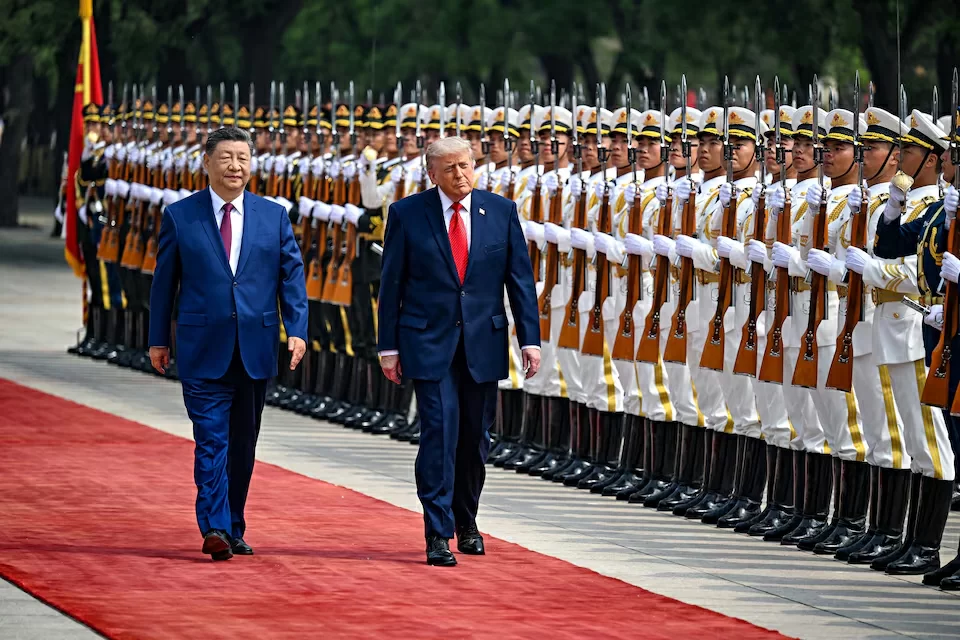
Trump-Xi top: Taiwan-waarschuwing en energieoverleg
On May 14, 2026, U.S. President Donald Trump arrived in Beijing for a historic two-day summit with Chinese President Xi Jinping, marking the first visit by an American sitting president to China in nearly a decade. The long-awaited high-level meeting brought the world’s two largest powers together to confront a sprawling agenda of divisive geopolitical and economic issues, at a moment of growing global uncertainty fueled by regional conflict and shifting trade alliances.
In closed-door strategic talks, President Xi delivered a firm warning on one of the most sensitive flashpoints in bilateral ties: the Taiwan question. Xi stressed that any misstep in handling the issue would push U.S.-China relations into “extremely dangerous territory.” China has long maintained that Taiwan is an inalienable part of its sovereign territory, while the United States retains a long-standing legal commitment to provide defensive support to Taipei. Senior U.S. administration officials reaffirmed during the summit that Washington’s long-held policy of strategic ambiguity on cross-strait relations remains unchanged.
Beyond cross-strait tensions, the two leaders turned their attention to critical global energy security. The Strait of Hormuz, the world’s most vital energy chokepoint that carries roughly one-fifth of global oil and liquefied natural gas supplies, has seen major disruptions amid ongoing escalations in the conflict with Iran. The two leaders agreed to pursue coordinated efforts to keep the strategic waterway open to international navigation. The summit also revealed China’s growing interest in increasing purchases of U.S. crude oil as part of broader efforts to diversify its energy imports and reduce its overreliance on Middle Eastern energy supplies.
On the economic front, Trump announced that China had finalized an agreement to purchase 200 commercial aircraft from U.S. aerospace giant Boeing. The deal marks the first major U.S. commercial aircraft contract secured by Boeing in the Chinese market in nearly 10 years, a symbolic breakthrough after years of frozen trade engagement. While the total value and volume of the agreement fell short of initial market expectations, it signals a shared commitment to normalizing bilateral trade ties following the fragile partial trade deal reached between the two powers last October.
During the discussions, Trump also raised the case of Jimmy Lai, the imprisoned Hong Kong-based media tycoon and prominent critic of Beijing, who is currently serving a lengthy prison sentence. The U.S. delegation stated that it hopes for a positive outcome on the issue, though Chinese officials have repeatedly emphasized that matters related to Hong Kong are purely internal affairs of China, falling outside the scope of foreign interference.
The summit comes as Trump seeks to shore up his domestic political standing ahead of upcoming political cycles, but his agenda in Beijing was constrained by ongoing challenges: stalled progress on broader trade negotiations and ongoing political and military fallout from the U.S.-linked conflict in Iran that has left his administration vulnerable to domestic criticism.
By the end of the two-day meeting, the two leaders closed their summit with a working lunch and informal off-the-record talks, with both issuing a joint statement expressing a shared desire to strengthen overall bilateral cooperation. That said, fundamental disagreements on core issues remain unresolved, and those differences are expected to shape the trajectory of U.S.-China relations in the coming months. As the leaders wrapped up their talks, the global community continues to closely watch how the world’s most consequential bilateral relationship will evolve amid a period of unprecedented global geopolitical upheaval.
-
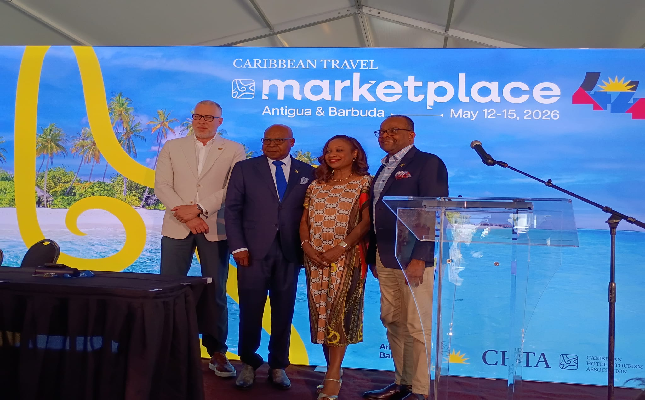
Jamaica focusing attention on rebuilding stronger tourism sector following hurricane
As the Caribbean region braces for the 2026 Atlantic Hurricane Season, climate change has forced tourism leaders across the bloc to reimagine what sustainable tourism looks like in an era of growing extreme weather risk. At the center of this regional shift is Jamaica, which has emerged as a trailblazer in climate-resilient tourism reconstruction one year after Category Five Hurricane Melissa flattened large swathes of its critical tourism infrastructure.
Data from Jamaica’s Planning Institute quantifies the staggering scale of the storm’s damage: total losses reached an estimated JMD $1.952 trillion (USD $12.2 billion), equal to 57% of the island nation’s entire annual gross domestic product. The tourism sector, Jamaica’s largest economic driver, bore the brunt of the destruction, accounting for $8.8 billion of the total losses.
Speaking at the 44th Caribbean Hotel and Tourism Association (CHTA) Marketplace held in St. John’s, Antigua and Barbuda, Jamaica’s Minister of Tourism Edmund Bartlett outlined the country’s bold new strategy to rebuild a more resilient, diversified tourism sector that can withstand future climate shocks.
“The hurricane taught us a critical lesson about how we need to build, accounting for the global realities of climate change and its growing impact,” Bartlett told reporters during a press briefing at the event. He explained that the government is completely overhauling its land use and development rules, particularly for low-lying coastal zones that are most vulnerable to storm surge and sea level rise.
“Several hard-hit coastal towns will be rezoned. Future residential development will be shifted further inland, while oceanfront land will be reserved exclusively for low-impact tourist activities,” Bartlett confirmed.
As part of its broader push to diversify Jamaica’s tourism offerings, the minister announced plans for a new flagship maritime tourism destination in northwestern Jamaica, adjacent to the popular Palladium Hotel. The country is also shifting strategic focus to luxury tourism, with the northeastern coastal town of Port Antonio earmarked to become the island’s new luxury tourism hub. A new airport is planned for Vernon Field in central Jamaica to improve access to the island’s interior, and upgrades to existing port infrastructure will allow Jamaica to operate as a standalone multi-stop cruise itinerary, cutting down on long travel times for visitors.
“Connectivity from all ports of entry to major resort areas will be capped at one to one and a half hours,” Bartlett said, adding that the infrastructure upgrades will eliminate long-standing transportation bottlenecks that have hampered visitor experiences. To support planned growth of 15,000 to 20,000 new hotel rooms, the government is investing in expanded carrying capacity infrastructure designed to make Jamaica a fully climate-sustainable destination.
When asked what lessons Jamaica’s experience holds for other small island Caribbean nations facing the same climate risks, Bartlett emphasized that resilience is not accidental: it requires intentional investment and systemic preparation. “We have to build the capacity for resilience — it does not happen just because we wish for it,” he said.
He called on regional governments to strengthen institutional frameworks, expand public education, update building policies, and enforce strict environmental and construction standards to prepare for future climate disasters. “First, we have to help our people understand what resilience means, then build a shared knowledge base that can be turned into practical, on-the-ground action,” Bartlett explained, pointing to Jamaica’s updated environmental and regulatory agencies as a model for systemic strengthening. He added that significant public and private capital investment is required to update building codes and improve construction approval processes to meet new resilience standards.
Bartlett highlighted Jamaica’s rapid recovery after Hurricane Melissa as proof that these investments pay off: when the storm hit, 25,000 tourists were on the island, and not a single life was lost or major injury reported. All visitors were repatriated safely within one week of the storm, and the island reopened to tourists just six weeks later. Within six months, 80% of Jamaica’s tourism capacity was restored, and the country had already welcomed more than one million returning visitors.
Beyond climate risk, Bartlett addressed overlapping global challenges that threaten regional tourism growth, including rising oil prices and widespread instability in the airline industry. “Rising oil costs have already put pressure on aviation sectors across every Caribbean state,” he noted. “If current geopolitical tensions do not ease, long-haul travel to the region will face serious headwinds.”
He also acknowledged the financial struggles facing multiple low-cost carriers, including regional Caribbean airlines, warning that higher airfares could dampen tourist arrivals across the bloc. “To address this, we need to build capacity to future-proof our sector, hold collaborative dialogue with our airline partners, and most importantly, innovate and work together to share the burden of this challenging moment,” Bartlett said.
Despite the array of economic and climate challenges facing the global tourism industry, Bartlett reaffirmed his long-held belief in tourism as a force for global good. “Tourism means peace,” he said. “And we as tourism leaders are the most important agents of peace on planet Earth.”
-
Regering zet extra machines en crisisaanpak in tegen wateroverlast
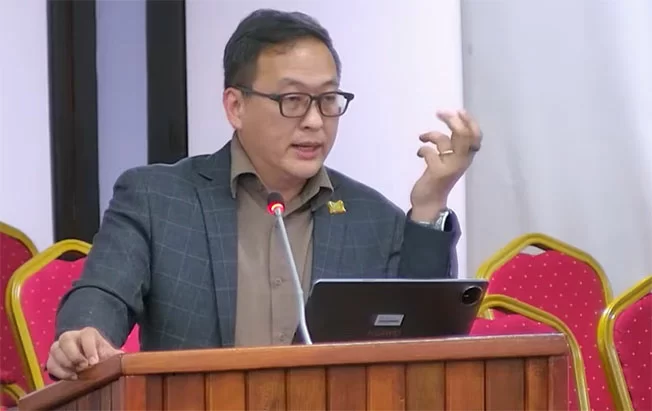
On Thursday, three top Surinamese government officials faced the National Assembly to outline the state of the country’s ongoing flood crisis and the steps the administration is taking to mitigate damage and prevent future disasters. Public Works and Spatial Planning Minister Stephen Tsang, Agriculture, Livestock and Fisheries Minister Mike Noersalim, and Government Coordinator André Misiekaba delivered detailed testimony before the legislative body, laying bare the depth of infrastructure decay that has compounded the impact of recent extreme rainfall.
Tsang opened his address by explaining that when his cabinet took office in late July 2025, it inherited a decades-long backlog of critical infrastructure maintenance that left both water-related and land-based infrastructure in what he described as a deplorable state. “We found trees growing inside drainage canals and sea outfalls. Drainage sumps were completely clogged with garbage, and we even recovered discarded mattresses, refrigerators and gas stoves from these waterways,” Tsang told parliament.
The minister added that the majority of the government’s heavy equipment tasked with maintaining drainage infrastructure was either broken or entirely non-functional when the new administration took office. None of the country’s three dedicated dredging pumps operated at full capacity, he confirmed. In the months since, multiple pieces of equipment have been repaired, and the government has launched a combined operational model that relies on both public assets and contracted private construction firms to address urgent needs.
Since September 2025, Tsang noted, the government has been building a long-term structural program focused on clearing outfalls, rehabilitating roadway networks, and upgrading national drainage systems across the country. He emphasized that the extreme rainfall that triggered the latest round of severe flooding was far outside normal weather patterns for the region. While 25 to 50 millimeters of rain is already classified as heavy precipitation for Suriname, measurements recorded on May 10 showed between 80 and 110 millimeters of rain falling across affected areas in just one event. “With that amount of water, major problems are unavoidable,” Tsang said. Even so, he added that preliminary interventions already completed have allowed floodwaters to recede far faster than they would have in previous years.
Currently, active mitigation work is underway in multiple high-priority communities including Wintiwai, Pontbuiten, Rahimal, Leiding 10A, and Domburg, according to Tsang. In the coming months, the government will launch new bidding processes for additional contracts to clear canals and upgrade drainage networks across multiple districts. Rehabilitation work on critical sluices and pump stations is also ongoing in Paramaribo-Noord, Santo Boma, and other flood-prone regions.
Looking ahead, the government is partnering with the Inter-American Development Bank to develop and deploy early warning systems for extreme weather events, a proactive measure designed to give communities more time to prepare for future flooding. An interdepartmental crisis working group has also been established, bringing together representatives from Public Works, Agriculture, Spatial Planning, and the National Disaster Management Coordination Center to align response efforts.
For his part, Agriculture Minister Noersalim confirmed that his ministry has also deployed all available heavy equipment to address acute flood issues in key agricultural and residential regions including Nickerie, Saramacca, Weg naar Zee, and Commewijne. He noted that the ministry faced an early challenge just mapping out what operational equipment was actually available, a process that revealed significant gaps in the government’s asset inventory. “It was a complicated puzzle to piece together. Police are still conducting investigations into the whereabouts of a number of missing pieces of heavy equipment,” Noersalim explained.
During clearing work on the Jahkrikreek in Saramacca, crews have encountered massive volumes of illegally dumped waste clogging the waterway, he added. To keep public spending under control, the ministry is prioritizing carrying out as much clearing and mitigation work as possible with in-house resources, only bringing in private contractors when work cannot be completed by public teams. A public tender for seven new flood mitigation projects is scheduled for next week, Noersalim confirmed.
Government Coordinator Misiekaba closed the parliamentary briefing by calling for understanding and support from both the public and parliament for the government’s recovery efforts. He stressed that even modern, well-maintained drainage systems struggle to cope with extreme rainfall events of the scale Suriname recently experienced. “Guyana was flooded, Trinidad was flooded, even Hilversum in the Netherlands was inundated by recent heavy rains,” Misiekaba noted, adding that it will take significant time to fully eliminate the decades of maintenance backlog that left the country so vulnerable to flooding.
Misiekaba also acknowledged that the government currently faces limited capacity to allocate new funding for flood mitigation work, as the 2026 national budget has not yet been finalized and approved by parliament. Even with these constraints, he guaranteed that the administration would not abandon communities affected by flooding. “Ministers are on the ground with communities every single day, working to identify ways to bring relief to those impacted,” he said.
-
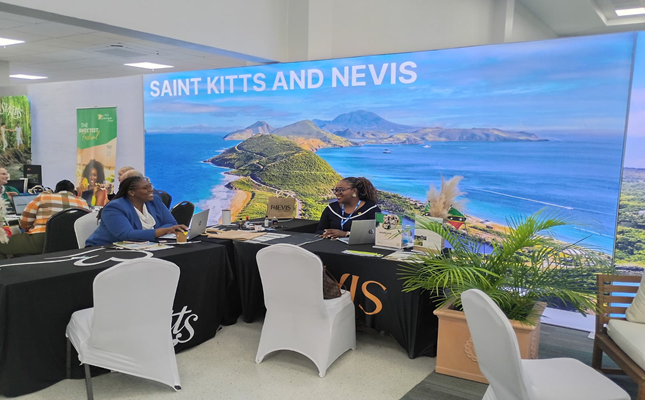
St. Kitts and Nevis showcased at CHTA Marketplace as stakeholders show interest
As one of the Caribbean’s most influential annual tourism industry gatherings drew to a close in Antigua, the dual-island nation of St. Kitts and Nevis has emerged with promising new leads from the 44th Caribbean Hotel and Tourism Association (CHTA) Marketplace. Held across two days at the American University of Antigua, the 2026 event brought more than 500 tourism stakeholders including international buyers, hospitality sellers, and industry media together to drive regional growth and showcase destination offerings. For St. Kitts and Nevis, the event marked a key milestone in the country’s push to expand its footprint in fast-growing new source markets. Delegations from the St. Kitts Tourism Authority (SKTA) and the Nevis Tourism Authority (NTA) participated as a unified delegation, positioning the Federation’s combined tourism product to global industry partners. SKTA Chief Executive Officer Kelly Fontenelle, who led the joint delegation, called the gathering exceptionally productive for the Caribbean nation’s tourism sector. In her assessment, the event delivered dual value: it strengthened long-standing commercial ties with existing industry partners, while unlocking critical access to untapped business opportunities, most notably across Latin America. “We have been working for months to build a presence in this region, and at CHTA Marketplace we connected with multiple tour operators actively seeking partnerships with local hotels and tourism stakeholders,” Fontenelle explained. “These operators are based in markets like Venezuela and Argentina, where clients enjoy visa-free entry to St. Kitts and Nevis, making this a natural expansion of our visitor base.” Beyond business development for St. Kitts and Nevis, the 44th CHTA Marketplace fulfilled its core industry mission: it underscored the outsized economic role of tourism across the Caribbean, while putting a spotlight on host nation Antigua and Barbuda’s own world-class hospitality offerings. Reflecting on the outcomes, Fontenelle emphasized that the event aligned perfectly with the Federation’s ongoing strategy to diversify its visitor sources and reduce dependence on traditional northern markets. “This has been an incredibly busy and productive event for our team, and we are eager to see what partnerships emerge from these conversations in the coming months,” she said. Looking back at early 2025 visitor arrival data, Fontenelle noted that St. Kitts and Nevis, like most competing Caribbean destinations, got off to a robust start to the year. “Nearly every island in the region reported a strong first quarter, starting the year with a surge in bookings,” she recalled. “We did see a small dip after political unrest in Venezuela disrupted regional travel early in January, but demand rebounded strongly through February and March, putting us back on track.” Still, the industry leader highlighted growing headwinds that are causing concern across the region ahead of the Northern Hemisphere summer travel season. Fontenelle pointed to shifting airline dynamics that have put upward pressure on airfares, dampening consumer demand for regional travel. “Airlines have reported that total revenue is holding up, but passenger load factors are down – what that means is ticket prices have gone up significantly,” she explained. “Carriers are still turning a profit, but fewer people are able to afford to travel right now, which is softening summer demand across the Caribbean.” To address this systemic challenge, Fontenelle proposed that Caribbean destination stakeholders collaborate to tackle rising airfare costs, a shared barrier that threatens to cut into visitor arrivals across the entire region. Even with the near-term uncertainty surrounding the summer 2025 travel season, Fontenelle remained upbeat about the Federation’s full-year outlook, particularly for the peak winter tourism season that drives the bulk of annual tourism revenue for most Caribbean destinations. “Winter bookings are tracking well ahead of expectations, which aligns with our long-standing strategy of launching promotional campaigns early to capture early-booking winter travelers,” she noted. “As things stand today, the winter season looks very strong for St. Kitts and Nevis.”
-
Communiquè from the Revolutionary Government
In a rare high-level engagement that marks a notable moment in the long-strained relations between the United States and Cuba, the Cuban Revolutionary Government has granted approval for a visit to Havana by a US delegation led by CIA Director John Ratcliffe. The in-person meeting between Ratcliffe’s delegation and Cuban officials from the Ministry of the Interior took place on Thursday, May 14, 2026, unfolding against a backdrop of long-standing complexity and friction in bilateral ties between the two neighboring nations.
According to official Cuban confirmation, the dialogue was structured to advance constructive political exchange between the two governments, forming part of broader ongoing efforts to address the most pressing points of tension in the current bilateral relationship. During the discussions, Cuban authorities presented clear, categorical evidence and engaged in detailed exchanges that unequivocally refute long-standing US claims that Cuba poses a threat to American national security. The Cuban delegation also firmly established that there is no legitimate justification for Cuba’s continued inclusion on the US government’s list of state sponsors of terrorism.
The meeting also served as a platform to reaffirm the consistent, unwavering stance that Cuba has maintained for decades: the Cuban government and its relevant national agencies unequivocally condemn and actively counter terrorism in every form and manifestation it takes. Cuban officials restated the country’s long-held position that the island nation does not host, support, finance, or tolerate the operation of any terrorist or extremist organizations within its borders. Furthermore, there are no foreign military or intelligence installations operating on Cuban territory, and Cuba has never backed any hostile activity targeting the United States, nor will it ever permit actions against any other sovereign nation to be planned or launched from its soil.
Beyond addressing long-standing points of contention, the talks also highlighted a shared interest from both sides in expanding practical bilateral cooperation between their respective law enforcement and security agencies. Both delegations agreed that deeper collaboration in this area would deliver tangible benefits not only for the national security of the United States and Cuba but also for broader regional and global stability. The high-profile visit opens a new channel of direct dialogue between the two nations at a time when bilateral relations remain deeply divided, offering a potential opening for incremental progress on shared security priorities.
-
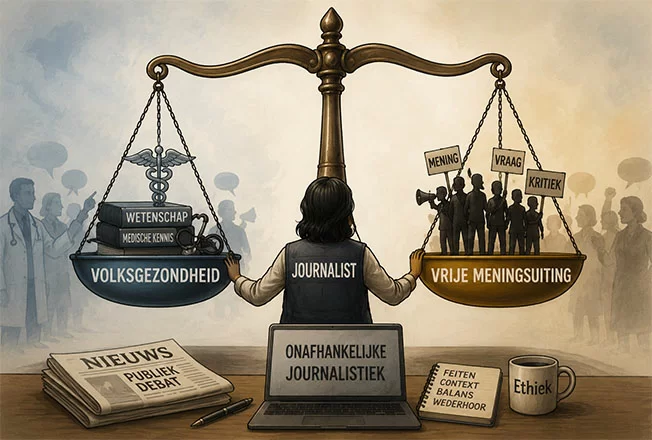
Column: Vrije meningsuiting ook voor impopulaire meningen
Freedom of speech is not designed only to shield ideas that already enjoy widespread public acceptance. It is the unpopular, heterodox perspectives that most need legal and cultural protection, after all; without this protection, free speech becomes little more than the freedom to repeat what everyone already agrees with.
This week, a sharp and illuminating debate has emerged in Suriname following the publication of a reader submission on local news platform Starnieuws. Written by contributor Karel Donk, the piece was a response to an upcoming national HIV testing campaign. In his contribution, Donk publicly questioned the established scientific link between HIV and AIDS, and urged readers to think carefully before agreeing to get tested.
The reaction from the medical community was swift and indignant. Multiple doctors, including clinicians who work directly in the HIV/AIDS treatment sector, condemned the publication. They argue that giving space to this unsubstantiated perspective puts public health at direct risk, and have criticized Starnieuws for platforming a claim that contradicts decades of established medical consensus.
This criticism is not unfounded. Medical professionals bear daily responsibility for patient lives, and they evaluate any such publication through the lens of rigorous scientific evidence and years of clinical experience. It is entirely natural that concern arises when claims directly contradict universally accepted medical understanding.
Yet it is precisely here that the fundamental debate over free speech begins. When a news outlet opens its pages to reader-submitted opinion pieces, it does not automatically endorse every view it publishes. Starnieuws made the decision to run Donk’s essay because a meaningful commitment to free speech requires making space for controversial, dissenting, even unpopular perspectives — as long as those contributions remain within established editorial guidelines. The outlet did not hide or suppress the medical community’s pushback: it published doctors’ critical responses in full, allowing readers to weigh competing perspectives against one another.
This is exactly how an open, democratic society is supposed to function. It does not ban dissenting views ahead of publication; instead, it brings conflicting ideas into public debate, where they can be challenged with evidence, facts and counterarguments. In recent years, calls to censor unpopular perspectives have grown steadily louder. Any view that deviates from dominant consensus is quickly labeled disinformation, conspiracy thinking or dangerous. Sometimes that label is justified.
But there is a critical line between publishing a controversial perspective as part of open debate, and actively seeking to cause harm. Speech that calls for violence, spreads hatred, or deliberately disseminates lies with malicious intent is a separate category entirely from what occurred in this case.
Added context is important here: HIV testing in Suriname is not legally mandated. It remains a voluntary choice for every citizen, who retains full responsibility for seeking out information, consulting medical professionals, and making their own decisions.
The true strength of a free society is not measured by its ability to silence dissenting voices, but by its ability to refute those voices publicly with evidence. Science is not strengthened by censorship; it grows stronger through open debate, transparent evidence-gathering and public scrutiny. That is precisely why freedom of expression must be protected and cherished. This is not because every unpopular opinion is correct, but because a free society that eliminates space for open debate gradually becomes a society ruled by fear, where self-censorship dictates what can and cannot be said.
A striking detail in this controversy is how many other media outlets have only repeated the doctors’ angry condemnation, without addressing the full original context: that Starnieuws intentionally created space for public debate, and that its decision to run the controversial piece was a deliberate editorial choice to fuel broader public discussion. When only the doctors’ criticism, with its harsh condemnation of Starnieuws, is published without the full original context, there is a serious risk that Starnieuws will be misrepresented as willfully spreading disinformation, when the outlet actually opened the door to debate and published critical counter perspectives.
At the same time, it is well within any other outlet’s rights to judge the doctors’ reaction as newsworthy. When medical professionals warn that public health may be endangered, that is inherently a societally relevant news story. It is appropriate and healthy for media outlets to hold each other accountable, but they have an obligation to be honest about the full context and intentions of their peer organizations. Without that commitment to context, we do not get a debate about ideas — we get a blanket moral condemnation of the outlet that opened space for discussion.
Freedom of speech does not mean every opinion is equally correct, or equally rooted in fact. It means that all ideas deserve to be publicly discussed, criticized and refuted, without an immediate call for censorship and silence. The strength of a democratic society lies not in banning controversial opinions, but in its ability to counter them openly with evidence and argument. A society where people are afraid to publish, to debate, to deviate from consensus for fear of public condemnation is ultimately far more dangerous than a single controversial reader submission.
-
Local players confirmed following CPL Draft
The annual player draft for the 2026 edition of the Republic Bank Caribbean Premier League (CPL) has concluded, with all seven participating franchises locking in their full rosters of domestic West Indian players ahead of the tournament, scheduled to run from August 7 to September 20. Overseas player signings will be revealed by the league in the coming weeks, building anticipation for one of cricket’s most exciting T20 competitions.
Barbados Tridents made one of the draft’s most high-profile moves, picking up left-arm spinner Gudakesh Motie, who departs his home franchise Guyana Amazon Warriors after a five-year tenure. The Tridents also retained Sherfane Rutherford, another Guyanese talent who was part of their 2025 squad, and exercised their Right to Match Options (RMOs) to bring back Brandon King, Kadeem Alleyne, Rivaldo Clarke, Johann Layne and Kofi James. Zishan Motara will also return to the Barbados-based side for the 2026 season.
Defending 2025 champions Trinbago Knight Riders prioritized continuity, using their RMOs to retain their star core of Sunil Narine, Nicholas Pooran, Kieron Pollard, Akeal Hosein and Terrance Hinds – a group of seasoned veterans that will form the backbone of their title defense. The Knight Riders also added fresh talent to their roster, welcoming Barbadian duo Justin Greaves and Dominic Drakes for their first stint with the Trinidad and Tobago franchise. Jyd Goolie will make his debut for his home team after a 2025 season with St Kitts & Nevis Patriots, and he will be joined by first-time CPL squad members Dexter Sween and Abdul Raheem-Toppin.
St Kitts & Nevis Patriots pulled off a major coup by drafting Johnson Charles, the CPL’s all-time leading run-scorer, to add firepower to their batting line-up. Charles will be joined by Andre Fletcher, the second-highest run-scorer in league history, who was re-signed via an RMO. The Patriots also exercised RMOs to retain Kyle Mayers, Alick Athanaze and Mikyle Louis, brought veteran all-rounder Jason Holder back into the squad, and secured first-time signings of fast bowler Obed McCoy and batter Kevin Wickham for the new season.
Despite losing Motie to Barbados Tridents, Guyana Amazon Warriors retained their core of top local talent, using RMOs to keep Shimron Hetmyer, Romario Shepherd, Shai Hope and Shamar Joseph. The franchise filled Motie’s spinner spot by picking up fellow left-arm slow bowler Khary Pierre, who represented Saint Lucia Kings in 2025. Staying true to their focus on developing homegrown players, 10 of the 12 local selections the Amazon Warriors made for 2026 are Guyanese, including new additions Ronaldo Alimohamed, Veersammy Permaul, Mavendra Dindyal and Jonathan van Lange.
The expansion-framed Jamaica Kingsmen built an experienced roster led by two of Jamaica’s biggest T20 stars, drafting all-rounders Rovman Powell and Andre Russell, both of whom boast elite records in franchise cricket around the world. They also added a host of fellow Jamaican talents including Odean Smith, Vitel Lawes, Jeavor Royal and Kirk McKenzie, and rounded out their squad with Keemo Paul, Keacy Carty and Shaqkere Parris – all players with prior CPL experience at other franchises.
Antigua & Barbuda Falcons secured a major signing in fast bowler Alzarri Joseph, who joins the side after five seasons with Saint Lucia Kings. The Falcons also added explosive batter Evin Lewis, who departs St Kitts & Nevis Patriots after more than a decade with the franchise. Existing squad members Fabian Allen, Jayden Seales and Amir Jangoo were retained via RMOs, while Shamar Springer, Rahkeem Cornwall and Karima Gore all return from the Falcons’ 2025 squad. New domestic prospects Anderson Mahase and Anderson Phillip round out the 2026 roster.
Completing the draft process, Saint Lucia Kings used their RMOs to retain Roston Chase, Matthew Forde and Keon Gaston. They added exciting young Antiguan batter Jewel Anderson to their batting line-up, and welcomed homegrown talent McKenny Clarke back to the franchise after he spent the 2025 season with Trinbago Knight Riders. The Kings also selected Trinidadian top-order batter Kamil Pooran, alongside domestic prospects Damion Joachim, Joshua Bishop and Darron Nedd.
With all domestic player selections now finalized, the CPL turns its focus to announcing the full list of international signings in the weeks ahead, as the region prepares for another high-octane edition of its premier T20 cricket competition.
-
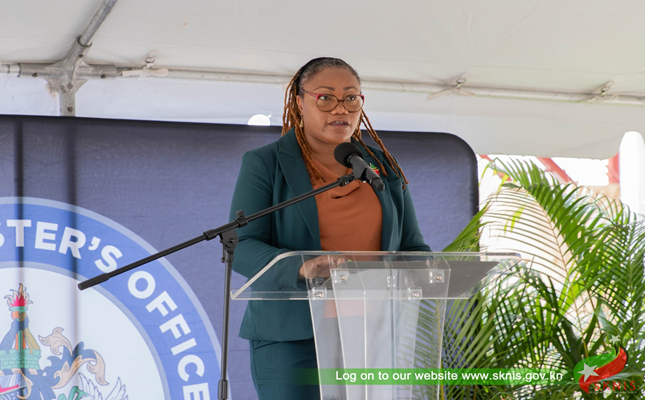
Saint Kitts and Nevis Government launches NCI Wellcare Digital Insurance Card for public servants and retirees
BASSETERRE, Saint Kitts – In a landmark move to upgrade public service benefits and streamline healthcare access, the Government of Saint Kitts and Nevis formally launched the National Caribbean Insurance (NCI) WellCare Digital Insurance Card system on May 13, 2026. The initiative, rolled out to serve thousands of public sector employees, retired workers, and qualifying dependents, marks a significant shift toward digitized, user-centered healthcare administration across the federation.
Unlike traditional insurance models that require patients to cover full treatment costs out of pocket and wait for delayed reimbursements via paper claims, the new digital platform eliminates this burdensome process. Cardholders only need to cover their required co-payment directly at the time of care when they swipe their digital card at participating provider locations. The remaining balance of the bill is settled automatically in real time through NCI’s secure electronic claims processing system, cutting out paperwork and eliminating long waiting periods for reimbursement.
Currently, the network of participating healthcare providers spans Saint Kitts, Nevis, and Anguilla, with government officials confirming that additional providers are set to join the program as it scales up to serve more residents in coming months.
Speaking at the official card distribution launch ceremony, Head of the Civil Service Thelma Richard framed the launch as the latest in a series of targeted government investments to strengthen support for public workers. Richard noted that the administration has already delivered additional gratuitous payments for general agreement employees, upgraded and expanded the national pension plan, and prioritized comprehensive support for workers both during their active service and through retirement. The digital card adds a critical new layer of security and benefit to this evolving support framework.
“This is not just another piece of plastic,” Richard emphasized during her address. “This is what empowerment looks like. This card puts real power in your hands: it helps you keep more money in your pocket, and more importantly, it gives you peace of mind, knowing that when you need care, you have better, faster access to that care.”
Richard explained that public servants were selected as the first cohort to access the program as part of the government’s ongoing commitment to reinforcing worker support systems across the public sector. “This is not a one-off achievement. It is part of a wider, carefully thought-out effort to strengthen the benefits package across the public service,” she said. “We understand something very important: when our workers are healthy and secure, they can serve the nation better. And those who serve this country deserve benefits that truly support them.”
Beyond its immediate convenience for users, the WellCare Card forms a core part of a broader national push to transform healthcare delivery in Saint Kitts and Nevis. “The distribution of the NCI WellCare Card gives you easy, fingertip access to improved benefits. But beyond that, it represents something bigger — a healthcare system that is more responsive, more inclusive, and more focused on the people it serves: you,” Richard added.
The initiative underscores the current administration’s consistent priority of easing the financial burden of medical costs for working people and retirees while expanding access to high-quality care. “When healthcare is easier to access, our families are stronger. And when financial stress is reduced, people can focus on their work and on their lives. And when workers feel supported, the entire country benefits,” Richard said.
The rollout of the digital insurance card reinforces the government’s ongoing commitment to digital transformation across public services, with a core focus on advancing the health and financial well-being of all residents of Saint Kitts and Nevis.
-
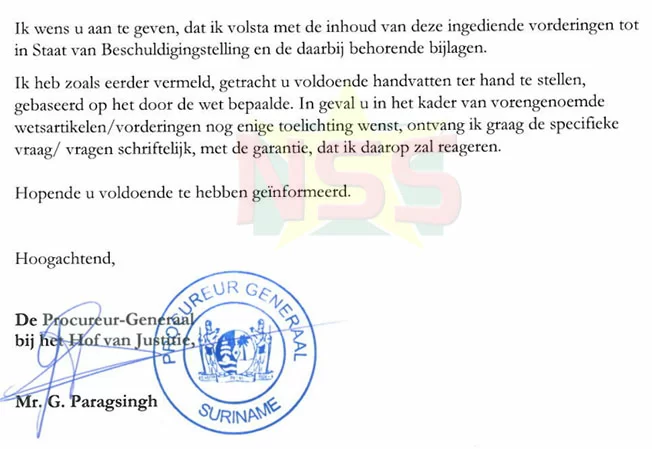
Pg wijst uitnodiging DNA-commissie af: extra toelichting alleen schriftelijk
On May 15, 2026, new developments emerged in Suriname’s high-stakes impeachment process against three former senior government officials, after Prosecutor General Garcia Paragsingh formally notified a parliamentary investigative committee that the Public Prosecution Service (OM) has already turned over all required documentation related to the cases.
The proceedings target three ex-cabinet members: Riad Nurmohamed, Bronto Somohardjo and Gillmore Hoefdraad, with the National Assembly required to reach a final ruling on whether to allow criminal prosecution by June 9. Paragsingh’s May 14 correspondence was addressed to committee chair Rabin Parmessar, who had previously extended a written invitation for the prosecutor general to deliver additional in-person testimony to the National Assembly. In her official response, Paragsingh confirmed that the already submitted impeachment motions and accompanying documentation are sufficient to address the committee’s needs. She added that the OM stands ready to provide written responses to any further follow-up questions the committee may put forward within the bounds of national law.
Per Paragsingh’s statement, the three impeachment motions were formally filed with the National Assembly on March 9, 2026, under Article 140 of the Surinamese Constitution and the country’s Law on Impeachment and Prosecution of Political Office Holders. The motions center on alleged criminal offenses the three former ministers are accused of committing during their tenures in public office. Nurmohamed’s case is tied primarily to the controversial Pan American Real Estate project, while proceedings against Somohardjo draw heavily on investigative findings from a CLAD report. Hoefdraad, a former finance minister who is currently a fugitive, faces new impeachment motions linked to the corruption investigation into the Suriname Post Savings Bank (SPSB).
In her letter, Paragsingh emphasized that all filed motions fully comply with the legal requirements laid out in Article 3 of the impeachment law. She confirmed that the submitted documents include detailed factual descriptions of the alleged offenses, alongside clear references to the specific legal provisions that underpin the charges against the three men.
The prosecutor general also clarified the legal scope of the National Assembly’s review role. Under Article 5 of the relevant legislation, parliament is only required to assess whether proceeding with prosecution is justified by the broader public interest from a political and administrative perspective. For this reason, Paragsingh explained, the OM intentionally included supporting background context alongside the formal motions, rather than releasing the full confidential criminal investigation dossier to the public and parliamentary body.
The cross-party investigative committee tasked with reviewing the motions is led by Parmessar, with additional seats held by members from Suriname’s major political parties: Dew Sharman (VHP), Xiabao Zheng (PL), Jennifer Vreedzaam (NDP), Mahinder Jogi (VHP), Ivanildo Plein (NPS) and Ebu Jones (NDP).