作者: admin

  • Escalatie van protesten in Bolivia: duizenden eisen aftreden president Paz

    Escalatie van protesten in Bolivia: duizenden eisen aftreden president Paz

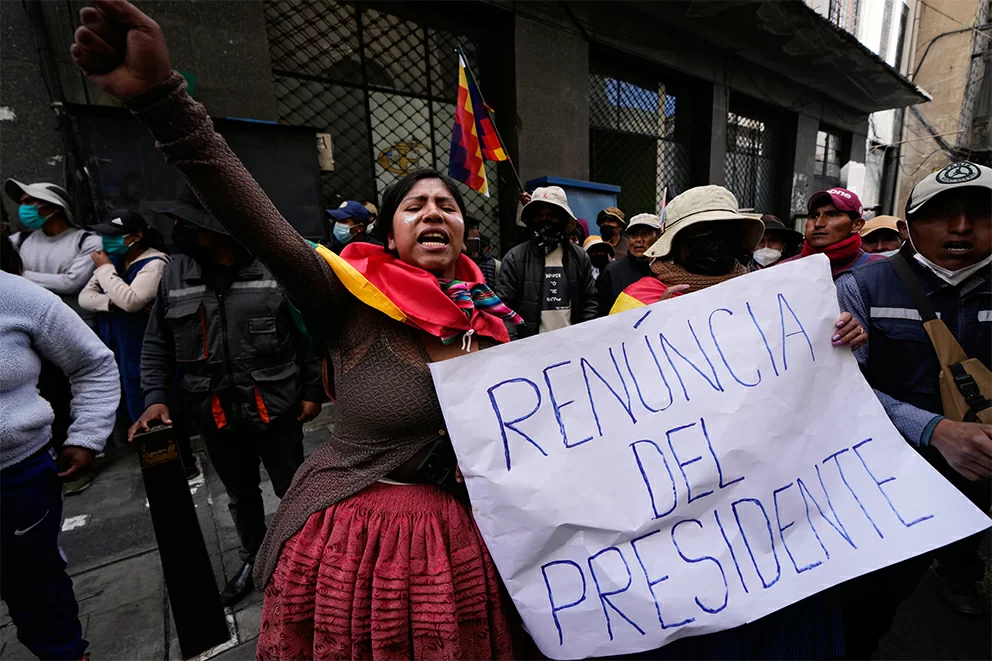
    Bolivia has been rocked by rapidly escalating mass anti-government demonstrations that have swept the nation in recent days, bringing the administrative capital La Paz to a near-standstill. Thousands of protesters drawn from across Bolivian society – including small-scale farmers, artisanal miners, teachers, public sector workers and Indigenous communities – have shut down key arterial routes surrounding the city, creating critical shortages of food, fuel and life-saving medications for local residents.

    The unrest first erupted weeks ago, targeting the administration of center-right President Rodrigo Paz, who took office less than six months ago, ending nearly two decades of continuous socialist rule in the South American nation. Demonstrators are demanding Paz’s immediate resignation, citing skyrocketing living costs, persistent widespread economic instability, and controversial plans to privatize state-owned enterprises as core grievances.

    Bolivia is currently grappling with its most severe economic crisis in four decades. Official data puts annual inflation at 14% as of April, a figure that has gutted household purchasing power and amplified public discontent across all income groups. For many protesters, the crisis has reached an unmanageable breaking point. “Paz is unfit to govern, and our country is spiraling into chaos,” said 60-year-old farmer Ivan Alarcon, who traveled 90 kilometers to join the demonstrations in La Paz.

    Artisanal small-scale miners, another key bloc of protesters, have marched through the city to demand expanded access to mining territories, escalating tensions in already volatile streets. Clashes have broken out between demonstrators and riot police in central La Paz, with tear gas deployed to disperse crowds attempting to reach the main city square, which houses major government administrative buildings. Protesters have thrown stones and homemade explosive devices, with at least two demonstrators confirmed injured. Local media reports more than 100 arrests have been made, and on-the-ground footage shows protesters entering government office buildings and removing property from the sites.

    A major flashpoint for the unrest was Paz’s recent decision to cut long-standing national fuel subsidies, a move his administration defended as necessary to reverse the depletion of the country’s foreign currency reserves. Far from stabilizing energy supplies, however, the policy triggered immediate fuel price hikes and worsened existing supply shortages, giving new momentum to the growing protest movement.

    The escalating political crisis has drawn international attention, with the United States formally weighing in on the unrest. U.S. Deputy Secretary of State Christopher Landau expressed deep concern following talks with President Paz, framing the mass demonstrations as an attempted coup partially funded by what he called an “unholy alliance between political actors and organized crime” in the region. Landau called for international support for Bolivia’s democratically elected government, warning that prolonged political instability would have damaging ripple effects across the entire South American region. He added that the U.S. is actively working to prevent anti-government and anti-institutional factions from seizing power.

    Amid the ongoing street violence and political uncertainty, multiple commercial banks across La Paz have temporarily suspended operations, closing their doors to the public out of caution for staff and customer safety.

  • Brunswijk zet strijd tegen bondsvoorzitter Hellings voort met hoger beroep

    Brunswijk zet strijd tegen bondsvoorzitter Hellings voort met hoger beroep

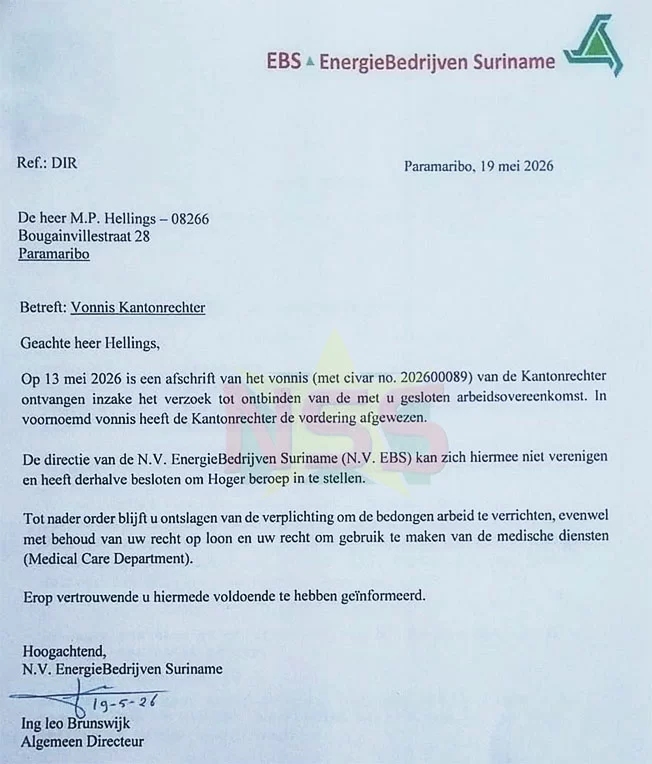
    A long-running high-profile labor conflict at Suriname’s state-owned energy utility Energiebedrijven Suriname (EBS) has entered a new phase, after EBS General Director Leo Brunswijk launched an appeal against a lower court ruling that favored Marciano Hellings, chair of the EBS employees’ union. The formal notice of appeal was officially served to Hellings on Tuesday, court documents confirm. In the notification, Brunswijk states that EBS leadership rejects the cantonal court’s earlier decision, which dismissed the utility’s request to terminate Hellings’ employment contract.

    Per the terms outlined in the appeal notice, Hellings will remain temporarily relieved of his work duties while retaining full access to his regular salary and all medical benefits through the duration of the appellate process. The contentious dispute between EBS executive leadership and the union chair first emerged in July of the previous year, and has since grown into one of the most widely discussed labor controversies at any state-owned enterprise in Suriname. Prior to the cantonal court’s ruling, EBS had already lost previous procedural challenges brought before the Labor Inspectorate, marking the second consecutive setback for the utility in the conflict.

    When contacted for comment by local outlet Starnieuws, Hellings responded calmly to the news of the appeal, saying he had fully anticipated the move from EBS leadership. “This doesn’t keep me up at night,” the union leader told reporters. He added that it had been clear for months that EBS intended to push the case to appellate court regardless of the lower court outcome.

    Hellings also echoed a observation the cantonal judge made in the initial ruling: the conflict has primarily been driven by a single individual within EBS’s executive leadership. The union chair expressed full confidence in the appellate process, saying he expects the lower court’s ruling will be upheld. “I am convinced that when this case is heard on appeal, we will get the same outcome,” he said.

    In additional comments, Hellings pointed out that the prolonged legal battle has already incurred substantial public costs, including fees for attorneys, court procedures and process servers. “The lawyer gets paid again, the process server gets paid, and all of that comes at the expense of state-owned NV EBS,” he noted.

  • Leisure : Did you know ? #25

    Leisure : Did you know ? #25

    In the 25th installment of HaitiLibre’s popular ‘Did You Know?’ leisure series, published May 20, 2026, readers are invited to explore the little-known history and unique culinary character of sumac, a versatile ancient spice with deep roots in Mediterranean and Middle Eastern food traditions.

    Sumac is harvested from the berries of wild shrubs that thrive in the rugged rocky terrain spanning the Mediterranean basin and the Middle East. What sets this spice apart from common acidic seasonings is its bright, lemony-forward profile paired with a subtle astringent bite, which adds fresh, tangy depth to dishes without requiring liquid additives like vinegar or freshly squeezed lemon juice. It has long been a staple in the national cuisines of Lebanon, Syria, and Turkey, and serves as a core component of the iconic Za’atar spice blend—an aromatic mix that also includes dried thyme, toasted sesame seeds, and salt.

    The historical reach of sumac stretches back far earlier than many modern home cooks realize. Long before lemons were introduced to European markets, ancient Romans already relied on sumac for both its medicinal benefits and culinary versatility. This long legacy offers a powerful reminder: regional biodiversity shaped unique culinary identities centuries before the globalization of food ingredients homogenized modern diets. In highlighting sumac’s story, the feature also issues a quiet call to action: to honor distinct regional terroirs, and recognize that every corner of the world holds one-of-a-kind natural treasures that deserve protection from conflict and the gradual erasure of ancient cultural traditions.

    This fun, educational fact comes straight from the HaitiLibre Quiz platform, an interactive general knowledge hub designed to challenge and engage learners across a wide range of topics. The platform caters to casual knowledge seekers and trivia enthusiasts alike, covering everything from Haitian current affairs and culture to global general knowledge. For users ready to test their expertise, the platform’s expert menu, hosted at https://quiz.haitilibre.com/en, offers a diverse array of specialized, challenging themes.

    Currently, the platform hosts 119 unique interactive quiz games, with new content added on a monthly basis. As part of the May 2026 monthly update, 30 brand-new quizzes were added to the library on May 4, expanding the platform’s offerings for all audiences. All HaitiLibre Quiz games are exclusive, completely free to access, and require no account registration to play. They are designed to be accessible to all age groups and knowledge levels, with three difficulty tiers—easy, intermediate, and hard—available for every quiz, and full support for both French and English languages.

    Readers are invited to visit the quiz hub at https://quiz.haitilibre.com/en to explore the full collection of content, test their own general knowledge, share the platform with family and friends, and send feedback to the HaitiLibre team to help improve future updates. This ‘Did You Know?’ entry is pulled from the platform’s International Cuisine 2.1 themed quiz, and previous installments of the series dating back to the 21st entry are also archived on the HaitiLibre website for interested readers to explore.

  • DNA keurt in korte tijd twee belangrijke wetten van Justitie en Politie goed

    DNA keurt in korte tijd twee belangrijke wetten van Justitie en Politie goed

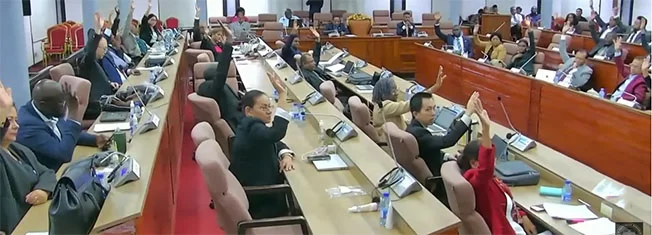
    On Tuesday, Suriname’s National Assembly (DNA) passed the amended Suriname Fire Service Bill with a unanimous 39-0 vote, marking the second major piece of legislation from the Ministry of Justice and Police to clear parliament in a single week. Just seven days prior, the Road Traffic Act also secured unanimous approval from the legislative body, signaling a productive stretch for the justice portfolio.

    Debate over the fire service law amendments included pointed scrutiny from assembly members, who raised detailed questions on core provisions ranging from expanded fire department authority and proactive fire prevention frameworks to cross-agency coordination with other emergency response units and fire safety standards for inland rural areas.

    Minister of Justice and Police Harish Monorath emphasized that the overarching goal of the revised legislation is to drive comprehensive modernization of Suriname’s fire corps and strengthen coordinated response across all emergency scenarios. Under the new law, greater institutional priority will be placed on proactive fire prevention, public fire safety education, and integrated collaboration between fire services, police, ambulance units and other relevant public agencies. Monorath also noted that the law establishes mandatory unified fire safety standards that will apply to all residential and commercial buildings, industrial operations, and public infrastructure across the country.

    A key topic of extensive discussion during plenary debate was the gap in fire coverage for remote inland communities that currently lack permanent fire stations. To address this gap, Monorath outlined that volunteer fire corps and partnerships with local community groups will form the core of the solution for underserved areas. He confirmed that the ministry has already held preliminary consultations with traditional community leaders to develop local frameworks for fire prevention and emergency response.

    Multiple assembly members stressed that while the amended law represents a critical first step forward, additional investment and institutional strengthening for the Suriname Fire Corps remains an urgent priority. Lawmakers noted that as Suriname’s rapidly expanding oil and gas sector drives national development, the fire service needs enhanced operational capacity and upgraded equipment to meet growing public safety demands. They also called for greater clarity on the role of district commissioners in unserved areas, pushed for alternative emergency response models for remote regions, and advocated for stricter routine fire safety inspections for existing buildings and private businesses.

    At the close of the debate, multiple assembly members including committee chair Dinotha Vorswijk urged the full chamber to support the legislation, framing the vote as a landmark milestone in building a more modern, professional, and responsive fire service for all Surinamese communities.

  • Studenten krijgen weer studiebeurzen voor Ghana

    Studenten krijgen weer studiebeurzen voor Ghana

    A groundbreaking educational partnership has been established that will soon open new academic doors for Surinamese students seeking advanced technical training. The Anton de Kom University of Suriname (AdeKUS) has signed a memorandum of understanding with Ghana’s Kwame Nkrumah University of Science and Technology and the Otumfuo Osei Tutu II Foundation to launch a annual scholarship scheme for Surinamese learners.

    The collaborative initiative is designed to offer up to five scholarships each year to Surinamese students admitted to postgraduate programs at the Ghanaian institution. Priority for the awards will be given to candidates enrolling in high-demand technical fields critical to Suriname’s growing resource sector, including mining engineering, oil and gas technology, general engineering and other related technical disciplines.

    The initial signing of the non-binding intent agreement took place during an official working visit by a Ghanaian delegation to Suriname, with senior government representatives including Sergio Akiemboto, Chief of Staff to the President of Suriname, in attendance to mark the milestone. At present, AdeKUS confirms that the university is awaiting final formal signatures from its Ghanaian partners on the intent agreement. Once that step is completed, work will begin to draft and finalize a binding full partnership agreement that outlines the details of program administration, selection criteria and funding arrangements.

    Organizers are moving forward with an ambitious timeline, with plans to have the first cohort of scholarship recipients begin their academic programs in Ghana as early as this August. To streamline the process for selected students, planning teams are working alongside Suriname’s Ministry of Foreign Affairs, International Trade and Cooperation to work out logistical details, including visa processing, in-country student support, and preparation of required travel documentation.

    The partnership represents a deepening of educational cooperation between Suriname and Ghana, addressing a gap in advanced technical training opportunities for Surinamese students in sectors that form a core part of the country’s national economy.

  • Internships : Launch of the Youth Employment Initiation Program in the Private Sector

    Internships : Launch of the Youth Employment Initiation Program in the Private Sector

    In a formal ceremony held at Port-au-Prince’s Ritz Kinam Hotel on May 15, 2026, Haitian academic leaders and stakeholders marked the official launch of the long-awaited Youth Employment Initiation Program, known locally by its Haitian Creole acronym PIJE, an initiative designed to bridge the gap between academic training and professional employment for the country’s young graduates.

    Dr. Jean Denis Saint-Felix S.J., dean of the Faculty of Economic, Social, and Political Sciences at Notre Dame University of Haiti (FSESP-UNDH), delivered opening remarks at the event, expressing heartfelt appreciation for the collaborative effort behind the program’s rollout. He emphasized that youth unemployment remains one of Haiti’s most pressing social and economic challenges, and called on the Haitian government to prioritize long-term, sustainable funding and implementation of PIJE to ensure that thousands of job-seeking young people across the country can access its benefits in coming years.

    Unlike generic unpaid internship programs that leave young graduates covering their own living costs during training, PIJE is structured to remove common barriers to entry for early-career workers. The initiative targets recent graduates from all accredited public and private universities and vocational training institutions across Haiti, placing selected participants into three-month paid internships at both public sector agencies and approved private companies. All participant stipends are fully covered by Haiti’s Public Treasury, eliminating the financial barrier that often prevents low-income young people from accessing skill-building work experience.

    The core mission of PIJE is to equip new graduates with hands-on, practical professional skills that cannot be taught in a classroom setting. By offering structured on-the-job training, the program prepares participants to enter the open job market with verifiable work experience, expanding their employment prospects while encouraging them to contribute actively to Haiti’s ongoing economic and social recovery.

    The program’s selection process is managed through coordinated outreach between the Ministry of Economy and Finance and Haiti’s post-secondary institutions. Each cohort of participants is selected through a progressive process: ministry officials contact participating universities and vocational schools in phases, requesting institutions to nominate candidates based on a combination of strong academic performance and demonstrated professional aptitude. To date, more than 60 post-secondary institutions across Haiti have already participated in earlier iterations of the program, including 16 vocational training centers, 14 public universities, and 33 private higher education institutions.

    As Haiti continues to work toward stabilizing its economy and expanding opportunities for its growing youth population, PIJE represents a targeted policy intervention that addresses a critical gap in the country’s workforce development ecosystem.

  • Colombia : Haiti participates in an important Conference of Ministers of Labor from Latin America and the Caribbean

    Colombia : Haiti participates in an important Conference of Ministers of Labor from Latin America and the Caribbean

    In a step that underscores Haiti’s growing engagement with regional policy cooperation on labor issues, Haiti’s Minister of Social Affairs and Labor Marc-Elie Nelson departed the country on May 20, 2026, for Bogotá, Colombia, to take part in the upcoming 2026 Conference of Ministers of Labor from Latin America and the Caribbean. The two-day event, scheduled to kick off on May 21, brings together a diverse cross-section of stakeholders to address the pressing, complex challenge of labor migration across the region. Attendees include heads of state, senior labor officials from across the Americas and the Caribbean, multilateral organization representatives, private sector leaders, and leading international experts focused on labor rights and migration policy.

    Over the course of the conference, participants will dive into a broad range of interconnected topics central to creating fair, sustainable migration frameworks. Key discussion themes cover the professional integration of migrant workers and robust protection of their fundamental rights, mechanisms for the mutual recognition of professional skills and qualifications across national borders, the development of regulated, secure pathways for professional mobility, and targeted strategies to advance socio-economic inclusion in communities and regions that face high rates of migration inflow. Additional agenda items include exploring opportunities to support migrant entrepreneurship and address challenges tied to the informal economy, fostering social innovation to strengthen community cohesion, and expanding targeted technical cooperation to improve vocational training systems across the region.

    On the second day of the gathering, Nelson is set to deliver an official address focused on the specific theme of “Migration and Professional Integration,” sharing Haiti’s perspectives and experiences on this critical policy area. When the conference draws to a close, participating ministers will gather to sign two landmark documents: the Bogotá Declaration and the Multilateral Memorandum of Understanding on Dignified Labor Migration and Rights-Based Mobility in Latin America and the Caribbean. These agreements will formalize a new regional cooperation framework centered on advancing decent work for migrant workers, standardizing qualification recognition, and upholding migrants’ rights, all with the goal of supporting seamless socio-economic integration for people moving across regional borders.

    his official participation in the high-profile regional conference makes clear the commitment of Haiti’s Prime Minister Fils-Aimé administration to strengthening inclusive social policies. These policies prioritize both the socio-economic integration of Haitian migrants across the region and the protection of their core fundamental rights, aligning Haiti with broader regional efforts to create more equitable, rights-centered migration systems.

  • Leadership Crisis Hits National Bus Company Weeks After Launch

    Leadership Crisis Hits National Bus Company Weeks After Launch

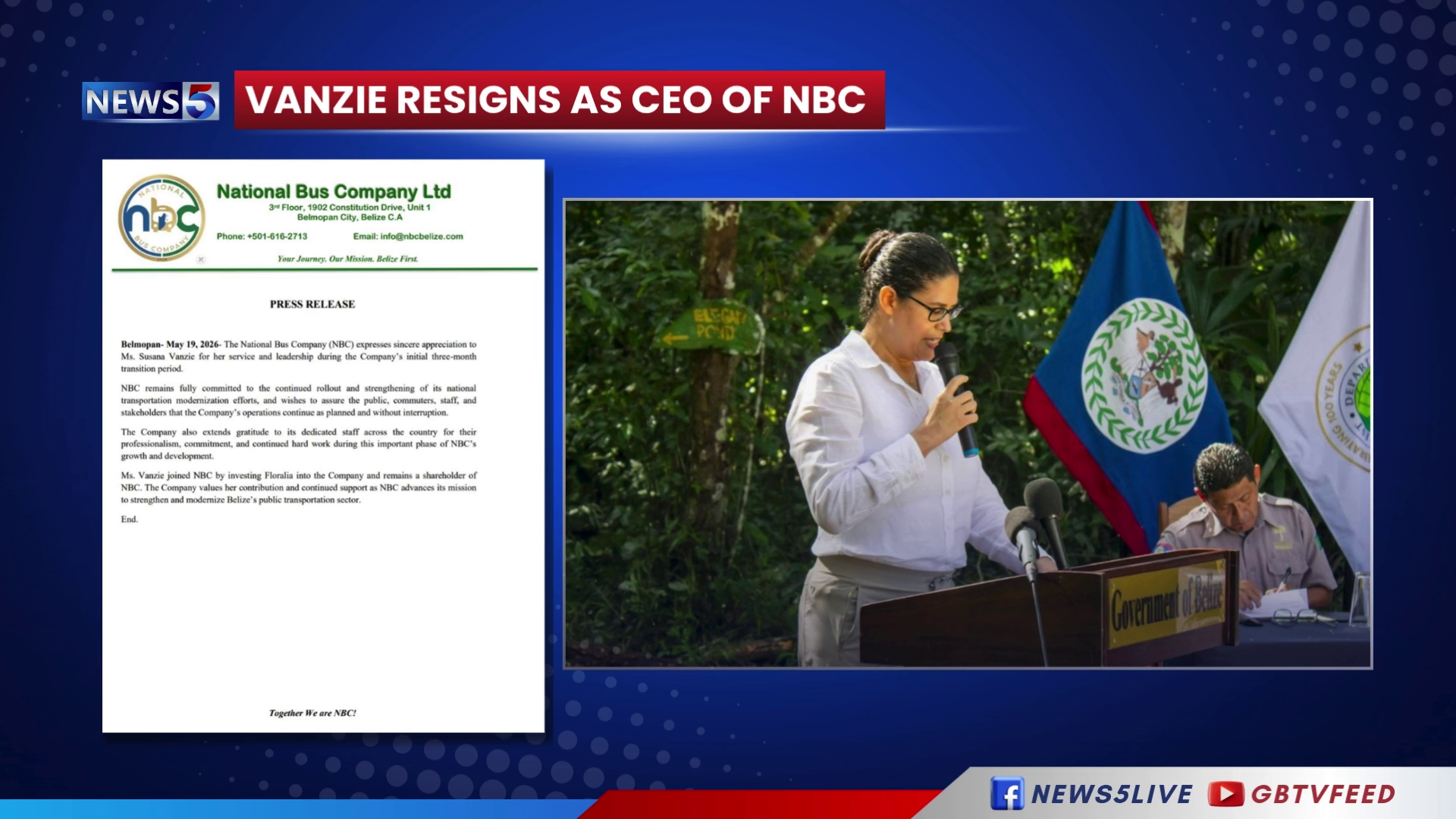
    Weeks after its national rollout, Belize’s flagship National Bus Company (NBC) finds itself in the midst of a leadership transition that has reignited questions about the future of the country’s public transportation overhaul. Less than three months after the service launched, founding CEO Susana Vanzie has stepped down from her post — a departure that comes at a critical juncture, just days after the company secured promising momentum from talks with rural bus operators aimed at expanding its network and bringing more private operators into the fold.

    Belize’s Minister of Transport Dr. Louis Zabaneh has moved quickly to downplay concerns over the sudden change, emphasizing that Vanzie’s tenure was always intended to be temporary. In an interview, Zabaneh explained that Vanzie agreed to step in only to guide the NBC through its early development stages, and notified government officials weeks ago that she would conclude her service by May 15. Vanzie and her brother remain shareholders in the company and will continue to support its growth as stakeholders, the minister added.

    Despite official assurances, the leadership change has sparked unease among industry stakeholders, who question the long-term stability of the ambitious nationalization project. While NBC confirms that day-to-day operations remain uninterrupted, with experienced regional managers overseeing core services, Zabaneh acknowledged that a permanent chief executive is essential to steer the company through its planned rapid expansion. The NBC board has launched a formal open search for a new CEO, accepting applications from both internal candidates and external applicants from across Belize’s economy. While the board already has internal candidates with demonstrated commitment to the project in its sights, the open process is designed to cast a wide net to find the best candidate to lead the transition, Zabaneh said. No timeline has been set for announcing the new appointment.

    Critics of the project say the CEO exit is a red flag that exposes deeper flaws in the Briceno administration’s rushed rollout of the national bus scheme. German Tillett, co-owner of private operator Tillett’s Bus Line, argues that Vanzie’s departure comes amid a growing list of unaddressed issues, from persistent mechanical problems with existing vehicles to a lack of transparency around the company’s financial management.

    Tillett has also raised sharp questions about the government’s upcoming plan to approve public financing for a new fleet of electric buses, noting that the administration has yet to release public data from an earlier pilot program that deployed two electric buses with private operator Westline. “I am not against innovation, but modernization without information is recklessness,” Tillett said. He pointed to the lack of published data on how the buses perform in Belize’s climate, including the impact of high heat, heavy rainfall, and local operational demands on battery life and long-term viability. He also questioned why the government has moved away from the original public-private partnership (PPP) model that was initially proposed for the project, shifting the full financial burden of the new electric fleet to Belizean taxpayers.

    As the search for a permanent CEO gets underway, the leadership vacuum adds another layer of uncertainty to a project that is meant to transform Belize’s public transportation landscape. While the government maintains the transition was pre-planned and operations remain on track, critics say the changes raise urgent questions about governance, planning, and transparency for one of the administration’s high-profile infrastructure initiatives.

  • The Young Communists League calls for a day of celebration for Raúl’s 95th birthday

    The Young Communists League calls for a day of celebration for Raúl’s 95th birthday

    Ahead of the June 3 milestone, Cuba’s National Bureau of the Young Communists League (UJC) has launched a nationwide call to action inviting Cubans from all walks of life to join in a collective celebration honoring Army General Raúl Castro Ruz on his 95th birthday. The initiative, officially named “Raúl’s 95th Birthday,” was first announced via the organization’s official Facebook page, framing the event as a grassroots tribute to a leader whose life and career have been inextricably tied to Cuba’s national journey.

    In the official statement, UJC organizers highlighted the core values that have defined Raúl’s decades of public service: unwavering loyalty to the Cuban people and the revolutionary project, a consistent commitment to social justice, and a lifelong advocacy for peace. The tribute specifically points to Raúl’s leadership through the process of updating Cuba’s economic model, a period of reform during which he never compromised on the country’s foundational commitments to equitable access to social services. It also notes his open, unashamed mourning of the passing of his lifelong partner Vilma Espín, framing this public display of grief as a reflection of his deeply rooted human compassion that has resonated across generations.

    The statement contextualizes the 2026 birthday celebration against the backdrop of the centenary of Raúl’s brother in struggle, Fidel Castro. UJC emphasizes that revolutionary greatness is not passed down through inheritance, but cultivated through daily example — a standard that Raúl has embodied through decades of hardship, fatigue, and unbroken resolve. Described as a steadfast patriot, Raúl has taught successive generations to defend Cuba’s revolutionary gains through both tenderness and resolve, intellectual preparation and strategic courage, dignity in international affairs, and solidarity with the Cuban people.

    In line with the grassroots spirit of the celebration, the UJC is actively encouraging creative expression from children, adolescents, and young adults across the country. The call invites people from every sector of society — from local neighborhood associations to primary schools, from university campuses to frontline communities — to share messages, poems, songs, and personal stories that honor Raúl’s legacy. The goal is to amplify these tributes across the nation, turning the day into a collective demonstration of gratitude and respect.

    “May June 3rd find us guided by Fidel’s memory and encouraged by Raúl’s presence; because the new generations are not here to repeat slogans, we are here to demonstrate that loyalty is action,” the statement reads. The UJC frames this action as three interconnected commitments: defending the progress Cuba has built over decades, transforming systems and structures that are not working as intended, and expanding the public affection for a leader who remains actively engaged in the country’s future, even at 95. The statement closes with a rallying cry echoing Raúl’s iconic resolve: “Come on, Cuba! May this 95th be a huge embrace for a dear friend and a leader beyond reproach. Raúl is Raúl!”

  • The people’s support for their Homeland: The greatest tribute to José Martí

    The people’s support for their Homeland: The greatest tribute to José Martí

    On a historically resonant day marking the 131st anniversary of José Martí’s death in combat, Cuban civil society delivered a powerful demonstration of national unity at Havana’s iconic José Martí Memorial Wednesday. Provincial delegates formally presented over 6.2 million signatures collected through the grassroots ‘My Signature for the Homeland’ movement to Miguel Díaz-Canel Bermúdez, First Secretary of the Central Committee of the Communist Party of Cuba and President of the Republic.

    The massive collection of signatures stands as a collective rebuke of long-standing foreign policy measures targeting Cuba: the decades-long economic blockade, the energy embargo, foreign political interference, and all threats of military aggression against the island nation. Framed by a deep, enduring love for Cuban national sovereignty, the movement also rejects what organizers describe as ongoing efforts at external domination and covert colonial influence over the country’s domestic affairs.

    Top Cuban political leaders joined the ceremony, including Esteban Lazo Hernández, President of the National Assembly of People’s Power and the Council of State; Prime Minister Manuel Marrero Cruz; Roberto Morales Ojeda, Organization Secretary of the Communist Party Central Committee; alongside senior representatives from the Young Communist League, mass organizations, and civil society groups across the country. Each territorial delegation brought its own set of signed forms as a documentary record of local participation in the movement.

    After accepting the compiled signature collections, Díaz-Canel reaffirmed Cuba’s long-stated commitment to national dignity, noting that this core value ‘is not implored, it is exercised; it is not begged for, it is defended; it is not negotiated, it is lived.’

    Ana María Mari Machado, Vice President of the National Assembly of People’s Power, emphasized that the more than 6 million signatures reflect the unified collective conscience of the Cuban people. She added that the vote of signatures opposes not only external intervention and illegal exclusion lists, but also ‘the attempt to govern us from abroad.’

    The ceremony also included a tribute to José Martí, Cuba’s national apostle, ahead of the premiere of an eight-part docuseries titled *El Misterio de un Hombre* (The Mystery of a Man), directed by filmmaker Roly. An original allegorical poster for the new series was presented to Díaz-Canel and attending members of the Communist Party Political Bureau to mark the occasion.