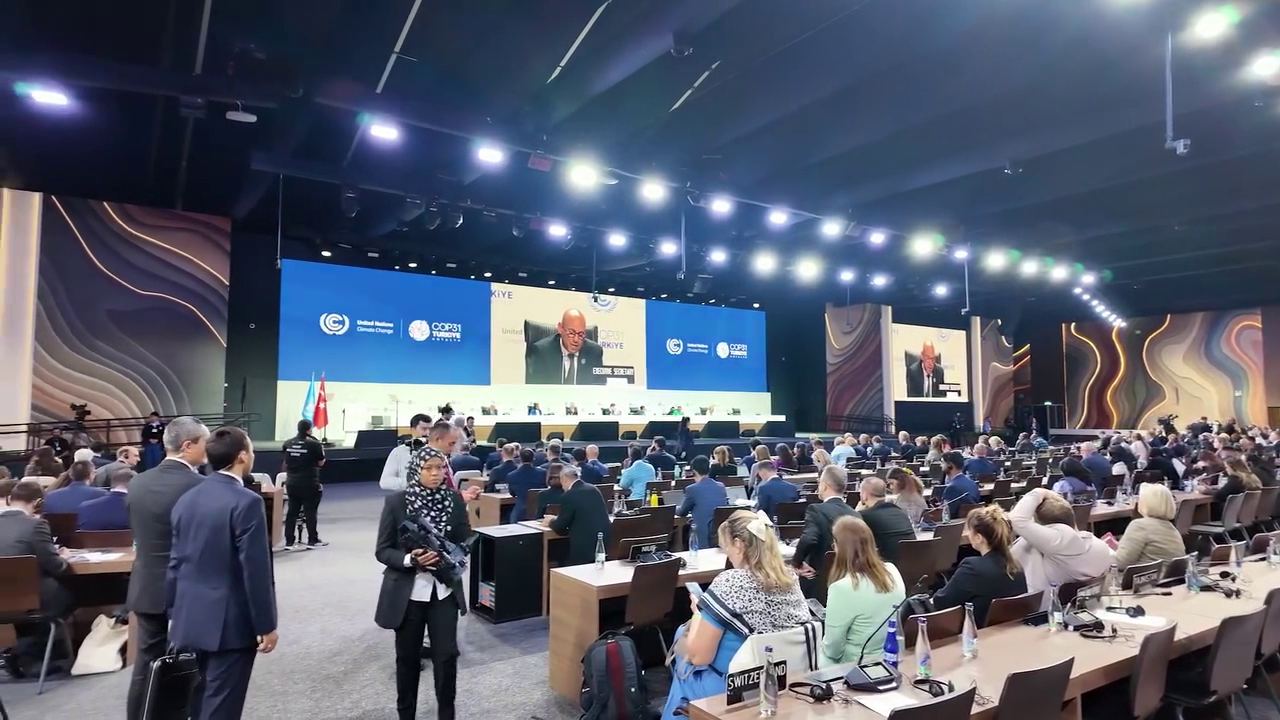
November 27, 2026 – Fresh on the heels of the conclusion of the 31st UN Climate Change Conference (COP31) hosted in Türkiye, Belize has emerged as one of the most vocal small island and low-lying developing nations to formally refuse to endorse the summit’s final consensus text, warning that the weak, unenforceable agreement would actively push the global community off the critical 1.5°C warming mitigation pathway that is a lifeline for climate-vulnerable Caribbean states.
The central objections raised by Belize’s negotiating team, alongside a coalition of similarly at-risk nations, center on two glaring gaps in the final COP31 decision document: the complete absence of binding, quantified language mandating a just, accelerated global phase-out of fossil fuels, and the failure to lock in clear baselines and funding commitments for scaled-up adaptation finance that frontline climate communities urgently need to cope with escalating extreme weather, chronic sea level rise, and cascading economic losses from climate disasters.
“Belize regrets that despite all of our efforts, unyielding, conflicting positions from high-emitting nations could not be reconciled with our core mission here,” stated LTJG Ed’n Newfield, official Belize representative to COP31. “We have conducted a thorough, line-by-line review of the cover decision, and it is our considered, evidence-backed view that the text would move us away from the 1.5°C pathway. For these non-negotiable reasons, Belize cannot accept the cover decision, and will not join the consensus on it.”
The refusal to sign onto the COP31 final accord is not a rejection of global climate cooperation, Belizean officials emphasized, but a deliberate protest of the summit’s failure to match the accelerating pace of the climate crisis that is already inflicting billions in annual losses across the Caribbean. Dr. Colin Young, Executive Director of the Caribbean Community Climate Change Centre, explained that negotiations collapsed after a bloc of fossil fuel-reliant nations, including some major developed economies, refused to uphold prior commitments laid out in past COP agreements.
“These countries refused to include any explicit, enforceable reference to transitioning away from fossil fuels in the final text,” Dr. Young noted. “This is an enormously frustrating outcome, and a clear betrayal of the legally binding climate commitments that the world’s highest-polluting nations already signed onto. We left COP31 without a document that reflects the urgency of this moment, and without any quantified guarantees of the funding wealthy nations are obligated to deliver to support the most vulnerable communities.”
Leading up to the summit, Belize’s negotiating team laid out stark national data showing that unmitigated climate change could cost the country hundreds of millions of dollars in recurrent flood damage alone, threatening to derail decades of progress in public health, infrastructure, and sustainable economic development. Orlando Habet, Belize’s Minister of Sustainable Development & Climate Change, emphasized that science, not political horse-trading between high-emitting states, must guide all global climate policy.
“We are calling on developed nations to immediately raise their adaptation finance delivery trajectory to fully deliver on the global commitment to triple adaptation funding for vulnerable nations,” Habet stated. “Science must be the backbone of every step we take. Belize is also demanding that all three working group reports from the Intergovernmental Panel on Climate Change be made fully accessible by 2028 to inform the second global stocktake of Paris Agreement progress. The world’s most vulnerable communities cannot afford delays in climate science or delayed, watered-down action.”
One of the most contentious sticking points in the closed-door negotiations was the refusal of high-emitting blocs including the European Union to embed a clear, agreed 2025 baseline of $40 billion in annual adaptation finance – the widely accepted starting point to hit the tripling target of $120 billion per year for vulnerable nations – into the final COP31 text, leaving funding commitments entirely unenforceable and open to interpretation.
Even as it rejected the flawed COP31 consensus, Belize notched tangible progress on its own climate priorities during the summit, becoming the first Caribbean nation to sign the Ambition on Melting Ice Declaration, and advancing regional collaborative frameworks for new sustainable carbon and biodiversity investment opportunities designed to build local climate resilience.
“Belize remains unwaveringly committed to full implementation of the Paris Agreement,” Habet affirmed in his closing remarks. “The chasm between global climate pledges and real, tangible delivery cannot be allowed to become a permanent, fatal burden for the world’s most vulnerable populations. Judge this conference not by the empty, unenforceable pledges that were announced on its stage, but by the actual protection delivered to keep the 1.5°C target alive, to deliver climate justice, and to safeguard the lives of our people.”
Moving forward, Belize and its Caribbean regional partners have confirmed they will continue to roll out domestic climate adaptation programs, while ramping up global advocacy to demand greater transparency and accountability from the world’s highest-emitting nations that bear the historic responsibility for the majority of global greenhouse gas emissions. This report was filed by News Five correspondent Britney Gordon.
Belize Won’t Join COP31 Consensus: “It Would Move Us Away From the 1.5 Path”