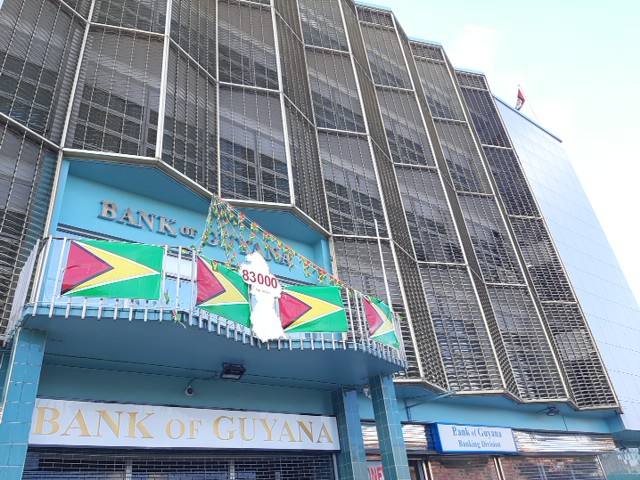
At the annual awards ceremony hosted by the Guyana Manufacturing and Services Association, Vice President Bharrat Jagdeo laid out a landmark foreign exchange intervention plan, revealing that the Bank of Guyana (BoG) is on track to more than double its annual US dollar disbursement to local commercial banks in 2027, pushing the total supply past the US$5 billion threshold. The announcement comes on the heels of seven consecutive years of skyrocketing demand for hard currency, driven by a dramatic surge in imports of both consumer goods and industrial capital equipment across the country. Jagdeo, a former national finance minister, noted that the central bank is projected to distribute roughly US$2.5 billion in US dollars directly to commercial lenders by the end of 2026, with the 2027 scaled-up supply expected to resolve longstanding backlogs and clear lingering mismatches in the local foreign exchange market. Even as he unveiled the expanded supply plan, the vice president acknowledged persistent structural flaws in Guyana’s forex ecosystem that threaten to undermine the intervention’s intended benefits. He stopped short of outlining formal enforcement measures to crack down on bad-faith businesses that submit duplicate foreign exchange requests to multiple commercial banks to manufacture artificial, non-existent demand for hard currency. Jagdeo also called out a widespread exploitative pricing practice among local importers: many firms access US dollars at the official commercial bank exchange rate of GY$216.50 to US$1, but mark up their final consumer goods using the much higher informal street exchange rate of GY$240 to US$1. This arbitrage scheme, he emphasized, is a major contributing factor to sustained domestic inflation, alongside unreasonable asset price bubbles including drastically inflated land values across the country. Jagdeo stressed that all newly released US dollar liquidity in 2027 will be strictly earmarked for verified, legitimate real economic demand, rather than speculative or manipulative usage. He contextualized the policy shift by presenting stark data on Guyana’s evolving import and export landscape: total annual imports have surged from just US$4 billion in 2019 to roughly US$10 billion by late 2026, while traditional non-oil economic sectors have failed to generate enough foreign currency earnings to keep pace with this spending growth. As a striking illustration of this imbalance, he noted that total 2025 expenditure on imported motor vehicles alone exceeded the combined foreign exchange earnings from every national export sector excluding gold. Last year, Guyana imported 50,000 vehicles at a total cost of US$500 million. Breakdowns of import categories reveal broad-based growth in forex demand: spending on core consumption goods jumped from US$510 million in 2019 to US$1.1 billion in 2026, imports of intermediate production inputs swelled from US$1.4 billion to US$3.1 billion over the same seven-year window, and agricultural sector capital goods purchases expanded tenfold from US$30 million to nearly US$300 million. Jagdeo added that much of the rising demand for hard currency stems from legitimate local private investors purchasing industrial machinery and other long-term capital goods to expand their operations, and noted that further demand projections will be finalized following the completion of the current wave of large-scale initial industrial investments across the country.
Foreign exchange supply to double next year, amid slump in traditional sectors