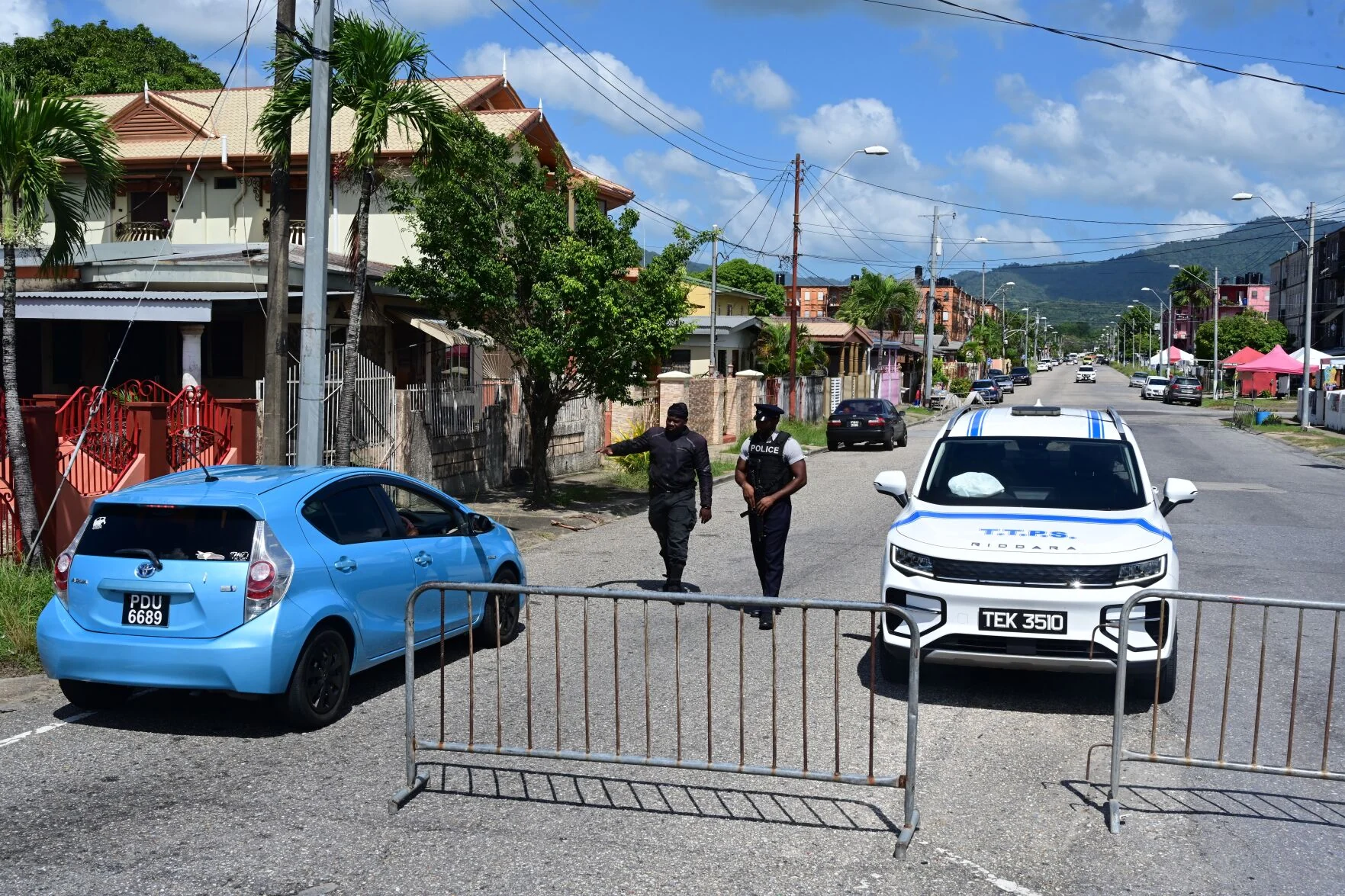
After 14 days of sweeping security restrictions, the Maloney Gardens housing development in Trinidad and Tobago saw the official termination of its Special Operations measures on November 24, drawing a line under a controversial intervention deployed to stamp out spiraling gang violence that had put ordinary residents at severe risk. The area was first designated a closed zone under the 2026 Special Operations Act on November 10, paired with a strict 9 p.m. to 5 a.m. curfew, after a wave of shootings and stabbings on November 9 left three people hospitalized, and security intelligence confirmed active plots for retaliatory gang attacks, widespread access to illegal firearms, and a long history of turf conflicts in the community. Law enforcement, led by Police Commissioner Allister Guevarro, deployed combined police and Defence Force units to the neighborhood during the operation, seizing five unregistered firearms in targeted raids. Guevarro noted he had formally requested the closed-area declaration after standard community policing measures proved insufficient to neutralize the imminent threat to innocent bystanders caught in gang crossfire. Announcing the end of the restrictions, Prime Minister Kamla Persad-Bissessar issued a stark public warning to gang members who had previously exerted de facto control over parts of Maloney Gardens: “If you return to resume your violent activities, we will return also with far greater force.” She publicly defended the government’s decision to invoke the Special Operations Act in response to questions from local outlet the Express, emphasizing the intervention was explicitly designed to prevent bloody clashes between rival criminal factions. Persad-Bissessar confirmed the government’s choice to lift the curfew and closed-area designation was based directly on formal police assessments that the immediate threat of large-scale gang violence had diminished. In a direct address to Maloney residents, the prime minister urged community members to prioritize the safety of their families over coercion from criminal groups or political actors, noting no gang member or politician could ever bring back a loved one killed in gang-related bloodshed. She also issued a public challenge to the opposition People’s National Movement (PNM), which had threatened legal action against the special operations measures, inviting the party to move forward with its pre-notified litigation rather than abandoning its cases, stating the government was prepared to argue its case fully in court. Attorney General John Jeremie echoed this position, confirming the executive had followed police guidance throughout the operation, and that the restrictions were only lifted after all pre-defined security targets set by law enforcement had been met. Jeremie added that the government stood ready to deploy similar targeted security operations across any community in the country at any time if public safety was deemed at imminent risk. Homeland Security Minister Roger Alexander, meanwhile, confirmed that a sustained, visible law enforcement presence would remain in Maloney Gardens even after the formal end of the special measures, to deter any resurgence of gang activity. He thanked the vast majority of Maloney residents for their cooperation during the two weeks of restrictions, noting many local households had even requested the extended police deployment be continued for an additional month, while dismissing what he described as the opposition’s political theatrics over the operation. Alexander stressed the restrictions had not disrupted children’s school attendance or normal daily activities for law-abiding residents, and had instead allowed community members to walk public streets without constant fear of being caught in random gunfire. He called on residents to take an active, vocal stand against remaining criminal elements in their neighborhood, noting the Trinidad and Tobago Police Service stood fully behind the community to help build a safe, violence-free environment for children to grow up in. The formal end of the special operations regime is codified in two official revocation orders signed by President Christine Kangaloo and dated November 23: the Special Operations (Closed Area) (Revocation) Order 2026, which terminates the original closed-area legal notice effective November 24, and the Special Operations (Curfew) (Revocation) Order 2026, which cancels the overnight movement restrictions that required all residents to remain in their homes after 9 p.m. without official authorization. Both orders are now subject to negative resolution review by the House of Representatives. The Maloney Gardens development was the first community in the country to be designated a closed area under the 2026 Special Operations Act. While the intervention drew widespread criticism from some quarters over its unannounced initial end date, burdens on local businesses, and complaints over movement permit processes, official government documents tabled in Parliament confirmed the Cabinet had acted on formal advice from the Special Branch, which had assessed that regular law enforcement tools were no longer sufficient to prevent imminent mass casualty gang violence in the neighborhood.