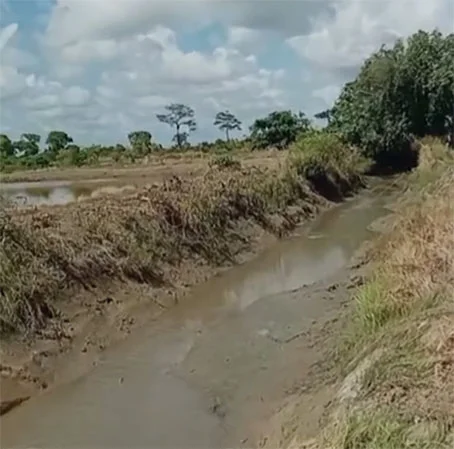
Smallholder rice farmers in Suriname’s Nickerie district are grappling with a severe, time-sensitive irrigation water shortage right in the middle of their annual planting window, as underperforming infrastructure at the Wakay pump station fails to deliver sufficient water to local distribution canals. The crisis has left critical waterways running dry at a moment when consistent, reliable water access is non-negotiable for newly sown rice crops to take root and develop properly, threatening the livelihoods of dozens of agricultural households across the region.
Dayanand Dwarka, chair of the staff union for the Overliggend Waterschap Multipurpose Corantijn Project (OWMCP) that oversees the regional irrigation network, laid out a stark assessment of the pump station’s condition in statements to local press. According to Dwarka, the facility is designed to operate four pumps total, but half of those units are fully non-functional, and the two remaining operational pumps are operating well below their maximum output due to longstanding mechanical wear and poor maintenance. The combined output of the underperforming working units is far outstripped by the volume of water farmers are drawing from the shared canal network for simultaneous planting, he explained, leading to rapidly dropping water levels that leave many plots without any access to irrigation.
Suriname’s Minister of Agriculture, Animal Husbandry and Fisheries Mike Noersalim offered a conflicting account of the pump station’s status, disputing key details of Dwarka’s assessment. The minister claimed the facility only hosts three pumps total, not four, and that all three pump units themselves are in fully functional condition. The only issue causing reduced output, he stated, is a severe leak in the radiator of the generator that supplies power to one of the electric pumps, leaving that single unit temporarily offline. Noersalim confirmed that his department is deploying all available resources to repair the faulty generator radiator as quickly as possible to restore full water delivery capacity, but he declined to provide a concrete public timeline for when the repairs will be completed and full operations resumed.
As of November 24, local farmers have publicly voiced rising alarm over the impasse, noting that even minor delays in restoring consistent water flow could lead to failed planting cycles and devastating losses for the upcoming harvest. The competing accounts from union leadership and the agriculture ministry have further amplified uncertainty for the farming community, which remains entirely dependent on the Wakay pump station’s output to sustain their core rice crops through the early growing season.